⚠️ Affiliate Disclosure: This post contains Amazon affiliate links. If you purchase through our links, we may earn a small commission at no extra cost to you. We only recommend products we have researched and whose listings we checked live on Amazon. Prices change constantly, so we deliberately don’t print them here. Tap through to see the current price before you buy.
Ultimate Buying Guide
🔧 Best PCB Holders & Helping Hands for Soldering
8 PCB holders, vises and helping-hands stations ranked for makers, hobbyists and repair techs, from the Hakko Omnivise and PanaVise 201 to magnetic QuadHands arms, with real specs, honest verdicts and direct Amazon links.
✅ 8 Holders Reviewed
✅ Verified Amazon ASINs
✅ Listings Checked Live
✅ Honest Pros & Cons
Soldering is a three-handed job: one hand for the iron, one for the solder and one to keep the board from sliding across the bench. A good PCB holder or set of helping hands supplies that third hand. It locks your ESP32 dev board, Arduino shield or custom PCB at the angle you need, so every joint gets a steady tip, proper heat and a clean fillet instead of a cold, cracked blob.
The trouble is that “PCB holder” covers very different tools. A rotating board holder like the Hakko Omnivise flips a populated board over in one move. A mini vise like the PanaVise 201 grips small modules and connectors firmly. Magnetic gooseneck arms like QuadHands hold wires, cables and odd-shaped parts, and low-profile vises like the Stickvise keep a board flat at table height. This guide ranks 8 picks across all four styles on grip, adjustability, stability and heat resistance.
💡 Reality check before you buy: No single holder does everything. Board holders and vises are rock solid for PCBs but clumsy for wire splicing, while gooseneck helping hands are brilliant for wires yet can sag or spring back under a heavy board. Cheap alligator clips have sharp teeth that scratch solder mask and can bite off small SMD parts, so slip heat-shrink or the supplied rubber covers over them. Plastic jaws and silicone covers also soften near a hot-air gun. Many experienced techs end up owning two tools: a board holder for PCBs plus a set of arms for everything else.
🔧 Quick Comparison: All 8 PCB Holders & Helping Hands
| Product | Type | Holds | Adjustment | Best For | Buy |
|---|
| 🥇 Hakko Omnivise C1390C | Rotating PCB holder | Up to 0.8 in thick, wide boards | 360° spin, 5 heights | Best Overall PCB Holder | Buy Here → |
| 🏅 PanaVise 201 Junior | Mini vise | Jaws open to 2-7/8 in | 210° tilt, 360° turn/rotate | Best Mini Vise | Buy Here → |
| 🤲 QuadHands Workbench | Magnetic helping hands | 4 alligator clips | 2×16 in + 2×8 in arms | Best Helping Hands | Buy Here → |
| 📐 Stickvise PCB Vise | Low-profile PCB vise | Board held flat, small/medium | Spring jaws, hackable plates | Best Low-Profile Vise | Buy Here → |
| 🏭 PanaVise 324 Electronic Work Center | Board holder work center | Boards up to 12 in wide | 90° tilt, 360° turn/rotate | Best for Large Boards | Buy Here → |
| 🧲 NOEVSBIG Magnetic Soldering Station | Magnetic station + PCB clips | 4 PCB clips + 4 alligator clips | 6 magnetic arms, hot-air holder | Best Heavy-Duty Station | Buy Here → |
| 💵 KOTTO Helping Hands (4 Arms) | Classic helping hands | 4 stainless alligator clips | 4 gooseneck arms | Best Budget Pick | Buy Here → |
| 🔍 XYK Helping Hands with 3X LED Magnifier | Helping hands + LED magnifier | 4 insulated alligator clips | 2×7.5 in + 2×5 in arms | Best With Magnifier | Buy Here → |
Prices are intentionally left out because they change daily. Click “Buy Here” to see the current price and availability on Amazon.
🔍 What to Look for in a PCB Holder or Helping Hands
🔄
Holding Style
Board holders grip the PCB edges and flip it over; vises clamp small parts hard; gooseneck arms hold wires and odd shapes. Match the style to what you solder most.
🧱
Base Weight & Stability
A heavy steel or cast base stops the holder tipping when you push the iron against a joint. Light bases and suction cups creep across the bench.
🎯
Adjustability
Look for true 360° rotation plus tilt so you can reach both sides of a board without unclamping. Single-knob locks are fastest to reposition.
🌡️
Heat & ESD Safety
Jaws should tolerate soldering heat and, ideally, be ESD-safe or static dissipative. Nylon and silicone covers protect boards but can soften under hot air.
📏
Capacity
Check maximum jaw opening or board width. A mini vise suits modules and connectors, while motherboards and long LED strips need a wide board holder.
🏆 Detailed Reviews: All 8 PCB Holders & Helping Hands
🥇 BEST OVERALL PCB HOLDER

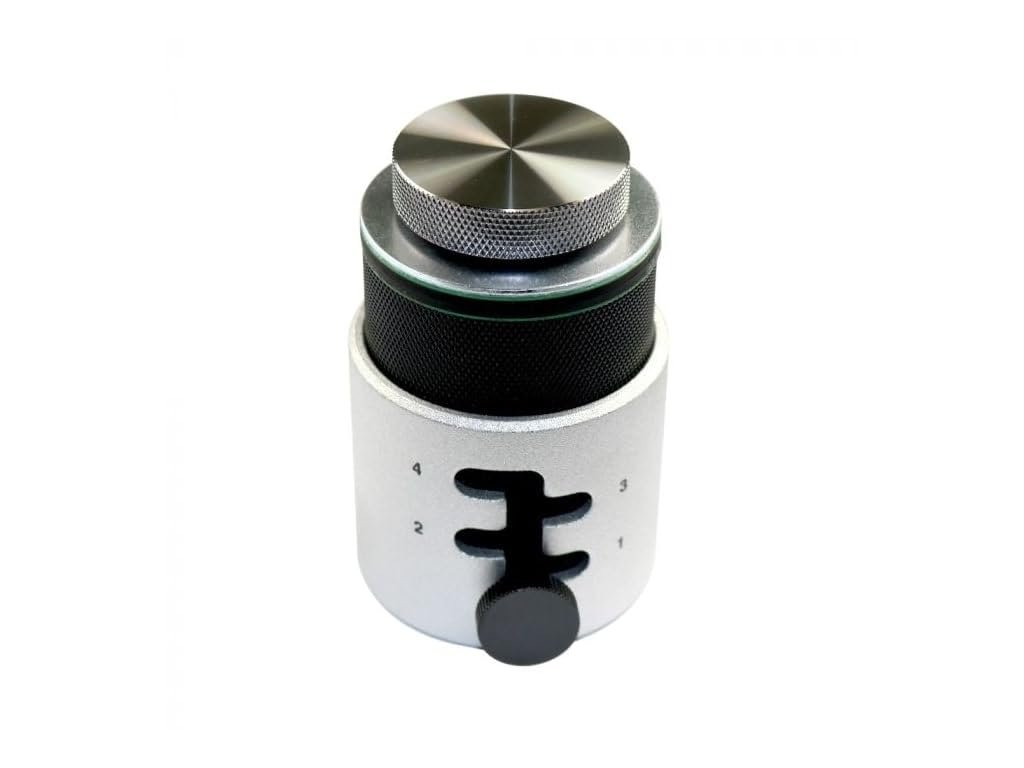
The Hakko Omnivise C1390C is the board holder you see on professional rework benches, and it earns that spot. Two padded jaws grip the PCB by its edges on a heavy metal base, and the whole cradle spins through 360°, so you can populate the top side, flip the board and solder the leads underneath without ever unclamping. Hakko lists five height settings between 2.8 and 3.8 in and an opening for objects up to 0.8 in thick, and the jaws are lined with static-dissipative rubber to protect sensitive parts. It was designed to pair with Hakko’s rework systems, but it works just as well for through-hole kits, dev boards and repair work.
✅ Pros- True 360° flip without unclamping
- Heavy, stable metal base
- Static-dissipative padded jaws
- Five quick height settings
❌ Cons- Premium price for a board holder
- Not meant for wires or loose parts
- Stock can be limited on some listings
🎯 Verdict: The best all-round PCB holder. If most of what you solder is on a board, this is the one tool that makes every job faster and safer.
👉 Check Price on Amazon →
🏅 BEST MINI VISE

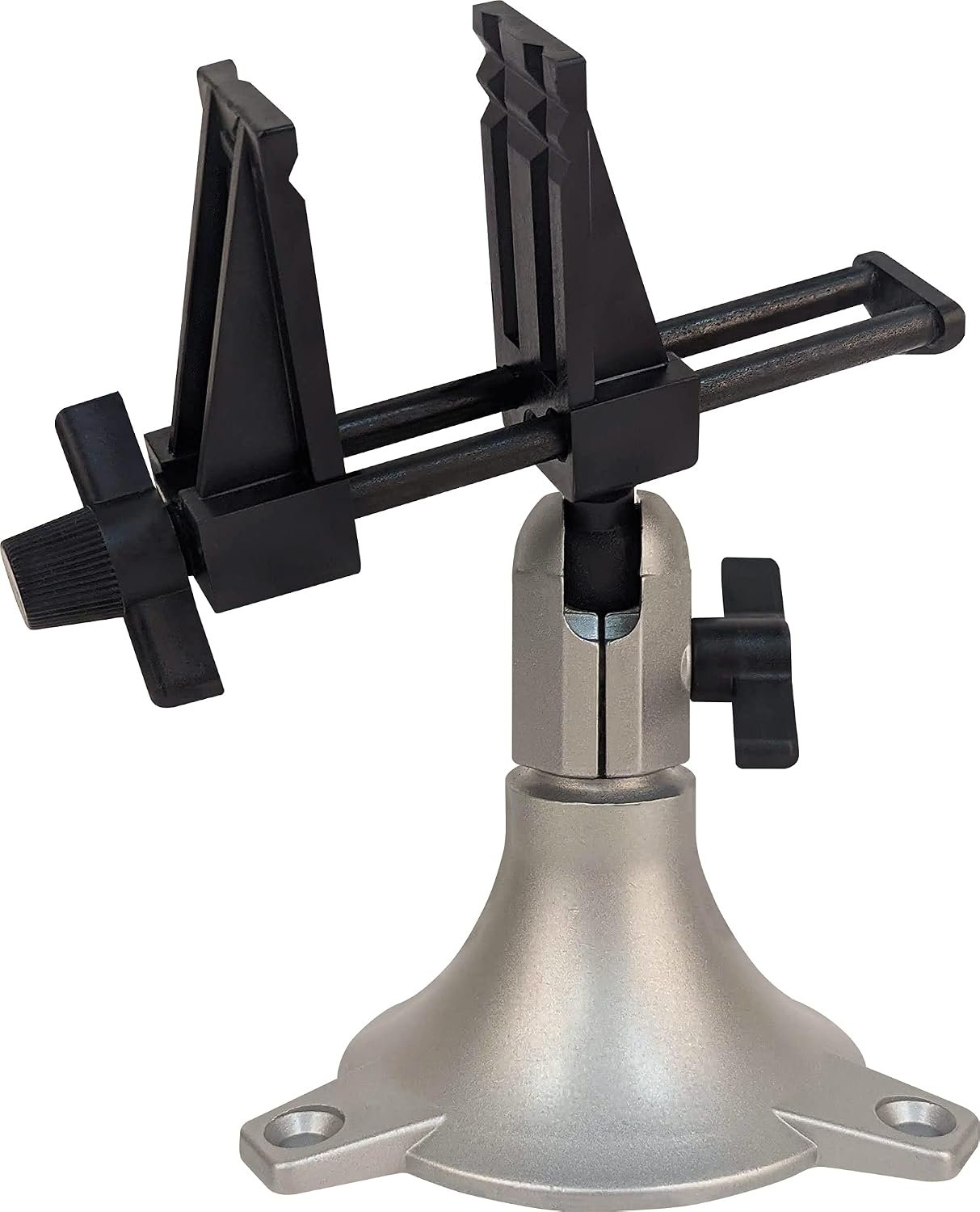
The PanaVise 201 “Junior” has been a fixture on electronics benches for decades. A single control knob locks the head through three planes of movement, 210° of tilt plus a full 360° turn and rotation, so you can angle a small board, connector or cable exactly where your iron wants it. The nylon jaws open to about 2-7/8 in, which covers breakout boards, sensor modules, USB connectors and headers, and PanaVise rates the head for continuous heat up to 350°F. It’s compact enough to live permanently next to your soldering station.
✅ Pros- Rock-solid grip on small parts
- One knob locks all three axes
- Durable, US-made build
- Tiny footprint on the bench
❌ Cons- Jaw opening too small for big boards
- Base is light; can lift with heavy parts
- Plastic jaws can mark soft parts
🎯 Verdict: The best compact vise for modules, connectors and small PCBs. A tool you will still be using ten years from now.
👉 Check Price on Amazon →
🤲 BEST HELPING HANDS · ⭐ 4.8/53. QuadHands Workbench
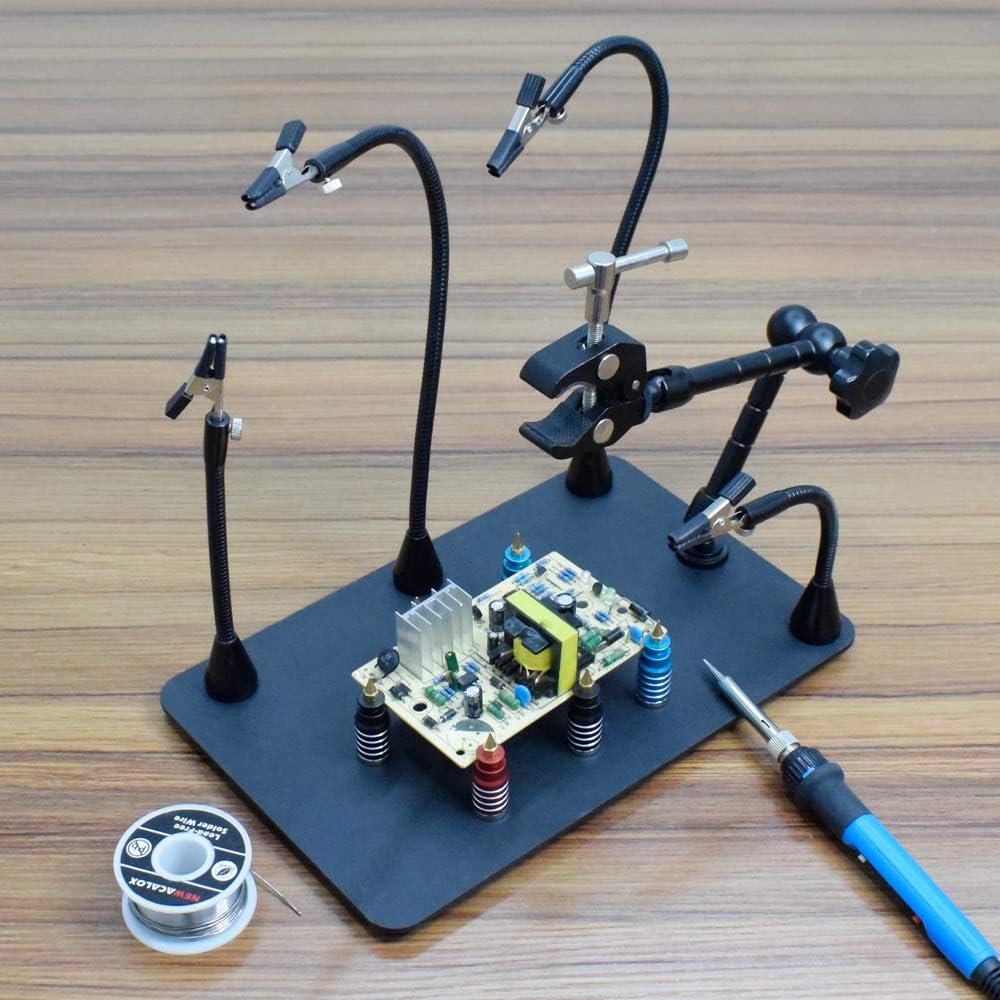
4 magnetic arms (2×16 in, 2×8 in) · 6×9 in powder-coated steel base · 360° clips · Made in USA
Buy Here →

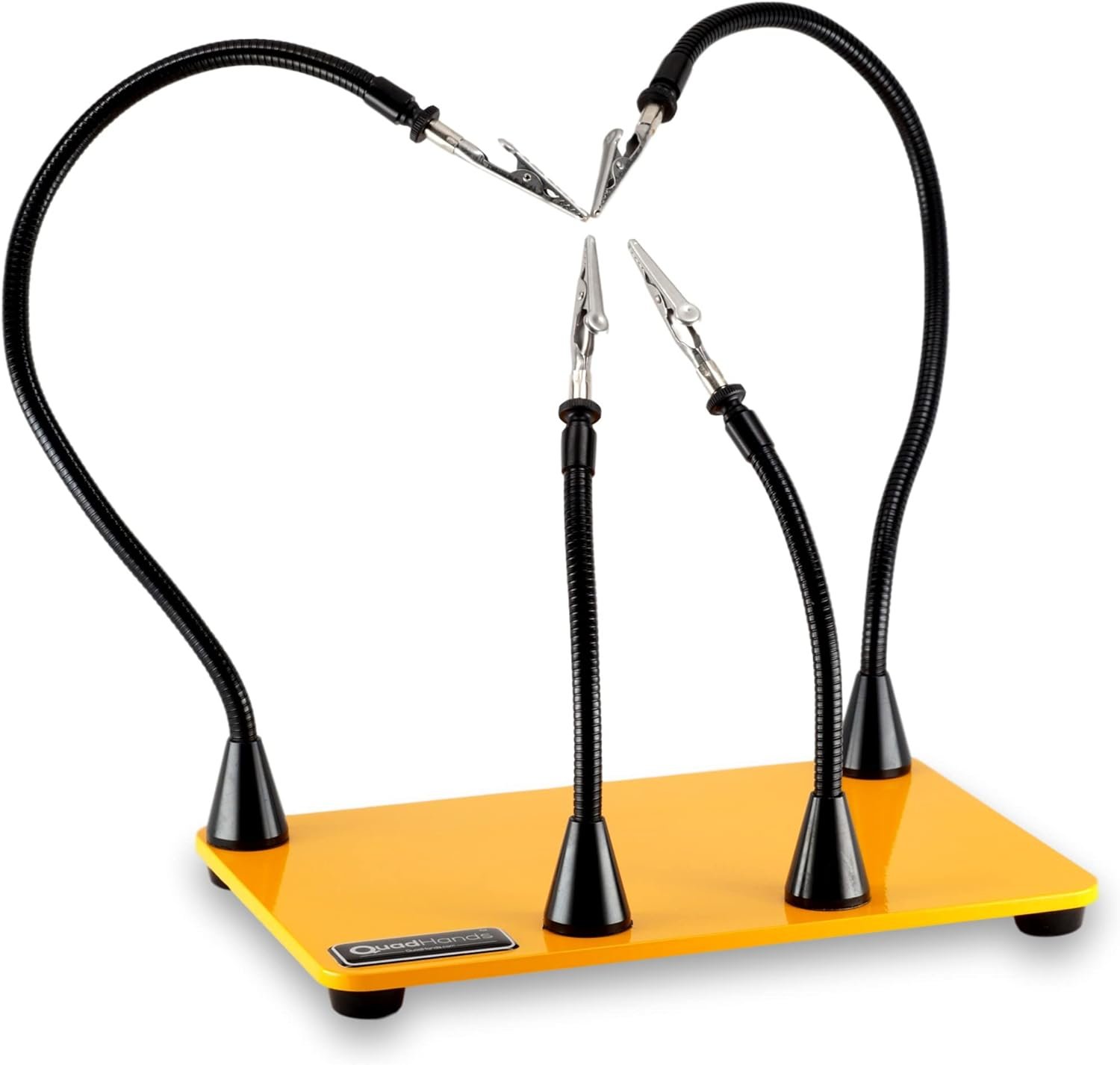
QuadHands Workbench is the helping-hands kit that made magnetic gooseneck arms popular. Four arms, two long 16 in and two short 8 in, snap onto a heavy 6×9 in steel plate anywhere you like, and each stainless alligator clip swivels 360° and locks with a thumb nut. That freedom is what you want for splicing wires, tinning cable ends, holding a connector against a board or positioning a small PCB at an odd angle. It’s made in the USA and backed by a lifetime satisfaction guarantee, with removable silicone clip covers included.
✅ Pros: Arms go anywhere on the magnetic base; long 16 in reach; heavy, non-slip steel plate; lifetime guarantee.
❌ Cons: Goosenecks can sag under a heavy board; alligator clips aren’t a true PCB grip; pricier than clones.
🎯 Verdict: The best helping hands for wires, cables and awkward parts. Pair it with a board holder and you’re covered for nearly everything.
📐 BEST LOW-PROFILE VISE · ⭐ 4.7/54. Stickvise PCB Vise
Holds PCB flat at table level · 7.9 × 3 × 1 in · nylon 6/6 jaws · spring clamp · 3D-printable jaw mods
Buy Here →

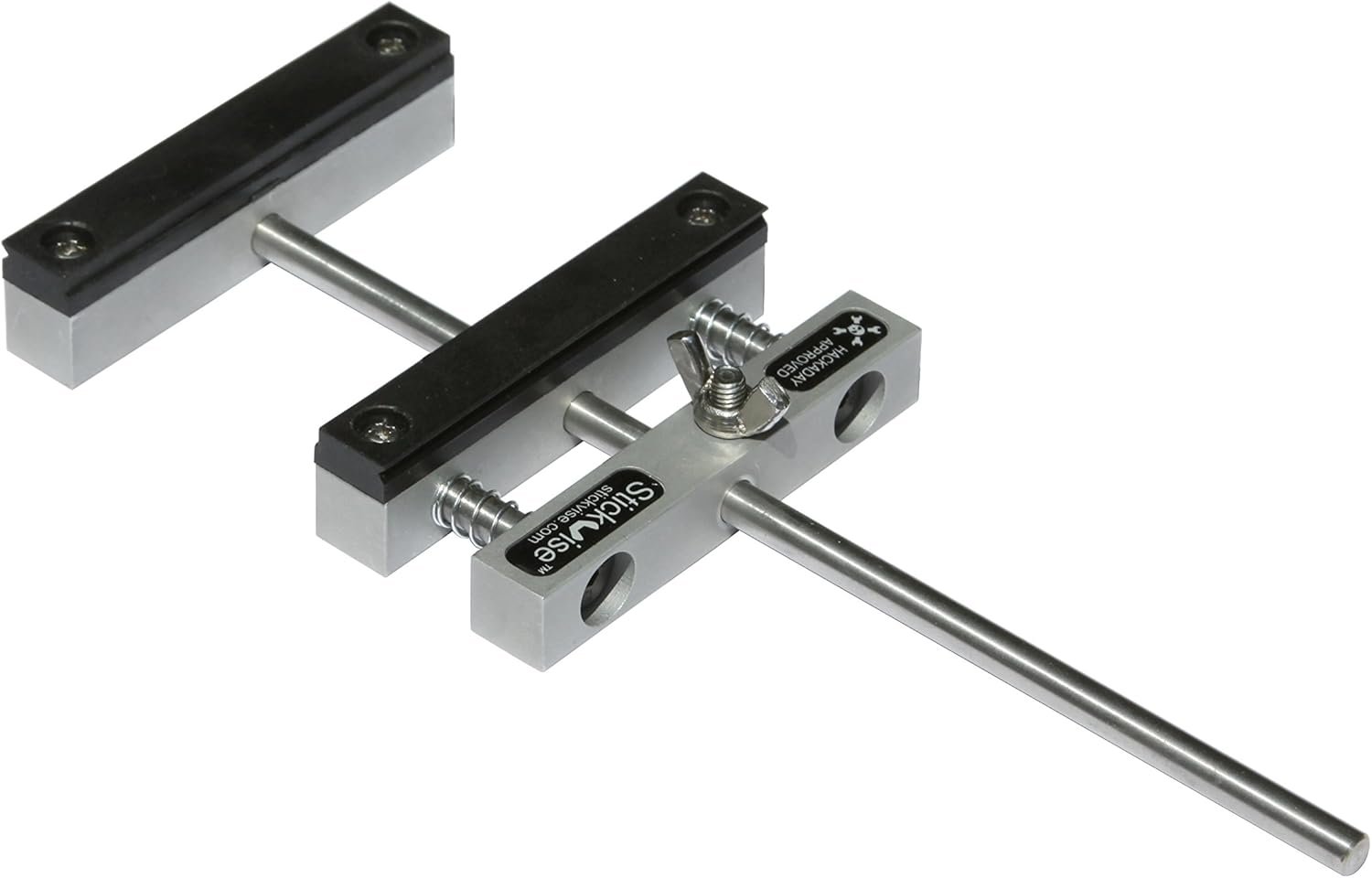
The Stickvise takes the opposite approach to a tilting vise: it holds your board flat, just above the table, so your forearms rest on the bench and your iron hand stays steady. A spring-loaded slider clamps the board between nylon 6/6 jaws, and at only about 1 in tall it’s perfect for SMD work under a microscope, probing test points, flashing firmware through pogo pins or hand-soldering QFNs. The design is openly hackable, with optional PTFE high-temperature jaws, aluminum Pro Jaws and printable jaw plates from the community.
✅ Pros: Very stable, table-height work; great under a microscope; cheap to customize; tiny and portable.
❌ Cons: Doesn’t tilt or flip the board; stock nylon jaws dislike hot air; limited to small and mid-size boards.
🎯 Verdict: The best low-profile PCB vise. Ideal for SMD soldering, probing and microscope work where stability beats angles.
🏭 BEST FOR LARGE BOARDS · ⭐ 4.6/55. PanaVise 324 Electronic Work Center
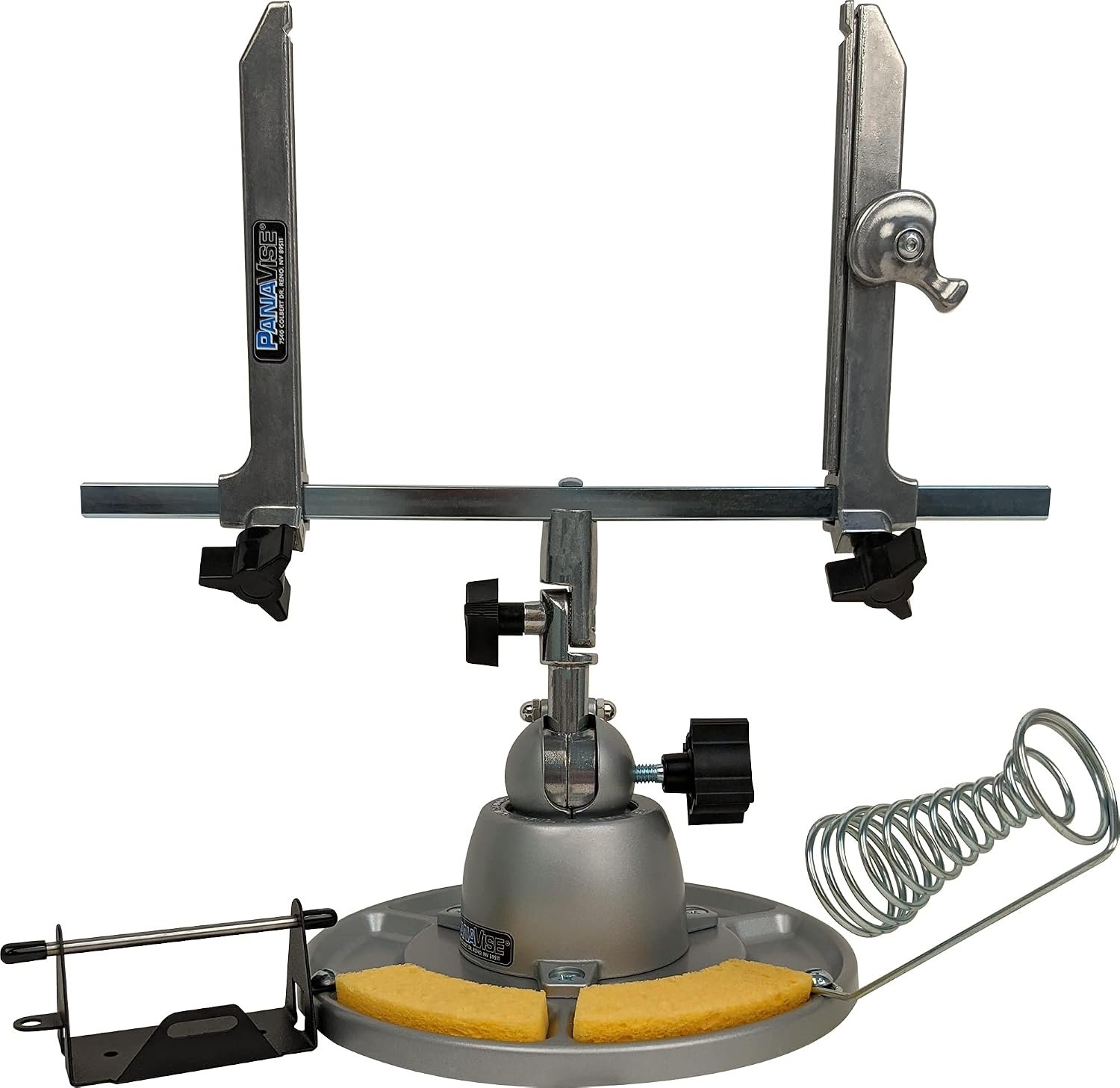
315 board holder (boards up to 12 in) · 90° tilt, 360° turn & rotate · parts tray base · solder station · 4.5 lb
Buy Here →

If you work on full-size boards, motherboards or long LED and power PCBs, the PanaVise 324 Electronic Work Center is built for you. It bundles the 315 Circuit Board Holder, which accepts boards up to about 12 in wide, with a 300 Standard Base, a 312 Parts Tray Base Mount and a 371 Solder Station. A single knob and PanaVise’s split-ball lock fix the holder at any angle across 90° tilt and 360° turn and rotation, and the tray base keeps screws and parts corralled right where you’re working.
✅ Pros: Holds large boards securely; one-knob split-ball lock; parts tray and solder stand included; built to last.
❌ Cons: Bulky on a small bench; heavier at 4.5 lb; overkill if you only solder small modules.
🎯 Verdict: The best choice for large PCBs and repair benches. A complete work center rather than just a clamp.
🧲 BEST HEAVY-DUTY STATION · ⭐ 4.8/56. NOEVSBIG Magnetic Soldering Station
11.4 × 7.1 in steel base (3.3 lb+) · 6 magnetic arms · 4 PCB clips + 4 alligator clips · hot-air gun holder
Buy Here →

The NOEVSBIG Magnetic Soldering Station is a hybrid: a large 11.4 × 7.1 in powder-coated steel base with magnetic pillar holders and dedicated PCB board clips for gripping boards by the edge, plus flexible gooseneck arms with alligator clips for wires and parts. The kit even includes a 360° rotating hot-air gun holder, which is handy for hands-free heat-shrink or SMD rework. It gives you a board holder and helping hands on one heavy base, with plenty of room to spread out.
✅ Pros: Board clips plus gooseneck arms in one kit; very heavy, stable base; hot-air holder included.
❌ Cons: Takes up a lot of bench space; board clips less refined than a Hakko or PanaVise; generic brand.
🎯 Verdict: The best all-in-one magnetic station if you want board clips and arms together on one heavy base.
💵 BEST BUDGET PICK · ⭐ 4.6/57. KOTTO Helping Hands (4 Arms)
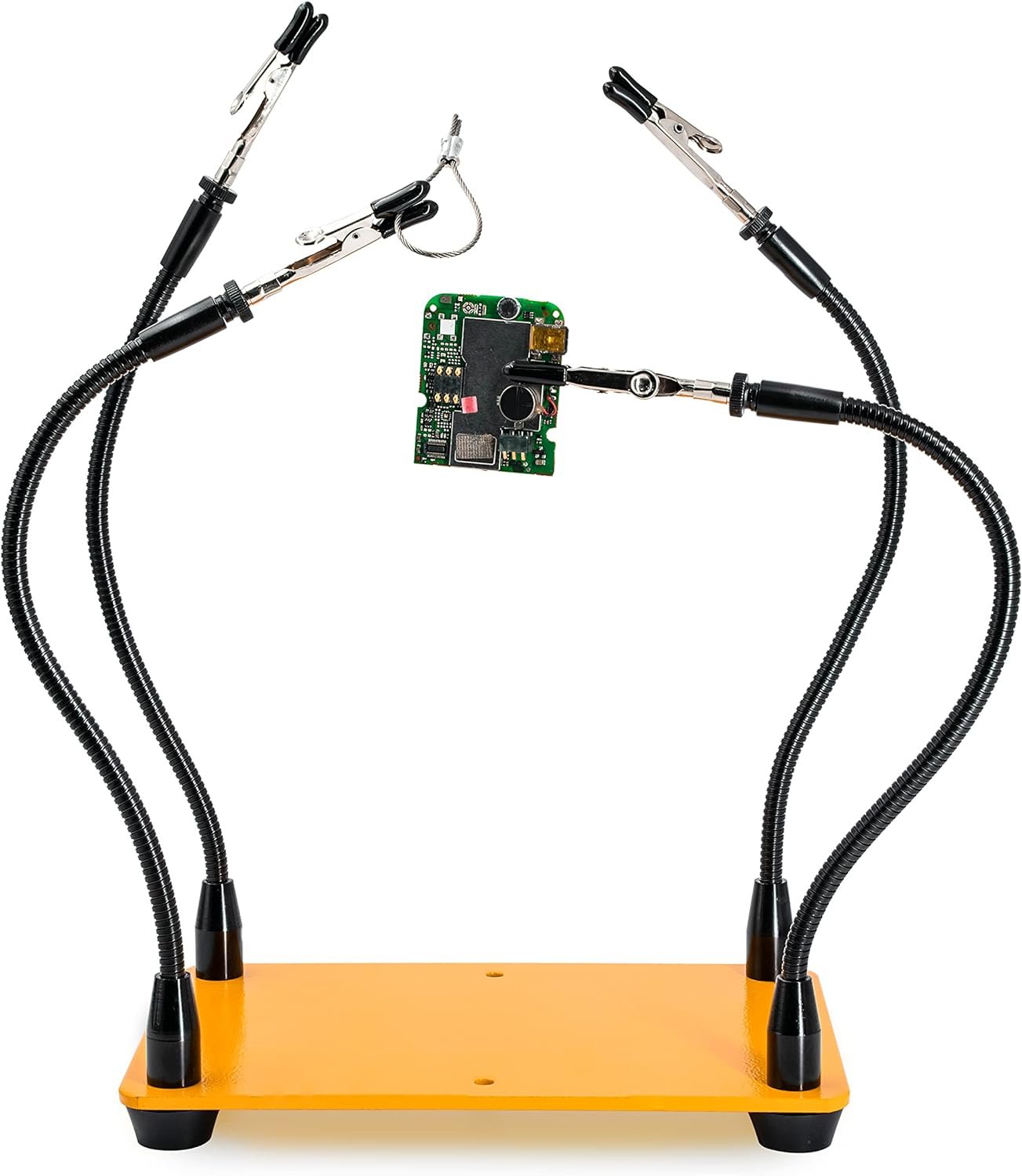
4 metal gooseneck arms · stainless steel alligator clips · weighted base with anti-slip feet · 2.8 lb
Buy Here →

For a first soldering setup, the KOTTO Helping Hands is the proven budget choice, with thousands of Amazon ratings behind it. Four metal gooseneck arms with stainless-steel alligator clips are screwed into a weighted base with anti-slip rubber feet, so it stays planted while you tin wires, hold a header or keep a small board steady. It lacks the magnetic flexibility of QuadHands, but for the money it’s a massive upgrade over a single-clip third hand.
✅ Pros: Great value; sturdy weighted base; stainless clips; huge base of happy users.
❌ Cons: Arms are fixed in place, not magnetic; clips can scratch without covers; not a true board holder.
🎯 Verdict: The best budget helping hands. The easiest way to stop chasing parts around the bench.
🔍 BEST WITH MAGNIFIER · ⭐ 4.5/58. XYK Helping Hands with 3X LED Magnifier
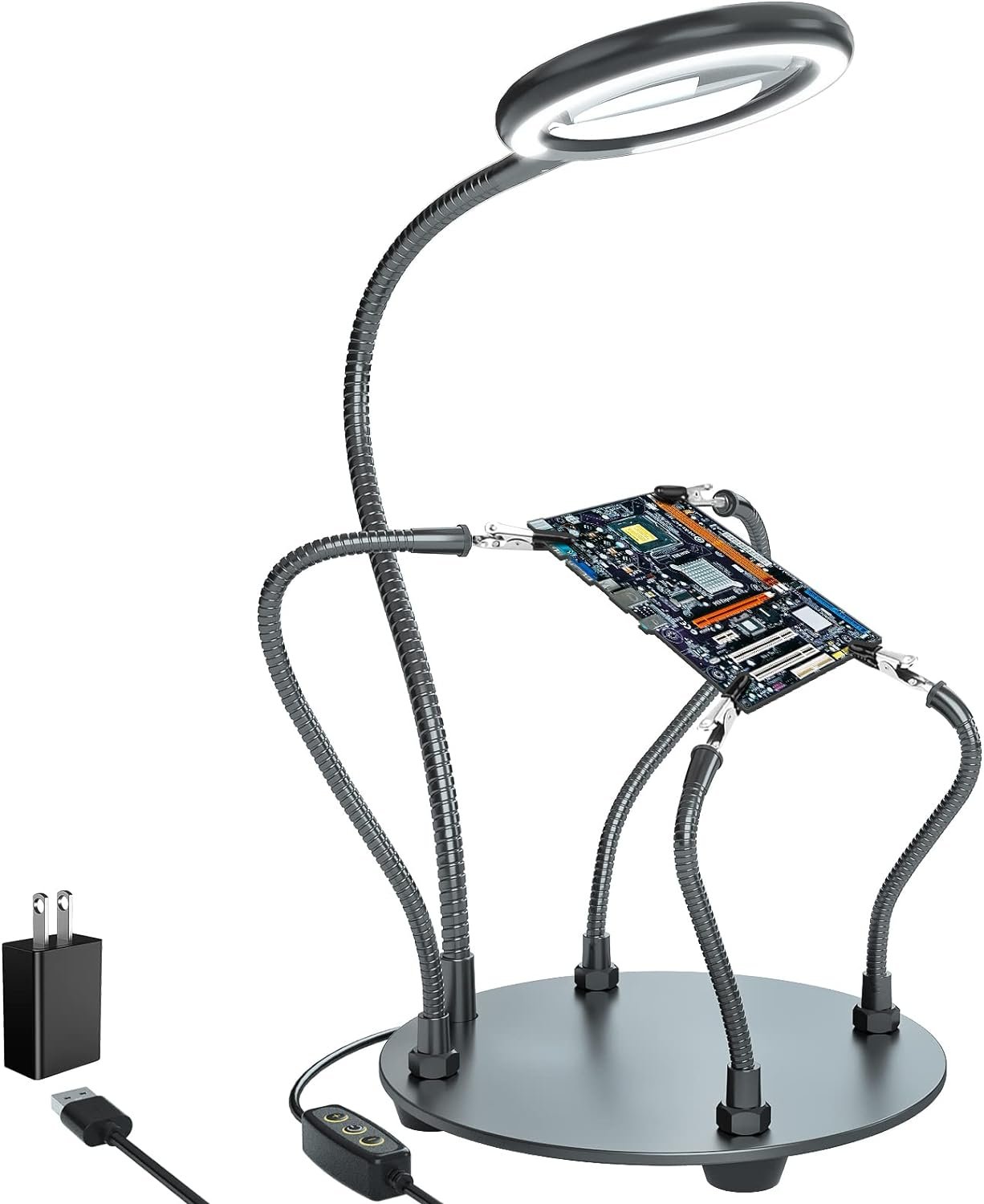
3X LED magnifier (28 LEDs, 6 brightness levels) · 2×7.5 in + 2×5 in arms · 7 in round steel base
Buy Here →

If your eyes struggle with 0603 parts and fine-pitch headers, the XYK Helping Hands adds a 3X dimmable LED magnifier to a classic four-arm stand. The lamp has 28 LEDs with six brightness levels, and the four gooseneck arms (two 7.5 in, two 5 in) carry insulated, rotating alligator clips on a 7 in powder-coated steel base with non-slip pads. It’s a neat all-in-one for hobbyists who don’t have a dedicated magnifier lamp or microscope yet.
✅ Pros: Built-in 3X LED magnifier; dimmable light; heavy round base; good value for the features.
❌ Cons: Magnifier needs mains power; 3X is modest for fine SMD; arms are shorter than QuadHands.
🎯 Verdict: The best helping hands with built-in magnification and lighting for detail work.
🛒 How to Choose the Right PCB Holder
🔄
Soldering both sides of a PCB?
Get the Hakko Omnivise. It flips the board 360° without unclamping.
🔌
Small modules and connectors?
The PanaVise 201 Junior grips breakout boards, headers and USB jacks firmly.
🧵
Wires, cables and odd parts?
QuadHands magnetic arms hold anything, anywhere on the base.
🔬
SMD work under a microscope?
The Stickvise keeps the board flat and stable at table height.
🖥️
Large boards or repair bench?
The PanaVise 324 holds boards up to about 12 in wide with a parts tray.
💵
Tight budget or first setup?
Start with the KOTTO 4-arm helping hands and upgrade later.
⚙️ Key Specs Compared: Side by Side
| Spec | Hakko Omnivise | PanaVise 201 | QuadHands | Stickvise | PanaVise 324 |
|---|
| Holding Style | Edge-grip board holder | Mini vise | Magnetic gooseneck arms | Flat spring vise | Edge-grip board holder |
| Max Capacity | 0.8 in thick objects | 2-7/8 in jaw opening | 4 alligator clips | Small/mid boards | Boards up to ~12 in ⭐ |
| Rotation / Tilt | 360° spin | 210° tilt, 360° turn/rotate ⭐ | 360° clips, free arms | None (flat) | 90° tilt, 360° turn/rotate |
| Flip Board Without Unclamping | Yes ⭐ | Partly | Partly | No | Yes ⭐ |
| Holds Wires & Odd Parts | No | Small parts | Excellent ⭐ | No | No |
| Base | Heavy metal | Compact cast base | 6×9 in steel plate | Low-profile rails | Standard base + tray |
| ESD-Safe Jaws | Yes (dissipative) ⭐ | No | No (silicone covers) | No (nylon) | No |
Specs come from the manufacturers and the live Amazon listings. Always confirm details on the listing before buying.
❓ Frequently Asked Questions
What’s the difference between a PCB holder and helping hands?
A PCB holder grips a circuit board by its edges and usually rotates or tilts it, so you can solder both sides without re-clamping. Helping hands are flexible arms with alligator clips designed for wires, cables and small parts. Helping hands can hold a small board, but the clips grip only a corner and the arms can spring back under pressure. If you mostly solder boards, get a holder; if you splice wires and build harnesses, get arms. Many benches have both.
Will alligator clips damage my PCB or components?
They can. Stock alligator clips have sharp steel teeth that scratch solder mask, dent pads and can pop small SMD parts off. Use the rubber or silicone covers that come with most kits (or a short piece of heat-shrink), clamp on the bare board edge rather than near parts, and avoid clamping directly on connectors. Padded board holders like the Hakko Omnivise avoid the problem entirely.
Do I need an ESD-safe PCB holder?
For hobby through-hole kits, it isn’t essential, but it’s good practice once you handle bare MCUs, RF modules and sensors. An ESD-safe or static-dissipative holder, used with a grounded mat and wrist strap, safely drains charge instead of letting it zap a pin. The Hakko Omnivise has static-dissipative jaw pads; for other holders, ground yourself and your mat and you’ll be fine for most maker work.
Can I use a PCB holder with hot air or reflow rework?
Yes, with care. Metal-bodied holders and vises handle nearby hot air well, but nylon jaws, silicone covers and plastic parts can soften or melt if you aim the nozzle at them. Keep the airflow on the component, not the jaws, and consider high-temperature upgrades such as Stickvise’s PTFE jaws. For heavy hot-air work, a board holder with metal jaws and some distance between the jaws and the rework area is best.
Magnetic arms or screw-in arms: which is better?
Magnetic arms (QuadHands, NOEVSBIG) can be moved anywhere on the steel base in seconds, so you can rearrange for each job and use as many arms as you need. Screw-in arms (KOTTO, XYK) stay in fixed sockets but are cheaper and can’t be knocked loose. If you do varied projects, magnetic is worth the extra cost; for a simple first setup, screw-in arms work fine.
🏁 Final Verdict: Best PCB Holder for Every Bench
The right holder for every project and budget:
🥇 Best Overall: Hakko Omnivise C1390C: 360° flip, heavy base, ESD-safe jaws
Buy Here →🏅 Best Mini Vise: PanaVise 201 Junior: one-knob, 3-axis grip for small parts
Buy Here →🤲 Best Helping Hands: QuadHands Workbench: 4 magnetic arms on a steel plate
Buy Here →📐 Best Low-Profile: Stickvise: flat, table-height PCB holding for SMD work
Buy Here →🏭 Best for Large Boards: PanaVise 324: boards up to ~12 in plus parts tray
Buy Here →💵 Best Budget: KOTTO 4-Arm: proven, weighted helping hands
Buy Here →A steady board is the cheapest soldering upgrade you can make. For most makers the Hakko Omnivise is the one to buy if you work mainly on PCBs, while the PanaVise 201 Junior is the classic grip for small modules and connectors. Add QuadHands magnetic arms for wires and awkward parts, choose the Stickvise for flat SMD and microscope work, step up to the PanaVise 324 for big boards, and start with the KOTTO helping hands if budget is tight. Once your board is locked in, put it to work with our Arduino, ESP32, STM32 and Raspberry Pi tutorials.
💬 Not sure which holder fits your bench? Tell us what you solder most, whether it’s dev boards, SMD kits, wire harnesses or repair work, in the comments below, and we’ll point you to the right pick.
All Amazon links above use our affiliate tag (microlab05-20). Purchasing through them supports microcontrollerslab.com at no extra cost to you. Prices and availability change frequently, so always check the current price on Amazon before buying.