⚠️ Affiliate Disclosure: This post contains Amazon affiliate links. If you purchase through our links, we may earn a small commission at no extra cost to you. Every product below was checked against its live Amazon listing before publishing. Prices change often, so we don’t list them here. Tap any Buy Here button to see the current price on Amazon.
Ultimate Buying Guide
📟 Best 4-20mA Tools and Modules
11 tools for working with industrial current loops: signal generators and a ProcessMeter for testing, converter modules for Arduino and ESP32, an isolator, and 4-20mA level and temperature sensors.
✅ 11 Picks Reviewed
✅ Test, Convert, Isolate
✅ Arduino, ESP32 & PLC
✅ Honest Pros & Cons
The 4-20 mA current loop is the workhorse of industrial instrumentation. Pressure, level, flow and temperature transmitters send a current between 4 mA (0%) and 20 mA (100%), which survives long cable runs and electrical noise far better than a voltage signal, and the “live zero” at 4 mA makes a broken wire easy to detect. To read these sensors with an Arduino or ESP32, test a PLC input, or drive a 4-20 mA input from your own controller, you need a few specialized tools.
This guide compares 11 picks on Amazon in four groups: signal generators and meters for testing, converter modules for microcontrollers, a signal isolator, and 4-20 mA sensors. To read many sensors over Modbus instead, see our Modbus relay and I/O modules guide.
💡 Reality check before you buy: Most 4-20 mA transmitters are two-wire, loop-powered devices that need a 12-24 V supply in series with the loop. A microcontroller can’t read the current directly: you need a converter module or a precision shunt resistor (250 Ω gives 1-5 V; 165 Ω gives about 0.66-3.3 V for 3.3 V ADCs). Never connect a loop’s supply voltage straight to an ADC pin, and check whether a module expects an active (powered) or passive loop.
📟 Quick Comparison: All 11 4-20mA Tools and Modules
| Product | Type | Key Spec (per listing) | Best For | Buy |
|---|
| 🥇 DROK 4-20mA Generator (2-pack) | Signal generator | 0-10 V / 0-4-20 mA | Best Overall | Buy Here → |
| 🛠️ Ximimark 4-20mA to Voltage (2-pack) | I-to-V converter | To 0-3.3 / 5 / 10 V | Best for Arduino/ESP32 | Buy Here → |
| 🎛️ UCTRONICS ±10V / 0-4-20mA Generator | Signal generator | ±10 V, USB powered | Bipolar Voltage | Buy Here → |
| 🔢 Riiai 4-Digit Signal Generator | Signal generator | 0-10 V / 0-4-20 mA | Top-Rated Budget | Buy Here → |
| 🔋 Riiai SG003A Handheld | Signal generator | 4-20 mA / 0-24 V, battery | Portable Field Use | Buy Here → |
| 🏆 Fluke 789 ProcessMeter | DMM + loop calibrator | Measure, source, simulate mA | Professional | Buy Here → |
| 📦 Acxico I-to-V Converter (4-pack) | I-to-V converter | To 0-3.3 / 5 / 10 V | Multi-Sensor Builds | Buy Here → |
| ↔️ 0-5V to 4-20mA Transmitter | V-to-I converter | Non-isolated, 7-30 V | MCU Output to PLC | Buy Here → |
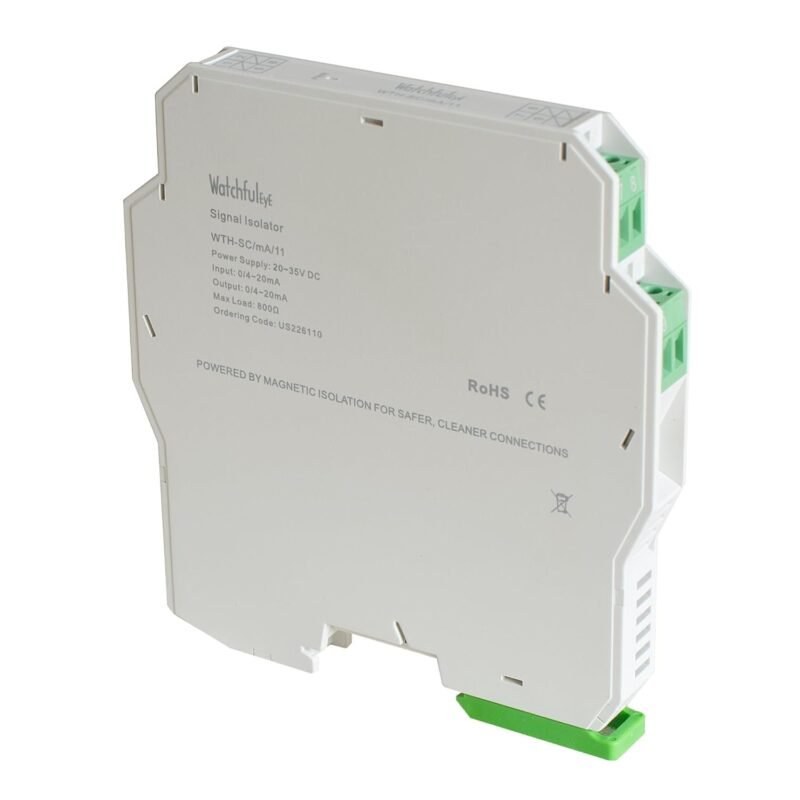
| 🛡️ WTH-SC Signal Isolator | Isolator, DIN rail | Magnetic isolation, 0.1% | Ground-Loop Fix | Buy Here → |
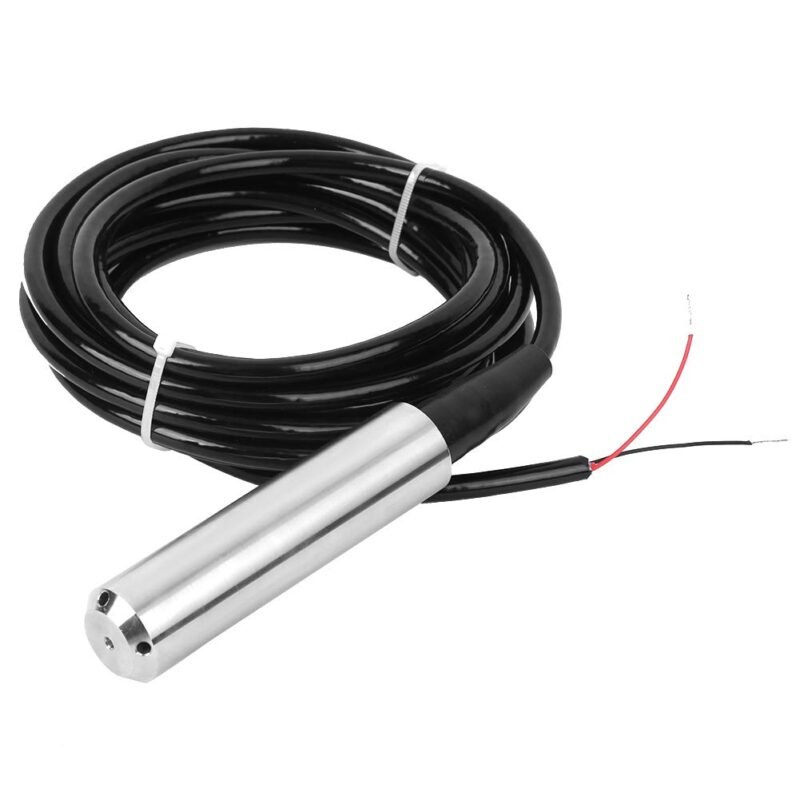
| 💧 TL-136 Submersible Level Sensor | Level transmitter | 4-20 mA / 0-10 V | Tank & Well Level | Buy Here → |
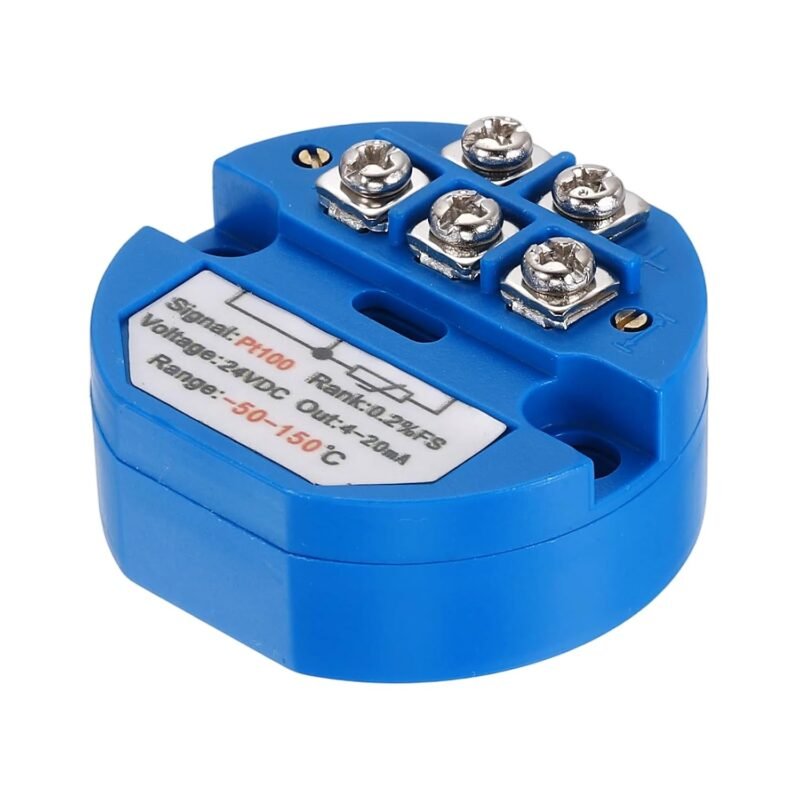
| 🌡️ uxcell Temperature Transmitter | Temp transmitter | 24 VDC, 4-20 mA | Temperature Loops | Buy Here → |
Specs from each Amazon listing. Tap Buy Here to see the live price.
🔍 What You Need for 4-20mA Projects
🎛️
A Signal Source for Testing
A 4-20 mA generator simulates a sensor so you can test PLC inputs, converter modules and firmware scaling on the bench without real transmitters.
🔁
Conversion for Microcontrollers
An I-to-V module turns the loop current into 0-3.3 V or 0-5 V for an ADC. Going the other way, a V-to-I module lets an Arduino or ESP32 drive a PLC’s 4-20 mA input.
🛡️
Isolation
When two systems share a loop with different grounds, readings drift or devices get damaged. A signal isolator breaks the ground path while passing the 4-20 mA value.
📏
Accuracy and Range
Budget modules are fine for hobby monitoring. For calibration or commissioning, a meter like the Fluke 789 gives traceable accuracy. Match sensor range to your process.
🏆 Detailed Reviews: All 11 Picks
🥇 BEST OVERALL
DROK 4-20mA Signal Generator (2-Pack)
⭐ 4.5/5 · Current and Voltage Simulator
Buy on Amazon →

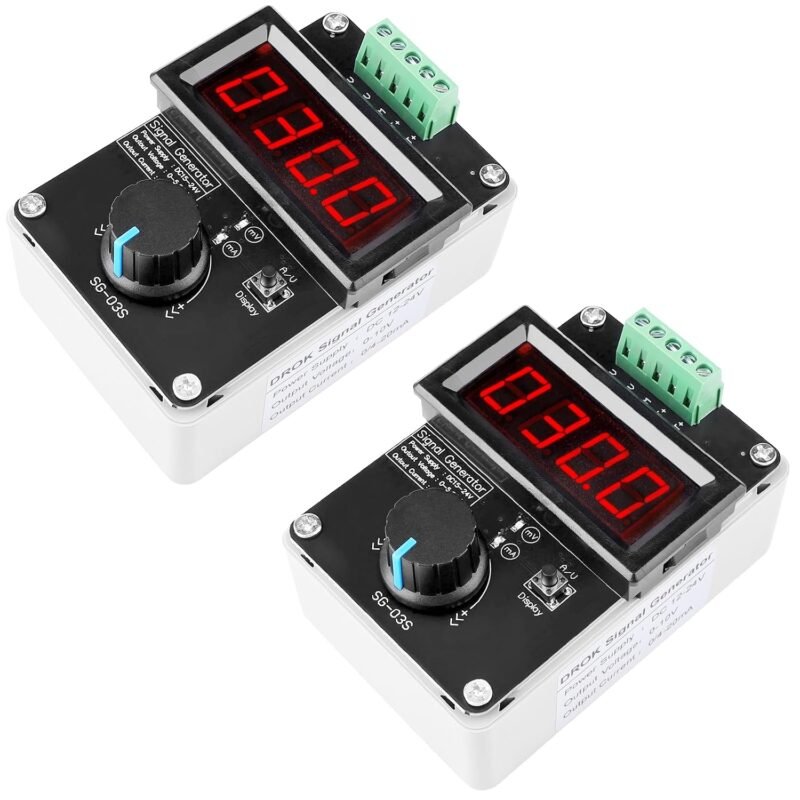
The most popular 4-20 mA tool on Amazon (about 4.3 stars from 530+ ratings), and you get two. Each DROK unit outputs an adjustable 0/4-20 mA current or 0-10 V voltage shown on a bright LED display, so you can simulate a transmitter to test PLC analog inputs, VFDs, converter modules and your Arduino or ESP32 scaling code. Having two lets you test two channels at once or keep one in the toolbox.
✅ Pros- Current and voltage
- Two units
- Huge review base
- Low cost
❌ Cons- Needs external power
- Not a calibrated instrument
🎯 Verdict: The bench essential for analog work.
👉 Check Price on Amazon →
🛠️ BEST FOR ARDUINO AND ESP32
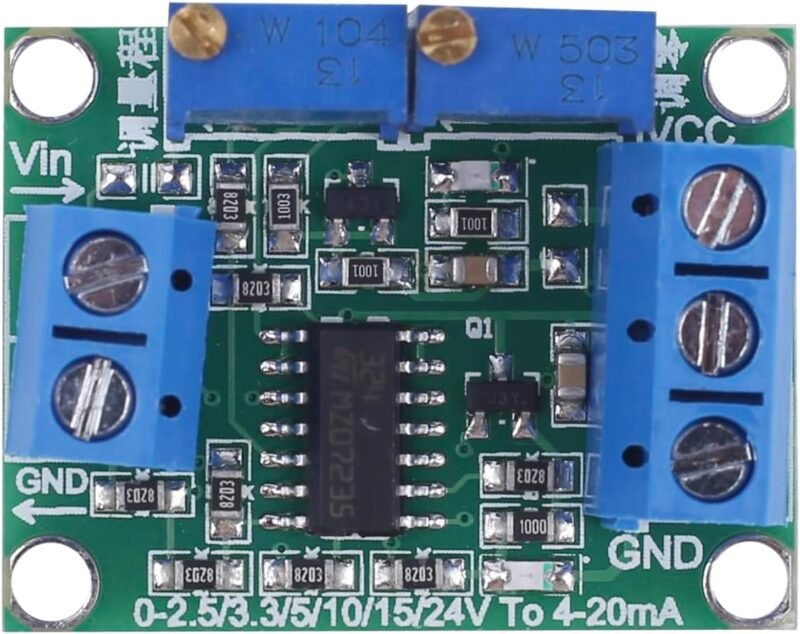
Ximimark 4-20mA to Voltage Converter (2-Pack)
⭐ 4.3/5 · Current Loop to ADC
Buy on Amazon →

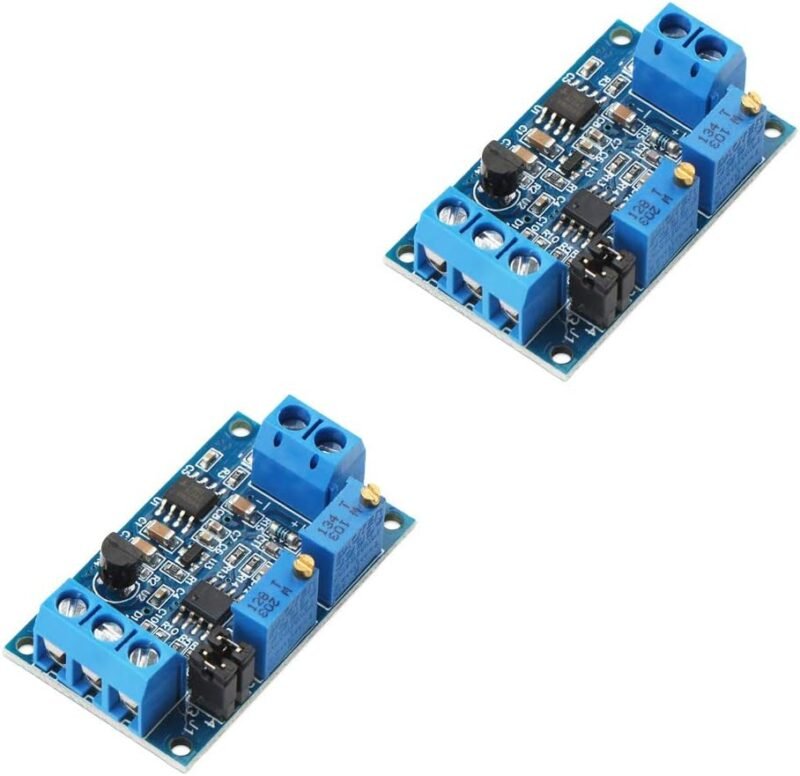
This small module converts a 0/4-20 mA loop into 0-3.3 V, 0-5 V or 0-10 V per the listing, so an ESP32 (3.3 V) or Arduino (5 V) ADC can read industrial pressure, level and flow transmitters. Modules of this type typically have zero and span trim potentiometers for calibration. It averages about 4.2 stars from 77 ratings. Calibrate it with a signal generator for best accuracy.
✅ Pros- 3.3 V output for ESP32
- Selectable ranges
- Cheap 2-pack
❌ Cons- Not isolated
- Needs calibration
🎯 Verdict: The easiest way to read 4-20 mA sensors.
👉 Check Price on Amazon →
🎛️ BIPOLAR VOLTAGE · ⭐ 4.4/53. UCTRONICS ±10V / 0-4-20mA Signal Generator
USB or external power · 0.01 V resolution · 281 ratings
Buy Here →

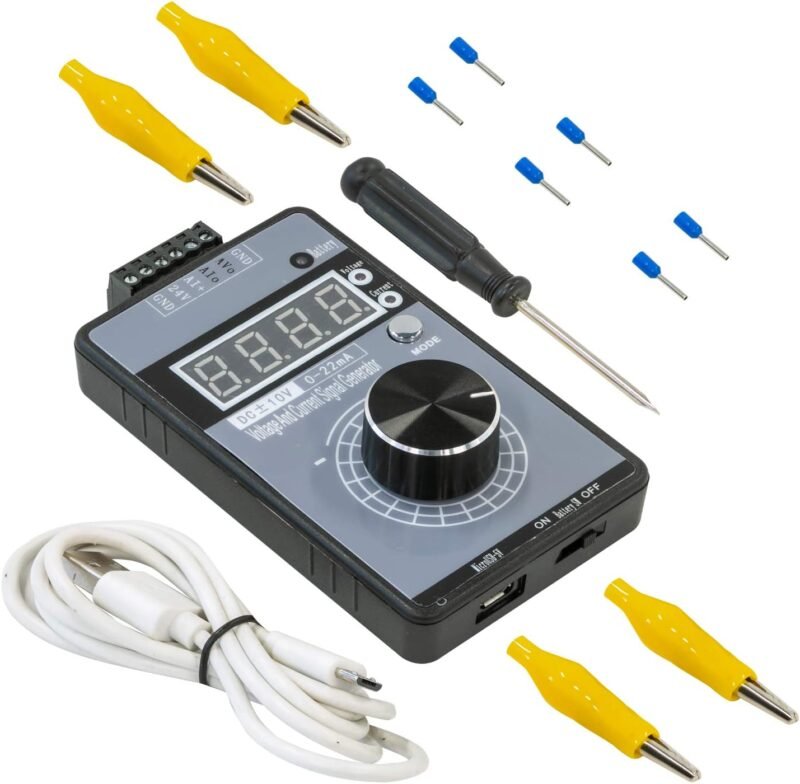
Unusually, this generator can output negative voltages (±10 V) as well as 0/4-20 mA, adjusted with an encoder knob in 0.01 V steps, and runs from micro-USB 5 V or an external supply per the listing. Bipolar output is useful for servo drives and some motion-control inputs. It averages about 4.4 stars from 281 ratings.
✅ Pros: ±10 V; USB powered.
❌ Cons: Bare board, no case.
🎯 Verdict: For bipolar analog inputs.
🔢 TOP-RATED BUDGET · ⭐ 4.6/54. Riiai 4-Digit 0-10V / 0-4-20mA Generator
4-digit display · 107 ratings
Buy Here →
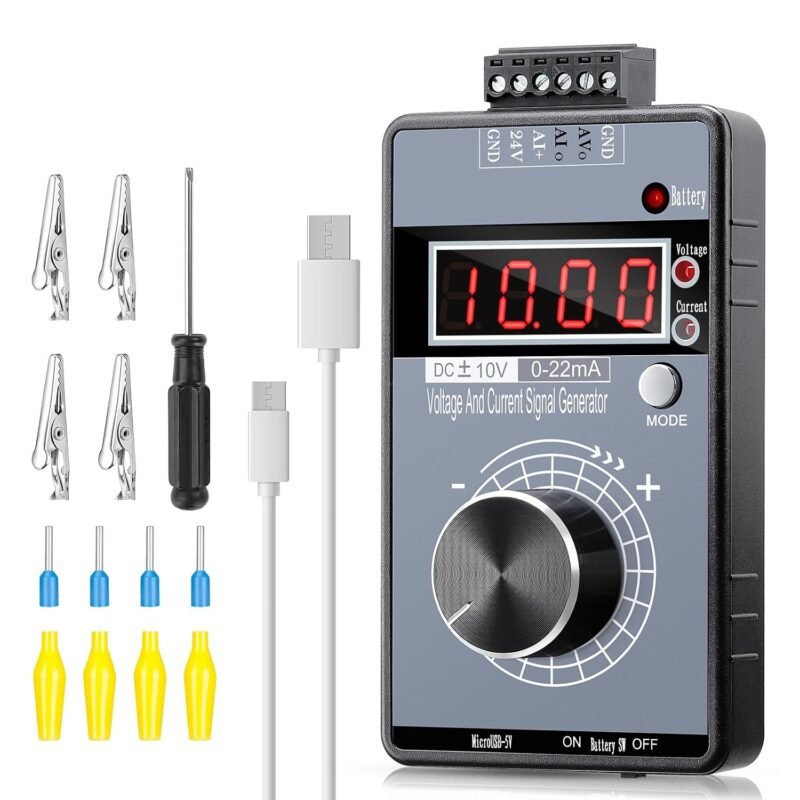
A compact current and voltage signal generator with a 4-digit display for finer readout than basic modules. It’s the highest-rated generator here, about 4.6 stars from 107 ratings.
✅ Pros: Best rated; clear display.
❌ Cons: Single unit.
🎯 Verdict: A precise budget simulator.
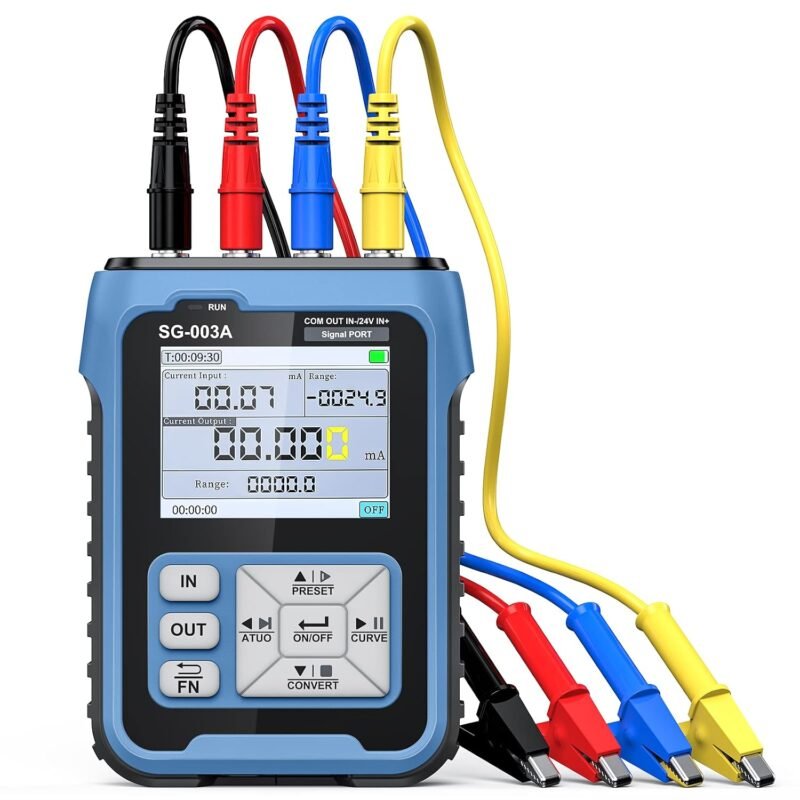
🔋 PORTABLE FIELD USE · ⭐ 4.4/55. Riiai SG003A Handheld Signal Generator
4-20 mA / 0-24 V · real-time curve · 3000 mAh battery · 91 ratings
Buy Here →
A handheld generator with a 3000 mAh rechargeable battery, 4-20 mA and 0-24 V outputs, multiple signal types and a real-time curve display per the listing. It’s the one to carry to a panel for commissioning without hunting for a power supply. It averages about 4.4 stars from 91 ratings.
✅ Pros: Battery; curve display.
❌ Cons: Not a calibrator.
🎯 Verdict: The field tech’s budget tool.
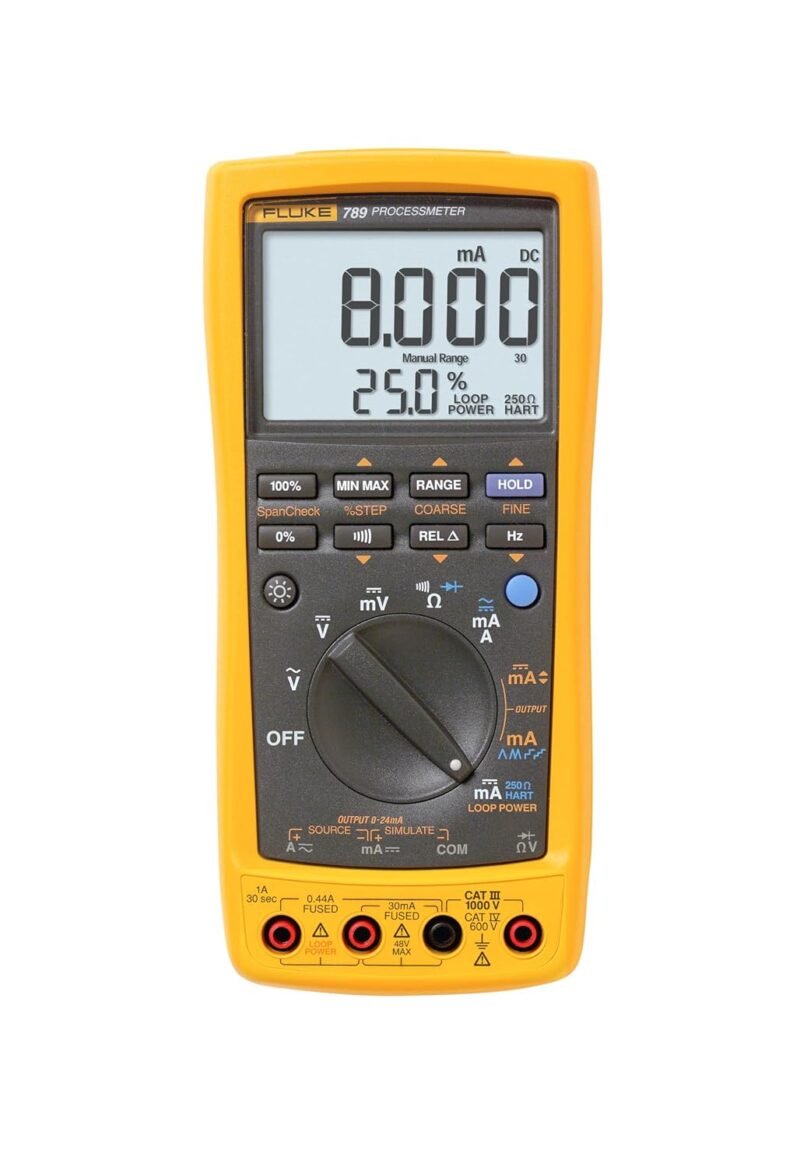
🏆 PROFESSIONAL · ⭐ 4.6/56. Fluke 789 ProcessMeter
DMM + measure, source, simulate 4-20 mA · 105 ratings
Buy Here →

The professional choice: a full digital multimeter that also measures, sources and simulates 4-20 mA signals, with a built-in loop supply, per the listing. Instrument technicians use it to commission and troubleshoot transmitters and PLC loops. It averages about 4.6 stars from 105 ratings. It’s a serious investment, but one tool replaces several.
✅ Pros: Fluke accuracy; all-in-one.
❌ Cons: Expensive.
🎯 Verdict: The instrument tech’s standard.
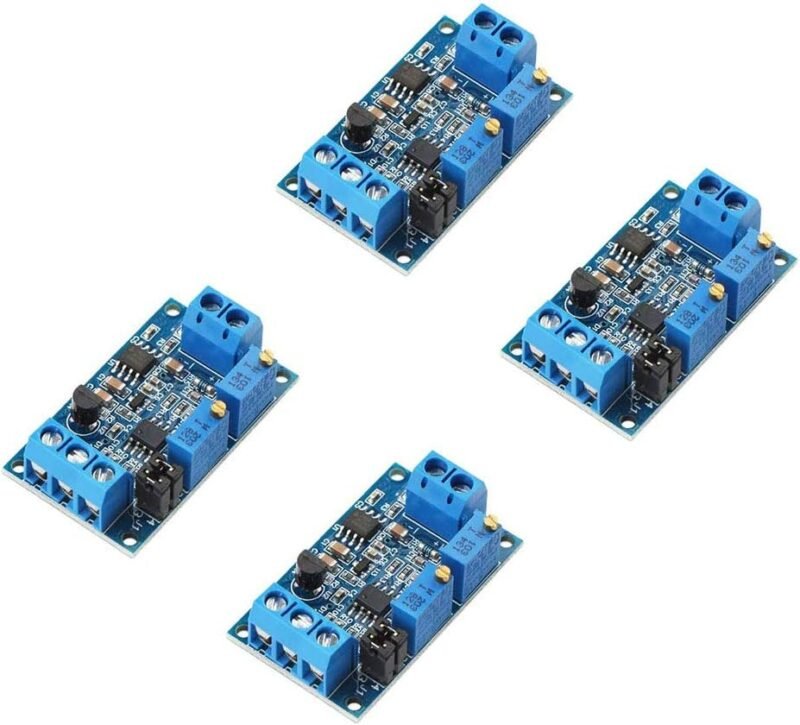
📦 MULTI-SENSOR BUILDS · ⭐ 4.1/57. Acxico 4-20mA to Voltage Converter (4-Pack)
To 0-3.3 / 5 / 10 V · 35 ratings
Buy Here →

The same type of current-to-voltage converter in a 4-pack, handy when you’re reading several transmitters (tank level, pressure and flow) on one ESP32. It averages about 4.1 stars from 35 ratings.
✅ Pros: Four modules.
❌ Cons: Non-isolated.
🎯 Verdict: Stock up for multi-channel builds.
↔️ MCU OUTPUT TO PLC · ⭐ 4.3/58. 0-5V to 4-20mA Voltage-to-Current Module
Non-isolated · DC 7-30 V · 30 ratings
Buy Here →

The reverse direction: it turns a 0-5 V signal (for example a DAC or filtered PWM from an Arduino) into a 4-20 mA output, so your microcontroller can feed a PLC analog input, a panel meter or a VFD. It’s non-isolated and powered from 7-30 V DC per the listing. It averages about 4.3 stars from 30 ratings.
✅ Pros: MCU-to-industrial bridge.
❌ Cons: Not isolated.
🎯 Verdict: Let your ESP32 talk 4-20 mA.
🛡️ GROUND-LOOP FIX · ⭐ 5.0/59. WTH-SC 4-20mA Signal Isolator
Magnetic isolation · 0.1% · DIN rail · 24 VDC · 12 ratings
Buy Here →
A one-in, one-out DIN-rail signal isolator that receives a 4-20 mA or 0-20 mA signal and reproduces it on an isolated output with 0.1% accuracy, per the listing. Use it when sharing a transmitter between two systems or to cure drifting readings caused by ground loops. Few reviews yet (12 ratings, 5.0 stars).
✅ Pros: Isolation; DIN rail.
❌ Cons: Few reviews.
🎯 Verdict: The fix for noisy shared loops.
💧 TANK & WELL LEVEL · ⭐ 4.5/510. TL-136 Submersible Level Sensor
4-20 mA / 0-10 V variants · 37 ratings
Buy Here →
A submersible hydrostatic level transmitter that sits at the bottom of a tank or well and outputs 4-20 mA (or 0-10 V, depending on variant) proportional to the water depth above it. Paired with a converter module and an ESP32, it makes a reliable tank-level monitor. It averages about 4.5 stars from 37 ratings. Choose the range that matches your tank depth.
✅ Pros: Simple; accurate level.
❌ Cons: Pick range carefully.
🎯 Verdict: The classic tank-level sensor.
🌡️ TEMPERATURE LOOPS · ⭐ 4.2/511. uxcell Temperature Sensor Transmitter
24 VDC · 4-20 mA output · 30 ratings
Buy Here →
A head-mount temperature transmitter that converts a temperature sensor’s reading into a 4-20 mA signal on a 24 V loop. The listing variant covers 50-150 °C, so check that the range fits your process. It averages about 4.2 stars from 30 ratings.
✅ Pros: Standard loop output.
❌ Cons: Fixed range per variant.
🎯 Verdict: Temperature onto a current loop.
🛒 Which Tool for Which Job?
🧪
Test a PLC analog input
DROK 4-20mA generator.
🛠️
Read a transmitter with ESP32
Ximimark I-to-V converter set to 0-3.3 V.
↔️
Send a value to a PLC
0-5V to 4-20mA module.
💧
Monitor a water tank
TL-136 level sensor + converter.
🛡️
Fix a drifting reading
WTH-SC signal isolator.
🏆
Commissioning professionally
Fluke 789 ProcessMeter.
⚙️ Reading 4-20mA with a Shunt Resistor
| Shunt Resistor | Voltage at 4 mA | Voltage at 20 mA | Suits |
|---|
| 250 Ω | 1.0 V | 5.0 V | 5 V Arduino ADC ⭐ |
| 165 Ω | 0.66 V | 3.3 V | 3.3 V ESP32 / Pico ADC ⭐ |
| 150 Ω | 0.6 V | 3.0 V | 3.3 V ADC with headroom |
| 500 Ω | 2.0 V | 10.0 V | 0-10 V inputs (PLCs) |
V = I × R. Use 0.1% precision resistors, add input protection, and make sure the loop supply can drive the extra burden voltage. The ESP32 ADC is non-linear near its limits, so a converter module or external ADC gives cleaner results.
❓ Frequently Asked Questions
Why do industrial sensors use 4-20 mA instead of voltage?
Current stays the same along the whole loop regardless of cable resistance, so long runs don’t introduce error, and it’s less sensitive to electrical noise. The 4 mA “live zero” lets you distinguish a zero reading (4 mA) from a broken wire (0 mA).
How do I power a 2-wire 4-20 mA transmitter?
Connect a 12-24 V DC supply in series with the transmitter and your measuring device (shunt resistor, converter or PLC input). The transmitter regulates the loop current to represent its reading.
How do I convert the reading to engineering units?
Value = (I − 4) / 16 × (Max − Min) + Min. For a 0-10 bar sensor at 12 mA: (12 − 4) / 16 × 10 = 5 bar. Readings below about 3.8 mA usually indicate a fault.
Can I read many 4-20 mA sensors over Modbus?
Yes. A 4-20 mA analog input module with RS485 Modbus reads several sensors and reports them to a PLC, gateway or ESP32. See our Modbus relay and I/O modules guide.
Which PLC should I use with 4-20 mA sensors?
Most PLCs accept 4-20 mA on analog input modules. See our best PLCs for beginners guide for options.
🏁 Final Verdict: Best 4-20mA Tools and Modules
The right tool for every current-loop job:
🥇 Best Overall: DROK 4-20mA Generator (2-Pack)
Buy Here →🛠️ Best for Arduino/ESP32: Ximimark I-to-V Converter
Buy Here →🏆 Best Professional: Fluke 789 ProcessMeter
Buy Here →↔️ Best MCU-to-PLC Bridge: 0-5V to 4-20mA Module
Buy Here →Every bench that touches industrial sensors should have a DROK 4-20mA generator for testing, and a Ximimark current-to-voltage module is the simplest way to read transmitters with an Arduino or ESP32. Use the 0-5V to 4-20mA module to send values the other way, a signal isolator to tame ground loops, and step up to the Fluke 789 for professional commissioning. Continue our industrial IoT series with PLCs for beginners, Modbus relay and I/O modules and Modbus gateways.
💬 What 4-20 mA sensors are you working with? Share your project in the comments below.
All Amazon links above use our affiliate tag (microlab05-20). Purchasing through them supports microcontrollerslab.com at no extra cost to you. Prices and availability change frequently, so always confirm the current price on Amazon before buying.