⚠️ Affiliate Disclosure: This post contains Amazon affiliate links. If you buy through them, we may earn a small commission at no extra cost to you. We only recommend modules we have researched and cross-checked against real datasheets and listings. Prices change often, so we don’t list them here — always confirm the current price on Amazon before buying.
Ultimate Buying Guide 2026
⚙️ Best DC Motor Driver Modules for Embedded & Robotics Projects
7 DC motor drivers ranked for makers, students and pro robot builders — from a 0.8 A pocket H-bridge to a rugged 10 A NMOS controller and a 43 A high-power beast — with real specs, honest pros & cons, and direct Amazon links.
✅ 7 Drivers Reviewed
✅ Verified Amazon ASINs
✅ Updated July 2026
✅ Honest Pros & Cons
A DC motor driver is the muscle between your microcontroller and your motors. An Arduino, ESP32 or Raspberry Pi Pico pin can only source a few milliamps — nowhere near enough to turn a gear motor, a robot wheel or a pump. A driver module takes your logic-level PWM and direction signals and switches the real motor current for you, usually through an H-bridge so you get both speed and reversible direction, while keeping the high-current motor supply safely isolated from your delicate MCU.
The catch is matching the driver to the motor. The right board depends on your motor’s stall current and voltage, how many motors you’re driving, and how much voltage drop and heat you can tolerate. A cheap L298N is fine for a first robot car but wastes almost 2 V as heat; a modern MOSFET driver like the TB6612FNG or DRV8833 runs cooler and quieter; and heavy 12–24 V gear motors need a proper high-current board like the Cytron MDD10A or a 43 A BTS7960. This guide ranks 7 DC motor driver modules across every budget and power level on what actually matters: current per channel, voltage range, number of channels, efficiency and control features.
💡 Reality check before you buy: Datasheet current ratings are peak, not continuous. An “L298N 2 A” or “DRV8833 1.2 A” board only holds that current with adequate cooling — plan for roughly half the headline number for sustained running, and always size for your motor’s stall current, not its running current. Bipolar chips like the L298N also drop 1.5–2 V across the bridge (your 12 V motor sees ~10 V and the rest becomes heat), while MOSFET drivers waste far less. Most modules ship with no heatsink, no wires and no motors — budget for those separately.
⚙️ Quick Comparison — All 7 DC Motor Driver Modules
| Driver Module | Chip / Type | Channels | Current / ch | Motor Voltage | Best For | Buy |
|---|
| 🥇 SparkFun TB6612FNG | TB6612FNG · MOSFET | 2 | 1.2 A (3.2 A peak) | 2.5–13.5 V | Best Overall | Buy → |
| 🏆 Cytron MDD10A | Dual NMOS H-bridge | 2 | 10 A (30 A peak) | 5–30 V | Best High-Power | Buy → |
| 🔩 L298N (Qunqi) | L298N · Bipolar | 2 | 2 A (peak) | ~5–35 V | Best Classic / Beginner | Buy → |
| 🪫 Adafruit DRV8833 | DRV8833 · MOSFET | 2 | 1.2 A (2 A peak) | 2.7–10.8 V | Best Low-Voltage | Buy → |
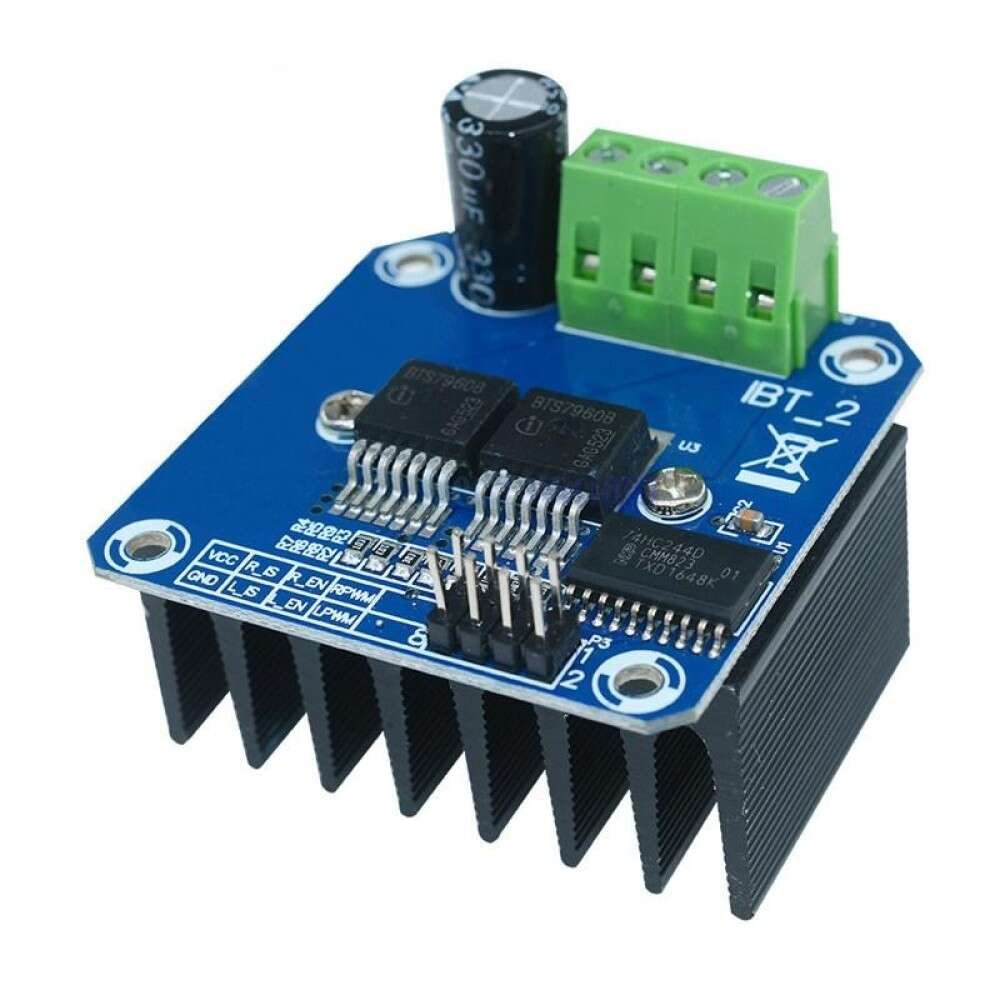
| ⚡ BTS7960 43A (IBT-2) | Dual BTS7960 · MOSFET | 1 (dual half-bridge) | Up to 43 A | 6–27 V | Best Extreme Power | Buy → |
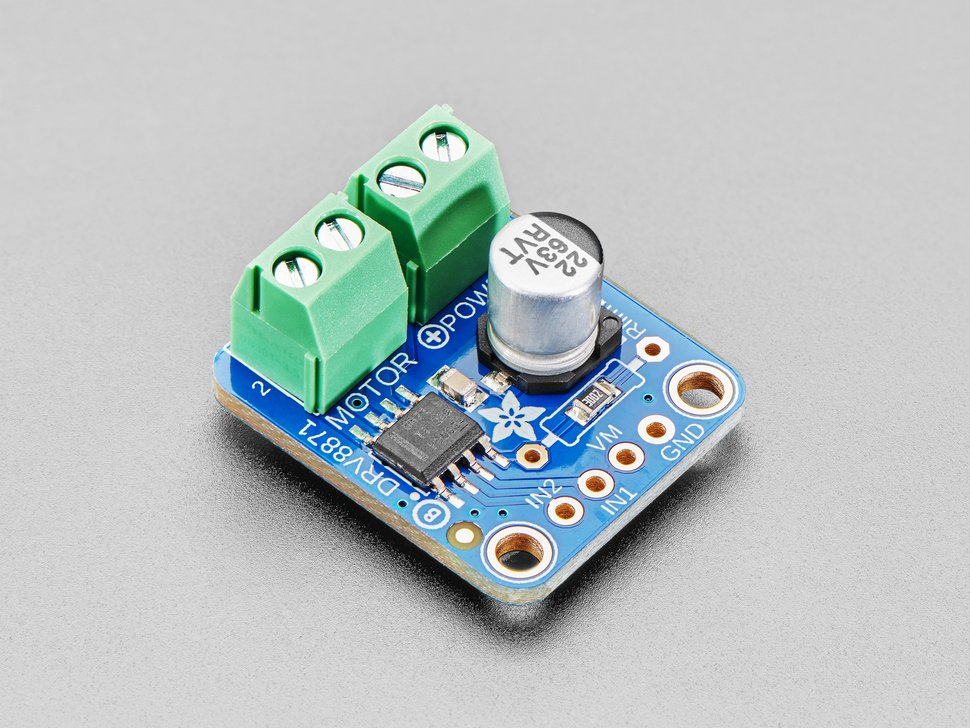
| 🔌 Adafruit DRV8871 | DRV8871 · MOSFET | 1 | 3.6 A (peak) | 6.5–45 V | Best Single High-Current | Buy → |
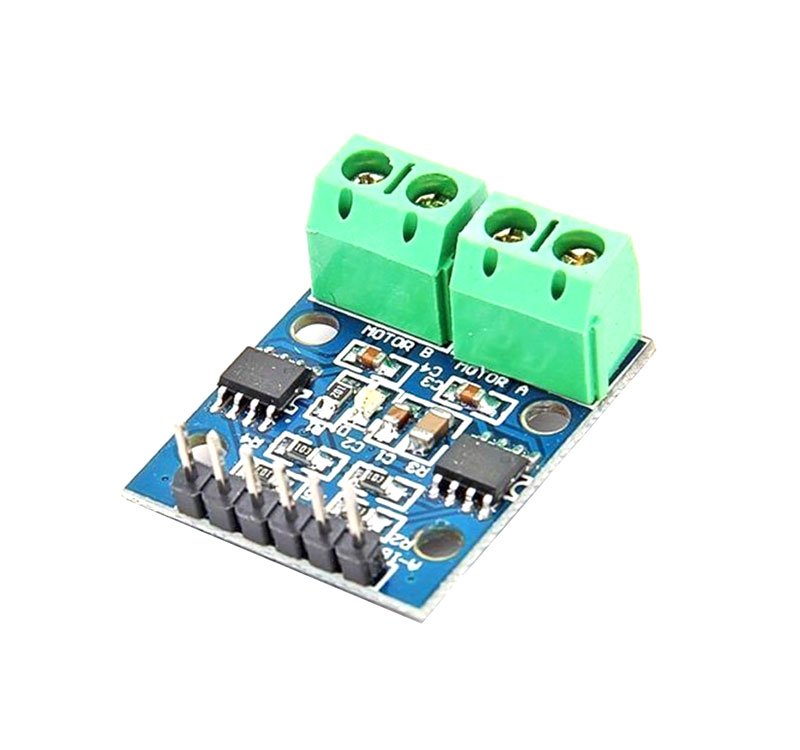
| 💲 HiLetgo L9110S | Dual L9110S · H-bridge | 2 | 0.8 A | 2.5–12 V | Best Ultra-Budget | Buy → |
Specs are typical module ratings from manufacturer datasheets. Current figures are peak unless noted — plan for lower continuous current with cooling. Confirm live price and variant on Amazon before buying.
🔍 What to Look for in a DC Motor Driver
🔋
Current Rating (Stall!)
Match the driver’s continuous current to your motor’s stall current, not its running current. A motor pulls its highest current at startup and when blocked — undersize the driver and it overheats or shuts down.
⚡
Voltage Range
Check the motor supply window. Low-voltage 3–6 V toy motors want a DRV8833 or TB6612; 12–24 V gear motors need the L298N, Cytron or BTS7960. Logic voltage should match your 3.3 V or 5 V MCU.
🔥
Efficiency & Heat
Old bipolar chips (L298N) drop ~2 V and run hot. Modern MOSFET drivers (TB6612, DRV8833, DRV8871, Cytron, BTS7960) waste far less, run cooler and give your motors more usable voltage.
🔀
Channels
A two-wheeled robot needs two channels; a single big motor needs one high-current channel. Dual H-bridges also drive one bipolar stepper. Count your motors before you buy.
🛡️
Protection & Control
Thermal shutdown, current limiting and undervoltage lockout save your board when a motor stalls. Fast PWM support (up to 100 kHz on the TB6612) means silent, smooth speed control.
🏆 Detailed Reviews — All 7 DC Motor Driver Modules
🥇 BEST OVERALL
SparkFun TB6612FNG
⭐ 4.8/5 · The modern L298N replacement
Buy on Amazon →

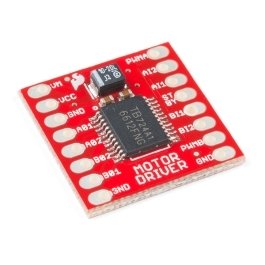
The TB6612FNG is the driver we hand to anyone still using an L298N. Toshiba’s MOSFET H-bridge drops far less voltage than a bipolar chip, so it runs cool, wastes less battery and gives 3–13.5 V motors more real power. You get two channels at 1.2 A each (3.2 A peak), fast PWM to 100 kHz, a standby pin for power saving, plus built-in thermal shutdown and low-voltage detection. SparkFun’s version ships with pre-soldered headers so you can breadboard it instantly.
✅ Pros- Cool, efficient MOSFET H-bridge
- Dual channel + drives a stepper
- Fast 100 kHz PWM, standby mode
- Thermal + low-voltage protection
❌ Cons- 13.5 V motor ceiling
- Tiny board — no screw terminals
- 1.2 A limits it to small motors
🎯 Verdict: The best all-round hobby driver. If your motors are under ~1 A and 13 V, this is the efficient, reliable pick that beats the classic L298N in every way that matters.
👉 Check Price on Amazon → 🏆 BEST HIGH-POWER
Cytron MDD10A
⭐ 4.7/5 · Rugged 10 A dual driver
Buy on Amazon →

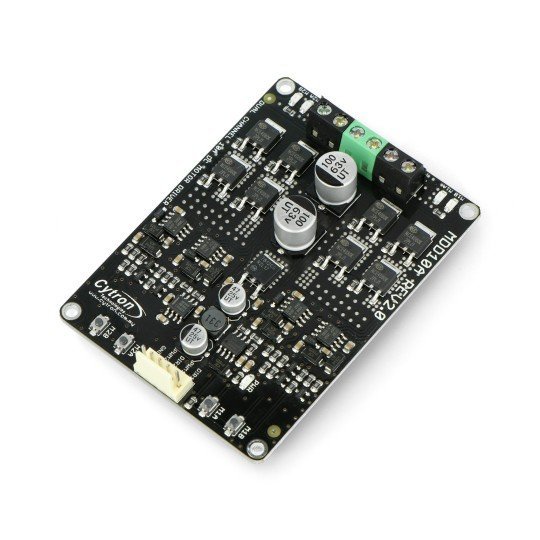
When your robot outgrows toy motors, the Cytron MDD10A is the step up. It’s a fully solid-state dual NMOS H-bridge that drives two brushed motors at 10 A continuous (30 A peak) each, from 5–30 V, with such low on-resistance that no heatsink is needed. You get 3.3 V/5 V logic compatibility for Arduino and Raspberry Pi, PWM to 20 kHz, regenerative braking, and on-board test buttons so you can spin a motor before writing a single line of code. It’s a quality, well-documented board from a real manufacturer.
✅ Pros- 10 A continuous, 30 A peak per channel
- Efficient NMOS — runs cool, no heatsink
- On-board test buttons + status LEDs
- Great docs, Arduino/Pi ready
❌ Cons- Priciest board here — overkill for tiny robots
- No reverse-polarity protection on Vmotor
- Sign-magnitude/lock-antiphase PWM, not RC
🎯 Verdict: The best driver for serious robots and 12–24 V gear motors. It costs more than a fistful of L298Ns, but the efficiency, current headroom and build quality are worth it for anything that has to actually move weight.
👉 Check Price on Amazon → 🔩 BEST CLASSIC / BEGINNER · ⭐ 4.4/5
3. L298N Dual H-Bridge (Qunqi)
Buy →2 channels · L298N bipolar · 2 A peak/ch · ~5–35 V motor · 5 V regulator · screw terminals

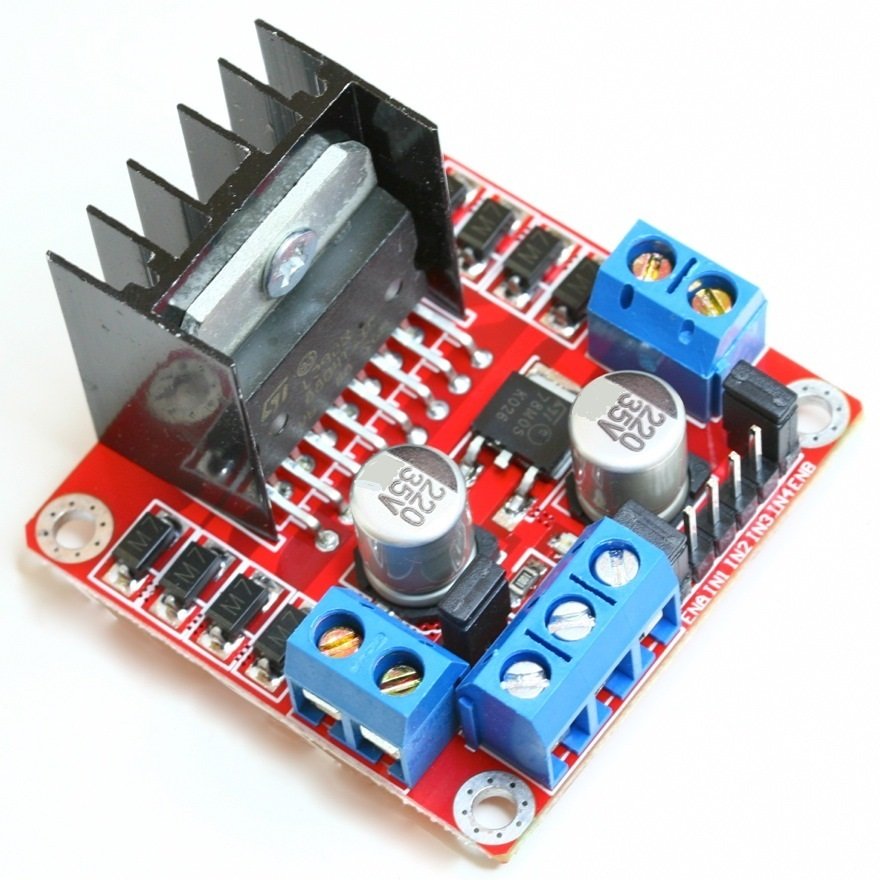
The L298N is the module almost everyone starts with, and there’s a reason it’s on every robot-car chassis kit: it’s cheap, rugged, has screw terminals and a built-in 5 V regulator to power your Arduino, and it drives 12 V gear motors happily. The trade-off is that it’s an old bipolar design — it drops nearly 2 V across the bridge (heat, not motion) and needs its heatsink under load. For a first robot at 6–12 V it’s still a perfectly good, forgiving choice.
✅ Pros: Dirt cheap & everywhere; screw terminals; on-board 5 V regulator; handles 12 V motors; hugely documented.
❌ Cons: ~2 V bridge drop, runs hot; inefficient bipolar chip; bulky; only ~2 A and no current limiting.
🎯 Verdict: The best cheap, beginner-friendly driver for 6–12 V robot cars. Learn on it, then graduate to a TB6612 or Cytron when efficiency starts to matter.
🪫 BEST LOW-VOLTAGE · ⭐ 4.5/5
4. Adafruit DRV8833
Buy →2 channels · DRV8833 MOSFET · 1.2 A/ch (2 A peak) · 2.7–10.8 V · current limiting · internal diodes

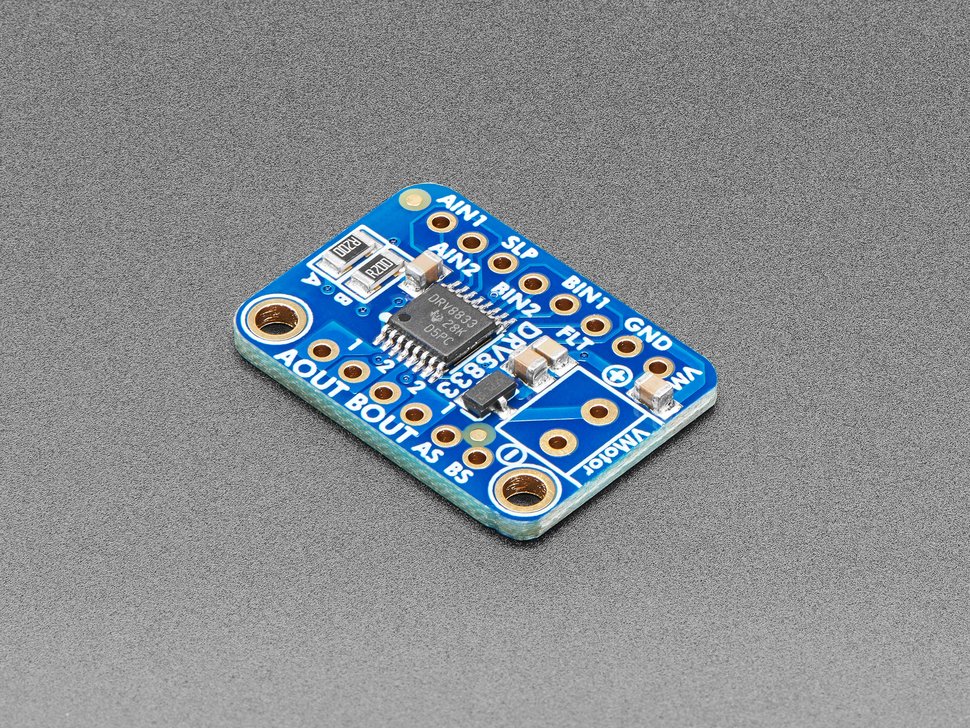
For battery robots and tiny 3–6 V toy motors, the DRV8833 is ideal. It runs from as little as 2.7 V, so a pair of AAs or a single LiPo is enough, and it’s efficient where an L298N would barely turn the motor. Two full H-bridges drive two DC motors or one stepper at 1.2 A each (2 A peak), with built-in current limiting and internal kick-back diodes so inductive spikes won’t fry your project. Perfect for Circuit Playground, micro:bit and pocket-sized bots.
✅ Pros: Runs from 2.7 V; efficient at low voltage; built-in current limiting + diodes; drives DC or stepper; tiny.
❌ Cons: 10.8 V motor ceiling; 1.2 A only; light soldering needed; not for 12 V+ gear motors.
🎯 Verdict: The best low-voltage driver. If your robot runs on 2–3 cells and small motors, the DRV8833 beats everything else on efficiency and features per dollar.
⚡ BEST EXTREME POWER · ⭐ 4.4/5
5. BTS7960 43A (IBT-2)
Buy →Single motor (dual half-bridge) · 2× BTS7960 · up to 43 A · 6–27 V · current sense · on-board heatsink

Need to move something big? The BTS7960 “IBT-2” pairs two Infineon half-bridge chips into one monster H-bridge rated up to 43 A at 6–27 V, with a chunky on-board heatsink, current-sense outputs and built-in over-temperature, over-current and under-voltage protection. It drives one motor with just two PWM lines from your MCU, making it the go-to for large scooters, e-bikes, winches, big robots and power-wheels conversions. Treat the 43 A as a peak — with real cooling it comfortably handles high-teens amps continuously.
✅ Pros: Huge current for the money; on-board heatsink + current sense; robust protection; simple 2-PWM control.
❌ Cons: Single motor only; large board; 43 A is peak, not continuous; needs a beefy power supply/battery.
🎯 Verdict: The best high-current driver for one big motor. Nothing else near this price moves this many amps — ideal for heavy 12–24 V builds.
🔌 BEST SINGLE HIGH-CURRENT · ⭐ 4.5/5
6. Adafruit DRV8871
Buy →Single motor · DRV8871 MOSFET · 3.6 A peak · 6.5–45 V · resistor-set current limit · screw terminals
The DRV8871 is the sweet spot between a hobby H-bridge and a heavy BTS7960. One efficient MOSFET bridge drives a single brushed motor at up to 3.6 A from a wide 6.5–45 V, and its standout trick is resistor-set current limiting — solder one resistor and the chip caps the current itself, protecting your motor and power supply with no inline sense resistor. Add undervoltage lockout, overcurrent and thermal shutdown and you have a tough little single-motor driver for actuators, linear rails and mid-size gear motors.
✅ Pros: Wide 6.5–45 V; simple resistor current limit; efficient; full protection; pre-soldered terminals.
❌ Cons: Single motor only; 3.6 A is peak; no built-in speed logic beyond PWM the two inputs.
🎯 Verdict: The best single-motor driver for wide-voltage, mid-current jobs. The one-resistor current limit makes it wonderfully safe and simple for actuators and one strong motor.
💲 BEST ULTRA-BUDGET · ⭐ 4.2/5
7. HiLetgo L9110S
Buy →2 channels · dual L9110S · 0.8 A/ch · 2.5–12 V · ~28×21 mm · sold in multi-packs

The L9110S is the tiny, dirt-cheap board you buy five at a time. Each thumb-sized module carries two L9110S H-bridge chips that drive two small DC motors (or one stepper) at up to 0.8 A each, from 2.5–12 V, working with both 3.3 V and 5 V logic. It has no frills — no current limiting, no regulator — but for classroom sets, line-follower bots, small fans and light 5 V motors it does the core job for pennies, and its size is perfect where an L298N simply won’t fit.
✅ Pros: Cheapest per board; very small; dual channel; 3.3 V/5 V logic; great for classrooms & small bots.
❌ Cons: Only 0.8 A; 12 V max; no protection or current limiting; screw-less pin headers only.
🎯 Verdict: The best ultra-budget driver for small, low-voltage motors. When you need many cheap boards or the smallest possible footprint, nothing beats it.
🛒 How to Choose the Right Motor Driver
🤖
Building your first robot car?
Grab the L298N — cheap, forgiving, screw terminals and a 5 V regulator for your Arduino.
🔋
Want efficiency & cool running?
The TB6612FNG is the modern MOSFET upgrade — same 2 channels, far less heat and voltage drop.
🪫
Tiny 3–6 V battery bot?
The DRV8833 runs from 2.7 V with current limiting — perfect for micro:bit and pocket robots.
🦾
Heavy 12–24 V gear motors?
The Cytron MDD10A gives two rugged 10 A channels with no heatsink needed.
⚡
One big, hungry motor?
The BTS7960 43A moves the most amps for the money; the DRV8871 is the tidy 3.6 A option.
🎓
Classroom set or smallest board?
The L9110S multi-pack is the cheapest way to give every student a working driver.
⚙️ Key Specs Compared — Side by Side
| Spec | TB6612FNG | Cytron MDD10A | L298N | DRV8833 | BTS7960 |
|---|
| Current / channel | 1.2 A | 10 A ⭐ | 2 A | 1.2 A | up to 43 A* |
| Motor voltage | 2.5–13.5 V | 5–30 V | ~5–35 V | 2.7–10.8 V | 6–27 V |
| Channels | 2 + stepper ⭐ | 2 | 2 | 2 | 1 |
| Technology | MOSFET ⭐ | NMOS ⭐ | Bipolar | MOSFET ⭐ | MOSFET ⭐ |
| Current limiting | No | No | No | Yes ⭐ | Current sense |
| Protection | Thermal + UVLO | Thermal/OC/UVLO ⭐ | None | Thermal + limit | Thermal/OC/OV/UV ⭐ |
| Best for | Small efficient bots | Heavy robots | First robot car | Low-voltage bots | One big motor |
*43 A is a peak rating with cooling — plan for far lower continuous current. Values are typical module/datasheet figures.
❓ Frequently Asked Questions
How do I know how much current my motor needs?
Size the driver to the motor’s stall current — the current it draws when the shaft is held still — not its free-running current, which is much lower. If the datasheet doesn’t list it, measure it: run the motor at its rated voltage through a multimeter in current mode and gently stop the shaft for a moment. Pick a driver whose continuous rating comfortably exceeds that figure, because a robot hits stall current every time it starts, climbs or bumps a wall.
Why does everyone say to replace the L298N?
The L298N uses an old bipolar transistor bridge that drops about 1.5–2 V. On a 6 V motor that’s a third of your voltage lost as heat, so the motor is weak and the chip gets hot. Modern MOSFET drivers like the TB6612FNG, DRV8833 and Cytron boards drop a fraction of a volt, run cool and give the motor almost the full battery voltage. The L298N is still fine for learning and 12 V motors where the drop matters less — but for efficiency, upgrade.
Can these drivers run stepper motors too?
The dual H-bridge boards — L298N, TB6612FNG, DRV8833 and L9110S — can each drive one bipolar stepper (two coils), which is handy for slow, low-cost motion. But they don’t microstep or set precise coil current like a dedicated stepper driver. For smooth, quiet, high-resolution stepping (3D printers, CNC), use a purpose-built A4988, DRV8825 or TMC2209 instead. The single-motor DRV8871 and BTS7960 are for brushed DC motors only.
Do I need flyback diodes or a separate motor supply?
Every board here has flyback/kick-back protection built into the driver chip, so you don’t need to add external diodes. You should power the motors from their own supply and only share a common ground with your microcontroller — motors dump electrical noise and voltage sags onto the rail that can crash an Arduino or ESP32. A bulk capacitor across the motor supply and keeping logic and motor grounds joined at one point will save you a lot of mysterious resets.
Which driver is best for an ESP32 or Raspberry Pi Pico?
All of these accept 3.3 V logic, so they work with the ESP32, Pico and STM32. For most 3.3 V bots the TB6612FNG or DRV8833 are ideal — efficient, small and happy with 3.3 V PWM. For bigger motors the Cytron MDD10A and BTS7960 also take 3.3 V control directly. Just remember the L298N’s on-board 5 V regulator output isn’t meant to power a 3.3 V board’s 3V3 pin — power your MCU properly and only share ground.
🏁 Final Verdict — Best Driver for Every Build
The right DC motor driver for every motor and budget:
🥇 Best Overall — SparkFun TB6612FNG: efficient MOSFET dual driver, the modern L298N upgrade
Buy →🏆 Best High-Power — Cytron MDD10A: rugged 10 A dual NMOS, no heatsink needed
Buy →🔩 Best for Beginners — L298N: cheap, forgiving, on-board 5 V regulator for robot cars
Buy →🪫 Best Low-Voltage — Adafruit DRV8833: runs from 2.7 V with current limiting
Buy →⚡ Best Extreme Power — BTS7960 43A: the most amps per dollar for one big motor
Buy →💲 Best Ultra-Budget — HiLetgo L9110S: tiny, cheap dual driver for small motors
Buy →No single driver is perfect for every project, but there’s an ideal match for each. For most makers the TB6612FNG is the one to reach for — efficient, dual-channel and a clear upgrade over the classic L298N. Beginners on a budget should start with the L298N or the pocket-sized L9110S; low-voltage battery bots want the DRV8833; and when you need to move real weight, step up to the Cytron MDD10A, DRV8871 or the 43 A BTS7960. Pair your driver with our Arduino, ESP32, STM32 and Raspberry Pi Pico tutorials and get your motors spinning today.
💬 Not sure which driver fits your motor? Tell us your motor voltage, current and how many motors you’re driving in the comments below, and we’ll point you to the right board.
All Amazon links above use our affiliate tag (microlab05-20). Buying through them supports microcontrollerslab.com at no extra cost to you. Specs are typical datasheet/module values and current ratings are peak unless stated — always confirm the live price, current variant and specs on Amazon before purchasing.
| Arduino Components | Amazon Links |
|---|
| Arduino Starter Kit | Buy Now |
| Arduino Development Kit | Buy Now |
| Arduino Smart Robot Car Kit V4 | Buy Now |
| Arduino Sensors Kit | Buy Now |