⚠️ Affiliate Disclosure: This post contains Amazon affiliate links. If you buy through our links, we may earn a small commission at no extra cost to you. Every listing below was checked live on Amazon before publishing. Prices change often, so we don’t list them here. Tap any Buy Here button to see the current price.
Ultimate Buying Guide
🖐️ Best Flex & Bend Sensors for Arduino, ESP32 & Robotics
8 flex sensors and force-sensitive resistors, from the SparkFun Flex 2.2″ to the FSR402, ranked for gesture gloves, robotic fingers, touch pads and wearables.
✅ 8 Sensors Reviewed
✅ ASINs Checked Live
✅ Real Datasheet Specs
✅ Honest Pros & Cons
A flex sensor (also called a bend sensor) is a thin strip whose resistance rises as it curves. Tape one along a finger and an Arduino, ESP32 or Raspberry Pi Pico can read how far that finger is bent, which is exactly how gesture gloves, sign-language translators, robotic hands and motion-capture rigs work. Its partner, the force-sensitive resistor (FSR) such as the FSR402, does the opposite job: its resistance falls as you press it, giving you a pressure-sensitive button, a grip sensor for a robot gripper or a footstep detector.
Both are cheap, both need only one resistor to read, and both are easy to buy badly. Clone flex strips vary a lot from part to part, many FSR listings quietly disappear from Amazon, and the right size depends entirely on what you are sensing. This guide ranks 8 flex and force sensors that are actually in stock, on the specs that matter for embedded and robotics work.
💡 Reality check before you buy: Flex sensors and FSRs are
relative sensors. Expect around ±25–30% part-to-part variation, a non-linear response and some drift with temperature and time. They are excellent for “how bent?” and “how hard, roughly?” but poor for absolute measurement. If you need real grams, use a
load cell with an HX711 instead. Plan to calibrate each sensor in firmware, and protect the solder tab of every flex strip, because that is where they fail.
🖐️ Quick Comparison: All 8 Flex & Bend Sensors
| Sensor | Type | Size | Range | Best For | Buy |
|---|
| 🥇 SparkFun Flex Sensor 2.2″ | Flex / Bend | 2.2″ strip | ~25 kΩ flat, rises with bend | Best Overall | Buy Here → |
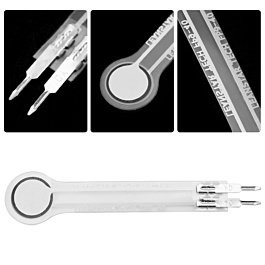
| 🏅 DIYables FSR402 | Force (FSR) | 0.5″ round | ~100 g–10 kg | Best FSR402 | Buy Here → |
| 📏 Reland Sun Flex Sensor 4.5″ | Flex / Bend | 4.5″ strip | ~25 kΩ flat, rises with bend | Best Long Flex | Buy Here → |
| 🔌 DAOKAI FSR402 + Voltage Module | FSR kit | 0.5″ round + board | ~100 g–10 kg | Best Plug-and-Play | Buy Here → |
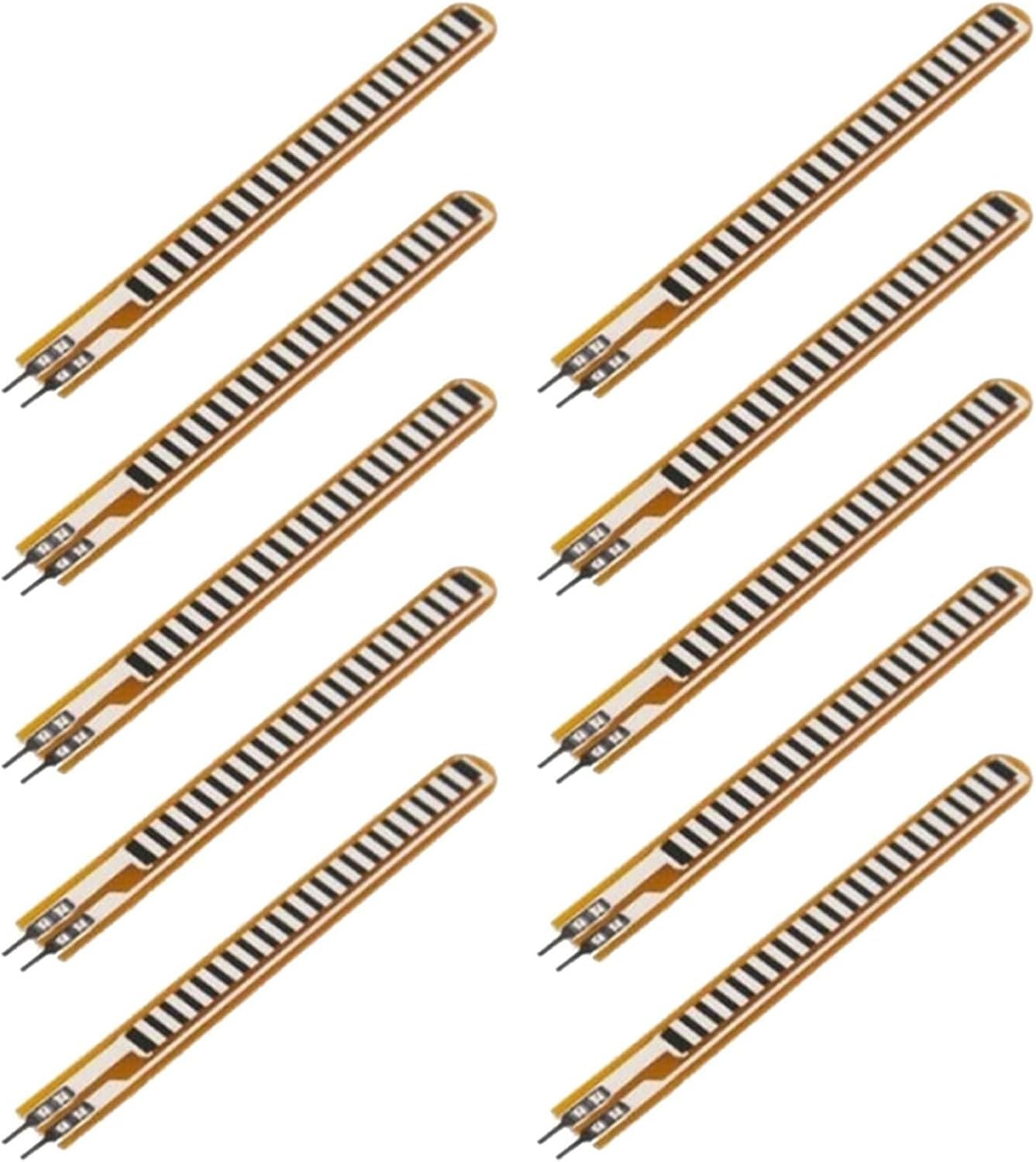
| 💸 Wuden 10× Flex Sensor 2.2″ | Flex / Bend | 2.2″ strip ×10 | ~25 kΩ flat, rises with bend | Best Bulk Pack | Buy Here → |
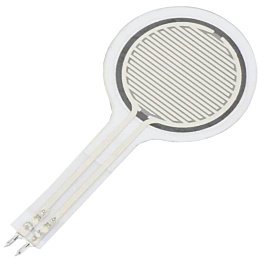
| 🧵 Walfront FSR402 Long Tail | Force (FSR) | 0.5″ round, long lead | 0–10 kg | Best Long-Lead FSR | Buy Here → |
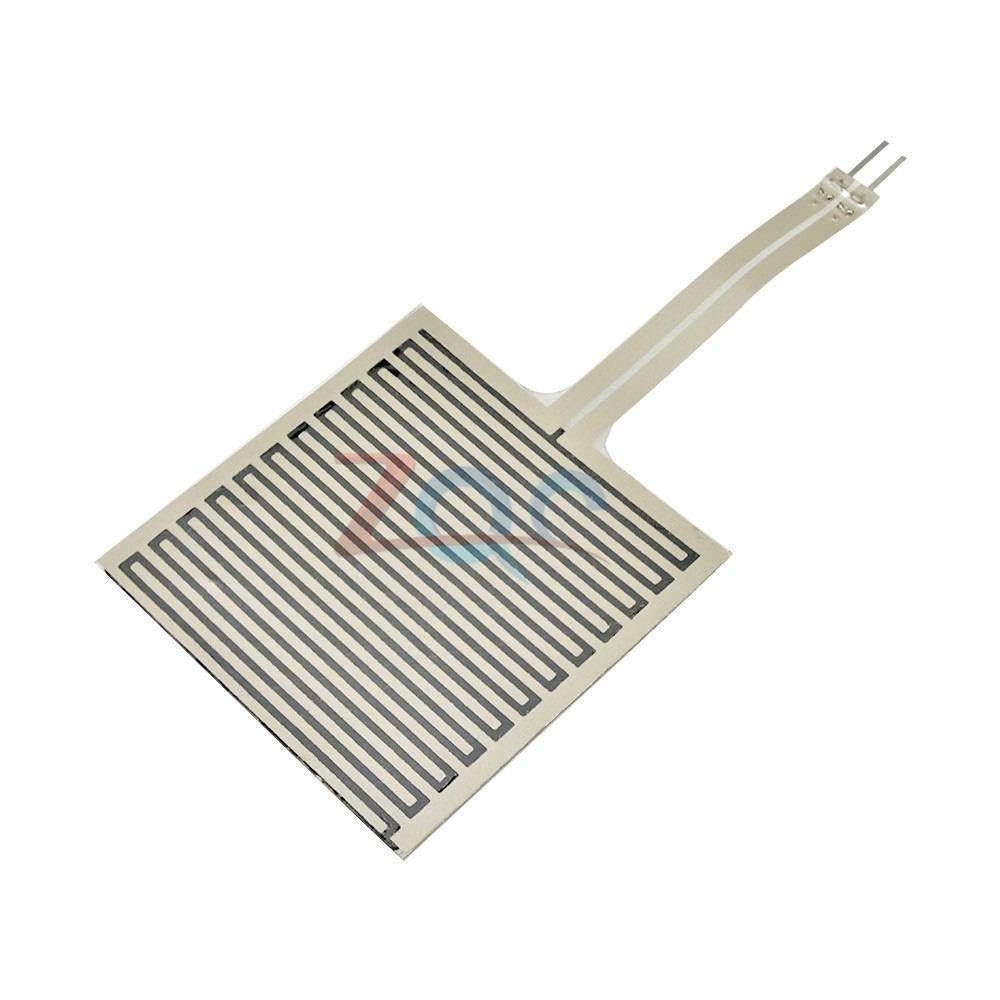
| 🟦 Generic FSR406 Square | Force (FSR) | ~1.5″ square | ~100 g–10 kg | Best Large Pad | Buy Here → |
| 🏋️ Walfront MD30-60 | Thin-film force | 30 mm round | 0–30 kg | Best High Range | Buy Here → |
Ranges are approximate and depend on the divider resistor you pair them with. Pack sizes vary by listing, so check the quantity before buying.
🔍 What to Look for in a Flex or Bend Sensor
📐
Bend or Press?
A flex sensor measures how far a strip curves, so it tracks finger and joint angles. An FSR measures how hard a spot is pressed. Gloves and robot hands often use both: flex strips along the fingers, FSRs on the fingertips.
📏
Length & Size
A 2.2″ flex strip covers one finger joint; a 4.5″ strip covers a whole finger, wrist or elbow. For FSRs, a 0.5″ round spot suits a fingertip button, a 1.5″ square catches presses that land anywhere on a pad.
🎯
Consistency
Branded Spectra Symbol strips (sold by SparkFun) are more consistent than unbranded clones. If you need five fingers to behave alike, either buy branded or buy a bulk pack and pick matched parts.
🔌
Interface
Bare sensors need one fixed resistor to form a voltage divider into an ADC pin. Module versions add the resistor (and sometimes an op-amp) on a small board, so you just wire VCC, GND and OUT.
🛡️
Durability
Flex strips fatigue at the pin end, not along the strip. FSRs dislike sharp point loads and heat (never solder directly to the film tail). Choose crimp or clincher connectors for both.
🏆 Detailed Reviews: All 8 Flex & Bend Sensors
🥇 BEST OVERALL FLEX SENSOR
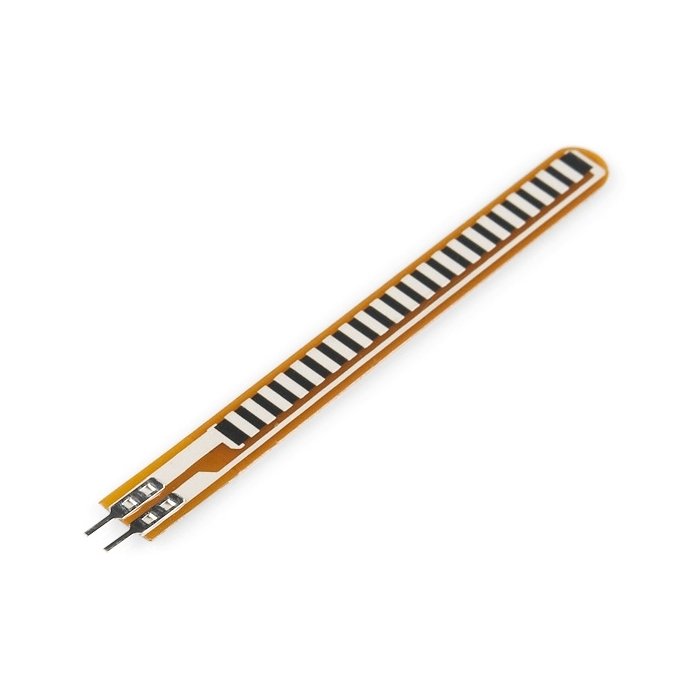
SparkFun Flex Sensor 2.2″
⭐ 4.7/5 · The reference bend sensor for gloves and fingers
45–125 kΩ
BENT (DATASHEET)

The SparkFun Flex Sensor 2.2″ is built on Spectra Symbol’s patented flex strip, the same technology made famous by the Nintendo Power Glove. Flat it sits around 25 kΩ, and bending it with the printed side on the inside of the curve pushes the resistance up into the 45–125 kΩ range quoted in the datasheet. The 2.2″ length matches a single finger, the 0.1″-pitch pins drop straight into a breadboard, and SparkFun’s hookup guide plus years of Arduino and ESP32 examples mean almost every glove tutorial you find was written around this exact part. Branded strips are noticeably more consistent than clones, which matters when five fingers must read alike.
✅ Pros- Genuine Spectra Symbol strip
- Better part-to-part consistency
- Breadboard-friendly pins
- Huge tutorial base
❌ Cons- Fragile at the pin end
- Reads bend in one direction
- Stock on Amazon comes and goes
🎯 Verdict: The flex sensor to buy when consistency matters. Ideal for gesture gloves, robotic fingers and wearables.
👉 Check Price on Amazon → 🏅 BEST FSR402 FORCE SENSOR
DIYables FSR402 Force Sensor
⭐ 4.6/5 · The classic 0.5″ FSR, with tutorials
Buy Here →

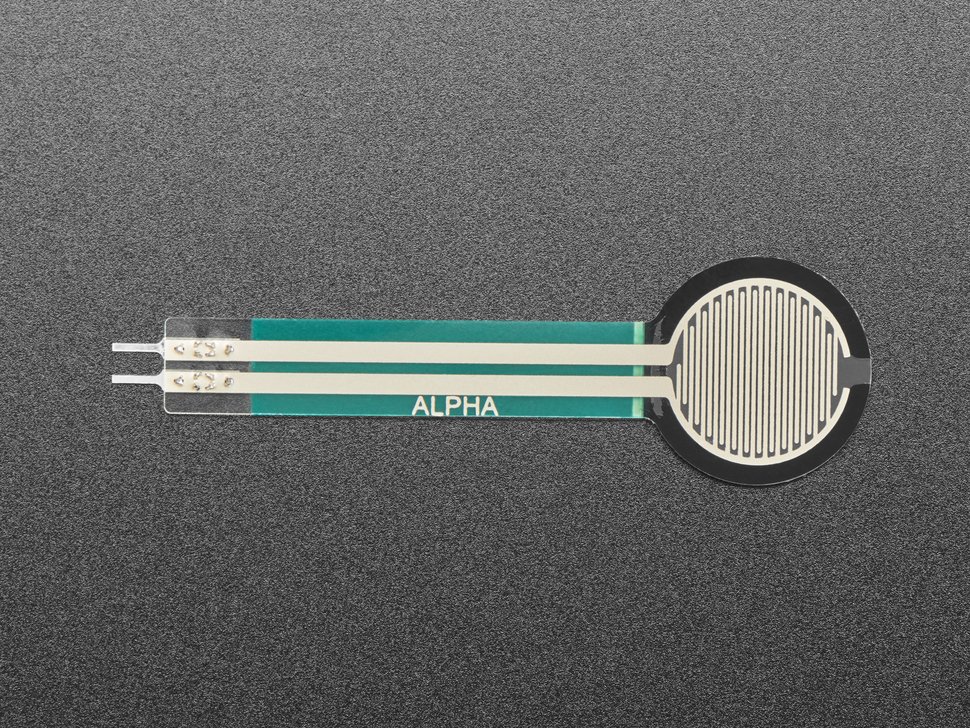
The FSR402 is the part most makers mean when they say “force sensor”: a 0.5″ round pad whose resistance falls from more than a megaohm untouched to a few hundred ohms under a firm press. This DIYables listing is the one we’d point beginners to because DIYables publishes step-by-step tutorials for Arduino, ESP32, ESP8266, Raspberry Pi and MicroPython for this exact sensor, it’s breadboard-compatible, and it has a peel-and-stick back for mounting under a button cap or a fingertip pad. It won’t give you calibrated grams, but for squeeze control, grip detection and pressure-sensitive buttons it’s the go-to part. Need more? DIYables also sells it as a 3-pack and 10-pack.
✅ Pros- Reads on one analog pin
- Maker tutorials for 5 platforms
- Thin, light, stick-on
- Multi-packs available
❌ Cons- Not a calibrated force gauge
- Saturates near 10 kg
- Tail must not be soldered hot
🎯 Verdict: The best FSR402 for most builds. Simple, documented and in stock.
👉 Check Price on Amazon → 📏 Reland Sun Flex Sensor 4.5″
⭐ 4.3/5 · 4.5″ strip · resistance rises with bend · one-way bend
Buy Here →
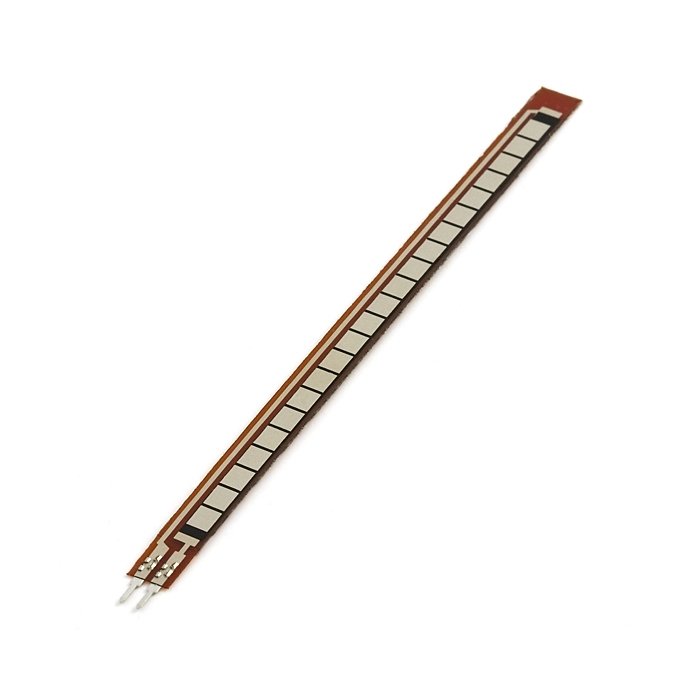
Best Long-Throw Flex. A 4.5″ strip spans a whole finger, a wrist or an elbow, so it captures larger motions with a smoother signal than a 2.2″ part. The SparkFun 4.5″ listing currently has no featured offer on Amazon, so this Reland Sun 4.5″ version is the in-stock alternative. It wires exactly the same way (divider resistor into an ADC pin), and the seller notes the same handling rule: the printed side goes on the inside of the bend and the pin end must never flex.
✅ Pros: Covers whole-finger and wrist motion; in stock; same easy wiring as 2.2″.
❌ Cons: Unbranded strip, so expect more variation; few reviews yet; too long for single joints.
🎯 Verdict: The flex sensor for big motions. Buy it when 2.2″ is too short.
🔌 DAOKAI FSR402 + Linear Voltage Module
⭐ 4.4/5 · FSR402 + conversion board + cable · 3.3–5 V · analog out
Buy Here →

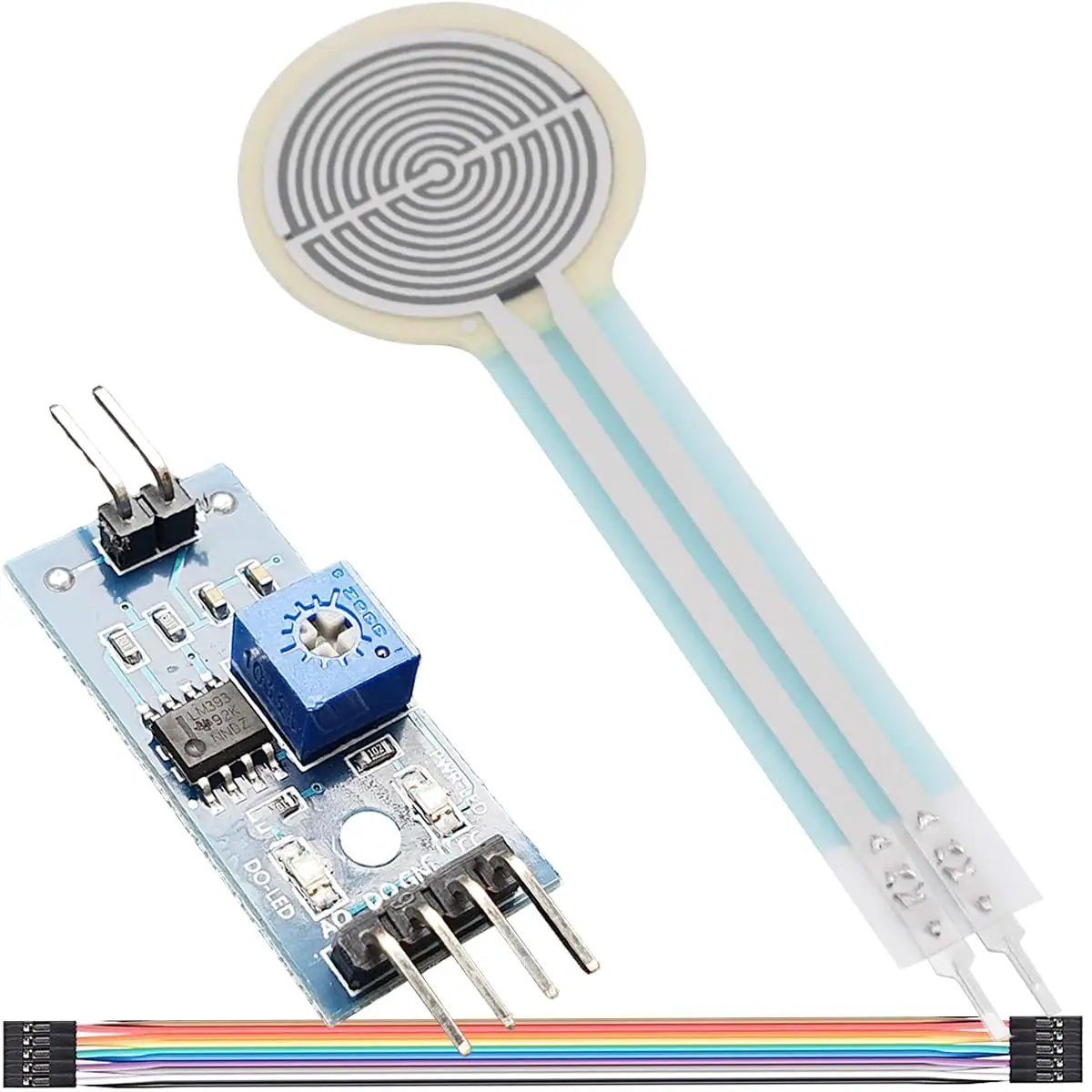
Best Plug-and-Play. This kit pairs an FSR402 with a small linear voltage conversion module and a connecting cable, so instead of building a divider you wire VCC, GND and the analog output straight to your board. The module works from 3.3 V or 5 V, which makes it a clean fit for ESP32 and Raspberry Pi Pico boards as well as classic Arduinos. The conversion stage also gives a more usable output swing than a bare divider, which helps beginners and classroom builds where nobody wants to tune resistor values.
✅ Pros: No divider to design; 3.3–5 V; cable included; tidier wiring.
❌ Cons: Still approximate force; extra board to mount; only a handful of reviews.
🎯 Verdict: The easiest FSR to get reading. Great for students and quick prototypes.
💸 Wuden 10× Flex Sensor 2.2″
⭐ 4.2/5 · 10-pack · 2.2″ strips · budget bend sensing
Buy Here →

Best Bulk Pack. A two-handed glove needs ten flex sensors, a robotic hand needs five, and a classroom needs dozens. This Wuden 10-pack of 2.2″ strips is the economical way there. Clone strips show more part-to-part spread than SparkFun’s, so measure each one flat and fully bent and store per-finger calibration in firmware. Having spares on hand is also the cheapest insurance against the pin-end failures every flex project eventually hits.
✅ Pros: Lowest cost per strip; enough for two gloves; spares for breakages.
❌ Cons: Wider variation; weaker pin ends than branded parts; per-sensor calibration needed.
🎯 Verdict: The value pick for gloves, robot hands and classrooms.
🧵 Walfront FSR402 Long Tail
⭐ 4.3/5 · 0.5″ round · 0–10 kg · extended lead
Buy Here →

Best Long-Lead FSR. The standard FSR402 tail is short, which is awkward when the sensing pad sits on a fingertip and the electronics sit on the back of the hand. This Walfront long-tail version keeps the 0.5″ round sensing area and 0–10 kg range but extends the printed lead, so you can route the connection away from the contact point without splicing. With dozens of reviews it’s also one of the better-tested generic FSR402 listings on Amazon right now.
✅ Pros: Long lead for gloves and grippers; solid review history; standard FSR402 response.
❌ Cons: Single unit; long tail is easy to crease; approximate output.
🎯 Verdict: Pick it when the pad and the electronics can’t sit next to each other.
🟦 Generic FSR406 Square Pad
⭐ 4.0/5 · ~1.5″ square · ~100 g–10 kg · large area
Buy Here →

Best Large-Area Pad. When you can’t predict exactly where a press will land, a bigger target beats a sensitive one. This FSR406-style square pad gives you roughly 1.5″ of sensing area with the same ~100 g–10 kg range and two-wire readout as the FSR402. It’s the right choice for footstep pads, seat occupancy, DIY dance-mat tiles and palm-sized touch surfaces. Genuine Interlink and Adafruit square FSRs are currently unavailable on Amazon, so this generic version is what we’d buy today.
✅ Pros: Wide, forgiving sensing area; same simple wiring; in stock.
❌ Cons: Generic brand with no reviews yet; looser QC than Interlink; still approximate.
🎯 Verdict: The pad for footsteps, seats and mats where the press point varies.
🏋️ Walfront MD30-60 Thin-Film Force Sensor
⭐ 4.1/5 · 30 mm round · 0–30 kg · <0.6 mm thick · water-resistant head
Buy Here →
Best High Range. Standard FSRs flatten out around 10 kg, which is useless for a seat, a bed or a person standing on a pad. The MD30-60 stretches the range to roughly 30 kg on a 30 mm round head that is under 0.6 mm thick, with a sealed, water-resistant sensing area and a rated life of over a million presses. Like every FSR its curve is steep at low force and flattens near the top, so drop the divider resistor (for example 1 kΩ instead of 10 kΩ) when you care about the heavy end.
✅ Pros: Three times the range of an FSR402; ultra-thin; water-resistant head; good review history.
❌ Cons: Less sensitive to light touches; low stock on the listing; not a weighing sensor.
🎯 Verdict: The force sensor for body-weight and heavy-press jobs.
🛒 How to Choose the Right Flex or Force Sensor
🧤
Building a gesture glove?
Use the SparkFun Flex 2.2″ on each finger for the most consistent readings, or the Wuden 10-pack if budget matters and you’ll calibrate per finger.
🦾
Robot hand with grip feedback?
Flex strips for joint angle plus a long-tail FSR402 on each fingertip, so the lead runs back to the palm cleanly.
👆
Pressure-sensitive button?
The DIYables FSR402 and one 10 kΩ resistor. Prefer no resistor maths? Take the DAOKAI module kit.
🦵
Tracking wrist, elbow or knee?
Go long: the 4.5″ flex sensor spans the whole joint and gives a smoother signal.
👣
Footsteps, mats or seats?
The FSR406 square pad for light loads, the MD30-60 when a person’s weight is involved.
⚙️ Key Specs Compared: Side by Side
| Spec | SparkFun Flex 2.2″ | DIYables FSR402 | FSR406 Square | MD30-60 |
|---|
| Senses | Bend angle ⭐ | Press force | Press force | Press force |
| Sensing area | 2.2″ strip | 0.5″ round | ~1.5″ square ⭐ | 30 mm round |
| Force range | n/a | ~100 g–10 kg | ~100 g–10 kg | 0–30 kg ⭐ |
| Response | R rises with bend | R falls with force | R falls with force | R falls with force |
| Typical divider | 47 kΩ | 10 kΩ | 10 kΩ | 1–10 kΩ |
| Consistency | Branded strip ⭐ | Good | Generic | Good |
| Best use | Gloves, fingers | Buttons, grip ⭐ | Mats, seats | Body weight |
Divider values are starting points. Match the fixed resistor to the sensor’s mid-range resistance for the widest ADC swing, then calibrate in firmware.
❓ Frequently Asked Questions
What’s the difference between a flex sensor and an FSR402?
A flex sensor responds to bending: its resistance goes up as the strip curves, so it measures angle. An FSR402 responds to pressing: its resistance goes down as force increases, so it measures how hard something pushes on it. A flex sensor pressed flat barely changes, and an FSR bent without pressure gives unreliable readings, so pick the one that matches the motion you want to sense.
What resistor should I use with a flex sensor?
Wire the flex sensor and a fixed resistor in series between VCC and GND and read the midpoint on an analog pin. For a 2.2″ strip that runs from about 25 kΩ flat to roughly 100 kΩ bent, a 47 kΩ resistor gives a good swing. Record the ADC value flat and fully bent for each sensor, then use map() to convert readings to an angle. Our FSR with Arduino tutorial walks through the same divider approach for force sensors.
Do these sensors work with ESP32 and Raspberry Pi?
Yes with ESP32, Pico and any board that has an ADC: power the divider from 3.3 V instead of 5 V. On ESP32, prefer ADC1 pins (ADC2 is unavailable while Wi-Fi is on) and expect some non-linearity near the rails. A standard Raspberry Pi has no analog inputs, so add an external ADC such as the MCP3008 or ADS1115.
Why do flex sensors break, and how do I stop it?
They almost always fail where the strip meets the metal pins, because repeated flexing there cracks the printed traces. Glue or clamp the pin end to something rigid so all the bending happens along the strip, add heat-shrink strain relief over the joint, bend over a curve rather than a sharp fold, and avoid soldering directly onto the pins with a hot iron. Buying a spare or two is cheap insurance.
Can an FSR402 measure weight accurately?
No. FSRs have wide part-to-part tolerance, a curved response and creep under constant load, so they are great for “pressed or not, and roughly how hard” but poor for grams. Placing a small rigid puck over the active area improves repeatability, but for a scale, a tension gauge or closed-loop force control, use a strain-gauge load cell with an HX711 amplifier.
🏁 Final Verdict: Best Flex & Bend Sensor for Every Project
The right flex or force sensor for every job and budget:
🥇 Best Overall Flex: SparkFun Flex Sensor 2.2″, the consistent glove-and-finger standard
Buy Here →🏅 Best FSR402: DIYables FSR402, simple pressure input with tutorials
Buy Here →📏 Best Long Flex: Reland Sun 4.5″, whole-finger and wrist motion
Buy Here →💸 Best Value: Wuden 10× Flex 2.2″, enough for two gloves
Buy Here →🏋️ Best High Range: Walfront MD30-60, up to 30 kg
Buy Here →For most bend-sensing builds, the SparkFun Flex Sensor 2.2″ is still the one to buy, with the Wuden 10-pack as the budget route for multi-finger projects and the 4.5″ strip for bigger joints. For pressure, start with the DIYables FSR402, step to the DAOKAI module kit if you want zero resistor maths, and reach for the FSR406 square or MD30-60 when the press area or load grows. Wire them up with our FSR with Arduino tutorial, pair them with a servo from our servo guide for a robotic hand, and browse more Arduino, ESP32, STM32 and Raspberry Pi tutorials on microcontrollerslab.com.
💬 Building a glove, a robot gripper or a pressure mat? Tell us about it in the comments and we’ll help you pick the right sensor and divider resistor.
All Amazon links above use our affiliate tag (microlab05-20). Buying through them supports microcontrollerslab.com at no extra cost to you. Prices and availability change frequently, so always check the current price on Amazon before buying.
| Arduino Components | Amazon Links |
|---|
| Arduino Starter Kit | Buy Now |
| Arduino Development Kit | Buy Now |
| Arduino Smart Robot Car Kit V4 | Buy Now |
| Arduino Sensors Kit | Buy Now |