⚠️ Affiliate Disclosure: This post contains Amazon affiliate links. If you purchase through our links, we may earn a small commission at no extra cost to you. Every board below was checked against its live Amazon listing before publishing. Prices change often, so we don’t list them here. Tap any Buy Here button to see the current price on Amazon.
Ultimate Buying Guide
📶 Best ESP32 Cellular Boards
12 ESP32 and ESP32-S3 boards with built-in cellular modems: fast LTE Cat-4, everyday Cat-1, battery-friendly LTE-M/NB-IoT, swappable-modem platforms and legacy 2G, compared for trackers, remote sensors and field gateways.
✅ 12 Boards Reviewed
✅ Cat-4, Cat-1, LTE-M, NB-IoT & 2G
✅ ESP32 & ESP32-S3
✅ Honest Pros & Cons
An ESP32 cellular board puts a Wi-Fi/Bluetooth microcontroller and a cellular modem on one PCB, so your project can send data, SMS and GPS positions from anywhere with mobile coverage, no Wi-Fi network required. They’re the fastest way to build a GPS tracker, a remote weather station, a farm sensor or a backup-connectivity gateway with the Arduino IDE or ESP-IDF and libraries like TinyGSM.
Almost all ESP32 cellular boards on Amazon come from LILYGO, which builds the same basic design around different SIMCom modems. The modem decides everything: speed, power draw, network compatibility and price. This guide compares 12 boards and modules so you can pick the right modem for your project. For Raspberry Pi HATs, Arduino shields and mini-PCIe cards, see our best 4G LTE modules guide.
💡 Reality check before you buy: Cellular boards only work if the modem’s technology and bands match your carrier. LTE-M and NB-IoT boards need a carrier and SIM plan that support those networks; Cat-1/Cat-4 boards need regular LTE data; 2G boards (SIM800L) are useless where 2G has been shut down, including most of the US. Buy the global “G” variants unless you’ve checked your bands. You’ll need a data SIM (many IoT plans work), external LTE and GPS antennas, and a battery or supply that can handle transmit current spikes. Most boards here are new on Amazon with few or no reviews; we note review counts on each card.
📶 Quick Comparison: All 12 ESP32 Cellular Boards
| Board | Modem / Network | MCU | Best For | Buy |
|---|
| 🥇 LILYGO T-SIM7000G | SIM7000G · LTE-M/NB-IoT + 2G | ESP32-WROVER-B | Best Overall | Buy Here → |
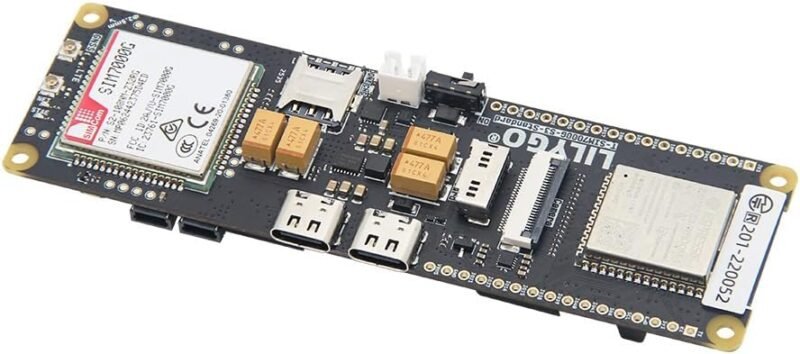
| 🚀 LILYGO T-SIM7600G-H (16MB) | SIM7600G-H · LTE Cat-4 + GPS | ESP32-WROVER | Best for Speed | Buy Here → |
| 🔋 LILYGO T-SIM7080G-S3 | SIM7080G · Cat-M/NB-IoT | ESP32-S3 | Low Power + Solar | Buy Here → |
| 📍 LILYGO T-A7670G R2 | A7670G · Cat-1 + 2G | ESP32 | Budget Tracker | Buy Here → |
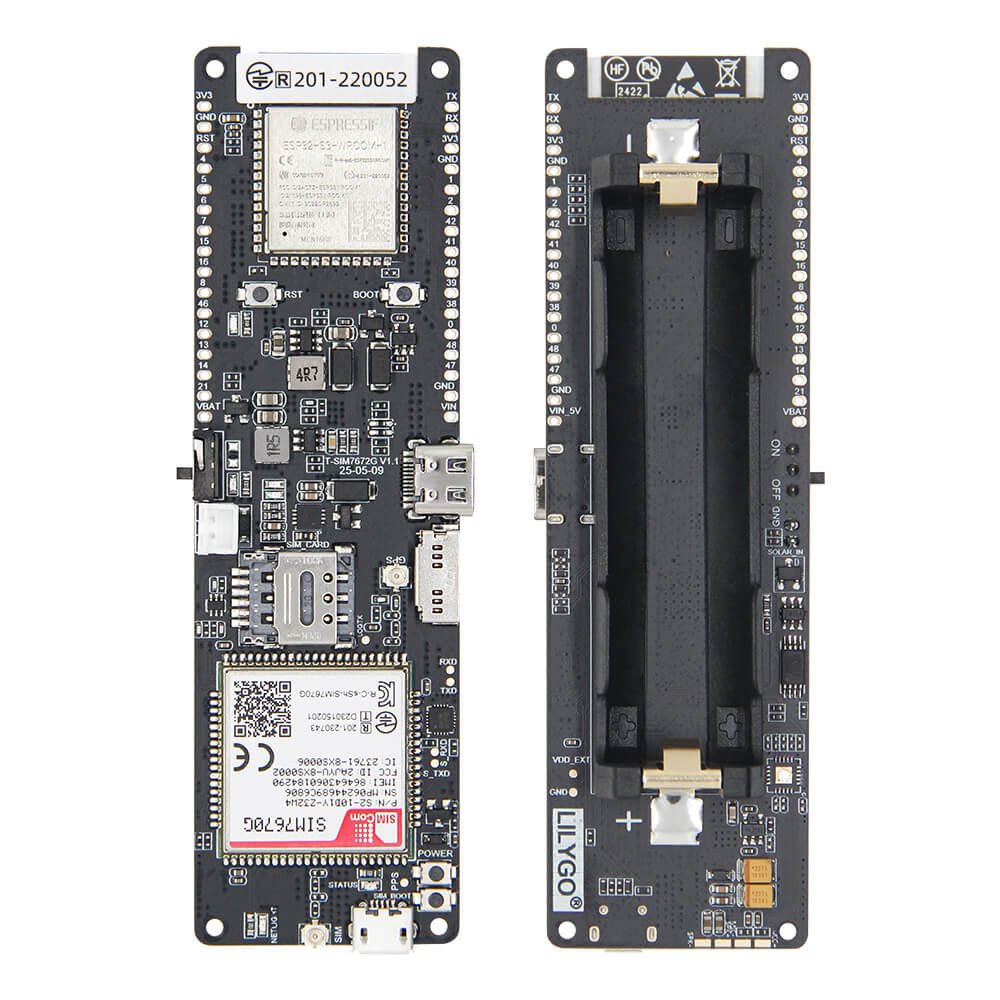
| 🧰 LILYGO T-SIM7670G-S3 | SIM7670G · Cat-1 | ESP32-S3 | Modern Cat-1 | Buy Here → |
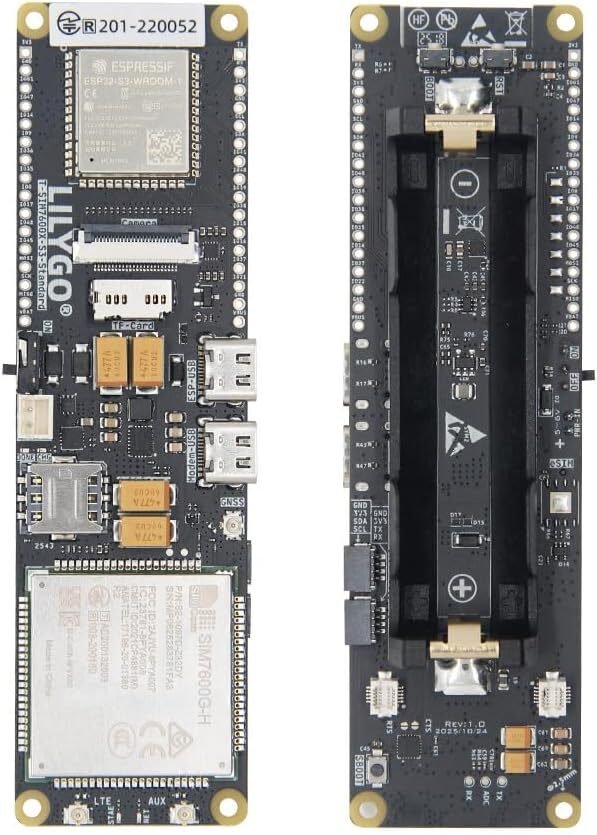
| ⚡ LILYGO T-SIM7600G-S3 | SIM7600 · Cat-4 + GPS | ESP32-S3 | Cat-4 on S3 | Buy Here → |
| 🆕 LILYGO T-SIM7000G-S3 | SIM7000G · LTE-M/NB-IoT + 2G | ESP32-S3 | LTE-M on S3 | Buy Here → |
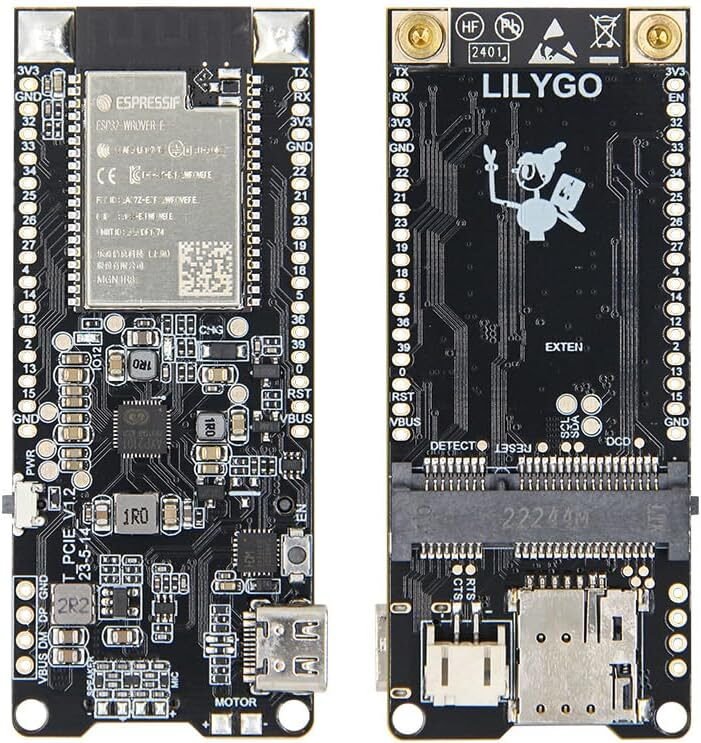
| 🔄 LILYGO T-PCIE | Swappable modem slot | ESP32 | Modem Flexibility | Buy Here → |
| 🧩 LILYGO PCIE-SIM7080G | SIM7080G module · Cat-M/NB-IoT | For T-PCIE family | Modem Add-On | Buy Here → |
| 📷 LILYGO T-SIMCAM | Camera + modem slot | ESP32-S3 | Cellular Camera | Buy Here → |
| 🌐 LILYGO T-ETH-Elite LTE Shield | Modem slot + L76K GPS | For T-ETH-Elite | Ethernet + LTE Gateway | Buy Here → |
| 📞 LILYGO T-Call V1.4 | SIM800L · 2G GSM/GPRS | ESP32 | 2G Regions Only | Buy Here → |
Modem and MCU details come from each Amazon listing and LILYGO’s documentation. Confirm bands for your carrier. Tap Buy Here to see the live price.
🔍 How to Choose an ESP32 Cellular Board
📶
Pick the Network First
Cat-4 (SIM7600) is fast enough for images and gateways. Cat-1 (A7670, SIM7670) covers most telemetry at lower cost. LTE-M/NB-IoT (SIM7000, SIM7080) is slow but sips power. 2G (SIM800L) only where 2G still runs.
🔋
Power Budget
For solar or battery nodes, LTE-M/NB-IoT with PSM/eDRX sleep is the only sensible choice. Cat-4 boards draw much more current and suit mains or vehicle power.
🧠
ESP32 vs ESP32-S3
Original ESP32 boards have the most example code. ESP32-S3 versions add native USB, more performance and Bluetooth 5 LE, useful for cameras, displays and heavier firmware.
🛰️
GPS
Most modems include GNSS that shares the modem’s time, while some boards add a dedicated GPS chip (L76K) that can run independently. Trackers benefit from the dedicated chip.
🔄
Fixed or Swappable Modem
Most boards solder the modem on. LILYGO’s T-PCIE, T-SIMCAM and T-ETH-Elite LTE shield take swappable PCIe-style modem modules, so you can change networks later.
🏆 Detailed Reviews: All 12 ESP32 Cellular Boards
🥇 BEST OVERALL
LILYGO T-SIM7000G ESP32
⭐ 4.7/5 · Most-Reviewed ESP32 Cellular Board
Buy on Amazon →

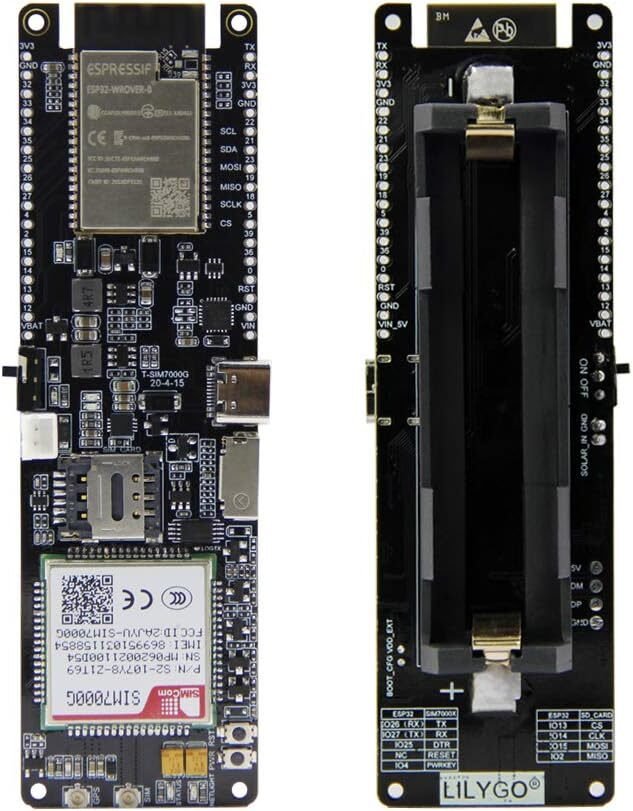
The LILYGO T-SIM7000G is the best-reviewed ESP32 cellular board on Amazon, averaging about 4.6 stars from 64 ratings. It pairs an ESP32-WROVER-B (listed with 16 MB flash and 8 MB PSRAM) with SIMCom’s SIM7000G, a global LTE-M and NB-IoT modem with 2G fallback and built-in GNSS. That combination is ideal for battery-powered sensors and trackers that send small messages occasionally. LILYGO’s listing is clear that it doesn’t support regular 4G (Cat-1/Cat-4), so your SIM and carrier must support NB-IoT or LTE-M (or 2G). Interfaces include I2C, SPI, UART, SDIO, I2S and CAN, and TinyGSM supports the modem.
✅ Pros- Proven and well reviewed
- Low-power LTE-M/NB-IoT
- GNSS built into the modem
- Plenty of PSRAM
❌ Cons- No Cat-1/Cat-4 LTE
- Needs LTE-M/NB-IoT coverage
- Low data rates
🎯 Verdict: The safest ESP32 board for low-power cellular IoT.
👉 Check Price on Amazon →
🚀 BEST FOR SPEED
LILYGO T-SIM7600G-H (16MB, Solar)
⭐ 4.5/5 · ESP32 + LTE Cat-4 + GPS
Buy on Amazon →

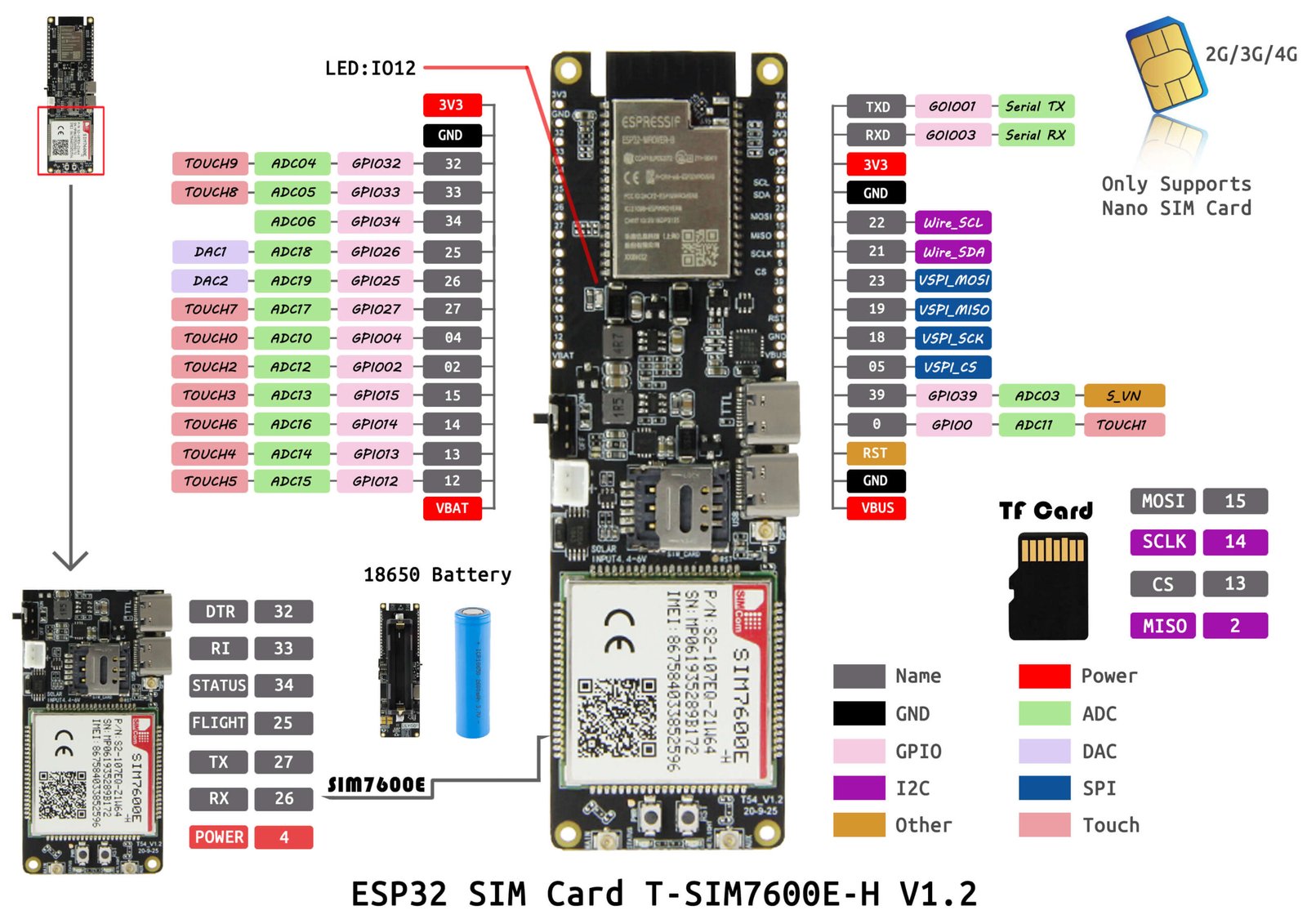
When you need real bandwidth, the T-SIM7600G-H pairs an ESP32-WROVER with SIMCom’s global SIM7600G-H LTE Cat-4 modem and GPS. LILYGO adds an 18650 battery holder, a solar charging input and two USB-C ports, one for the ESP32 and one that exposes the modem directly. It suits camera uploads, vehicle gateways and anything sending more than small sensor packets. This 16 MB listing averages about 4.0 stars from 10 ratings; we also cover the board in our 4G LTE modules guide.
✅ Pros- Fast Cat-4 LTE
- GPS, battery and solar built in
- Global bands
- Modem usable over USB
❌ Cons- High power draw
- Few reviews on this listing
- Overkill for small telemetry
🎯 Verdict: The ESP32 board for bandwidth-hungry projects.
👉 Check Price on Amazon →
🔋 LOW POWER + SOLAR · ⭐ 4.0/53. LILYGO T-SIM7080G-S3
SIM7080G Cat-M/NB-IoT · ESP32-S3 · solar charge · 10 ratings
Buy Here →

The T-SIM7080G-S3 combines an ESP32-S3 (16 MB flash, 2 MB PSRAM per the listing) with SIMCom’s SIM7080G, a newer Cat-M/NB-IoT modem with GNSS and very low sleep current, plus a solar charging input. It’s LTE-M/NB-IoT only, with no 2G fallback. It averages about 3.2 stars from 10 ratings, so expect some setup effort.
✅ Pros: ESP32-S3; solar; low sleep current.
❌ Cons: Mixed reviews; no 2G fallback.
🎯 Verdict: The solar-sensor pick.
📍 BUDGET TRACKER · ⭐ 3.9/54. LILYGO T-A7670G R2
A7670G Cat-1 + 2G fallback · ESP32 · 5 ratings
Buy Here →

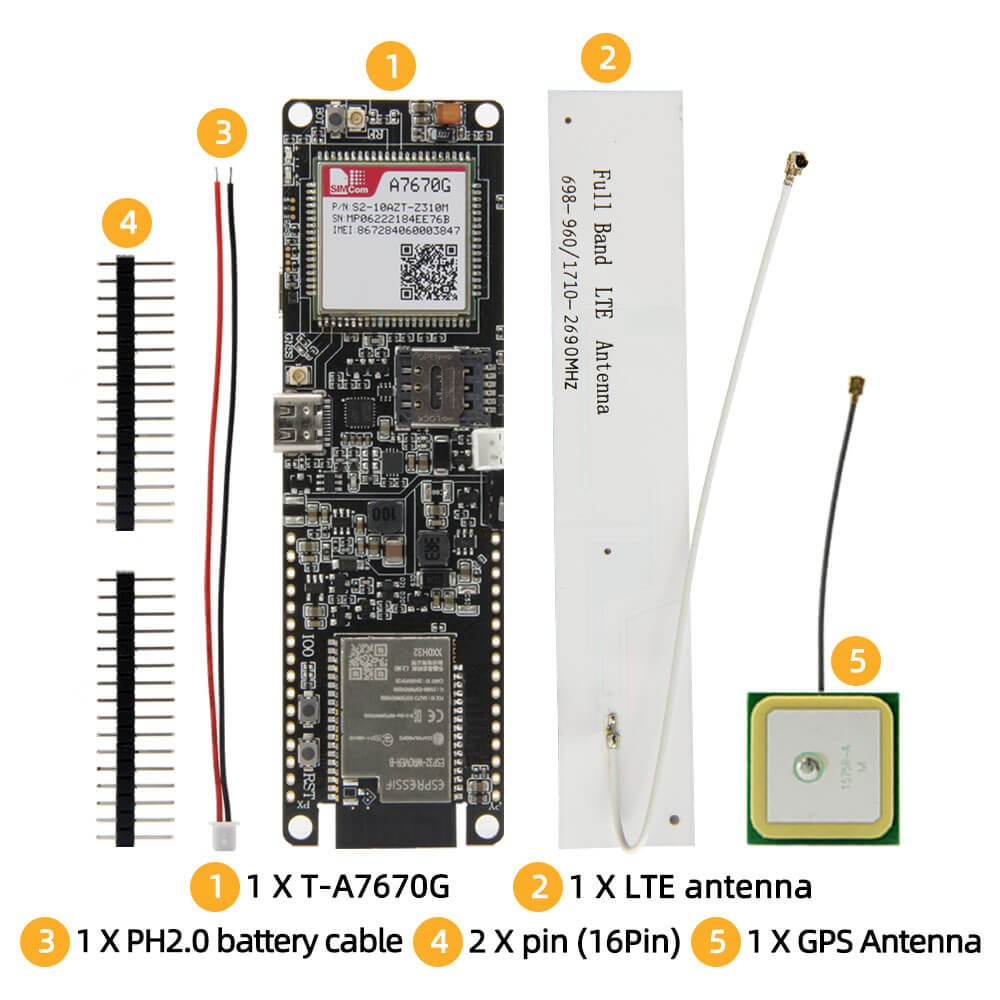
The T-A7670G R2 uses the low-cost A7670G LTE Cat-1 modem with 2G fallback, which is plenty for MQTT, HTTP and SMS. It’s a common base for budget GPS trackers; check whether your listing variant includes the separate GPS module. It averages about 3.4 stars from 5 ratings.
✅ Pros: Affordable Cat-1; 2G fallback.
❌ Cons: Mixed reviews; check variant.
🎯 Verdict: The value Cat-1 board.
🧰 MODERN CAT-1 · ⭐ 4.0/55. LILYGO T-SIM7670G-S3
SIM7670G Cat-1 · ESP32-S3 · Wi-Fi + BLE 5 · 4 ratings
Buy Here →
The T-SIM7670G-S3 pairs an ESP32-S3 with SIMCom’s SIM7670G, a global LTE Cat-1 modem with GNSS. It’s LTE-only, which avoids reliance on fading 2G networks, and the S3 brings native USB and more processing headroom. It averages about 3.6 stars from 4 ratings.
✅ Pros: ESP32-S3; LTE-only; GNSS.
❌ Cons: Very few reviews.
🎯 Verdict: A future-proof Cat-1 board.
⚡ CAT-4 ON S3 · ⭐ 4.0/56. LILYGO T-SIM7600G-S3
SIM7600 Cat-4 + GPS · ESP32-S3 · new listing
Buy Here →

The newer T-SIM7600G-S3 moves LILYGO’s Cat-4 + GPS design onto an ESP32-S3 with Bluetooth 5 LE. LILYGO’s upgrade notes on GitHub cover the differences from the original ESP32 version. It’s a new listing with no reviews yet.
✅ Pros: Cat-4 speed; ESP32-S3.
❌ Cons: New; no reviews.
🎯 Verdict: Cat-4 with a modern MCU.
🆕 LTE-M ON S3 · ⭐ 4.0/57. LILYGO T-SIM7000G-S3
SIM7000G · ESP32-S3 · 16 MB flash · new listing
Buy Here →

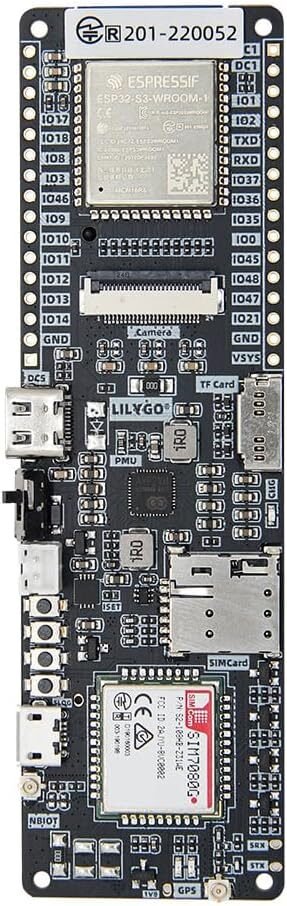
The S3 version of our top pick keeps the SIM7000G LTE-M/NB-IoT modem and moves to an ESP32-S3 with 16 MB flash, 2 MB PSRAM and Bluetooth 5 LE. Choose it if you want the SIM7000G’s network support with native USB. It’s a new listing with no reviews yet.
✅ Pros: Modern MCU; low-power modem.
❌ Cons: Less PSRAM than the original; new.
🎯 Verdict: The T-SIM7000G, modernized.
🔄 MODEM FLEXIBILITY · ⭐ 4.2/58. LILYGO T-PCIE ESP32
ESP32 · swappable cellular modem slot · new listing
Buy Here →

The T-PCIE is an ESP32 carrier (4 MB flash, 8 MB PSRAM per the listing) with a slot for swappable LILYGO modem modules, such as SIM7000G, SIM7600X or the PCIE-SIM7080G below. Prototype on one network and switch modems later without changing your board. Modules are sold separately. New listing with no reviews yet.
✅ Pros: Change networks by swapping modules.
❌ Cons: Modem sold separately.
🎯 Verdict: The flexible prototyping platform.
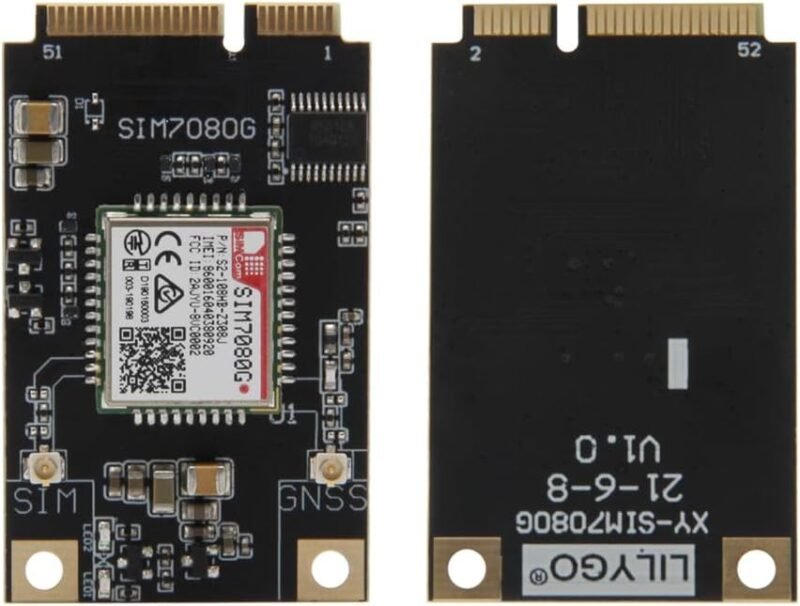
🧩 MODEM ADD-ON · ⭐ 4.0/59. LILYGO PCIE-SIM7080G Modem Module
Cat-M/NB-IoT · for T-PCIE family · new listing
Buy Here →

This plug-in SIM7080G module gives a T-PCIE board low-power Cat-M/NB-IoT connectivity. LILYGO lists it as compatible with the T-PCIE, and other modem modules exist for Cat-4 and more. New listing with no reviews yet.
✅ Pros: Low-power modem; swappable.
❌ Cons: Needs a compatible carrier board.
🎯 Verdict: The low-power module for T-PCIE.
📷 CELLULAR CAMERA · ⭐ 4.1/510. LILYGO T-SIMCAM ESP32-S3 (OV2640)
ESP32-S3 · 2 MP camera · modem slot · new listing
Buy Here →

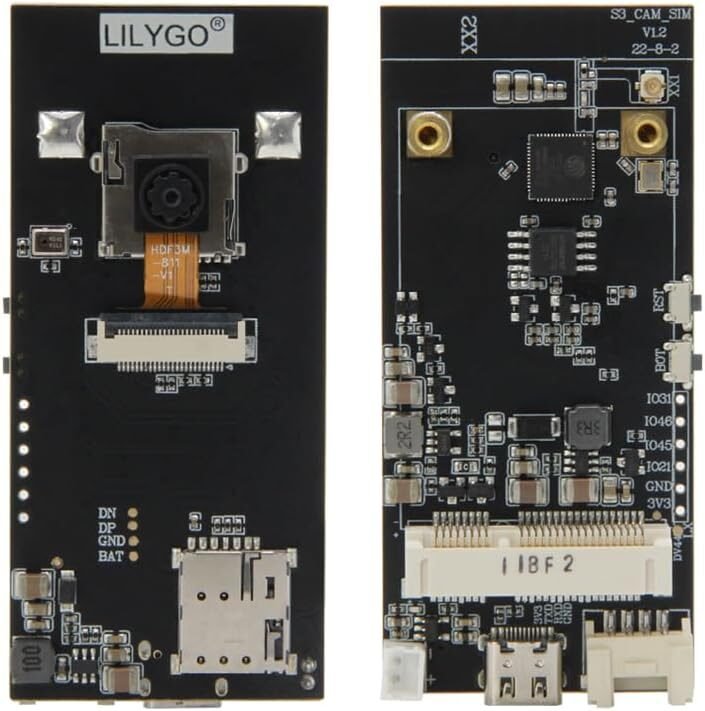
The T-SIMCAM combines an ESP32-S3 (16 MB flash, 8 MB PSRAM) with an OV2640 2 MP camera and a slot for LILYGO’s PCIe-style modem modules, so you can build a remote trail or site camera that uploads over cellular. Variants with OV5640, IR-cut and autofocus cameras are also listed. Pair it with a Cat-1 or Cat-4 module for photo uploads. New listing with no reviews yet.
✅ Pros: Camera + cellular in one; camera options.
❌ Cons: Modem sold separately.
🎯 Verdict: The remote cellular camera base.
🌐 ETHERNET + LTE GATEWAY · ⭐ 4.0/511. LILYGO T-ETH-Elite LTE Shield (with GPS)
Modem slot · L76K GPS · requires T-ETH-Elite mainboard · new listing
Buy Here →

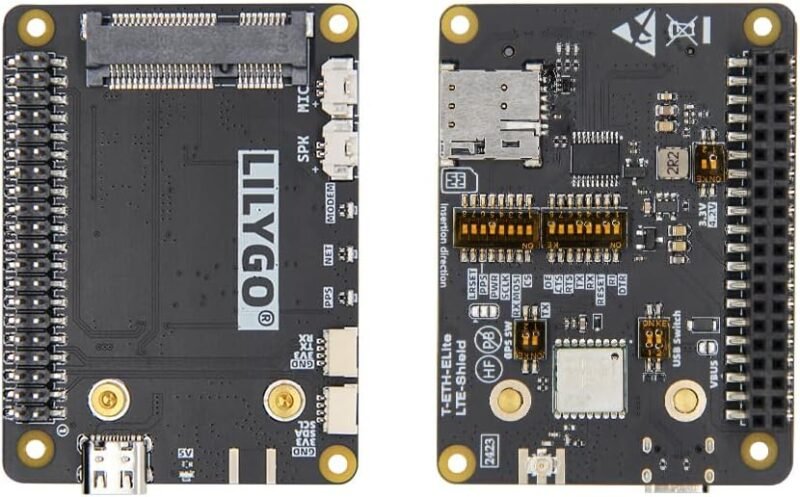
This expansion board adds a swappable LTE modem slot and an L76K GPS to LILYGO’s T-ETH-Elite Ethernet ESP32 mainboard, which you must buy separately. Together they make a compact gateway with wired Ethernet plus cellular backup. New listing with no reviews yet.
✅ Pros: Ethernet + LTE + GPS combo.
❌ Cons: Mainboard and modem extra.
🎯 Verdict: For wired gateways with cellular failover.
📞 2G REGIONS ONLY · ⭐ 3.8/512. LILYGO TTGO T-Call V1.4 (SIM800L)
SIM800L 2G GSM/GPRS · ESP32 · 4 MB flash + 8 MB PSRAM
Buy Here →

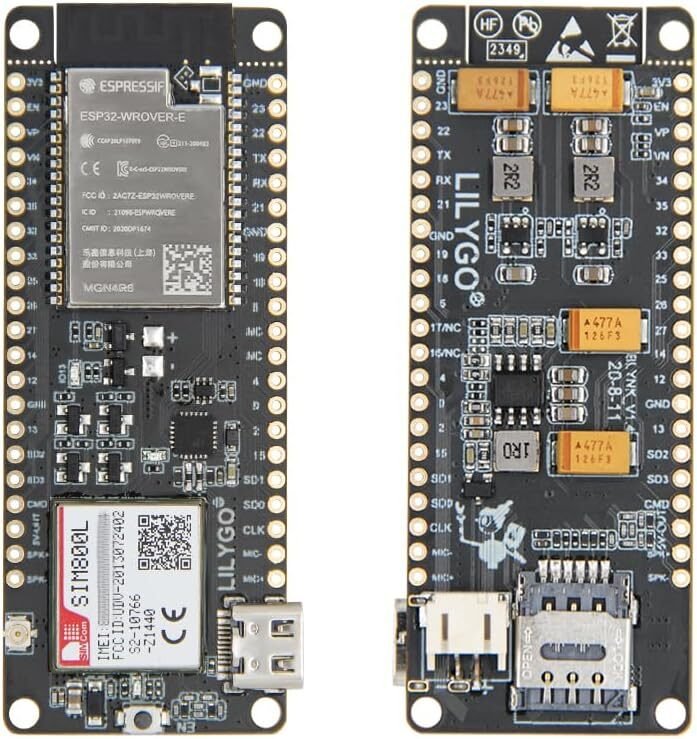
The T-Call was the original ESP32 + SIM800L board and remains popular for SMS alerts, calls and GPRS data in countries where 2G networks still operate. In the US and many other markets 2G has been switched off, so it won’t connect there. It’s cheap and well documented in older tutorials. New listing with no reviews yet.
✅ Pros: Cheap; SMS and voice; many tutorials.
❌ Cons: 2G only; obsolete in many countries.
🎯 Verdict: Only where 2G still works.
🛒 Which Board for Which Project?
🌱
Solar or battery sensor
T-SIM7000G or T-SIM7080G-S3.
📍
GPS tracker
T-A7670G R2 or T-SIM7670G-S3.
🚐
Vehicle or high-data gateway
T-SIM7600G-H or T-SIM7600G-S3.
📷
Remote camera
T-SIMCAM + a Cat-1 or Cat-4 modem module.
🔄
Unsure which network
T-PCIE with swappable modules.
📞
SMS alerts where 2G runs
T-Call V1.4.
⚙️ Cellular Technologies Compared
| Technology | Example Modems | Data Rate | Power | Best For |
|---|
| LTE Cat-4 | SIM7600 | Highest ⭐ | High | Cameras, gateways, vehicles |
| LTE Cat-1 | A7670, SIM7670 | Moderate | Medium | Trackers, telemetry |
| LTE-M / NB-IoT | SIM7000, SIM7080 | Low | Lowest ⭐ | Battery and solar sensors |
| 2G GSM/GPRS | SIM800L | Very low | Medium | Only where 2G still operates |
General characteristics; actual performance depends on network and signal.
❓ Frequently Asked Questions
Which SIM card do I need?
A data-enabled SIM for the right technology. Cat-1 and Cat-4 boards work with most normal or IoT data SIMs. LTE-M and NB-IoT boards need a carrier and plan that explicitly support those networks. Check SIM size and voltage on the board’s documentation.
How do I program these boards?
Use the Arduino IDE, PlatformIO or ESP-IDF like any ESP32. The TinyGSM library handles SIMCom modems for MQTT and HTTP, and LILYGO publishes example sketches for each board on GitHub.
Will a SIM800L board work in the US?
No. Major US carriers have shut down their 2G networks, so SIM800L boards can’t register. Choose an LTE Cat-1 or LTE-M board instead. 2G still operates in some other countries; check your local carrier.
Can I power these from a battery?
Yes, many include 18650 holders or LiPo connectors and solar inputs. Transmit bursts draw high current, so use a healthy cell. For months of runtime, pick an LTE-M/NB-IoT board and use the modem’s power-saving modes.
Do I need external antennas?
Yes. Use an LTE antenna on the modem connector and, for GPS, an active GPS antenna with clear sky view. Never transmit without the cellular antenna attached.
🏁 Final Verdict: Best ESP32 Cellular Boards
The right board for every cellular project:
Start with the LILYGO T-SIM7000G if your carrier supports LTE-M or NB-IoT; it’s the most proven ESP32 cellular board and ideal for low-power sensors. Choose the T-SIM7600G-H when you need Cat-4 speed, the T-A7670G R2 or T-SIM7670G-S3 for everyday Cat-1 trackers, and the T-PCIE family if you want to swap modems later. For Raspberry Pi HATs, Arduino shields and mini-PCIe modules, see our best 4G LTE modules guide, and explore our ESP32 tutorials.
💬 Building a cellular ESP32 project? Tell us your board, carrier and SIM in the comments below.
All Amazon links above use our affiliate tag (microlab05-20). Purchasing through them supports microcontrollerslab.com at no extra cost to you. Prices and availability change frequently, so always confirm the current price on Amazon before buying.