⚠️ Affiliate Disclosure: This post contains Amazon affiliate links. If you purchase through our links, we may earn a small commission at no extra cost to you. Every product below was checked against its live Amazon listing before publishing. Prices change often, so we don’t list them here. Tap any Buy Here button to see the current price on Amazon.
Ultimate Buying Guide
⚡ Best Home Energy Monitors and Modbus Energy Meters
10 ways to measure electricity: whole-home CT monitors, DIN-rail Wi-Fi and Modbus meters for solar, a Modbus sub-meter, and PZEM-004T modules for Arduino and ESP32 projects.
✅ 10 Picks Reviewed
✅ Solar & Net Metering
✅ Home Assistant & Modbus
✅ Honest Pros & Cons
Knowing exactly where your electricity goes is the first step to cutting bills, sizing solar and batteries, and automating loads intelligently. Energy monitoring hardware comes in three main styles: clamp-on CT monitors that install in your breaker panel and report to an app, DIN-rail and socket meters with Wi-Fi and/or Modbus RS485 for solar and integration projects, and low-cost PZEM modules that let an Arduino or ESP32 measure voltage, current, power and energy.
This guide compares 10 picks on Amazon across all three styles. To get Modbus meters onto your network, see our RS485 to Ethernet converters and Modbus gateways guide.
💡 Safety and reality check: Panel monitors and DIN-rail meters are installed inside your electrical panel, and PZEM modules connect directly to mains voltage. Work on panels should be done by a qualified, licensed electrician following local code. Clamp-on CTs don’t cut wires, but the panel cover still exposes live parts. Match the meter to your supply: North American homes use 120/240 V split-phase, many other countries use single-phase 230 V, and businesses often use three-phase. Check CT ratings against your main breaker size.
⚡ Quick Comparison: All 10 Energy Monitors and Meters
| Product | Type | Interface | Best For | Buy |
|---|
| 🥇 Emporia Vue 3 | Panel CT monitor | Wi-Fi, app | Best Overall Home Monitor | Buy Here → |
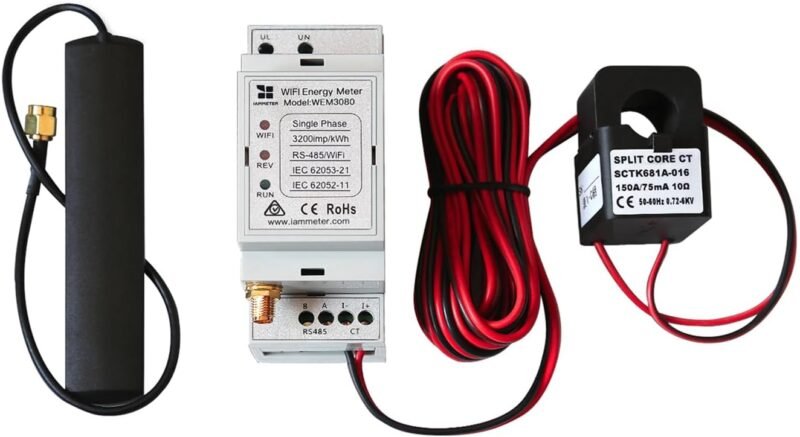
| ☀️ IAMMETER Bi-Directional DIN Meter | DIN-rail meter + CT | Wi-Fi, Modbus, HA | Solar + Integration | Buy Here → |
| 🔒 Refoss EM16P | Panel CT monitor | Wi-Fi, local API, HA | No-Cloud Monitoring | Buy Here → |
| 🔺 IAMMETER WEM3050T | Multi-phase meter + CTs | Wi-Fi | Split & Three-Phase | Buy Here → |
| 🔹 IAMMETER Single-Phase (150A CT) | DIN-rail meter + CT | Wi-Fi | Single-Phase Solar | Buy Here → |
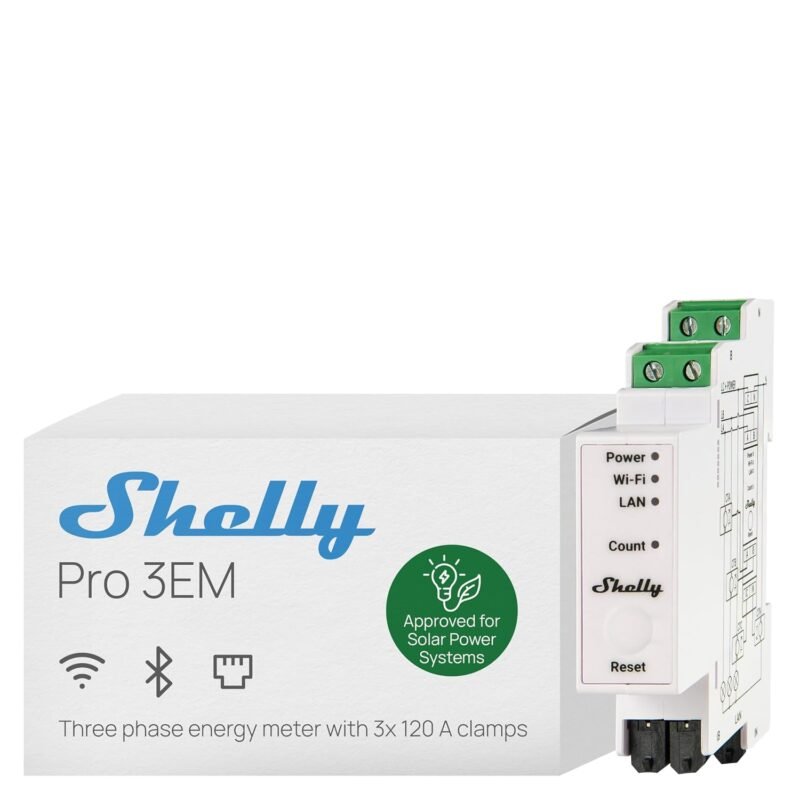
| 🏭 Shelly Pro 3EM 120A v2 | DIN-rail 3-ch meter | Wi-Fi, LAN, Matter | Local + Ethernet | Buy Here → |
| 💵 Wi-Fi Monitor, 2× 120A CTs | Panel CT monitor | Wi-Fi | Budget Whole-Home | Buy Here → |
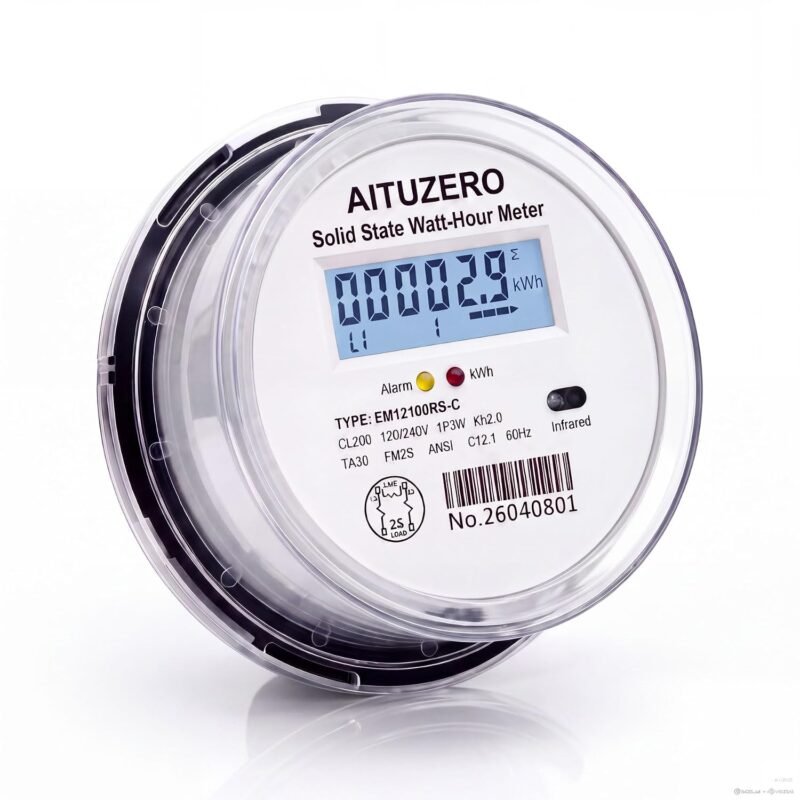
| 🏢 Aituzero CL200 Sub-Meter | ANSI Form 2S socket meter | RS485 Modbus | Landlords & Units | Buy Here → |
| 🛠️ PZEM-004T 100A Module | Measurement module | TTL serial | Arduino & ESP32 | Buy Here → |
| 🔧 PZEM-004T with CT | Measurement module + coil | TTL serial | DIY Appliance Metering | Buy Here → |
Features from each Amazon listing. Check voltage system and CT ratings before buying. Tap Buy Here to see the live price.
🔍 How to Choose an Energy Monitor
🏠
Whole-Home vs Circuit-Level
Two CTs on the mains show total usage. Adding circuit sensors (Emporia’s larger kits, Refoss EM16P) reveals which appliances use the most power.
☀️
Bi-Directional for Solar
With solar or batteries you need a meter that measures import and export separately. Bi-directional meters like IAMMETER show grid export versus solar production.
🔌
Integration
For Home Assistant, Node-RED or SCADA, look for local APIs, MQTT or Modbus. Cloud-only apps are easier but less flexible and depend on the vendor’s servers.
🔺
Phase Configuration
Pick a meter that matches your supply: split-phase (North America), single-phase or three-phase. Multi-phase meters like the WEM3050T and Pro 3EM handle several.
🛠️
DIY Modules
PZEM-004T modules are cheap and well supported in Arduino and ESPHome, but they need careful mains wiring and an enclosure. They’re for learning and custom builds, not panel installs by beginners.
🏆 Detailed Reviews: All 10 Picks
🥇 BEST OVERALL HOME MONITOR

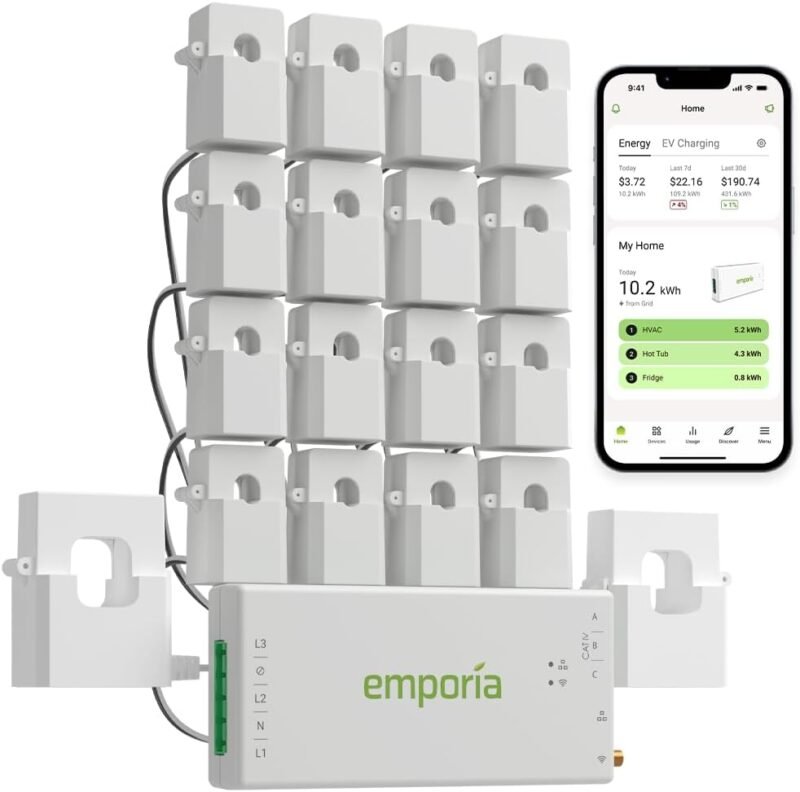
The Emporia Vue 3 is the most popular home energy monitor on Amazon, averaging about 4.6 stars from 880+ ratings. It installs inside most home circuit panels with clamp-on CT sensors, carries UL certification per the listing, and supports solar and net metering. The Emporia app shows real-time and historical usage and can drive automations. Emporia sells kits with different numbers of circuit sensors, so choose the bundle that matches how many circuits you want to track.
✅ Pros- Huge review base
- UL certified
- Solar and circuit-level options
- Polished app
❌ Cons- Cloud-based app
- Panel install required
🎯 Verdict: The easiest whole-home monitor.
👉 Check Price on Amazon →
☀️ BEST FOR SOLAR AND INTEGRATION
IAMMETER Bi-Directional DIN-Rail Meter
⭐ 4.6/5 · Wi-Fi, Modbus and Home Assistant
Buy on Amazon →

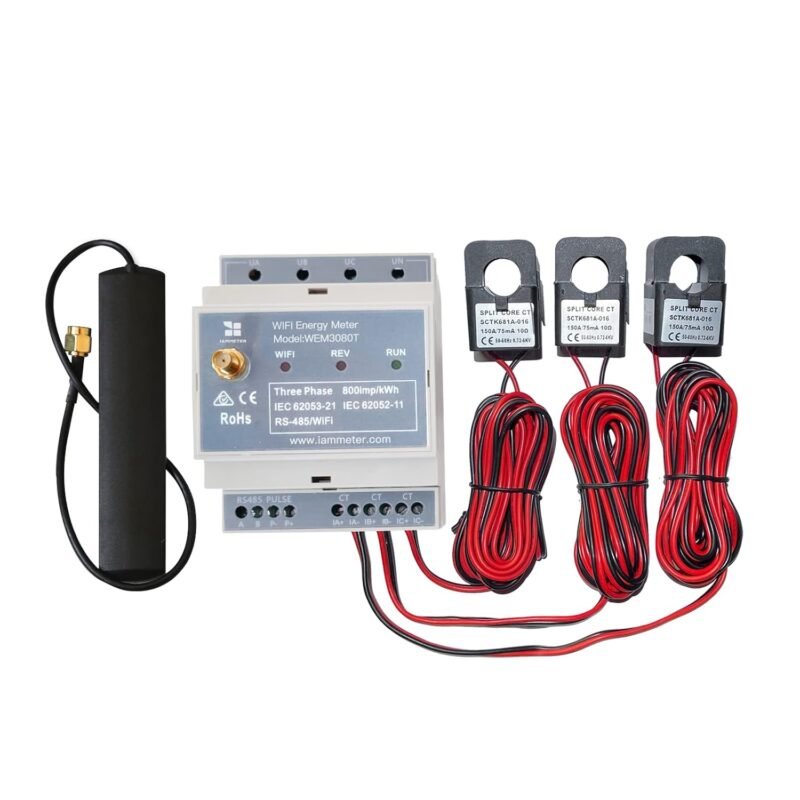
IAMMETER’s bi-directional DIN-rail meter tracks energy imported from and exported to the grid versus solar production, making it a favorite for solar and battery owners. Its title lists Home Assistant and Modbus support, so you can pull readings locally into HA, Node-RED or an inverter controller rather than relying only on the cloud. It averages about 4.5 stars from 72 ratings. Check the listing’s variants for your phase configuration.
✅ Pros- Import/export metering
- Modbus and HA
- DIN rail
- Great for solar
❌ Cons- Whole-feed only (no circuits)
- Electrician install
🎯 Verdict: The solar enthusiast’s meter.
👉 Check Price on Amazon →
🔒 NO-CLOUD MONITORING · ⭐ 4.2/53. Refoss EM16P Energy Monitor
Local control · open API · native Home Assistant · 321 ratings
Buy Here →
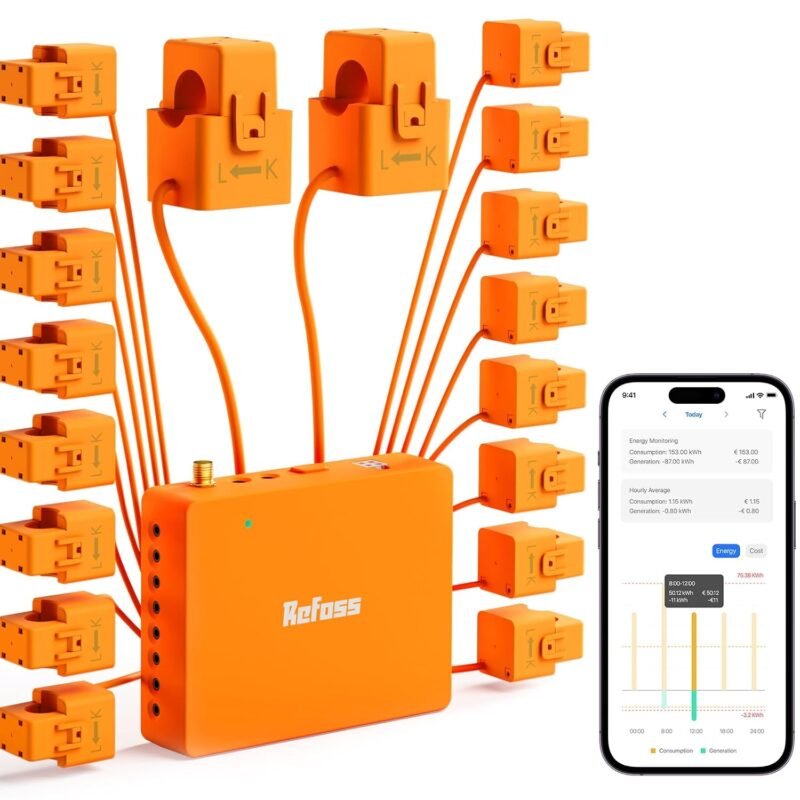
Refoss pitches the EM16P on privacy: local control, an open API and native Home Assistant support with no cloud required, plus circuit-level monitoring. It’s the pick if you want Emporia-style insight without sending your data to a vendor cloud. It averages about 4.1 stars from 321 ratings.
✅ Pros: Local API; HA native.
❌ Cons: Smaller app ecosystem.
🎯 Verdict: The privacy-first panel monitor.
🔺 SPLIT & THREE-PHASE · ⭐ 4.7/54. IAMMETER WEM3050T
Split, single & three-phase · solar · 65 ratings
Buy Here →

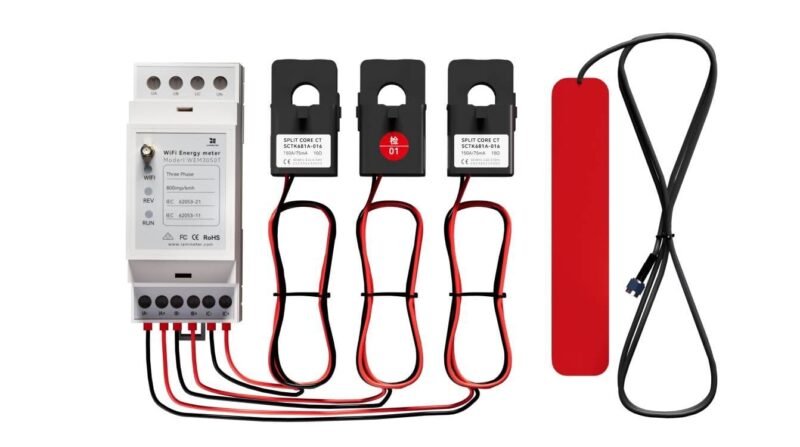
A Wi-Fi energy meter that, per the listing, works with split-phase, single-phase and three-phase systems, so it covers North American homes and small businesses alike, with solar monitoring. The highest-rated pick here, about 4.7 stars from 65 ratings.
✅ Pros: Any phase config; top rated.
❌ Cons: Fewer reviews.
🎯 Verdict: The flexible multi-phase meter.
🔹 SINGLE-PHASE SOLAR · ⭐ 4.3/55. IAMMETER Single-Phase DIN Meter (150A CT)
Bi-directional · split-core CT · 31 ratings
Buy Here →

A single-phase bi-directional DIN-rail meter with a 150 A split-core CT for real-time grid import/export and solar flow monitoring. It suits 230 V single-phase homes and individual circuits. It averages about 4.2 stars from 31 ratings.
✅ Pros: 150 A CT; bi-directional.
❌ Cons: Single-phase only.
🎯 Verdict: Simple single-phase solar tracking.
🏭 LOCAL + ETHERNET · ⭐ 4.6/56. Shelly Pro 3EM 120A v2
DIN rail · 3 CT channels · Wi-Fi, LAN, Matter · 110 ratings
Buy Here →
Shelly’s DIN-mountable 3-channel meter with 120 A CTs, Wi-Fi, wired LAN and Matter support. It works locally with Home Assistant, so you can use it for mains, solar and a large load such as an EV charger. It averages about 4.6 stars from 110 ratings. See our Shelly devices guide for more.
✅ Pros: LAN; local API; 3 channels.
❌ Cons: Panel install needed.
🎯 Verdict: Wired, local, flexible.
💵 BUDGET WHOLE-HOME · ⭐ 4.0/57. Wi-Fi Home Energy Monitor (2× 120A CTs)
Bi-directional · configurable reporting · 110 ratings
Buy Here →

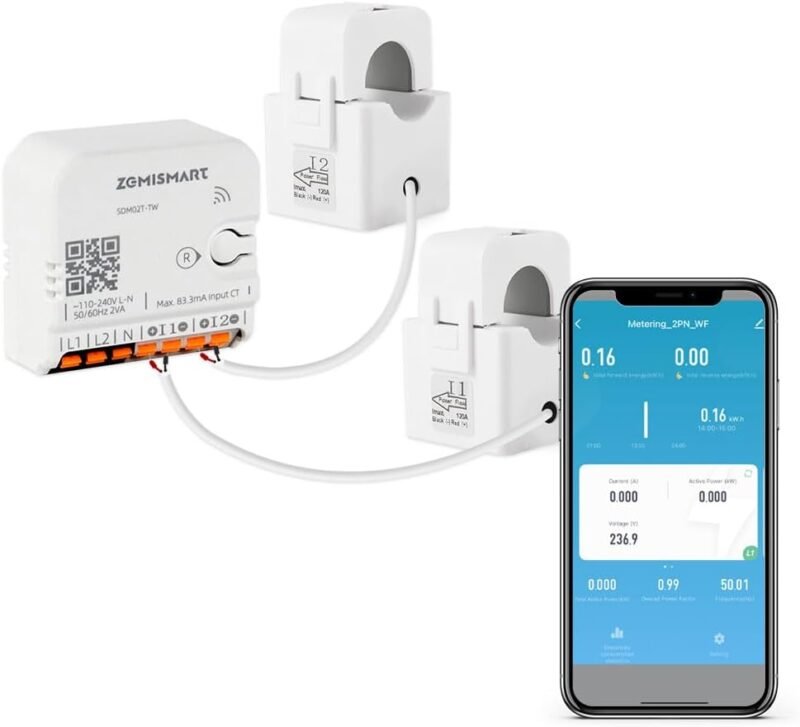
A lower-cost Wi-Fi monitor with two 120 A CTs, configurable reporting and bi-directional measurement for solar systems per the listing. It covers whole-home usage on a budget. It averages about 4.0 stars from 110 ratings.
✅ Pros: Affordable; solar capable.
❌ Cons: Lesser-known brand.
🎯 Verdict: Whole-home basics, cheaply.
🏢 LANDLORDS & UNITS · ⭐ 4.8/58. Aituzero CL200 Sub-Meter (RS485 Modbus)
120/240 V · ANSI Form 2S plug-in · Modbus · 22 ratings
Buy Here →
A CL200, ANSI Form 2S plug-in sub-meter for 120/240 V meter sockets, with an RS485 Modbus port so readings can be collected remotely through a Modbus gateway. It’s aimed at landlords billing tenants, workshops and outbuildings. It averages about 4.8 stars from 22 ratings. A related listing has more reviews; check its interface before buying.
✅ Pros: Socket install; Modbus.
❌ Cons: Needs a meter socket.
🎯 Verdict: Billing-grade sub-metering.
🛠️ ARDUINO & ESP32 · ⭐ 4.6/59. PZEM-004T 100A Energy Module
AC 80–260 V · 100 A · TTL serial · 26 ratings
Buy Here →
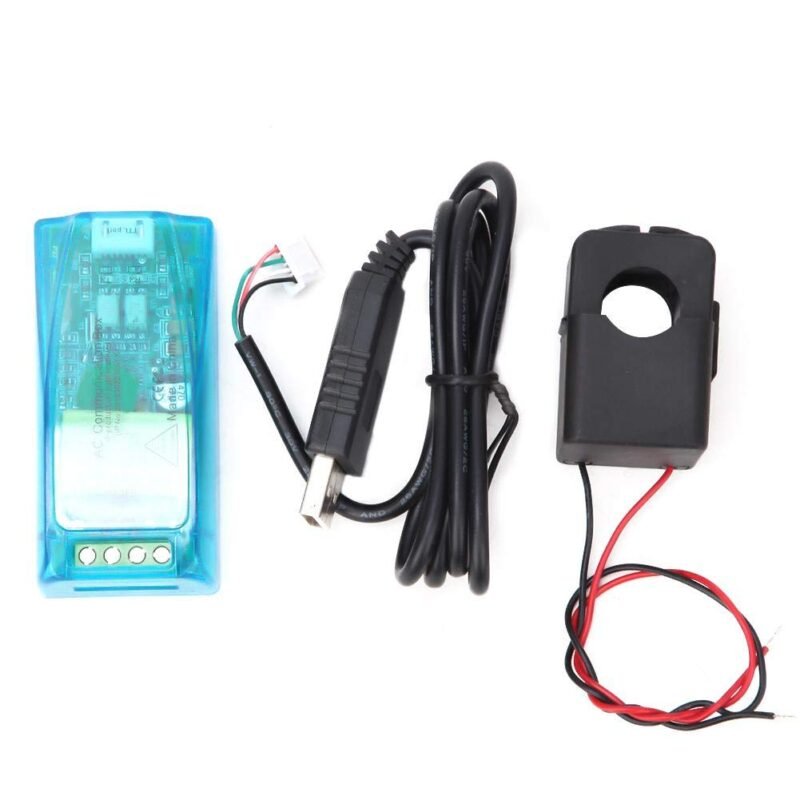
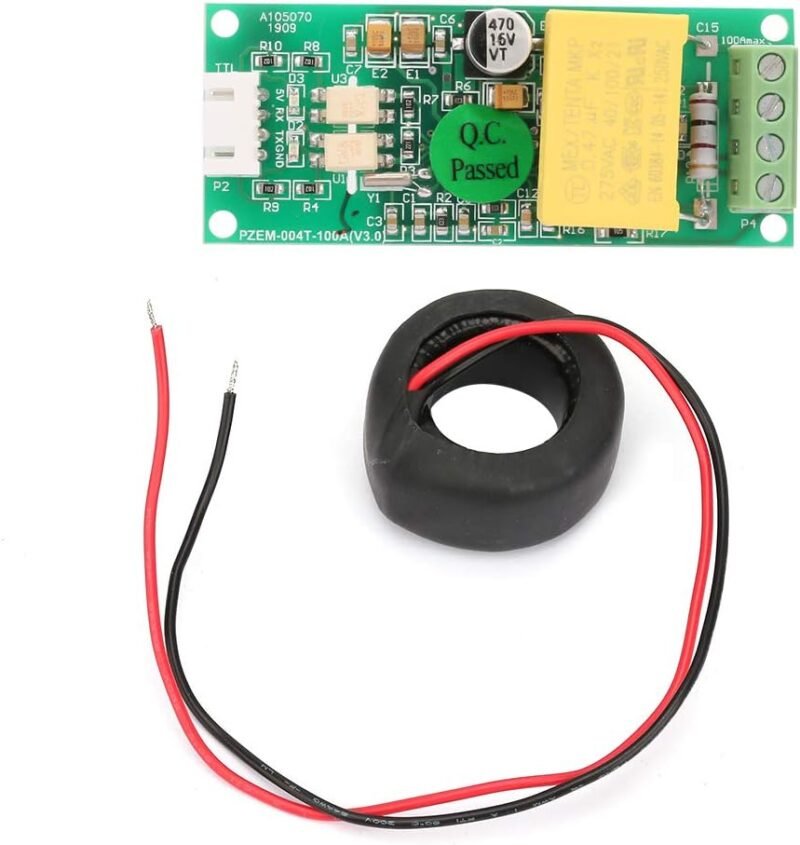
The PZEM-004T is the classic maker energy module: it measures AC voltage, current, active power, frequency and energy (80–260 V, up to 100 A per the listing) and talks to a microcontroller over a TTL serial port. Version 3 modules use a Modbus-RTU protocol over that UART, and libraries exist for Arduino and ESPHome. Build it into a proper enclosure, since it handles mains voltage. It averages about 4.6 stars from 26 ratings.
✅ Pros: Cheap; great libraries.
❌ Cons: Mains wiring; DIY enclosure.
🎯 Verdict: The maker’s energy meter.
🔧 DIY APPLIANCE METERING · ⭐ 3.9/510. PZEM-004T with Current Transformer
AC 80–260 V · 100 A · CT coil included · 15 ratings
Buy Here →

Another PZEM-004T listing that bundles the current transformer coil, ready for building an appliance or circuit power monitor with an ESP32 and a display. Reviews are a little lower (about 3.9 stars from 15 ratings), and some sellers ship older versions, so confirm v3.0 if you need Modbus.
✅ Pros: CT included.
❌ Cons: Version varies by seller.
🎯 Verdict: A ready-to-build kit.
🛒 Which Monitor for Which Goal?
🏠
See where your money goes
Emporia Vue 3 with circuit sensors.
☀️
Solar self-consumption
IAMMETER bi-directional meter.
🔒
Local Home Assistant only
Refoss EM16P or Shelly Pro 3EM.
🔺
Three-phase business
IAMMETER WEM3050T.
🏢
Bill tenants
CL200 Modbus sub-meter + Modbus gateway.
🛠️
DIY ESP32 project
PZEM-004T 100A + ESPHome.
⚙️ Monitor Types Compared
| Type | Install | Detail Level | Integration | Best For |
|---|
| Panel CT monitor | In panel, clamp-on | Whole home + circuits ⭐ | App; some local APIs | Homeowners |
| DIN-rail Wi-Fi/Modbus meter | DIN rail + CTs | Feeds, solar, big loads | Modbus, HA, MQTT ⭐ | Solar & automation |
| Socket sub-meter | Meter socket | One service | RS485 Modbus | Landlords |
| PZEM module | DIY enclosure | One circuit | UART (Modbus-RTU on v3) | Makers |
General characteristics; individual products vary.
❓ Frequently Asked Questions
Do I need an electrician to install an energy monitor?
Panel monitors and DIN-rail meters require opening your electrical panel. Many jurisdictions require or recommend a licensed electrician, and it’s the safest choice. Plug-in smart plugs with metering avoid panel work for single appliances.
How do I read a Modbus energy meter remotely?
Connect its RS485 terminals to a Modbus gateway or an ESP32 with an RS485 transceiver, then poll it from Home Assistant, Node-RED or SCADA. See our Modbus gateways and RS485 modules guides.
Why do I need a bi-directional meter with solar?
A one-way meter can’t tell exported solar energy from imported grid energy. Bi-directional meters measure both, so you can see self-consumption and control loads like water heaters or EV chargers to use surplus solar.
Is the PZEM-004T accurate?
It’s accurate enough for monitoring and automation, and widely used in hobby projects. It isn’t a certified billing meter. Calibrate against a known load if precision matters.
What about off-grid solar systems?
Off-grid DC systems often use battery monitors and charge controllers with their own telemetry. See our solar charge controllers for IoT guide.
🏁 Final Verdict: Best Energy Monitors and Meters
The right energy monitor for every goal:
☀️ Best for Solar: IAMMETER Bi-Directional Meter
Buy Here →🏭 Best Wired/Local: Shelly Pro 3EM 120A v2
Buy Here →For most homes, the Emporia Vue 3 is the simplest way to see where your electricity goes. Solar owners get more from a bi-directional IAMMETER meter with Modbus and Home Assistant support, while privacy-focused users should look at the Refoss EM16P or Shelly Pro 3EM. Makers can build custom monitors with a PZEM-004T and an ESP32, and landlords can sub-meter units with a CL200 Modbus meter. Continue our industrial IoT series with Modbus gateways, and see our RS485 modules guide for DIY Modbus projects.
💬 How do you monitor your home’s energy? Share your setup in the comments below.
All Amazon links above use our affiliate tag (microlab05-20). Purchasing through them supports microcontrollerslab.com at no extra cost to you. Prices and availability change frequently, so always confirm the current price on Amazon before buying.