⚠️ Affiliate Disclosure: This post contains Amazon affiliate links. If you purchase through our links, we may earn a small commission at no extra cost to you. Every product below was checked against its live Amazon listing before publishing. Prices change often, so we don’t list them here. Tap any Buy Here button to see the current price on Amazon.
Ultimate Buying Guide
🔴 Best IR Receiver and Transmitter Modules for Arduino and ESP32
12 infrared receivers, IR LEDs, remote kits and ESP32 IR boards compared for decoding TV remotes, building IR blasters and controlling your projects with any remote.
✅ 12 Picks Reviewed
✅ VS1838B, KY-022 and TSOP38238
✅ ESP32 and ESPHome Ready
✅ Honest Pros and Cons
Infrared is the oldest wireless protocol in your house and still the one your TV, air conditioner, soundbar and fan understand. An IR remote flashes a 940nm LED on and off at a 38kHz carrier, and the pattern of bursts encodes the button (NEC, RC5, Sony SIRC and so on). A receiver such as the VS1838B or TSOP38238 strips the carrier and hands your microcontroller a clean digital signal, while an IR LED driven by an Arduino or ESP32 lets you replay those codes. This guide covers the modules that make both directions easy.
Pair these parts with the IRremote library on Arduino, IRremoteESP8266 on ESP boards, or ESPHome’s remote receiver and transmitter components for Home Assistant. If you are new to IR, start with our IR receiver and transmitter interfacing guide and the IR remote LED control tutorial. If you would rather buy a finished hub than build one, see our IR blasters and smart universal remotes guide.
💡 Reality check before you buy: IR is line-of-sight: it will not pass through walls or cabinet doors, and a single 5mm LED driven straight from a GPIO pin only reaches a few metres, so use a transistor and a series resistor for room-scale range. Most consumer remotes use 38kHz, but some use 36kHz or 40kHz, and a 38kHz receiver will be less sensitive to those. Air-conditioner remotes send long state frames that need a library that knows the protocol. Bright sunlight and some LED or fluorescent lamps can swamp a receiver. Check the module voltage too: several boards here are listed for 5V, and 5V logic on an ESP32 pin needs a level shifter. None of these parts touch mains, but if you use IR to switch a relay that does, follow proper mains wiring and enclosure practice.
Table of Contents
- Quick Comparison: All 12 IR Modules and Kits
- How to Choose IR Modules
- Detailed Reviews: All 12 Picks
- Which One for Which Job
- IR Receiver and Emitter Types Compared
- Frequently Asked Questions
- Final Verdict: Best IR Receiver and Transmitter Modules
🔴 Quick Comparison: All 12 IR Modules and Kits
| Product | Type | Key Parts | Interface | Best For | Buy |
|---|
| 🥇 Gikfun IR LED + VS1838B (10 pairs) | Receiver + emitter parts | VS1838B / 940nm LED | Bare components | Best Overall | Buy Here → |
| 🔴 Dorhea 38kHz RX + TX Modules (4+4) | Receiver + transmitter modules | 1838 RX / single IR tube TX | 3-pin modules | Best Module Pair | Buy Here → |
| 🎁 Lonely Binary Infrared Kit | 3 RX, 3 TX, 3 remotes | TK15 / TK16 modules | 4-pin, 3.3V and 5V | Best Complete Kit | Buy Here → |
| 📶 HiLetgo HX1838 NEC Module (3pcs) | Receiver module + cable | HX1838 / VS1838 | 5V digital out | Best Wired Receiver | Buy Here → |
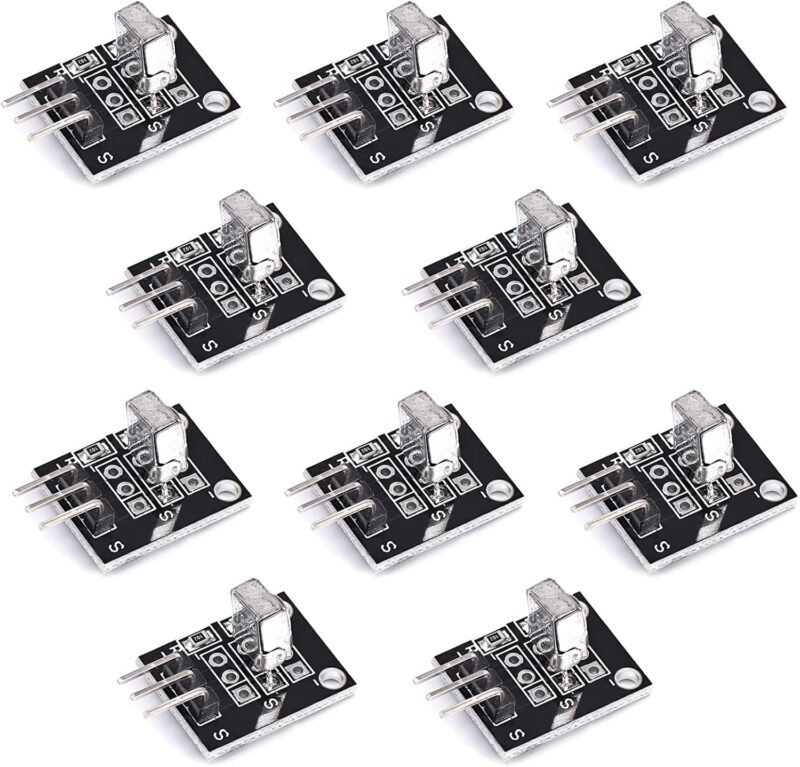
| 📦 Teyleten KY-022 (10pcs) | Receiver modules | VS1838B / TL1838 | 2.7 to 5.5V | Best Receiver Bulk Pack | Buy Here → |
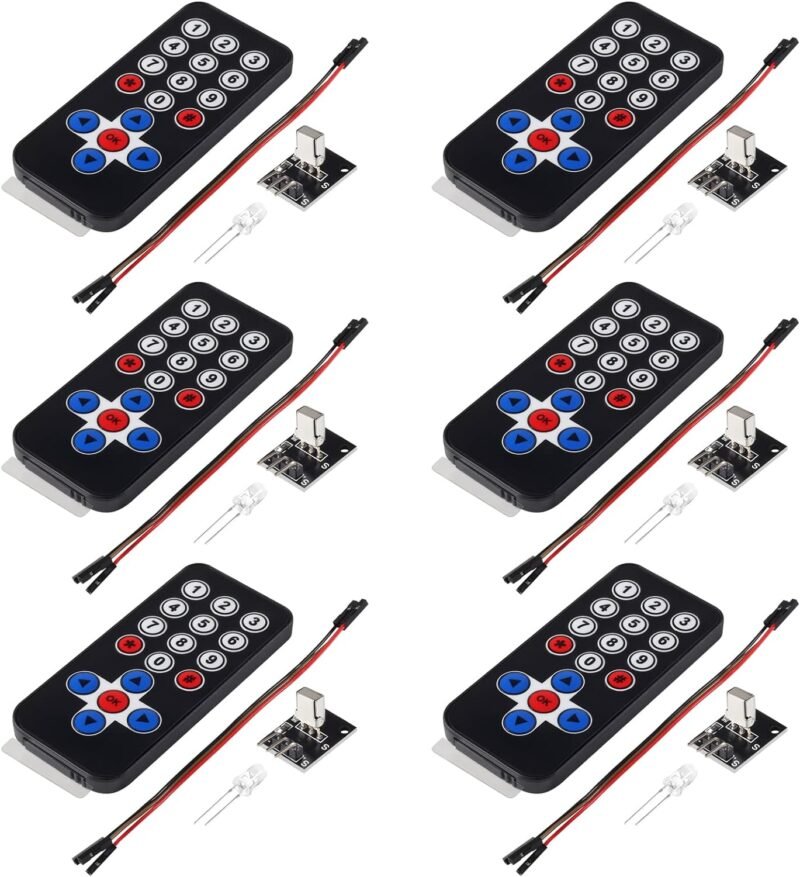
| 🎮 DWEII HX1838 Remote Kits (6 sets) | Remote + receiver kits | HX1838 38kHz | CR2025 remote | Best for Classrooms | Buy Here → |
| 🎯 Bridgold TSOP38238 + TSAL6200 | Receiver + high-power LED | TSOP38238 / TSAL6200 | 2.5 to 5.5V RX | Best Brand-Name Parts | Buy Here → |
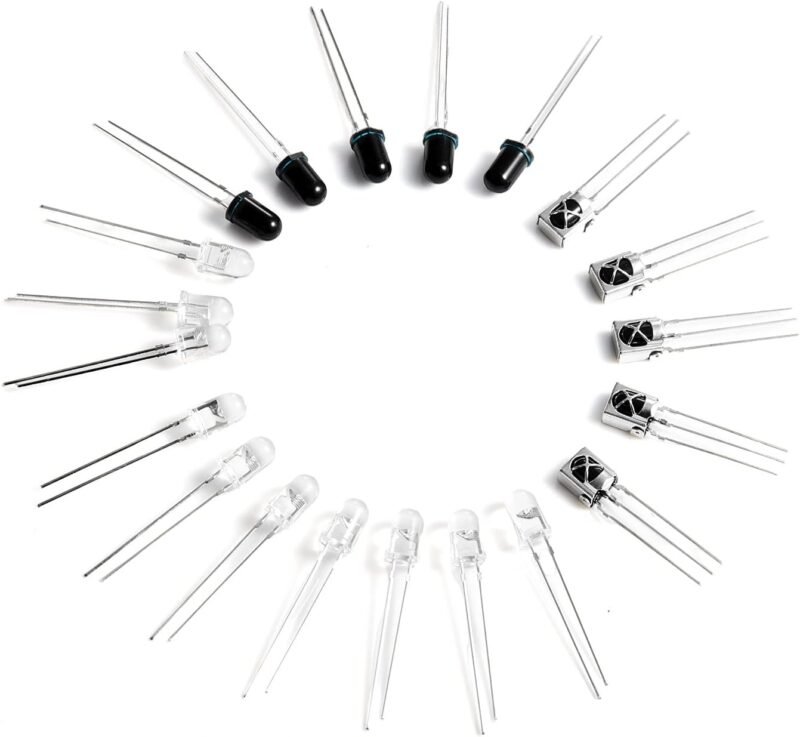
| 💡 CHANZON 940nm LED + VS1838B Kit | 10 emitters + 5 receivers | 940nm / VS1838B | Bare components | Best Emitter Assortment | Buy Here → |
| 📡 HiLetgo ESP8285 ESP-01M IR (2pcs) | Wi-Fi IR transceiver | ESP8285 + IR RX/TX | 5V | Best Wi-Fi IR Board | Buy Here → |
| 🧊 M5Stack ATOMS3 Lite | ESP32-S3 dev kit, IR TX | Built-in IR LED | USB-C | Best ESP32-S3 IR Node | Buy Here → |
| ⚛️ M5Stack Atom Lite | ESP32 dev kit, IR TX | Built-in IR LED | USB-C | Best Classic ESP32 IR Node | Buy Here → |
| 🔌 GODIYMODULES UART IR Codec | Serial IR encode/decode | TTL UART | 5V | Best No-Library Option | Buy Here → |
Specs and features are taken from each Amazon listing’s title and bullet points. Ratings were read from the live listings and can change.
🔍 How to Choose IR Modules
📥
Receive, Transmit or Both
Decoding a remote needs a receiver. Controlling a TV or AC needs an IR LED. Learning then replaying codes, the usual blaster workflow, needs both.
🔢
Carrier Frequency
Most remotes use 38kHz and every receiver here is 38kHz class. If your device uses 36kHz or 40kHz, expect reduced range and test before committing.
⚡
Voltage and Logic Level
ESP32 and Pico are 3.3V. Pick receivers listed for 2.7 or 3.3V and up, or level-shift a 5V-only module’s output.
📏
Range and Beam Angle
A narrow LED like the TSAL6200 throws further; a 45° LED covers a wider area. Use a transistor driver and two or more LEDs for whole-room coverage.
🧩
Bare Parts vs Modules vs Boards
Bare diodes are cheapest, modules plug in without soldering, and ESP boards with IR built in become finished Wi-Fi blasters with ESPHome.
🏆 Detailed Reviews: All 12 Picks
🥇 BEST OVERALL
1. Gikfun IR Emitter LEDs and VS1838B Receivers (10 Pairs)
⭐ 4.5/5 on Amazon · 342 ratings · Bare IR Parts Kit
Buy on Amazon →

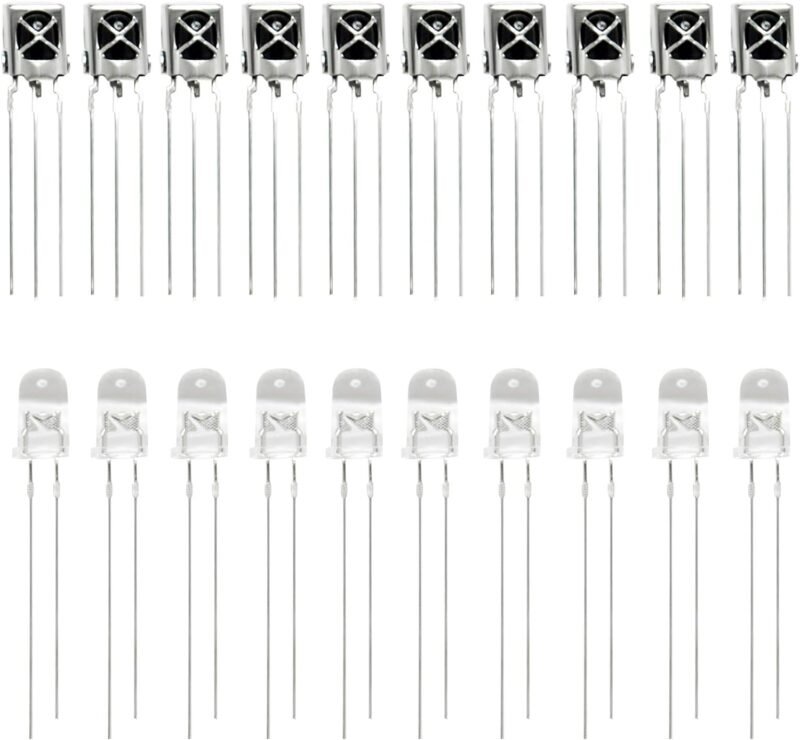
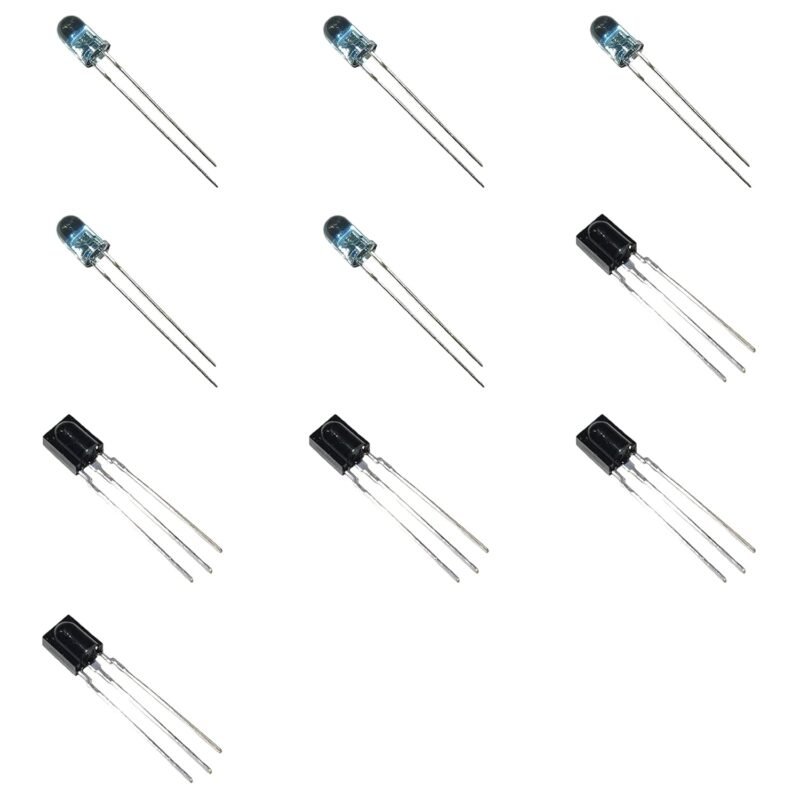
If you want to both receive and send remote codes, this is the kit to start with. The listing includes 10 VS1838B infrared receivers and 10 5mm 940nm IR emission LEDs, which is enough for a TV-remote decoder, an ESP32 IR blaster and a few spares. The VS1838B has the demodulator built in, so its output pin goes straight to any GPIO and works with the IRremote (Arduino) or IRremoteESP8266 libraries, or ESPHome’s remote_receiver. It is the most-reviewed pick here at 4.5 stars from 342 ratings.
✅ Pros- Covers both RX and TX
- Most reviews in this guide
- Breadboard friendly
❌ Cons- Bare parts, no PCB or pull-ups
- LED needs a resistor and ideally a transistor
🎯 Verdict: The best-value way to add IR receive and transmit to any Arduino, ESP32 or Pi project.
👉 Check Price on Amazon →
🔴 BEST MODULE PAIR
2. Dorhea 38kHz IR Receiver and Transmitter Module Kit (4 + 4)
⭐ 4.1/5 on Amazon · 115 ratings · Ready-Made RX and TX Boards
Buy on Amazon →

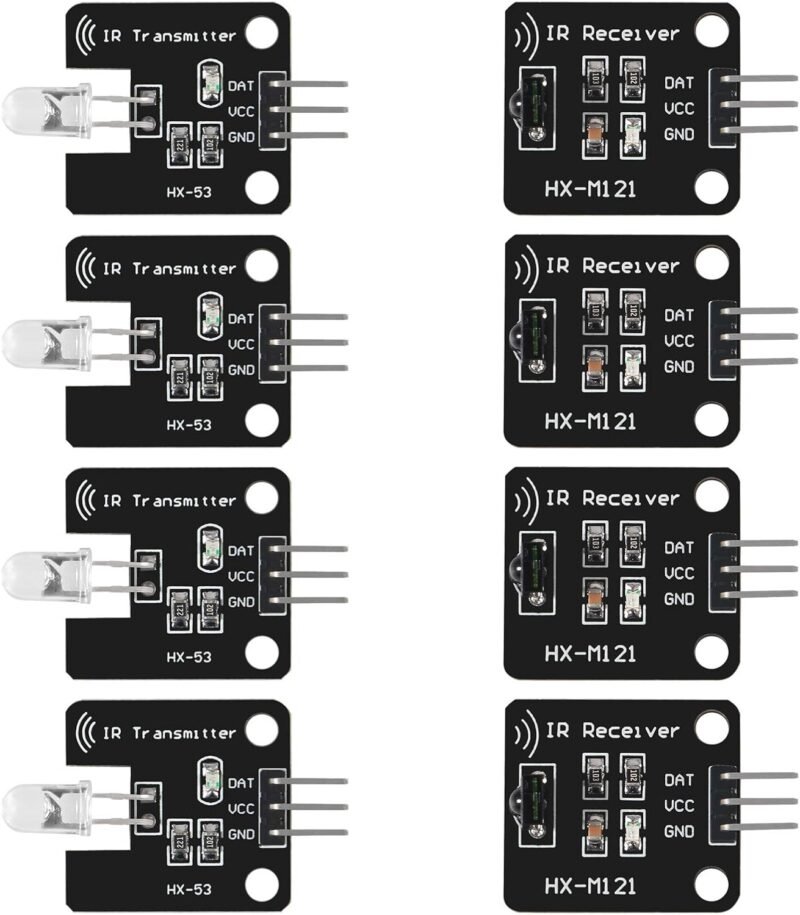
Dorhea’s kit gives you four 38kHz receiver modules and four transmitter modules on small PCBs, so there is no soldering of bare diodes. Per the listing the receiver uses a high-sensitivity 1838 receiver and the transmitter board has an emission indicator LED for debugging. The listing notes the transmitter is driven directly by a single tube and the waveform must be modulated by your program, which is exactly what IR libraries do. It is listed for Raspberry Pi, 51, AVR and ARM platforms and rates 4.1 stars from 115 ratings.
✅ Pros- Plug-in modules, no soldering
- Matched RX and TX boards
- Indicator LED helps debugging
❌ Cons- Short TX range from a single LED
- Pinout labels vary, check before wiring
🎯 Verdict: The easiest way to get a working IR send and receive pair on a breadboard.
👉 Check Price on Amazon →
🎁 BEST COMPLETE KIT · ⭐ 4.8/53. Lonely Binary Infrared Kit (3 Receivers, 3 Transmitters, 3 Remotes)
3 RX + 3 TX + 3 remotes, 3.3V/5V · 13 ratings
Buy Here →

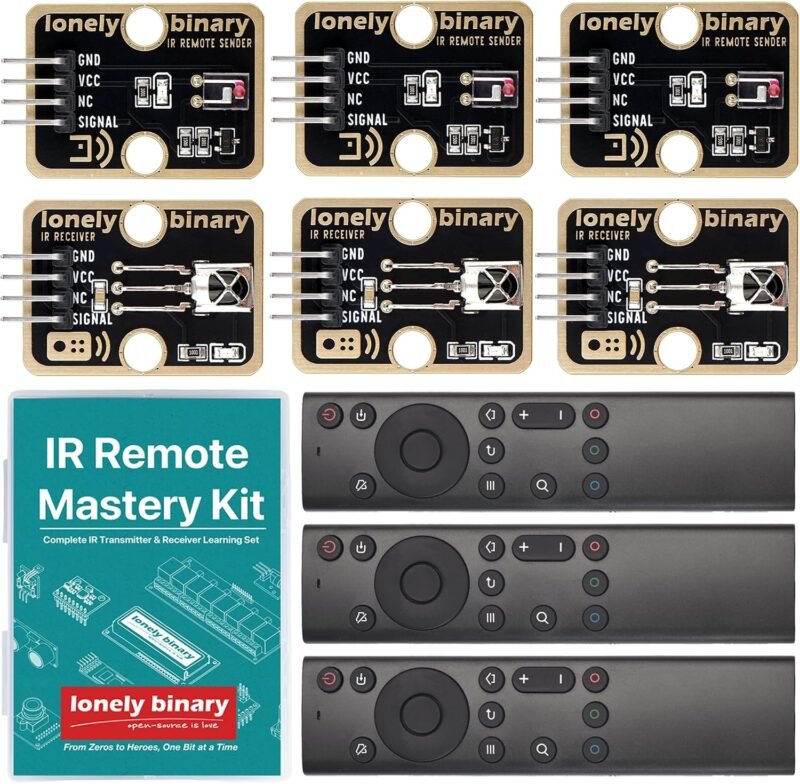
The most complete kit in the guide: per the listing you get 3 TK15 receiver modules, 3 TK16 transmitter modules and 3 handheld remotes on gold-finish (ENIG) boards with a 4-pin plug-and-play interface. It runs on 3.3V and 5V, so it suits an ESP32-S3 or Pico 2 as well as an UNO, and the seller supplies commented example sketches that go from detecting pulses to decoding a remote with the IRremote library. It is new, with only 13 ratings so far, though they average 4.8 stars.
✅ Pros: Remotes included; 3.3V and 5V; example code.
❌ Cons: Only 13 ratings so far.
🎯 Verdict: The best all-in-one starter set if you want remotes, receivers and emitters together.
📶 BEST WIRED RECEIVER · ⭐ 4.3/54. HiLetgo HX1838 VS1838 NEC Infrared Receiver Module with Cable (3pcs)
HX1838, 5V, digital output · 26 ratings
Buy Here →

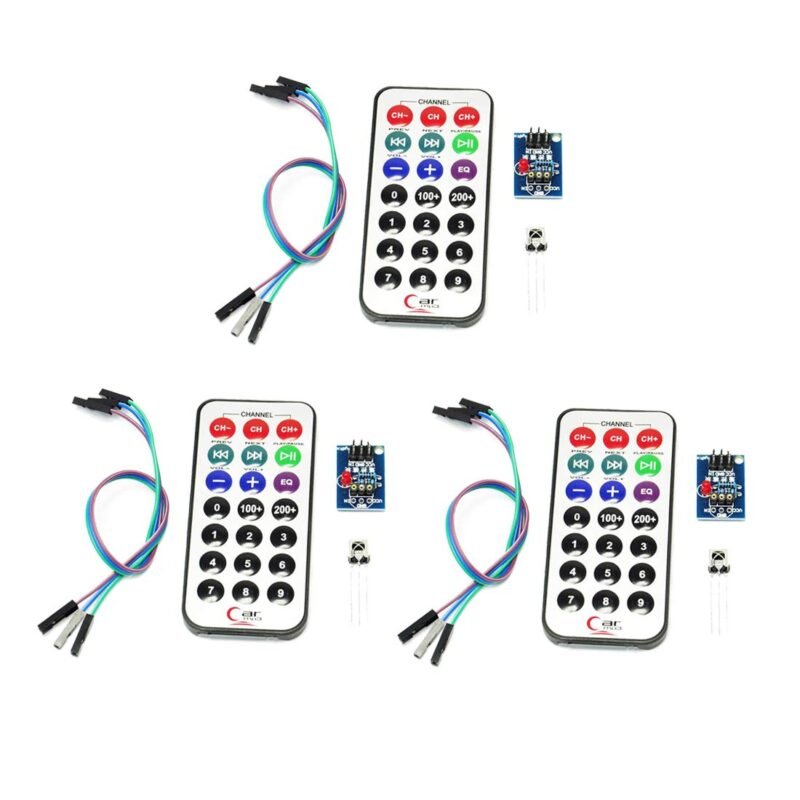
HiLetgo’s three-pack of HX1838 receiver modules ships with cables, which makes it easy to mount the sensor behind a panel window while the board sits elsewhere. The listing gives 5V operation and a digital output, and the HX1838 is the classic receiver for decoding NEC remotes. Check the listing photos for the exact contents before ordering if you also need a handheld remote.
✅ Pros: Cable included; trusted maker brand.
❌ Cons: Listed at 5V, so check behaviour on 3.3V boards.
🎯 Verdict: A tidy receiver for panel-mounted remote-control projects.
📦 BEST BULK RECEIVERS · ⭐ 4.4/55. Teyleten Robot KY-022 VS1838B IR Receiver Module (10pcs)
2.7 to 5.5V, 37.9kHz, 90° angle · 46 ratings
Buy Here →

The KY-022 is the 3-pin receiver board you see in most Arduino sensor kits. This 10-pack lists a 2.7 to 5.5V working voltage, a 37.9kHz receive frequency, a 90° receive angle and up to 18m receive range, so it runs happily on both 3.3V ESP32 boards and 5V Arduinos. Ten modules is plenty for a classroom or for putting one in every room of an ESPHome IR setup.
✅ Pros: Wide voltage range; ten modules.
❌ Cons: Receive only; no transmitter included.
🎯 Verdict: The cheapest way to stock up on KY-022 receivers.
🎮 BEST FOR CLASSROOMS · ⭐ 4.3/56. DWEII HX1838 IR Remote Control Module Kits (6 Sets)
Mini remote + 38kHz receiver per set · 68 ratings
Buy Here →

Each of the six sets pairs an ultra-thin mini IR remote with a 38kHz receiver module, the classic combo for learning how to read NEC codes and switch LEDs, relays or motors. The listing notes a 3 to 5mA dynamic current and that the remote’s CR2025 battery is not included. With 68 ratings at 4.3 stars it is a solid pick for a robotics club or a batch of student projects.
✅ Pros: Remote and receiver in every set; good for groups.
❌ Cons: Batteries not included; no transmitter.
🎯 Verdict: Six ready-to-code remote kits for the price of a few modules.
🎯 BEST PRO-GRADE PARTS · ⭐ 4.1/57. Bridgold TSOP38238 Receiver and TSAL6200 940nm IR LED (10pcs)
TSOP38238 + TSAL6200 940nm, ±17° · 31 ratings
Buy Here →
If your blaster needs more reach, this set pairs the TSOP38238 receiver (2.5 to 5.5V, listed as insensitive to supply ripple and noise) with the TSAL6200 940nm LED, which the listing describes as suitable for high pulse current with a narrow ±17° half-intensity angle. These are the part numbers many ESP8266 and ESP32 IR blaster designs call for. Drive the LED through a transistor to take advantage of its pulse rating.
✅ Pros: Well-known part numbers; narrow, punchy LED beam.
❌ Cons: Bare parts; narrow beam needs aiming.
🎯 Verdict: The upgrade parts for a longer-range DIY IR blaster.
💡 BEST EMITTER ASSORTMENT · ⭐ 4.5/58. CHANZON 940nm IR LED Emitter and VS1838B Receiver Kit
10 x 940nm LEDs (45°), 5 x VS1838B · 153 ratings
Buy Here →

CHANZON’s kit lists ten 940nm 5mm emitters with a 45° emitting angle and five VS1838B receivers. The emitters are rated 1.2 to 1.5V forward voltage and the receivers 3 to 5V. The wider 45° LEDs are handy when one blaster has to hit a TV, soundbar and AC unit across a room, and the kit has a strong 4.5-star average from 153 ratings.
✅ Pros: Wide-angle LEDs; well reviewed.
❌ Cons: Fewer receivers than emitters.
🎯 Verdict: Best for building wide-coverage IR blasters.
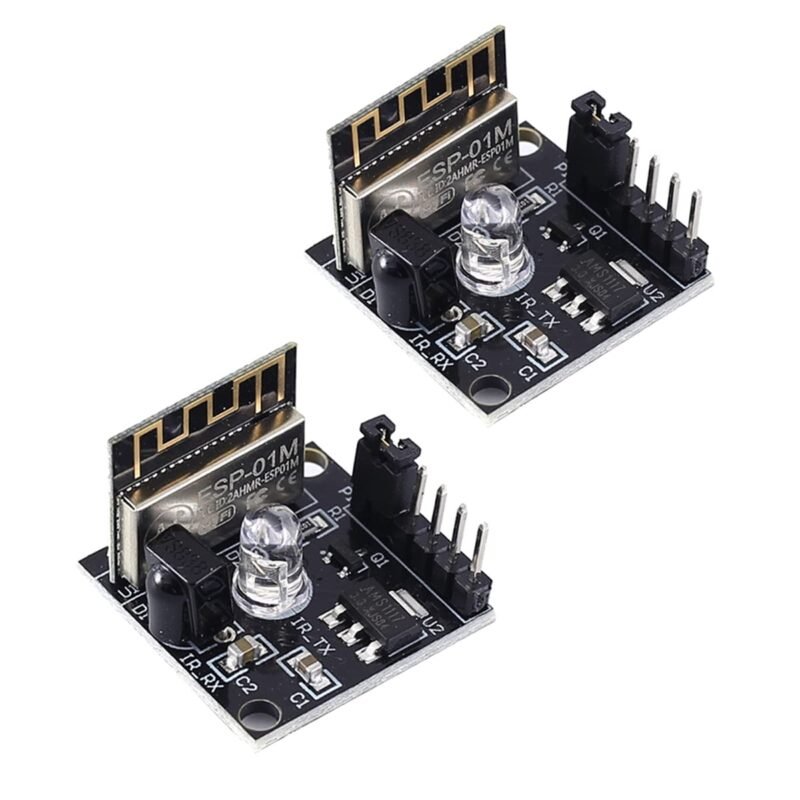
📡 BEST WI-FI IR BOARD · ⭐ 4.4/59. HiLetgo ESP8285 ESP-01M IR Transmitter Receiver Module (2pcs)
ESP8285, IR RX + TX, DC 5V · 24 ratings
Buy Here →
This tiny 23.4 x 23.4 x 18mm board combines an ESP8285 Wi-Fi chip with an IR transmitter and receiver, and the listing says it supports infrared control, Wi-Fi control and firmware updates from a DC 5V supply. That makes it a ready-made base for a DIY Wi-Fi IR blaster. Makers often reflash boards like this with ESPHome or Tasmota, but the listing does not state that, so treat custom firmware as something to verify yourself.
✅ Pros: Wi-Fi and IR in one small board.
❌ Cons: Custom firmware support not stated in listing.
🎯 Verdict: The quickest route to a Wi-Fi IR blaster without wiring.
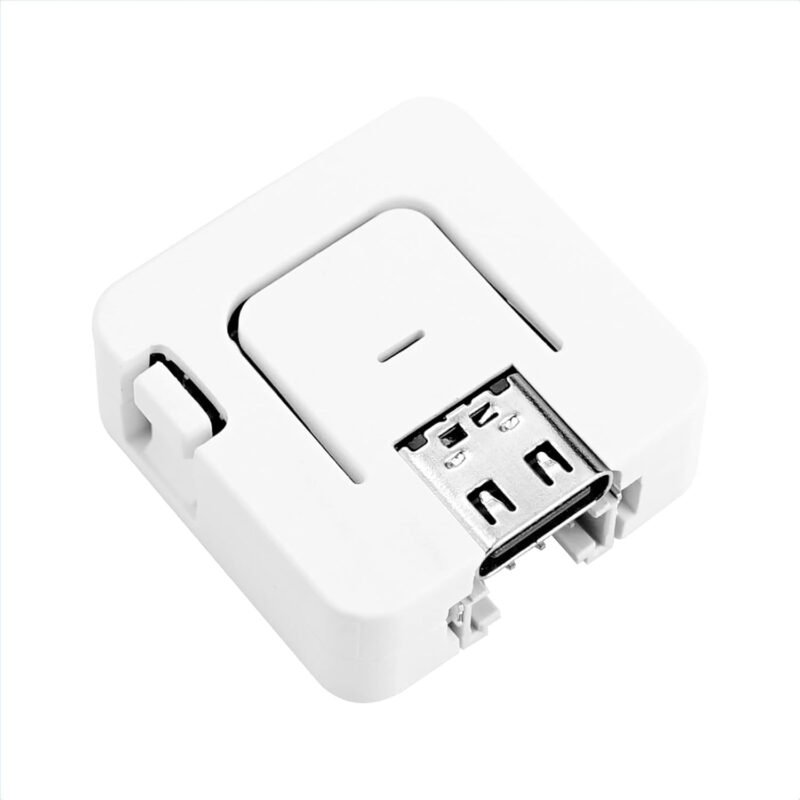
🧊 BEST ESP32-S3 IR NODE · ⭐ 4.8/510. M5Stack ATOMS3 Lite ESP32-S3 Dev Kit (Built-in IR Transmitter)
ESP32-S3FN8, 8MB flash, IR TX + RGB LED · 32 ratings
Buy Here →
The ATOMS3 Lite is a 24 x 24mm ESP32-S3 controller with 8MB flash, a built-in IR transmitter LED and a WS2812C RGB status LED, programmed over USB-C with UiFlow2, Arduino IDE, ESP-IDF or PlatformIO per the listing. Add ESPHome’s remote_transmitter and it becomes a neat, finished-looking IR blaster for Home Assistant. It transmits only, so pair it with a receiver module (like the KY-022 above) if you need to learn codes.
✅ Pros: Tiny, cased and USB-C; IR LED built in.
❌ Cons: Transmit only; short range from one small LED.
🎯 Verdict: The tidiest ESP32-S3 IR blaster you can buy ready-made.
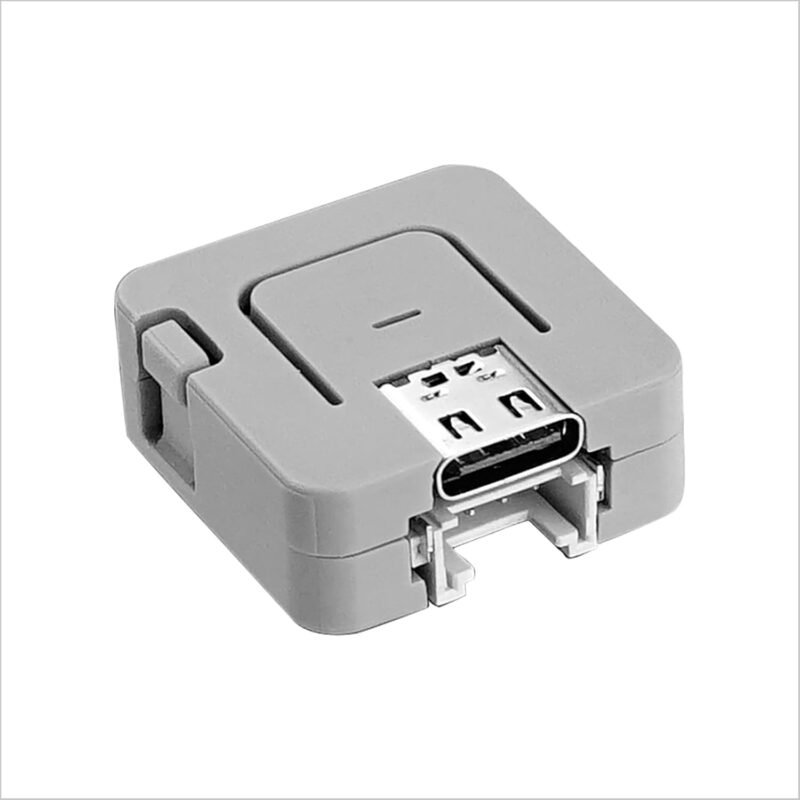
⚛️ BEST CLASSIC ESP32 IR NODE · ⭐ 4.7/511. M5Stack Atom Lite ESP32 IoT Dev Kit (Built-in IR Transmitter)
ESP32, IR TX + SK6812 RGB, USB-C · 21 ratings
Buy Here →
The original Atom Lite uses a classic ESP32 with a built-in IR transmitter and SK6812 RGB LED, and supports UiFlow1/2, Arduino IDE, ESP-IDF and PlatformIO per the listing. It is a well-known ESPHome target in the Home Assistant community for small IR blasters and Bluetooth proxies. Choose it over the ATOMS3 Lite if you want the original ESP32 chip, which has the widest library support.
✅ Pros: Proven ESP32 platform; IR LED built in.
❌ Cons: Transmit only; 21 ratings so far.
🎯 Verdict: A proven, compact IR blaster base for ESPHome.
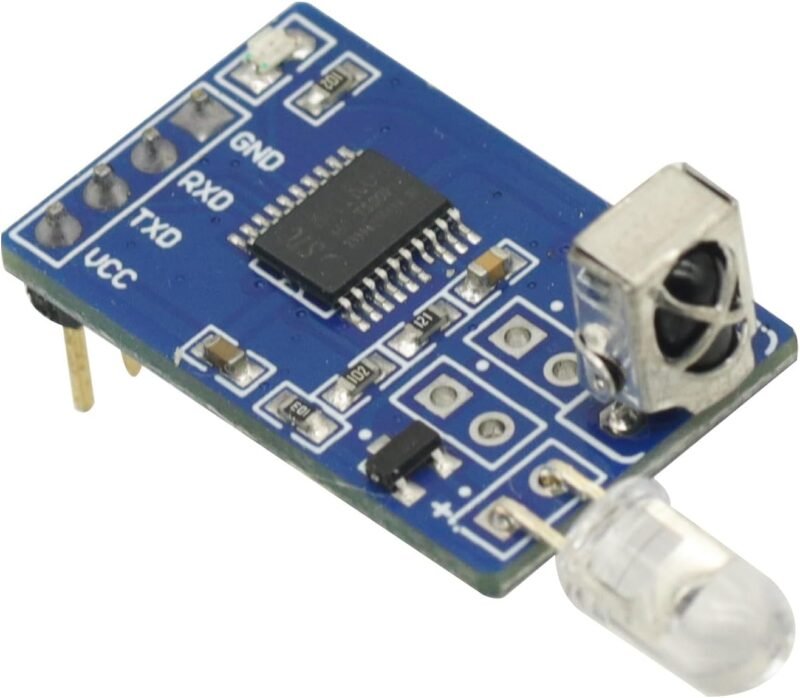
🔌 BEST NO-LIBRARY OPTION · ⭐ 4.0/512. GODIYMODULES 5V Serial IR Decoder and Encoder Module
TTL serial, 5V, 6 to 10m transmit · 12 ratings
Buy Here →

This module does the IR encoding and decoding on board and talks to your microcontroller over TTL serial, so you send and receive codes as UART bytes instead of timing pulses yourself. The listing gives a 5V supply, a 6 to 10m firing distance (8m in the seller’s own test) and an expansion interface for an external emitter. Useful for boards with weak interrupt timing or for languages without a good IR library. Only 12 ratings, so expect thin documentation.
✅ Pros: Offloads IR timing; simple UART interface.
❌ Cons: Few reviews; 5V logic, so level-shift for 3.3V boards.
🎯 Verdict: Handy when you want IR without an IR library.
🛒 Which One for Which Job
📺
Control Projects with a TV Remote
A KY-022 or HX1838 receiver plus a spare remote lets an Arduino switch relays, LEDs or a robot. The DWEII six-set kit is ideal for groups.
🏠
Home Assistant IR Blaster
An M5Stack ATOMS3 Lite or Atom Lite running ESPHome sends TV and AC codes from automations with no soldering.
🎓
Learn and Replay Codes
Use the Gikfun or Dorhea kit: decode with the receiver, then replay with the IR LED using IRremote or IRremoteESP8266.
❄️
Smart Air Conditioner Control
Build a longer-range blaster from the TSAL6200 LED and a transistor, plus a TSOP38238 to capture the remote’s state frames.
🌐
Wi-Fi IR Bridge on a Budget
The HiLetgo ESP8285 ESP-01M board puts Wi-Fi, an IR LED and a receiver on one tiny 5V board.
🧪
Classroom or Workshop Kits
The Lonely Binary kit includes remotes, receivers and emitters with example code for both 3.3V and 5V boards.
⚙️ IR Receiver and Emitter Types Compared
| Option | Typical Part | Supply | Soldering | Code Needed | Best For |
|---|
| Bare receiver | VS1838B, TSOP38238 | 2.5 to 5.5V (TSOP) | Yes | IR library | Custom PCBs, tight spaces |
| Receiver module | KY-022, HX1838 | 2.7 to 5.5V or 5V | None | IR library | Breadboards and kits |
| Bare IR LED | 940nm 5mm, TSAL6200 | 1.2 to 1.5V forward | Yes | IR library + transistor | Longest range blasters |
| Transmitter module | Dorhea TX board | Board supply | None | IR library | Quick TX tests |
| ESP board with IR | ATOMS3 Lite, Atom Lite, ESP-01M | USB-C or 5V | None | ESPHome YAML | Home Assistant blasters |
| UART codec module | GODIYMODULES | 5V | None | Serial bytes only | No-library projects |
Highlighted cells mark the strongest option in each column. Supply values come from the listings in this guide; always check the datasheet of the exact part you receive.
❓ Frequently Asked Questions
What is the difference between VS1838B, HX1838 and TSOP38238?
All three are 38kHz demodulating IR receivers with a digital output. The VS1838B and HX1838 are low-cost generic parts used on most kit modules, while the TSOP38238 is a brand-name receiver listed for 2.5 to 5.5V with better rejection of supply noise. For hobby remote decoding any of them works; for a product or a noisy power supply, pick the TSOP38238.
Can an ESP32 send IR codes to my TV or air conditioner?
Yes. Wire a 940nm IR LED through a transistor to a GPIO pin, or use a board with an IR LED built in such as the M5Stack Atom Lite, then use IRremoteESP8266 or ESPHome’s remote transmitter. AC remotes send long state frames, so use a library that supports your AC brand. Our IR remote home automation project shows the receive side in a real build.
Do 5V IR receiver modules work with 3.3V boards?
Many do, because the VS1838B family typically runs from about 2.7V, and the Teyleten KY-022 is listed for 2.7 to 5.5V. If a module is listed for 5V only, power it at 5V and use a level shifter or divider on its output before it reaches an ESP32 pin.
How far can a DIY IR blaster reach?
A single LED driven straight from a GPIO pin manages a few metres. Driving the LED through a transistor at higher pulse current, or using two LEDs with different angles, extends that to room scale. The GODIYMODULES serial module lists 6 to 10m, which is a useful reference for what a properly driven emitter can do.
Is an IR obstacle sensor the same as an IR receiver?
No. Obstacle and line sensors detect reflected IR light from their own LED and do not decode remote codes. If you want object detection, see our IR sensors and obstacle avoidance modules guide. For remote control, you need a 38kHz demodulating receiver like the ones above.
🏁 Final Verdict: Best IR Receiver and Transmitter Modules
The picks that cover every IR job:
🥇 Best Overall: Gikfun IR LEDs + VS1838B Receivers
Buy Here →🔴 Best Module Pair: Dorhea 38kHz RX and TX Module Kit
Buy Here →🎁 Best Complete Kit: Lonely Binary Infrared Kit
Buy Here →🧊 Best ESPHome IR Blaster: M5Stack ATOMS3 Lite
Buy Here →🎯 Best Long-Range Parts: Bridgold TSOP38238 + TSAL6200
Buy Here →📦 Best Bulk Receivers: Teyleten KY-022 10-Pack
Buy Here →