⚙️ Best Stepper Motors & Driver Kits for Robotics & Embedded Devices
8 stepper motors and driver boards ranked for makers, roboticists and CNC builders — from a $5 beginner 28BYJ-48 kit to silent TMC2209 drivers and high-torque Nema 23 motors — with real specs, honest verdicts and direct Amazon links.
A stepper motor is the muscle behind almost every precise-motion project you build — 3D printers, CNC routers, camera sliders, robot arms, pick-and-place heads and automated valves all rely on them. Unlike a plain DC motor, a stepper moves in exact, repeatable increments (typically 1.8° per step), so your microcontroller always knows precisely where the shaft is. But the motor is only half the story: it is deaf and blind without a stepper driver that translates simple STEP/DIR pulses from an Arduino, ESP32 or STM32 into the carefully timed coil currents the motor actually needs.
The tricky part is matching the pair to your project. A tiny 28BYJ-48 and ULN2003 board is perfect for a first blinking-curtain project but useless for a CNC gantry; a Nema 23 paired with a TB6600 or DM542T will push a router through aluminium but is overkill for a desk robot. This guide ranks 8 stepper motors and driver kits across every budget — absolute beginner to workshop-grade — on the specs that actually matter: holding torque, rated current, microstepping resolution, supply voltage and how quietly and coolly they run.
Torque ratings are holding torque (motor stationary) — usable torque drops fast as RPM climbs, so size up if you need speed and force. A driver’s “peak” current is a marketing number; run continuously at roughly 70% of it or the chip will thermally shut down, and always fit the heatsinks and set the current-limit potentiometer. Cheap A4988/DRV8825 boards are noisy and warm — if you want a quiet printer, spend up for TMC2209. Finally, most drivers and bench motors ship without a power supply or wiring, so budget for a 12–36 V supply and connectors.
⚙️ Quick Comparison — All 8 Stepper Motors & Drivers
| Product | Type | Key Specs | Best For | Buy |
|---|---|---|---|---|
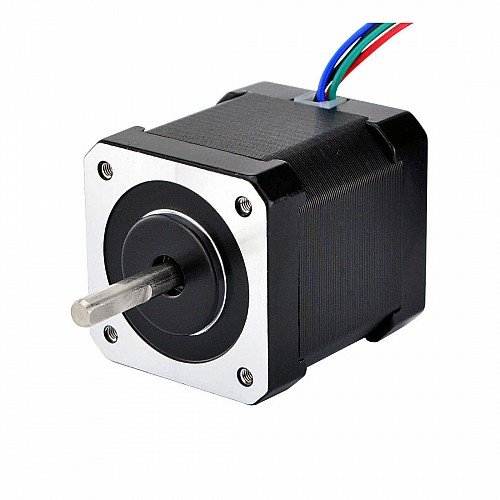
| 🥇 STEPPERONLINE Nema 17 | Motor | 59Ncm · 2A · 1.8° · 42×48mm | Best Overall Motor | Buy → |
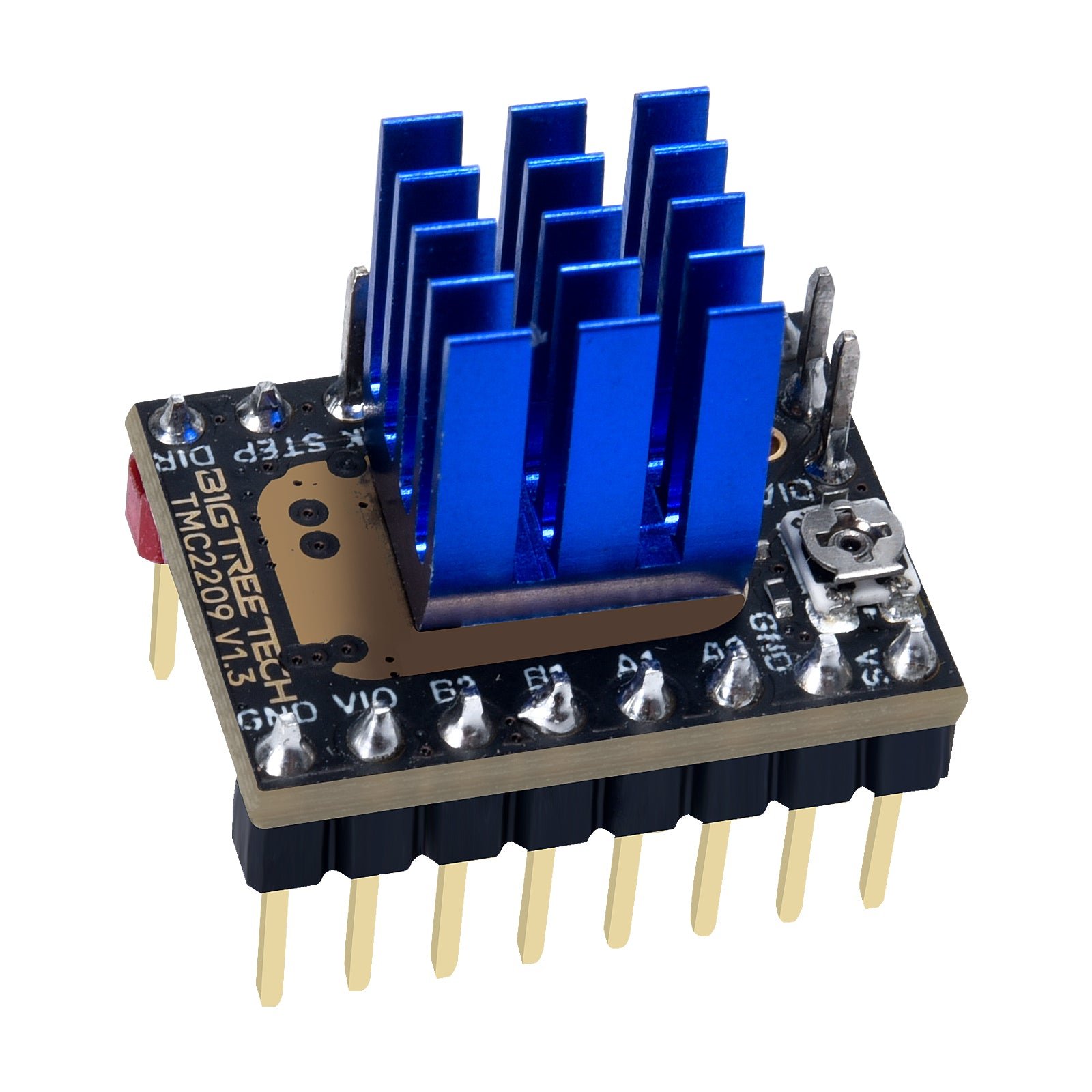
| 🏅 BIGTREETECH TMC2209 (5-pk) | Driver | 2.0A RMS · UART · 256 µstep · silent | Best Silent Driver | Buy → |
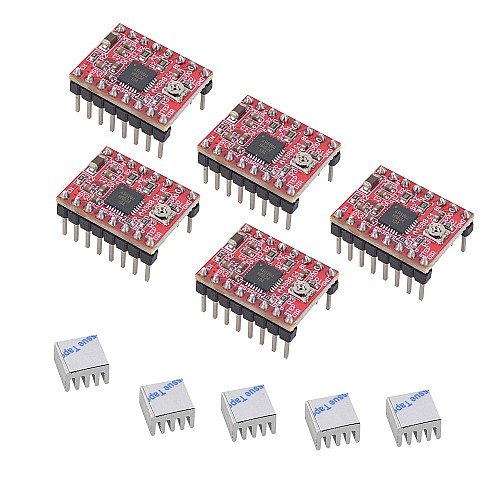
| 💵 HiLetgo A4988 (5-pk) | Driver | 35V · 2A · 1/16 µstep · heatsinks | Best Budget Driver | Buy → |
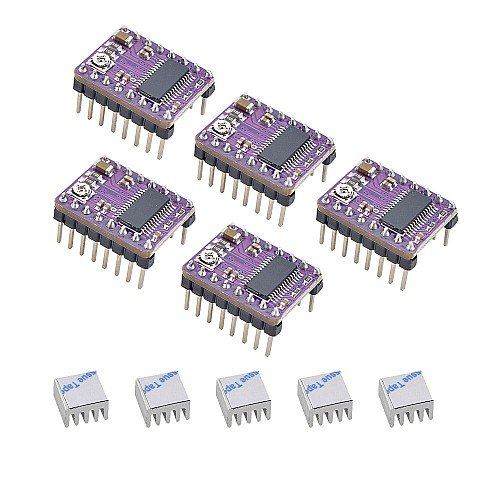
| 🖨️ RepRapDiscount DRV8825 (5-pk) | Driver | 45V · 2.2A · 1/32 µstep | Best for 3D Printers | Buy → |
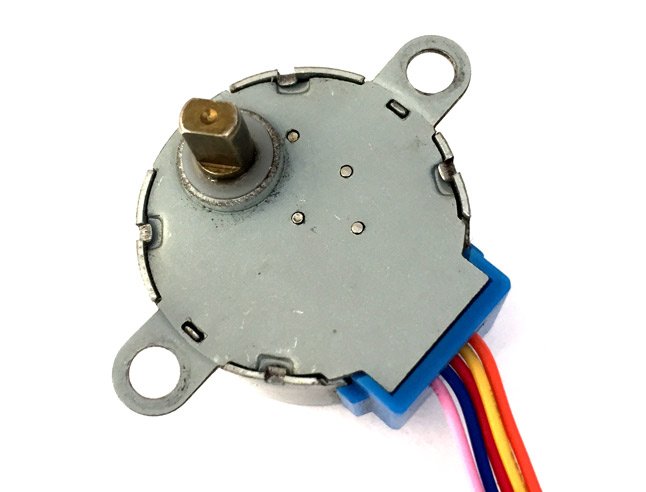
| 🎓 ELEGOO 28BYJ-48 + ULN2003 (5 sets) | Motor + Driver Kit | 5V · 4-phase · unipolar · geared | Best for Beginners | Buy → |
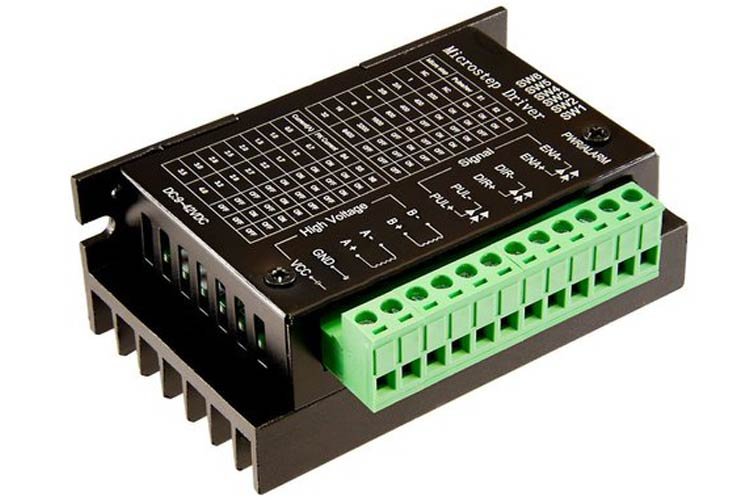
| 🏗️ MYSWEETY TB6600 | Driver | 9–42V · 4A · 1/32 µstep | Best for CNC / High Current | Buy → |
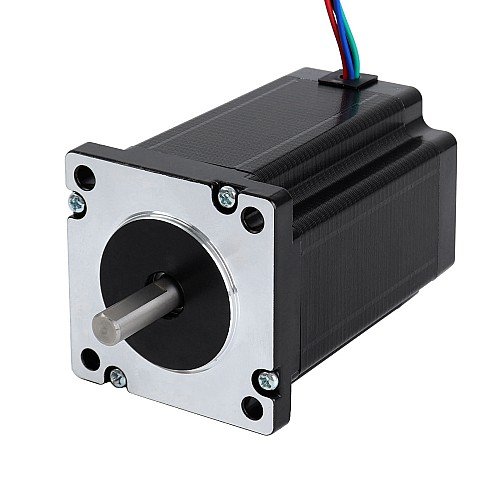
| 🧰 STEPPERONLINE Nema 23 | Motor | 1.9Nm · 3A · 57×76mm | Best High-Torque Motor | Buy → |
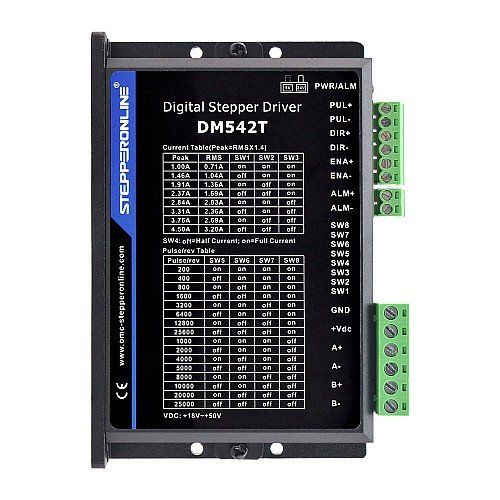
| 🔧 STEPPERONLINE DM542T | Driver | 18–50VDC · 1.0–4.2A · 1/128 µstep · DSP | Best Pro Digital Driver | Buy → |
Prices change frequently, so we’ve deliberately left them out — tap any Buy → button to see the current Amazon price. All links use our affiliate tag microlab05-20.
🔍 What to Look for in a Stepper Motor & Driver
Holding Torque
Measured in Ncm or oz-in, it’s the force the motor resists when stopped. Nema 17 (≈40–65 Ncm) suits printers and light robots; Nema 23 (1.5–3 Nm) drives CNC axes. Remember torque falls as speed rises.
Rated Current & Voltage
The driver must supply the motor’s per-phase current (e.g. 2A) and tolerate your rail voltage. Higher voltage = faster stepping. Match driver current headroom to the motor and set the Vref limit.
Microstepping
Splitting each full step into 1/16, 1/32 or 1/256 micro-steps gives smoother, quieter motion and finer resolution. TMC2209 interpolates to 256; A4988 tops out at 1/16.
Noise & Heat
StealthChop drivers (TMC2209) run near-silent and cool; classic A4988/DRV8825 whine and need heatsinks. For bedroom printers and quiet robots, silence is worth the premium.
Control Interface
Nearly all use simple STEP/DIR logic that any Arduino/ESP32 can drive. UART drivers (TMC2209) add live current & sensorless-homing config; standalone drivers (TB6600, DM542T) use DIP switches.
🏆 Detailed Reviews — All 8 Picks
🛒 How to Choose the Right Stepper Setup
Just learning?
Start with the ELEGOO 28BYJ-48 + ULN2003 kit — five zero-solder motor-and-driver sets that run straight off an Arduino or ESP32.
Building / upgrading a 3D printer?
Pair Nema 17 motors with TMC2209 drivers for silence, or DRV8825 if you just want a cheap current bump.
Robotics / general projects?
The Nema 17 + A4988 combo on a CNC shield is the cheapest reliable STEP/DIR platform for arms, sliders and plotters.
CNC router / heavy load?
Use Nema 23 motors with a TB6600 (budget) or DM542T (precision) driver on a 24–48 V supply.
Need it quiet?
Only the TMC2209 here uses StealthChop — the clear pick for bedroom printers and noise-sensitive rigs.
Precision automation?
The DM542T’s DSP tuning and 1/128 microstepping give the smoothest, most repeatable motion in this guide.
⚙️ Key Specs Compared — Side by Side
| Spec | Nema 17 | Nema 23 | TMC2209 | TB6600 | DM542T |
|---|---|---|---|---|---|
| Category | Motor | Motor | Driver | Driver | Driver |
| Torque / Current | 59 Ncm · 2A | 1.9 Nm · 3A ⭐ | drives 2.0A | up to 4A | 1.0–4.2A |
| Voltage | — | — | 4.75–28V | 9–42V | 18–50V ⭐ |
| Max Microstep | — | — | 1/256 ⭐ | 1/32 | 1/128 |
| Quiet (StealthChop) | — | — | Yes ⭐ | No | No |
| UART config | — | — | Yes ⭐ | DIP | DIP |
| Best axis size | Nema 17 | Nema 23 | Nema 17 | Nema 23/34 ⭐ | Nema 17–24 |
⭐ marks the standout figure in each row. Motor rows list torque/current; driver rows list what the driver can supply.
❓ Frequently Asked Questions
What’s the difference between a stepper motor and a stepper driver?
The motor is the mechanical part that turns in fixed steps. The driver is the electronics between your microcontroller and the motor — it takes low-power STEP/DIR signals and switches the higher coil currents in the right sequence, adding microstepping and current limiting. You almost always need both: a Nema 17, for example, is useless without an A4988, DRV8825 or TMC2209 to power it. The one exception here is the 28BYJ-48 kit, which bundles a matched ULN2003 driver board.
Which driver should I use with a Nema 17?
For learning or a cheap plotter, an A4988 is fine. If you want quiet, smooth motion (a 3D printer in your room), choose a TMC2209. If you need a bit more current than an A4988 but don’t want UART, a DRV8825 is the easy middle ground. All three plug into the same CNC-shield/RAMPS sockets — just re-set the current limit for each.
Can an Arduino or ESP32 run these directly?
Yes — every driver here uses simple STEP/DIR (or UART) logic that any 3.3 V/5 V microcontroller can generate, and libraries like AccelStepper and Klipper make it easy. The board only sends signals, though; the motor current comes from a separate power supply (5 V for the 28BYJ-48, typically 12–24 V for Nema 17, 24–48 V for Nema 23). Never try to power a bench stepper from the Arduino’s 5 V pin.
Why do my A4988/DRV8825 drivers get so hot?
That’s normal — they dissipate the difference between supply voltage and coil voltage as heat. Fit the included heatsink, add a little airflow, and above all set the Vref current limit with a multimeter so you’re not pushing more current than the motor needs. If they still run too hot or noisy, that’s exactly the problem the cooler, quieter TMC2209 solves.
Do I need Nema 23, or is Nema 17 enough?
For 3D printers, plotters, camera sliders and most desktop robots, Nema 17 is plenty. Step up to Nema 23 only when you’re cutting or pushing real load — CNC routers, mills, lathes and larger gantries — where its ~3× torque prevents skipped steps. Bigger motors also demand a beefier driver (TB6600/DM542T) and a higher-voltage supply, so don’t over-buy.
🏁 Final Verdict — Best Pick for Every Budget
The right stepper setup for every project and wallet:
No single motor or driver is right for everyone, but the pairing logic is simple: pick the motor for the load (28BYJ-48 to learn, Nema 17 for most projects, Nema 23 for CNC) and the driver for the behaviour you want (A4988/DRV8825 for cheap, TMC2209 for silence, TB6600/DM542T for high current). For the majority of makers, a Nema 17 with a TMC2209 is the sweet spot you won’t outgrow. Ready to build? Wire your new stepper up with our Arduino, ESP32, STM32 and Raspberry Pi Pico tutorials and start moving things.
💬 Not sure which motor or driver fits your project? Tell us what you’re building — a printer, a CNC, a robot arm or a classroom demo — in the comments below and we’ll point you to the right pair.
All Amazon links above use our affiliate tag (microlab05-20). Buying through them supports microcontrollerslab.com at no extra cost to you. We’ve intentionally kept prices out of the tables because they change constantly — always confirm the current price and exact variant on Amazon before you buy.