⚠️ Affiliate Disclosure: This post contains Amazon affiliate links. If you purchase through our links, we may earn a small commission at no extra cost to you. We only recommend products we have researched and verified against the live Amazon listing. Prices change frequently, so we don’t list them here. Always tap through and confirm the current price on Amazon before buying.
Ultimate Buying Guide
🔬 Best Arduino Pro Mini Boards: 5V & 3.3V Genuine Boards, Clones and Programmers
8 picks for tiny, low-power ATmega328P builds: genuine SparkFun boards, value-packed 5V and 3.3V clone packs, a starter bundle, and the USB-serial programmers you need to actually upload code.
✅ 8 Products Reviewed
✅ Verified Amazon ASINs
✅ 5V & 3.3V Covered
✅ Honest Pros & Cons
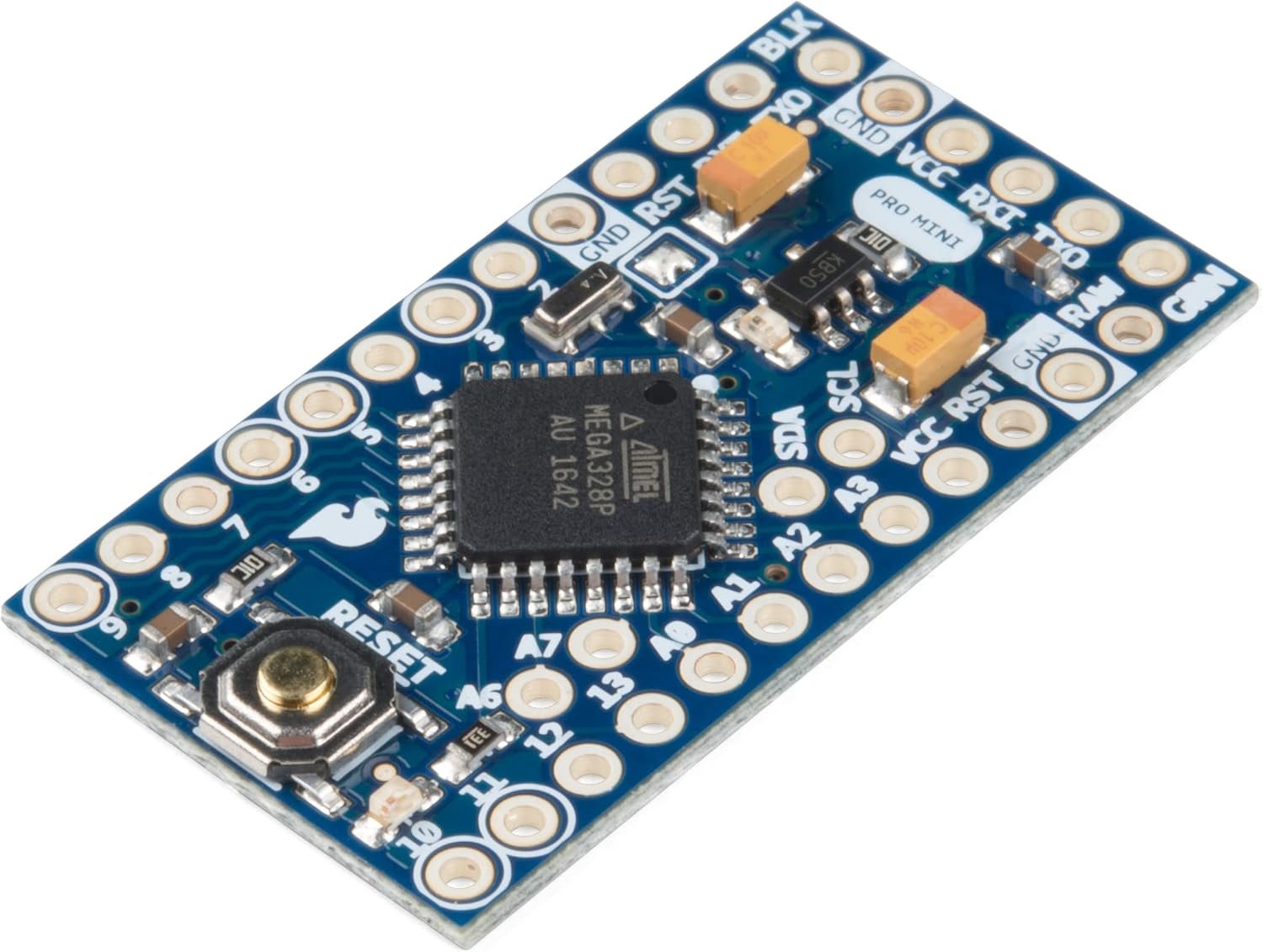
The Arduino Pro Mini is the board you reach for when a project has to be small, cheap and frugal with power. It strips the classic ATmega328P Arduino down to the essentials: no USB chip, no big connectors, just the microcontroller, a crystal (or resonator), a regulator and a row of pins on a board roughly 18 x 33 mm. That makes it ideal for wireless sensor nodes, wearables, battery-powered data loggers, RC gadgets and anything you want to permanently embed once the prototype on your Uno is done.
The official Arduino-branded Pro Mini has long been retired, so today you buy either the genuine SparkFun Pro Mini (SparkFun designed the original) or one of countless clones. The key choice is the variant: 5V/16MHz for full Uno-speed compatibility with 5V parts, or 3.3V/8MHz for LiPo batteries, 3.3V radios and ultra-low-power sleep. Because there is no onboard USB, you also need a USB-to-serial (FTDI-style) programmer. This guide covers all three: genuine boards, clones and programmers.
💡 Reality check before you buy: Pro Mini clones are cheap for a reason. Pin placement of A4/A5 and A6/A7 moves between clone revisions, so a shield or PCB footprint designed for one board may not fit another. Some clones use weaker regulators, a ceramic resonator instead of a crystal, or ship with an older bootloader that needs a different upload setting. None of them have USB, so budget for an FTDI or CP2102 adapter, and expect to solder headers yourself. Finally, match the variant to your parts: a 5V board will happily fry a 3.3V-only sensor or radio, and in the Arduino IDE you must select the correct processor (5V/16MHz vs 3.3V/8MHz) or uploads fail and timing runs at half speed.
🔬 Quick Comparison: All 8 Pro Mini Picks
| Product | Type | Voltage / Clock | Headers | Best For | Buy |
|---|
| 🥇 SparkFun Pro Mini 5V | Genuine · 1 board | 5V / 16MHz | No (solder your own) | Best Overall | Buy Here → |
| 🏅 HiLetgo Pro Mini 5V | Clone · 3 boards | 5V / 16MHz | Included (loose) | Best Value | Buy Here → |
| 🔋 SparkFun Pro Mini 3.3V | Genuine · 1 board | 3.3V / 8MHz | No (solder your own) | Best for Battery Projects | Buy Here → |
| 💧 HiLetgo Pro Mini 3.3V | Clone · 3 boards | 3.3V / 8MHz | Check listing | Best Budget 3.3V Clone | Buy Here → |
| 🧰 Pro Mini + CP2102 Kit | Clone · board + adapter | 5V / 16MHz | Check listing | Best Starter Bundle | Buy Here → |
| 📦 Pro Mini 5-Pack | Clone · 5 boards | 5V / 16MHz | Check listing | Best Bulk Pack | Buy Here → |
| 🔌 SparkFun FTDI Basic 5V | USB-serial programmer | 5V logic | 6-pin female | Best Official Programmer | Buy Here → |
| 🛠️ HiLetgo FT232RL | USB-serial programmer | 3.3V / 5V jumper | 6-pin male | Best Budget Programmer | Buy Here → |
Prices are intentionally not listed because they change often. Pack sizes and included accessories are taken from the Amazon listings at the time of writing; always confirm details and the live price on Amazon before buying.
🔍 What to Look for in an Arduino Pro Mini
⚡
5V/16MHz vs 3.3V/8MHz
The 5V version runs at full Uno speed and talks directly to 5V modules. The 3.3V version runs at 8MHz (the ATmega328P isn’t rated for 16MHz at 3.3V), works straight from a LiPo and connects to 3.3V radios like the nRF24L01 and ESP-01 without level shifters.
✅
Genuine vs Clone
SparkFun boards have a consistent, documented pinout, a quality MIC5205 regulator and a real crystal. Clones cost far less per board and are fine for most builds, but layout, regulator and oscillator quality vary between batches.
🔌
Programming Interface
There’s no USB. You upload through the 6-pin FTDI header (GND, CTS, VCC, TX, RX, DTR). Get an adapter that exposes DTR so the board auto-resets on upload; otherwise you’ll be pressing reset by hand every time.
🔋
Power & Sleep Current
The RAW pin feeds the onboard regulator. For coin-cell or multi-year battery nodes, the 3.3V board with its power LED (and optionally the regulator) removed can sleep in the microamp range using a low-power library.
📐
Pinout & Headers
Check where A4/A5 (I2C) and A6/A7 (analog-only) sit, whether headers are included, and whether they are pre-soldered. Clone packs usually ship loose headers, which lets you choose straight, right-angle or no headers at all.
🏆 Detailed Reviews: All 8 Pro Mini Picks
🥇 BEST OVERALL

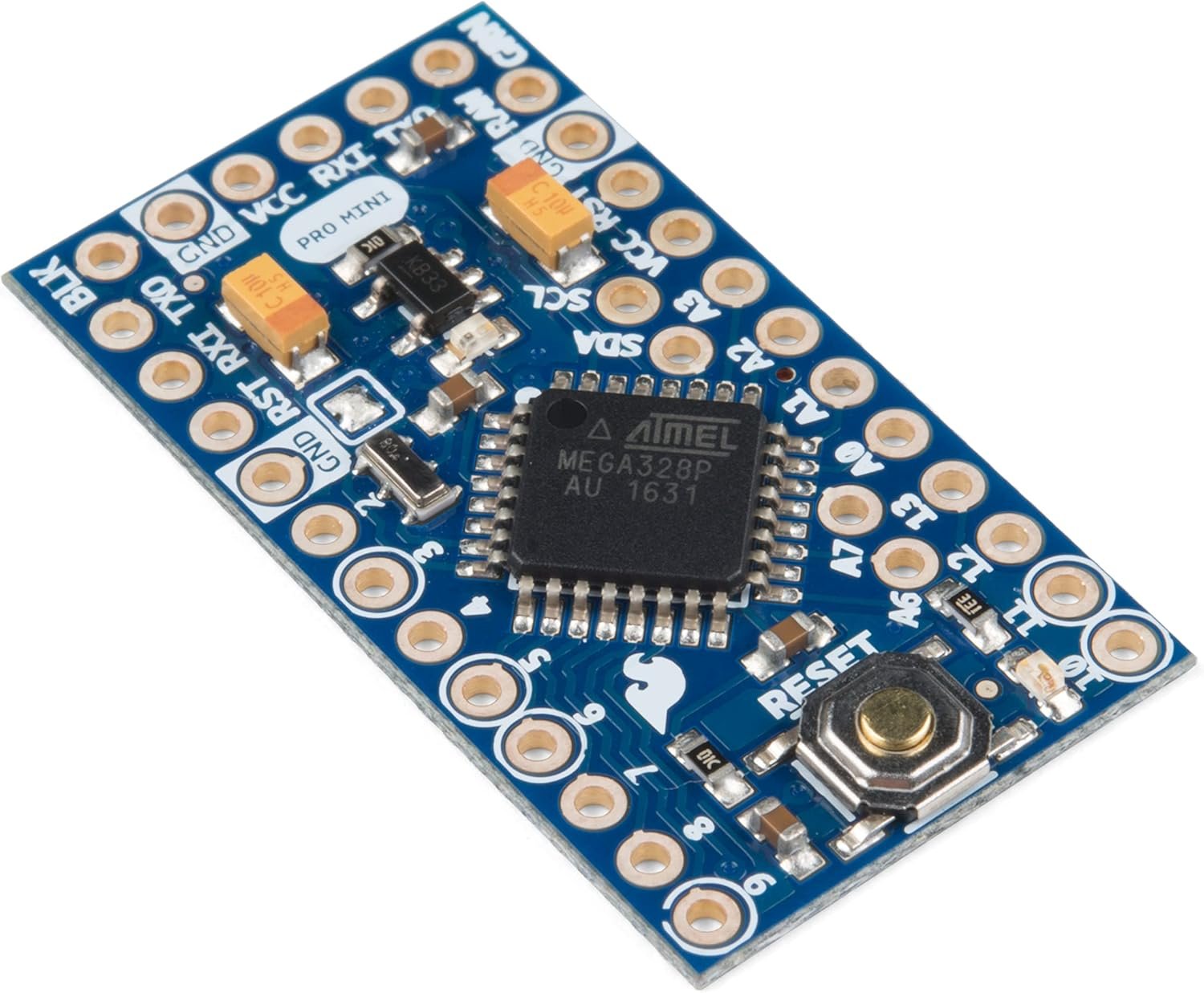
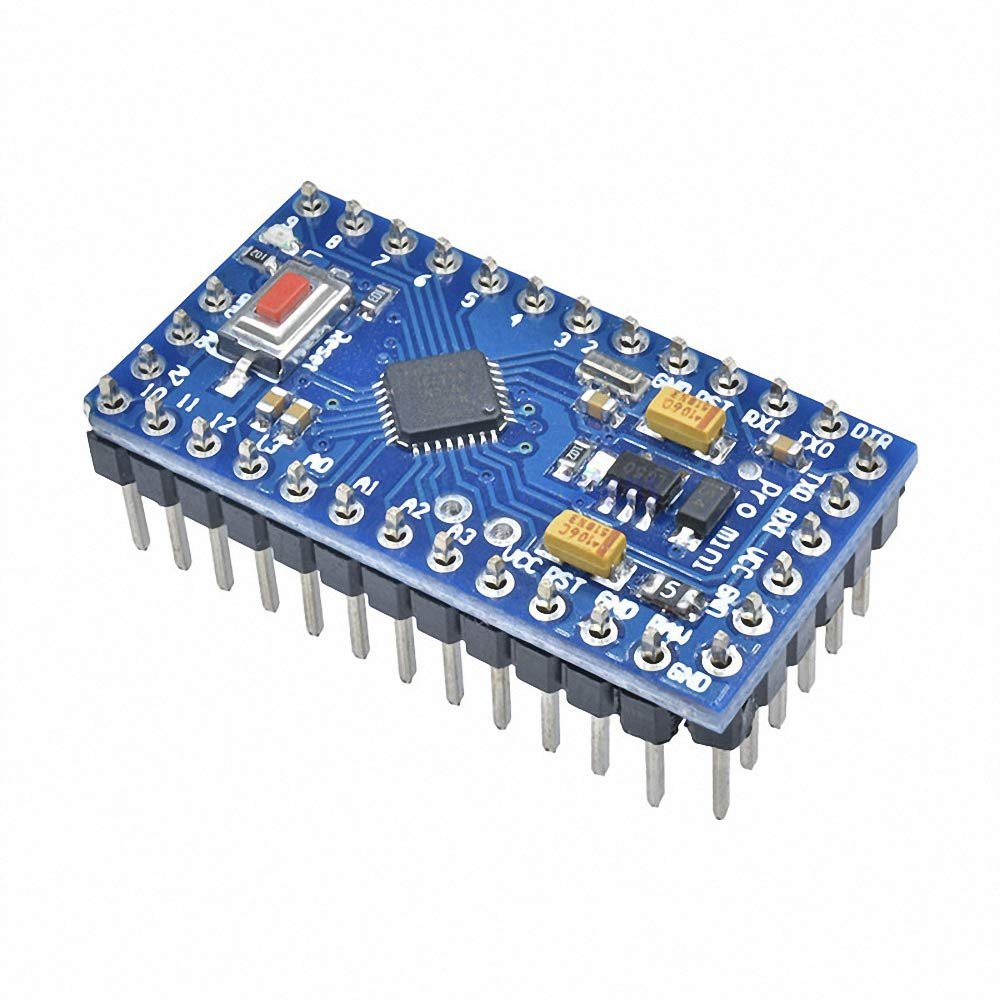
The SparkFun Pro Mini 5V/16MHz is the board every clone copies, and it’s still the one to buy when reliability matters. It runs the ATmega328P at the same 5V/16MHz as an Arduino Uno, so any Uno sketch and 5V module works unchanged. You get 14 digital I/O (6 PWM), 8 analog inputs including the analog-only A6/A7, a quality MIC5205 regulator fed from the RAW pin, a proper crystal, and the standard 6-pin FTDI header with auto-reset. SparkFun publishes schematics, Eagle files and a hookup guide, and the pin layout is consistent from board to board, which matters when you design a carrier PCB around it.
✅ Pros- Genuine, consistent pinout and documentation
- Full 5V/16MHz Uno compatibility
- Quality regulator and crystal
- Open-source hardware files for custom PCBs
❌ Cons- Costs several times a clone per board
- No headers included
- Needs a separate FTDI programmer
🎯 Verdict: The best Pro Mini for anyone who wants one board that simply works, and the safest reference when designing a PCB footprint.
👉 Check Price on Amazon →
🏅 BEST VALUE
HiLetgo Pro Mini 5V/16M (3-Pack)
⭐ 4.6/5 · Cheapest Way to Stock Up
Buy on Amazon →

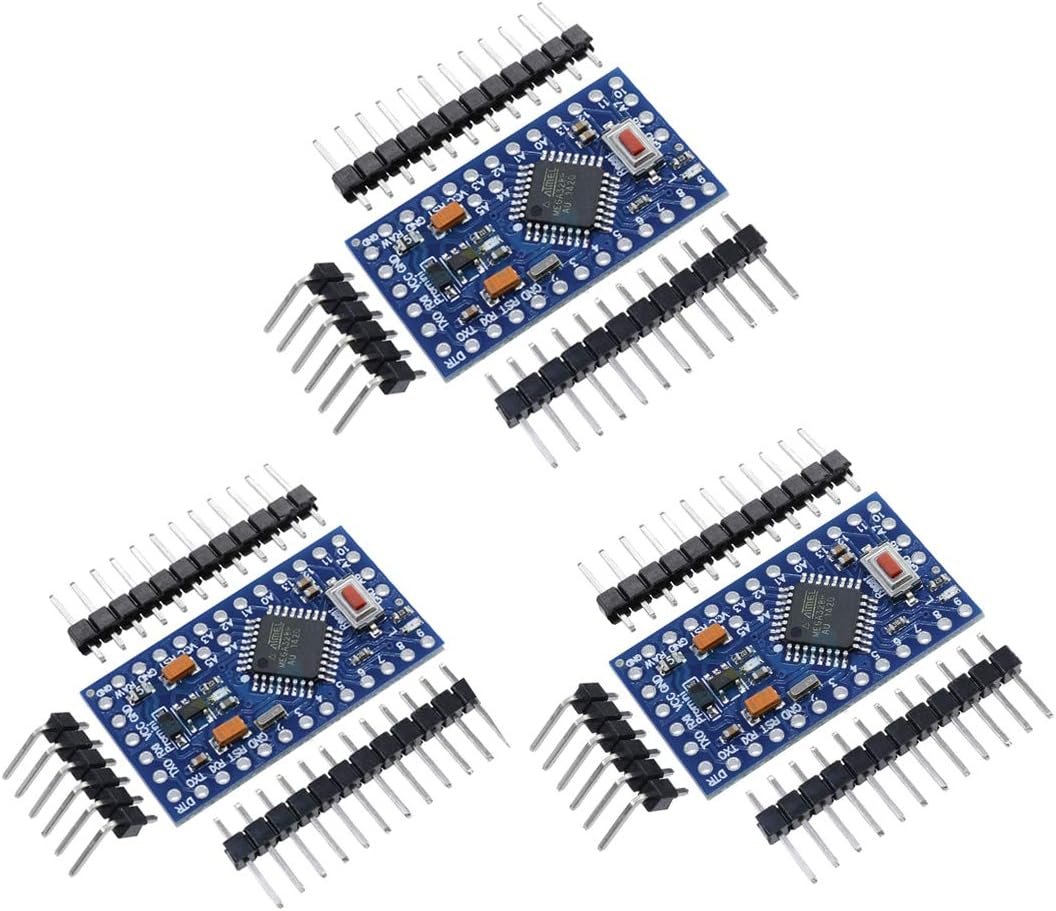
The HiLetgo 3-pack is the easiest way to put a Pro Mini into every project instead of borrowing one from the last build. Each board carries an ATmega328P-AU with the Arduino bootloader preloaded, runs at 5V/16MHz and accepts roughly 3.8–12V on the external input according to the listing. Headers are included loose, so you can solder straight pins for breadboarding or leave them off to embed the board directly. HiLetgo is one of the more consistent clone sellers on Amazon, and at a fraction of the genuine board’s per-unit cost you can afford to dedicate one to each sensor node.
✅ Pros- Low per-board cost across a 3-pack
- Bootloader preloaded, selects as Pro Mini in IDE
- Headers included
- Established seller with plenty of reviews
❌ Cons- Pinout of A4/A5/A6/A7 can differ from SparkFun
- Regulator and QC vary by batch
- Programmer sold separately
🎯 Verdict: The best value Pro Mini. Buy the pack, keep spares, and use them freely in permanent builds.
👉 Check Price on Amazon →
🔋 BEST FOR BATTERY PROJECTS · ⭐ 4.6/53. SparkFun Pro Mini 3.3V/8MHz
ATmega328P · 3.3V · 8MHz · RAW up to 12V · MIC5205 regulator · no USB
Buy →

The SparkFun Pro Mini 3.3V/8MHz is the genuine board for battery-powered and wireless work. It runs directly from a single-cell LiPo, speaks 3.3V logic natively to radios like the nRF24L01, RFM69 and LoRa modules, and has the same documented layout as its 5V sibling. With the power LED removed and the MCU in power-down sleep, it’s a classic choice for sensor nodes that must last months on a battery. Just remember it runs at 8MHz, so time-critical code and baud rates behave differently than on an Uno.
✅ Pros: Genuine and consistent; native 3.3V logic; runs straight from LiPo; great low-power base.
❌ Cons: Half the clock speed of 5V boards; no headers; pricier than clones.
🎯 Verdict: The best Pro Mini for battery-powered, 3.3V and wireless sensor projects.
👉 Check Price on Amazon →
💧 BEST BUDGET 3.3V CLONE · ⭐ 4.3/54. HiLetgo Pro Mini 3.3V/8M (3-Pack)
3 boards · ATmega328P · 3.3V · 8MHz crystal · bootloaded · FTDI auto-reset
Buy →

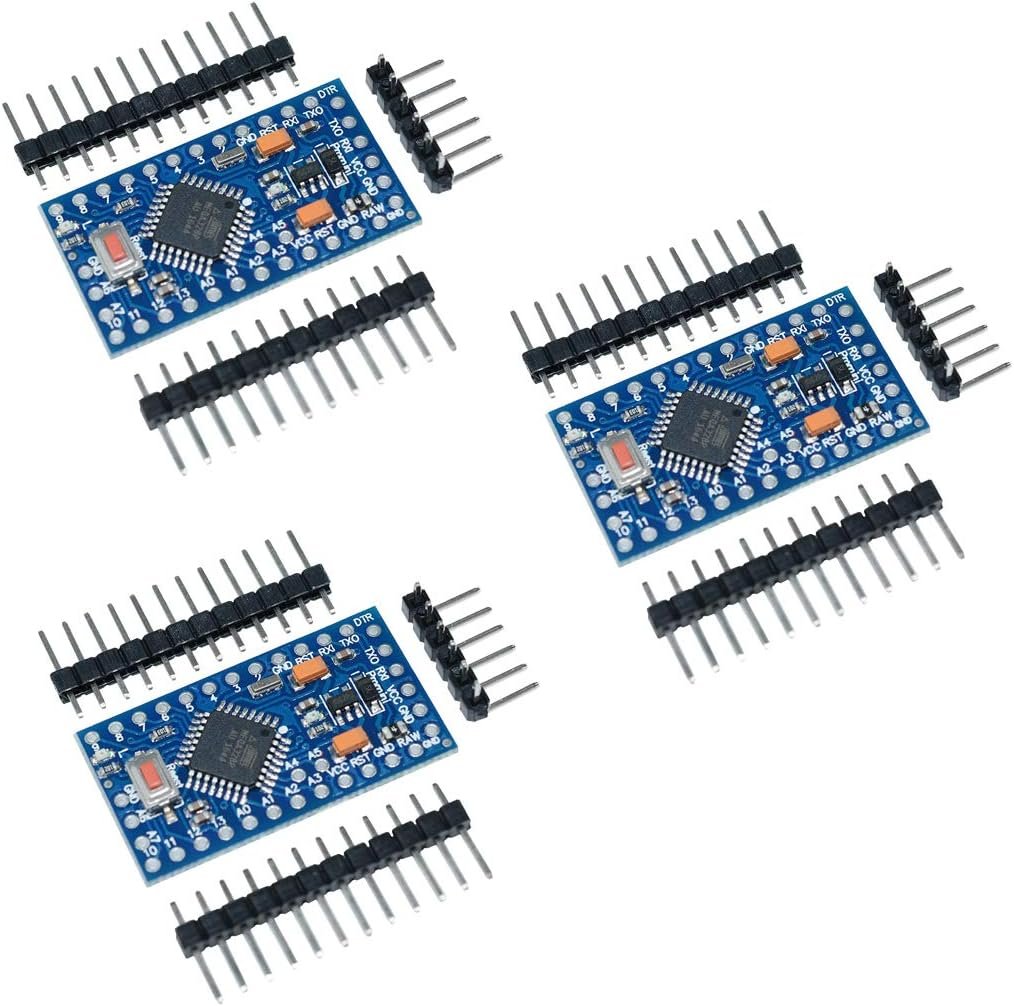
The HiLetgo 3.3V 3-pack gives you three low-voltage Pro Minis for roughly the price of one genuine board. They come bootloaded, use a crystal oscillator, and plug straight into an FTDI Basic-style adapter with auto-reset, per the listing. They’re ideal when you need several identical 3.3V nodes for a home sensor network. Reviews are more mixed than the 5V pack, with occasional reports of dead or mis-flashed boards, so test each one on arrival and keep an ISP programmer handy in case you need to reburn a bootloader.
✅ Pros: Three 3.3V boards cheaply; bootloaded; direct FTDI connection; perfect for multi-node networks.
❌ Cons: More QC variation than the 5V pack; test on arrival; pinout may differ from SparkFun.
🎯 Verdict: The best budget pick for building several 3.3V battery or radio nodes at once.
👉 Check Price on Amazon →
🧰 BEST STARTER BUNDLE · ⭐ 4.2/55. Pro Mini 5V + CP2102 USB-TTL Kit
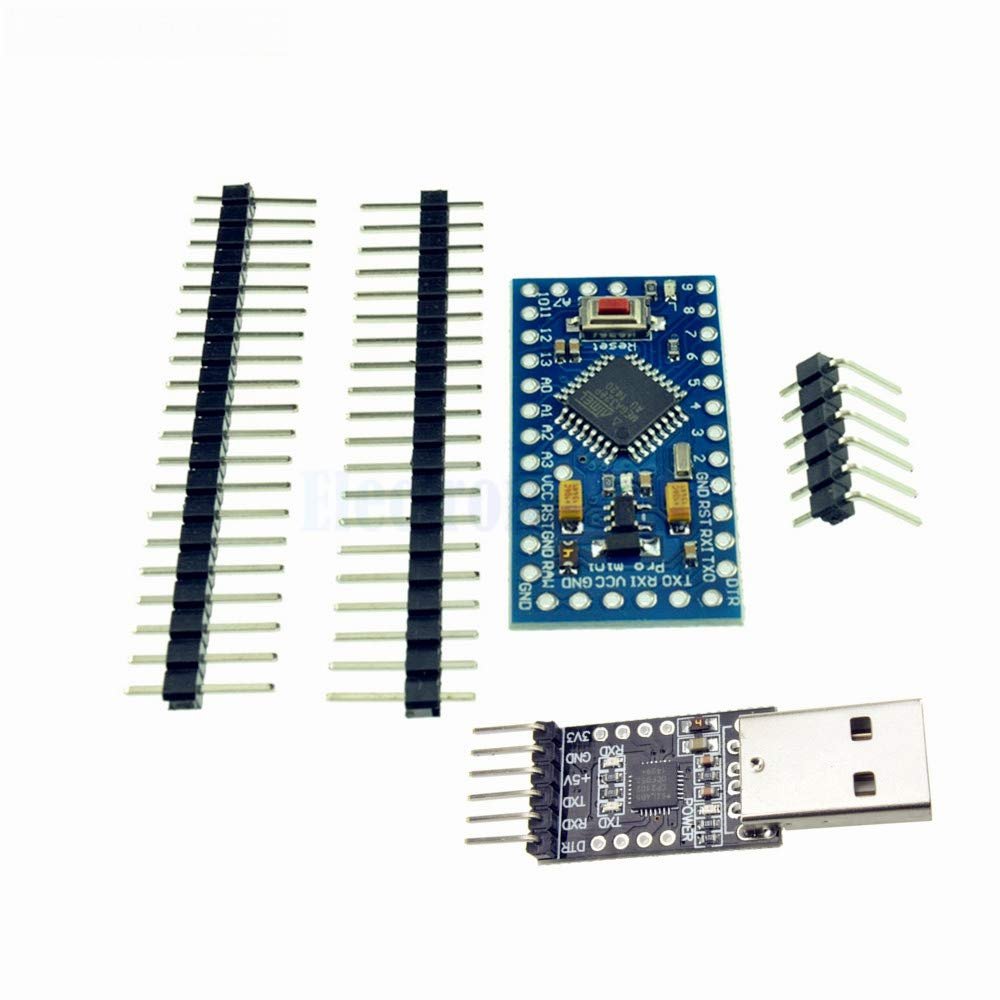
Pro Mini 5V/16M board · 6-pin CP2102 USB 2.0 to UART adapter · one-order bundle
Buy →

If you don’t already own a USB-serial adapter, this Pro Mini + CP2102 bundle removes the most common beginner stumbling block: buying a Pro Mini and discovering you can’t program it. You get a 5V/16M ATmega328P Pro Mini plus a 6-pin CP2102 USB-to-UART adapter in one order. The six-pin form factor is designed to line up with the Pro Mini’s programming header. Treat it as a convenience kit rather than a premium product: the listing is generic and has little review history, so double-check the adapter’s pin order against your board before plugging in.
✅ Pros: Board and programmer in one order; CP2102 works on Windows, macOS and Linux; beginner-friendly.
❌ Cons: Generic listing with limited reviews; confirm pin order and DTR wiring before first upload.
🎯 Verdict: The best one-click starter bundle if you have no programmer yet.
👉 Check Price on Amazon →
📦 BEST BULK PACK · ⭐ 4.0/56. Pro Mini 5V/16MHz (5-Pack Lot)
5 boards · ATmega328P · 5V · 16MHz · TQFP package · bootloader varies
Buy →
Building a batch of identical devices, a classroom set or a swarm of sensors? This 5-pack of 5V/16MHz Pro Minis lowers the per-board cost further. They are the same basic ATmega328P Pro Mini design as the other clones, with no USB and a 6-pin serial header. The listing is sparse, with generic specs and little review history, so treat these as budget workhorses: check each board’s bootloader by uploading Blink on arrival, and expect to solder headers yourself.
✅ Pros: Lowest cost per board; handy for classrooms and multi-unit builds; same Pro Mini footprint.
❌ Cons: Sparse listing details; little review history; QC and bootloader can vary.
🎯 Verdict: The best bulk buy when you need many 5V boards and can tolerate the odd dud.
👉 Check Price on Amazon →
🔌 BEST OFFICIAL PROGRAMMER · ⭐ 4.7/57. SparkFun FTDI Basic Breakout 5V
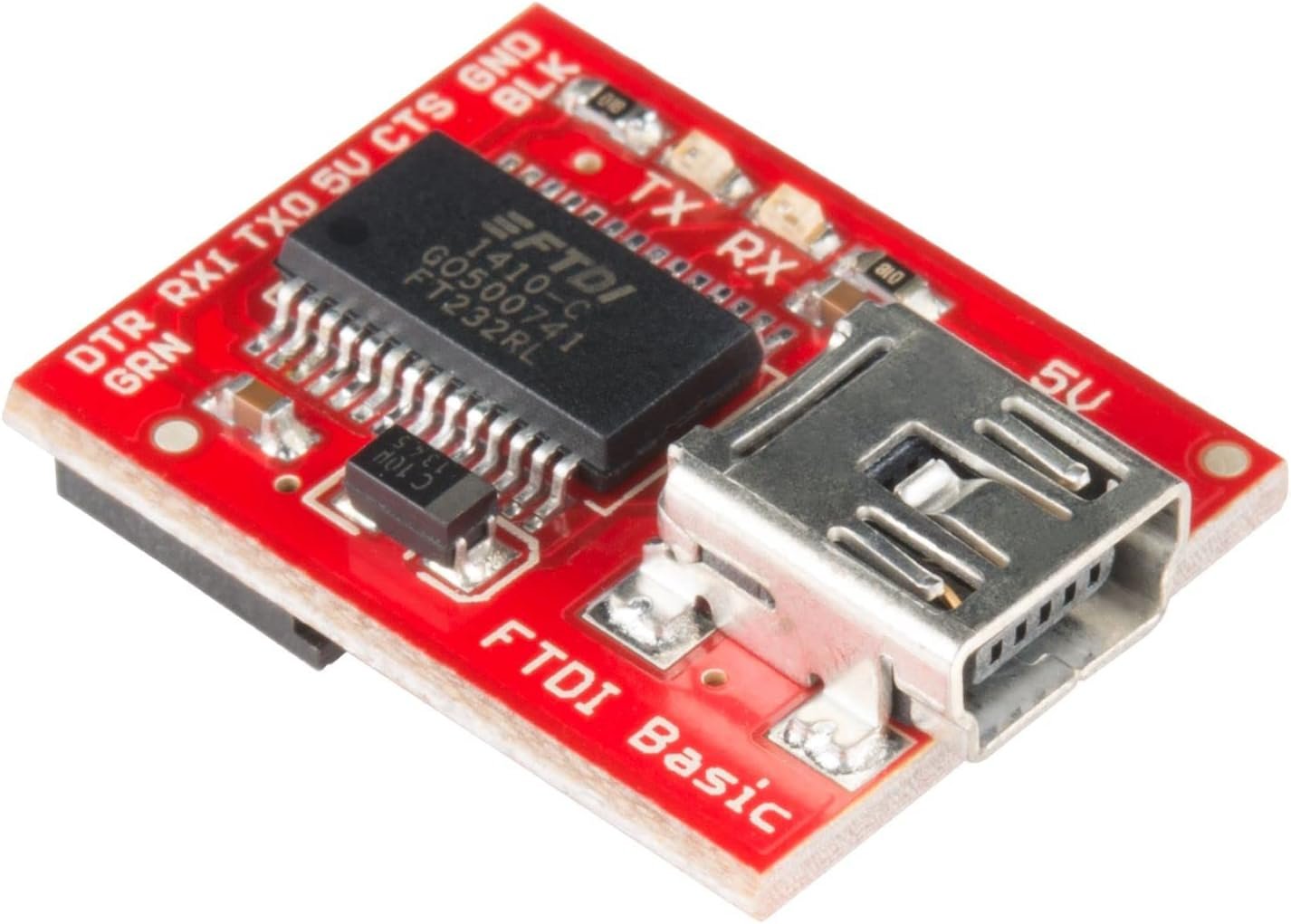
FTDI USB-serial · 5V · USB Mini-B · 6-pin header matches Pro Mini · DTR auto-reset · TX/RX LEDs
Buy →

The SparkFun FTDI Basic Breakout 5V is the programmer the Pro Mini was designed around. Its 6-pin header (GND, CTS, VCC, TXO, RXI, DTR) mates directly with the Pro Mini’s programming pins, DTR triggers auto-reset so uploads just work from the Arduino IDE, and TX/RX LEDs show traffic. It also powers the board from USB while you develop. Pair the 5V version with 5V Pro Minis; SparkFun sells a 3.3V version for the 3.3V boards.
✅ Pros: Plug-and-play with SparkFun Pro Mini; reliable auto-reset; activity LEDs; genuine FTDI drivers.
❌ Cons: Fixed 5V (buy the 3.3V version separately); pricier than generic adapters; Mini-B cable.
🎯 Verdict: The best official programmer for Pro Mini boards, especially if you own the SparkFun 5V version.
👉 Check Price on Amazon →
🛠️ BEST BUDGET PROGRAMMER · ⭐ 4.5/58. HiLetgo FT232RL USB to TTL Adapter
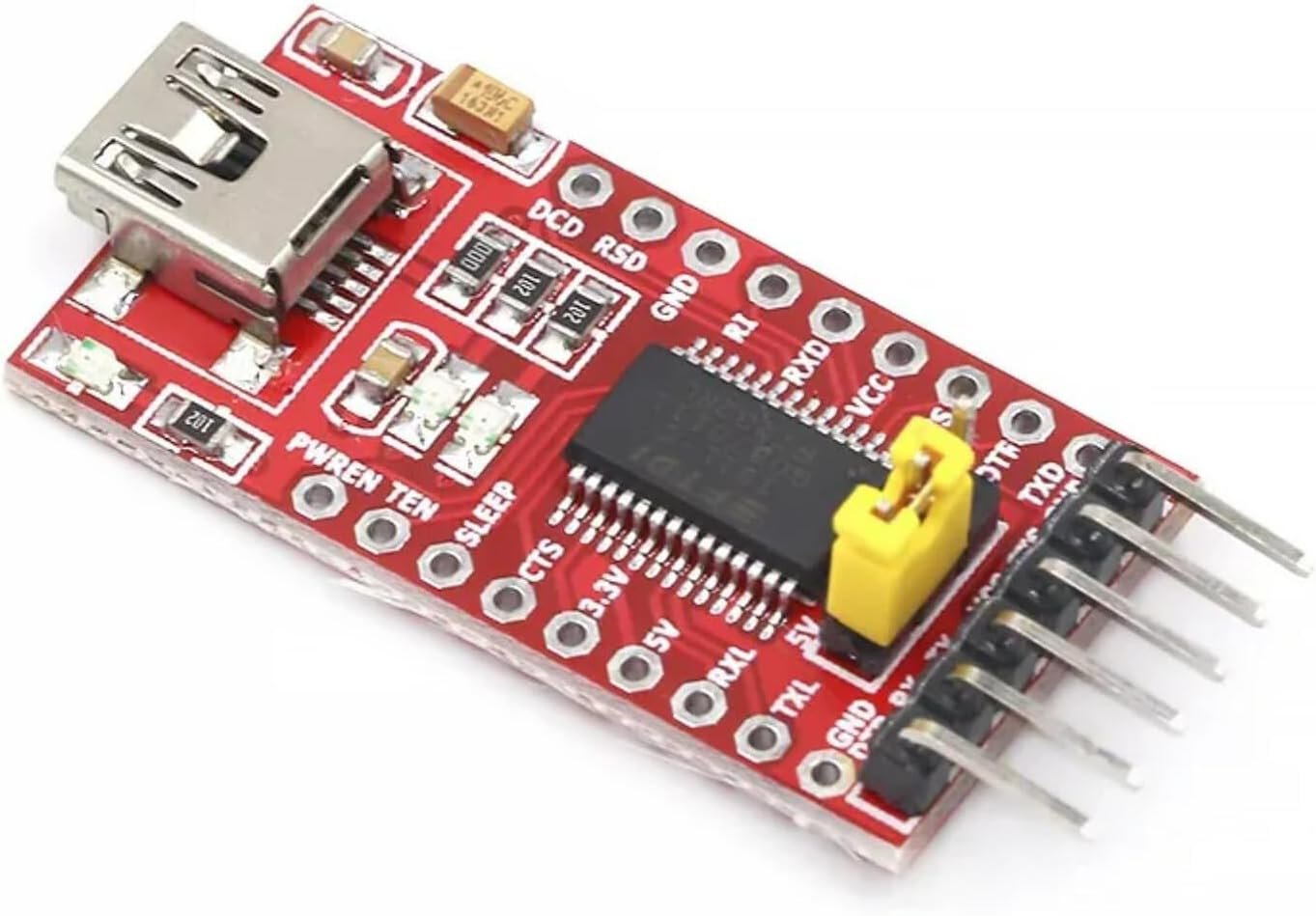
FT232RL USB-TTL · jumper-selectable 3.3V/5V · Mini USB · DTR/RX/TX/VCC/CTS/GND header
Buy →

The HiLetgo FT232RL adapter is the budget programmer with a huge review history, and its jumper lets one adapter program both 5V and 3.3V Pro Minis. The header exposes DTR, RXD, TXD, VCC, CTS and GND, which lines up with the Pro Mini’s FTDI pins for auto-reset uploads. Because it’s inexpensive, many makers keep one per workbench. Always set the voltage jumper to match your board before connecting, and be aware that some cheap FT232RL modules have had driver issues with counterfeit chips on Windows.
✅ Pros: Very affordable; 3.3V/5V jumper covers both Pro Mini variants; DTR for auto-reset; large user base.
❌ Cons: Easy to forget the voltage jumper; occasional driver/counterfeit-chip complaints; basic build.
🎯 Verdict: The best budget programmer, and the one to buy if you work with both 5V and 3.3V boards.
👉 Check Price on Amazon →
🛒 How to Choose the Right Pro Mini
✅
Want one board that just works?
Get the genuine SparkFun Pro Mini 5V/16MHz: documented, consistent pinout and full Uno compatibility.
💵
Putting a board in every project?
Grab the HiLetgo 5V 3-pack for low per-board cost, or the 5-pack lot for classrooms and batches.
🔋
Running on a LiPo or coin cell?
Choose the SparkFun Pro Mini 3.3V/8MHz, or the HiLetgo 3.3V 3-pack for multiple nodes.
📡
Using nRF24L01, LoRa or 3.3V sensors?
Stick to a 3.3V/8MHz board so logic levels match without level shifters.
🔰
First Pro Mini and no programmer?
The Pro Mini + CP2102 kit gets you board and uploader in a single order.
🔌
Need a programmer?
The HiLetgo FT232RL covers 3.3V and 5V boards cheaply; the SparkFun FTDI Basic is the plug-and-play official option.
⚙️ Key Specs Compared: Side by Side
| Spec | SparkFun 5V | HiLetgo 5V (3-pack) | SparkFun 3.3V | HiLetgo 3.3V (3-pack) | 5-Pack Lot |
|---|
| Genuine / Clone | Genuine ⭐ | Clone | Genuine ⭐ | Clone | Clone |
| Operating Voltage | 5V | 5V | 3.3V ⭐ | 3.3V ⭐ | 5V |
| Clock Speed | 16MHz ⭐ | 16MHz ⭐ | 8MHz | 8MHz | 16MHz ⭐ |
| Boards per Pack | 1 | 3 | 1 | 3 | 5 ⭐ |
| Headers Included | No | Yes ⭐ | No | Check listing | Check listing |
| Documented Pinout | Yes, open hardware ⭐ | Varies | Yes, open hardware ⭐ | Varies | Varies |
| Best Power Source | USB / 5–12V RAW | USB / 3.8–12V | 1S LiPo ⭐ | 1S LiPo ⭐ | USB / RAW |
All boards use the ATmega328P with 32KB flash, 2KB SRAM and 1KB EEPROM. Clone specs are taken from the Amazon listings and can change between batches; always confirm details on the live listing.
❓ Frequently Asked Questions
Should I buy the 5V/16MHz or the 3.3V/8MHz Pro Mini?
Choose by your parts and power source. If you’re using 5V sensors, relays, WS2812 LEDs or porting an Uno sketch that depends on 16MHz timing, get the 5V board. If you’re powering from a single LiPo cell, using 3.3V radios (nRF24L01, RFM69, LoRa, ESP-01) or chasing low sleep current, get the 3.3V board. Mixing them is the most common mistake: 5V logic can damage 3.3V-only parts, and the 3.3V board runs at half the clock speed.
How do I upload code to an Arduino Pro Mini without USB?
Connect a USB-to-serial adapter (FTDI Basic, FT232RL or CP2102) to the 6-pin header: GND to GND, VCC to VCC, TX to RX, RX to TX, and DTR to DTR (often labelled GRN on the board side). In the Arduino IDE select Arduino Pro or Pro Mini as the board and pick the matching processor, ATmega328P (5V, 16MHz) or ATmega328P (3.3V, 8MHz). With DTR connected, the board auto-resets and uploads like an Uno. Without DTR, press the reset button right as the IDE starts uploading.
Are Pro Mini clones as good as the genuine SparkFun board?
Functionally, most clones run the same ATmega328P and bootloader, so sketches behave the same. The differences are consistency and component quality: clones may move A4/A5/A6/A7, use a cheaper regulator or a resonator instead of a crystal, and ship with occasional dead or unflashed boards. For one-off hobby builds, clone packs are excellent value. For a product, a custom PCB footprint or when you can’t afford debugging time, the genuine SparkFun board is worth the premium.
Why does my Pro Mini upload fail with “not in sync” errors?
The usual causes are: the wrong processor selected (5V/16MHz vs 3.3V/8MHz), TX and RX wired straight instead of crossed, DTR not connected so the board never resets, or the adapter set to the wrong voltage. Some older clones have the ATmega168 or an old bootloader; try the other processor option or burn a fresh bootloader with an ISP programmer (another Arduino running ArduinoISP works).
How low can the Pro Mini’s power consumption go?
Out of the box, the power LED and regulator draw a few milliamps even when the MCU sleeps. Removing the power LED, and on the 3.3V board bypassing or removing the regulator and feeding VCC directly from a suitable battery, lets the ATmega328P in power-down mode with the watchdog timer reach the low microamp range. That’s why modified 3.3V Pro Minis are a staple for battery-powered sensor nodes that last months or longer. Results depend on the clone’s components and your peripherals, so measure your own board.
🏁 Final Verdict: Best Pro Mini for Every Build
The right Pro Mini board or programmer for every project and budget:
🥇 Best Overall: SparkFun Pro Mini 5V/16MHz · genuine, documented, full Uno compatibility
Buy →🏅 Best Value: HiLetgo Pro Mini 5V 3-pack · low per-board cost with headers
Buy →🔋 Best for Battery Projects: SparkFun Pro Mini 3.3V/8MHz · LiPo-ready and low power
Buy →💧 Best Budget 3.3V: HiLetgo Pro Mini 3.3V 3-pack · cheap multi-node radio builds
Buy →🧰 Best Starter Bundle: Pro Mini 5V + CP2102 kit · board and programmer in one order
Buy →📦 Best Bulk Pack: Pro Mini 5V 5-pack · classrooms and batch builds
Buy →🔌 Best Official Programmer: SparkFun FTDI Basic 5V · plug-and-play auto-reset uploads
Buy →🛠️ Best Budget Programmer: HiLetgo FT232RL · one adapter for both 3.3V and 5V boards
Buy →The Pro Mini remains one of the smartest ways to shrink an Arduino project into something permanent and battery-friendly. For most makers, the genuine SparkFun Pro Mini 5V/16MHz is the board to trust, while the HiLetgo 5V 3-pack is the value play for putting a board in every build. For LiPo and wireless nodes, go 3.3V/8MHz with SparkFun or the HiLetgo 3-pack, and don’t forget a programmer: the HiLetgo FT232RL covers both voltages, and the SparkFun FTDI Basic is the plug-and-play choice. Once your board arrives, dive into our Arduino, ESP32, STM32 and Raspberry Pi tutorials and start building.
💬 Not sure which Pro Mini fits your project? Tell us what you’re building (a sensor node, a wearable, a data logger or an RC gadget) in the comments below, and we’ll help you pick the right board.
All Amazon links above use our affiliate tag (microlab05-20). Purchasing through them supports microcontrollerslab.com at no extra cost to you. Prices and availability change frequently, so always confirm the current price on Amazon before buying.
| Arduino Components | Amazon Links |
|---|
| Arduino Starter Kit | Buy Now |
| Arduino Development Kit | Buy Now |
| Arduino Smart Robot Car Kit V4 | Buy Now |
| Arduino Sensors Kit | Buy Now |