⚠️ Affiliate Disclosure: This post contains Amazon affiliate links. If you purchase through our links, we may earn a small commission at no extra cost to you. We only recommend modules we have researched and whose listings we checked live on Amazon. Prices and pack sizes change constantly, so we deliberately do not print them here. Always tap through and confirm the current price and variant before buying.
Ultimate Buying Guide
🚗 Best CAN Bus Modules (MCP2515) for Arduino, ESP32 & Raspberry Pi
7 MCP2515 CAN bus boards ranked, from the classic blue MCP2515 + TJA1050 breakout to Arduino shields with a DB9 OBD-II port and isolated dual channel HATs for the Raspberry Pi, with real specs, honest verdicts and Amazon listings we checked live.
✅ 7 Boards Reviewed
✅ Live Amazon Listings
✅ Arduino · ESP32 · SocketCAN
✅ Honest Pros & Cons
CAN bus is the network that holds a modern car together, and it is just as common in e-bikes, battery management systems, industrial drives, robot joints and agricultural machines. It runs on a single twisted pair, survives electrical noise that would destroy a UART link, arbitrates between nodes without a master, and checks every frame with a CRC. The catch for makers is that most hobby microcontrollers, including the classic Arduino Uno and Nano and every Raspberry Pi, have no CAN controller at all. That is the gap the Microchip MCP2515 fills: a stand alone CAN 2.0B controller that talks to your board over SPI and handles framing, bit timing, filtering and error counting for you.
An MCP2515 on its own is only half of a CAN node, though. It needs a transceiver such as the TJA1050, MCP2551 or SN65HVD230 to turn its logic level TX and RX into the differential CAN_H and CAN_L signals on the bus, and the choice of transceiver quietly decides which boards the module is safe to use with. This guide ranks 7 MCP2515 CAN bus modules across three form factors, bare SPI breakouts, Arduino shields and Raspberry Pi HATs, and explains which one matches the project you actually have in mind, whether that is sniffing your car’s OBD-II port, linking three ESP32 nodes or giving a Pi a proper SocketCAN interface.
💡 Reality check before you buy: The cheap blue MCP2515 + TJA1050 modules are clones of one reference design, so brand matters less than you think and quality control varies between batches. Expect no documentation in the box, header pins that may need soldering, and an 8 MHz crystal where most Arduino examples assume 16 MHz, which is the number one reason a freshly wired module never sees a frame. Expect a 5 V design: the TJA1050 needs a 5 V supply, which makes these modules awkward on 3.3 V boards like the ESP32 and Raspberry Pi without a small modification or a level shifter. Finally, remember the MCP2515 is classic CAN only, up to 1 Mbit/s. It cannot join a CAN FD network, and it will struggle to log every frame on a busy 500 kbit/s vehicle bus through a slow SPI link.
🧩 Do you even need an MCP2515? Check your microcontroller first. The ESP32 family has a built in CAN 2.0 controller (Espressif calls it TWAI), and most STM32 parts include bxCAN or FDCAN peripherals. On those chips you only need a transceiver, such as an SN65HVD230 breakout, wired to two GPIO pins, which is cheaper, faster and avoids the SPI bottleneck entirely. An MCP2515 module makes the most sense on boards with no native CAN, such as the Arduino Uno, Nano and Mega, the Raspberry Pi and the Raspberry Pi Pico, or when you need an extra CAN channel on a board that already has one.
🚗 Quick Comparison: All 7 MCP2515 CAN Bus Modules
| CAN Module | Form Factor | Controller + Transceiver | Works Best With | Best For | Buy |
|---|
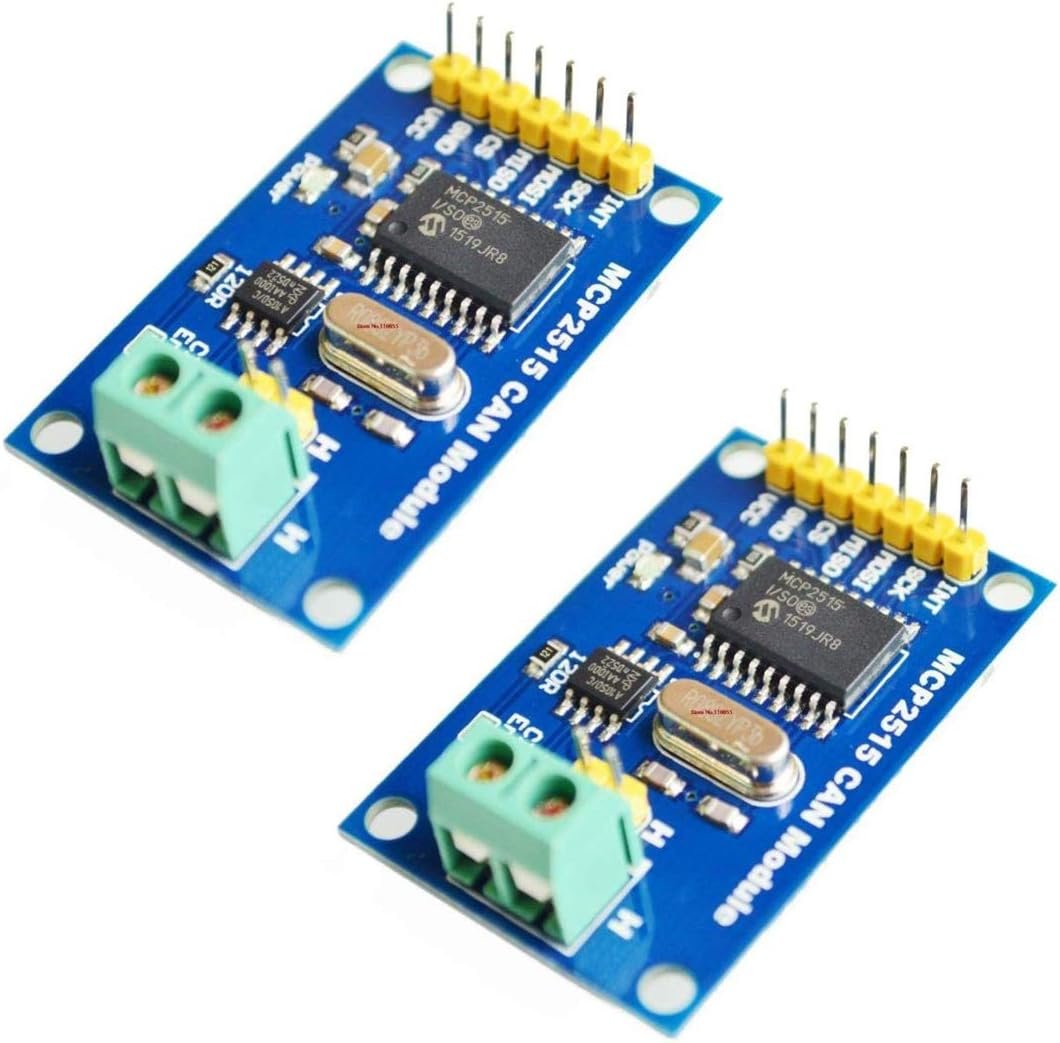
| 🥇 HiLetgo MCP2515 Module (2 pcs) | SPI breakout, screw terminal | MCP2515 + TJA1050 | Arduino Uno, Nano, Mega | Best Overall | Buy Here → |
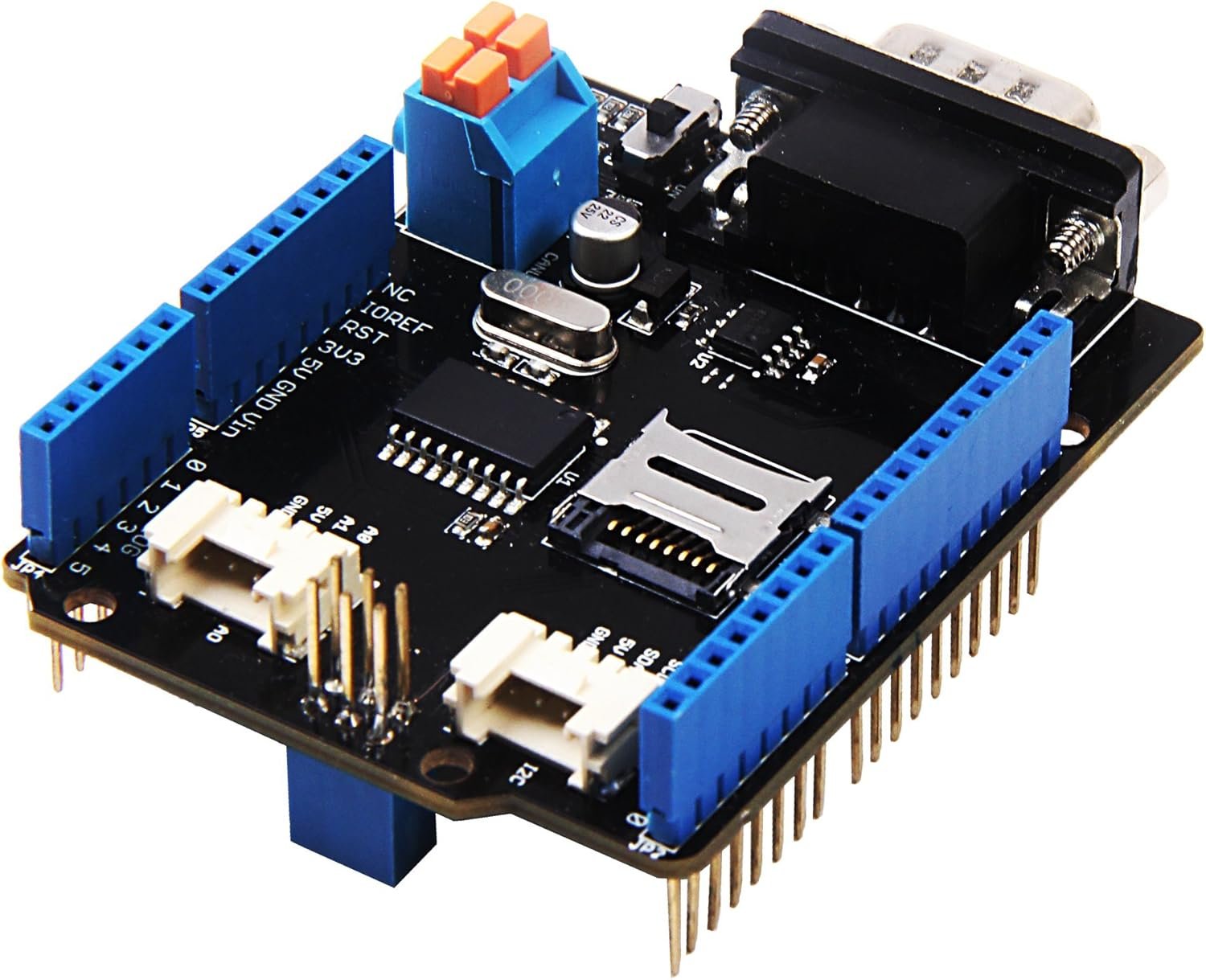
| 🏅 Seeed Studio CAN-Bus Shield V2 | Arduino shield, DB9 + terminal | MCP2515 + MCP2551 | Arduino Uno, Mega, Leonardo | Best Arduino Shield | Buy Here → |
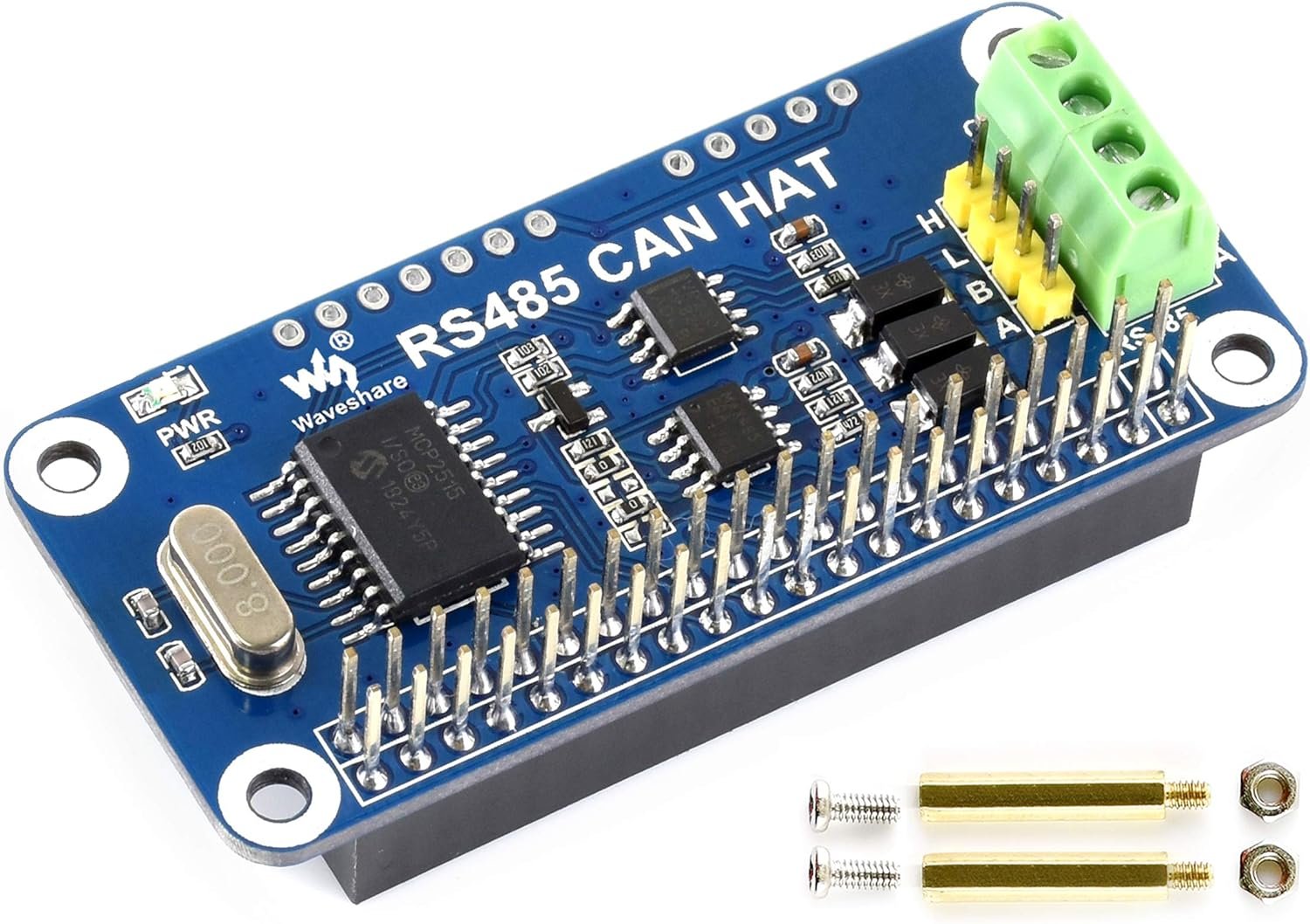
| 🍓 Waveshare RS485 CAN HAT | Raspberry Pi HAT | MCP2515 + SIT65HVD230, plus RS485 | Raspberry Pi 5, 4B, Zero 2 W | Best for Raspberry Pi | Buy Here → |
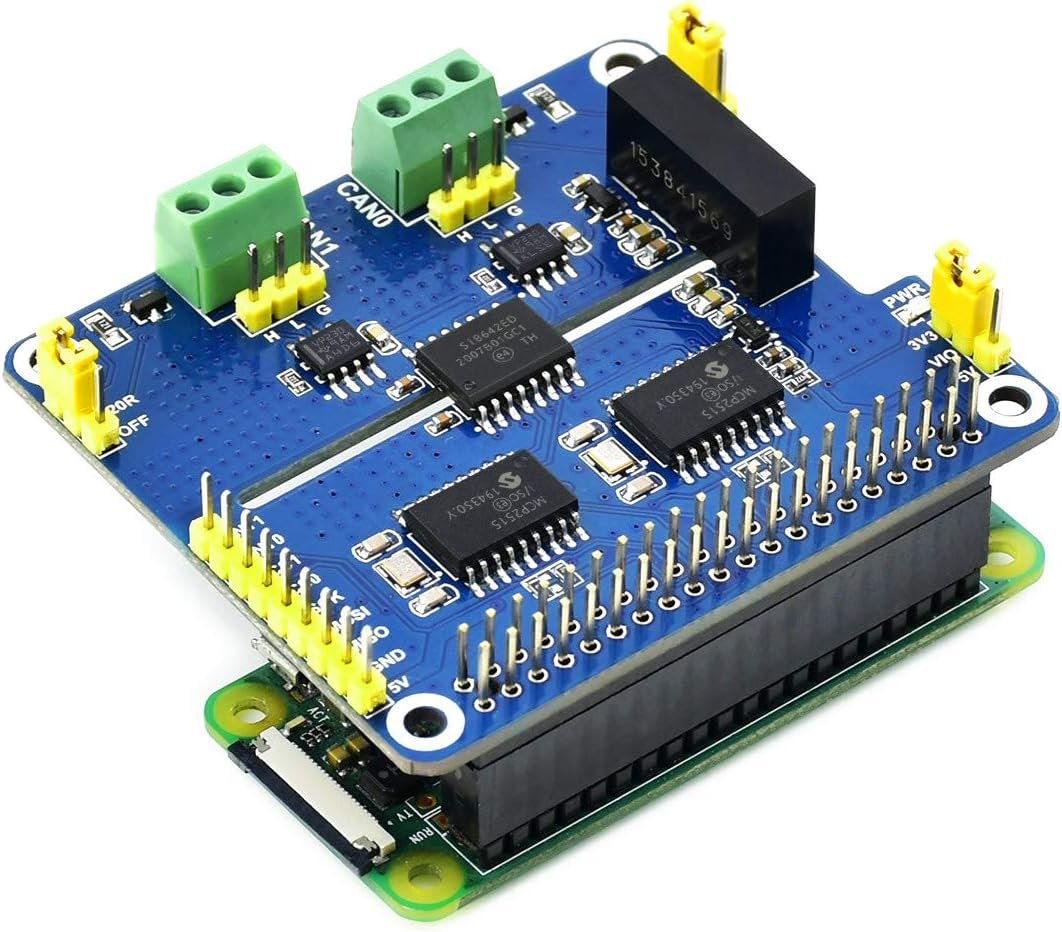
| 🛡️ Waveshare 2-CH Isolated CAN HAT | Raspberry Pi HAT, two ports | 2 × MCP2515 + SN65HVD230, isolated | Raspberry Pi 5, 4B, 3B | Best Isolated Dual Channel | Buy Here → |
| 🚙 SparkFun CAN-Bus Shield | Arduino shield, DB9 | MCP2515 + MCP2551 | Arduino Uno, RedBoard | Best for Car Data Logging | Buy Here → |
| 🔗 WWZMDiB MCP2515 Module (3 pcs) | SPI breakout, jumper wires included | MCP2515 + TJA1050 | Arduino, ESP32, STM32 | Best for a 3-Node Network | Buy Here → |
| 💰 Comidox MCP2515 Module (3 pcs) | SPI breakout, screw terminal | MCP2515 + TJA1050 | Arduino, 51 MCU, ARM | Best Budget Multi-Pack | Buy Here → |
Specs come from the current Amazon listings and manufacturer documentation. Pack sizes and board revisions change, especially on the generic blue modules, so check exactly what a listing is selling. We deliberately do not publish prices because they move constantly. Tap through and check the live price yourself.
🔍 What to Look for in an MCP2515 CAN Bus Module
⚡
Transceiver and Logic Voltage
The transceiver decides your voltage. The TJA1050 and MCP2551 need a 5 V supply, which is perfect for an Arduino Uno but means the MCP2515 on the same board drives its SPI output at 5 V, too high for a 3.3 V ESP32 or Raspberry Pi pin. Boards built around the SN65HVD230 run entirely at 3.3 V and are the safe choice for a Pi or ESP32 with no modification.
⏱️
Crystal Frequency
The MCP2515 derives every bit time from its crystal, so your code must be told the correct value. Generic blue modules usually carry an 8 MHz crystal, Arduino shields typically use 16 MHz, and Raspberry Pi HATs vary by revision. Read the marking on the metal can before you write a line of code. A mismatch halves or doubles your real bitrate and the bus stays silent.
🔌
Connector and Termination
A screw terminal is best for bench networks and twisted pair wiring. A DB9 connector with an OBD-II pinout lets you plug straight into a car with a standard cable. Either way, look for a switchable 120 Ω termination resistor, because a CAN bus needs exactly two terminators, one at each end, and a node in the middle must have its terminator disabled.
🛡️
Isolation and Protection
On a bench, a bare transceiver is fine. On a vehicle, a motor controller or anything with a separate ground, a galvanically isolated board with TVS diodes protects your Raspberry Pi from ground loops, load dump spikes and ESD. It costs more, but it is cheap insurance compared with a dead Pi and an SD card full of lost logs.
📚
Library and Driver Support
On Arduino, the MCP2515 is supported by several mature libraries, including mcp_can, autowp arduino-mcp2515 and Seeed’s own CAN library. On a Raspberry Pi, the Linux kernel’s mcp251x driver turns the chip into a standard SocketCAN interface, so you can use can-utils and python-can without any vendor code. Branded boards add a wiki with tested wiring and overlay settings.
🏆 Detailed Reviews: All 7 MCP2515 CAN Bus Modules
🥇 BEST OVERALL
HiLetgo MCP2515 CAN Bus Module (2 Pack)
⭐ 4.5/5 · The Classic MCP2515 + TJA1050 Breakout
1 Mbit/s
CAN 2.0B MAX RATE
2 Pack
A COMPLETE TEST BUS

This is the module almost every Arduino CAN tutorial is written around, and the HiLetgo two pack is the version we would buy first. Each board pairs an MCP2515 controller with a TJA1050 high speed transceiver, supports the full CAN 2.0B specification with standard, extended and remote frames, and runs up to 1 Mbit/s. You wire it with seven pins, VCC, GND, CS, SO, SI, SCK and INT, and connect the bus through a two way screw terminal for CAN_H and CAN_L. A jumper enables the onboard 120 Ω termination resistor, which is exactly what you want at each end of a short bench network. Buying two matters more than it sounds: CAN needs at least two nodes to acknowledge a frame, so a single module on its own cannot even prove that your code works. The listing is honest about the power budget, 5 V supply and about 5 mA typical, and like every clone of this design it ships with an 8 MHz crystal and no documentation, so set MCP_8MHZ in your library call before you start debugging anything else.
✅ Pros- Two modules in the box, enough for a working two node bus
- Supported by every major Arduino MCP2515 library
- Switchable 120 Ω termination on each board
- Screw terminal makes twisted pair wiring easy
- Strongest rating among the generic modules we checked
❌ Cons- 8 MHz crystal trips up code written for 16 MHz shields
- 5 V design needs a mod or level shifter for ESP32 and Pi
- No documentation or example code included
- No isolation or TVS protection for vehicle use
🎯 Verdict: The best starting point for most makers. Two proven MCP2515 + TJA1050 boards, enough to build and debug a real two node CAN network on an Arduino in an afternoon.
👉 Check Price on Amazon →
🏅 BEST ARDUINO SHIELD
Seeed Studio CAN-Bus Shield V2
⭐ 4.4/5 · Plug In CAN for Uno and Mega
Buy on Amazon →

If you would rather not wire seven jumpers and wonder which one is loose, the Seeed CAN-Bus Shield V2 is the cleanest way to put CAN on an Arduino. It stacks directly on an Uno, Mega or Leonardo and uses the same MCP2515 controller with an MCP2551 transceiver, but adds the things a real project needs. The DB9 connector can be switched by jumper between the OBD-II pinout, the default, and the standard CAN pinout, so a common OBD-II to DB9 cable plugs straight into a car. A TF card slot lets you log frames without extra hardware, its chip select can be set to D4 or D5, and the INT pin can be moved between D2 and D3 with jumpers on the back to avoid clashes with other shields. Seeed maintains an open source Arduino CAN library with send, receive, filter and OBD-II examples, which is a big step up from the silent box you get with a generic module. It is several times the price of a blue breakout, and it is a 5 V design, so it belongs on a classic Arduino rather than a 3.3 V board.
✅ Pros- Stacks straight onto Uno, Mega and Leonardo, no wiring
- DB9 with jumper selectable OBD-II or CAN pinout
- TF card slot for standalone frame logging
- Jumper selectable TF card CS and INT pins avoid shield conflicts
- Maintained library and a documented wiki
❌ Cons- Costs several times a generic MCP2515 module
- 5 V shield, not a fit for 3.3 V boards
- OBD-II cable is not included
- Newer batches hide the back pad traces inside the PCB, so re-jumpering needs care
🎯 Verdict: The best Arduino CAN shield for most people. Buy it when you want an OBD-II ready DB9 port, onboard logging and a library that actually has examples.
👉 Check Price on Amazon →
🍓 BEST FOR RASPBERRY PI · ⭐ 4.3/53. Waveshare RS485 CAN HAT
MCP2515 over SPI · SIT65HVD230 3.3 V CAN transceiver · SP3485 RS485 on UART · DIP switch 120 Ω termination · TVS protection · Pi 5, 4B, 3B+ and Zero 2 W
Buy Here →

The Raspberry Pi has no CAN controller, and wiring a 5 V blue module to its 3.3 V GPIO is asking for trouble. The Waveshare RS485 CAN HAT solves both problems in one board. It plugs onto the 40 pin header, runs entirely at 3.3 V, and pairs an MCP2515 with a SIT65HVD230 transceiver, a 3.3 V part in the SN65HVD230 family. Because the MCP2515 is supported by the Linux kernel, one dtoverlay line in config.txt turns the HAT into a standard SocketCAN interface, can0, and from then on candump, cansend and python-can just work. As a bonus you also get a half duplex RS485 port on the UART with automatic direction control, handy for Modbus RTU sensors on the same project. Both buses have 120 Ω termination on a DIP switch and TVS surge protection. The one detail to check is the crystal: Waveshare has shipped this HAT with different oscillator values across revisions, so read the can and set the oscillator= parameter to match.
✅ Pros: Native 3.3 V design safe for Pi GPIO; kernel SocketCAN support with one overlay line; bonus RS485 port for Modbus; DIP switch termination and TVS protection; largest review base of any Pi CAN board we checked.
❌ Cons: Single CAN channel only; not isolated, so take care on vehicles with separate grounds; oscillator value differs between board revisions; screw terminal only, no DB9 for OBD-II.
🎯 Verdict: The easiest way to give a Raspberry Pi a real SocketCAN interface, with a free RS485 port thrown in. The default choice for Pi based CAN projects on the bench.
🛡️ BEST ISOLATED DUAL CHANNEL · ⭐ 4.4/54. Waveshare 2-Channel Isolated CAN Bus Expansion HAT
Two MCP2515 controllers · SN65HVD230 transceivers · galvanic isolation · SM24CANB TVS diodes · 40 pin Pi header · Pi 5, 4B and 3B
Buy Here →

Once a CAN project leaves the bench and meets a real vehicle, a motor drive or a battery pack, isolation stops being optional. This Waveshare HAT carries two independent MCP2515 controllers, each with its own SN65HVD230 transceiver, and separates both buses from the Raspberry Pi with galvanic isolation on power and signal. SM24CANB TVS diodes on each port add ESD and transient protection, the kind of spikes you meet on automotive and industrial wiring. In Linux the two channels appear as can0 and can1, which opens up projects a single channel board cannot do: bridging two networks at different bitrates, acting as a gateway between a vehicle bus and your own devices, or logging two buses at once with a single timestamp source. Waveshare publishes the overlay settings and C and Python examples on its wiki. It costs more than the single channel HAT, and two MCP2515 chips sharing one SPI bus still will not keep up with two fully loaded 1 Mbit/s networks, but for protected, real world use it is the right tool.
✅ Pros: Two independent CAN channels as can0 and can1; galvanic isolation protects the Pi; TVS diodes on each port; ideal for gateways and dual bus logging; strong rating on the official listing.
❌ Cons: Pricier than single channel boards; shared SPI bus limits throughput on two busy networks; classic CAN only, no CAN FD; overkill for a two node bench test.
🎯 Verdict: The board to buy when a Raspberry Pi has to live on a real vehicle or machine. Two isolated channels and proper surge protection for a modest step up in price.
🚙 BEST FOR CAR DATA LOGGING · ⭐ 4.0/55. SparkFun CAN-Bus Shield
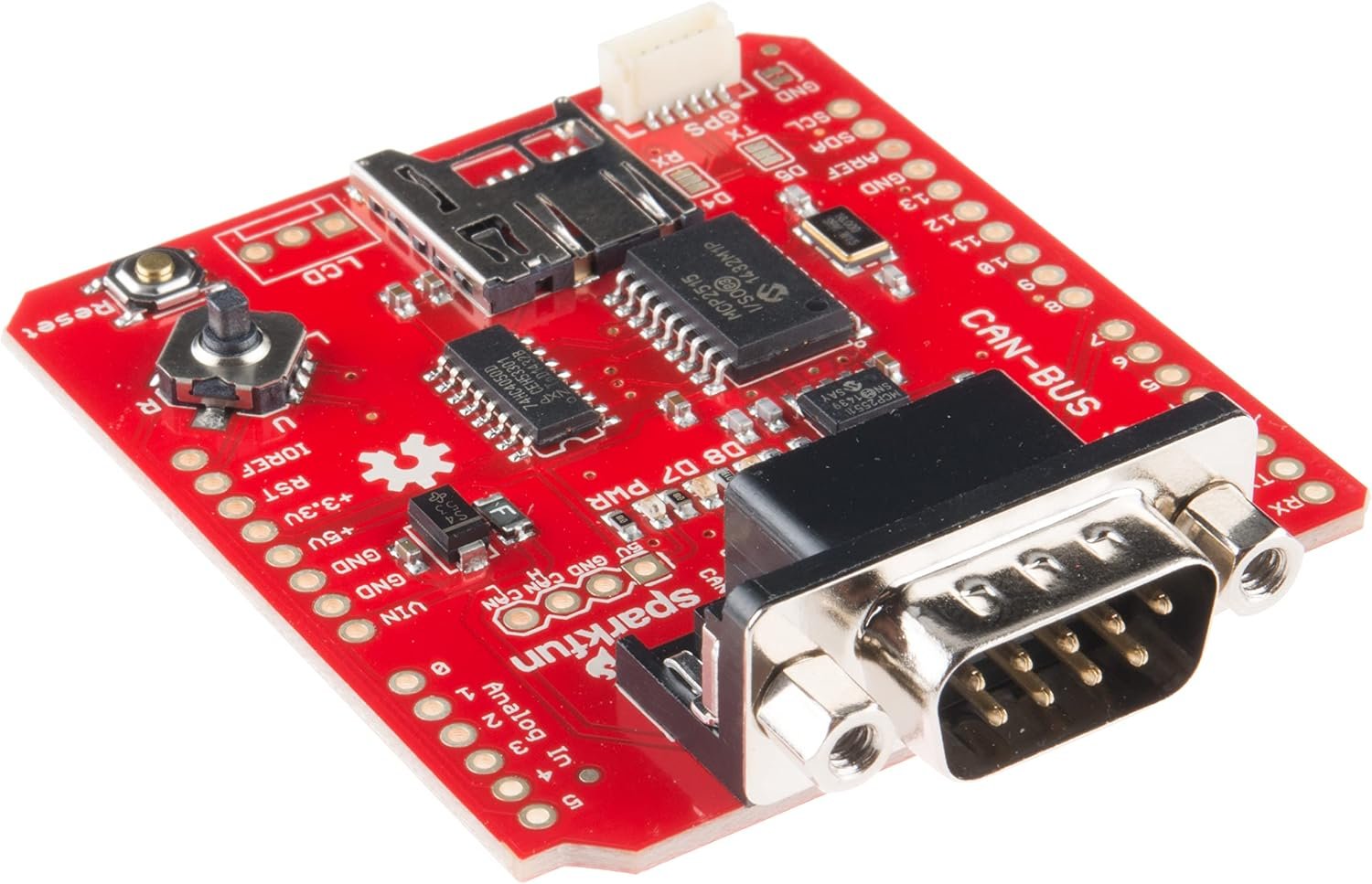
MCP2515 + MCP2551 · DB9 for OBD-II cable · microSD holder · serial LCD and EM506 GPS connectors · fused power from the bus · Arduino Uno and RedBoard
Buy Here →

The SparkFun CAN-Bus Shield is built around one very specific job: turning an Arduino into an in-car data logger. It uses the familiar MCP2515 and MCP2551 pair with a 10 MHz SPI link, and its standard 9 way sub-D connector is wired for an OBD-II to DB9 cable, so you can poll the ECU for coolant temperature, throttle position, vehicle speed and engine RPM. What sets it apart is everything around the CAN chips: a microSD card holder for logs, a serial LCD connector for a dash display and a header for an EM506 GPS module, which together make a GPS tagged trip logger with very little extra wiring. The shield can also be powered from the vehicle through the DB9, with a resettable fuse and reverse polarity protection. The honest downsides: the DB9 cable is not included, the Amazon listing has only a handful of ratings and low stock, and the EM506 GPS it was designed around is no longer a current part, so plan on a different GPS module.
✅ Pros: Purpose built for OBD-II logging; microSD, LCD and GPS headers on one board; can be powered from the car with fuse and reverse polarity protection; SparkFun hookup guide and example code.
❌ Cons: DB9 cable sold separately; very few Amazon ratings and limited stock; GPS header targets a discontinued module; 5 V only, like the Seeed shield.
🎯 Verdict: Pick it if your goal is a self contained Arduino car logger with a display and GPS. For general CAN work, the Seeed shield is the better all rounder.
🔗 BEST FOR A 3-NODE NETWORK · ⭐ 4.1/56. WWZMDiB MCP2515 TJA1050 CAN Module (3 Pack)
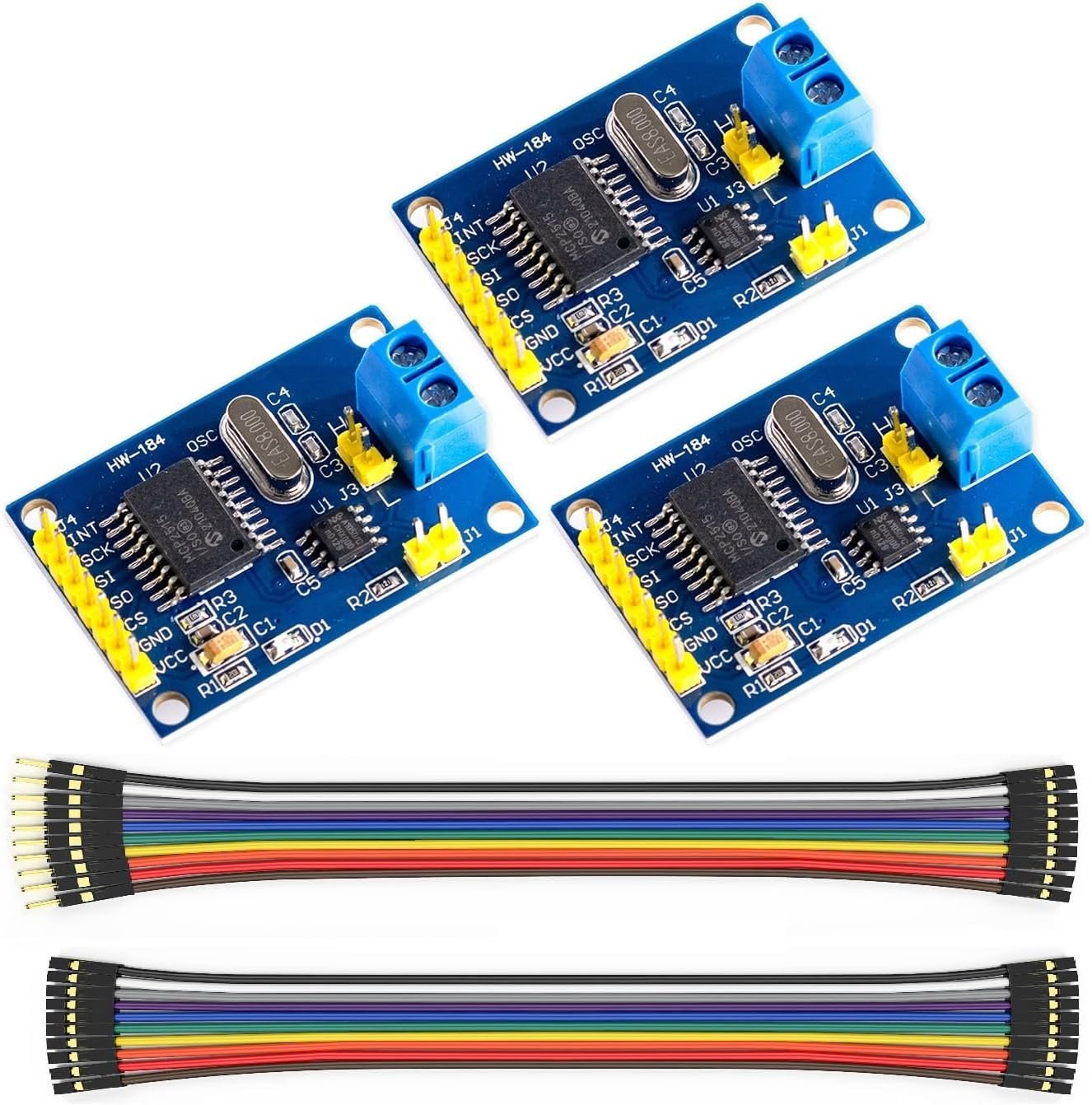
Three MCP2515 + TJA1050 boards · 1 Mbit/s CAN 2.0B · SPI · 120 Ω termination · Dupont jumper wires included · listed for Arduino, ESP32, STM32 and Raspberry Pi
Buy Here →

Two nodes prove your wiring. Three nodes teach you how CAN really behaves, because only then do you see arbitration, where the lowest ID wins the bus without a collision, acceptance filters and masks doing real work, and what happens when one node goes bus off. The WWZMDiB three pack is the easiest way to get there. The boards are the same MCP2515 + TJA1050 design as our top pick, with CAN 2.0B support up to 1 Mbit/s and a 120 Ω terminator, and the bundle adds Dupont jumper wires, so you can wire all three to microcontrollers without raiding your parts drawer. The listing mentions ESP32, STM32 and Raspberry Pi, which is true in the sense that the SPI interface is universal, but remember the TJA1050 still needs 5 V. On a 3.3 V board, either power the MCP2515 side from 3.3 V with the well known trace modification or put a level shifter on MISO.
✅ Pros: Three nodes for arbitration and filter experiments; jumper wires included; the lowest cost per board of the packs we checked; same proven MCP2515 + TJA1050 layout; good review base for a generic module.
❌ Cons: 3.3 V compatibility claim needs caveats; 8 MHz crystal and no documentation; generic clone quality varies by batch; no isolation for vehicle use.
🎯 Verdict: The best kit for learning CAN properly. Three nodes and a bundle of jumpers turn a two board test into a real network you can experiment with.
💰 BEST BUDGET MULTI-PACK · ⭐ 4.0/57. Comidox MCP2515 CAN Bus Module (3 Pack)
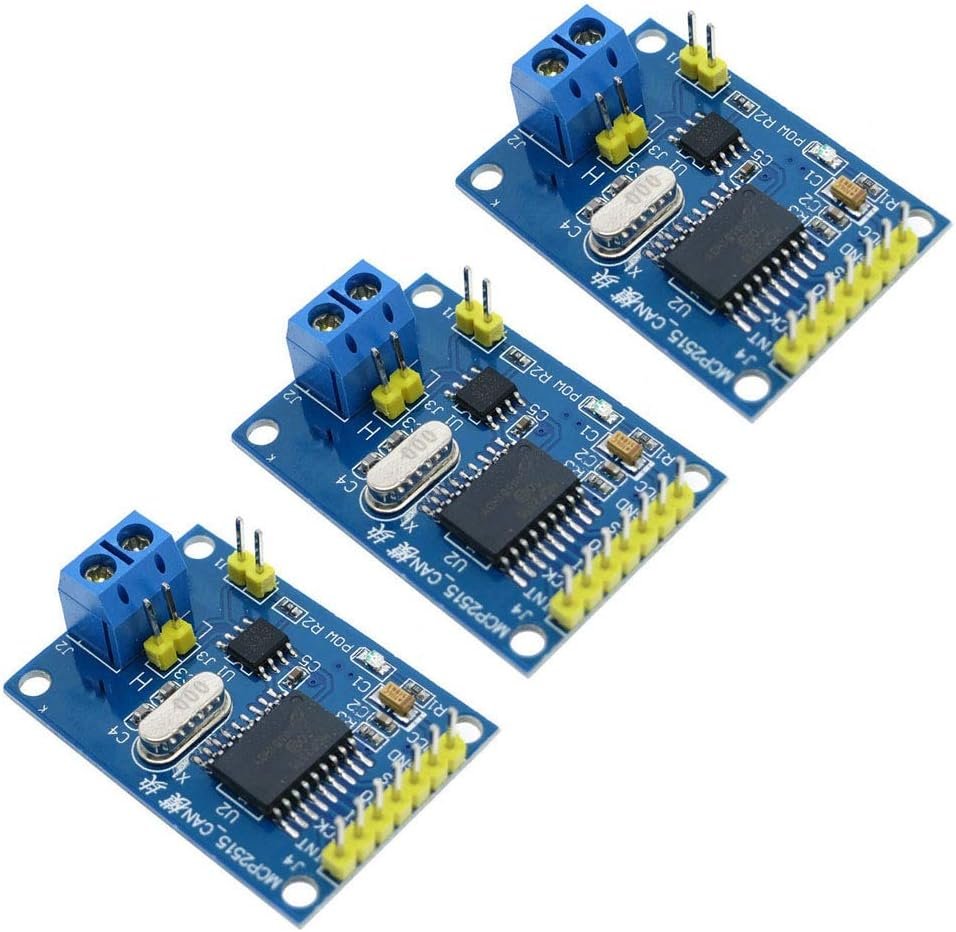
MCP2515 + TJA1050 · CAN 2.0B at 1 Mbit/s · 5 V SPI module · 120 Ω termination · 44 × 28 mm with 23 × 38 mm hole spacing · rated -40 to 85 °C
Buy Here →

The Comidox three pack is the no frills option when you simply need more boards: spares for a classroom, one node per sensor in a small robot, or a module you are happy to solder permanently into a prototype. It is the standard MCP2515 + TJA1050 layout with CAN 2.0B at up to 1 Mbit/s, 0 to 8 byte data fields, standard, extended and remote frames, a 120 Ω terminator and a 5 V supply. Comidox is one of the few sellers that lists the mechanical dimensions, 44 × 28 mm with mounting holes on a 23 × 38 mm pattern, which helps if you are designing an enclosure or a carrier PCB. It also carries one of the larger review counts among generic modules on Amazon. Like every clone, it arrives with an 8 MHz crystal and no instructions, and the industrial temperature rating on the listing refers to the chips rather than a tested module, so treat it as a maker part rather than production hardware.
✅ Pros: Three boards for a low total cost; documented board size and hole spacing; large review base for a generic module; standard layout that every tutorial covers.
❌ Cons: No jumper wires, unlike the WWZMDiB pack; 5 V only without modification; 8 MHz crystal and no documentation; batch to batch quality is not guaranteed.
🎯 Verdict: The pick when you just need several MCP2515 boards at the lowest cost per node, and you already have wires and know about the 8 MHz crystal.
🛒 How to Choose the Right CAN Bus Module
🧪
Learning CAN on an Arduino?
Start with the HiLetgo two pack. Two MCP2515 + TJA1050 boards and two Unos give you a complete, acknowledging CAN bus for the price of a lunch.
🔧
Want plug in, no jumper wires?
The Seeed CAN-Bus Shield V2 stacks on an Uno or Mega and adds a switchable OBD-II DB9 port, a TF card slot and a maintained library.
🍓
Using a Raspberry Pi?
Take the Waveshare RS485 CAN HAT. It is 3.3 V native, becomes a SocketCAN interface with one overlay line, and throws in an RS485 port.
🏭
Connecting to a vehicle or machine?
The Waveshare 2-Channel Isolated CAN HAT protects the Pi with galvanic isolation and TVS diodes, and gives you two buses for gateways and logging.
🚙
Building a car trip logger?
The SparkFun CAN-Bus Shield combines an OBD-II DB9, microSD, a serial LCD header and GPS header on one Arduino board.
🔗
Want to see arbitration and filters?
Get the WWZMDiB three pack with jumpers, or the Comidox three pack if you already have wires. Three nodes make CAN behaviour visible.
📶
Already using an ESP32 or STM32?
Use the chip’s built in CAN (TWAI on ESP32, bxCAN or FDCAN on STM32) with a 3.3 V SN65HVD230 transceiver, and keep an MCP2515 only for an extra channel.
⚙️ Key Specs Compared: Side by Side
| Spec | HiLetgo Module | Seeed Shield V2 | Waveshare RS485 CAN HAT | Waveshare 2-CH Isolated | SparkFun Shield |
|---|
| CAN channels | 1 per board (2 in pack) | 1 | 1 (plus RS485) | 2 independent ⭐ | 1 |
| Transceiver | TJA1050 | MCP2551 | SIT65HVD230 | SN65HVD230 | MCP2551 |
| Logic voltage | 5 V | 5 V | 3.3 V ⭐ | 3.3 V ⭐ | 5 V |
| Bus connector | Screw terminal | DB9 (OBD-II or CAN) + terminal ⭐ | Screw terminal | Screw terminals | DB9 (OBD-II) |
| Isolation and protection | None | None | TVS | Galvanic isolation + TVS ⭐ | Fuse + reverse polarity on supply |
| Onboard extras | 120 Ω jumper | TF card slot | RS485, DIP termination | Two isolated ports | microSD, LCD and GPS headers ⭐ |
| Host board | Any SPI MCU (5 V native) ⭐ | Uno, Mega, Leonardo | Raspberry Pi | Raspberry Pi | Uno, RedBoard |
| Best suited to | Most makers ⭐ | Plug in Arduino projects | Pi SocketCAN on the bench | Vehicles and machines | In-car data logging |
Specs come from current Amazon listings and manufacturer documentation and can vary by board revision. ⭐ marks the strongest option in each row for that criterion, not an overall winner. All five boards use the MCP2515 controller, so they share the same CAN 2.0B feature set and 1 Mbit/s ceiling. Always confirm the exact variant on the live listing before buying.
❓ Frequently Asked Questions
Can I use the MCP2515 TJA1050 module with an ESP32 or other 3.3 V board?
Yes, but not straight out of the bag. The TJA1050 needs 5 V, and on these modules the MCP2515 shares that 5 V rail, so its SO (MISO) pin outputs 5 V, above what an ESP32 or Raspberry Pi GPIO is rated for. Plenty of people get away with it for a while, but it is not a safe long term setup. The two clean fixes are a level shifter or resistor divider on MISO, or the common modification of cutting the trace so the MCP2515 runs from 3.3 V while the TJA1050 stays on 5 V. Better still, on an ESP32 skip the MCP2515 and use its built in TWAI controller with a 3.3 V SN65HVD230 transceiver.
My MCP2515 initialises but never receives anything. What is wrong?
Check these in order. First, the crystal: blue modules use 8 MHz, so pass MCP_8MHZ (or the equivalent in your library) instead of the 16 MHz default. Second, bitrate: every node must use the same rate, for example 500 kbit/s. Third, termination: with power off, measure between CAN_H and CAN_L, and you should read about 60 Ω, meaning two 120 Ω terminators in parallel. Fourth, make sure there is at least one other active node to acknowledge frames, because a lone transmitter will simply retry and pile up errors. Finally, confirm CAN_H goes to CAN_H and that all nodes share a ground reference.
Can I read my car’s data with an MCP2515 module?
On most cars built since the late 2000s, yes. The OBD-II port exposes a CAN bus on pin 6 (CAN_H) and pin 14 (CAN_L), usually at 500 kbit/s, and you can send standard OBD-II PID requests to read speed, RPM, coolant temperature and more. A shield with a DB9 OBD-II pinout, such as the Seeed or SparkFun boards, plus an OBD-II to DB9 cable makes the connection clean. Three cautions: do not enable a terminator, because the car already has two; start in listen only mode while you explore; and never transmit arbitrary frames on a vehicle you are driving. For anything beyond a bench test, an isolated interface is strongly recommended.
How do I set up an MCP2515 HAT on a Raspberry Pi?
Enable SPI, then add an overlay line to config.txt in the form dtoverlay=mcp2515-can0,oscillator=XXXXXXXX,interrupt=YY, using the crystal frequency printed on your board and the interrupt GPIO from the vendor wiki. After a reboot, bring the interface up with sudo ip link set can0 up type can bitrate 500000, install can-utils, and test with candump can0 and cansend. From Python, the python-can library talks to the same SocketCAN interface. Dual channel boards add a second overlay for can1 with its own interrupt pin.
Does the MCP2515 support CAN FD, and when should I upgrade?
No. The MCP2515 is a classic CAN 2.0B controller limited to 1 Mbit/s and 8 byte payloads, and a classic controller will actually signal errors if it sees CAN FD frames on the bus. If you need CAN FD, with up to 64 byte payloads and a faster data phase, look for boards built on the MCP2518FD or a microcontroller with an FDCAN peripheral, such as many newer STM32 parts. You should also consider moving on if you are logging a busy bus, since the MCP2515 has only two receive buffers and an SPI link that can drop frames at high load. For learning, hobby networks and most OBD-II work, the MCP2515 remains the simplest and best supported option.
🏁 Final Verdict: Best MCP2515 CAN Bus Module for Every Project
The right board for every build, from a two node Arduino bench test to an isolated Raspberry Pi vehicle gateway:
🥇 Best Overall · HiLetgo MCP2515 Module (2 pack): the classic MCP2515 + TJA1050 breakout, two nodes in one box
Buy Here →🏅 Best Arduino Shield · Seeed Studio CAN-Bus Shield V2: OBD-II ready DB9, TF card slot and a maintained library
Buy Here →🍓 Best for Raspberry Pi · Waveshare RS485 CAN HAT: 3.3 V native SocketCAN plus a bonus RS485 port
Buy Here →🛡️ Best Isolated Dual Channel · Waveshare 2-CH Isolated CAN HAT: two protected buses as can0 and can1
Buy Here →🚙 Best for Car Data Logging · SparkFun CAN-Bus Shield: OBD-II DB9, microSD, LCD and GPS headers
Buy Here →🔗 Best for a 3-Node Network · WWZMDiB MCP2515 Module (3 pack): three boards plus jumper wires
Buy Here →💰 Best Budget Multi-Pack · Comidox MCP2515 Module (3 pack): the lowest cost way to add more nodes
Buy Here →There is no single best CAN bus module, only the one that matches your host board and where the bus is going to live. For most makers on an Arduino, the HiLetgo MCP2515 two pack is the right first buy: two proven MCP2515 + TJA1050 boards, enough for a working network, as long as you remember the 8 MHz crystal. Choose the Seeed CAN-Bus Shield V2 for a clean plug in build with an OBD-II port, the Waveshare RS485 CAN HAT for a Raspberry Pi on the bench, the Waveshare 2-Channel Isolated HAT when the Pi has to meet a real vehicle or machine, the SparkFun shield for an all in one car logger, and one of the three packs when you want to watch arbitration and filters at work. Whichever you choose, pair it with our Arduino, ESP32, STM32 and Raspberry Pi tutorials and start building your own CAN nodes rather than just running the library examples.
💬 Not sure which CAN module fits your project? Tell us what you are building, whether that is an OBD-II dashboard, an e-bike battery monitor, a robot joint network or a Raspberry Pi gateway, in the comments below, and we will point you to the right board.
All Amazon links above use our affiliate tag (microlab05-20). Purchasing through them supports microcontrollerslab.com at no extra cost to you. Prices, pack sizes and availability change frequently, so always confirm the current listing and variant on Amazon before buying.
| Arduino Components | Amazon Links |
|---|
| Arduino Starter Kit | Buy Now |
| Arduino Development Kit | Buy Now |
| Arduino Smart Robot Car Kit V4 | Buy Now |
| Arduino Sensors Kit | Buy Now |