⚠️ Affiliate Disclosure: This post contains Amazon affiliate links. If you purchase through our links, we may earn a small commission at no extra cost to you. Every product below was checked against its live Amazon listing before publishing. Prices change often, so we don’t list them here. Tap any Buy Here button to see the current price on Amazon.
Ultimate Buying Guide
⚡ Best DC Electronic Loads and Battery Capacity Testers
13 bench loads, load tester modules, USB loads and 18650 cell testers for proving power supplies, chargers and battery packs before they go into your IoT builds.
✅ 13 Picks Reviewed✅ Bench and Module Loads✅ USB and 18650 Testers✅ Honest Pros and Cons
A DC electronic load is the opposite of a bench power supply: instead of supplying current, it draws a controlled amount from a power supply, charger or battery. That lets you check whether a buck converter really delivers its rated current, how a USB charger behaves under load, or how many mAh an 18650 cell or LiFePO4 pack actually holds. Most loads offer constant current (CC) mode, and better ones add constant voltage (CV), constant resistance (CR) and constant power (CP).
This guide compares 13 loads and testers on Amazon, from programmable bench instruments by Siglent and Rigol down to cheap knob-adjusted modules and USB loads. It pairs well with our guides to USB-C power meters and PD trigger boards, LiFePO4 batteries and chargers and 18650 batteries and holders.
💡 Reality check before you buy: Power ratings on cheap load modules are usually peak figures that need good airflow, and several listings warn you to start with the current knob at minimum and ramp up slowly. Derate them for long tests. Every load turns your test power into heat, so keep vents clear and stay below the rated voltage and current at the same time (watts = volts x amps). Discharging lithium cells below their minimum voltage damages them, so set a cutoff voltage. Low-voltage testing (under about 1 to 2 V) is a weak spot on many modules. None of these is meant for mains AC.
Table of Contents
- Quick Comparison: All 13 Electronic Loads and Testers
- How to Choose an Electronic Load
- Detailed Reviews: All 13 Picks
- Which One for Which Job
- Bench Load vs Load Module vs USB Load vs Cell Tester
- Frequently Asked Questions
- Final Verdict: Best DC Electronic Loads
⚡ Quick Comparison: All 13 Electronic Loads and Testers
| Product | Type | Rated (per listing) | Modes / Extras | Rating | Best For | Buy |
|---|
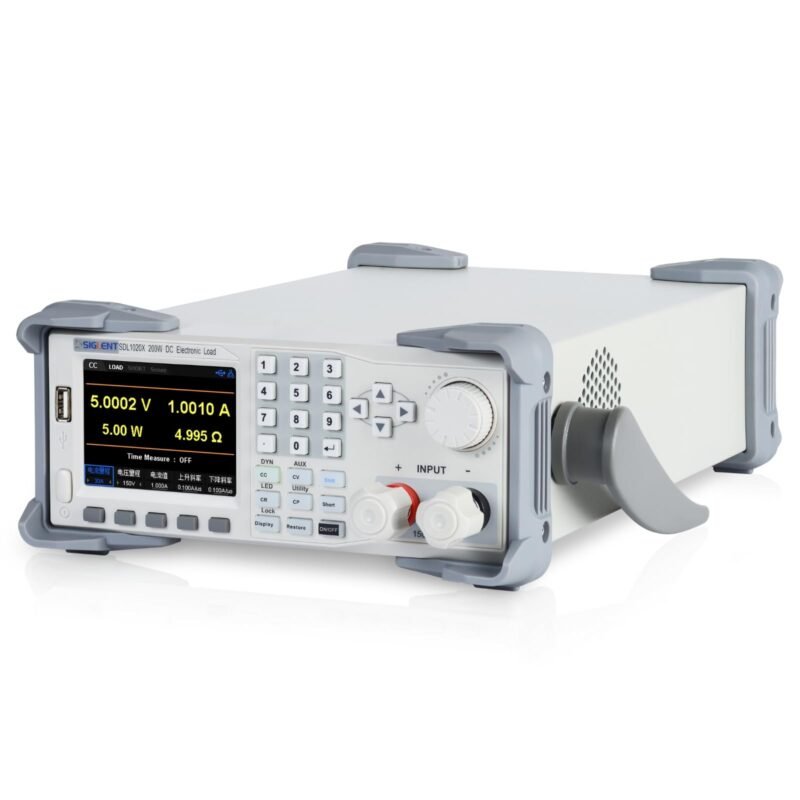
| 🥇 Siglent SDL1020X-E | Bench, programmable | 150 V / 30 A / 200 W | CC/CV/CR/CP, dynamic, list | ⭐ 4.4 (39) | Best Overall | Buy Here → |
| 🔥 MakerHawk 150W Load Tester | Load module | 200 V / 20 A / 150 W | CC, capacity, timer | ⭐ 3.7 (268) | Best Budget Module | Buy Here → |
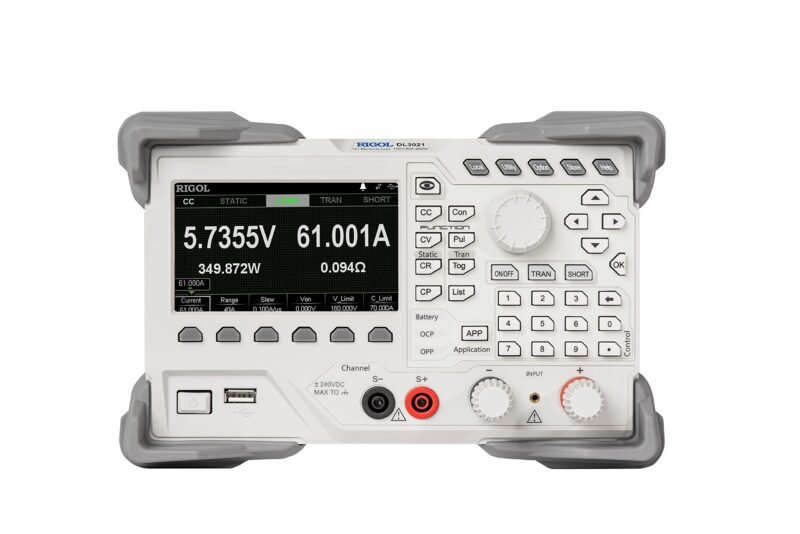
| 🖥️ Rigol DL3021 | Bench, programmable | 150 V / 40 A / 200 W | 15 kHz dynamic, LAN/USB/RS232 | ⭐ 3.9 (36) | Best for Automation | Buy Here → |
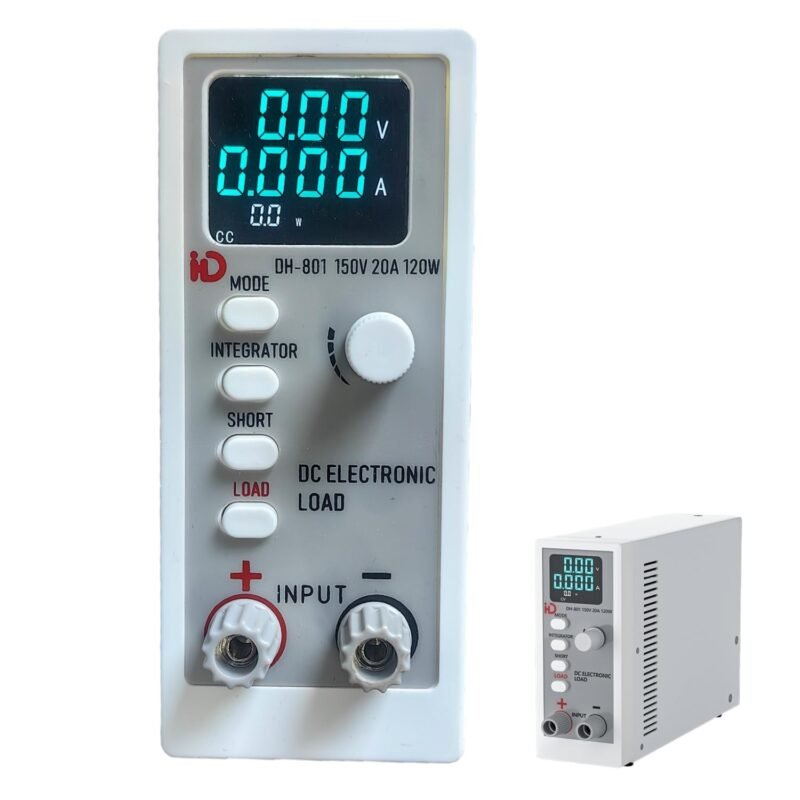
| 🎛️ MUXWELL 120W Programmable | Compact programmable | 150 V / 20 A / 120 W | CC/CV/CR/CP, Wh timing | ⭐ 4.2 (19) | Best Compact Programmable | Buy Here → |
| 📱 MakerHawk 180W 4-Wire | Load module + app | 200 V / 20 A / 180 W | CC/CP/CR/CV, 4-wire, app | ⭐ 3.9 (76) | Best Module With App | Buy Here → |
| 📶 KKnoon BW150 Wi-Fi Load | Load module + Wi-Fi | 1 to 200 V / up to 25 A | Wi-Fi app, PC, logging | ⭐ 3.9 (96) | Best Wi-Fi Logging | Buy Here → |
| 🌡️ Eyes.sys 180W Load Tester | Load module | 200 V / 20 A / 180 W | CC/CV/CP/CR, NTC probe | ⭐ 4.2 (44) | Best Temperature Monitoring | Buy Here → |
| 📈 Vastarry 180W Load Tester | Load module | 180 W | CC/CV, color curve screen | ⭐ 4.0 (63) | Best Cable and Charger Tests | Buy Here → |
| 🔌 Eversame 35W USB Load | USB load + meter | 35 W | CC, QC2.0/3.0 trigger | ⭐ 4.2 (97) | Best USB Kit | Buy Here → |
| 🧪 UCTRONICS 35W USB Load | USB load | 4 to 25 V / 35 W | QC/AFC/FCP trigger, OVP | ⭐ 4.1 (153) | Best Fast-Charge Trigger | Buy Here → |
| 💡 DROK LD25 USB Load | USB load resistor | 25 W / 0.25 to 4 A | USB-A and Type-C, OVP | ⭐ 4.6 (309) | Best Pocket Load | Buy Here → |
| 🔋 DWEII 4-Ch 18650 Tester | Cell capacity tester | 4 x 18650, DC 5 V | Capacity + internal resistance | ⭐ 4.3 (111) | Best 18650 Cell Tester | Buy Here → |
| 🧮 Shutao 8-Ch 18650 Tester | Cell capacity tester | 8 x 18650 (flat top) | Capacity + IR, auto cycle | ⭐ 4.7 (25) | Best for Pack Builders | Buy Here → |
Ratings and specs are taken from each Amazon listing at the time of writing. Power ratings on modules assume good cooling. Tap Buy Here to see the live price.
🔍 How to Choose an Electronic Load
🔥
Power and Cooling
Pick a rating above your biggest test. A 5 V 3 A charger needs 15 W, a 12 V 10 A supply needs 120 W. Budget modules quote peak power, so leave headroom for long tests.
🎛️
Modes
CC covers most battery and supply tests. CV is useful for testing chargers and solar panels, CR mimics a resistor and CP mimics a constant-power device such as a DC-DC converter.
📏
Low-Voltage Range
Single lithium cells sit at 2.5 to 4.2 V and NiMH near 1.2 V. Check the minimum operating voltage at full current, and look for 4-wire sensing for accurate readings.
📊
Logging and Control
Bench loads offer LAN, USB or RS232 for scripted tests. Newer modules add Bluetooth or Wi-Fi apps that plot discharge curves.
🔋
Dedicated Cell Testers
For grading many 18650 cells, a multi-slot tester that measures capacity and internal resistance automatically is faster and safer than a generic load.
🏆 Detailed Reviews: All 13 Picks
🥇 BEST OVERALL
Siglent SDL1020X-E Programmable DC Electronic Load
⭐ 4.4/5 · 39 ratings · Bench Programmable Load
Buy on Amazon →

The Siglent SDL1020X-E is a proper single-channel bench instrument. Per the listing it handles 150 V and 30 A up to 200 W, offers four static modes (CC, CV, CR and CP) plus a dynamic mode (25 kHz in CC, 12.5 kHz in CP), a list function with up to 100 steps and an adjustable current rise time. That is what you need to test regulator transient response, characterise a power supply or run repeatable battery discharge profiles. It averages 4.4 stars from 39 ratings, which is a small sample but typical for lab gear.
✅ Pros- Four static modes plus dynamic
- 100-step list sequences
- Real bench instrument build
❌ Cons- Few Amazon ratings
- Bigger investment than modules
🎯 Verdict: The one to buy if you test power electronics regularly.
👉 Check Price on Amazon →
🔥 BEST BUDGET MODULE
MakerHawk 150W Electronic Load Tester
⭐ 3.7/5 · 268 ratings · Most-Reviewed Load Module
Buy on Amazon →
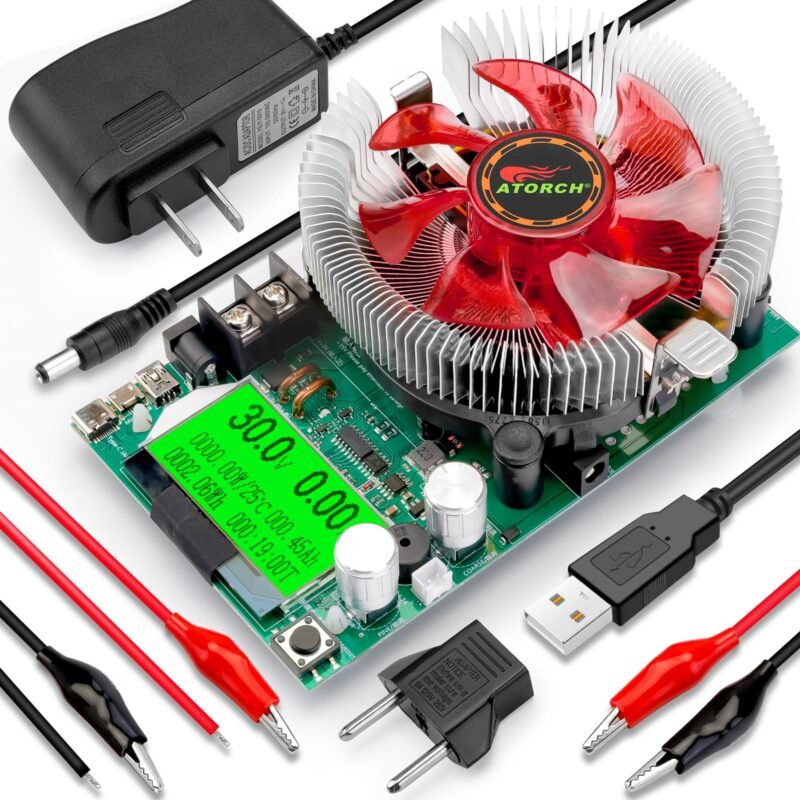
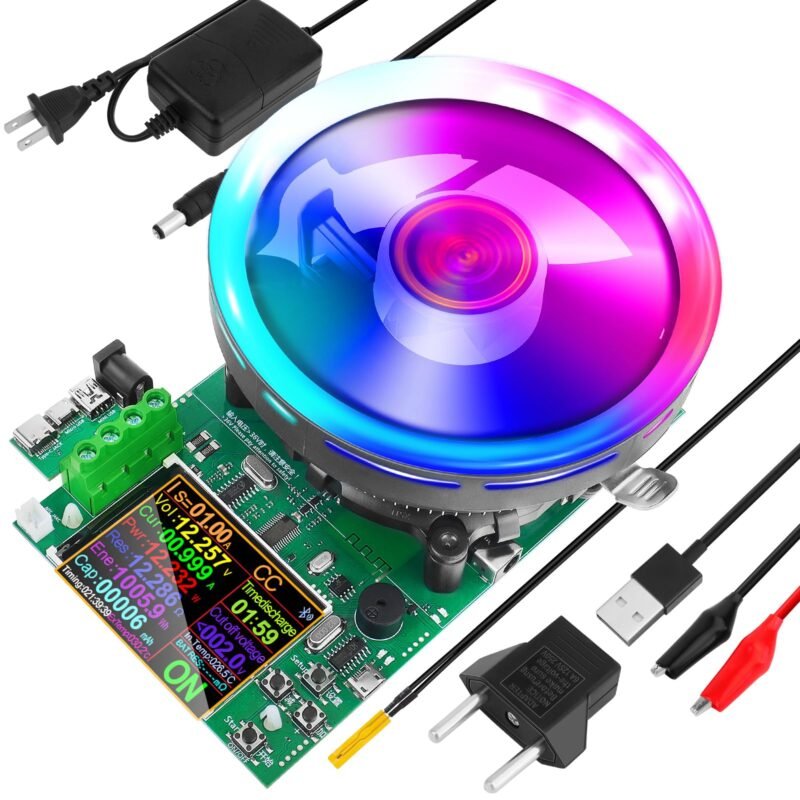
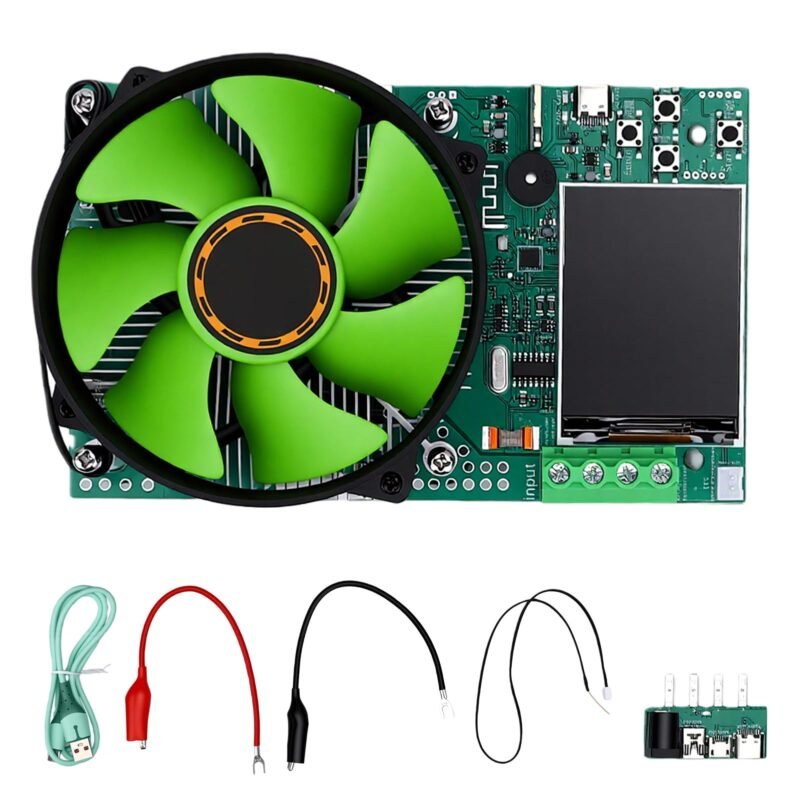
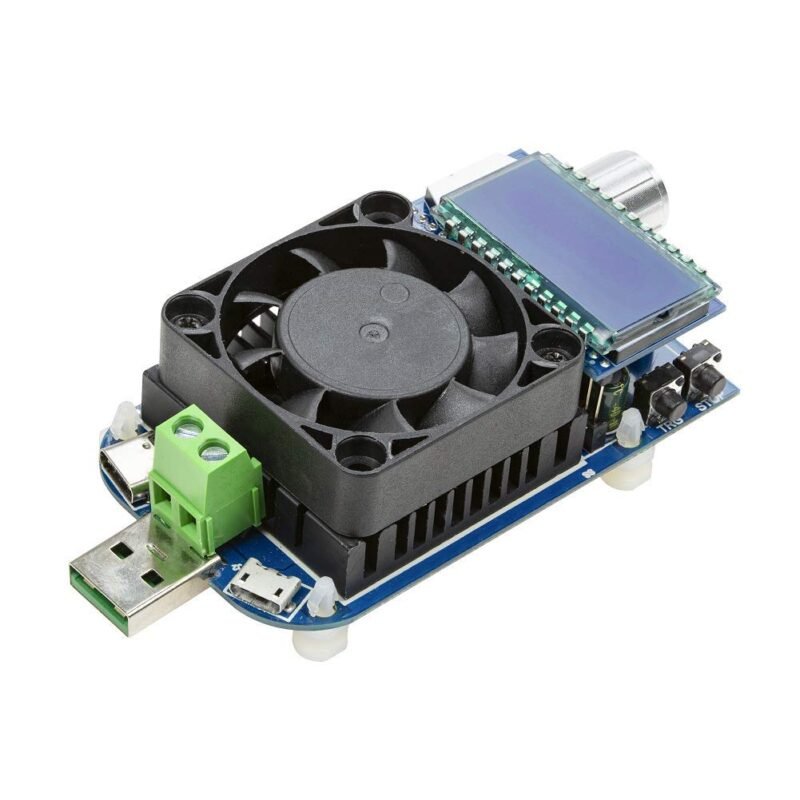
This MakerHawk module is the classic cheap constant-current load with a fan-cooled heatsink. The listing gives a 0 to 200 V and 0 to 20 A measuring range, 150 W of rated power, and lets you set capacity, power and time limits with the keys. It runs from a 6 to 12 V DC supply or a micro USB cable. It has the most ratings of any DC load here (268) but a modest 3.7 star average, and the listing itself warns you to start with the current knobs at zero and ramp slowly.
✅ Pros- Huge voltage range for the price
- Capacity and timer limits
- Most-reviewed load here
❌ Cons- 3.7 star average
- Needs a separate power input
- Derate for long tests
🎯 Verdict: Good value for battery and charger tests if you treat 150 W as a peak.
👉 Check Price on Amazon →
🖥️ BEST FOR AUTOMATED TESTS · ⭐ 3.9/53. Rigol DL3021 Programmable DC Electronic Load
150 V / 40 A / 200 W, LAN, USB and RS232 · 36 ratings
Buy Here →

Rigol’s DL3021 is the main rival to the Siglent. Per the listing it covers 150 V and 40 A up to 200 W, has a 15 kHz dynamic mode, a 4.3 inch TFT display, multi-layer protection and built-in LAN, USB and RS232 for remote programming, so you can script battery or PSU tests from Python. It averages 3.9 stars from 36 ratings.
✅ Pros: 40 A current; full remote control interfaces.
❌ Cons: Lower average than the Siglent; few ratings.
🎯 Verdict: Pick it when you want to script tests from a PC.
🎛️ BEST COMPACT PROGRAMMABLE · ⭐ 4.2/54. MUXWELL 120W Programmable DC Electronic Load
0 to 150 V, 0 to 20 A, 120 W, 0.1 to 999.9 ohm · 19 ratings
Buy Here →
A small box that brings all four modes (CC, CV, CR and CP) to a mid-range budget. The listing gives 0 to 150 V, 0 to 20 A, a 0.1 to 999.9 ohm CR range and 120 W, plus integral timing for watt-hour measurement on an LED display. Only 19 ratings so far (4.2 stars), so it is less proven than the big names.
✅ Pros: All four modes; Wh measurement.
❌ Cons: Only 19 ratings; 120 W ceiling.
🎯 Verdict: A sensible step up from knob-adjusted modules.
📱 BEST MODULE WITH APP · ⭐ 3.9/55. MakerHawk 180W 4-Wire Battery Load Tester
200 V / 20 A / 180 W, 2.4 inch color screen · 76 ratings
Buy Here →
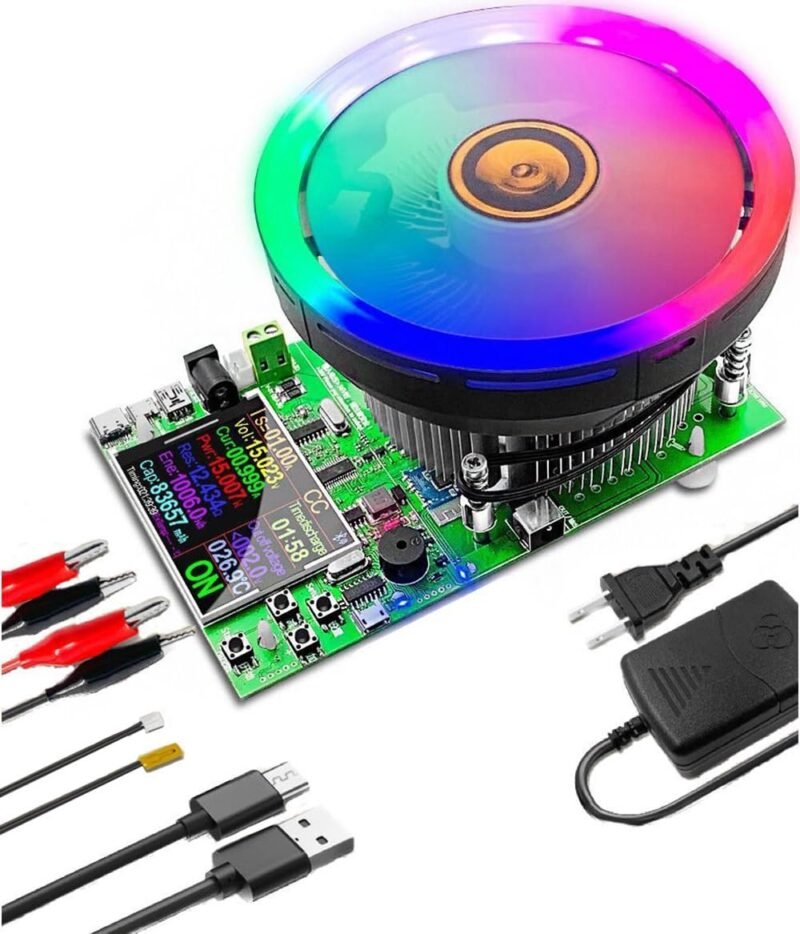
MakerHawk’s newer 180 W tester adds a 4-wire (Kelvin) connection for more accurate voltage readings at high current, a 2.4 inch color screen and four discharge modes (CC, CP, CR and CV). The listing says it works with Android and iOS apps plus PC over Bluetooth or a wired link, so you can log discharge curves. It averages 3.9 stars from 76 ratings.
✅ Pros: 4-wire sensing; app logging.
❌ Cons: Modest rating average.
🎯 Verdict: The module to get if you want curves on your phone.
📶 BEST WI-FI LOGGING · ⭐ 3.9/56. KKnoon BW150 Electronic Load Tester
1 to 200 V, up to 25 A at 5 V and above, 0.01 to 5 A low range · 96 ratings
Buy Here →
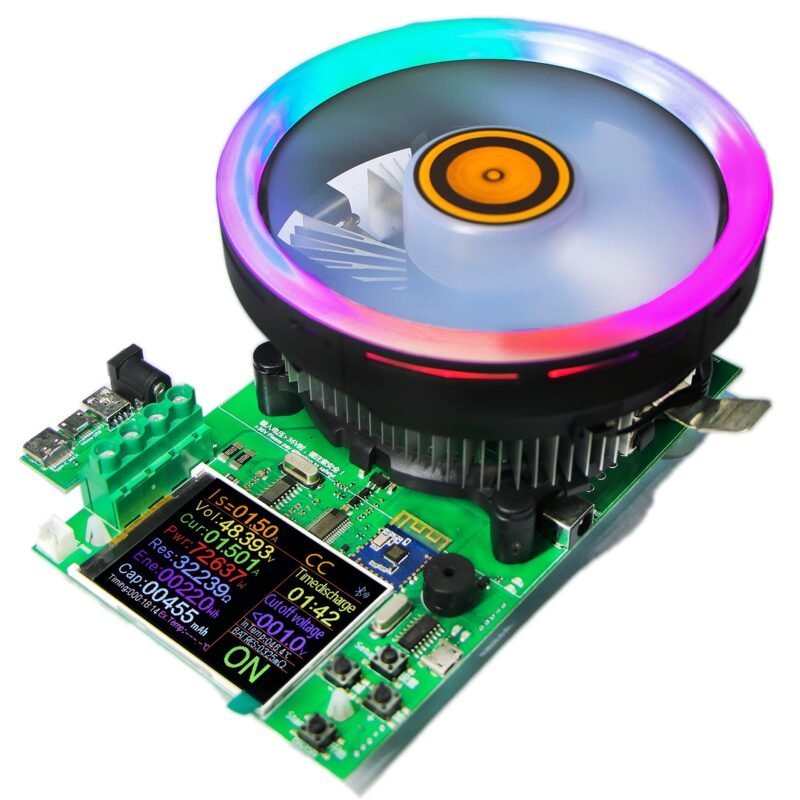
The BW150 has built-in Wi-Fi and PC connectivity for real-time monitoring, parameter changes and automatic test curves. Per the listing it accepts 1 to 200 V, sinks up to 25 A at 5 V and above, and has a separate 0.01 to 5 A mode for voltages under 5 V, which helps with single cells. A large fan handles long tests. It averages 3.9 stars from 96 ratings.
✅ Pros: Wi-Fi logging; low-voltage current range.
❌ Cons: Average rating; app quality varies.
🎯 Verdict: Handy for long unattended discharge runs.
🌡️ BEST TEMP MONITORING · ⭐ 4.2/57. Eyes.sys 180W Electronic Load Tester
200 V / 20 A / 180 W, 2.4 inch HD color screen · 44 ratings
Buy Here →

This 180 W tester offers four modes (CC, CV, CP and CR) and auto-generated data reports on a 2.4 inch color screen. Its standout per the listing is an external wired NTC thermometer for dual temperature measurement, so you can watch the cell or charger under test as well as the load, plus three safety protections. It averages 4.2 stars from 44 ratings.
✅ Pros: External temperature probe; four modes.
❌ Cons: Smaller review base.
🎯 Verdict: Great for watching cell heat during discharge.
📈 BEST FOR CABLES AND CHARGERS · ⭐ 4.0/58. Vastarry 180W DC Electronic Load Tester
180 W, 4 modes, 2.4 inch color curve display · 63 ratings
Buy Here →
Another 180 W module with a 2.4 inch color screen that draws a live curve. The listing lists four operating modes including constant current and constant voltage, intelligent fan control, and support for testing Android, Type-C, Mini and other cables directly. It averages 4.0 stars from 63 ratings.
✅ Pros: Live curve display; direct cable testing.
❌ Cons: Fewer headline specs in the listing.
🎯 Verdict: A tidy all-rounder for chargers and cables.
🔌 BEST USB KIT · ⭐ 4.2/59. Eversame 35W Adjustable USB Load Tester
35 W, OLED meter, QC2.0/QC3.0 trigger included · 97 ratings
Buy Here →
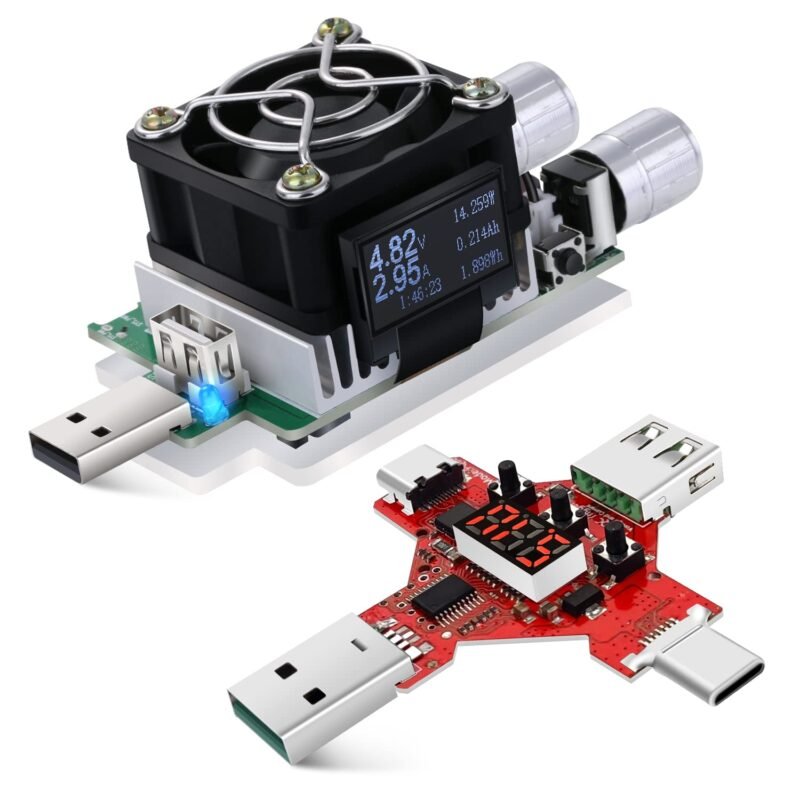
A complete USB test kit: an adjustable constant-current USB load with two current pots, an OLED USB meter and a QC2.0/QC3.0 trigger so you can test fast chargers at higher voltages. It plugs straight into chargers and power banks. It averages 4.2 stars from 97 ratings.
✅ Pros: Meter, load and trigger in one pack.
❌ Cons: USB only; 35 W limit.
🎯 Verdict: The easy way to check power banks and USB chargers.
🧪 BEST FAST-CHARGE TRIGGER · ⭐ 4.1/510. UCTRONICS 35W Electronic USB Load Tester
DC 4 to 25 V, 35 W, USB, Micro USB, Type-C and screw terminal · 153 ratings
Buy Here →
UCTRONICS combines an electronic load with a QC2.0/QC3.0/AFC/FCP trigger. Per the listing it runs from 4 to 25 V with a 35 W maximum, has USB, Micro USB, Type-C and an external wiring port, and includes anti-reverse, overvoltage and overcurrent protection. That external port means you can also load a small buck converter. It averages 4.1 stars from 153 ratings.
✅ Pros: Many input ports; protections.
❌ Cons: 35 W ceiling.
🎯 Verdict: Best small load for fast chargers and small converters.
💡 BEST POCKET LOAD · ⭐ 4.6/511. DROK LD25 USB Load Tester
25 W, 0.25 to 4 A constant current, USB and Type-C · 309 ratings
Buy Here →
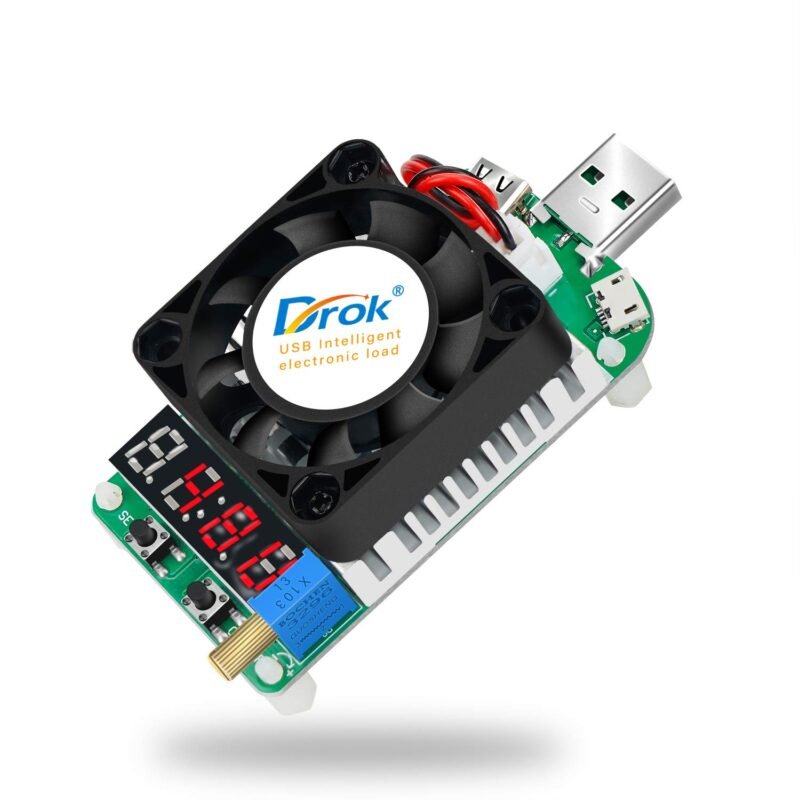
The DROK LD25 is a tiny temperature-controlled constant-current load with USB-A and Type-C inputs, adjustable from 0.25 to 4 A up to 25 W. Per the listing it has overvoltage protection (25 to 30 V) and can resume automatically. It is the highest rated of the loads here, at 4.6 stars from 309 ratings. Pair it with a USB meter for capacity tests.
✅ Pros: Top-rated load; tiny and simple.
❌ Cons: USB only; 25 W limit.
🎯 Verdict: Keep one in the drawer for quick USB checks.
🔋 BEST 18650 CELL TESTER · ⭐ 4.3/512. DWEII 4-Channel 18650 Battery Capacity Tester
4 channels, Type-C 5 V power, 1.77 inch screen · 111 ratings
Buy Here →
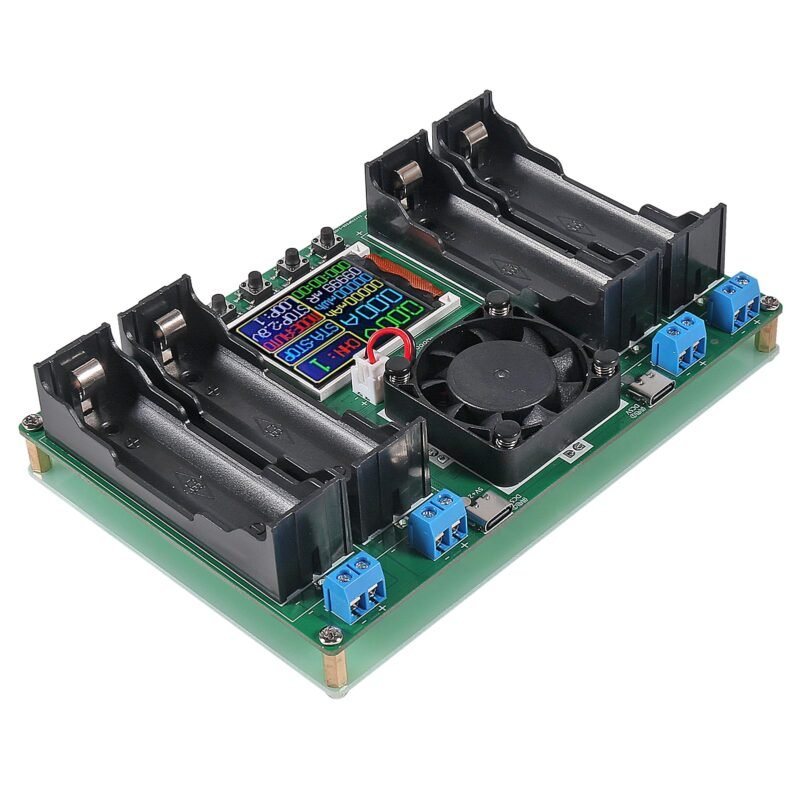
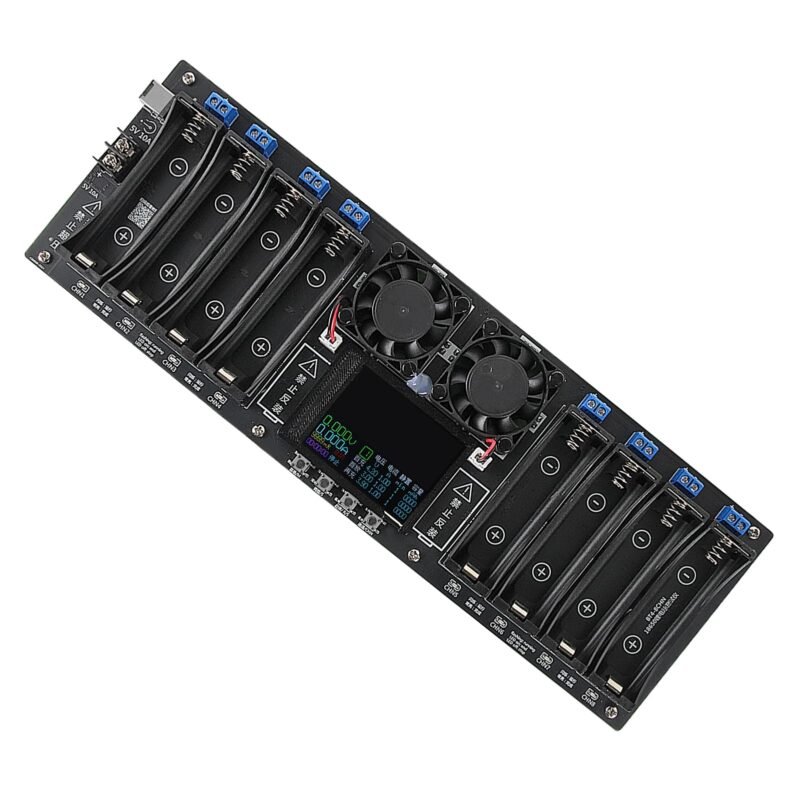
If you build packs from salvaged or new 18650 cells, a dedicated cell tester beats a generic load. This module runs an automatic charge and discharge cycle on four cells and measures capacity (mAh and mWh) plus internal resistance, shown on a 1.77 inch screen. It is powered from 5 V over Type-C. It averages 4.3 stars from 111 ratings.
✅ Pros: Capacity and internal resistance; 4 cells.
❌ Cons: 18650 format only.
🎯 Verdict: The smart way to grade cells for a DIY pack.
🧮 BEST FOR PACK BUILDERS · ⭐ 4.7/513. Shutao 8-Channel 18650 Battery Capacity Tester
8 channels, charge, discharge and charge cycle, Type-C powered · 25 ratings
Buy Here →
Doubling the slots to eight 18650 cells, this tester measures internal resistance and capacity at the same time and supports a charge, discharge and charge cycle with automatic charge cutoff and discharge stop. The listing notes it is meant for flat-top cells. It averages 4.7 stars from 25 ratings, so the review base is small.
✅ Pros: 8 cells at once; auto protection.
❌ Cons: Only 25 ratings; flat-top cells.
🎯 Verdict: Saves hours when matching cells for a big pack.
🧭 Which One for Which Job
🔌
Testing a bench or DIY power supply
Siglent SDL1020X-E or MUXWELL 120W, to check regulation from no load to full load. Useful for buck converter modules.
🔋
Measuring LiPo and LiFePO4 pack capacity
MakerHawk 180W or KKnoon BW150 with a cutoff voltage set, logging the curve. See our LiFePO4 guide.
🧮
Grading salvaged 18650 cells
DWEII 4-channel for a few cells, Shutao 8-channel for big batches.
📱
Checking USB chargers and power banks
Eversame 35W kit or UCTRONICS 35W with fast-charge triggering.
🐍
Automated test scripts
Rigol DL3021 over LAN or USB, driven from Python.
🎒
Quick checks on the go
DROK LD25 plus a USB meter fits in a pocket.
⚙️ Bench Load vs Load Module vs USB Load vs Cell Tester
| Aspect | Bench Load | Load Module | USB Load | Cell Tester |
|---|
| Typical power | 150 to 200 W, well cooled ⭐ | 120 to 180 W peak | 25 to 35 W | Per-cell, low |
| Modes | CC/CV/CR/CP + dynamic ⭐ | CC, often CV/CR/CP | CC only | Automatic cycle |
| Accuracy and logging | High, LAN/USB/RS232 ⭐ | Moderate, some apps | Basic | Capacity + IR readout |
| Best for | Power supply design | Battery and charger tests | Chargers, cables, banks | Grading 18650 cells ⭐ |
| Footprint | Bench box | Heatsink + fan board | Pocket size ⭐ | Small multi-slot board |
Starred cells mark the strongest option in each row. Most makers end up with a module or bench load plus a USB load.
❓ Frequently Asked Questions
What is the difference between an electronic load and a power resistor?
A resistor draws a current that changes with voltage, while an electronic load actively holds the current, voltage, resistance or power at your setting. That makes test results repeatable and lets you measure capacity accurately as a battery’s voltage falls.
How do I measure battery capacity with an electronic load?
Charge the battery fully, set a constant current (for example 0.2C to 0.5C), set a cutoff voltage the chemistry allows (around 2.8 to 3.0 V per lithium-ion cell), and let the load integrate mAh or Wh until it stops. Loads with logging apps save the curve too.
Can I test a 12 V lead-acid or LiFePO4 battery with a 150 W module?
Yes, within its limits: at 12 V a 150 W rating allows roughly 12 A peak, and less for long runs. Watch the heatsink temperature. For bigger packs, discharge at a lower current over a longer time. See our LiFePO4 batteries guide for cutoff voltages.
Why does my load module shut down or read wrong at low voltage?
Many MOSFET loads cannot sink full current below a minimum voltage, and test lead resistance causes voltage drop at high current. Use thick short leads, 4-wire sensing if available, or a model with a low-voltage current range like the KKnoon BW150.
Do I need a USB load if I already own a USB-C power meter?
A meter only measures what your device draws. A USB load creates a known, adjustable draw, which is what you need to test a charger’s real output. Many people pair the two. See our USB-C power meter guide.
🏁 Final Verdict: Best DC Electronic Loads
Our picks for the most common jobs:
🔥 Best Budget Module: MakerHawk 150W Load Tester
Buy Here →📶 Best Logging Module: KKnoon BW150 Wi-Fi Load
Buy Here →🔋 Best 18650 Cell Tester: DWEII 4-Channel Tester
Buy Here →For serious power supply work the Siglent SDL1020X-E is the most complete instrument here, with the Rigol DL3021 close behind when you want to script tests. On a budget, a MakerHawk or KKnoon module handles battery and charger tests, a DROK LD25 or UCTRONICS USB load covers chargers and power banks, and a multi-slot 18650 tester is the right tool for pack builders. For more bench gear, see our guides to USB-C power meters, LiFePO4 batteries and chargers, 18650 batteries and holders, step-down regulator modules and solar charge controllers.
💬 Which load do you use on your bench, and what was the biggest surprise it revealed? Tell us in the comments below.
All Amazon links above use our affiliate tag (microlab05-20). Purchasing through them supports microcontrollerslab.com at no extra cost to you. Prices and availability change frequently, so always confirm the current price on Amazon before buying.