⚠️ Affiliate Disclosure: This post contains Amazon affiliate links. If you purchase through our links, we may earn a small commission at no extra cost to you. We only recommend modules we have researched and whose listings we checked live on Amazon. Prices change constantly, so we deliberately do not print them here. Tap through and check the current price on Amazon before you buy.
Ultimate Buying Guide
🛰️ Best GPS Modules for Arduino & ESP32
9 GNSS receivers ranked for makers and firmware engineers, from the classic NEO-6M and NEO-7M to the NEO-M8N, u-blox M10 and a centimetre-level ZED-F9P RTK board, with verified Amazon listings, real chipset specs and honest verdicts.
✅ 9 Modules Reviewed
✅ Verified Amazon ASINs
✅ Real Chipset & GNSS Specs
✅ Honest Pros & Cons
Location turns an ordinary microcontroller project into something genuinely useful: a vehicle tracker, a GPS data logger, a weather balloon, an autonomous lawn rover, or a LoRa asset tag that reports where it is. For Arduino and ESP32 builds, that almost always means a small serial GNSS module that streams NMEA sentences over UART, which you parse with a library like TinyGPS++. The good news is that these modules are cheap and easy to wire. The bad news is that the listings all look identical, and the difference between a NEO-6M, a NEO-7M and a NEO-M8N is not obvious from a photo.
This guide ranks 9 GPS modules across every budget and use case. We cover the chipset generation, which satellite constellations each one can track at the same time, update rate, accuracy, antenna type and whether it has a built-in compass, so you can pick the right receiver for the project on your bench instead of the one with the loudest title.
💡 Reality check before you buy: Almost every budget “NEO-6M” or “NEO-M8N” board on Amazon is built by third-party vendors, and some use clone or recycled u-blox chips. They usually work fine for hobby projects, but configuration tools like u-center may report odd firmware versions and some settings will not save. None of these modules will get a fix indoors: a first fix from cold needs a clear view of the sky and typically 30 seconds to a few minutes. The small ceramic patch antennas bundled with cheap boards are the single biggest weak point, so budget for an active antenna if your module has an SMA or IPEX connector. And standalone GPS accuracy is about 1.5 to 2.5 metres in open sky. If you need centimetre-level accuracy, only an RTK receiver with a correction source will get you there.
📡 Quick Comparison of All 9 GPS Modules
| Module | Chipset | Constellations | Compass | Best For | Buy |
|---|
| 🥇 Beitian BN-880 | u-blox M8 (M8030) | GPS + GLONASS (BDS/Galileo cfg) | HMC5883L | Best Overall | Buy Here → |
| 🏅 HiLetgo NEO-6M | u-blox 6 | GPS only | No | Best Budget / Beginners | Buy Here → |
| HiLetgo NEO-7M | u-blox 7 | GPS or GLONASS | No | Best NEO-6M Upgrade | Buy Here → |
| GT-U7 (2-Pack) | u-blox 7 class | GPS (NEO-6M compatible) | No | Best USB Plug-and-Play | Buy Here → |
| Deegoo NEO-M8N | u-blox M8 (M8030) | GPS + BDS | Yes | Best for Rovers & Drones | Buy Here → |
| ATGM336H (2-Pack) | AT6558 | GPS, BDS, GLONASS, Galileo | No | Best Low-Power Multi-GNSS | Buy Here → |
| HGLRC M100-5883 | u-blox M10 | GPS, Galileo, BDS, GLONASS | QMC5883 | Best Tiny Latest-Gen | Buy Here → |
| SparkFun NEO-M9N | u-blox M9 | 4 concurrent GNSS | No | Best Premium / Qwiic | Buy Here → |
| SparkFun ZED-F9P | u-blox F9 (multi-band) | 4 GNSS, L1 + L2 | No | Best cm-Level RTK | Buy Here → |
Prices are intentionally not listed because they change frequently. Click “Buy Here” to see the current price and pack size on Amazon.
🔍 What to Look for in a GPS Module for Arduino / ESP32
🧬
Chipset Generation
Newer u-blox generations (6 → 7 → M8 → M9/M10 → F9) track more satellites, get a fix faster and hold it better under trees and between buildings. A NEO-6M is fine for learning; an M8 or M10 is noticeably more robust in real use.
🌐
Concurrent Constellations
GPS-only receivers see roughly 8 to 12 satellites. Modules that combine GPS with GLONASS, Galileo and BeiDou at the same time can see 20 or more, which cuts time-to-fix and improves accuracy in urban canyons.
📶
Antenna & Connector
The antenna matters more than the chip. A 25 mm ceramic patch works outdoors; an SMA or IPEX connector lets you add an active antenna on a cable, which is essential for anything mounted inside a car or enclosure.
🧭
Built-in Compass
GPS alone cannot tell you which way a stationary robot is facing. Modules with an I2C magnetometer (HMC5883L or QMC5883L) give you heading for autonomous rovers and drones through a second, independent bus.
🔌
Interface & Logic Level
Most modules speak UART at 9600 baud by default. Check that the board has a regulator for 5 V and 3.3 V, whether it can save settings to flash or EEPROM, and whether it offers I2C (Qwiic) or USB for easier setup.
🏆 Detailed Reviews of All 9 GPS Modules
🥇 BEST OVERALL
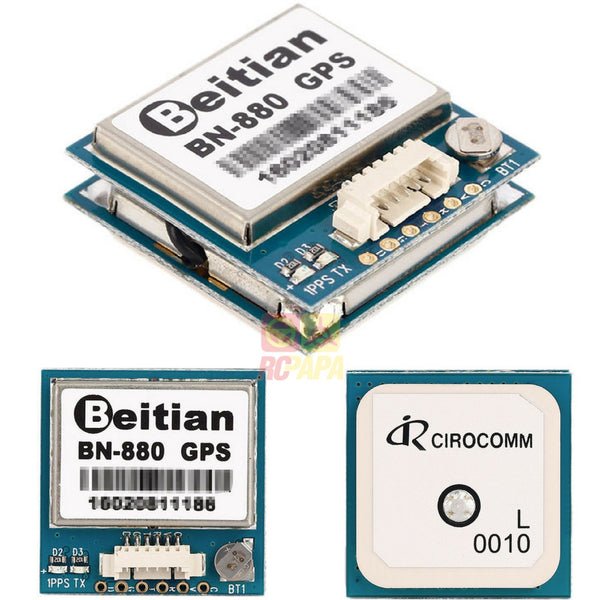
1. Beitian BN-880 (u-blox M8 + Compass)
⭐ 4.7/5 · The Do-Everything Receiver
Buy on Amazon →

The Beitian BN-880 is the module we would put on almost any Arduino or ESP32 project that has to work outside the lab. It is built around a u-blox M8 (M8030) receiver that tracks GPS and GLONASS together by default, with BeiDou or Galileo selectable in u-center, so it sees far more satellites than any NEO-6M and gets a fix noticeably faster. It adds an onboard flash chip that keeps your baud-rate and update-rate settings through power cycles, a proper 25 mm patch antenna under a shield, and an HMC5883L magnetometer on a separate I2C bus for heading. Wiring is two cables: UART (TX/RX at 9600 baud by default) for NMEA, and SDA/SCL for the compass. The listing is aimed at flight controllers, but it is a plain TTL UART device, so TinyGPS++ on an Uno or ESP32 HardwareSerial works without any special driver.
✅ Pros- GPS + GLONASS concurrent for faster, stable fixes
- Flash memory saves configuration
- Built-in compass for rover and drone heading
- Compact 28 mm square, 3.3 V to 5 V supply
❌ Cons- Costs about four times a basic NEO-6M
- Compass must be mounted away from motors and wires
- Some batches ship a QMC5883L instead of HMC5883L
🎯 Verdict: The best all-round GPS module for Arduino and ESP32. Buy it once and use it on every outdoor build.
👉 Check Price on Amazon →
🏅 BEST BUDGET / BEGINNERS
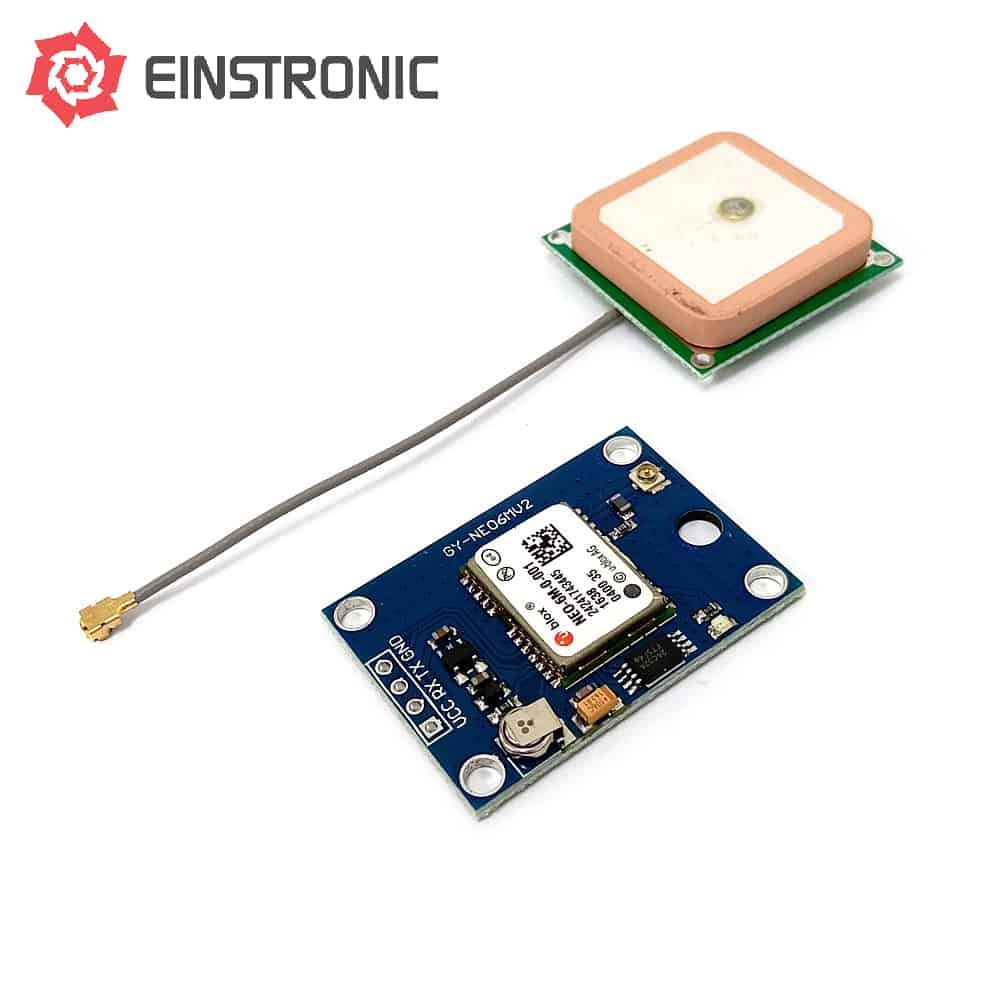
2. HiLetgo GY-NEO6MV2 NEO-6M
⭐ 4.5/5 · The Classic Starter Module
Buy on Amazon →

The GY-NEO6MV2 is the GPS module that nearly every Arduino tutorial is written for, and the HiLetgo version is one of the most-reviewed listings on Amazon. It pairs the u-blox NEO-6M with a 25 mm ceramic patch antenna on an IPEX lead, an EEPROM for saving configuration, a small backup battery that keeps almanac data for faster warm starts, and a fix LED that blinks once you have a lock. It powers from 3.3 V to 5 V and streams NMEA at 9600 baud, so four jumper wires and TinyGPS++ get you coordinates on an Uno, Nano or ESP32 in minutes. The limits are the chip generation: it is GPS only, cold fixes can take a minute or more, and it struggles under trees or near buildings.
✅ Pros- Lowest cost way to start with GPS
- Supported by every tutorial and library
- Backup cell speeds up warm starts
- Works at 3.3 V and 5 V
❌ Cons- GPS only, older u-blox 6 generation
- Slow cold fix, weak in poor sky view
- Clone chips are common on these boards
🎯 Verdict: The right first GPS module for learning NMEA parsing and building a simple tracker. Upgrade later if you need robustness.
👉 Check Price on Amazon →
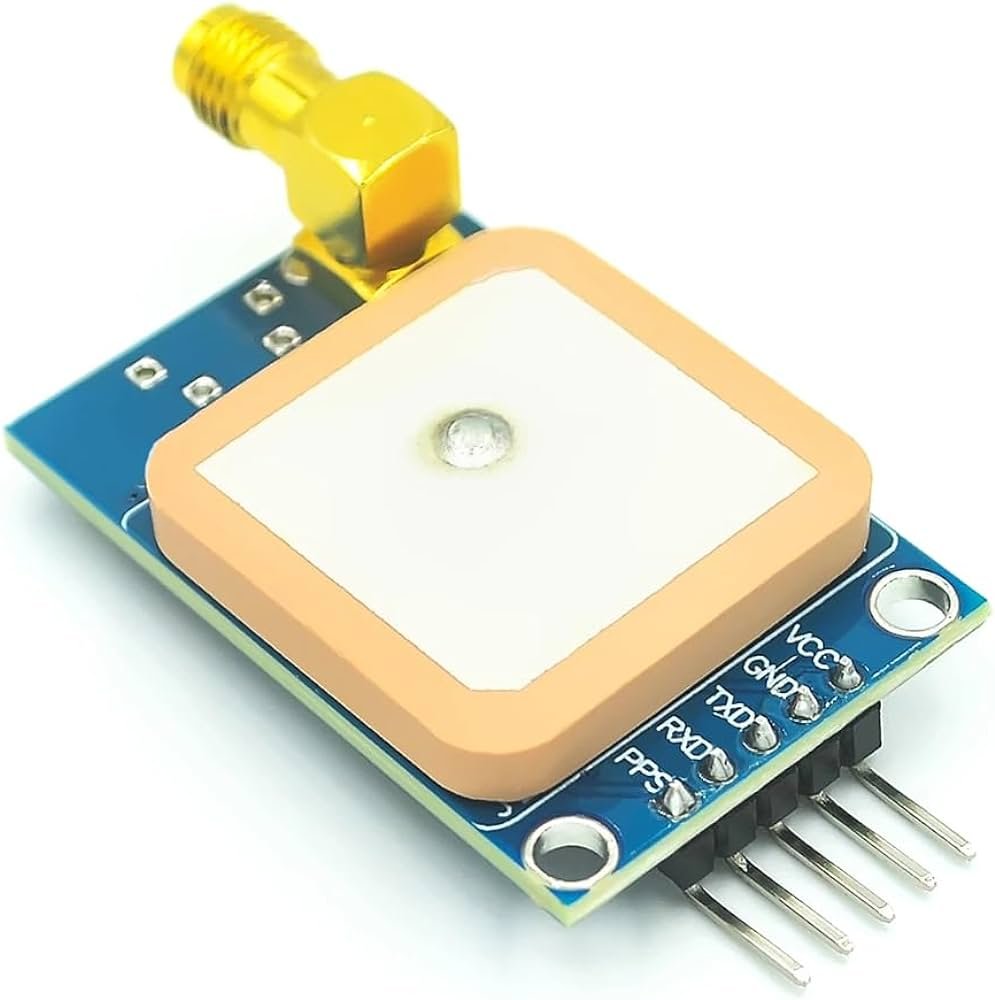
🔼 BEST NEO-6M UPGRADE · ⭐ 4.3/53. HiLetgo NEO-7M (USB + SMA)
u-blox 7 · 56 channels · GPS or GLONASS · up to 10 Hz · UART + USB · SMA antenna port · 3.3 V / 5 V
Buy Here →

The HiLetgo NEO-7M board is the easiest step up from a NEO-6M without changing a single line of code. It is pin- and protocol-compatible, still outputs NMEA over TTL UART, but moves to the u-blox 7 generation with 56 channels, GLONASS support and update rates up to 10 Hz. Two practical extras make this board stand out: a USB port so you can plug it straight into a PC and watch the fix in u-center, and an SMA connector for an external active antenna alongside the onboard patch. That makes it a good choice for a car tracker where the module sits inside the dashboard. Reviews mention occasional quality variation, so test it outdoors when it arrives.
✅ Pros: Drop-in NEO-6M replacement; USB for PC testing; SMA port for an active antenna; GLONASS support.
❌ Cons: GPS and GLONASS cannot run at the same time on u-blox 7; mixed seller QC; larger 39 x 25.5 mm board.
🎯 Verdict: A sensible upgrade when a NEO-6M project needs a better antenna option and a quicker path to debugging over USB.
👉 Check Price on Amazon →
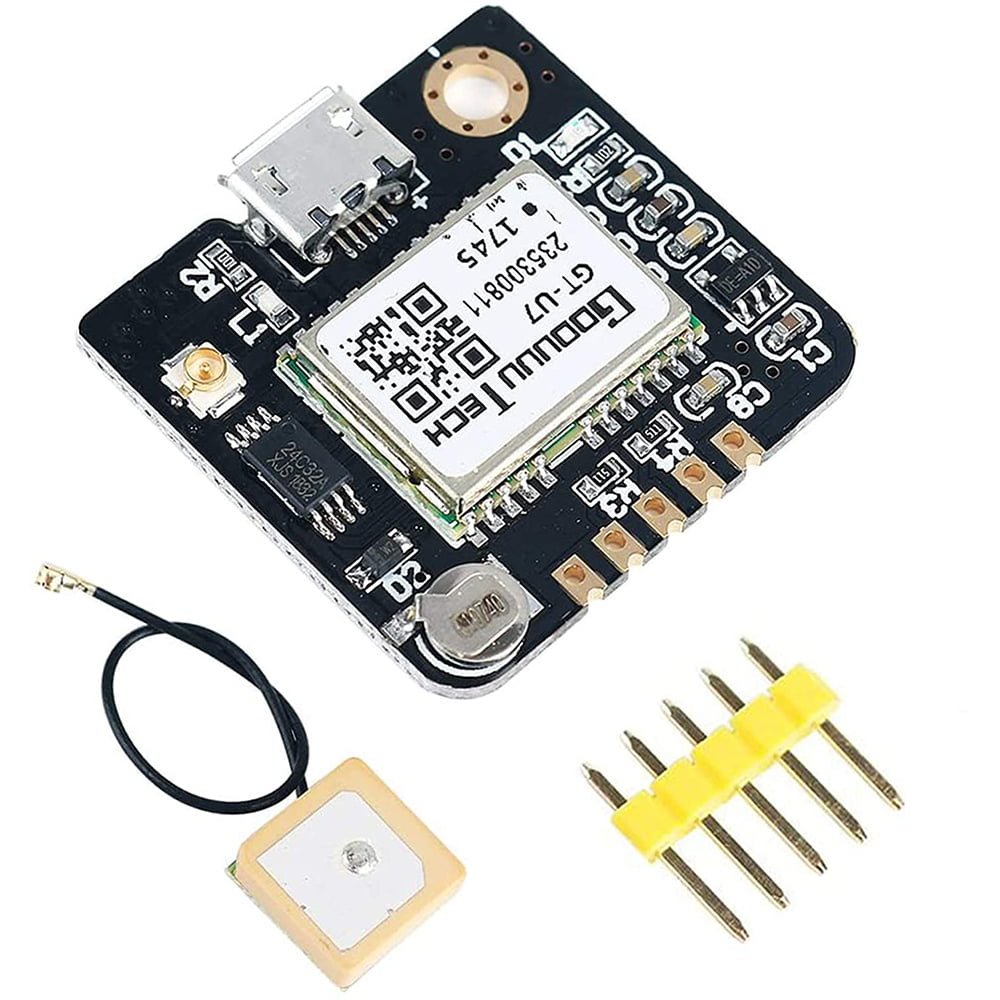
💻 BEST USB PLUG-AND-PLAY · ⭐ 4.4/54. GT-U7 u-blox 7 GPS (2-Pack)
u-blox 7-class chip · NEO-6M software compatible · UART + micro-USB · IPEX antenna · EEPROM · 2-pack
Buy Here →

The GT-U7 is one of the best-reviewed GPS listings on Amazon, and it is a smart buy if you want spares. It uses a u-blox 7-series chip that is software-compatible with the NEO-6M, so any TinyGPS++ sketch runs unchanged, but it adds a micro-USB port that appears as a serial device on your PC. That lets you verify a fix and tweak settings in u-center before wiring it to an Arduino or ESP32. It includes an EEPROM for configuration and an IPEX connector for the supplied patch antenna. The two-pack format is handy for a tracker plus a bench unit, or for a base-and-rover experiment.
✅ Pros: Excellent review history; USB for instant PC testing; NEO-6M code compatible; two modules per pack.
❌ Cons: Small bundled patch antenna; GPS-focused rather than true multi-GNSS; no compass.
🎯 Verdict: The easiest module to get working on day one, and a great value two-pack for classrooms and multiple builds.
👉 Check Price on Amazon →
🚜 BEST FOR ROVERS & DRONES · ⭐ 4.2/55. Deegoo-FPV NEO-M8N GPS + Compass
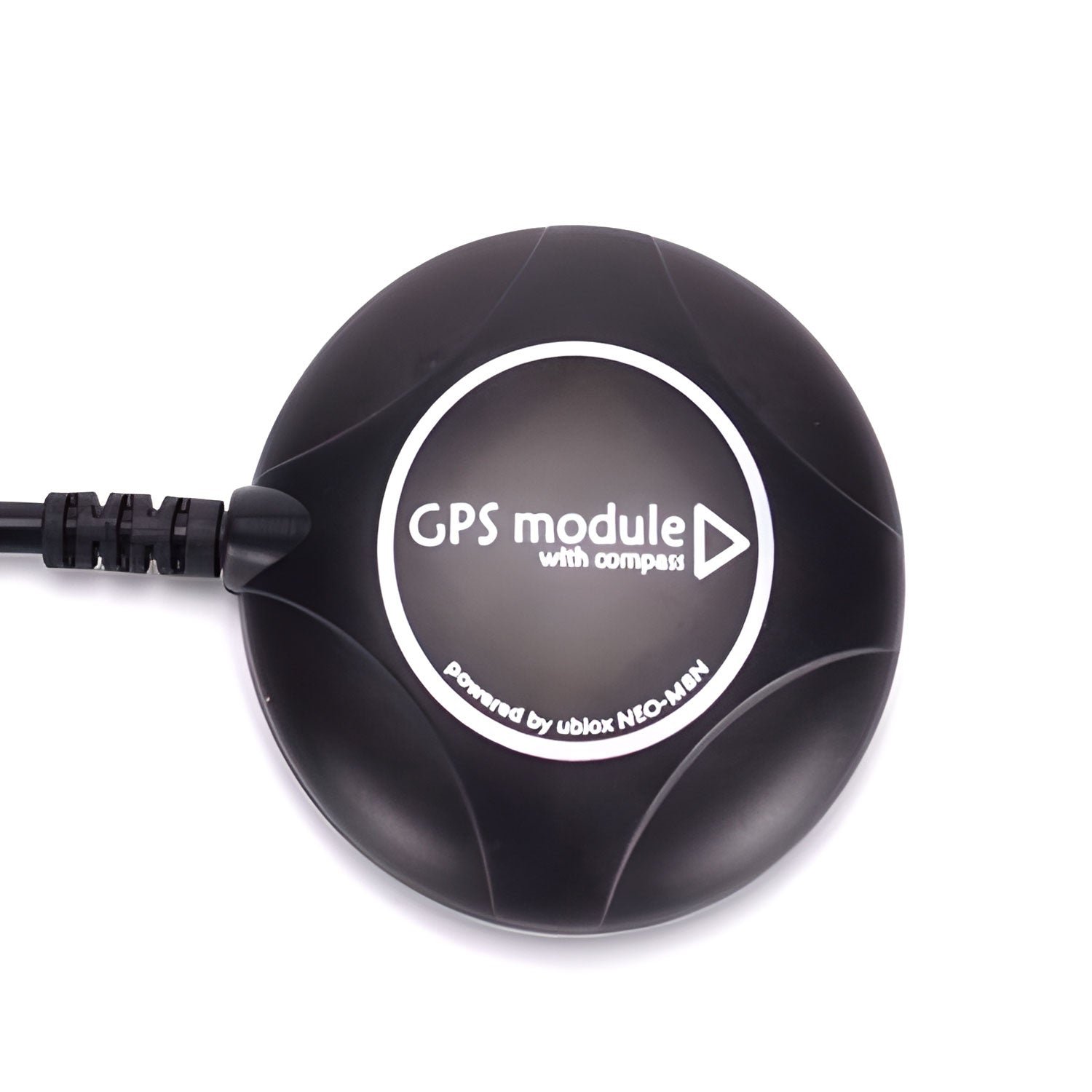
u-blox M8 (M8030-KT) · 72 channels · GPS + BDS · TCXO · built-in compass · puck housing with cable
Buy Here →

If you are building an autonomous rover, boat or drone, a puck-style NEO-M8N with a compass is the classic choice. The Deegoo-FPV unit uses a u-blox M8030-KT receiver with a TCXO for temperature stability, 72 tracking channels and GPS + BeiDou dual-mode positioning, plus a magnetometer inside the same weatherproof dome. The cable plugs straight into APM and Pixhawk ports, and for Arduino or ESP32 you simply break out the UART and I2C wires. The dome and ground plane give it a clear performance edge over bare breakout boards when mounted on a mast. The Amazon rating is lower than others here, mostly from connector mismatches, so check the plug against your controller before flying.
✅ Pros: Weatherproof puck with good antenna; compass in the same housing; M8 generation performance; mast-mountable.
❌ Cons: Connector often needs re-pinning for Arduino; mixed reviews on QC; larger than breakout boards.
🎯 Verdict: The practical pick for navigation projects that need both position and heading from one weatherproof unit.
👉 Check Price on Amazon →
🔋 BEST LOW-POWER MULTI-GNSS · ⭐ 4.3/56. Teyleten ATGM336H GPS+BDS (2-Pack)
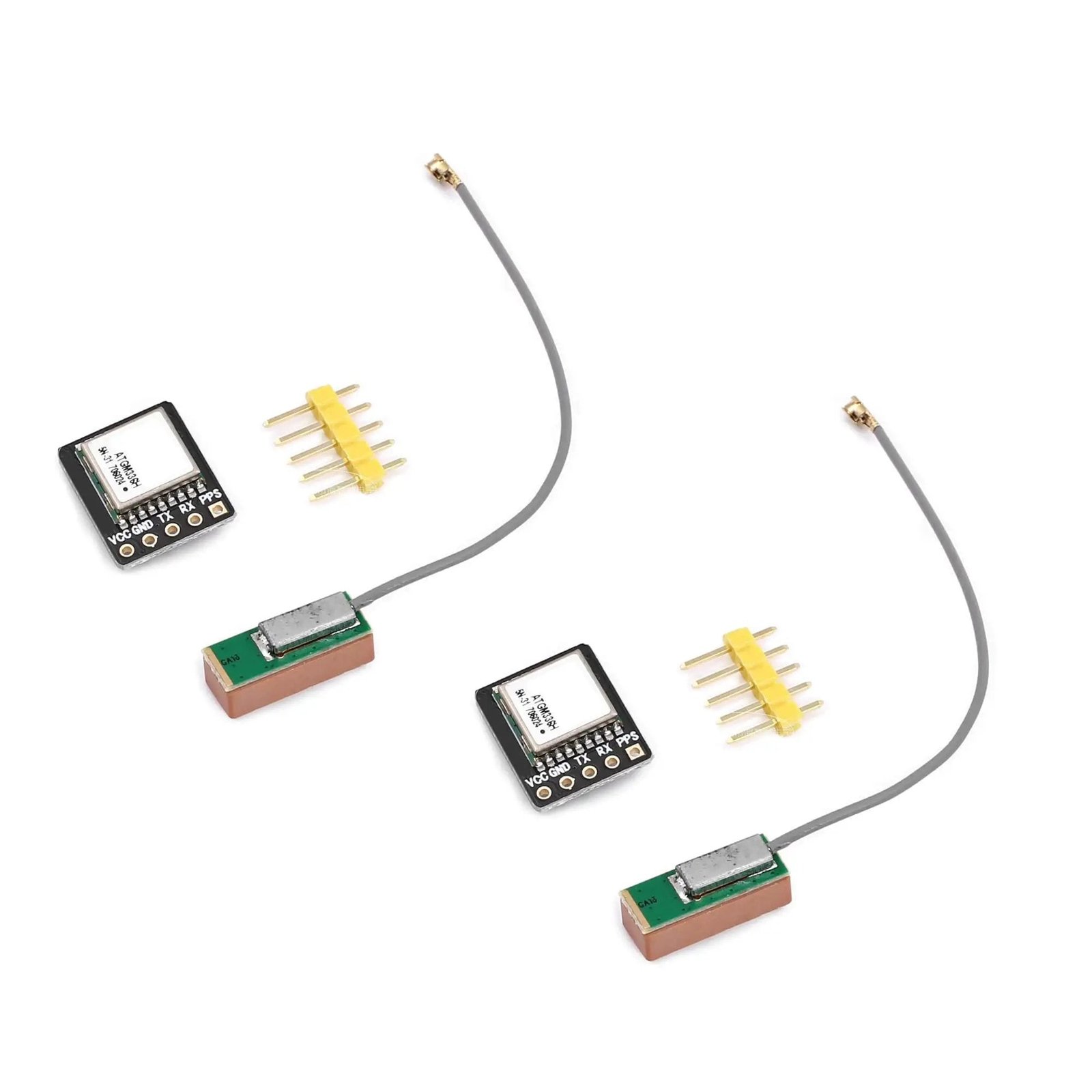
AT6558 SoC · 32 channels · BDS, GPS, GLONASS, Galileo, QZSS, SBAS · 9.7 x 10.1 mm module · UART · 2-pack
Buy Here →

The ATGM336H is not a u-blox part. It is built on the AT6558 multi-GNSS SoC from Hangzhou Zhongke Microelectronics, and it is quietly one of the best-value receivers for battery projects. The module tracks BeiDou, GPS, GLONASS, Galileo and QZSS, supports SBAS, and draws less current than a NEO-6M, which matters for an ESP32 or LoRa tracker that sleeps between fixes. The Teyleten pack gives you two boards with small external antennas, and they output standard NMEA at 9600 baud, so TinyGPS++ works as-is. Configuration uses the CASIC protocol rather than UBX, so u-center will not talk to it.
✅ Pros: Multi-constellation at a budget price; low power draw; tiny module footprint; two boards per pack.
❌ Cons: Not compatible with u-center or UBX commands; less documentation than u-blox; tiny antennas need a clear sky.
🎯 Verdict: The best budget choice for low-power ESP32 and LoRa trackers where multi-GNSS matters more than u-blox tooling.
👉 Check Price on Amazon →
🪶 BEST TINY LATEST-GEN · ⭐ 4.5/57. HGLRC M100-5883 (u-blox M10 + Compass)
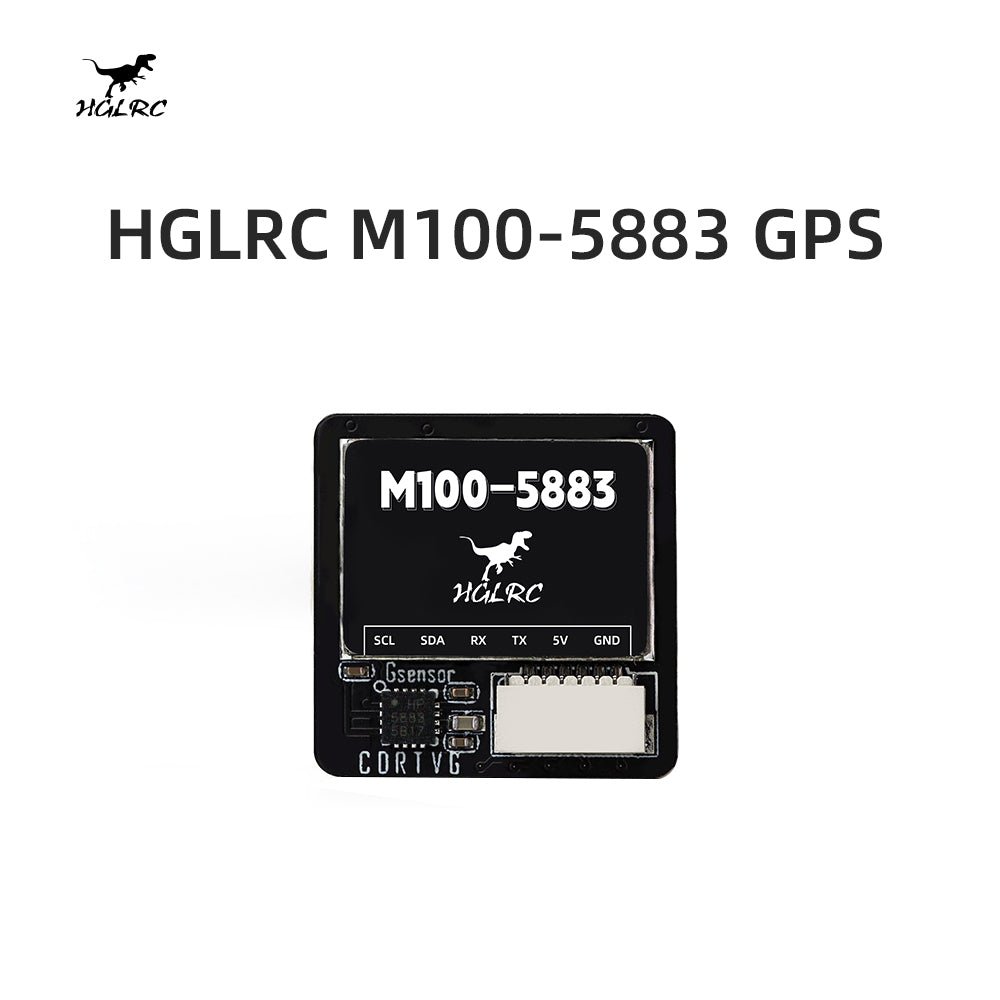
u-blox M10 (10th gen) · GPS, Galileo, BDS (+ GLONASS) · QMC5883 compass · 21 x 21 mm · 7.73 g
Buy Here →
The HGLRC M100-5883 packs a 10th-generation u-blox M10 receiver and a QMC5883 compass into a 21 mm square that weighs under 8 g. The M10 platform tracks four constellations concurrently and is one of the lowest-power u-blox receivers ever made, which makes this a surprisingly good fit for wearables, small robots and ESP32 trackers, not only FPV drones. It has a strong review count on Amazon. The catch for makers is the connector: it ships with a small JST-style FPV lead, so you will crimp or solder jumpers to reach an Arduino header. Check the baud rate in u-center on first power-up, as FPV-targeted units are often preset for flight-controller firmware.
✅ Pros: Latest u-blox M10 in a tiny, light package; four-constellation tracking; compass included; low power.
❌ Cons: FPV cable needs adapting for breadboards; ceramic patch is small; documentation is FPV-oriented.
🎯 Verdict: The most modern receiver per gram here. Ideal when space and battery life matter.
👉 Check Price on Amazon →
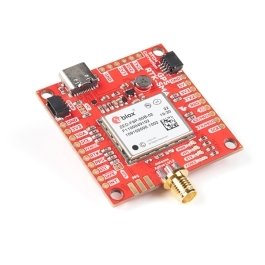
🧪 BEST PREMIUM / QWIIC · ⭐ 4.7/58. SparkFun GPS Breakout NEO-M9N, SMA (Qwiic)
u-blox NEO-M9N · 92 channels · 4 concurrent GNSS · up to 25 Hz · I2C (Qwiic), UART, SPI, USB-C · SMA
Buy Here →

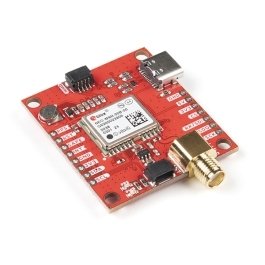
The SparkFun NEO-M9N breakout is what you buy when you want a GPS receiver you can trust and debug properly. It uses a genuine u-blox NEO-M9N with 92 channels, four constellations at once and navigation rates up to 25 Hz. SparkFun exposes I2C via Qwiic, UART, SPI and USB-C, adds a backup battery, and the SparkFun u-blox GNSS Arduino Library lets you read position, speed and time as binary UBX data over I2C, which is far more efficient than parsing NMEA on an ESP32. This SMA version lets you choose your own active antenna. It sits well above the budget modules here, so choose it for professional prototypes or data logging where a genuine chip matters.
✅ Pros: Genuine u-blox chip with full documentation; Qwiic I2C and USB-C; excellent Arduino library; 25 Hz updates.
❌ Cons: Much more expensive than hobby boards; antenna sold separately for the SMA version; 3.3 V logic.
🎯 Verdict: The best premium GPS for Arduino and ESP32 prototypes that need reliable, well-documented hardware.
👉 Check Price on Amazon →
🎯 BEST CENTIMETRE-LEVEL RTK · ⭐ 4.8/59. SparkFun GPS-RTK-SMA ZED-F9P (Qwiic)
u-blox ZED-F9P · 184 channels · multi-band L1 + L2 · RTK · up to 20 Hz · Qwiic, UART, SPI, USB-C · SMA
Buy Here →
The SparkFun GPS-RTK-SMA board brings real-time kinematic positioning to Arduino and ESP32. Its u-blox ZED-F9P is a multi-band receiver that tracks L1 and L2 signals from all four major constellations, and with an RTK correction stream from a local base station or an NTRIP caster it reaches centimetre-level accuracy. That is the difference between knowing which garden bed a robot is in and knowing which row it is on. It needs a proper multi-band antenna and a correction source, and it is by far the most expensive pick here, well above a normal maker budget. For precision agriculture, surveying rovers and robotic mowers, nothing else on this list comes close.
✅ Pros: Centimetre-level RTK with corrections; multi-band L1/L2 reception; excellent SparkFun library and guides.
❌ Cons: Very high price relative to other picks; needs a multi-band antenna and RTK corrections to shine.
🎯 Verdict: The only choice here for precision robotics and survey work. Overkill for a basic tracker.
👉 Check Price on Amazon →
🧭 How to Choose the Right GPS Module for Your Project
🎓
Learning GPS on an Arduino Uno?
Start with the HiLetgo NEO-6M. Every tutorial uses it, it runs at 5 V, and TinyGPS++ gets you coordinates in minutes.
📍
Building an ESP32 tracker or logger?
Choose the Beitian BN-880 for fast, stable multi-GNSS fixes and saved settings, wired to ESP32 UART2 on GPIO16/17.
🚜
Need heading for a rover or drone?
A compass module is essential. Pick the BN-880 for small robots or the NEO-M8N puck for mast-mounted builds.
💻
Want to test on a PC before wiring?
The GT-U7 or NEO-7M both have USB, so you can confirm a fix in u-center before touching a breadboard.
🔋
Running on a battery with LoRa?
The ATGM336H offers multi-GNSS at low current, and the HGLRC M10 is the lowest-power u-blox option here.
🎯
Need centimetre accuracy?
Only the SparkFun ZED-F9P RTK board gets there, and you will also need a multi-band antenna and a correction source.
⚙️ Key Specs Compared Side by Side
| Spec | BN-880 | NEO-6M | NEO-7M | NEO-M8N | ATGM336H | HGLRC M10 | NEO-M9N | ZED-F9P |
|---|
| Chipset | u-blox M8 | u-blox 6 | u-blox 7 | u-blox M8 | AT6558 | u-blox M10 | u-blox M9 | u-blox F9 ⭐ |
| Tracking Channels | 72 | 50 | 56 | 72 | 32 | Multi-GNSS | 92 | 184 ⭐ |
| Concurrent GNSS | 2 (up to 3) | 1 (GPS) | 1 (GPS or GLONASS) | 2 (GPS + BDS) | Multi-GNSS | 4 ⭐ | 4 ⭐ | 4, multi-band ⭐ |
| Max Update Rate | 10 Hz | 5 Hz | 10 Hz | 10 Hz | 10 Hz | 10 Hz | 25 Hz ⭐ | 20 Hz (RTK) |
| Typical Accuracy | ~2.0 m | ~2.5 m | ~2.5 m | ~2.5 m | ~2.5 m | ~1.5 m | ~1.5 m | ~1 cm (RTK) ⭐ |
| Built-in Compass | Yes ⭐ | No | No | Yes ⭐ | No | Yes ⭐ | No | No |
| Interfaces | UART + I2C | UART | UART + USB | UART + I2C | UART | UART + I2C | I2C, UART, SPI, USB-C ⭐ | I2C, UART, SPI, USB-C ⭐ |
| Best Use | All-round outdoor | Learning | NEO-6M upgrade | Rovers & drones | Low-power trackers | Tiny builds | Pro prototypes | Precision robotics |
Figures are typical chipset values under open sky. Real-world accuracy depends heavily on antenna, mounting and surroundings, and budget boards may use clone chips. Always confirm the current specification on the live Amazon listing.
❓ Frequently Asked Questions
NEO-6M vs NEO-7M vs NEO-M8N: which one should I buy?
They are three generations of the same u-blox family, and all speak NMEA over UART, so code written for one works on the others. The NEO-6M is GPS only and the cheapest, which is fine for learning. The NEO-7M adds GLONASS (one constellation at a time) and faster update rates. The NEO-M8N and other M8 modules such as the BN-880 track two or more constellations at the same time, which gives quicker fixes and noticeably better reliability near trees and buildings. For any project that has to work outside, an M8 or newer module is worth the extra cost.
Why won’t my GPS module get a fix?
In most cases it is the location, not the module. GPS signals are extremely weak and do not pass through roofs, so test outdoors or at a window with a wide view of the sky. A cold start with no stored almanac can take one to several minutes on a NEO-6M; the backup battery on most boards shortens later starts. Also check that TX on the module goes to RX on the microcontroller, that the baud rate matches (usually 9600), and that the antenna lead is fully seated in its IPEX connector. The fix LED on most boards starts blinking once a lock is achieved.
Can I use these GPS modules with an ESP32 at 3.3 V?
Yes. Most breakout boards here include a regulator and accept 3.3 V or 5 V on VCC, and their UART output is 3.3 V logic, which is safe for the ESP32. Use a hardware UART rather than SoftwareSerial: on a classic ESP32, Serial2.begin(9600, SERIAL_8N1, 16, 17) maps RX to GPIO16 and TX to GPIO17. Feed the incoming bytes into TinyGPS++ and read latitude, longitude, speed and UTC time. The SparkFun boards can also be read over I2C with their u-blox library.
Do I need an active antenna?
Not for outdoor testing with a clear sky, where the bundled ceramic patch is usually enough. You should add an active antenna, which has a built-in low-noise amplifier and a cable, whenever the module sits inside a vehicle, a metal or thick plastic enclosure, or anywhere the patch cannot face the sky. Modules with an SMA or IPEX connector, such as the NEO-7M, GT-U7 and SparkFun boards, make this easy. Mount the antenna flat, facing up, and away from noisy switching regulators and Wi-Fi antennas.
What is RTK and do I need it?
RTK (real-time kinematic) uses carrier-phase measurements plus correction data from a nearby base station to push accuracy from about two metres down to roughly one to two centimetres. You need a multi-band receiver such as the ZED-F9P, a matching antenna, and a correction stream from your own base station or an NTRIP service. It is essential for robotic mowers, precision agriculture and survey work, but it is unnecessary for trackers, loggers and most hobby robots, where a standard M8 or M10 module is more than enough.
🏁 Final Verdict: The Right GPS Module for Every Build
Pick by where your project will live and how precise it needs to be:
🥇 Best Overall · Beitian BN-880: u-blox M8, GPS + GLONASS, flash and compass
Buy Here →🏅 Best Budget / Beginners · HiLetgo NEO-6M: the classic tutorial module with EEPROM and backup cell
Buy Here →🔼 Best NEO-6M Upgrade · HiLetgo NEO-7M: u-blox 7 with USB and an SMA antenna port
Buy Here →💻 Best USB Plug-and-Play · GT-U7 two-pack: NEO-6M compatible, micro-USB, EEPROM
Buy Here →🚜 Best for Rovers & Drones · Deegoo NEO-M8N: weatherproof puck with compass
Buy Here →🔋 Best Low-Power Multi-GNSS · ATGM336H two-pack: BDS, GPS, GLONASS and Galileo on a budget
Buy Here →🪶 Best Tiny Latest-Gen · HGLRC M100-5883: u-blox M10 plus compass in 21 mm
Buy Here →🧪 Best Premium / Qwiic · SparkFun NEO-M9N: genuine u-blox, 25 Hz, I2C and USB-C
Buy Here →🎯 Best cm-Level RTK · SparkFun ZED-F9P: multi-band RTK for precision robotics
Buy Here →Choosing a GPS module comes down to three questions: how much sky your antenna will see, whether you need heading as well as position, and how precise the answer has to be. For most people the Beitian BN-880 is the module to buy, because multi-constellation tracking and a built-in compass solve the problems that trip up real outdoor projects. If you are just learning, the HiLetgo NEO-6M is still a perfectly good start, and when a project demands centimetre accuracy the SparkFun ZED-F9P is the step up. Once your module arrives, follow our NEO-6M GPS module with Raspberry Pi Pico guide, pair it with a radio from our LoRa modules buying guide, and explore more Arduino, ESP32, STM32 and Raspberry Pi tutorials.
💬 Not sure which GPS module fits your build? Tell us what you are making, a vehicle tracker, a LoRa asset tag, a weather balloon or an autonomous rover, in the comments below and we will point you to the right receiver.
All Amazon links above use our affiliate tag (microlab05-20). Purchasing through them supports microcontrollerslab.com at no extra cost to you. We do not print prices because they change frequently, so always confirm the current price and exact variant on Amazon before buying.
| Arduino Components | Amazon Links |
|---|
| Arduino Starter Kit | Buy Now |
| Arduino Development Kit | Buy Now |
| Arduino Smart Robot Car Kit V4 | Buy Now |
| Arduino Sensors Kit | Buy Now |