⚠️ Affiliate Disclosure: This post contains Amazon affiliate links. If you purchase through our links, we may earn a small commission at no extra cost to you. Every product below was checked against its live Amazon listing before publishing. Prices change often, so we don’t list them here. Tap any Buy Here button to see the current price on Amazon.
Ultimate Buying Guide
🔋 Best LTE-M and NB-IoT Modules
13 low-power cellular modules, HATs and dev kits for battery and solar IoT: SIMCom SIM7000G, SIM7080G, SIM7070G and SIM7028, Quectel BG95-M3 and BC95, and Nordic’s nRF9151 for professional product development.
✅ 13 Picks Reviewed
✅ SIMCom, Quectel & Nordic
✅ Pi, Pico, Arduino & ESP32
✅ Honest Pros & Cons
LTE-M (also called Cat-M1 or eMTC) and NB-IoT are the two cellular technologies designed specifically for IoT. They trade speed for range, building penetration and very low power: with power-saving modes like PSM and eDRX, a well-designed node can sleep at microamps and run for years on batteries while still reporting over the carrier network. They’re ideal for meters, trackers, environmental sensors and anything sending small messages occasionally.
This guide compares 13 LTE-M/NB-IoT modules, HATs and kits on Amazon, from beginner-friendly Raspberry Pi and Arduino boards to bare modules for custom PCBs and Nordic’s nRF9151 kit for professional product development. For higher-speed LTE, see our 4G LTE HATs for Raspberry Pi and ESP32 cellular boards guides.
💡 Reality check before you buy: LTE-M and NB-IoT only work where your carrier has deployed them and your SIM plan supports them. Coverage differs by country and operator, and some networks offer only one of the two. Check before buying, especially for NB-IoT-only modules (SIM7028, BC95). Data rates are low (kilobits per second), so these aren’t for video or large files. Battery life depends on using PSM/eDRX correctly in firmware. Several listings here are new with few reviews, and bare modules require your own PCB, antenna and RF design.
🔋 Quick Comparison: All 13 LTE-M/NB-IoT Picks
| Product | Modem / Networks | Form | Best For | Buy |
|---|
| 🥇 Waveshare SIM7000G HAT | SIM7000G · LTE-M/NB-IoT/EDGE · GNSS | Pi + Pico HAT | Best Overall | Buy Here → |
| 🏭 Nordic nRF9151-SMA-DK | nRF9151 · LTE-M/NB-IoT/NTN · GNSS · DECT NR+ | Dev kit | Product Development | Buy Here → |
| 📶 LILYGO T-SIM7000G | SIM7000G · LTE-M/NB-IoT/2G | ESP32 board | Best for ESP32 | Buy Here → |
| 🔧 Botletics SIM7000 Shield | SIM7000 · LTE-M/NB-IoT · GPS | Arduino shield | Best for Arduino | Buy Here → |
| 🐍 Waveshare BG95 EVB | BG95-M3 · Cat M1/NB2/EGPRS | QuecPython board | Python on the Modem | Buy Here → |
| 🟦 BG95-M3 Zero Board | BG95-M3 · LTE-M/NB2/EGPRS · GNSS | Compact USB-C board | Compact Quectel | Buy Here → |
| 🔌 Getcom.AI BG95-M3 Dongle | BG95-M3 · Cat M1/NB2/EGPRS | USB dongle | PC / SBC Testing | Buy Here → |
| 🥧 SIM7080G Pico Module | SIM7080G · Cat-M/NB-IoT · GNSS | Pico header board | Raspberry Pi Pico | Buy Here → |
| 📡 SIM7028 HAT (Onboard Antenna) | SIM7028 · NB-IoT only | Pi HAT | Simple NB-IoT | Buy Here → |
| 🌐 SIM7028 HAT (Pi 5 / Jetson) | SIM7028 · NB-IoT · LwM2M/CoAP | Pi + Jetson HAT | NB-IoT Protocols | Buy Here → |
| 🧪 BC95 NB-IoT Board | Quectel BC95 · NB-IoT | Dev board, 5–12 V | Budget NB-IoT | Buy Here → |
| ⚙️ SIM7080G Bare Module | SIM7080G · Cat-M/NB-IoT | SMD 15.7×17.6 mm | Custom PCB | Buy Here → |
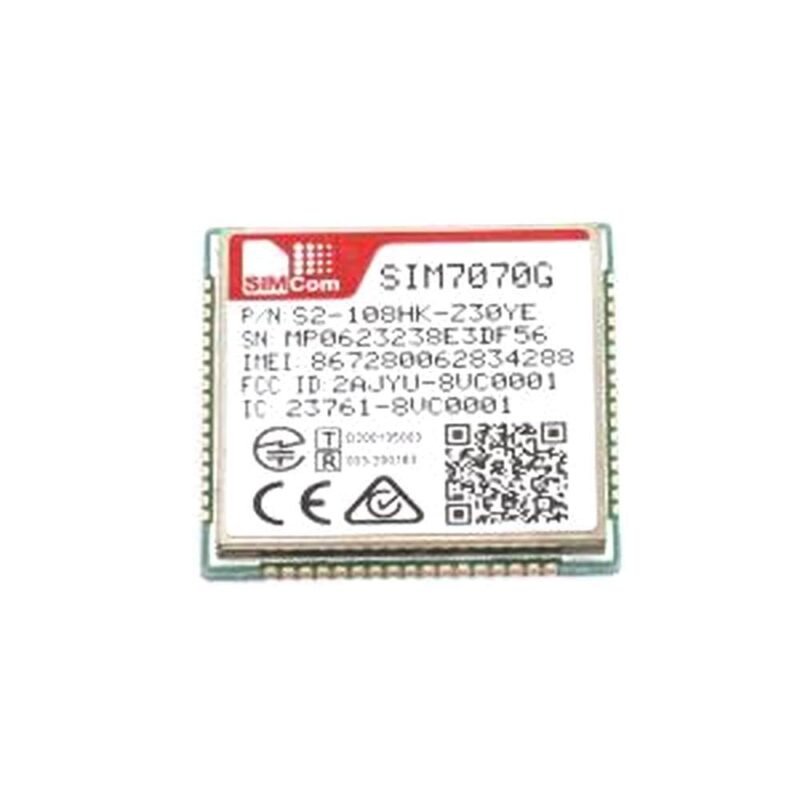
| ⚙️ SIM7070G Bare Module | SIM7070G · Cat-M/NB-IoT/GPRS | LCC-68 24×24 mm | Custom PCB + 2G | Buy Here → |
Network and form details come from each Amazon listing and the module makers’ documentation. Tap Buy Here to see the live price.
🔍 How to Choose an LTE-M or NB-IoT Module
📶
LTE-M vs NB-IoT
LTE-M offers higher throughput, lower latency and mobility (handover), so it suits trackers and wearables. NB-IoT is slower but excels at deep indoor and underground coverage for stationary meters. Dual-mode modules hedge your bets.
🌍
Carrier Support
Check which technology your carrier offers and whether your SIM is provisioned for it. Some modules add 2G (GPRS/EGPRS) fallback where LTE-M/NB-IoT is missing.
💤
PSM and eDRX
Power Saving Mode and extended DRX let the modem sleep between transmissions. The network must grant the timers, and your firmware must request them; this is where most battery life is won or lost.
🧩
Prototype vs Product
HATs and shields are for prototyping. For a product, choose a certified module (bare SIMCom/Quectel) or a SiP like Nordic’s nRF91, which also runs your application.
🛰️
GNSS
Many modules include GNSS, but it often shares the radio, so GPS fixes and cellular transmissions are scheduled rather than simultaneous.
🏆 Detailed Reviews: All 13 LTE-M/NB-IoT Picks
🥇 BEST OVERALL
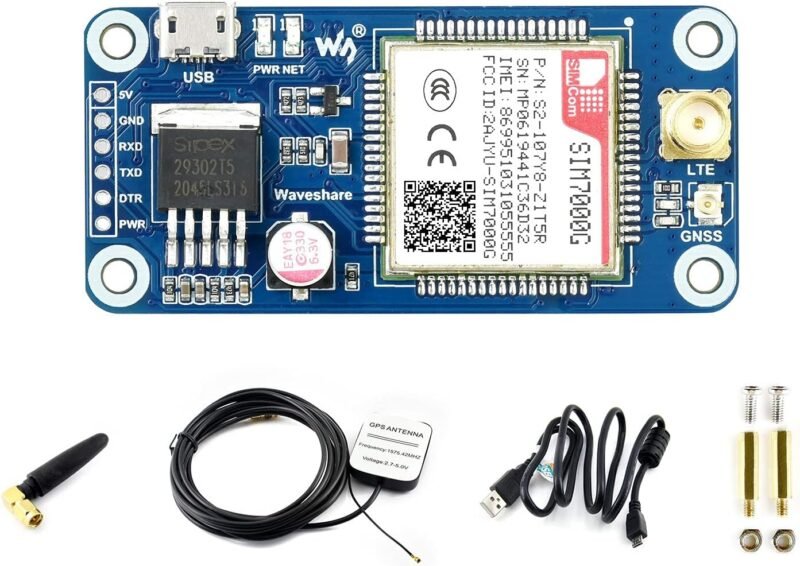
Waveshare SIM7000G NB-IoT/Cat-M/EDGE/GPRS HAT
⭐ 4.6/5 · Works With Pi and Pico
Buy on Amazon →

Waveshare’s SIM7000G HAT is the most versatile way to start with LTE-M and NB-IoT. The global SIM7000G covers Cat-M, NB-IoT and EDGE/GPRS fallback with GPS, BeiDou and GLONASS. It fits the Raspberry Pi 40-pin header and, per the listing, also the Raspberry Pi Pico. An onboard USB port lets you test AT commands from a PC, and a voltage translator (3.3 V by default, switchable to 5 V) makes it safe with Arduino and STM32 boards. It averages about 4.4 stars from 8 ratings, the best score among the HATs here.
✅ Pros- Both LTE-M and NB-IoT
- 2G fallback and GNSS
- Pi, Pico, Arduino, STM32
- USB for easy testing
❌ Cons- Older modem than SIM7080G
- Few reviews
- Prototype form factor
🎯 Verdict: The most flexible low-power cellular HAT.
👉 Check Price on Amazon →
🏭 BEST FOR PRODUCT DEVELOPMENT
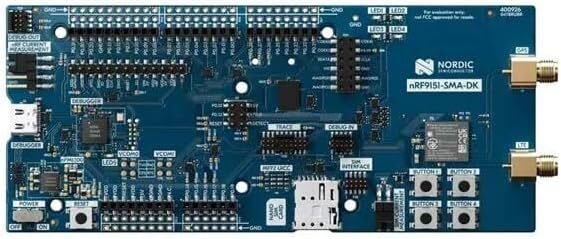
Nordic Semiconductor nRF9151-SMA-DK
⭐ 4.7/5 · Professional Cellular IoT Kit
Buy on Amazon →

If you’re designing a real product, Nordic’s nRF9151-SMA-DK is a different class from the AT-command HATs above. The nRF9151 is a system-in-package that combines the LTE modem with an application processor, so your firmware runs on the same chip that handles cellular. Per the listing, the kit supports LTE-M, NB-IoT, NB-NTN (satellite), GNSS and DECT NR+ prototyping, and the SMA variant exposes antenna connectors for testing. Development uses Nordic’s nRF Connect SDK (Zephyr-based) with mature power-profiling tools. It’s a new Amazon listing with no reviews.
✅ Pros- Modem + app MCU in one SiP
- NB-NTN and DECT NR+
- Professional SDK and tools
- Path to certified product
❌ Cons- Steeper learning curve
- Not an AT-command HAT
- No Amazon reviews
🎯 Verdict: The pick for engineers building a shippable cellular IoT product.
👉 Check Price on Amazon →
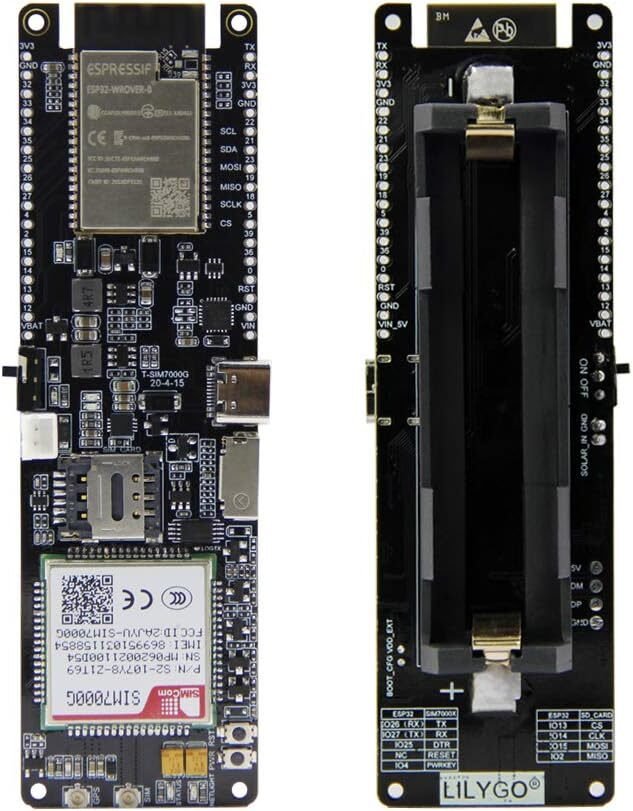
📶 BEST FOR ESP32 · ⭐ 4.6/53. LILYGO T-SIM7000G ESP32
SIM7000G · ESP32-WROVER-B · 65 ratings
Buy Here →

The most-reviewed product here combines the SIM7000G with an ESP32-WROVER-B on one board, averaging about 4.6 stars from 65 ratings. It’s the easiest all-in-one LTE-M/NB-IoT platform for Arduino and ESP-IDF users. Read our full review in the ESP32 cellular boards guide.
✅ Pros: All-in-one; well reviewed.
❌ Cons: ESP32 adds idle current.
🎯 Verdict: The ESP32 route to LTE-M.
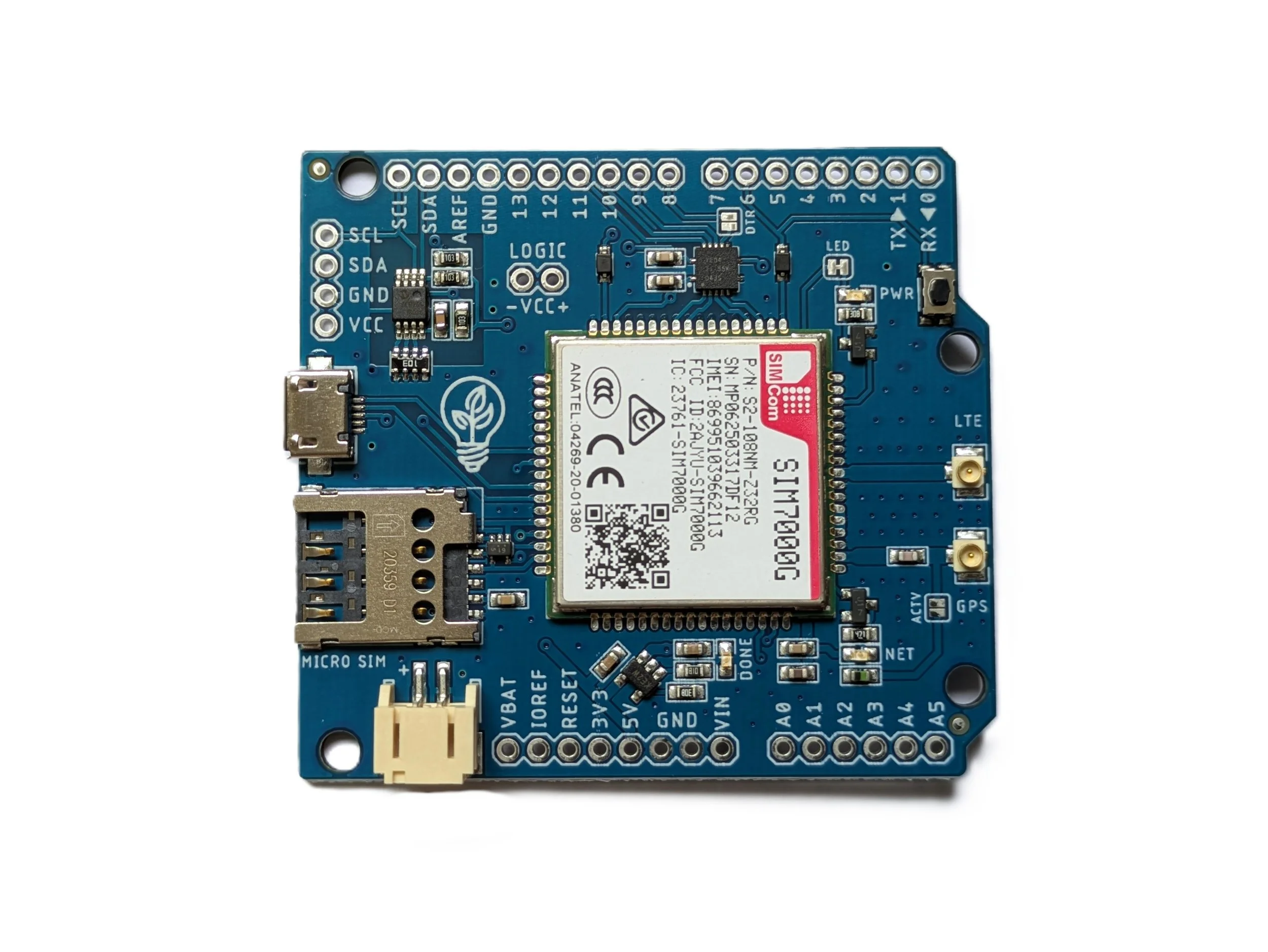
🔧 BEST FOR ARDUINO · ⭐ 4.4/54. Botletics SIM7000 LTE Cat-M1/NB-IoT Shield Kit
SIM7000 · GPS · antennas included · 12 ratings
Buy Here →

The Botletics shield plugs directly onto an Arduino Uno, Mega or Leonardo and runs a SIM7000 LTE-M/NB-IoT modem with GPS and antennas included. Its open-source library and detailed wiki make it the friendliest way to learn low-power cellular on Arduino. It averages about 4.1 stars from 12 ratings.
✅ Pros: Plug-in shield; great docs.
❌ Cons: Headers to solder.
🎯 Verdict: The classic Arduino cellular shield.
🐍 PYTHON ON THE MODEM · ⭐ 3.9/55. Waveshare BG95 EVB (QuecPython)
Quectel BG95-M3 · Cat M1/NB2/EGPRS · 40-pin header · 4 ratings
Buy Here →

This board is built around Quectel’s BG95-M3 (LTE Cat M1, Cat NB2 and EGPRS) and is designed for QuecPython, so you can run Python scripts directly on the modem without an external MCU. A 40-pin header accepts many Raspberry Pi HATs for sensors. It averages about 3.3 stars from 4 ratings.
✅ Pros: No external MCU needed.
❌ Cons: QuecPython learning curve.
🎯 Verdict: For Python fans who want a single-chip node.
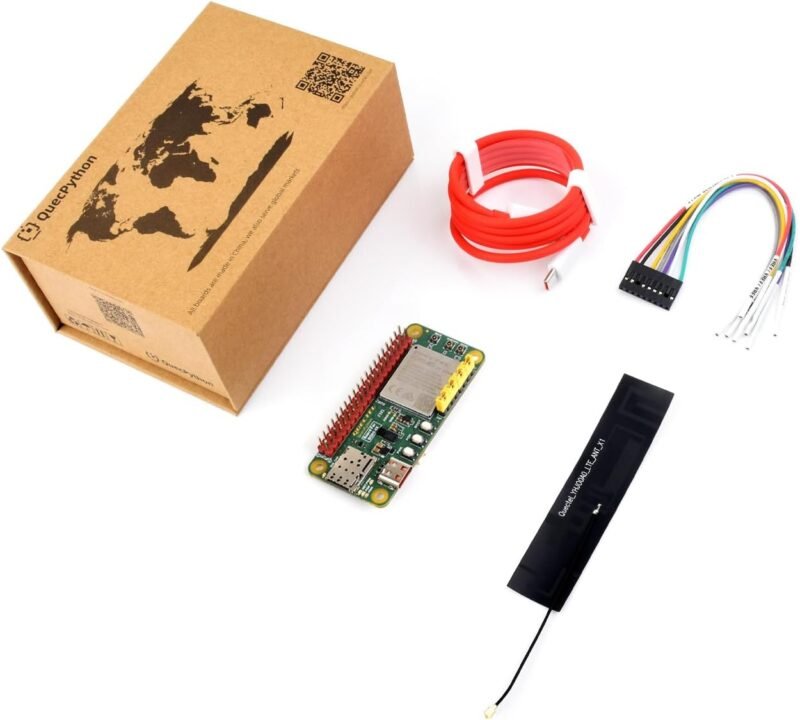
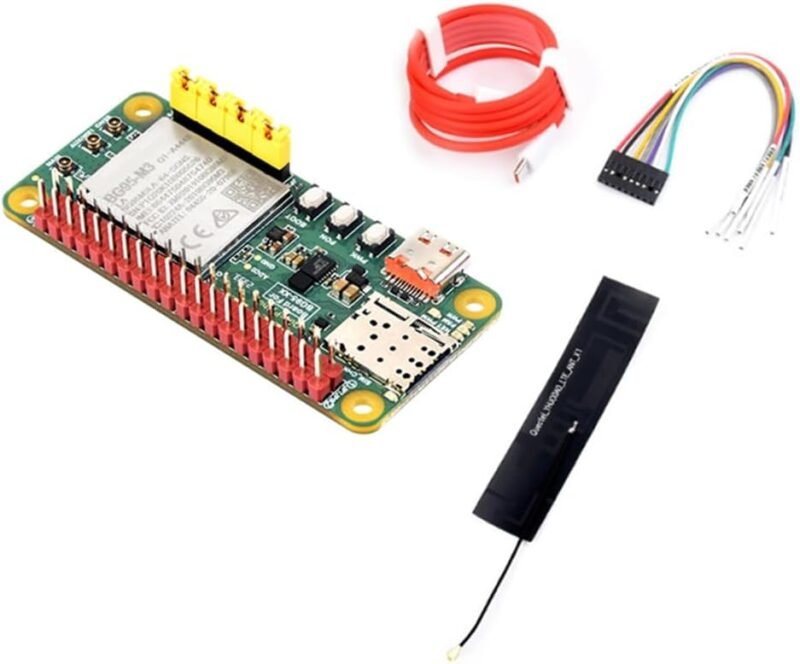
🟦 COMPACT QUECTEL · ⭐ 4.0/56. BG95-M3 Zero Development Board
BG95-M3 · LTE-M/NB2/EGPRS · GNSS · USB-C · new listing
Buy Here →

A compact board with the BG95-M3 modem and GNSS, powered and controlled through a single USB-C cable. It’s a small, tidy way to evaluate Quectel’s popular LTE-M module from a PC or single-board computer. New listing with no reviews.
✅ Pros: Small; single USB-C.
❌ Cons: Generic seller; new.
🎯 Verdict: A compact BG95 evaluation board.
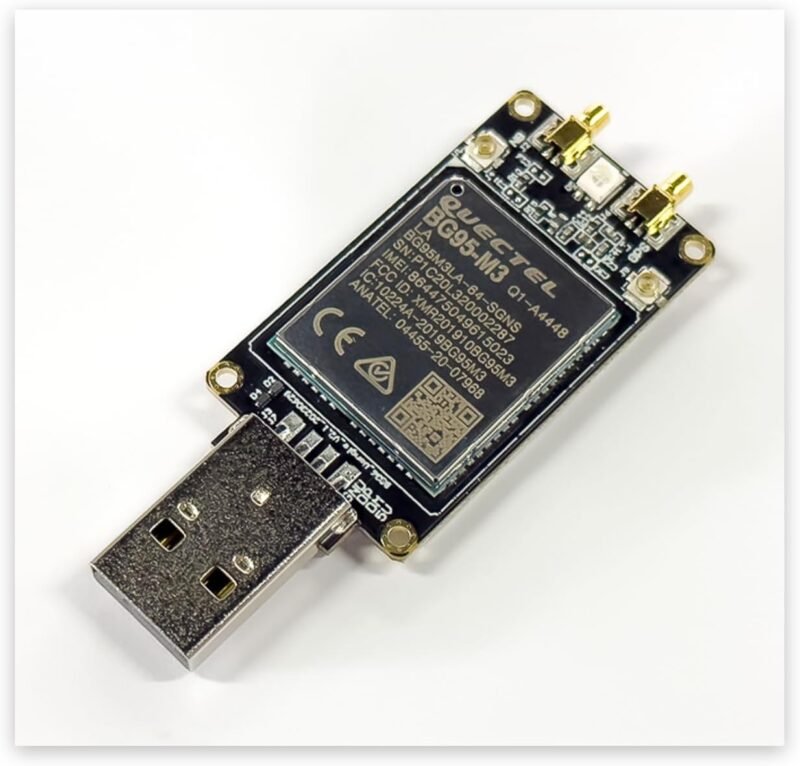
🔌 PC / SBC TESTING · ⭐ 4.0/57. Getcom.AI BG95-M3 LTE-M/NB-IoT USB Dongle
BG95-M3 · Cat M1/NB2/EGPRS · new listing
Buy Here →

A plug-in USB dongle with the BG95-M3, useful for testing carrier coverage and LTE-M/NB-IoT provisioning from a laptop or gateway before committing to a design. New listing with no reviews.
✅ Pros: Quick coverage testing.
❌ Cons: Unknown brand; few details.
🎯 Verdict: A handy network-test tool.
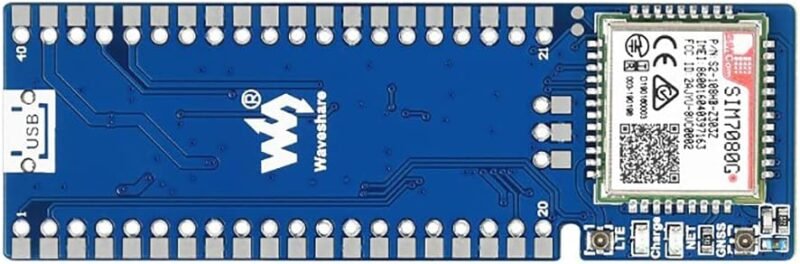
🥧 RASPBERRY PI PICO · ⭐ 4.1/58. SIM7080G NB-IoT/Cat-M/GNSS Module for Pico
SIM7080G · Pico header · UART AT · new listing
Buy Here →

This board puts the newer SIM7080G (Cat-M/NB-IoT with GNSS) on a Raspberry Pi Pico footprint, controlled by UART AT commands. A Pico plus SIM7080G makes a very low-cost, low-power cellular node with MicroPython or C. New listing with no reviews.
✅ Pros: Pico footprint; SIM7080G.
❌ Cons: No 2G fallback; new.
🎯 Verdict: The low-cost Pico cellular node.
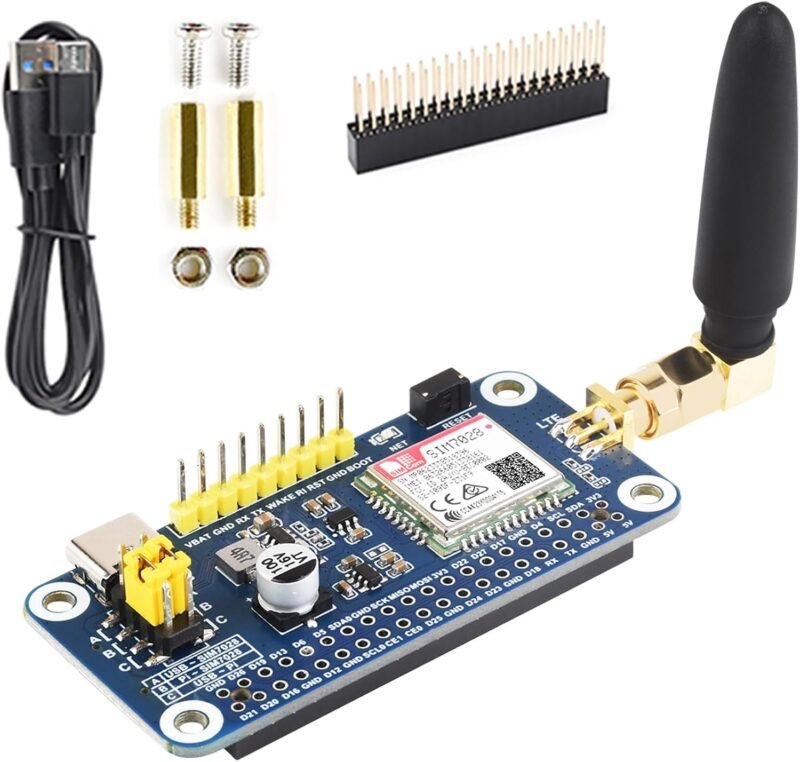
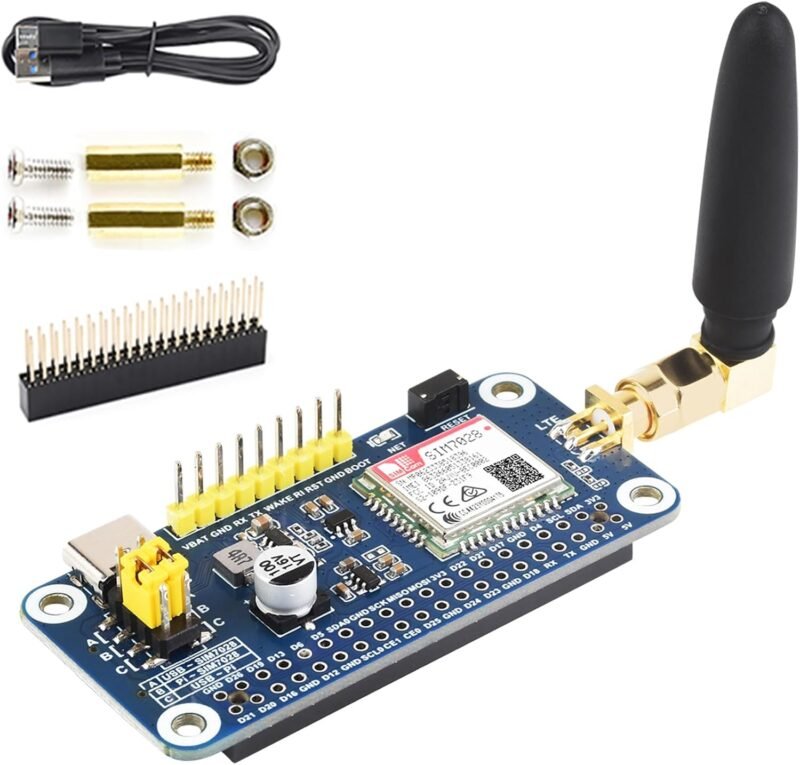
📡 SIMPLE NB-IoT · ⭐ 3.9/59. SIM7028 NB-IoT HAT (Onboard Antenna)
SIM7028 · NB-IoT only · 40-pin · 6 ratings
Buy Here →

A small, low-power SIM7028 HAT with an onboard antenna, for NB-IoT-only deployments such as meters and stationary sensors. Only buy it if your carrier offers NB-IoT. It averages about 3.6 stars from 6 ratings.
✅ Pros: Compact; antenna onboard.
❌ Cons: NB-IoT only.
🎯 Verdict: A simple NB-IoT HAT.
🌐 NB-IoT PROTOCOLS · ⭐ 3.9/510. SIM7028 NB-IoT HAT (Pi 5 / Jetson)
TCP, UDP, LwM2M, CoAP, DTLS · 4 ratings
Buy Here →

Another SIM7028 HAT, listed for Raspberry Pi 5/4/Zero and Jetson Nano, with global-band NB-IoT and built-in support for IoT protocols like LwM2M, CoAP and DTLS alongside TCP/UDP. It averages about 3.7 stars from 4 ratings.
✅ Pros: LwM2M/CoAP stacks.
❌ Cons: NB-IoT only.
🎯 Verdict: NB-IoT with IoT protocol stacks.
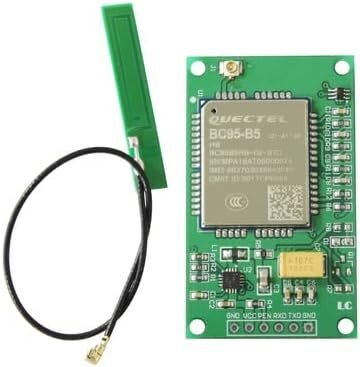
🧪 BUDGET NB-IoT · ⭐ 3.8/511. BC95 NB-IoT Development Board
Quectel BC95 · 5–12 V input · micro SIM · 1 rating
Buy Here →

A simple breakout for Quectel’s BC95 NB-IoT module with a 5–12 V input and micro SIM holder. BC95 variants are often single-band, so confirm the variant matches your carrier’s NB-IoT band before ordering. One 5-star rating.
✅ Pros: Simple NB-IoT breakout.
❌ Cons: Check band variant.
🎯 Verdict: Budget NB-IoT for the right band.
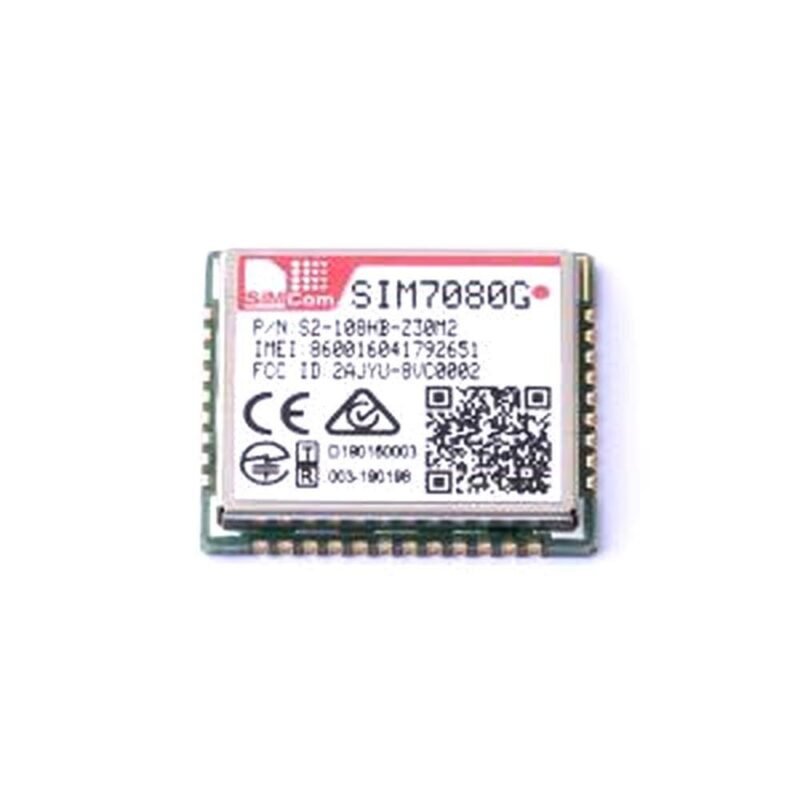
⚙️ CUSTOM PCB · ⭐ 4.0/512. SIMCom SIM7080G Bare SMD Module
Cat-M/NB-IoT · 15.7 × 17.6 mm · single module
Buy Here →

For your own PCB, the bare SIM7080G module is compact at 15.7 × 17.6 mm. You’ll design the SIM interface, power supply, RF matching and antenna yourself, and buy from a reputable distributor for production. Sold here as a single unit from a generic seller.
✅ Pros: Tiny; widely used.
❌ Cons: Needs RF design; generic seller.
🎯 Verdict: For prototyping custom hardware.
⚙️ CUSTOM PCB + 2G · ⭐ 4.0/513. SIMCom SIM7070G Bare LCC Module
Cat-M/NB-IoT/GPRS · LCC-68, 24 × 24 mm · single module
Buy Here →
The SIM7070G adds GPRS fallback to Cat-M and NB-IoT in a larger LCC-68 package (24 × 24 mm), which is easier to hand-solder than smaller modules. Same caveats as above: RF design and sourcing are on you.
✅ Pros: 2G fallback; LCC package.
❌ Cons: Larger; generic seller.
🎯 Verdict: Custom PCB with 2G backup.
🛒 Which Module for Which Project?
🍓
Raspberry Pi or Pico prototype
Waveshare SIM7000G HAT or the SIM7080G Pico module.
🔧
Arduino or ESP32
Botletics shield or LILYGO T-SIM7000G.
🏭
Commercial product
Nordic nRF9151-SMA-DK.
🐍
Python, no external MCU
Waveshare BG95 EVB (QuecPython).
📊
Stationary NB-IoT meter
SIM7028 HAT or BC95 board.
🧭
Testing carrier coverage
BG95-M3 USB dongle or Zero board.
⚙️ LTE-M vs NB-IoT vs Cat-1
| Feature | LTE-M (Cat-M1) | NB-IoT | LTE Cat-1 |
|---|
| Data rate | Low (hundreds of kbps) | Very low (tens of kbps) | Moderate (Mbps) ⭐ |
| Mobility | Yes ⭐ | Limited | Yes ⭐ |
| Indoor penetration | Good | Excellent ⭐ | Standard |
| Power | Very low (PSM/eDRX) ⭐ | Very low (PSM/eDRX) ⭐ | Higher |
| Best for | Trackers, wearables | Meters, static sensors | Telemetry with more data |
General characteristics; real performance depends on carrier and signal.
❓ Frequently Asked Questions
Should I choose LTE-M or NB-IoT?
Choose what your carrier supports. If both are available, LTE-M is usually the better default for moving devices and firmware updates, while NB-IoT is strong for fixed devices in basements or remote areas. Dual-mode modules like the SIM7000G, SIM7080G and BG95 support both.
How long can an LTE-M device run on batteries?
With PSM enabled, infrequent reports and an efficient MCU, multi-year battery life is achievable. Without PSM, or with frequent transmissions and weak signal, batteries drain far faster. Measure with a power profiler rather than relying on datasheet figures.
Do I need a special SIM?
Usually yes. Many consumer SIMs aren’t provisioned for LTE-M or NB-IoT. IoT SIMs from your carrier or an IoT connectivity provider typically include them; confirm which technology and roaming partners are covered.
What protocols should I use over NB-IoT?
Lightweight UDP-based protocols like CoAP and LwM2M suit NB-IoT’s latency and small packets. MQTT over TCP works, especially on LTE-M, but keep payloads small and connections infrequent.
Is the nRF9151 worth it over a SIMCom HAT?
For learning and quick prototypes, an AT-command HAT is simpler. For a product, the nRF91 series removes the separate host MCU, offers strong power-optimization tools and a single-vendor SDK, which often outweighs the steeper start.
🏁 Final Verdict: Best LTE-M and NB-IoT Modules
The right low-power cellular option for every project:
🏭 Best for Products: Nordic nRF9151-SMA-DK
Buy Here →🔧 Best for Arduino: Botletics SIM7000 Shield
Buy Here →Start with the Waveshare SIM7000G HAT to learn LTE-M and NB-IoT on a Raspberry Pi or Pico, or the LILYGO T-SIM7000G and Botletics shield if you work in ESP32 or Arduino. When you’re ready to build a product, the Nordic nRF9151-SMA-DK gives you an integrated modem, application MCU and professional tooling. Before buying anything, confirm your carrier’s LTE-M/NB-IoT coverage and get a SIM provisioned for it. Also see our 4G LTE HATs, ESP32 cellular boards and 4G LTE modules guides.
💬 Running LTE-M or NB-IoT in the field? Share your module, carrier and battery life in the comments below.
All Amazon links above use our affiliate tag (microlab05-20). Purchasing through them supports microcontrollerslab.com at no extra cost to you. Prices and availability change frequently, so always confirm the current price on Amazon before buying.