⚠️ Affiliate Disclosure: This post contains Amazon affiliate links. If you purchase through our links, we may earn a small commission at no extra cost to you. Every product below was checked against its live Amazon listing before publishing. Prices change often, so we don’t list them here. Tap any Buy Here button to see the current price on Amazon.
Ultimate Buying Guide
🔋 Best LiPo and 18650 Chargers and BMS Boards
12 smart 18650 chargers, TP4056 modules, RC LiPo balance chargers and 3S/4S BMS boards for powering Arduino, ESP32 and battery-pack projects safely.
✅ 12 Picks Reviewed
✅ 18650 & LiPo
✅ TP4056 to 200W
✅ Honest Pros & Cons
Almost every portable ESP32 or Arduino build ends up on a lithium cell, and the charger is where most battery accidents start. There are three very different tools for the job: smart bay chargers for loose 18650 and 21700 cells, tiny TP4056-style charger boards you solder into a project, and hobby balance chargers for multi-cell LiPo packs. Packs built from several cells also need a BMS (battery management system) board that cuts off over-charge, over-discharge and short circuits.
This guide picks the best of each. Pair it with our 18650 batteries and holders guide for the cells themselves, and see LiFePO4 batteries and chargers if you are building a solar or long-life IoT node.
💡 Reality check before you buy: Lithium cells store a lot of energy, so treat every charger choice as a safety decision. Never charge unattended on a flammable surface, and use a LiPo-safe bag or a metal tray for RC packs. TP4056 boards charge a single cell only (4.2 V) at up to about 1 A, so they are not for 2S or 3S packs, and the board’s charge current is set by a resistor you should match to your cell. A BMS protects a pack but does not replace a proper charger, and an active equalizer is not a BMS at all. Match chemistry settings carefully: Li-ion, LiFePO4 and LiHV cells need different end voltages. Cheap unbranded boards vary in quality, so check the cut-off values on the listing and test them with a meter before trusting a pack to them.
Table of Contents
- Quick Comparison: All 12 Chargers and BMS Boards
- How to Choose a Lithium Charger or BMS
- Detailed Reviews: All 12 Chargers and BMS Boards
- Which One for Which Job
- Charger Types Compared
- Frequently Asked Questions
- Final Verdict: Best LiPo and 18650 Chargers and BMS Boards
🔋 Quick Comparison: All 12 Chargers and BMS Boards
| Product | Type | Cells / Chemistry | Input | Rating | Best For | Buy |
|---|
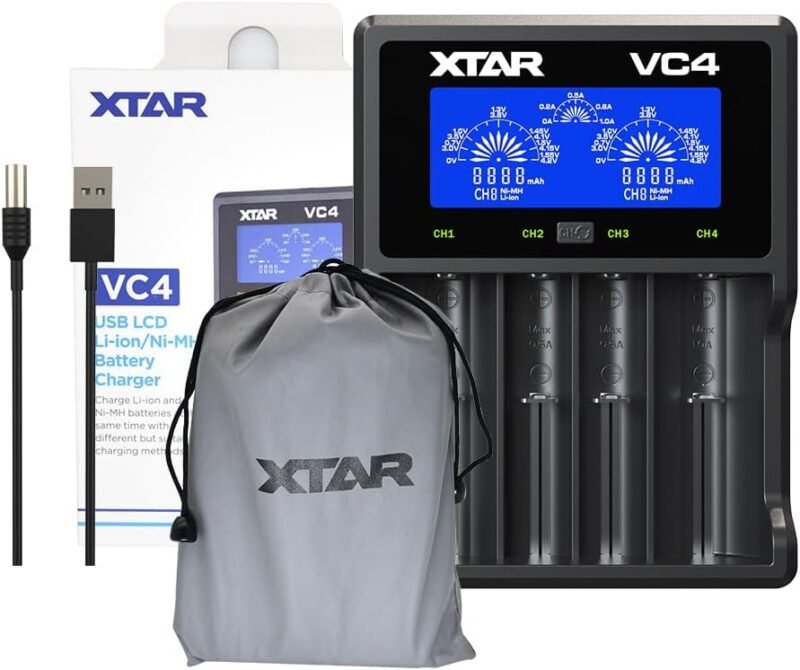
| 🥇 XTAR VC4 | Smart bay charger | 4 x Li-ion (10440 to 18650 and more) | USB | ⭐ 4.4 (637) | Best Overall | Buy Here → |
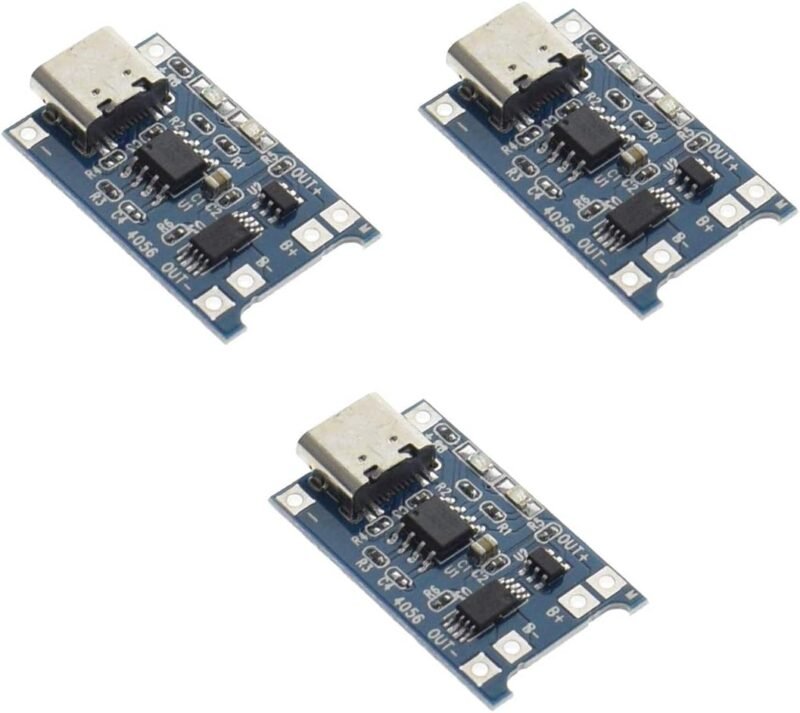
| 🔧 HiLetgo TP4056 Type-C (3 Pack) | Solder-in module | 1S Li-ion (4.2 V) | USB-C 5 V | ⭐ 4.4 (608) | Best Built-In Module | Buy Here → |
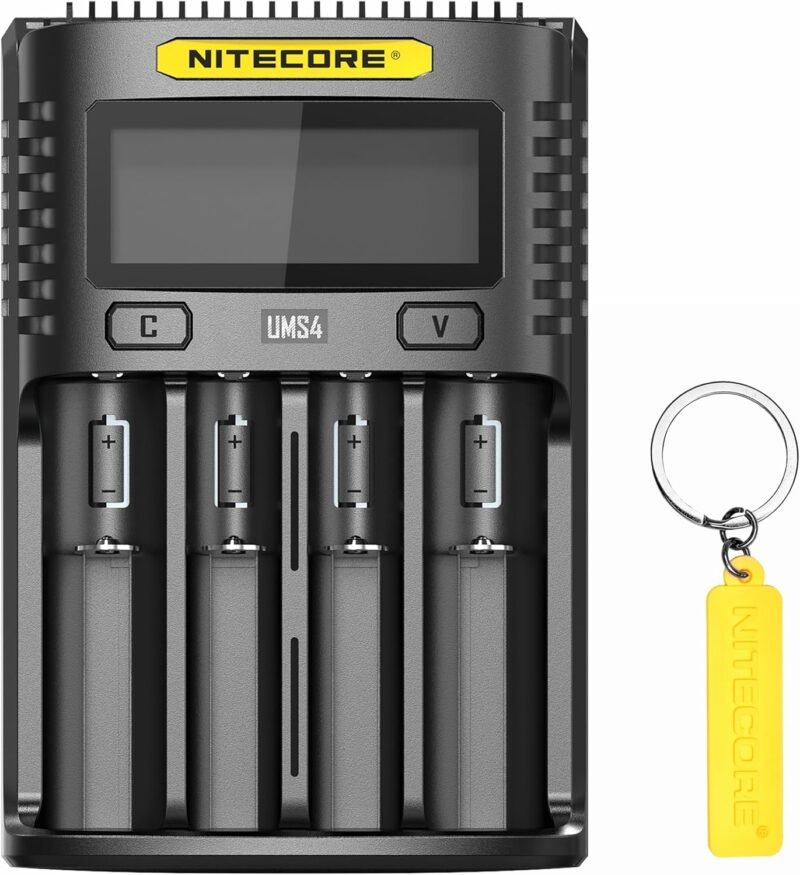
| 🔬 Nitecore UMS4 | Smart bay charger | Li-ion, IMR, LiFePO4, NiMH, NiCd | QC USB | ⭐ 4.6 (196) | Best Battery Diagnostics | Buy Here → |
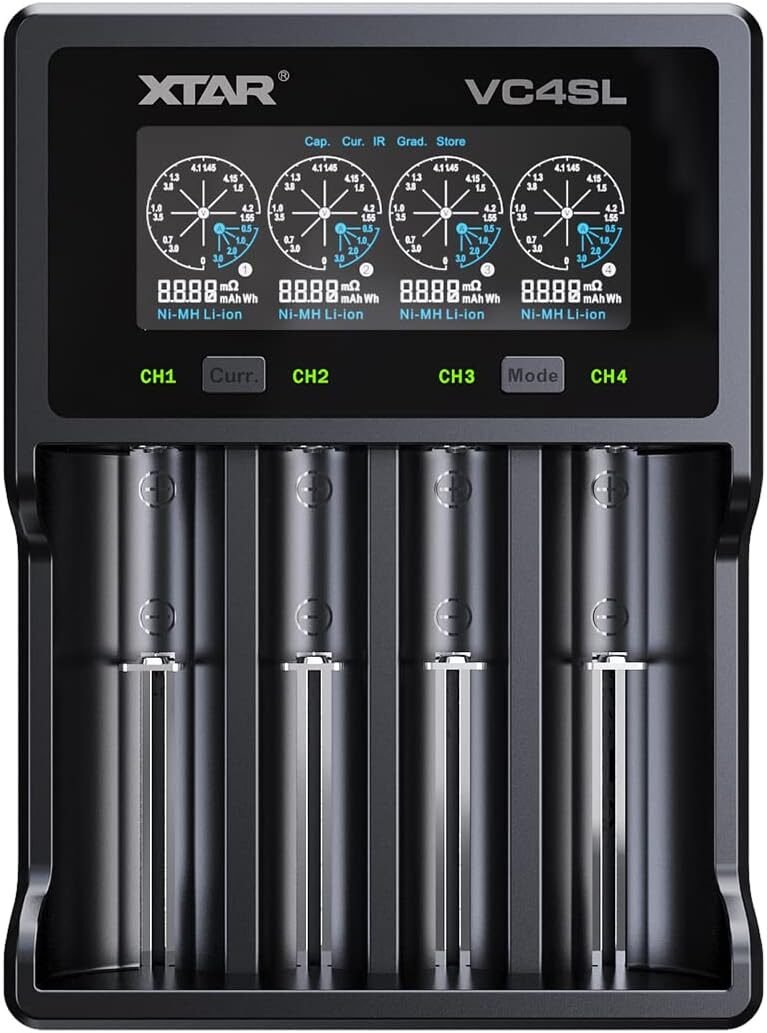
| ⚡ XTAR VC4SL | Smart bay charger | 3.7 V / 3.6 V Li-ion | USB-C | ⭐ 4.4 (238) | Best USB-C Bay Charger | Buy Here → |
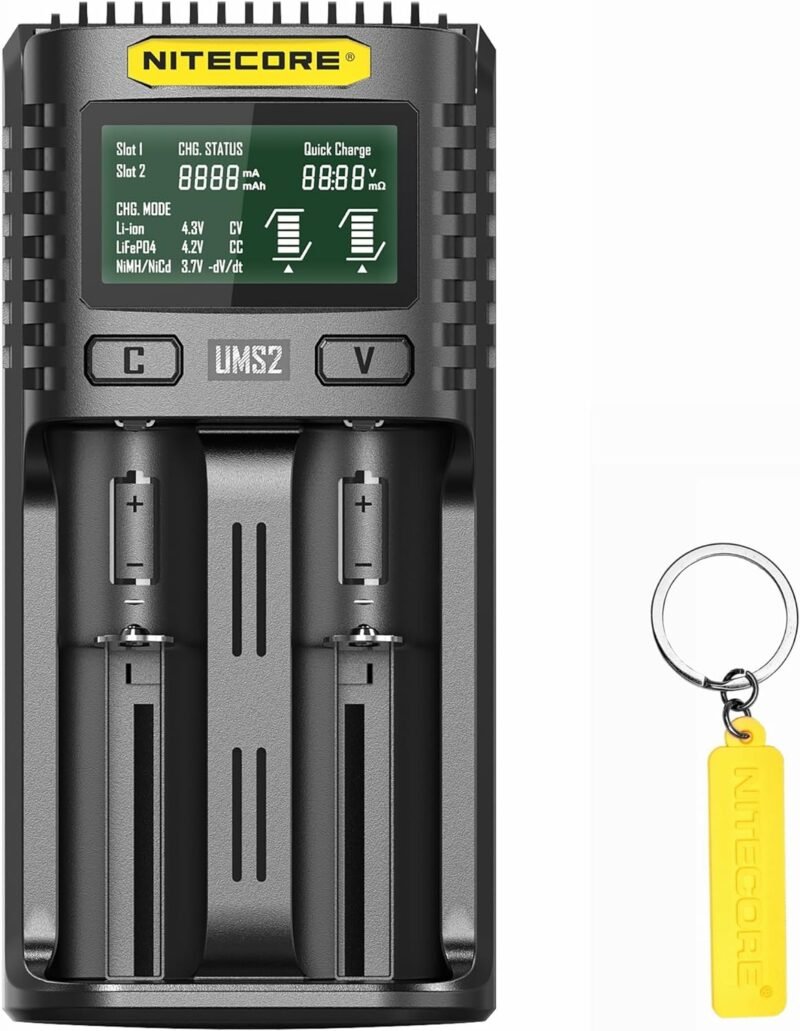
| 🎒 Nitecore UMS2 | Smart bay charger | Li-ion, IMR, LiFePO4, NiMH, NiCd | QC USB | ⭐ 4.4 (148) | Best Compact Charger | Buy Here → |
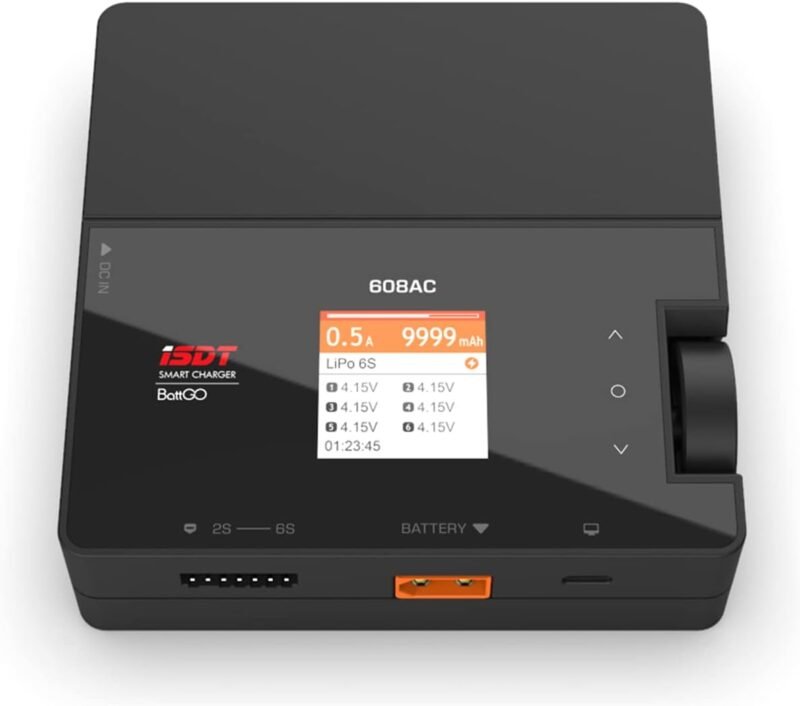
| 🚁 ISDT 608AC | Hobby balance charger | 1 to 6S LiPo, Li-ion, LiFe, LiHV, Pb, NiMH | AC or DC | ⭐ 4.4 (111) | Best Hobby Balance Charger | Buy Here → |
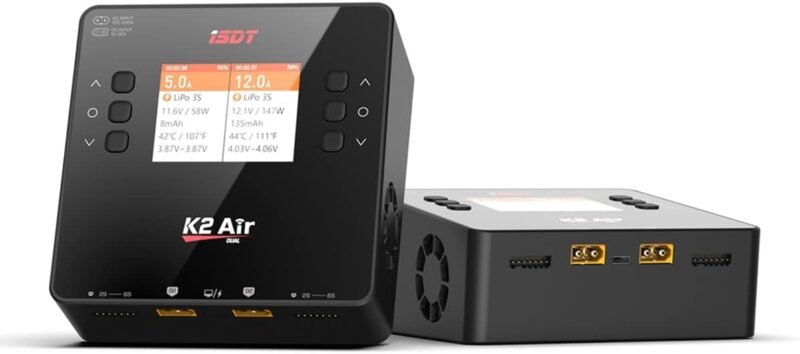
| 🛩️ ISDT K2 AIR | Dual balance charger | 1 to 6S LiPo, Li-ion, LiFe, LiHV, Pb, NiMH | AC or DC | ⭐ 4.4 (90) | Best Dual-Channel | Buy Here → |
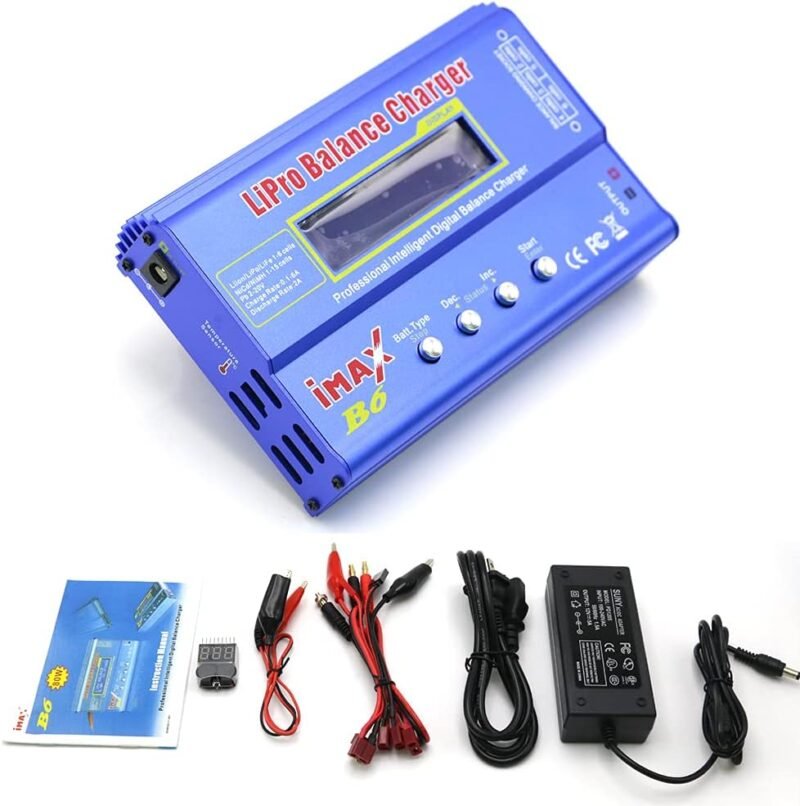
| 💰 IMAX B6 80W | Hobby balance charger | LiPo, Li-ion, NiMH, NiCd and more | DC (see listing) | ⭐ 4.2 (261) | Best Budget Balance Charger | Buy Here → |
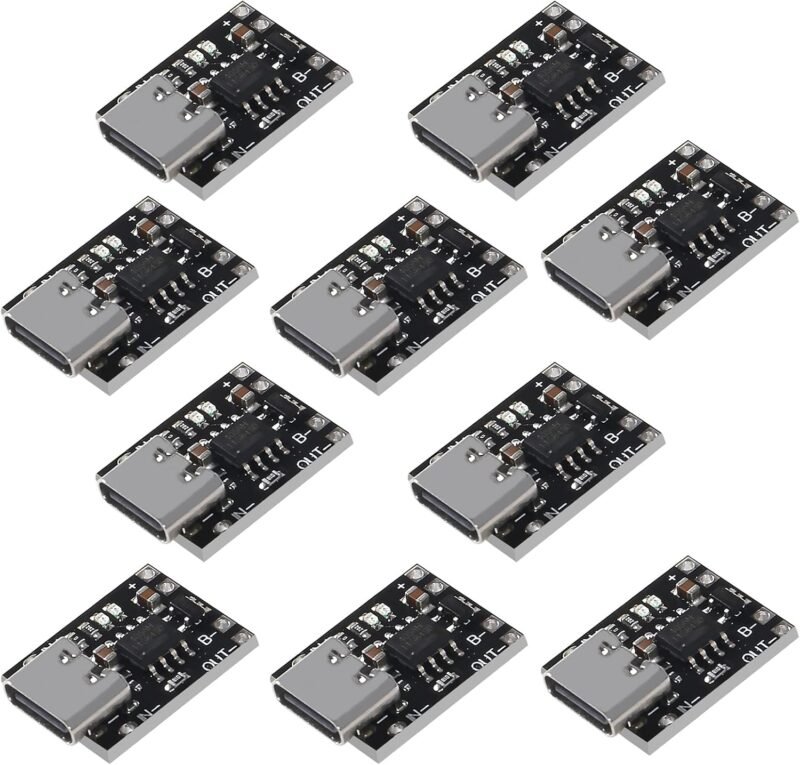
| 🐜 Ultra-Mini USB-C Charger Board (10 Pack) | Solder-in module | 1S Li-ion (4.2 V output) | USB-C 5 to 6 V | ⭐ 4.7 (95) | Best Tiny Module | Buy Here → |
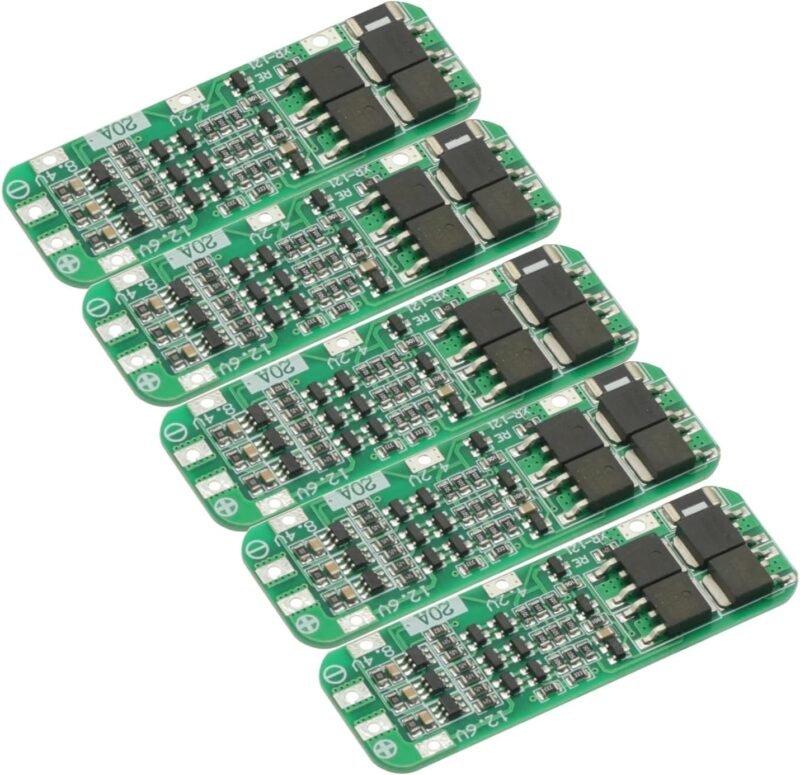
| 🧱 3S 20A BMS Board (5 Pack) | BMS protection board | 3S Li-ion (12.6 V) | Pack charger | ⭐ 4.4 (55) | Best Small 3S BMS | Buy Here → |
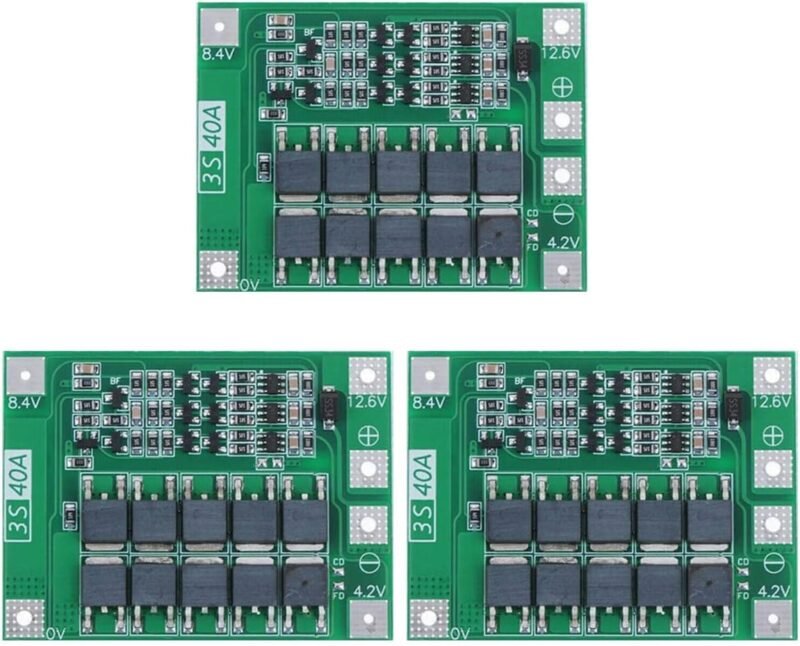
| 🔩 Gebildet 3S 40A BMS (3 Pack) | BMS protection board | 3S Li-ion (12.6 V) | Pack charger | ⭐ 4.6 (53) | Best High-Current 3S BMS | Buy Here → |
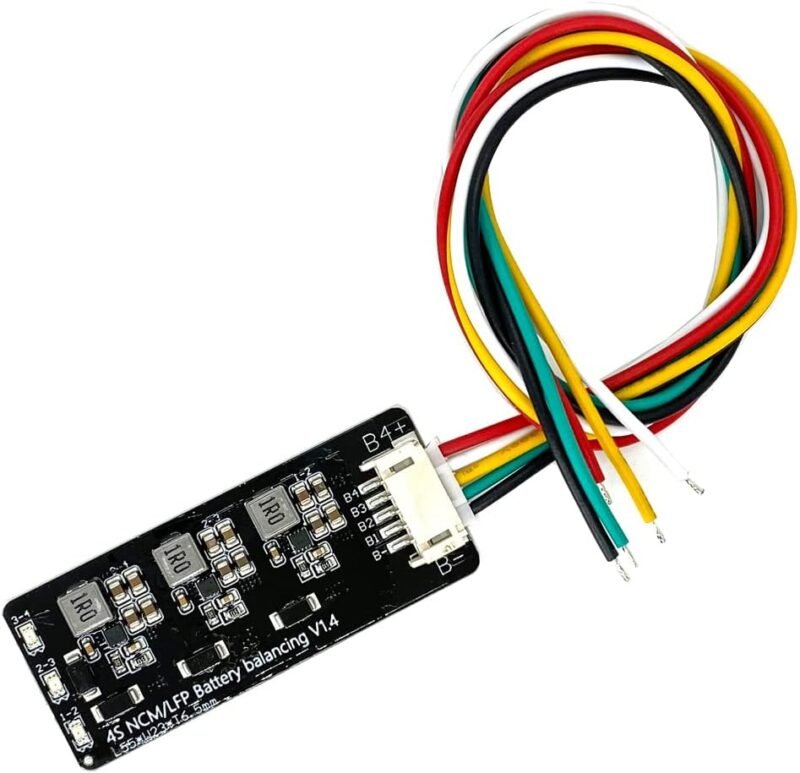
| ⚖️ 4S Active Equalizer | Active balancer (not a BMS) | 4S Li-ion or LiFePO4 | Pack-powered | ⭐ 4.1 (137) | Best Pack Balancer | Buy Here → |
Ratings and review counts are as shown on each Amazon listing when we checked. Specs and compatibility notes come from the listing titles and bullet points; always confirm on the product page before buying.
🔍 How to Choose a Lithium Charger or BMS
🔌
Loose Cells or Built-In?
Loose 18650 or 21700 cells go in a bay charger like the XTAR VC4 or Nitecore UMS4. A cell that lives inside your project needs a solder-in board like a TP4056 module.
🧮
Count the Cells
Single-cell (1S) projects use TP4056-class boards. 2S to 6S RC LiPo packs need a balance charger with a balance lead. Series packs you build yourself need a matching 3S or 4S BMS.
⚡
Charge Current
Faster is not always better. 1 A suits most 18650s and small LiPos; small pouch cells need less. Bay chargers that let you pick the current are kinder to small cells.
🧪
Chemistry Support
Make sure the charger has the right profile: 4.2 V Li-ion, 3.65 V LiFePO4 or 4.35 V LiHV. Hobby chargers cover them all; TP4056 boards are Li-ion only.
🛡️
Protection Features
Look for over-charge, over-discharge, over-current and short protection on modules and BMS boards, and an LCD that shows per-cell voltage on bay chargers.
🏆 Detailed Reviews: All 12 Chargers and BMS Boards
🥇 BEST OVERALL
1. XTAR VC4 4-Bay Universal Battery Charger with LCD
⭐ 4.4/5 · 637 ratings · Best Overall
Buy on Amazon →

The XTAR VC4 is the easiest way to charge loose cells for your projects. Per the listing it charges four cells at once across many sizes (10440, 14500, 16340, 18350, 18650 and more), offers 500 mA and 1000 mA current choices and picks a current from 0.1 A to 1 A intelligently, and its LCD shows each cell’s voltage, type, charging current and status. Built-in protection covers over-charge and over-discharge. It has the most ratings in this guide: 4.4 stars from 637 ratings.
✅ Pros- Charges many cell sizes
- Clear per-cell LCD
- Most reviewed pick
❌ Cons- 1 A max is slow for 21700s
- Li-ion focused
🎯 Verdict: The safe default for charging loose 18650s on the bench.
👉 Check Price on Amazon →
🔧 BEST BUILT-IN MODULE
2. HiLetgo TP4056 Type-C 18650 Charger Module with Protection, 3 Pack
⭐ 4.4/5 · 608 ratings · Best Built-In Module
Buy on Amazon →

For a cell that lives inside your ESP32 or Arduino project, the TP4056 board is the classic answer. This HiLetgo three pack uses a USB-C input and, per the listing, has dual protection, a maximum charging current of 1000 mA, 3 A over-current protection and a 4.00 V overcharge lifting voltage. Wire the cell to B+/B- and your load to OUT+/OUT- so the protection circuit sits between them. It averages 4.4 stars from 608 ratings.
✅ Pros- USB-C input
- Charging plus protection
- Three boards per pack
❌ Cons- Single cell only
- No load sharing while charging
🎯 Verdict: The cheapest way to make a single-cell project rechargeable.
👉 Check Price on Amazon →
🔬 BEST BATTERY DIAGNOSTICS · ⭐ 4.6/53. Nitecore UMS4 Intelligent QC 4-Slot Charger
4 slots, internal resistance and health readout · 196 ratings
Buy Here →

The Nitecore UMS4 adds diagnostics to a four-slot charger. Per the listing it takes QC input, shows battery health as Good or Poor and displays internal resistance on its LCD, runs an optimized IMR charging program, and has multiple safeguards including automatic internal resistance detection. It supports Li-ion, IMR, LiFePO4, NiMH and NiCd cells. It has the highest score among the bay chargers: 4.6 stars from 196 ratings.
✅ Pros: Shows internal resistance; multi-chemistry.
❌ Cons: Needs a QC adapter for full speed.
🎯 Verdict: Pick it to spot tired cells before they go in a pack.
⚡ BEST USB-C BAY CHARGER · ⭐ 4.4/54. XTAR VC4SL USB-C 4-Bay 18650 Charger with LCD
USB-C input, 4 bays, LCD · 238 ratings
Buy Here →

The XTAR VC4SL is the upgraded version of the VC4S, and its listing title highlights a USB-C input, four bays, fast charging and an LCD for 3.7 V and 3.6 V Li-ion cells from 10440 up. It is a good choice if you already power your bench from USB-C chargers. The listing has no bullet points, so check the product images for the exact current options. It averages 4.4 stars from 238 ratings.
✅ Pros: USB-C; fast charging per the title.
❌ Cons: Listing has few written specs.
🎯 Verdict: The VC4 idea with a modern USB-C input.
🎒 BEST COMPACT CHARGER · ⭐ 4.4/55. Nitecore UMS2 Intelligent QC Dual-Slot Charger
2 slots, USB QC input, health readout · 148 ratings
Buy Here →

The Nitecore UMS2 is the two-slot sibling of the UMS4. Per the listing it takes QC USB input and shows battery health and internal resistance on its LCD, with the same multi-chemistry support for Li-ion, IMR, LiFePO4, NiMH and NiCd cells. Two slots are plenty if you only run a couple of cells in a handheld or a field sensor. It averages 4.4 stars from 148 ratings.
✅ Pros: Small; same diagnostics as UMS4.
❌ Cons: Only two cells at a time.
🎯 Verdict: For a small kit bag or a two-cell project.
🚁 BEST HOBBY BALANCE CHARGER · ⭐ 4.4/56. ISDT 608AC 200W AC/DC LiPo Balance Charger
8 A / 200 W, AC and DC input, XT60 · 111 ratings
Buy Here →

The ISDT 608AC is a compact smart balance charger for multi-cell packs. Per the listing it delivers 8 A and 200 W from AC or DC input with a detachable power supply, charges 1 to 6S LiFe, Li-ion, LiPo, LiHV, Pb and NiMH batteries, has three function modes, uses a single roll-and-press knob, and can act as an adjustable digital power supply through its XT60 port. It averages 4.4 stars from 111 ratings.
✅ Pros: AC or DC input; doubles as a power supply.
❌ Cons: More than a 1S project needs.
🎯 Verdict: The charger to buy for robot, drone and RC packs.
🛩️ BEST DUAL-CHANNEL · ⭐ 4.4/57. ISDT K2 AIR Dual-Channel LiPo Balance Charger
Dual channel, 200 W AC / 500 W x 2 DC · 90 ratings
Buy Here →

The ISDT K2 AIR charges two packs at once. Per the listing it has AC and DC dual input, with 200 W output on AC and 500 W x 2 on DC (up to 20 A), a fool-proof input design where the AC and DC inputs are mutually exclusive, smart per-port charging and a wide-angle display. It covers 1 to 6S packs across LiFe, Li-ion, LiPo, LiHV, Pb and NiMH. It averages 4.4 stars from 90 ratings.
✅ Pros: Two packs at once; huge DC power.
❌ Cons: Large and overkill for small cells.
🎯 Verdict: For labs and clubs that charge several packs a day.
💰 BEST BUDGET BALANCE CHARGER · ⭐ 4.2/58. IMAX B6 80W LiPo Balance Charger and Discharger
80 W, 6 A charge and discharge, LCD · 261 ratings
Buy Here →

The IMAX B6 design is the long-running budget balance charger. This 80 W listing advertises 6 A charge with discharge, support for LiPo, Li-ion, NiMH, NiCd and other rechargeable types, and an LCD display. It averages 4.2 stars from 261 ratings. Many B6 chargers on the market are clones of the original design, so read recent reviews and check the input supply requirements in the listing.
✅ Pros: Low cost; charge and discharge.
❌ Cons: Clone quality varies; dated interface.
🎯 Verdict: A cheap way into balance charging, if you accept clone risk.
🐜 BEST TINY MODULE · ⭐ 4.7/59. Ultra-Mini USB-C 3.7V Lithium Charger Board, 10 Pack
1 A, USB-C, LED indicators, 10 boards · 95 ratings
Buy Here →

When a TP4056 board is too big, this ultra-mini USB-C charger board fits in wearables and small sensor nodes. Per the listing it is a 1 A board for 3.7 V lithium cells with a 5 to 6 V input, 4.2 V output, over-current, over-voltage and under-voltage protection, LED charge indicators, and a USB-C port that works with most PD fast-charging heads. It has the best score in this guide, 4.7 stars, from 95 ratings, but it is an unbranded listing.
✅ Pros: Very small; ten per pack; LEDs.
❌ Cons: Unbranded; check the chip before relying on it.
🎯 Verdict: The pick when board size matters most.
🧱 BEST SMALL 3S BMS · ⭐ 4.4/510. 3S 20A BMS Protection Board for 18650 Packs, 5 Pack
12.6 V charge, 20 A max output · 55 ratings
Buy Here →

Building a 12 V pack from three 18650s? This 3S BMS five pack is sold for 18650 packs in drills, motors and LiPo cell modules, with a 12.6 V charging voltage and 20 A maximum output current per the listing. That suits robots, LED strips and 12 V IoT gear. Charge the finished pack with a proper 12.6 V Li-ion charger. It averages 4.4 stars from 55 ratings.
✅ Pros: Five boards; 20 A is plenty for most builds.
❌ Cons: Unbranded; no balancing details on the listing.
🎯 Verdict: A sensible BMS for small 3S 18650 builds.
🔩 BEST HIGH-CURRENT 3S BMS · ⭐ 4.6/511. Gebildet 3S 40A 18650 BMS Protection Board, 3 Pack
40 A discharge, 20 A charge, -40 to +50 C · 53 ratings
Buy Here →

The Gebildet 3S BMS is the high-current option. Per the listing it handles up to 40 A continuous discharge (less if cooling is poor), up to 20 A continuous charge, and works from -40 to +50 degrees Celsius. That headroom suits motor-driven projects such as power tools, rovers and winches. It averages 4.6 stars from 53 ratings.
✅ Pros: High current headroom; three per pack.
❌ Cons: Needs airflow at high current.
🎯 Verdict: Choose it when your 3S pack drives motors.
⚖️ BEST PACK BALANCER · ⭐ 4.1/512. 4S 1.2A Active Equalizer Balancer (Li-ion and LiFePO4)
1.2 A balancing, Li-ion and LiFePO4 · 137 ratings
Buy Here →

An active equalizer moves charge between cells so a 4S pack stays balanced over time. This 1.2 A board supports NCM Li-ion and LiFePO4 cells, and its listing is clear that it is not a BMS protection board but an auxiliary device, so use it alongside a 4S BMS, not instead of one. The listing also warns that it is not recommended for low string configurations. It averages 4.1 stars from 137 ratings.
✅ Pros: Keeps cells matched; supports LiFePO4.
❌ Cons: Not a BMS; adds a small standby drain.
🎯 Verdict: Add it to a 4S solar or LiFePO4 pack that drifts out of balance.
🛒 Which One for Which Job
🌱
ESP32 sensor node on one 18650
Solder in a HiLetgo TP4056 Type-C board and charge from any USB-C phone charger. Keep spare cells topped up in an XTAR VC4.
⌚
Wearables and tiny gadgets
The ultra-mini USB-C charger board fits where a TP4056 will not; pair it with a small LiPo pouch cell.
🤖
Robot or rover on a 3S pack
Build the pack with a Gebildet 3S 40A BMS for motor current, and charge it with an ISDT 608AC.
🚁
Drones and RC LiPo packs
Use the ISDT 608AC for one pack at a time or the K2 AIR to charge two; the IMAX B6 is the budget fallback.
☀️
Solar 4S LiFePO4 storage
Protect the pack with a 4S BMS and add the 4S active equalizer to keep cells matched over many cycles.
🔬
Sorting salvaged 18650s
Use the Nitecore UMS4 to read internal resistance and reject weak cells before building a pack.
⚙️ Charger Types Compared
| Type | Cells | Typical Current | Balancing | Best Use |
|---|
| TP4056-style module | 1S only | Up to 1 A | Not needed | Inside small projects |
| Smart bay charger | Loose single cells | 0.5 to 2 A per slot | Each cell charged separately | Loose 18650 and 21700 cells |
| Hobby balance charger | 1 to 6S packs | Up to 8 A or more | Yes, via balance lead | RC, robot and drone packs |
| BMS board | Matches pack (3S, 4S) | Rated discharge, e.g. 20 to 40 A | Some boards only | Protecting DIY packs |
| Active equalizer | Matches pack | About 1 A balancing | Active cell-to-cell | Long-life solar and LiFePO4 packs |
Current ranges are typical for each category; the values for the products above come from their Amazon listings. Always set the charger to the correct chemistry and cell count.
❓ Frequently Asked Questions
Can a TP4056 charge two 18650 cells?
Only if they are wired in parallel (still 1S, 4.2 V). It cannot charge cells in series. For 2S or 3S packs, use a balance charger or a pack charger with a matching BMS.
Do I still need a BMS if my charger has protection?
Yes for any series pack you build. The charger protects the charging process, while the BMS protects the pack in use against over-discharge and short circuits, which is when most DIY packs get damaged.
What charge current should I use for an 18650?
Most 18650 cells are happy at around 0.5 to 1 A. Smaller cells such as 14500 or small LiPo pouches should use less. Check the cell’s datasheet, and see our battery capacity tester guide to measure what your cells really hold.
Can I run my ESP32 while it charges from a TP4056?
Yes, from the OUT terminals, but the board does not have proper load sharing, so a heavy load can confuse the charge termination. For always-on devices, keep the load small or use a power-path charger board.
How do I get 5 V or 3.3 V from a single lithium cell?
Add a boost converter for 5 V or a low-dropout or buck regulator for 3.3 V. Our boost converter and step-down regulator guides cover the best modules.
🏁 Final Verdict: Best LiPo and 18650 Chargers and BMS Boards
Our picks for each job:
🔧 Best Built-In Module: HiLetgo TP4056 Type-C (3 Pack)
Buy Here →🔩 Best High-Current BMS: Gebildet 3S 40A BMS (3 Pack)
Buy Here →🐜 Best Tiny Module: Ultra-Mini USB-C Charger Board (10 Pack)
Buy Here →For most makers the winning combination is an XTAR VC4 on the bench for loose cells and a TP4056 Type-C board inside each single-cell project, with an ISDT 608AC and a matching BMS once you move up to multi-cell packs. For the rest of the power chain, see our guides to 18650 batteries and holders, LiFePO4 batteries and chargers, solar charging modules for IoT, solar charge controllers and DC electronic loads and battery testers.
💬 What do you use to charge the batteries in your projects? Share your setup in the comments below.
All Amazon links above use our affiliate tag (microlab05-20). Purchasing through them supports microcontrollerslab.com at no extra cost to you. Prices and availability change frequently, so always confirm the current price on Amazon before buying.