⚠️ Affiliate Disclosure: This post contains Amazon affiliate links. If you purchase through our links, we may earn a small commission at no extra cost to you. Every product below was checked against its live Amazon listing before publishing. Prices change often, so we don’t list them here. Tap any Buy Here button to see the current price on Amazon.
Ultimate Buying Guide
🔥 Best Solder Wire and Flux for Electronics
13 solder wires, flux pastes, flux pens and solder paste for Arduino, ESP32, PCB repair and SMD work, from Kester 44 to AMTECH tacky flux.
✅ 13 Picks Reviewed
✅ Leaded and Lead Free
✅ Flux Pens, Pastes and Gels
✅ Honest Pros and Cons
A good iron can’t fix bad consumables. Most frustrating joints, grainy fillets, solder that balls up instead of flowing, bridges between pins, come down to the solder alloy and, above all, the flux. Choosing a decent 63/37 or lead free wire in the right diameter, and keeping a syringe of flux on the bench, makes soldering headers, USB-C connectors and fine pitch chips dramatically easier.
This guide compares 13 solder and flux products on Amazon, grouped by job: leaded wire, lead free wire, flux paste and gels, a flux pen and solder paste for reflow. It completes our electronics bench series alongside soldering stations and hot air rework stations.
💡 Reality check before you buy: Leaded solder (63/37, 60/40) is easier to use but contains lead: work in a ventilated area, don’t eat at the bench and wash your hands afterwards. Lead free alloys melt roughly 30 to 40 °C hotter and need more flux and a hotter tip. Fumes come from the flux, not the metal, so use a fume extractor either way. Generic rolls vary from batch to batch, and solder paste has a limited shelf life, so check date codes. No clean residue is designed to stay on the board, but it can still look sticky and should be removed on high impedance or RF circuits.
Table of Contents
- Quick Comparison: All 13 Solder and Flux Picks
- How to Choose Solder and Flux
- Detailed Reviews: All 13 Picks
- Which One for Which Job
- Solder Alloys Compared: 63/37 vs 60/40 vs Lead Free
- Frequently Asked Questions
- Final Verdict: Best Solder Wire and Flux
🔥 Quick Comparison: All 13 Solder and Flux Picks
| Product | Type | Alloy / Flux | Size | Best For | Buy |
|---|
| 🥇 Kester 44 63/37 0.031in | Leaded wire | 63/37, RMA rosin core | 0.031 in, 1 oz tube | Best Overall | Buy Here → |
| 🧪 MG Chemicals 8341 No Clean Flux Paste | Flux paste | No clean | 10 mL syringe + tip | Best Flux | Buy Here → |
| 🧵 Kester 24-6040-0027 Spool | Leaded wire | 60/40 (Kester 6040 code) | 0.031 in spool | Best Bulk Spool | Buy Here → |
| 💰 MAIYUM 63-37 0.8mm 50g | Leaded wire | 63/37, rosin core 1.8% | 0.8 mm, 50 g | Best Budget | Buy Here → |
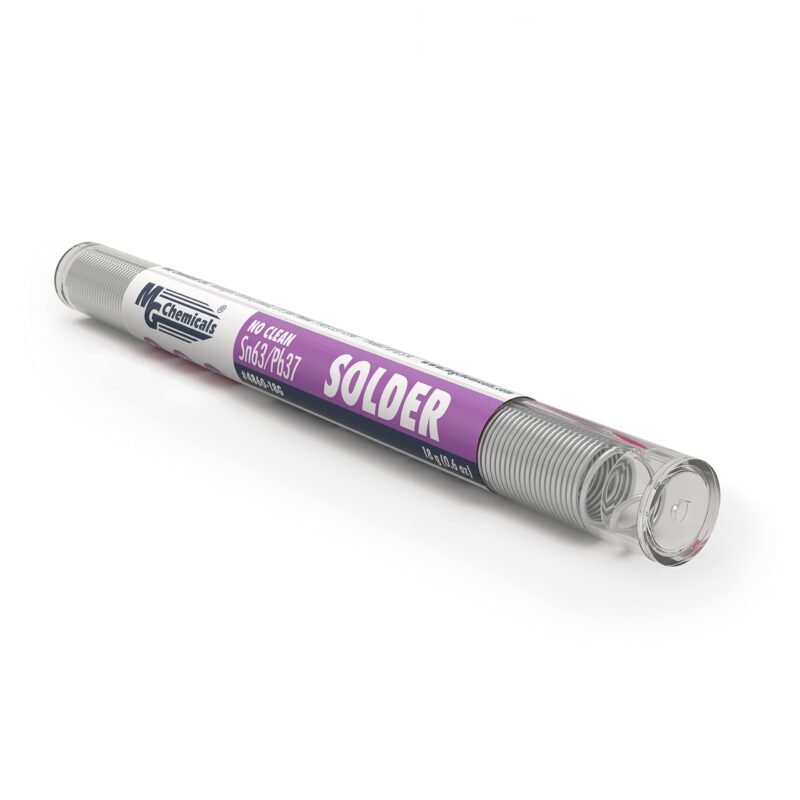
| 🧼 MG Chemicals 4860 No Clean 63/37 | Leaded wire | 63/37, no clean core | 0.032 in, 18 g pack | Best No Clean Wire | Buy Here → |
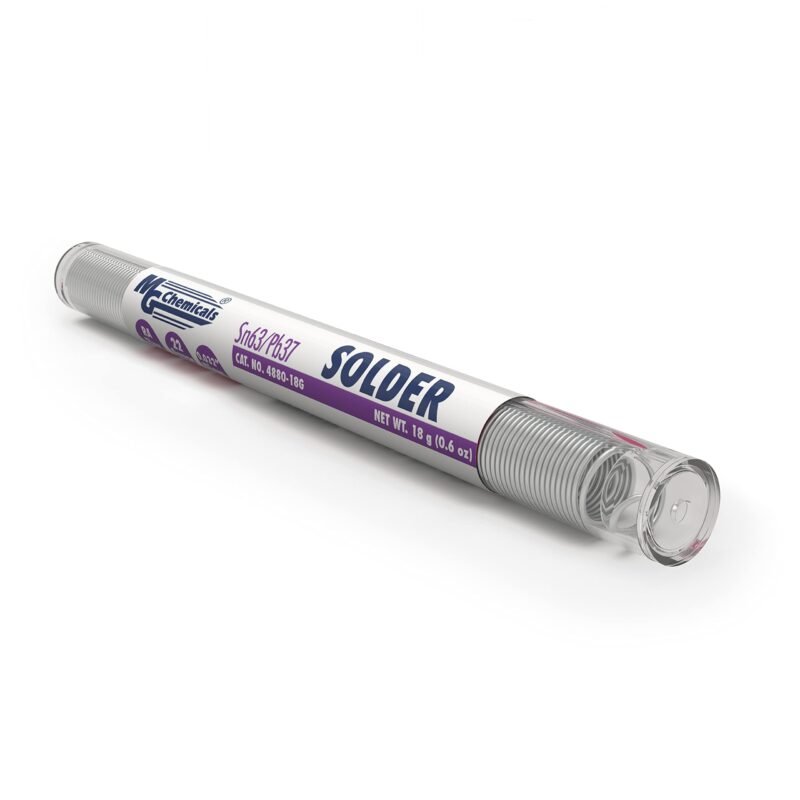
| 🎒 MG Chemicals 63/37 Rosin Core | Leaded wire | 63/37, rosin core | 0.032 in, 0.6 oz | Best Pocket Pack | Buy Here → |
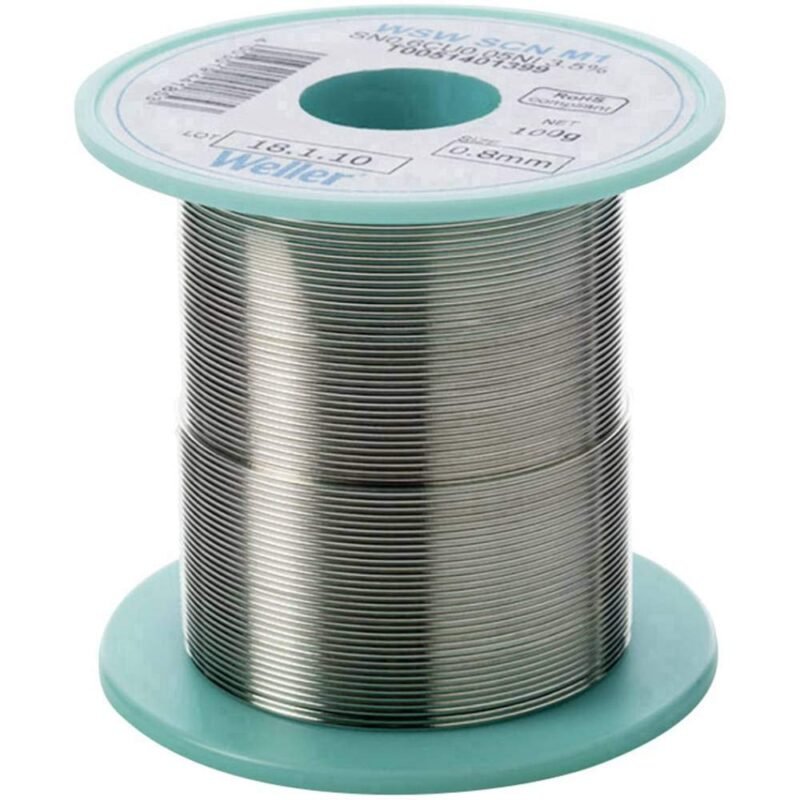
| 🌿 Weller WSW SCN M1 Lead Free | Lead free wire | Sn99.3 Cu0.6 Ni0.05, 3.5% flux | 0.8 mm, 100 g | Best Lead Free | Buy Here → |
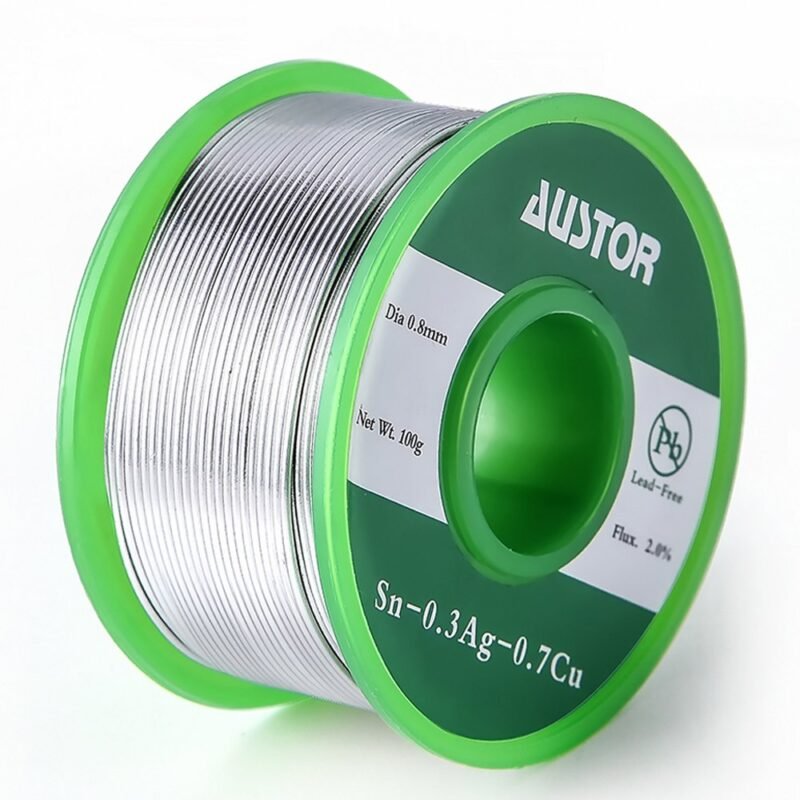
| ♻️ AUSTOR Lead Free 0.8mm 100g | Lead free wire | Sn99 Ag0.3 Cu0.7, 2% flux | 0.8 mm, 100 g | Budget Lead Free | Buy Here → |
| 🫙 SRA 135 Rosin Paste Flux | Flux paste | Rosin, no clean per listing | Tin | Best Flux Tin | Buy Here → |
| 🔥 AMTECH NC-559-V2 (10cc) | Tacky flux gel | No clean (NC series) | 10cc syringe | Best for Hot Air and BGA | Buy Here → |
| 🖊️ MG Chemicals 835-P Flux Pen | Flux pen | Rosin liquid | 10 mL pen | Best Flux Pen | Buy Here → |
| 🧷 Chip Quik SMD291AX10 Paste | Solder paste | 63/37, no clean | 10cc, 35 g | Best Solder Paste | Buy Here → |
| 🧰 Twocorn 63/37 0.8mm 50g | Leaded wire | 63/37, rosin 1.8% | 0.8 mm, 50 g | Alternative Budget | Buy Here → |
Specs, ratings and review counts are taken from each Amazon listing at the time of writing and can change. Always confirm details on the listing before buying.
🔍 How to Choose Solder and Flux
⚖️
Leaded or lead free
63/37 melts at 183 °C and flows easily, ideal for hobby and repair work. Lead free (SAC or SnCu) is required for RoHS products and some schools, but runs hotter.
📏
Wire diameter
0.8 mm (about 0.031 in) is the all rounder. Go thinner (0.5 to 0.6 mm) for fine SMD, thicker (1 mm plus) for wires, battery tabs and large connectors.
🧪
Flux type
Rosin and RMA fluxes are more active and should be cleaned off. No clean flux leaves benign residue. Water soluble flux is aggressive and must be washed.
🧴
Format
Use cored wire for everyday joints, a flux pen for quick touch ups, a syringe of paste or tacky gel for SMD and hot air, and solder paste for reflow.
🏷️
Brand and listing
Big brands (Kester, MG Chemicals, Weller, AMTECH) are worth it for consistency. Look for the brand’s own store and beware lookalike listings, especially for NC-559.
🏆 Detailed Reviews: All 13 Picks
🥇 BEST OVERALL SOLDER WIRE
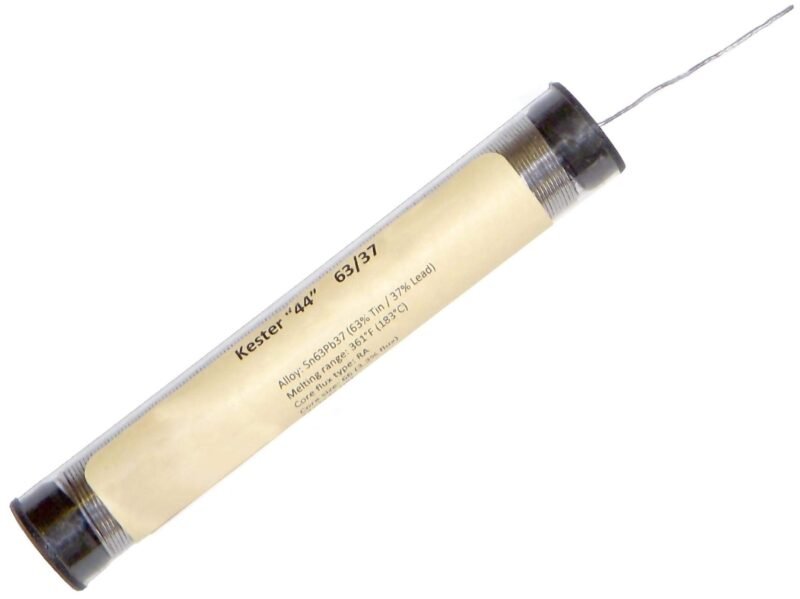
1. Kester 44 Solder Wire, 63/37, 0.031in, RMA Rosin (1 oz Tube)
⭐ 4.8/5 · 805 ratings · Classic RMA Rosin Core
Buy on Amazon →

Kester 44 is the solder many electronics benches standardise on, and this listing gives you the classic 63/37 eutectic alloy with an RMA (rosin mildly activated) core in a 0.031 inch diameter that suits through-hole parts, headers, wires and larger SMD pads. Because 63/37 goes straight from liquid to solid with no pasty range, joints are less likely to fracture if a lead moves while cooling. It averages 4.8 stars from 805 ratings. The 1 oz tube is a convenient bench or toolbox size; note the listing says it is packed by TekLine Supply rather than shipped on a factory Kester spool.
✅ Pros- Eutectic alloy, clean shiny joints
- Trusted Kester 44 flux
- Diameter suits most hobby work
❌ Cons- Contains lead, wash hands
- Small 1 oz tube
- Repacked tube, not factory spool
🎯 Verdict: The reference solder for hand soldering. Start here.
👉 Check Price on Amazon →
🧪 BEST FLUX FOR SMD AND REWORK
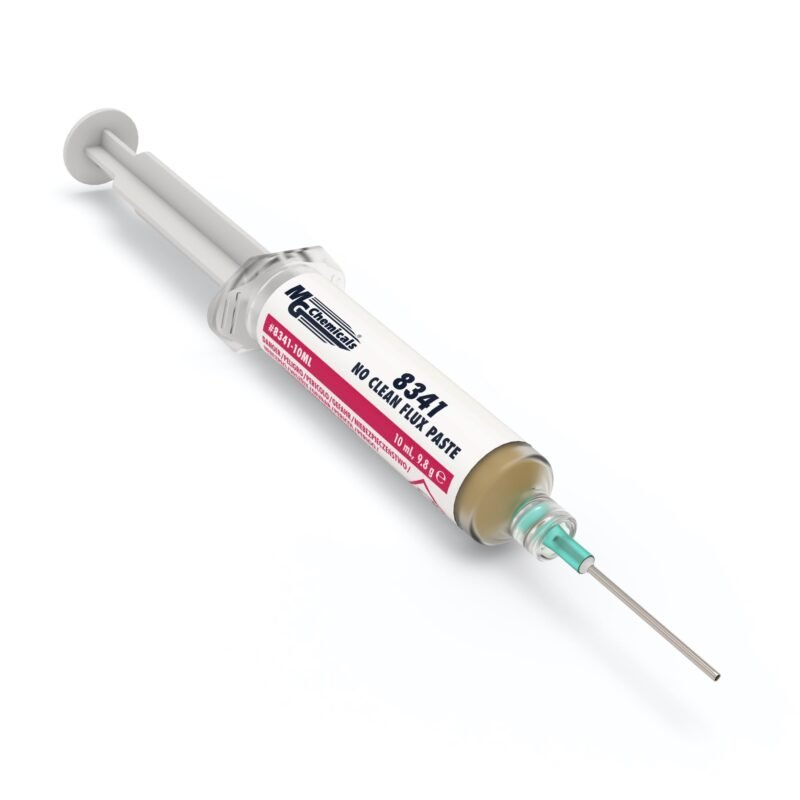
2. MG Chemicals 8341 No Clean Flux Paste (10 mL Syringe)
⭐ 4.7/5 · 6,124 ratings · No Clean Flux Paste
Buy on Amazon →

If you only add one thing to your solder, make it flux. The MG Chemicals 8341 is a no clean flux paste in a 10 mL syringe that comes with a plunger and dispensing tip, so you can place a small bead exactly on a QFP row, a USB-C connector or a drag-soldering job. Per the listing it wets instantly, leaves residue that is non corrosive, non conducting and moisture resistant, and works with both leaded and lead free solder. With 4.7 stars from 6,124 ratings it is one of the most reviewed electronics fluxes on Amazon.
✅ Pros- Precise syringe dispensing
- Residue is non conductive per listing
- Huge review base
❌ Cons- Small volume for heavy users
- Residue still looks sticky unless cleaned
🎯 Verdict: The flux to keep next to your iron for SMD and rework.
👉 Check Price on Amazon →
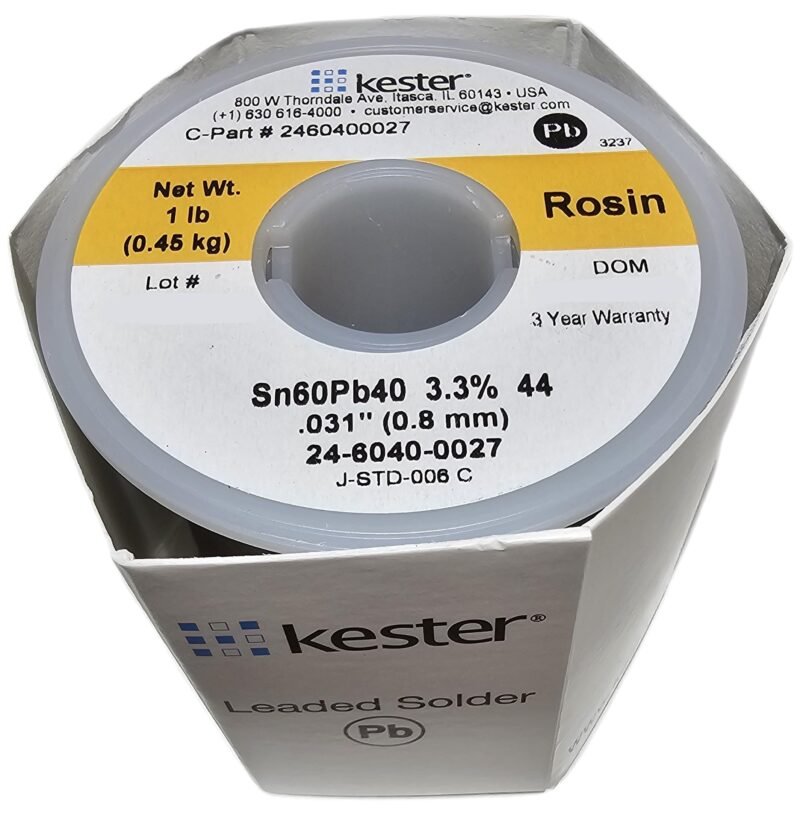
🧵 BEST BULK SPOOL · ⭐ 4.9/53. Kester 24-6040-0027 Wire Solder, 0.031in
0.031 in diameter, spool · 2,704 ratings
Buy Here →

For anyone who solders every week, a full spool works out far better than tubes. This Kester 24-6040-0027 listing is a 0.031 inch wire solder spool; the listing text is sparse, but 6040 in Kester’s part number is its 60/40 tin lead alloy code, and the package weight shown is a little over a pound. It has the strongest score in this guide at 4.9 stars from 2,704 ratings. Check the listing photos for the flux core marking before you order if you need a specific core type.
✅ Pros: Big spool; top rated; trusted brand.
❌ Cons: Sparse listing details; 60/40 has a short pasty range.
🎯 Verdict: The spool to buy once and forget about for a year.
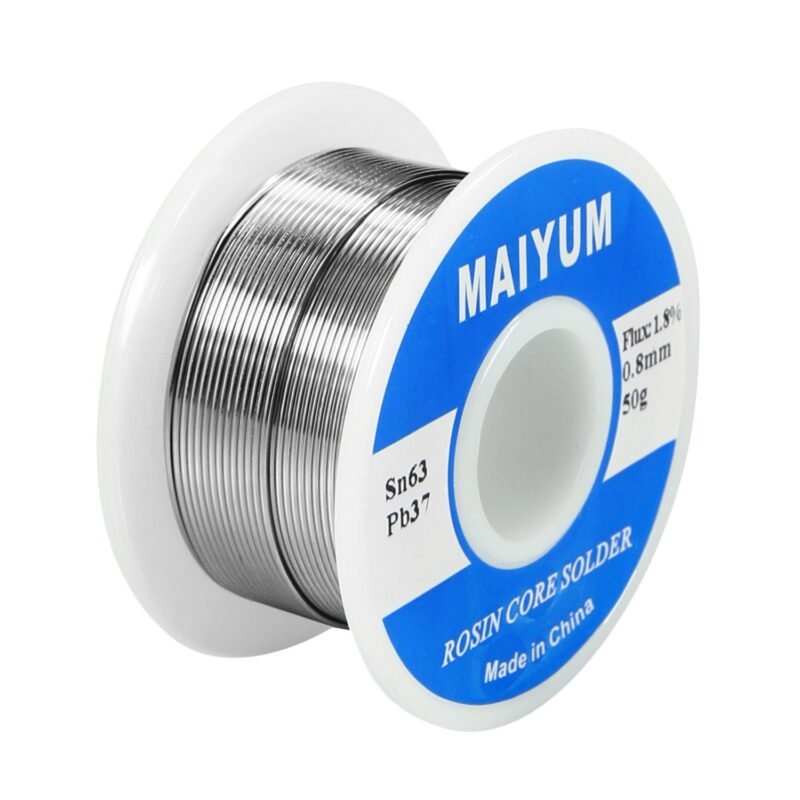
💰 BEST BUDGET · ⭐ 4.6/54. MAIYUM 63-37 Rosin Core Solder Wire, 0.8mm, 50g
63/37, 1.8% flux, 0.8 mm, 50 g · 22,773 ratings
Buy Here →
The MAIYUM 63-37 is the most reviewed solder wire we found, with 4.6 stars from 22,773 ratings. The listing specifies a 63/37 tin lead alloy, 1.8% rosin flux content, 0.8 mm (0.0315 inch) diameter, 50 g gross weight and a 183 °C (361 °F) melting point. That is effectively the same spec sheet as premium 63/37 wire, and it is an easy pick for a first soldering kit or a spare roll for the lab drawer.
✅ Pros: Eutectic 63/37; clear specs; massive review base.
❌ Cons: Small 50 g roll; generic brand consistency varies.
🎯 Verdict: The value roll for beginners and spare kits.
🧼 BEST NO CLEAN WIRE · ⭐ 4.7/55. MG Chemicals 4860 63/37 No Clean Leaded Solder, 0.032in, 18 g Pocket Pack
63/37, no clean core, 0.032 in · 338 ratings
Buy Here →
Rosin cores leave amber residue that many people clean off with isopropyl alcohol. The MG Chemicals 4860 uses a no clean flux core instead, so the small amount of residue left on a finished board is designed to stay. You still get a 63/37 alloy at 0.032 inch in an 18 g pocket pack that fits a field kit. It averages 4.7 stars from 338 ratings.
✅ Pros: No clean core; pocket size; reputable maker.
❌ Cons: Only 18 g; no clean flux is less aggressive on dirty parts.
🎯 Verdict: Great for quick repairs where you won’t clean the board.
🎒 BEST POCKET PACK · ⭐ 4.8/56. MG Chemicals 63/37 Rosin Core Leaded Solder, 0.032in Pocket Pack
63/37, rosin core, 0.032 in · 372 ratings
Buy Here →
The rosin core version of MG Chemicals’ pocket pack gives a slightly more active flux than the no clean 4860, which helps on older or lightly oxidised leads. The listing specifies 63/37 alloy, rosin core, 0.032 inch diameter in a 0.6 oz dispenser. It averages 4.8 stars from 372 ratings, which makes it a strong alternative if the Kester tube is unavailable.
✅ Pros: Rosin core flows well; tidy dispenser.
❌ Cons: Small amount; residue should be cleaned for neat boards.
🎯 Verdict: A tidy toolbox roll with dependable flow.
🌿 BEST LEAD FREE · ⭐ 4.7/57. Weller WSW SCN M1 Lead Free Solder Wire, 0.8mm, 100g
Sn99.3Cu0.6Ni0.05, 3.5% flux, 0.8 mm · 163 ratings
Buy Here →
If you need RoHS style lead free joints, for example on products you sell or in a school lab, Weller’s WSW SCN M1 is a serious option. The listing gives the alloy as Sn99.3 Cu0.6 Ni0.05 with a generous 3.5% flux content in a 0.8 mm, 100 g roll. The higher flux content helps lead free solder, which melts hotter and wets more slowly than 63/37. It averages 4.7 stars from 163 ratings.
✅ Pros: Lead free; high flux content; branded quality.
❌ Cons: Needs a hotter iron; duller looking joints are normal.
🎯 Verdict: The lead free roll for people who want brand consistency.
♻️ BUDGET LEAD FREE · ⭐ 4.6/58. AUSTOR 0.8mm Lead Free Solder Wire with Rosin Core, 100g
Sn99 Ag0.3 Cu0.7, 2% flux, 0.8 mm · 2,745 ratings
Buy Here →
The AUSTOR roll is the popular budget lead free choice, with 4.6 stars from 2,745 ratings. Its listing specifies a tin, silver and copper alloy (99%, 0.3%, 0.7%) with 2% rosin flux in a 0.8 mm, 100 g roll. The small silver content helps wetting compared with plain tin copper, and the 100 g roll lasts a hobbyist a long time.
✅ Pros: Lead free with silver; large roll; well reviewed.
❌ Cons: Runs hotter than leaded; add extra flux for SMD.
🎯 Verdict: The lead free roll to start with on a budget.
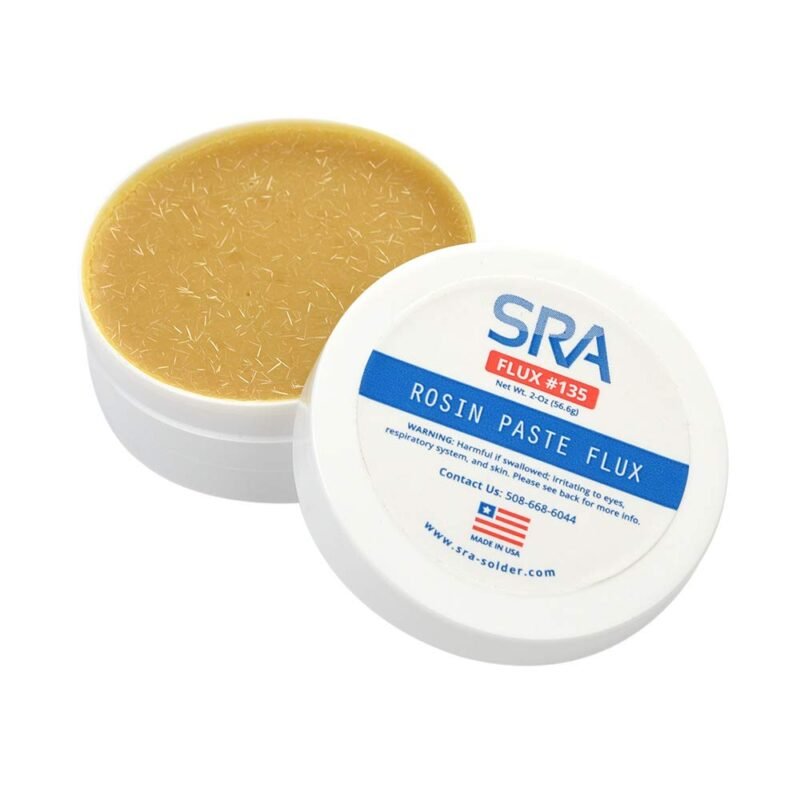
🫙 BEST FLUX TIN · ⭐ 4.7/59. SRA Solder 135 Rosin Paste Soldering Flux
Rosin paste, no clean per listing · 18,452 ratings
Buy Here →
The SRA 135 rosin paste is a long running favourite for tinning wires, cleaning up iron tips and general through-hole work. The listing describes it as a no clean flux for both leaded and lead free solder on circuit boards. A tin is less precise than a syringe, but it is ideal for dipping wire ends and works out economical. It has a huge 18,452 ratings at 4.7 stars.
✅ Pros: Very well reviewed; great for tinning wires.
❌ Cons: Tin is messy for fine pitch SMD.
🎯 Verdict: The all purpose flux tin for wiring and tinning.
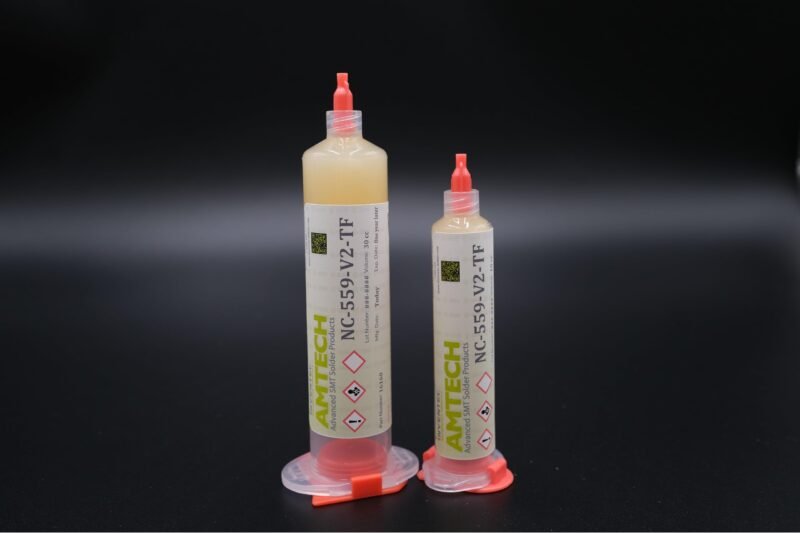
🔥 BEST TACKY FLUX · ⭐ 4.5/510. Inventec AMTECH NC-559-V2 Tacky Flux (10cc Syringe)
NC-559-V2, 10cc syringe · 83 ratings
Buy Here →

AMTECH’s NC-559 series is the tacky gel flux repair technicians use for hot air rework, chip removal and reballing, because it stays in place under hot air and holds small parts while they reflow. This listing is the Inventec AMTECH NC-559-V2 in a 10cc syringe, sold under the Inventec brand. It has 4.5 stars from 83 ratings. Many lookalike NC-559 listings exist on Amazon, so buying the branded version matters.
✅ Pros: Stays put under hot air; branded listing.
❌ Cons: Fewer reviews; overkill for basic through-hole.
🎯 Verdict: The flux to pair with a hot air station.
🖊️ BEST FLUX PEN · ⭐ 4.3/511. MG Chemicals 835-P Rosin Flux Pen, 10 mL
Rosin flux, leaded and lead free · 310 ratings
Buy Here →

A flux pen is the cleanest way to wet a row of pads before drag soldering or to refresh a joint during rework. The MG Chemicals 835-P holds 10 mL of rosin liquid flux that the listing says suits leaded and lead free solder. It averages 4.3 stars from 310 ratings. Liquid flux evaporates faster than paste, so it is best for quick touch ups rather than long hot air jobs.
✅ Pros: Mess free application; good for drag soldering.
❌ Cons: Liquid dries quickly; rosin residue to clean.
🎯 Verdict: Keep one in the drawer for touch ups.
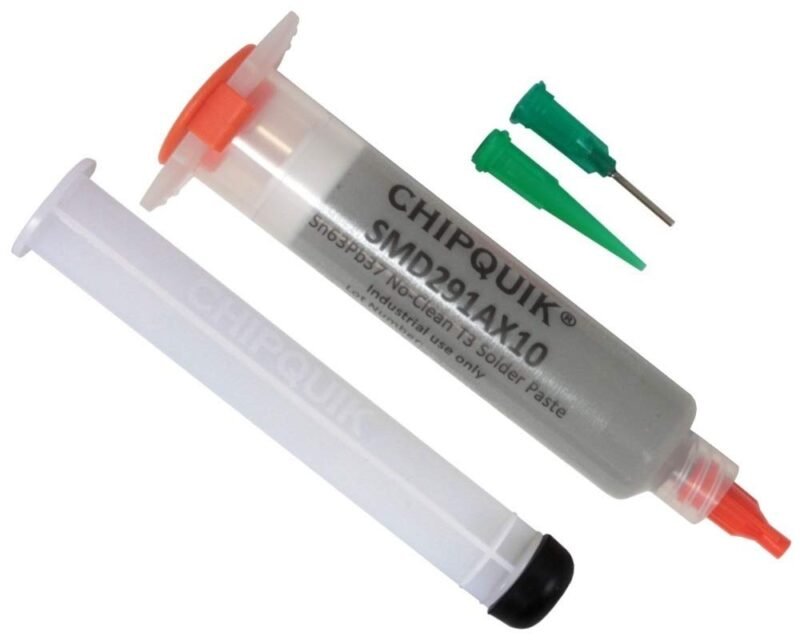
🧷 BEST SOLDER PASTE · ⭐ 4.4/512. Chip Quik SMD291AX10 No Clean 63Sn/37Pb Solder Paste (10cc, 35 g)
63/37 paste, no clean, 10cc syringe · 20 ratings
Buy Here →

For hot air or hot plate reflow of SMD boards you need solder paste, not wire. The Chip Quik SMD291AX10 is a no clean 63Sn/37Pb paste in a 10cc syringe holding 35 g, a common choice for stencil free dispensing on prototypes. It has 4.4 stars, but only 20 ratings, and the seller shown is a reseller rather than Chip Quik directly. Paste has a shelf life, so check the date code on arrival and store it cool.
✅ Pros: Leaded paste reflows at low temperature; syringe format.
❌ Cons: Few reviews; reseller listing; limited shelf life.
🎯 Verdict: The paste for hot air or hot plate reflow on prototypes.
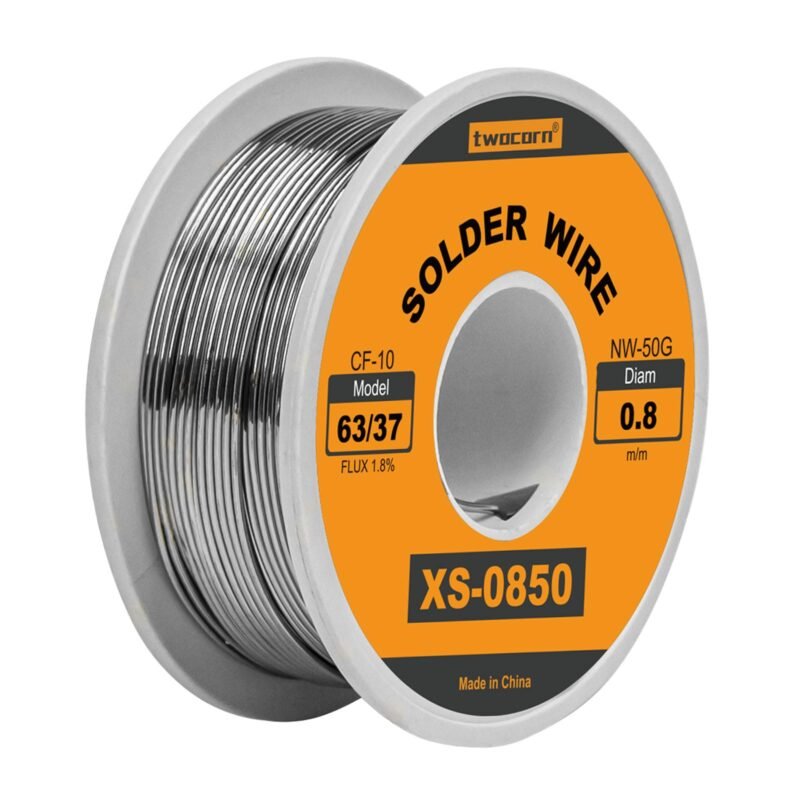
🧰 ALTERNATIVE BUDGET · ⭐ 4.4/513. Twocorn 63/37 Rosin Cored Solder Wire, 0.8mm, 50g
63/37, 1.8% flux, 0.8 mm · 1,110 ratings
Buy Here →
The Twocorn roll is a second budget 63/37 option if the MAIYUM is out of stock. The listing specifies 63/37 tin lead, 1.8% rosin flux, 0.8 mm (0.0315 inch) diameter and 50 g. It averages 4.4 stars from 1,110 ratings. It is a sensible filler roll for a kit or a second workstation.
✅ Pros: Eutectic alloy; clear specs.
❌ Cons: Small roll; lower score than MAIYUM.
🎯 Verdict: A fine backup budget roll.
🛒 Which One for Which Job
🔌
Soldering headers on an ESP32 or Arduino
Kester 44 63/37 at 0.031 in. Add a dab of MG 8341 if the pins are old or tarnished. See our soldering station guide.
📱
Drag soldering a QFP or USB-C connector
MG Chemicals 8341 flux paste plus a thin wire like the MAIYUM 0.8 mm, and a chisel or hoof tip.
🧩
Reflowing SMD prototypes
Chip Quik SMD291AX10 paste dispensed onto pads, then hot air or a hot plate.
🏭
Products that must be lead free
Weller WSW SCN M1 or AUSTOR SAC wire, plus extra no clean flux.
🧵
Tinning wires and big connectors
Kester 24-6040-0027 spool and a tin of SRA 135 rosin paste.
⚙️ Solder Alloys Compared: 63/37 vs 60/40 vs Lead Free
| Property | 63/37 Tin Lead | 60/40 Tin Lead | SAC (Sn/Ag/Cu) | Sn/Cu (+Ni) |
|---|
| Melting behaviour | 183 °C, eutectic (no pasty range) ⭐ | About 183 to 190 °C, short pasty range | About 217 to 227 °C | About 227 °C |
| Ease for beginners | Easiest, very forgiving ⭐ | Easy | Moderate, needs more flux | Moderate, needs more flux |
| Joint appearance | Bright and shiny ⭐ | Shiny | Duller, slightly grainy is normal | Duller |
| RoHS / lead free | No | No | Yes ⭐ | Yes ⭐ |
| Typical tip temperature | 300 to 330 °C ⭐ | 310 to 340 °C | 340 to 370 °C | 350 to 380 °C |
| Picks in this guide | Kester 44, MAIYUM, MG 4860, MG rosin core, Twocorn | Kester 24-6040-0027 | AUSTOR | Weller WSW SCN M1 |
❓ Frequently Asked Questions
Is 63/37 better than 60/40 solder?
For electronics, usually yes. 63/37 is eutectic, so it melts and freezes at one temperature (183 °C) with no pasty stage, which reduces disturbed, grainy joints. 60/40 is slightly cheaper and works fine, but it has a short range where it is partly solid.
Do I really need extra flux if my solder has a flux core?
For simple through-hole joints the core is enough. For SMD, drag soldering, rework, oxidised parts or reworking an existing joint, the core flux burns off too quickly, and adding paste flux or a flux pen makes a huge difference.
Do I have to clean no clean flux?
Not normally. The residue is designed to be non corrosive and non conductive. Clean it with isopropyl alcohol if the board looks sticky, if you need a cosmetic finish, or on sensitive analog, high impedance or RF circuits.
Which solder diameter should I buy first?
0.8 mm (about 0.031 inch) covers most Arduino, ESP32 and Raspberry Pi work. Add a 0.5 or 0.6 mm roll later for fine pitch SMD, and a thicker wire for battery packs and heavy connectors.
Is leaded solder safe to use at home?
It is widely used by hobbyists, but take precautions: ventilate, use a fume extractor for the flux smoke, keep food and drinks off the bench, and wash your hands after soldering. Keep it away from children and pets.
🏁 Final Verdict: Best Solder Wire and Flux
The consumables we’d stock on a new bench:
🥇 Best Solder Wire: Kester 44 63/37 0.031in
Buy Here →🧪 Best Flux: MG Chemicals 8341 No Clean Flux Paste
Buy Here →🧷 Best Solder Paste: Chip Quik SMD291AX10
Buy Here →For most makers the winning combination is simple: a roll of Kester 44 63/37 (or the budget MAIYUM), a syringe of MG Chemicals 8341 flux, and AMTECH NC-559-V2 if you do hot air rework. Switch to Weller or AUSTOR lead free wire when RoHS matters. Round out your bench with our guides to soldering stations, hot air rework stations, solder fume extractors, precision tweezers, flush cutters and USB microscopes for PCB work.
💬 Which solder and flux live on your bench? Share your favourite combo in the comments below.
All Amazon links above use our affiliate tag (microlab05-20). Purchasing through them supports microcontrollerslab.com at no extra cost to you. Prices and availability change frequently, so always confirm the current price on Amazon before buying.