⚠️ Affiliate Disclosure: This post contains Amazon affiliate links. If you purchase through our links, we may earn a small commission at no extra cost to you. We only recommend ESCs we have researched and whose listings we checked live on Amazon. Prices change constantly, so we deliberately do not print them here. Tap through and check the current price on Amazon before you buy.
Ultimate Buying Guide
⚡ Best ESCs (Electronic Speed Controllers) for Drones, RC Cars & Robotics
8 speed controllers ranked for quadcopters, fixed-wing planes, RC cars, rovers and Arduino robots, from the Hobbywing Skywalker and QuicRun lines to BLHeli_S 30A and 4-in-1 FPV boards, with verified Amazon listings, real current ratings and honest verdicts.
✅ 8 ESCs Reviewed
✅ Verified Amazon ASINs
✅ Real Current & BEC Specs
✅ Honest Pros & Cons
The electronic speed controller (ESC) is the part that turns a throttle signal from your flight controller, RC receiver or Arduino into the high-current three-phase drive a brushless motor actually needs. It switches tens of amps thousands of times per second, decides how smoothly the motor starts, and often powers your receiver and servos through its built-in BEC. Pick the wrong one and you get stuttering starts, a burnt MOSFET on the first hard punch-out, or a drone that desyncs mid-flip.
The trouble is that “ESC” covers very different products. A drone ESC running BLHeli_S with DShot is tuned for instant throttle changes and has no reverse; a car ESC like the Hobbywing QuicRun adds reverse, braking and sensored startup; a fixed-wing ESC like the Skywalker trades speed for a beefy BEC and soft start. This guide ranks 8 ESCs across those categories so you can match the controller to your motor, battery and vehicle, not to the biggest amp number on the box.
💡 Reality check before you buy: There is no universal ESC. A drone ESC will happily spin a car motor but has no reverse and no proper brake, and a car ESC is far too slow and heavy for a quadcopter. The amp rating on budget listings is often a burst figure dressed up as continuous, so size your ESC at least 20 to 30 percent above the motor’s real maximum draw. Many FPV ESCs are OPTO (no BEC), so you will need a separate 5 V supply for a receiver or Arduino. And brushed motors need a brushed ESC: a brushless ESC cannot drive a two-wire brushed motor at all.
🔋 Quick Comparison of All 8 ESCs
| ESC | Type | Current (Cont.) | LiPo | BEC | Best For | Buy |
|---|
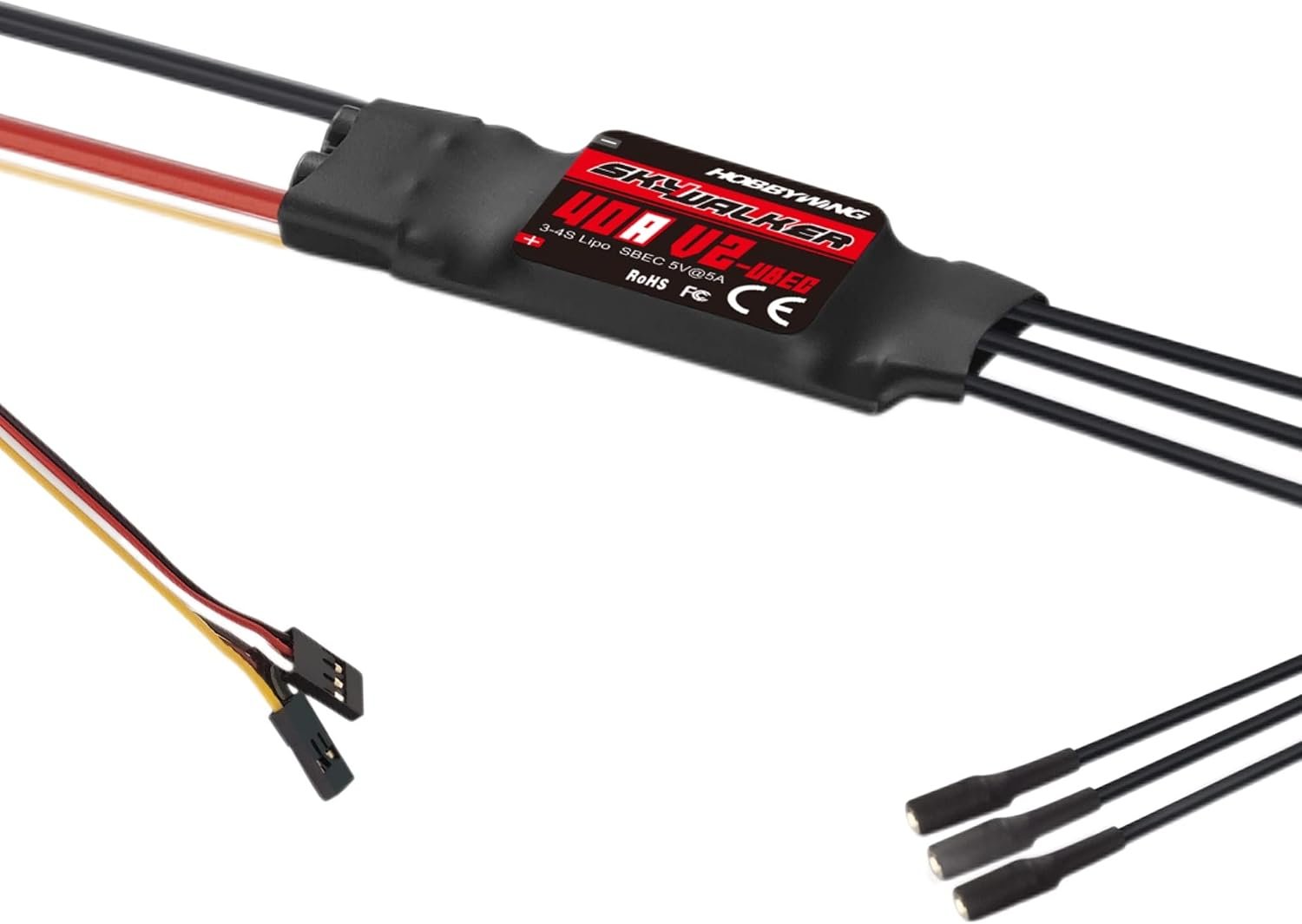
| 🥇 Hobbywing Skywalker 40A V2 | Brushless, fixed-wing | 40A | 3-4S | 5V / 5A switch | Best Overall | Buy Here → |
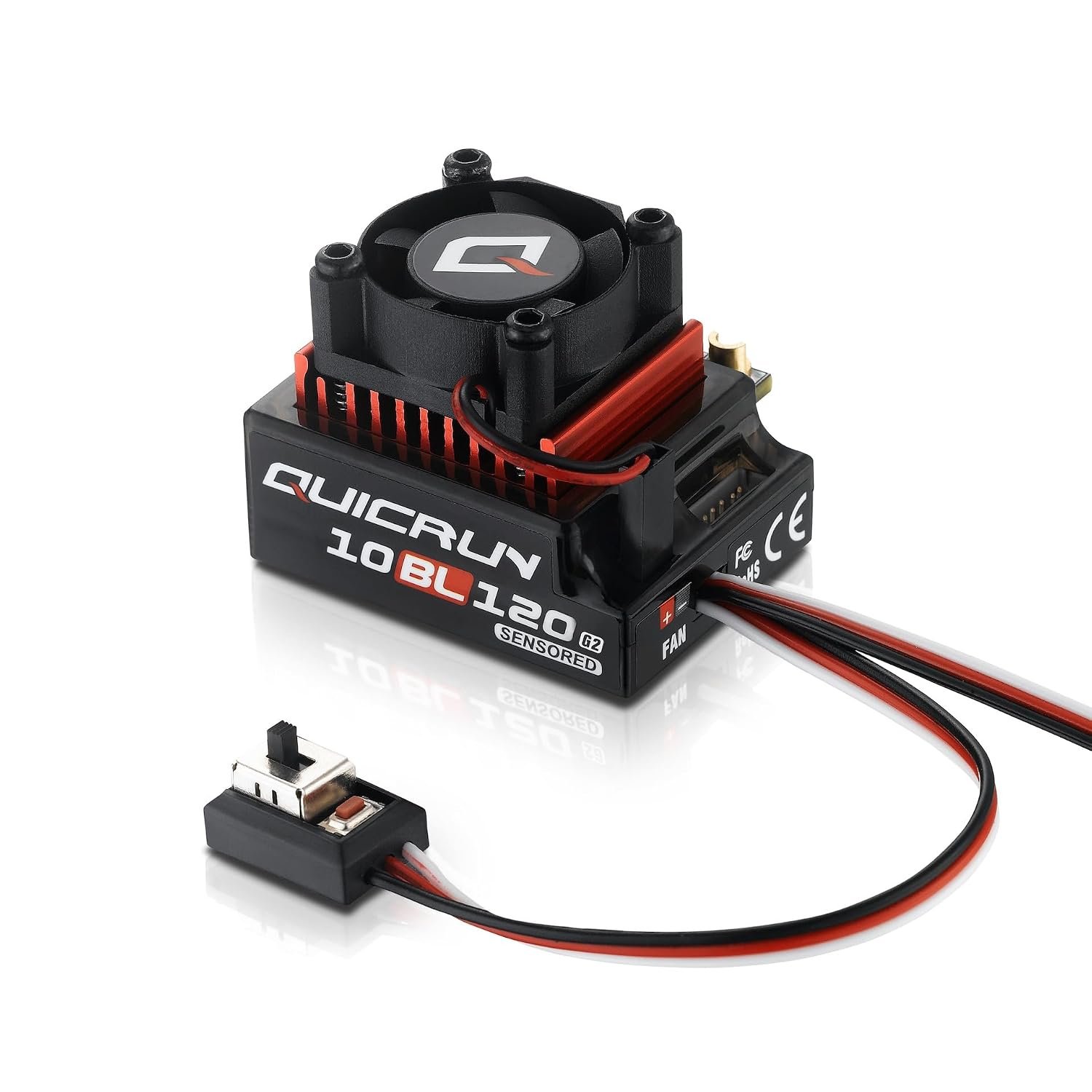
| 🏅 Hobbywing QuicRun 10BL120 Sensored G2 | Brushless, car | 120A | 2-3S | 6/7.4V / 4A | Best for Cars & Rovers | Buy Here → |
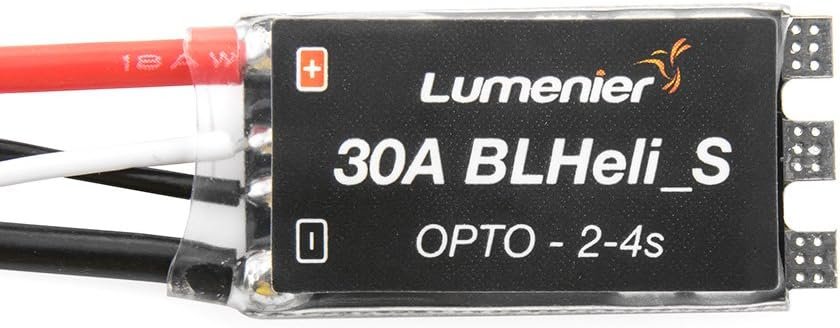
| 🚁 Lumenier 30A BLHeli_S OPTO | Brushless, multirotor | 30A | 2-4S | None (OPTO) | Best BLHeli_S 30A | Buy Here → |
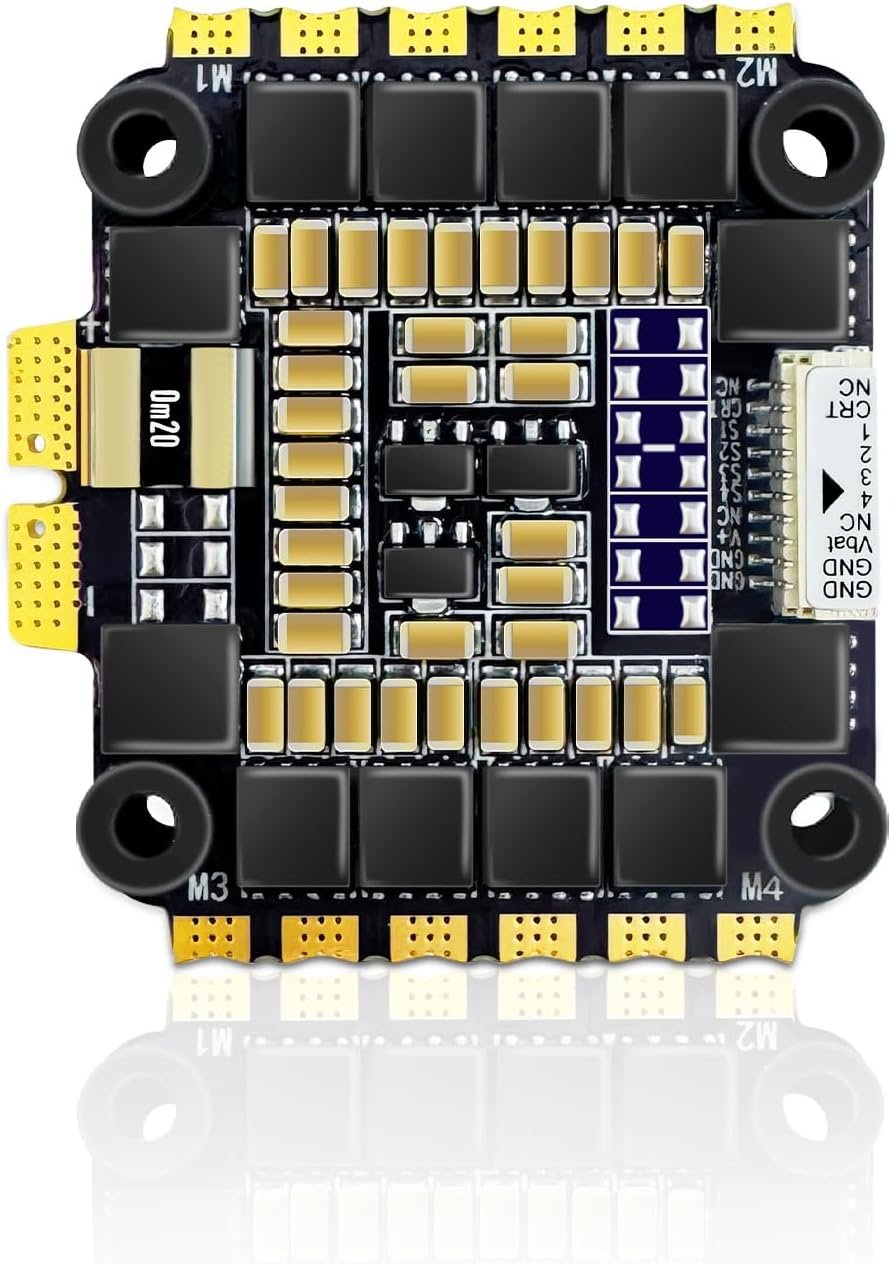
| 🧩 Radiolink Flycolor 55A 4-in-1 | Brushless, 4-in-1 | 55A per motor | 3-6S | None | Best 4-in-1 for FPV | Buy Here → |
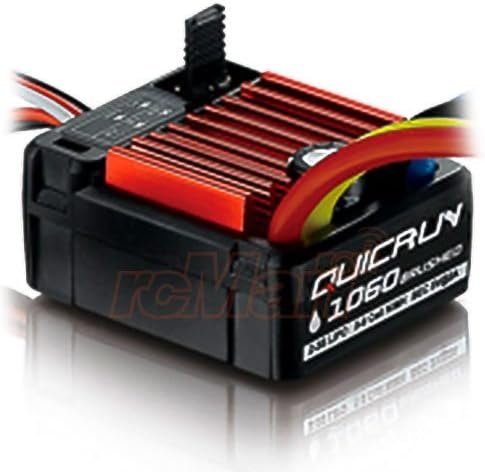
| 🤖 Hobbywing QuicRun WP 1060 | Brushed, waterproof | 60A fwd / 30A rev | 2-3S | Switch mode | Best Brushed ESC | Buy Here → |
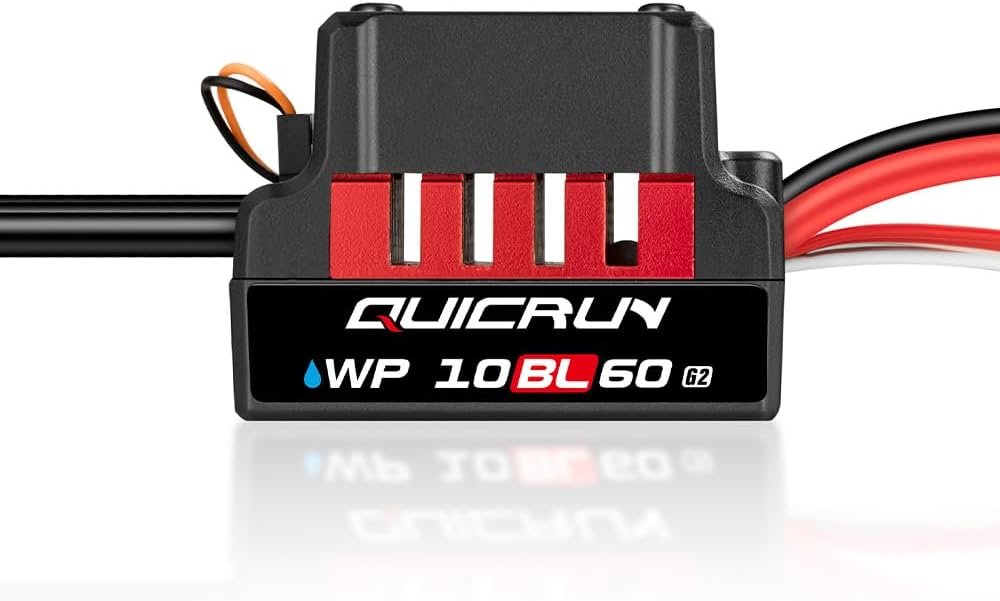
| 💧 Hobbywing QuicRun WP 10BL60 G2 | Brushless, car | 60A | 2-3S | 6V / 3A | Best Budget Waterproof | Buy Here → |
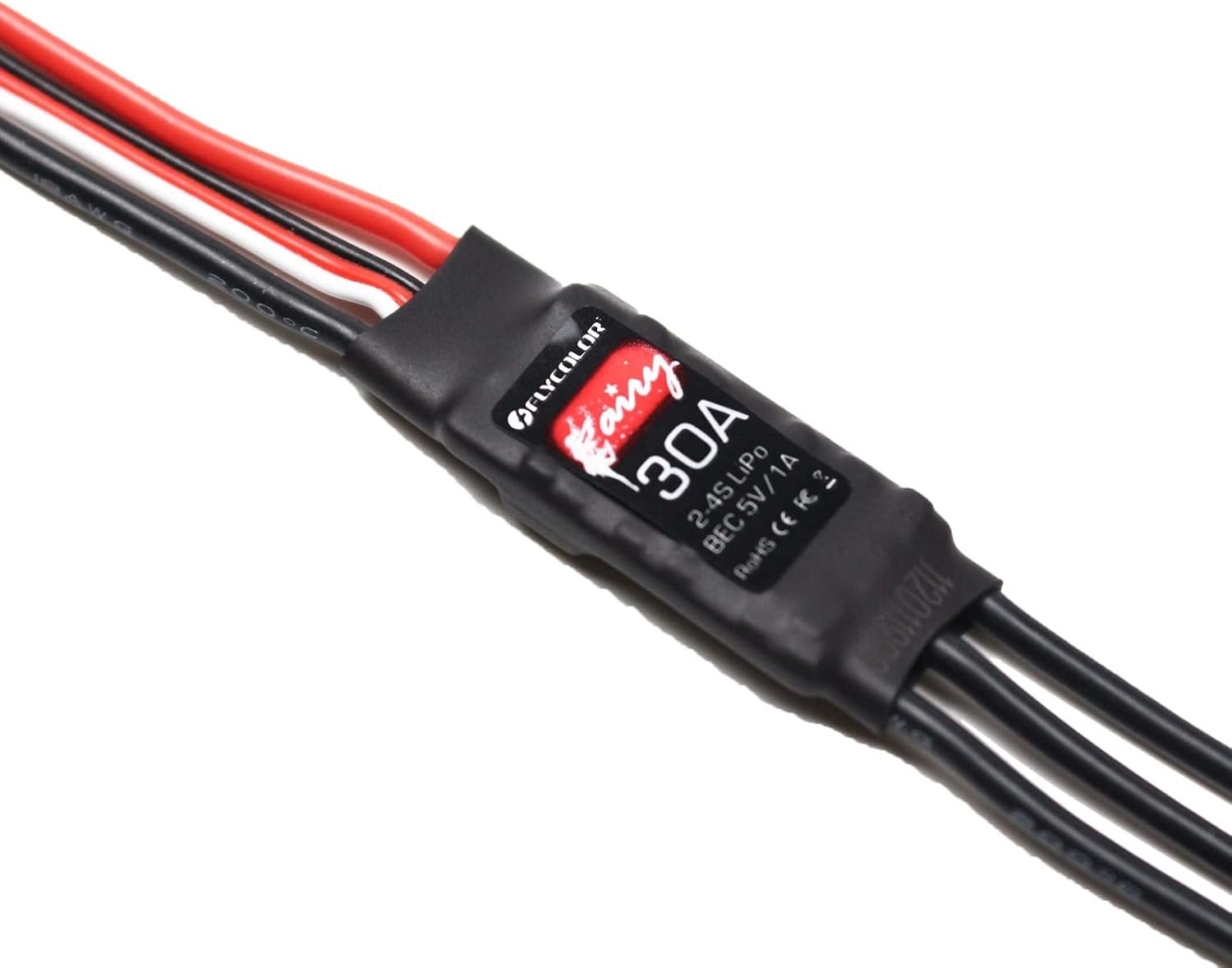
| 🔌 Flycolor 30A with BEC | Brushless, multirotor | 30A | 2-4S | 5V / 1A | Best for Arduino Projects | Buy Here → |
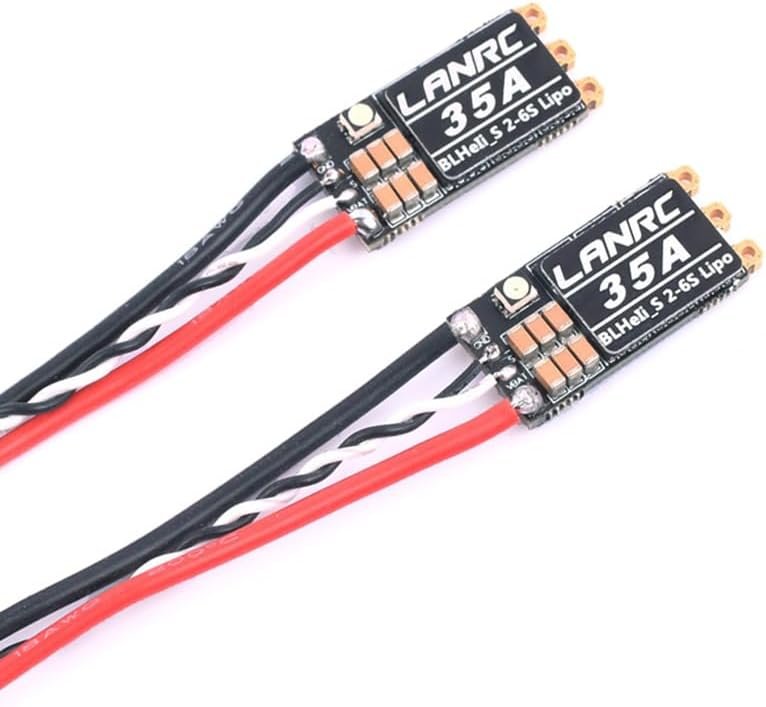
| 🌈 LANRC 35A BLHeli_S (2-pack) | Brushless, multirotor | 35A | 2-6S | None | Best Value for 6S Builds | Buy Here → |
We do not list prices because Amazon changes them frequently and pack sizes vary between sellers. Tap any Buy button to see the live price and confirm the exact variant (amp rating, plug type, pack quantity) before ordering.
🔍 What to Look for in an ESC
🔥
Continuous Current, With Headroom
Check the motor and prop (or gearing) combination’s maximum draw, then add 20 to 30 percent. A motor that pulls 28A at full throttle wants a 35A or 40A ESC. Ignore the burst figure for sizing: it only lasts a few seconds.
🔋
Supported LiPo Cell Count
The 2-4S or 3-6S range sets the MOSFET voltage rating. Running a 4S-rated ESC on 6S kills it on the first voltage spike. Plan for the battery you will grow into, not just the one you own today.
🧠
Firmware & Protocol
Drones want BLHeli_S, Bluejay, BLHeli_32 or AM32 with DShot300/600 for digital throttle and RPM filtering. Cars and planes use standard 50 Hz PWM servo signals, which is also what an Arduino Servo library outputs.
🔌
BEC or OPTO
A built-in BEC powers your receiver, servos or microcontroller from the main pack. Switch-mode BECs handle 3A to 5A without cooking; linear BECs get hot past 1A on 3S. OPTO ESCs have no BEC, so plan a separate regulator.
🔄
Reverse, Brake & Sensored Start
Ground robots need forward, brake and reverse. Sensored ESCs read hall sensors in the motor for smooth, cog-free starts at crawl speeds, which matters a lot for rovers and heavy robots that start under load.
🏆 Detailed Reviews of All 8 ESCs
🥇 BEST OVERALL
1. Hobbywing Skywalker 40A V2
⭐ 4.7/5 · The Reliable All-Rounder
Buy on Amazon →

If you want one ESC that simply works, the Hobbywing Skywalker 40A V2 is it. The V2 moved the classic Skywalker onto a 32-bit ARM M0 processor at 96 MHz and added Hobbywing’s DEO (Driving Efficiency Optimization) for smoother throttle and cooler running. The headline feature for makers is the 5 V / 5 A switch-mode BEC: enough to run a receiver, several metal-gear servos or an ESP32 and a sensor stack without a separate regulator. It accepts a standard 50 Hz PWM signal, so an Arduino running the Servo library drives it directly. You also get programmable brake modes, a reverse-brake option for shorter landings, and a “search mode” that beeps the motor to help you find a downed plane. It is built for fixed-wing aircraft and is too slow for a racing quad, but for planes, airboats, wind tunnels, test stands and robot thrusters it is the safe default.
✅ Pros- Strong 5 A switch-mode BEC
- Smooth soft start, 32-bit core
- Plain PWM input, Arduino friendly
- Programmable via LED box or transmitter
❌ Cons- Listing rates it for 3-4S, not 2S
- No DShot, unsuitable for FPV quads
- No motor reverse for ground robots
🎯 Verdict: The best general-purpose brushless ESC for planes, test rigs and Arduino projects. Buy this if you are unsure.
👉 Check Price on Amazon →
🏅 BEST FOR RC CARS & ROVERS
2. Hobbywing QuicRun 10BL120 Sensored G2
⭐ 4.6/5 · The Ground-Vehicle Workhorse
Buy on Amazon →

The QuicRun 10BL120 Sensored G2 is the ESC to build a serious wheeled robot or 1/10 car around. It runs both sensored and sensorless brushless motors, and the sensored mode is the reason to buy it: with hall feedback the motor pulls away smoothly from a standstill under load, with none of the cogging and stutter a sensorless ESC shows at crawl speeds. That matters for rovers, balancing robots and anything that starts on a slope. The G2 upgrade bumped the BEC to 4 A continuous (7 A peak), adjustable between 6 V and 7.4 V, so high-voltage steering servos are fine. You get forward, brake and reverse, adjustable Boost and Turbo timing up to 32 degrees, and programming by LCD box or the onboard button. The motor limit is 4.5T on 2S and 10.5T on 3S for a 3650-size motor.
✅ Pros- Smooth sensored low-speed control
- Forward, brake and reverse
- Strong 4 A adjustable BEC
- Huge 120A continuous headroom
❌ Cons- Not waterproof (unlike the WP models)
- Boost/Turbo not allowed on 3S
- Overkill for small 1/16 robots
🎯 Verdict: The best ESC for rovers and 1/10 cars where smooth low-speed torque matters. Pair it with a sensored motor to get its full value.
👉 Check Price on Amazon →
🚁 BEST BLHELI_S 30A · ⭐ 4.5/53. Lumenier 30A BLHeli_S OPTO
30A cont. / 35A burst · 2-4S · BusyBee2 EFM8BB21 @ 48 MHz · DShot · 5 g · single ESC
Buy Here →

If you searched for a “BLHeli_S 30A ESC”, this is the clean, branded version of that product. The Lumenier 30A uses the BusyBee2 (EFM8BB21F16) MCU at 48 MHz with hardware PWM, runs BLHeli_S out of the box and auto-detects DShot, Oneshot125, Oneshot42, Multishot and PWM. It weighs about 5 g and measures roughly 28 x 14 mm, so it slips onto the arm of a 5-inch or smaller quad. Because the EFM8BB21 is a supported target, you can also flash open-source Bluejay firmware for bidirectional DShot and RPM filtering in Betaflight. It is an OPTO design with no BEC and is sold as a single ESC, so budget for four.
✅ Pros: Fast BB2 chip; full DShot support; Bluejay-flashable; tiny and light; pre-soldered leads.
❌ Cons: Sold singly; no BEC; 35A burst leaves little headroom on hot 4S setups; 8-bit platform is older tech.
🎯 Verdict: The trustworthy individual BLHeli_S 30A ESC for 3 to 5-inch quads and Betaflight builds that use separate arm ESCs.
🧩 BEST 4-IN-1 FOR FPV · ⭐ 4.4/54. Radiolink Flycolor 55A 4-in-1
55A cont. / 65A peak per channel · 3-6S · EFM8BB21 @ 50 MHz · BLHeli_S / Bluejay · DShot300/600 · 15.8 g
Buy Here →

Most modern 5-inch freestyle quads use a 4-in-1 ESC stacked under the flight controller instead of four separate arm ESCs: cleaner wiring, one power lead and one connector to the FC. This Radiolink Flycolor 55A board delivers 55A continuous and 65A peak per motor on 3S to 6S, which is comfortable headroom for 2207 and 2306 motors on 6S. It runs on the EFM8BB21 MCU with a dedicated 3-in-1 gate driver, supports Bluejay with DShot300/600 for bidirectional DShot and RPM filtering, and falls back to BLHeli_S protocols like Oneshot and Multishot. At 15.8 g it is light for its rating. Confirm the mounting pattern and FC harness pinout against your flight controller before ordering.
✅ Pros: Plenty of current for 6S 5-inch builds; Bluejay support; one-board wiring; branded Radiolink listing.
❌ Cons: No 2S support; a single burnt channel means replacing the whole board; harness may need re-pinning for your FC.
🎯 Verdict: The pick for a 5-inch FPV stack on 4S or 6S if you want 55A headroom and Bluejay without paying flagship prices.
🤖 BEST BRUSHED ESC · ⭐ 4.6/55. Hobbywing QuicRun WP 1060
Brushed · 60A / 360A forward · 30A / 180A reverse · 2-3S LiPo or 5-9 NiMH · waterproof · switch-mode BEC
Buy Here →

Plenty of robots still run brushed DC gear motors, and for those you need a brushed ESC. The QuicRun WP 1060 is the most popular one for good reason: 60A forward (360A peak) and 30A reverse, 2-3S LiPo input, full waterproofing and a switch-mode BEC, all in a small case. It reads a standard RC PWM signal, so an Arduino, ESP32 or Raspberry Pi with a PWM driver can command forward, brake and reverse with the same code you would use for a servo. It is common in rock crawlers, combat-robot drive trains, lawn robots and outdoor rovers built on 540 or 550 motors. Motor limits are 12T or more on 2S and 18T or more on 3S for 540/550 size motors, and it does not support 4S.
✅ Pros: Fully waterproof; forward/brake/reverse; easy jumper programming; proven reliability; low cost.
❌ Cons: Brushed motors only; reverse current is half the forward rating; plug style varies by variant, so check the listing.
🎯 Verdict: The go-to ESC for brushed robot drive motors and outdoor rovers. Cheap, tough and simple to drive from any microcontroller.
💧 BEST BUDGET WATERPROOF BRUSHLESS · ⭐ 4.5/56. Hobbywing QuicRun WP 10BL60 G2
60A / 360A · 2-3S · sensorless brushless · 6V / 3A BEC · waterproof · cooling fan included
Buy Here →

The QuicRun WP 10BL60 G2 is the budget way into brushless power for cars, boats and outdoor robots. It is rated 60A continuous and 360A peak on 2-3S, drives sensorless brushless motors, and is fully waterproof, which the sensored 10BL120 above is not. The G2 version is shorter and narrower than the original, uses a mesh heat sink with copper thermal bars, and includes a fan powered by the 6 V / 3 A BEC. Hobbywing’s intelligent freewheeling keeps efficiency up and temperatures down. Because it is sensorless, very low-speed starts under load are less smooth, so it suits fast-moving vehicles better than slow precision rovers. Keep motors under about 6000 KV on 2S and 3500 KV on 3S.
✅ Pros: Waterproof; includes fan; compact G2 size; forward/brake/reverse; strong Hobbywing reliability.
❌ Cons: Sensorless only, so some cogging at crawl speed; 3 A BEC is modest for big servos; 3S motor KV limit.
🎯 Verdict: The best value brushless car ESC for bashers, boats and wet-weather robots that do not need sensored precision.
🔌 BEST FOR ARDUINO PROJECTS · ⭐ 4.1/57. Flycolor 30A ESC with BEC
30A · 2-4S · 5V / 1A BEC · OneShot125 and PWM up to 500 Hz · single ESC
Buy Here →

For a first brushless experiment on the bench, a classic F450 or S500 quad, or an Arduino-controlled fan or thruster, the Flycolor 30A is the low-cost, low-drama choice. It takes 2-4S, accepts standard PWM and OneShot125 at up to 500 Hz, and includes a 5 V / 1 A BEC that can power a receiver or an Arduino Nano directly, which keeps a learning setup simple. Protection covers motor blocking, abnormal startup, overheating, signal loss and low-voltage cut-off. It uses multirotor-tuned firmware with four timing options and fast throttle response. The trade-offs are the modest BEC, which will not run several servos, and the lack of DShot, so it is not the right ESC for a modern Betaflight racer.
✅ Pros: Very affordable; built-in BEC; simple PWM control from any MCU; good protection features.
❌ Cons: 1 A BEC only; no DShot or Bluejay; firmware details are thin on the listing; sold singly.
🎯 Verdict: The easiest budget ESC for learning brushless control with an Arduino or building a classic PWM quad.
🌈 BEST VALUE FOR 6S BUILDS · ⭐ 4.2/58. LANRC 35A BLHeli_S (2-Pack)
35A cont. / 45A peak (10 s) · 2-6S · EFM8BB21F16G · DShot150/300/600 · RGB LED · 6.6 g · 2 ESCs per pack
Buy Here →

If you want individual arm ESCs but need 6S support, the LANRC 35A BLHeli_S covers 2S to 6S with 35A continuous and 45A peak for 10 seconds. It runs the same EFM8BB21F16G chip as the Lumenier with hardware PWM enabled by default, supports DShot150/300/600, and uses a 6-layer, 3 oz copper PCB that separates high-current and signal layers for better noise immunity. Each ESC weighs about 6.6 g and has a built-in RGB LED for night flying. It comes as a 2-pack, so order two packs for a quad. Brand support and documentation are thinner than Lumenier or Hobbywing, so treat it as a value pick rather than a premium one.
✅ Pros: 2-6S range; DShot600; damped light and regen braking; RGB LED; good price per ESC.
❌ Cons: Lesser-known brand; no BEC; seller (MEIVIFPV) differs from brand name, so check reviews.
🎯 Verdict: A cost-effective set of BLHeli_S arm ESCs for 6S builds and spare parts, if you are comfortable with a value brand.
🧭 How to Choose the Right ESC for Your Build
✈️
Fixed-wing plane or test stand?
Get the Hobbywing Skywalker 40A V2. The 5 A BEC runs your servos and receiver, and plain PWM makes it easy to drive from a thrust-stand Arduino.
🚁
Building a 3 to 5-inch quad with arm ESCs?
Four Lumenier 30A BLHeli_S ESCs on 4S, or two packs of the LANRC 35A if you plan to fly 6S.
🎮
Modern FPV freestyle stack?
Use the Radiolink Flycolor 55A 4-in-1 with Bluejay for bidirectional DShot and RPM filtering on 4S or 6S.
🛰️
Slow, precise rover or 1/10 car?
The QuicRun 10BL120 Sensored G2 with a sensored motor gives smooth torque from zero speed, plus reverse and a strong BEC.
🤖
Robot with brushed gear motors?
The QuicRun WP 1060 is the brushed ESC to buy: waterproof, reversible and controlled by the same PWM as a servo.
🎓
Learning brushless with Arduino on a budget?
Start with the Flycolor 30A. Its 5 V BEC can power a Nano, and the Servo library drives it out of the box.
⚙️ Key Specs Compared Side by Side
| Spec | Skywalker 40A V2 | 10BL120 Sensored G2 | Lumenier 30A | Flycolor 55A 4-in-1 | QuicRun WP 1060 | WP 10BL60 G2 |
|---|
| Continuous Current | 40A | 120A ⭐ | 30A | 55A x 4 | 60A fwd | 60A |
| LiPo Range | 3-4S | 2-3S | 2-4S | 3-6S ⭐ | 2-3S | 2-3S |
| BEC | 5V / 5A ⭐ | 6/7.4V / 4A | None | None | Switch mode | 6V / 3A |
| Motor Type | Brushless | Sensored + sensorless ⭐ | Brushless | Brushless | Brushed | Sensorless |
| Reverse | No (reverse brake only) | Yes ⭐ | 3D mode via config | 3D mode via config | Yes ⭐ | Yes ⭐ |
| Throttle Protocol | PWM | PWM | DShot / Oneshot ⭐ | DShot600 / Bluejay ⭐ | PWM | PWM |
| Waterproof | No | No | No | No | Yes ⭐ | Yes ⭐ |
| Best Use | Planes, rigs, Arduino | Rovers, 1/10 cars | 3-5 inch quads | 5-inch FPV stack | Brushed robots | Bashers, boats |
Specifications are taken from the live Amazon listings and manufacturer data at the time of writing. Variants (plug type, pack quantity, G1 vs G2) change, so confirm the exact model on the listing before ordering. The Flycolor 30A and LANRC 35A are covered in the quick comparison table above.
❓ Frequently Asked Questions
How do I choose the right amp rating for my ESC?
Find the maximum current your motor draws with your exact prop or gearing and battery, usually from the motor’s thrust table or a wattmeter test at full throttle. Then pick an ESC whose continuous rating is 20 to 30 percent higher. A motor that pulls 30A at full throttle should get a 40A ESC. Oversizing a little costs a few grams and some money; undersizing costs a burnt ESC and sometimes a fire. Burst ratings are only for a few seconds and should not be used for sizing.
Can I control an ESC with an Arduino or ESP32?
Yes. Any ESC that accepts standard PWM (Skywalker, QuicRun, Flycolor 30A) responds to the same 50 Hz signal as a hobby servo: about 1000 µs for zero throttle and 2000 µs for full. On Arduino use the Servo library and writeMicroseconds(); on ESP32 use the ESP32Servo library or LEDC. Send minimum throttle for a couple of seconds after power-up so the ESC arms, connect the grounds together, and always test with the propeller removed. BLHeli_S ESCs also accept PWM, though DShot needs a flight controller or a dedicated library.
What is the difference between BLHeli_S, Bluejay, BLHeli_32 and AM32?
They are ESC firmwares. BLHeli_S runs on 8-bit EFM8 chips and was the standard for budget quad ESCs. Bluejay is an open-source replacement for the same 8-bit hardware that adds bidirectional DShot, which Betaflight uses for RPM filtering. BLHeli_32 ran on 32-bit ARM chips but is no longer developed, and AM32 is the open-source 32-bit successor. For a new quad, Bluejay or AM32 support is what you want. For planes, cars and Arduino projects the firmware matters much less than the BEC and current rating.
Should I buy a sensored or sensorless ESC?
A sensorless ESC estimates rotor position from the motor’s back-EMF, which only works once the motor is turning. That is fine for drones, planes and fast cars. A sensored ESC reads hall-effect sensors inside a sensored motor, so it knows the rotor position at zero speed and starts smoothly under load. For slow rovers, crawlers, balancing robots or anything that must creep precisely, sensored is worth the extra cost. Note you need a sensored motor too; a sensored ESC runs sensorless motors but without the benefit.
Why does my brushless motor stutter or not spin at all?
The usual causes are: the ESC was never armed because the throttle was not at minimum at power-up; the throttle range has not been calibrated to your transmitter or Arduino’s pulse widths; one of the three motor wires has a bad solder joint, causing a desync; or the timing setting does not suit a high-pole-count motor. Recalibrate the throttle range, check all three phase connections, and try a higher timing setting. To reverse the direction of a brushless motor, simply swap any two of the three motor wires.
🏁 Final Verdict: The Right ESC for Every Build
Pick by vehicle, motor type and battery, not by the biggest amp number:
🥇 Best Overall · Hobbywing Skywalker 40A V2: 32-bit, 5 A BEC, PWM input for planes and Arduino rigs
Buy Here →🏅 Best for Cars & Rovers · Hobbywing QuicRun 10BL120 Sensored G2: 120A, sensored start, reverse
Buy Here →🚁 Best BLHeli_S 30A · Lumenier 30A OPTO: BB2 chip, DShot, Bluejay-flashable
Buy Here →🧩 Best 4-in-1 for FPV · Radiolink Flycolor 55A: 3-6S, Bluejay, DShot600
Buy Here →🤖 Best Brushed ESC · Hobbywing QuicRun WP 1060: 60A, waterproof, forward and reverse
Buy Here →💧 Best Budget Waterproof Brushless · Hobbywing QuicRun WP 10BL60 G2: 60A, fan included
Buy Here →🔌 Best for Arduino Projects · Flycolor 30A: 2-4S with a 5 V BEC, simple PWM control
Buy Here →🌈 Best Value for 6S Builds · LANRC 35A BLHeli_S 2-pack: 2-6S, DShot600
Buy Here →The right ESC is the one matched to your motor, battery and vehicle. For most makers the Hobbywing Skywalker 40A V2 is the safest single purchase: a strong BEC, smooth 32-bit drive and plain PWM that any microcontroller can generate. Ground robots belong on a QuicRun, the sensored 10BL120 for precision or the WP 1060 for brushed drive motors, while quadcopters want BLHeli_S or Bluejay hardware like the Lumenier 30A or the Flycolor 55A 4-in-1. Size for continuous current with headroom, respect the LiPo rating, and always bench-test with the props off. Once your ESC arrives, put it to work with our Arduino, ESP32, STM32 and Raspberry Pi tutorials.
💬 Not sure which ESC fits your motor? Tell us the motor model, battery and what you are building, a drone, a plane, a rover or a robot arm, in the comments below and we will help you pick.
All Amazon links above use our affiliate tag (microlab05-20). Purchasing through them supports microcontrollerslab.com at no extra cost to you. We do not print prices because they change frequently, so always confirm the current price and exact variant on Amazon before buying.
| Arduino Components | Amazon Links |
|---|
| Arduino Starter Kit | Buy Now |
| Arduino Development Kit | Buy Now |
| Arduino Smart Robot Car Kit V4 | Buy Now |
| Arduino Sensors Kit | Buy Now |