⚠️ Affiliate Disclosure: This post contains Amazon affiliate links. If you purchase through our links, we may earn a small commission at no extra cost to you. We only recommend products we have thoroughly researched and verified. Prices change frequently, so we don’t list them here — always tap through and confirm the live price on Amazon before buying.
Ultimate Buying Guide 2026
🖐️ Best Flex & Force Sensors for Embedded & Robotics Projects
8 flex, force-sensitive resistor, load-cell and thin-film sensors ranked for makers, students and roboticists — from bend-sensing gloves to precise weighing — with real specs, honest verdicts and direct Amazon links.
✅ 8 Sensors Reviewed
✅ Verified Amazon ASINs
✅ Updated July 2026
✅ Honest Pros & Cons
Flex and force sensors are how an embedded project feels the physical world. A flex (bend) sensor changes resistance as it curves, so a microcontroller like an Arduino, ESP32, Raspberry Pi Pico or PIC can read finger movement, joint angle or how far something has flexed — perfect for gesture gloves, wearables, robotic fingers and interactive art. A force sensor — whether a force-sensitive resistor (FSR), a strain-gauge load cell or a thin-film pressure sensor — converts pressure or weight into an electrical signal you can measure, ideal for touch buttons, footstep pads, grip control and digital scales.
The tricky part is that these sensors trade accuracy, size, range and cost very differently. A cheap FSR is great for “is something pressing here and roughly how hard?” but useless for precise grams; a load cell nails precise weight but needs an amplifier and calibration; a flex sensor reads bend but drifts with temperature. This guide ranks 8 flex and force sensors across every budget and use-case — bend, FSR, load cell and thin-film — on the specs that actually matter for embedded and robotics work.
💡 Reality check before you buy: Flex and FSR sensors are resistive and approximate — expect ±10–30% part-to-part variation, drift with temperature, and a non-linear response, so they’re brilliant for relative sensing but poor for absolute measurement. FSRs sense force, not true weight, and saturate above ~10 kg. If you need accurate grams, use a load cell + HX711, not an FSR. Every one of these needs a simple voltage-divider (a resistor to ground) to read on an analog pin — and flex sensors are fragile at the solder tab, so anchor the leads and never crease them sharply.
🖐️ Quick Comparison — All 8 Flex & Force Sensors
| Sensor | Type | Range | Output | Best For | Buy |
|---|
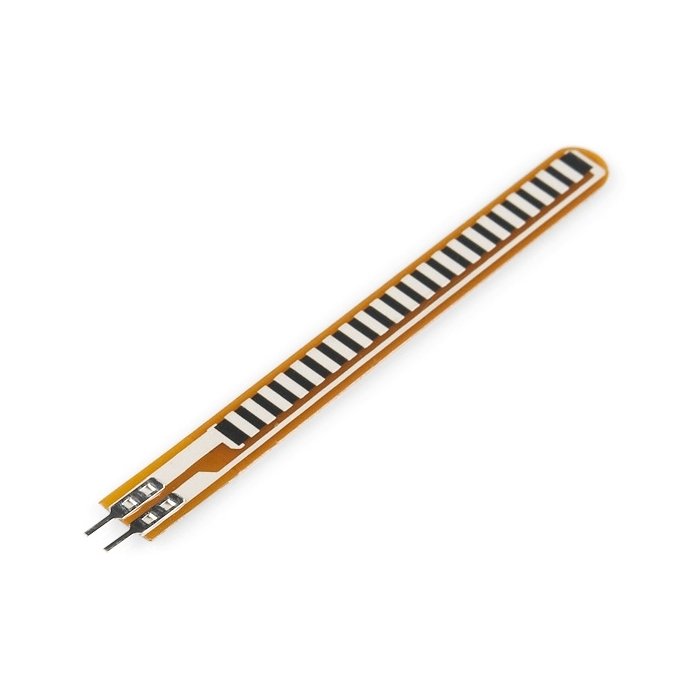
| 🥇 SparkFun Flex 2.2″ | Bend / Flex | ~25k→110kΩ | Resistive | Best Overall | Buy → |
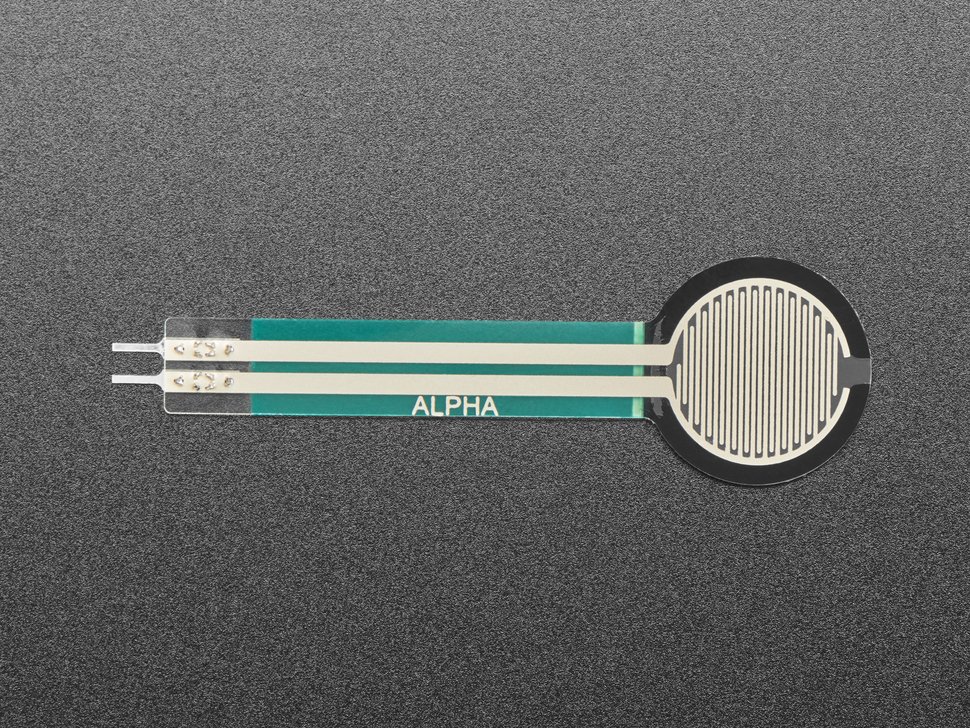
| 🏅 Interlink FSR 402 | Force (FSR) | ~100g–10kg | Resistive | Best Force Sensor | Buy → |
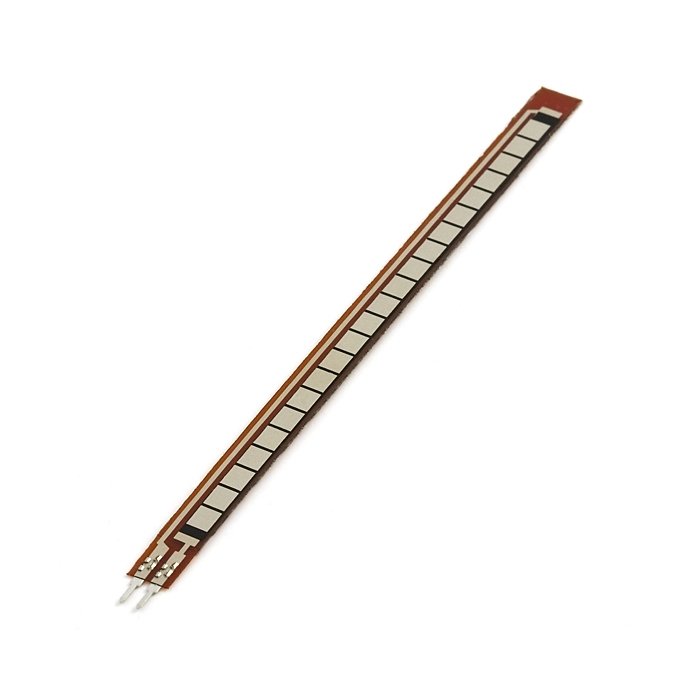
| 📏 SparkFun Flex 4.5″ | Bend / Flex | ~25k→110kΩ | Resistive | Best Long-Throw Flex | Buy → |
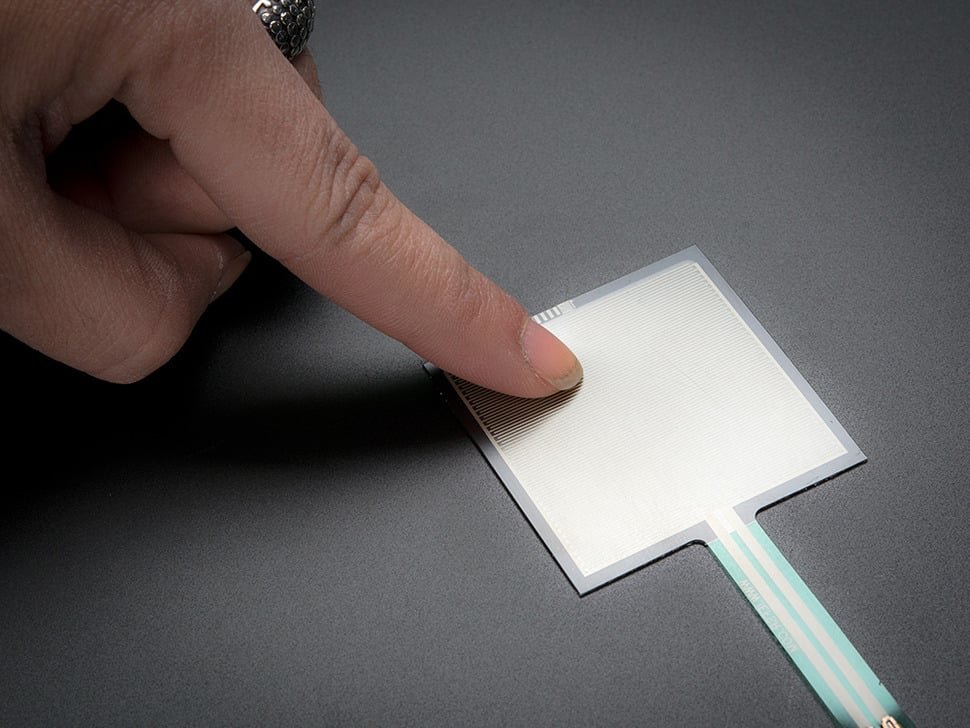
| 🟦 Adafruit Square FSR | Force (FSR) | ~100g–10kg | Resistive | Best Large-Area Pad | Buy → |
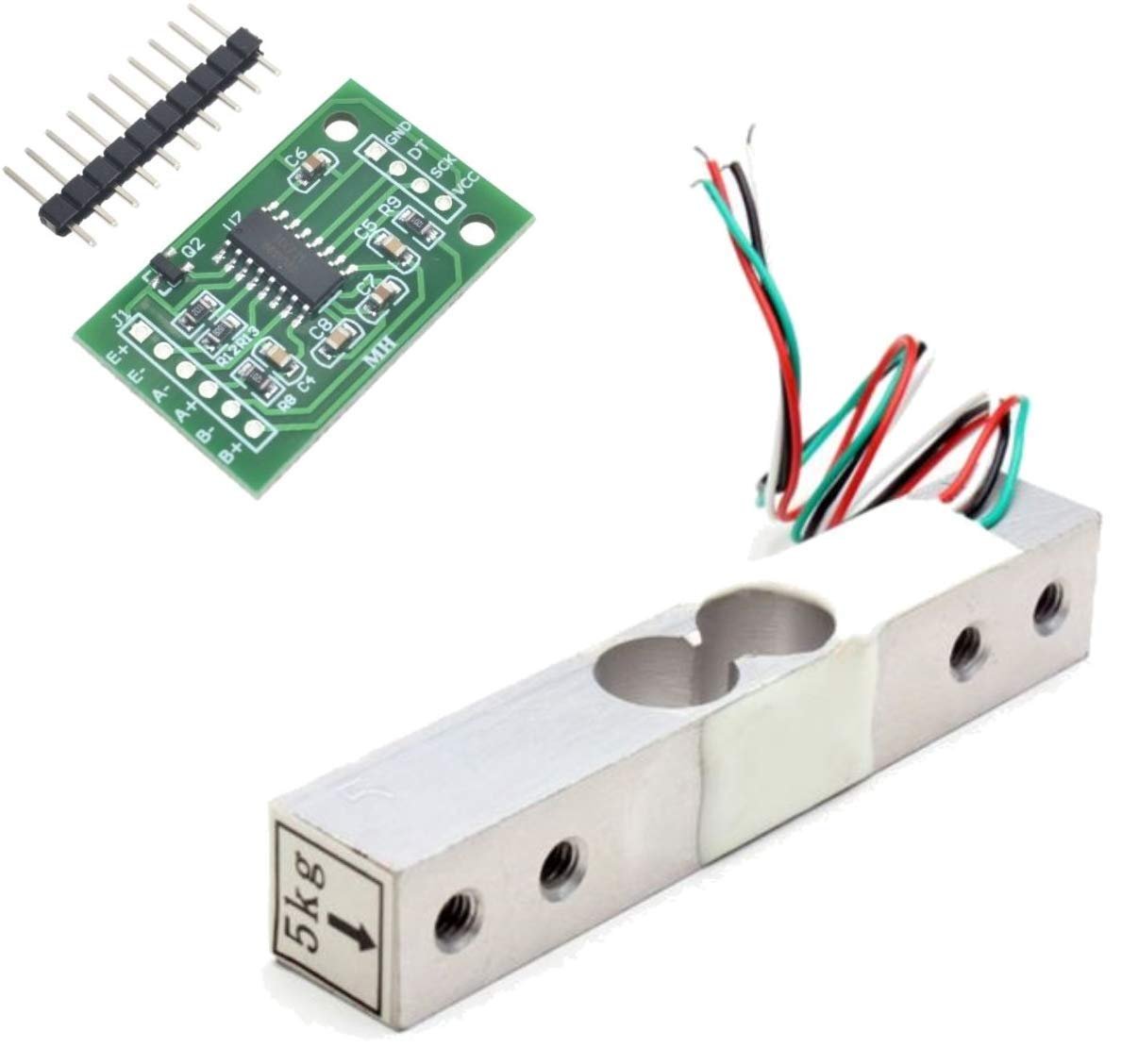
| ⚖️ Degraw 5kg Load Cell + HX711 | Load Cell | 0–5 kg | 24-bit digital | Best for Weighing | Buy → |
| 🎞️ RP-C18.3 Thin-Film | Thin-Film Force | 20g–6kg | Resistive | Best Thin-Film | Buy → |
| 💸 Wuden 10× Flex 2.2″ | Bend / Flex | ~25k→110kΩ | Resistive | Best Budget / Bulk | Buy → |
| 🟪 Generic FSR 406 Square | Force (FSR) | ~100g–10kg | Resistive | Best Budget Pad | Buy → |
Ranges are approximate and vary with the resistor you pair them with and the seller. Many parts are sold in multi-packs — check the listing. Always confirm the live price on Amazon before buying.
🔍 What to Look for in a Flex or Force Sensor
📐
Sensing Range
Match the sensor to the job: flex sensors read bend angle, FSRs read ~100 g–10 kg of force, load cells read precise weight, and thin-film sensors read light touch. Undersize and you saturate; oversize and you lose resolution.
🎯
Accuracy vs Approximate
FSRs and flex sensors are relative — expect ±10–30% spread and drift. If you need real, repeatable grams (a scale, a force gauge), only a strain-gauge load cell delivers it.
📏
Size & Form Factor
A 2.2″ flex fits a finger; a 4.5″ reads a whole limb. Round FSRs suit a fingertip button; square pads catch a footstep. Thin-film (0.4 mm) hides inside slim wearables.
🔌
Interface
Resistive sensors need one fixed resistor to form a voltage divider into an ADC pin. Load cells need a dedicated 24-bit amplifier like the HX711. No amp, no readable signal.
🛡️
Durability
Flex sensors fatigue at the solder tab — anchor the leads and avoid sharp creases. FSRs shrug off millions of presses but hate point loads and shear. Match ruggedness to how rough your build gets.
🏆 Detailed Reviews — All 8 Flex & Force Sensors
🥇 BEST OVERALL
SparkFun Flex Sensor 2.2″
⭐ 4.8/5 · The Maker Standard for Bend Sensing
Buy on Amazon →

The SparkFun Flex Sensor 2.2″ is the bend sensor almost every wearable, gesture glove and robotic-finger project starts with. Built on Spectra Symbol’s patented technology (the same used in Nintendo’s Power Glove), it rises from about 25 kΩ flat to 100–110 kΩ when fully bent, giving a clean, readable swing on any analog pin. The 2.2″ length is a perfect fit for a finger joint, and its huge install base means endless Arduino and ESP32 tutorials. For most makers it’s the sweet spot of size, quality and support.
✅ Pros- Clean, repeatable bend response
- Perfect finger-joint length
- Breadboard-friendly 0.1″ pins
- Massive tutorial base
❌ Cons- Fragile at the solder tab
- Only bends one direction
- Pricier than clones
🎯 Verdict: The best all-round flex sensor. Reliable, well-documented bend sensing for gloves, wearables and robotic fingers.
👉 Check Price on Amazon → 🏅 BEST FORCE SENSOR
Interlink FSR 402
⭐ 4.7/5 · The Go-To Force-Sensitive Resistor
Buy on Amazon →

The FSR 402 is the classic 0.5″ round force-sensitive resistor — the part most makers mean when they say “FSR.” Its resistance falls from over 1 MΩ (untouched) to a few hundred ohms under a firm press, letting you read pressure on a single analog pin with one divider resistor. It won’t give you calibrated grams, but for touch buttons, squeeze control, grip sensing and “how hard is this being pressed” it’s cheap, thin and endlessly reliable. A staple of interactive and robotics builds.
✅ Pros- Simple single-pin reading
- Thin, light, robust
- Great for touch/grip control
- Huge community support
❌ Cons- Not accurate/calibrated force
- Saturates above ~10 kg
- Small round sensing spot
🎯 Verdict: The best general-purpose force sensor. Perfect when you need to know something is pressed and roughly how hard.
👉 Check Price on Amazon → 📏 SparkFun Flex Sensor 4.5″
⭐ 4.6/5 · ~25k→110kΩ · 4.5″ long · one-direction bend
Buy →
Best Long-Throw Flex. The 4.5″ version of the SparkFun flex sensor doubles the sensing length, so it captures bend over a whole hand, a large joint or a limb rather than a single finger. It uses the same proven Spectra Symbol strip and reads the same way, but the longer span gives a smoother, larger-motion signal — ideal for full-hand gesture gloves, posture and motion-capture rigs, and animatronic limbs where a 2.2″ sensor would be too short.
✅ Pros: Captures large-motion bend; smooth signal; same easy wiring; robust strip.
❌ Cons: Too long for single fingers; premium price; still one-way bend.
🎯 Verdict: The best flex sensor for whole-hand and limb motion. Reach for it when 2.2″ is too short.
🟦 Adafruit Square FSR (Interlink 406)
⭐ 4.6/5 · ~1.75×1.5″ pad · ~100g–10kg · resistive
Buy →
Best Large-Area Pad. This genuine Interlink FSR 406 (sold by Adafruit) swaps the small round spot for a roughly 1.75×1.5″ square sensing area, so it catches pressure anywhere across a wide zone rather than a single point. That makes it the go-to for footstep pads, seat-occupancy sensing, DDR-style step tiles and any surface where you can’t guarantee exactly where the press lands. Same simple resistive readout, just a much bigger target.
✅ Pros: Wide sensing area; genuine Interlink quality; peel-and-stick backing; forgiving press location.
❌ Cons: Still approximate, not calibrated; saturates ~10 kg; costs more than clones.
🎯 Verdict: The best force pad for wide areas. Ideal for footsteps, seats and step tiles.
⚖️ Degraw 5kg Load Cell + HX711
⭐ 4.5/5 · 0–5 kg · 24-bit HX711 amp · precise weight
Buy →

Best for Precise Weighing. When you need real, repeatable grams instead of “roughly how hard,” a strain-gauge load cell is the only honest answer — and this combo pairs a 5 kg straight-bar cell with the 24-bit HX711 amplifier that makes its tiny signal readable. With a two-point calibration you get a genuine digital scale accurate to a gram or two, perfect for kitchen scales, force gauges, tension rigs and any project that must report actual weight. It needs mounting (load applied across the bar) and the HX711 library, but nothing else here measures force this accurately.
✅ Pros: True calibrated weight; 24-bit resolution; complete kit; great HX711 library support.
❌ Cons: Needs mounting & calibration; soldering required; slower than a raw analog read.
🎯 Verdict: The best pick when accuracy matters. The right tool for scales and real force measurement.
🎞️ RP-C18.3 Thin-Film Pressure Sensor
⭐ 4.3/5 · 20g–6kg · 0.4mm thick · ultra-low power
Buy →

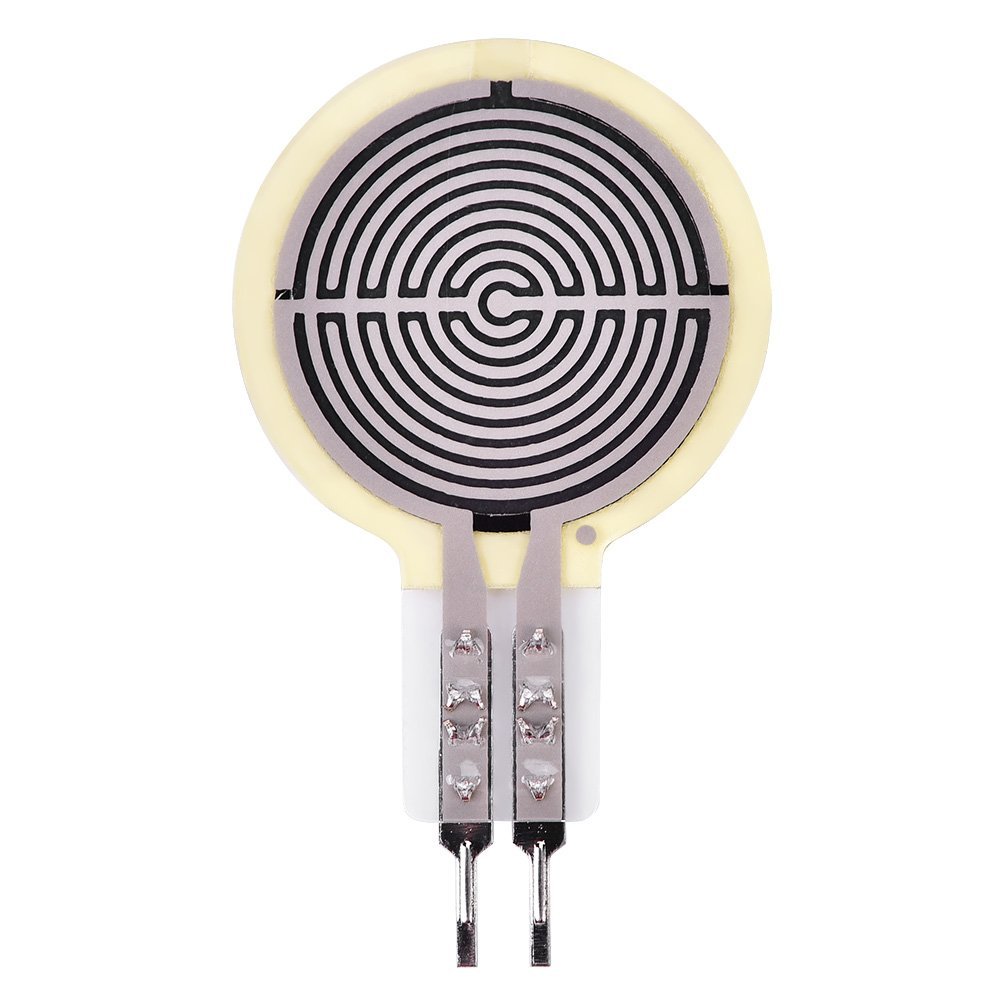
Best Thin-Film Sensor. At just 0.4 mm thick and flexible, the RP-C18.3-ST hides where nothing else fits — under a glove finger, inside a shoe insole, behind a soft touch surface. It triggers from as little as 20 g and reads up to about 6 kg, with a fast (<10 ms) response and very low idle power, so it’s well suited to battery wearables and long-term monitoring. Like any resistive sensor it’s approximate, but for slim, hidden touch and pressure detection it’s hard to beat.
✅ Pros: Ultra-thin & flexible; senses light 20 g touch; fast, low-power; great for wearables.
❌ Cons: Approximate output; delicate leads; lower max range than FSR 402.
🎯 Verdict: The best sensor for slim, hidden touch. Perfect for insoles, gloves and wearables.
💸 Wuden 10× Flex Sensor 2.2″
⭐ 4.2/5 · 10-pack · ~25k→110kΩ · budget bend
Buy →

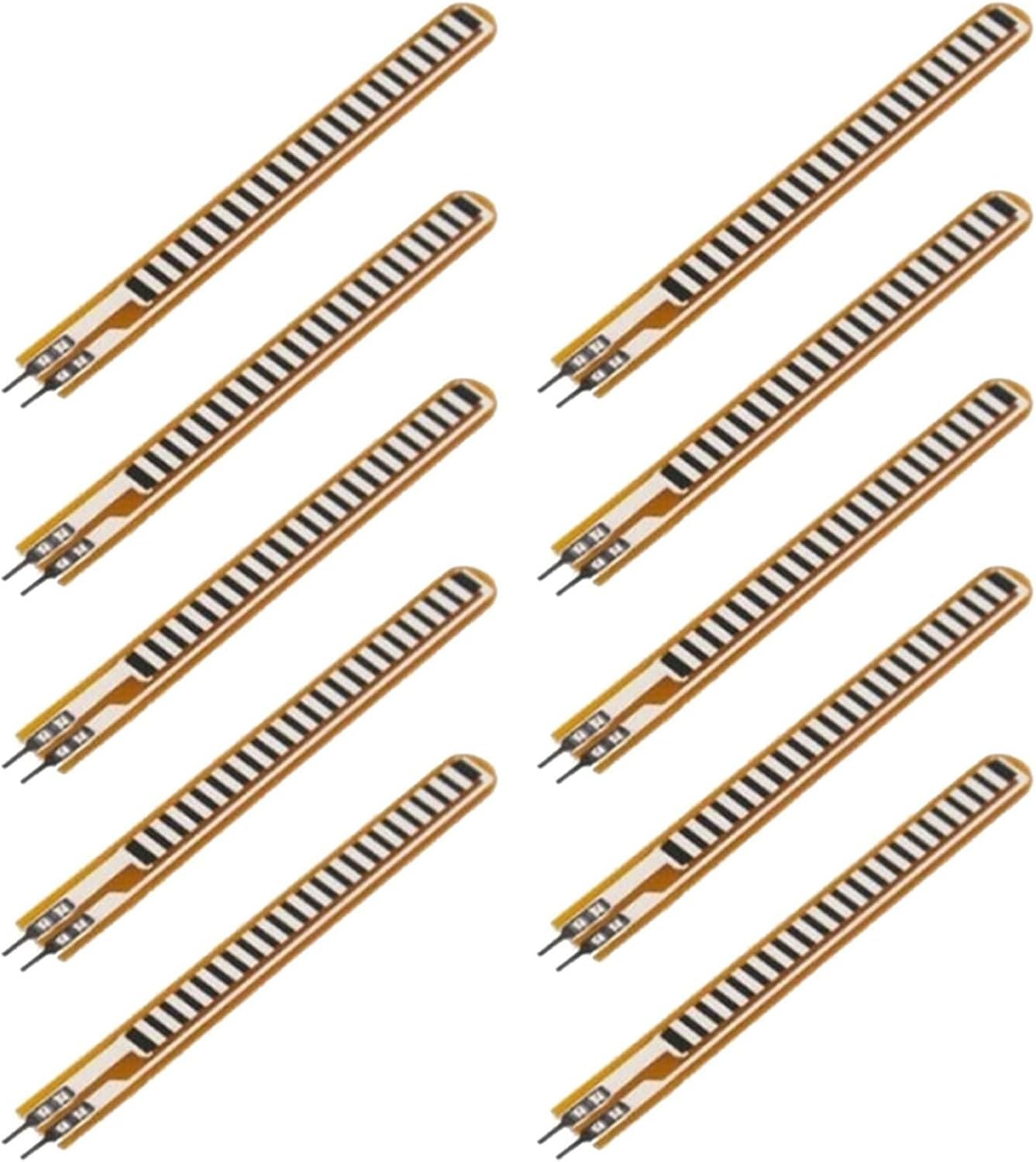
Best Budget / Bulk Flex. If you’re kitting out a classroom, building both hands of a gesture glove, or just want spares because flex sensors are fragile, a 10-pack of 2.2″ bend sensors is the economical way to go. Clone quality is less consistent than SparkFun’s — expect more part-to-part spread and the odd weak tab — but they wire and behave the same way, and at pennies per sensor the value is unbeatable for prototyping in volume.
✅ Pros: Lowest cost per sensor; great for classes/multi-glove builds; standard 2.2″ behavior.
❌ Cons: Inconsistent clone quality; weaker tabs; less support than SparkFun.
🎯 Verdict: The best value in bend sensing. Buy a pack for classrooms and high-count prototypes.
🟪 Generic FSR 406 Square Pad
⭐ 4.1/5 · ~1.75×1.5″ · ~100g–10kg · budget pad
Buy →

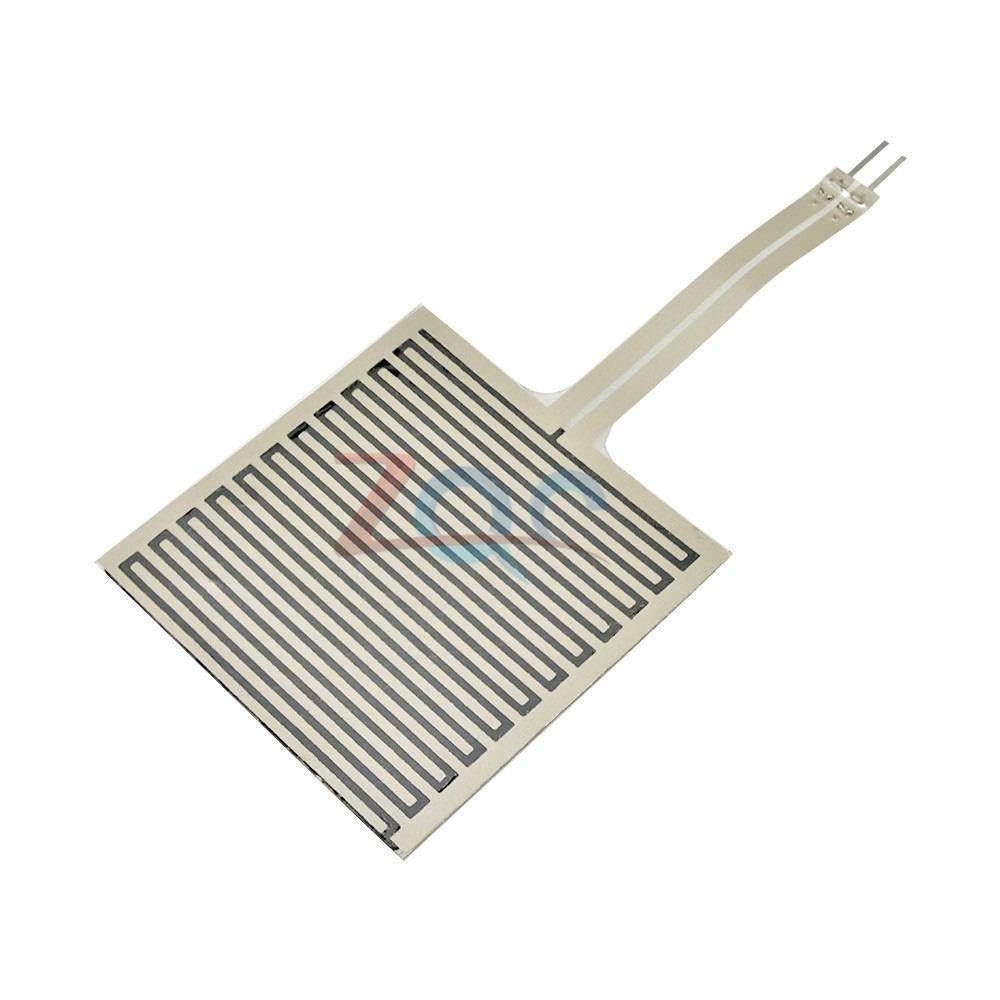
Best Budget Force Pad. This generic square FSR mirrors the Interlink 406 footprint — a roughly 1.75×1.5″ sensing area — at a fraction of the price, so it’s the sensible choice when you need several wide-area force pads for a DDR mat, a pressure-sensitive floor or a multi-zone touch surface. Quality control is looser than the branded part, but for hobby projects where a few percent of drift doesn’t matter, it delivers the same forgiving large-area sensing for less.
✅ Pros: Cheap large-area sensing; buy several for mats/floors; standard FSR wiring.
❌ Cons: Looser QC than Interlink; approximate output; variable durability.
🎯 Verdict: The best budget force pad. Great when you need several wide pads on a tight budget.
🛒 How to Choose the Right Sensor
🧤
Building a gesture glove?
Use SparkFun Flex 2.2″ on each finger — the cleanest, best-documented bend sensor for wearables.
👆
Need a touch/press button?
Grab an Interlink FSR 402 — one resistor and an analog pin gives you pressure-sensitive input.
⚖️
Measuring real weight?
Only a load cell + HX711 gives calibrated grams. The right tool for scales and force gauges.
👣
Sensing footsteps or seats?
Use a wide square FSR (Adafruit 406 or generic) so the press lands anywhere on the pad.
👟
Hiding it in a wearable?
The 0.4 mm RP-C18.3 thin-film sensor slips into insoles, gloves and slim touch surfaces.
🎓
Prototyping in volume?
A 10-pack of flex sensors or generic square FSRs keeps classroom and multi-unit builds cheap.
⚙️ Key Specs Compared — Side by Side
| Spec | SparkFun Flex 2.2″ | Interlink FSR 402 | Load Cell + HX711 | RP-C18.3 |
|---|
| Category | Bend / Flex | Force (FSR) | Strain gauge | Thin-film force |
| Range | Bend angle | ~100 g–10 kg | 0–5 kg (precise) ⭐ | 20 g–6 kg |
| Accuracy | Approximate | Approximate | Calibrated ⭐ | Approximate |
| Thickness | ~0.4 mm | ~0.4 mm | Bar (thick) | 0.4 mm (flexible) ⭐ |
| Interface | Divider → ADC | Divider → ADC | HX711 (24-bit) | Divider → ADC |
| Best Use | Bend / gloves ⭐ | Touch buttons | Weighing | Slim wearables |
| Ease of Use | Very easy ⭐ | Very easy ⭐ | Moderate | Easy |
Specs are approximate and vary by seller and the divider resistor used. Always confirm details on the live Amazon listing.
❓ Frequently Asked Questions
What’s the difference between a flex sensor and a force sensor?
A flex (bend) sensor changes resistance based on how far it is curved — it measures angle or bend, not push. A force sensor (FSR, load cell or thin-film) changes with how hard it is pressed. Use a flex sensor to read finger or joint movement in a glove or robot; use a force sensor to read touch, grip or weight. They’re often combined — e.g. flex sensors for finger bend plus FSRs on the fingertips for grip.
How do I wire a flex sensor or FSR to an Arduino?
Both are variable resistors, so you build a simple voltage divider: connect the sensor between 5 V and an analog input, and a fixed resistor (often 10 kΩ–47 kΩ) from that same input to ground. As the sensor’s resistance changes, the voltage at the analog pin changes, and analogRead() gives you a value. Pick the fixed resistor to roughly match the sensor’s mid-range resistance for the widest, most sensitive swing.
Can an FSR measure exact weight in grams?
Not reliably. FSRs are force-sensitive resistors with a wide part-to-part tolerance, a non-linear response and noticeable drift, so they’re excellent for “is it pressed and roughly how hard” but poor for calibrated measurement. If you need accurate grams — a scale, a tension gauge, closed-loop grip force — use a strain-gauge load cell with an HX711 amplifier and a two-point calibration instead.
Why do my flex sensors break so easily?
The weak point is where the leads meet the sensor’s solder tab — repeated flexing right at that junction fatigues and cracks it. Anchor the base of the sensor and its wires so the bend happens along the strip, not at the tab; avoid sharp creases (bend over a curve, not a fold); and add strain relief such as heat-shrink or a small connector. Treated gently, the strip itself lasts well over a million bends.
Do these sensors need a special shield or amplifier?
Flex sensors, FSRs and thin-film sensors need only one fixed resistor to read directly on an analog pin — no shield required. Load cells are the exception: their strain-gauge signal is far too small to read directly, so they require a dedicated 24-bit amplifier like the HX711 (included in the combo kit here). Any board with an ADC — Arduino, ESP32, Pico or PIC — can read all of them.
🏁 Final Verdict — Best Sensor for Every Project
The right flex or force sensor for every job and budget:
🥇 Best Overall — SparkFun Flex 2.2″: clean, well-documented bend sensing
Buy →🏅 Best Force Sensor — Interlink FSR 402: simple, reliable touch/pressure
Buy →⚖️ Best for Weighing — Degraw 5kg Load Cell + HX711: true calibrated grams
Buy →🎞️ Best Thin-Film — RP-C18.3: 0.4mm slim touch for wearables
Buy →💸 Best Value — Wuden 10× Flex / Generic Square FSR: bulk prototyping
Buy →No single sensor is right for every build, but each pick here earns its place. For most bend-sensing projects the SparkFun Flex 2.2″ is the one to buy — clean, reliable and superbly documented. Reach for the Interlink FSR 402 whenever you need simple touch or pressure input; step up to a load cell + HX711 when you need real, calibrated weight; choose the RP-C18.3 thin-film sensor when it has to disappear into a wearable; and stock up on 10-packs or generic square FSRs when you’re prototyping in volume. Pair your sensors with our Arduino, ESP32, STM32 and Raspberry Pi tutorials and start building today.
💬 Not sure which sensor fits your project? Tell us what you’re building — a gesture glove, a pressure mat, a robot gripper or a digital scale — in the comments below, and we’ll point you to the right pick.
All Amazon links above use our affiliate tag (microlab05-20). Purchasing through them supports microcontrollerslab.com at no extra cost to you. Prices and availability change frequently — always confirm the current price on Amazon before buying.
| Arduino Components | Amazon Links |
|---|
| Arduino Starter Kit | Buy Now |
| Arduino Development Kit | Buy Now |
| Arduino Smart Robot Car Kit V4 | Buy Now |
| Arduino Sensors Kit | Buy Now |