⚠️ Affiliate Disclosure: This post contains Amazon affiliate links. If you purchase through our links, we may earn a small commission at no extra cost to you. We only recommend products we have thoroughly researched and verified.
Ultimate Buying Guide 2026
🧠 Best TinyML & Edge AI Development Kits
8 boards ranked for on-device machine learning — from a $15 XIAO ESP32-S3 Sense to NVIDIA’s $249 Jetson Orin Nano Super — with real specs, honest verdicts, and direct Amazon links.
✅ 8 Kits Reviewed
✅ Verified Amazon ASINs
✅ Updated June 2026
✅ Honest Pros & Cons
TinyML and edge AI push machine learning off the cloud and onto the device itself — so a microcontroller can recognize a spoken keyword, spot a person in a camera frame, classify a vibration pattern, or read a gesture without ever sending data to a server. That means lower latency, better privacy, and battery-powered inference that runs for weeks. If you build with Arduino, ESP32, STM32 or Raspberry Pi, adding a little on-device intelligence is now cheaper and easier than it has ever been.
The catch is that “edge AI” spans a huge range of hardware. At one end sits a $15 board that runs a quantized keyword-spotting model on a microcontroller; at the other, a $249 NVIDIA Jetson that runs full vision transformers and small language models. This guide ranks 8 development kits across that whole spectrum, with the specs that actually matter — AI compute, camera, dedicated NPU/TPU, memory and software support — so you can match the right kit to your project without overspending or hitting a wall later.
💡 Reality check before you buy: “TOPS” headline numbers can be misleading. For most maker projects the bottleneck isn’t raw compute — it’s memory (RAM/PSRAM for the model and frame buffer), tooling (does it work with Edge Impulse, TensorFlow Lite Micro, or the vendor SDK?), and whether the board is standalone or needs a host computer. A tiny microcontroller can’t run an LLM, and a Jetson is overkill for a sensor classifier. Match the kit to the model you actually plan to deploy.
🧠 Quick Comparison — All 8 Edge AI Kits
| Kit | AI Compute | Camera | Standalone | Best For | Price | Buy |
|---|
| 🥇 Seeed XIAO ESP32-S3 Sense | MCU (240 MHz) | 2 MP OV2640 | ✅ | Best Overall | ~$15 | View → |
| 🏅 NVIDIA Jetson Orin Nano Super | 67 TOPS GPU | via CSI/USB | ✅ | Best Performance | ~$249 | View → |
| 🔌 Google Coral USB Accelerator | 4 TOPS Edge TPU | — | ❌ needs host | Best Accelerator | ~$60–80 | View → |
| 📷 Arduino Nicla Vision | Dual M7/M4 | 2 MP color | ✅ | Best Compact Vision | ~$80 | View → |
| 🎓 Arduino Tiny ML Kit | MCU (64 MHz) | OV7675 | ✅ | Best for Learning | ~$80–100 | View → |
| 👁️ Seeed Grove Vision AI V2 | Ethos-U55 NPU | add-on cam | ❌ needs host | Best Vision Add-on | ~$20–25 | View → |
| 🤖 Espressif ESP32-S3-EYE | MCU (240 MHz) | 2 MP + LCD | ✅ | Best AI Camera Demo | ~$45–55 | View → |
| 🔊 Sony Spresense | 6× M4F (156 MHz) | via interface | ✅ | Best Low-Power Audio | ~$65 | View → |
🔍 What to Look for in an Edge AI Kit
⚡
AI Compute & NPU
A dedicated TPU/NPU (Edge TPU, Ethos-U55) runs models far faster than the CPU — but pure-MCU boards are fine for small models.
🧮
RAM & PSRAM
Memory, not clock speed, usually limits what model fits. Vision needs PSRAM for the frame buffer — 8 MB is the sweet spot.
📷
Camera & Mic
Vision and audio are the big edge-AI use cases. A built-in camera and microphone save a lot of wiring and debugging.
🛠️
Software Support
Edge Impulse, TensorFlow Lite Micro, PyTorch or a vendor SDK — good tooling is what turns hardware into a working model.
🔋
Power & Form Factor
Battery projects need a low-power MCU board; a Jetson needs a wall supply. Size matters for wearables and sensors.
🏆 Detailed Reviews — All 8 Edge AI Kits
🥇 Best Overall
Seeed XIAO ESP32-S3 Sense
⭐⭐⭐⭐⭐ 4.8/5 · Editor’s Choice
Buy on Amazon →

The XIAO ESP32-S3 Sense is the board that put TinyML in everyone’s pocket. For about $15 you get a dual-core ESP32-S3 at 240 MHz, a generous 8 MB PSRAM and 8 MB flash, an OV2640 2 MP camera, a digital microphone and an SD slot — all on a thumbnail-sized board with onboard battery charging. It works beautifully with Edge Impulse and TensorFlow Lite Micro, so you can train and deploy keyword spotting, image classification or person detection in an afternoon.
✅ Pros- Incredibly cheap (~$15)
- Camera + mic + 8 MB PSRAM onboard
- First-class Edge Impulse support
- Tiny, with battery charging built in
❌ Cons- No hardware NPU (CPU inference)
- Basic OV2640 camera
- Tiny pads can be fiddly to solder
🎯 Verdict: The best all-round TinyML board for makers. Nothing else gets you a camera, mic and ML-ready memory for this little money.
👉 Check Price on Amazon: amazon.com/dp/B0C69FFVHH 🏅 Best Performance
NVIDIA Jetson Orin Nano Super
⭐⭐⭐⭐⭐ 4.8/5 · The Powerhouse
Buy on Amazon →

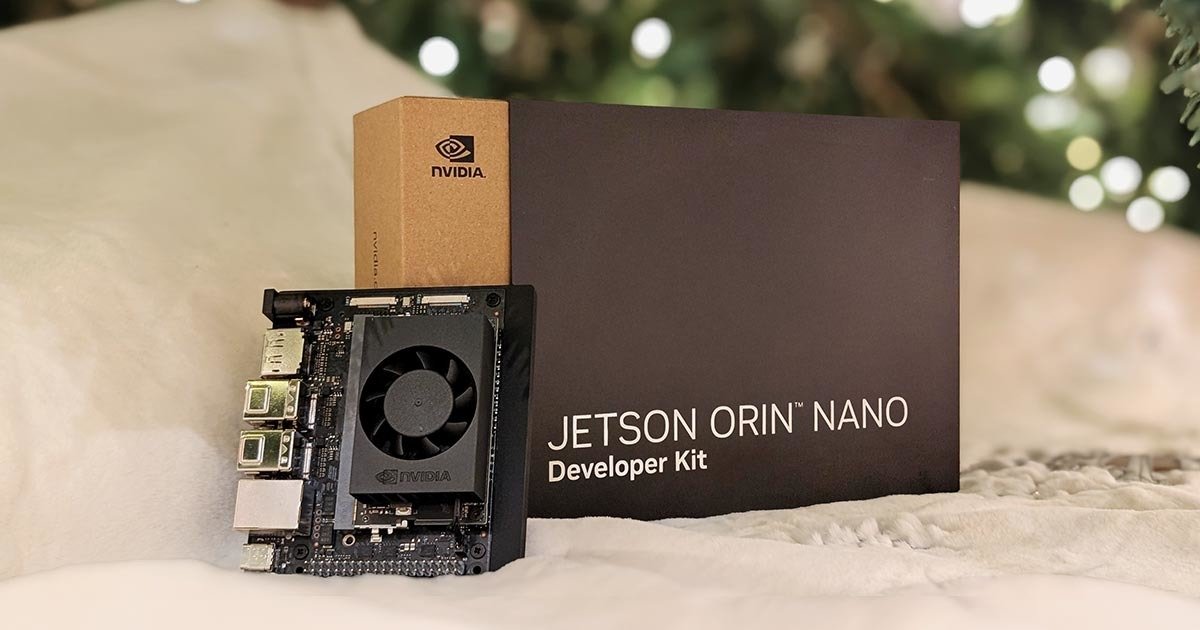
When your “edge AI” means running real vision transformers, LLMs and vision-language models, you step up to the Jetson Orin Nano Super. A December-2024 software update lifted the original Orin Nano to 67 INT8 TOPS (a 1.7× jump) with a 1024-core Ampere GPU, 32 tensor cores, a 6-core Arm Cortex-A78AE CPU and 8 GB of fast LPDDR5. It runs full Linux with JetPack and CUDA, so almost any modern model just works. At $249 it’s the most expensive pick here — and the only one that genuinely does generative AI on-device.
✅ Pros- Runs LLMs & vision transformers at the edge
- CUDA + huge NVIDIA software ecosystem
- Existing Orin Nano kits upgrade by software
- Massive community & tutorials
❌ Cons- $249 — by far the priciest here
- Needs your own SD/NVMe + PSU
- Spot prices can run above $249
- Overkill for simple sensor ML
🎯 Verdict: The buy-it-if-you-need-it powerhouse. If your project involves generative AI or heavy computer vision, nothing else on this list comes close.
👉 Check Price on Amazon: amazon.com/dp/B0C72Q1CH9 🔌 Best Edge TPU Accelerator · ⭐ 4.6/53. Google Coral USB Accelerator
Edge TPU · 4 TOPS · USB 3.0 Type-C · TensorFlow Lite · ~$60–80
Buy →

The Coral USB Accelerator isn’t a board — it’s a USB stick that bolts Google’s Edge TPU (4 TOPS) onto any host, most famously a Raspberry Pi. Plug it into USB 3.0 and a Pi that struggled with one frame per second can suddenly run real-time object detection. It uses TensorFlow Lite models compiled for the Edge TPU and draws very little power. It’s the easiest way to add serious vision throughput to an existing SBC build.
✅ Pros: 4 TOPS in a USB stick; turns a Pi into a vision machine; very low power; mature TF Lite tooling.
❌ Cons: not standalone (needs a host); models must be Edge-TPU-compiled (int8); the software stack has aged; ~$60–80.
🎯 Verdict: The best bolt-on accelerator. If you already build with Raspberry Pi, this is the cheapest path to real-time vision.
👉 amazon.com/dp/B07R53D12W 📷 Best Compact Vision AI · ⭐ 4.5/54. Arduino Nicla Vision
STM32H747 dual M7/M4 · 2 MP cam · IMU + ToF + mic · ~$80
Buy →

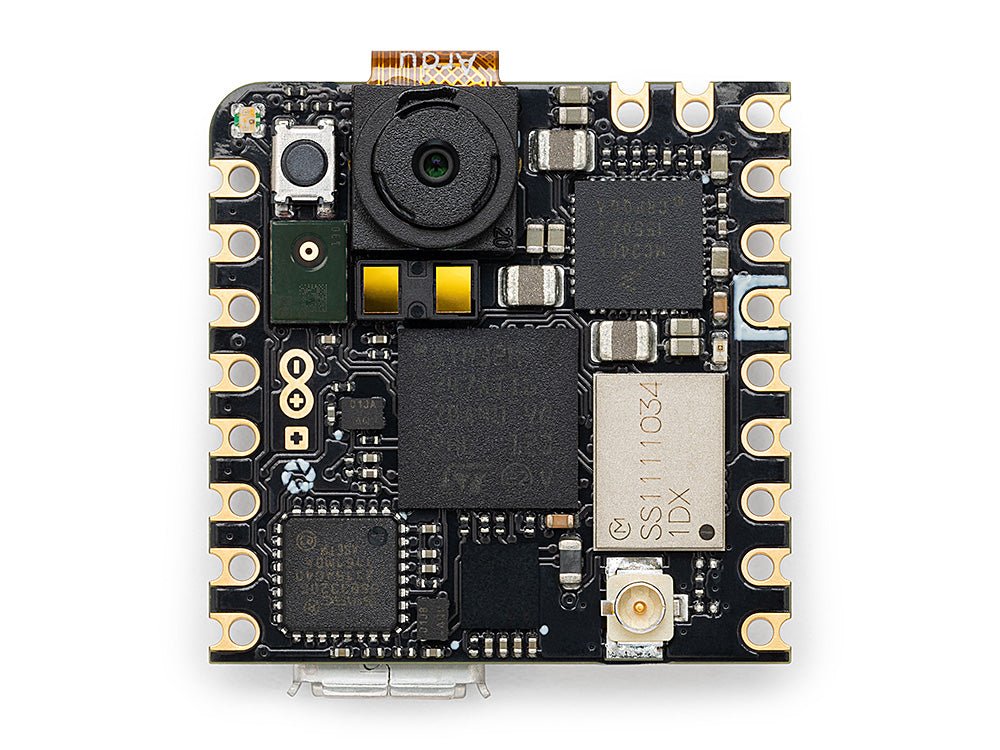
The Arduino Nicla Vision packs a standalone smart camera into a 22.86 × 22.86 mm square. It pairs a powerful STM32H747 dual-core (Cortex-M7 at 480 MHz + M4 at 240 MHz) with a 2 MP color camera, a 6-axis IMU, a time-of-flight distance sensor, a microphone and Wi-Fi/BLE. It runs OpenMV and MicroPython and integrates cleanly with Edge Impulse, making it a favorite for asset tracking, object recognition and predictive-maintenance prototypes that need to ship.
✅ Pros: standalone smart camera; OpenMV + Edge Impulse; ToF + IMU + mic onboard; industrial-grade build; tiny.
❌ Cons: ~$80; only 2 MP and 1 MB RAM limits big models; pricier than a XIAO.
🎯 Verdict: The best ready-to-deploy vision board. Buy it when you’re prototyping a real product, not just learning.
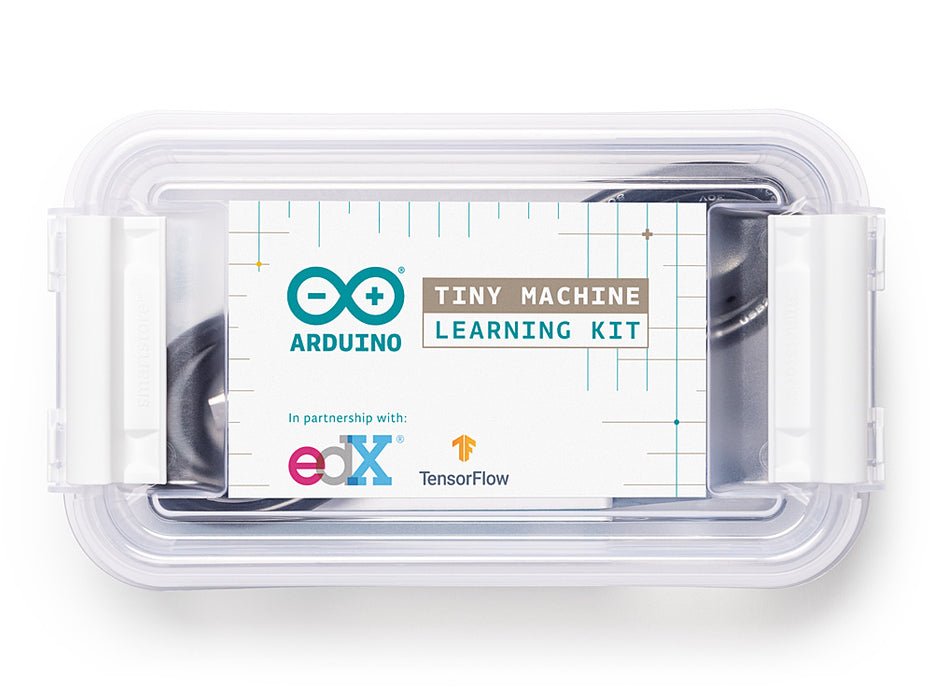
👉 amazon.com/dp/B0B979238K 🎓 Best for Learning TinyML · ⭐ 4.5/55. Arduino Tiny Machine Learning Kit
Nano 33 BLE Sense + OV7675 cam + ML shield · ~$80–100
Buy →

The Arduino Tiny Machine Learning Kit bundles the sensor-packed Nano 33 BLE Sense (nRF52840 Cortex-M4F), an OV7675 camera, a custom ML shield and a cable — and pairs with the well-known Harvard/Google TinyML courses on edX. The board senses motion, sound, gestures, color, light and pressure, so you can work through real TensorFlow Lite Micro examples with hardware that matches the curriculum. It’s less about raw power and more about a structured, guided way to actually learn TinyML.
✅ Pros: complete learning bundle; matches the edX TinyML courses; tons of onboard sensors; excellent documentation.
❌ Cons: older 64 MHz M4F is slow; low-res OV7675; costs more than buying parts separately; stock can be spotty.
🎯 Verdict: The best structured on-ramp. If you want to understand TinyML, not just run a demo, this is the kit.
👉 amazon.com/dp/B09PF9N3VQ 👁️ Best Vision Accelerator Module · ⭐ 4.6/56. Seeed Grove Vision AI Module V2
Himax WiseEye2 · Cortex-M55 + Ethos-U55 NPU · ~$20–25
Buy →
The Grove Vision AI Module V2 is remarkable for its price: it carries a Himax WiseEye2 with an Arm Cortex-M55 plus an Ethos-U55 micro-NPU — a genuine neural accelerator for around $20. It supports TensorFlow and PyTorch models and Seeed’s no-code SenseCraft AI deployment, so you can flash a person-detection or object-counting model and visualize results without writing inference code. It connects to a XIAO, Arduino, Raspberry Pi or ESP board and a small camera.
✅ Pros: real Ethos-U55 NPU for ~$20; no-code SenseCraft deployment; ultra-low power; pairs perfectly with a XIAO.
❌ Cons: needs a camera + host board; smaller community than Arduino/Pi; docs can be sparse in places.
🎯 Verdict: The best cheap dedicated vision-AI accelerator. Astonishing NPU value for the money.
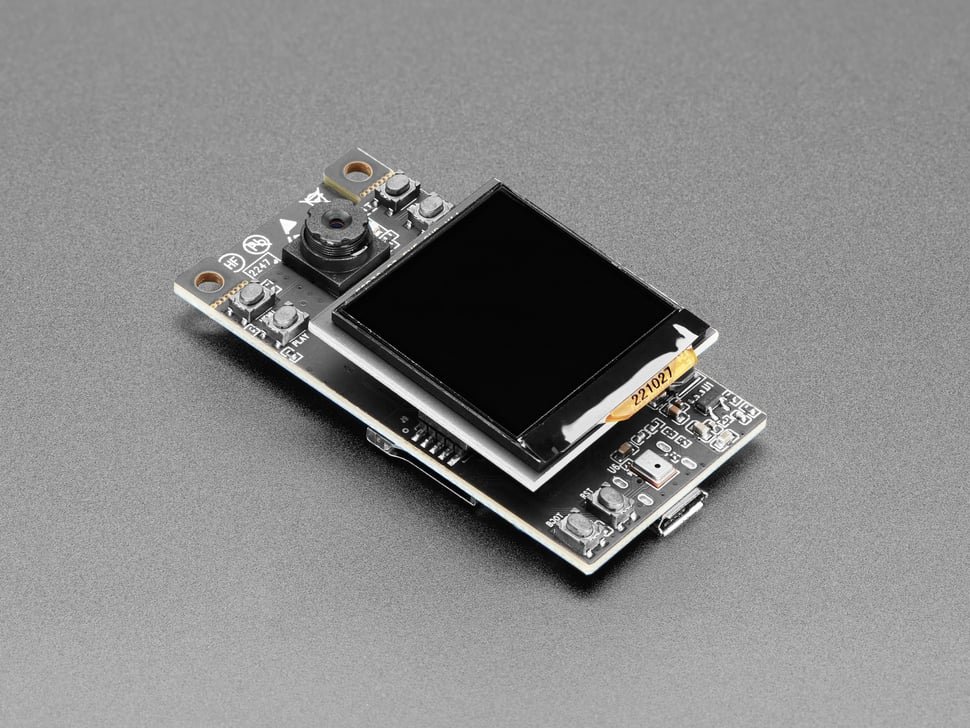
👉 amazon.com/dp/B0D2LC7R4K 🤖 Best AI Camera Demo Board · ⭐ 4.4/57. Espressif ESP32-S3-EYE
ESP32-S3 · 2 MP cam + LCD + mic · ESP-WHO/ESP-DL · ~$45–55
Buy →

Espressif’s official ESP32-S3-EYE is a compact AI camera board built around the ESP32-S3 with a 2 MP camera, a small LCD, a microphone and 8 MB PSRAM / 8 MB flash. It ships with ESP-WHO and ESP-DL, so out of the box it does on-device face detection/recognition and voice wake-word commands — all processed on-chip, no cloud. The LCD makes it a satisfying demo board, and it’s a natural next step if you already build with ESP32.
✅ Pros: out-of-box face + voice recognition; LCD for live preview; official Espressif support; fully on-device.
❌ Cons: ESP-WHO/ESP-DL has a learning curve; ~$48; tied to Espressif’s toolchain.
🎯 Verdict: The best plug-and-play AI camera demo. Great for face/voice projects on the ESP32 platform.
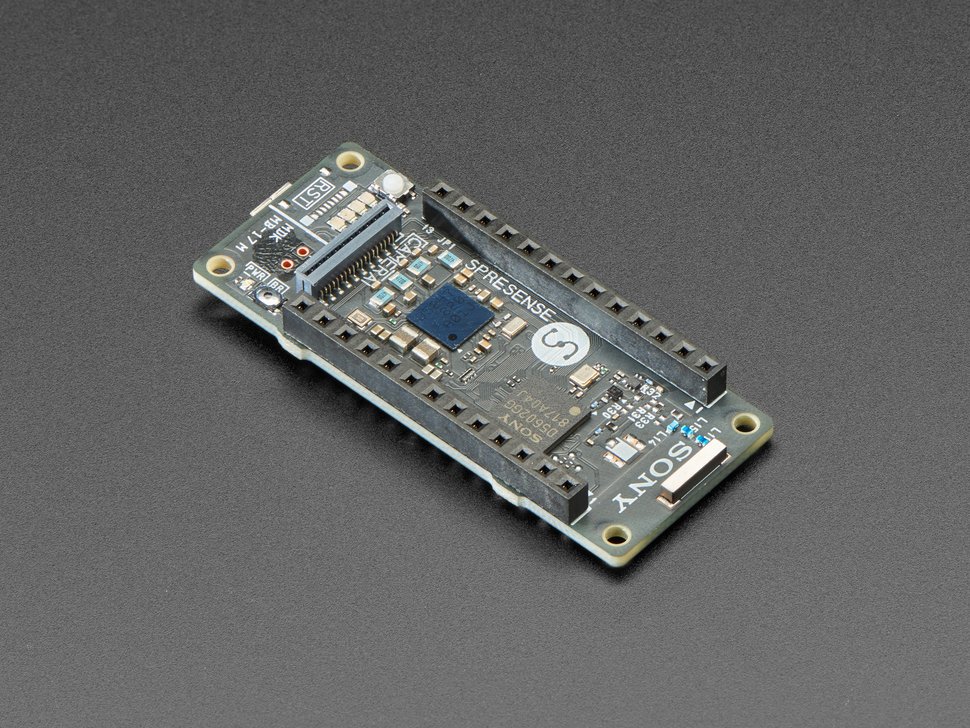
👉 amazon.com/dp/B09MS6PH7L 🔊 Best Low-Power Audio AI · ⭐ 4.2/58. Sony Spresense Main Board
CXD5602 · 6× Cortex-M4F 156 MHz · GPS + hi-res audio · ~$65
Buy →
Sony’s Spresense is the oddball that shines for audio. Its CXD5602 chip runs six Arm Cortex-M4F cores at 156 MHz on an ultra-efficient FD-SOI process, with integrated GPS, a 192 kHz/24-bit hi-res audio codec and support for up to 8 microphone inputs. That combination makes it superb for acoustic event detection, sound classification and low-power, GPS-aware sensor nodes. It programs from the Arduino IDE or the NuttX SDK.
✅ Pros: 6 cores + GPS + hi-res multi-mic audio; extremely power-efficient; excellent for audio ML.
❌ Cons: niche ecosystem and smaller community; no onboard Wi-Fi; listed as end-of-life at several retailers — confirm stock before buying.
🎯 Verdict: The best low-power pick for audio/acoustic edge AI — just check availability, as it’s being phased out by some sellers.
👉 amazon.com/dp/B07Q1BVSQD 🛒 How to Choose the Right Edge AI Kit
🥇
Just Starting / Best All-Rounder?
Get the Seeed XIAO ESP32-S3 Sense (~$15). Camera, mic, 8 MB PSRAM and Edge Impulse support — the complete TinyML starter.
🚀
Need Real Horsepower?
The NVIDIA Jetson Orin Nano Super (~$249) runs LLMs, VLMs and vision transformers with CUDA. The only true generative-AI pick here.
🔌
Already Have a Raspberry Pi?
Add the Coral USB Accelerator (~$60–80) for 4 TOPS of real-time vision, or the Grove Vision AI V2 (~$20) for a tiny NPU.
📷
Building a Smart Camera?
The Arduino Nicla Vision (~$80) ships ready to deploy; the ESP32-S3-EYE (~$48) is the best plug-and-play demo.
🎓
Want to Learn the Theory?
The Arduino Tiny ML Kit (~$80–100) follows the Harvard/Google edX TinyML courses step by step.
🔊
Audio or Battery Sensor Node?
The Sony Spresense (~$65) is unbeatable for low-power, multi-mic audio ML with onboard GPS.
⚡ Key Specs Compared — Side by Side
| Spec | XIAO S3 Sense | Jetson Orin Nano | Coral USB | Nicla Vision | Grove AI V2 | ESP32-S3-EYE |
|---|
| AI compute | MCU 240 MHz | 67 TOPS ⭐ | 4 TOPS TPU | Dual M7/M4 | Ethos-U55 NPU | MCU 240 MHz |
| Dedicated NPU/TPU | ❌ | GPU+tensor ⭐ | ✅ Edge TPU | ❌ | ✅ Ethos-U55 ⭐ | ❌ |
| Camera | 2 MP OV2640 | CSI/USB | — | 2 MP color | add-on | 2 MP + LCD ⭐ |
| Memory | 8 MB PSRAM | 8 GB LPDDR5 ⭐ | host RAM | 1 MB RAM | on-module | 8 MB PSRAM |
| Standalone | ✅ ⭐ | ✅ | ❌ host | ✅ | ❌ host | ✅ |
| Connectivity | Wi-Fi+BLE5 | GbE / M.2 | USB 3.0 | Wi-Fi+BLE | I2C/SPI | Wi-Fi |
| Price | ~$15 ⭐ | ~$249 | ~$60–80 | ~$80 | ~$20–25 | ~$45–55 |
❓ Frequently Asked Questions
What’s the difference between TinyML and edge AI?
“Edge AI” is the broad idea of running models on the device instead of in the cloud — that includes everything from a Jetson running an LLM to a sensor classifying vibration. “TinyML” is the subset that runs on microcontrollers with kilobytes of RAM and milliwatts of power, like keyword spotting on the XIAO or Nano 33 BLE Sense. Every TinyML project is edge AI, but not every edge-AI board is “tiny.”
Do I need a board with a dedicated NPU or TPU?
Not for most starter projects. Keyword spotting, gesture and simple sensor classification run fine on a plain microcontroller like the XIAO ESP32-S3. You want a dedicated accelerator (Coral’s Edge TPU, the Grove module’s Ethos-U55, or the Jetson’s GPU) once you need real-time camera inference at higher frame rates or larger models — that’s where the CPU becomes the bottleneck.
Can these kits run real LLMs or generative AI?
Only the Jetson Orin Nano Super realistically runs small language models, vision-language models and vision transformers — that’s exactly what its 67 TOPS and 8 GB of LPDDR5 are for. The microcontroller boards (XIAO, Nicla, ESP32-S3-EYE, Spresense) are for classic TinyML: classification, detection and keyword tasks, not text generation. Don’t expect a chatbot from a $15 board.
What software do I use to train and deploy models?
Edge Impulse is the most beginner-friendly path and supports the XIAO, Nicla Vision and Nano 33 BLE Sense end to end. TensorFlow Lite Micro is the underlying runtime for most microcontroller boards. Espressif boards use ESP-DL/ESP-WHO, the Grove module uses Seeed’s no-code SenseCraft AI, and the Jetson runs the full JetPack/CUDA stack with PyTorch and TensorFlow.
Which kit is best for a battery-powered sensor node?
For low-power always-on sensing, a microcontroller board wins — the XIAO ESP32-S3 for general use, the Sony Spresense for audio with GPS, or a XIAO paired with the Grove Vision AI V2 when you need a vision NPU without a power-hungry host. Avoid the Jetson and Coral for battery projects; they’re designed for mains or a sizeable power bank.
🏁 Final Verdict — Our Top Picks
🎯 The best edge AI kit for every budget and use case
🥇 Best Overall — Seeed XIAO ESP32-S3 Sense: camera, mic & 8 MB PSRAM for ~$15
Buy →
🏅 Best Performance — NVIDIA Jetson Orin Nano Super: 67 TOPS for LLMs & vision
Buy →
🔌 Best Accelerator — Google Coral USB: 4 TOPS for any Raspberry Pi build
Buy →
👁️ Best NPU Value — Grove Vision AI V2: a real Ethos-U55 NPU for ~$20
Buy →
📷 Best Smart Camera — Arduino Nicla Vision: standalone, deploy-ready vision
Buy →
🎓 Best for Learning — Arduino Tiny ML Kit: hardware for the edX TinyML courses
Buy → No single board is right for everyone, but every kit on this list will get on-device intelligence into your projects faster. For most makers the Seeed XIAO ESP32-S3 Sense is the one to buy first — it’s cheap enough to experiment with freely and capable enough to ship real TinyML. If you’ve outgrown microcontrollers and need to run vision transformers or small language models, the NVIDIA Jetson Orin Nano Super is the leap worth making. Pair your new kit with our embedded and electronics tutorials and start training your first model today.
💬 Not sure which kit fits your project? Tell us what you’re building in the comments below — we read and reply to every question.
All Amazon links above use our affiliate tag. Purchasing through them supports microcontrollerslab.com at no extra cost to you. Prices and availability change frequently — always confirm the current price on Amazon before buying.