⚠️ Affiliate Disclosure: This post contains Amazon affiliate links. If you purchase through our links, we may earn a small commission at no extra cost to you. Every product below was checked against its live Amazon listing before publishing. Prices change often, so we don’t list them here. Tap any Buy Here button to see the current price on Amazon.
Ultimate Buying Guide
📻 Best RTL-SDR Dongles for rtl_433 and Home Assistant
12 RTL-SDR Blog, Nooelec NESDR and specialist SDR receivers compared, for decoding 433MHz, 315MHz and 915MHz sensors into Home Assistant.
✅ 12 Picks Reviewed
✅ rtl_433 Ready
✅ TCXO and Bias Tee Explained
✅ Home Assistant via MQTT
An RTL-SDR is a cheap USB receiver built on the RTL2832U chip that turns a PC or Raspberry Pi into a wideband radio. For smart homes its killer app is rtl_433, an open-source decoder that listens on the 433.92MHz, 315MHz, 868MHz and 915MHz ISM bands and turns hundreds of weather stations, thermometers, door sensors, tyre pressure sensors and remotes into JSON or MQTT messages. Feed those into Home Assistant and every cheap wireless sensor in range becomes a local, cloud-free entity.
This guide continues our 433MHz and sub-GHz smart home series after the 433MHz RF bridges and RF/IR hubs guide. If you want to build your own transmitters and receivers instead, see our 433MHz RF transmitter and receiver modules guide. We only included listings with an Add to Cart button and checked each ASIN against the live page. Note that the newer RTL-SDR Blog V4 was not available as a verified brand listing on Amazon US during our check (only an unbranded clone with 8 ratings), so the V3 leads this guide.
💡 Reality check before you buy: RTL-SDR dongles are receive only: they can read sensors and remotes but cannot send commands, so pair one with an RF bridge if you need to control devices. Check your sensor’s band: US gear is commonly 433MHz, 315MHz or 915MHz (Ambient Weather, Ecowitt and La Crosse often use 915MHz in the US), while European sensors use 433MHz or 868MHz, and rtl_433 only listens to the frequency you set (it can hop between bands). One dongle tunes one band at a time, so a mixed 433MHz and 915MHz house may need two. Long USB extension cables help a lot, because Raspberry Pi and USB 3 ports radiate noise right into 433MHz. Rolling-code and encrypted devices (alarm panels, car keys) are not decoded, and you should only monitor equipment you own.
Table of Contents
- Quick Comparison: All 12 RTL-SDR Dongles
- How to Choose an RTL-SDR for rtl_433
- Detailed Reviews: All 12 RTL-SDR Dongles
- Which One for Which Job
- RTL-SDR vs RF Bridge vs ESP32 433MHz Receiver
- Frequently Asked Questions
- Final Verdict: Best RTL-SDR Dongles for rtl_433
📻 Quick Comparison: All 12 RTL-SDR Dongles
| Product | Type | Tuner / Range | Key Specs (from listing) | Best For | Rating | Buy |
|---|
| 🥇 RTL-SDR Blog V3 + Dipole Kit | Dongle + antenna kit | 500kHz to 1.7GHz, RX only | 1PPM TCXO, bias tee, SMA, aluminium case | Best Overall | 4.4 (6,500) | Buy Here → |
| 📦 Nooelec NESDR SMArt v5 Bundle | Dongle + 3 antennas + base | 100kHz to 1.75GHz | 0.5PPM TCXO, SMA, aluminium enclosure | Best Starter Bundle | 4.2 (4,000) | Buy Here → |
| 🖥️ RTL-SDR Blog V3 (Dongle Only) | Dongle only | 500kHz to 1.7GHz, RX only | 1PPM TCXO, bias tee, SMA | Pi and Home Assistant hubs | 4.6 (3,140) | Buy Here → |
| 🔷 Nooelec NESDR SMArt v5 (Dongle) | Dongle only | 100kHz to 1.75GHz | 0.5PPM TCXO, SMA, aluminium enclosure | Nooelec fans | 4.5 (2,883) | Buy Here → |
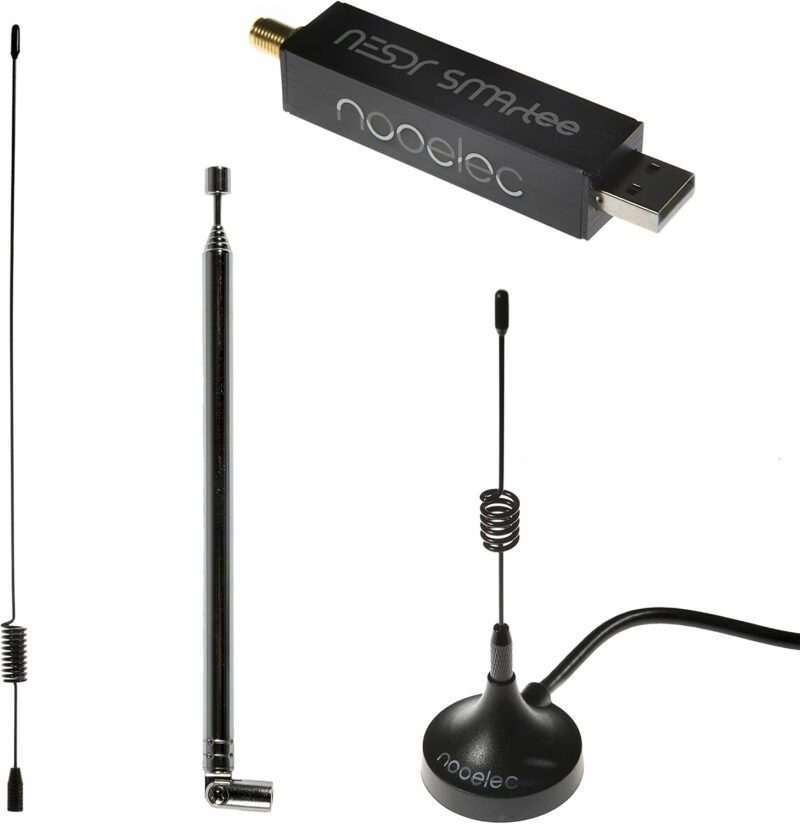
| ⚡ NESDR SMArTee v2 Bundle | Dongle + 3 antennas + base | RTL2832U + R820T2 | Integrated bias tee, 0.5PPM TCXO, SMA | Powered LNAs | 4.4 (652) | Buy Here → |
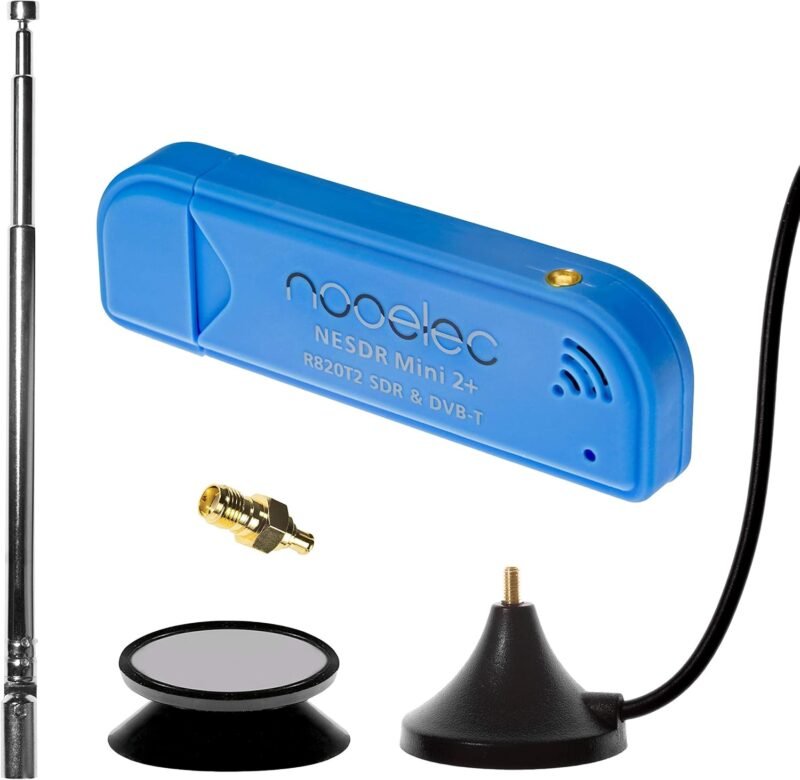
| 💰 NESDR Mini 2+ TCXO | Dongle + antenna + mount | RTL2832U + R820T2 | 0.5PPM TCXO, female SMA adapter | Budget TCXO | 4.4 (1,119) | Buy Here → |
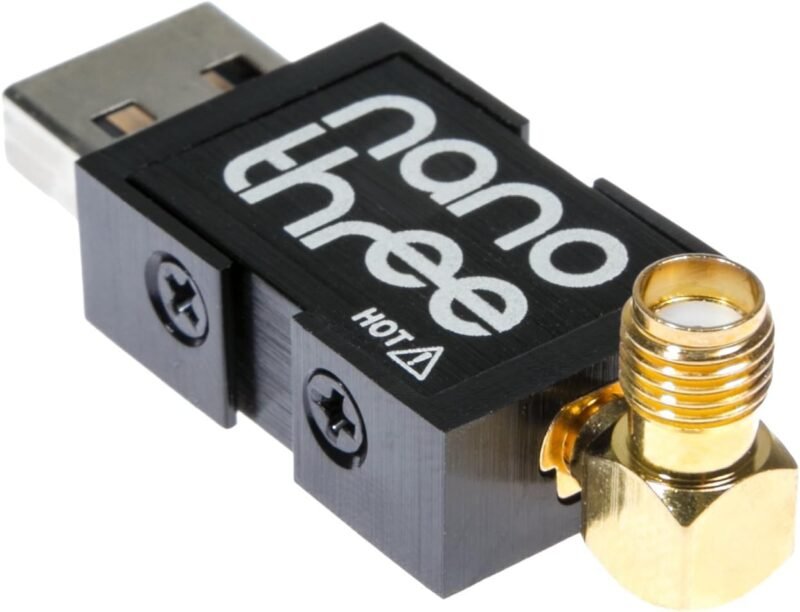
| 🔹 NESDR Nano 3 | Tiny dongle | RTL2832U + R820T2 | 0.5PPM TCXO, SMA and MCX, heatsink | Crowded USB ports | 4.3 (153) | Buy Here → |
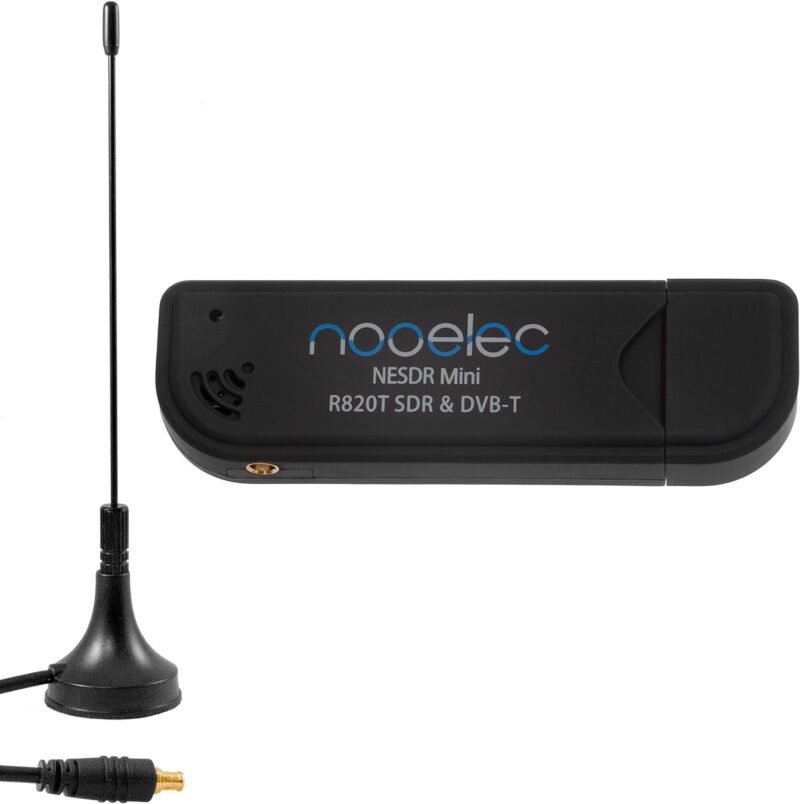
| 🪙 NESDR Mini (R820T) | Dongle + antenna | RTL2832U + R820T | MCX input, ESD-safe antenna input | Lowest cost entry | 4.3 (1,910) | Buy Here → |
| 🔌 RTL-SDR Blog V3 USB-C | Dongle only, USB-C | 500kHz to 1.7GHz, RX only | 1PPM TCXO, bias tee, SMA | USB-C laptops and phones | 4.6 (21) | Buy Here → |
| 📱 NESDR Nano 3 OTG (USB-C) | Tiny dongle + OTG kit | RTL2832U + R820T2 | 3 OTG adapters, nano antenna, heatsink | Android and portable | 4.0 (137) | Buy Here → |
| ✈️ AirNav Radar FlightStick | ADS-B stick | 1090MHz filtered | Band pass filter, amplifier, ESD protection | Plane tracking | 4.4 (569) | Buy Here → |
| 🛰️ Nooelec GOES Satellite Bundle | Satellite kit | Includes NESDR SMArTee XTR | Kit for LRIT, HRIT and HRPT | Satellite imagery | 4.5 (112) | Buy Here → |
Specs and features are taken from each product’s Amazon listing title and bullets. Ratings and review counts were as shown on the listing at the time of writing.
🔍 How to Choose an RTL-SDR for rtl_433
🎯
Insist on a TCXO
A temperature compensated oscillator (1PPM or 0.5PPM) stops the tuned frequency drifting as the dongle warms up, which keeps narrow 433MHz sensor signals decoding reliably 24/7.
📡
Plan the antenna
Antenna placement matters more than the dongle. A tuned quarter-wave or dipole near a window, on a USB extension cable, beats a bigger dongle sitting behind a Pi.
🔌
Connector and size
SMA connectors are easiest to find antennas for; MCX needs adapters. Nano designs fit crowded USB ports; USB-C versions suit modern laptops and phones.
⚡
Bias tee or not
A bias tee powers a mast-head LNA or filter through the coax. RTL-SDR Blog V3 has an activatable one; the SMArTee has it built in.
🧭
Match the job
General dongles suit rtl_433. ADS-B sticks with 1090MHz filters block 433MHz, so use them only for plane tracking.
🏆 Detailed Reviews: All 12 RTL-SDR Dongles
🥇 BEST OVERALL RTL-SDR FOR RTL_433
1. RTL-SDR Blog V3 R860 Dongle With Multipurpose Dipole Antenna Kit
⭐ 4.4/5 from 6,500 ratings · R860 + RTL2832U, 1PPM TCXO
Buy on Amazon →

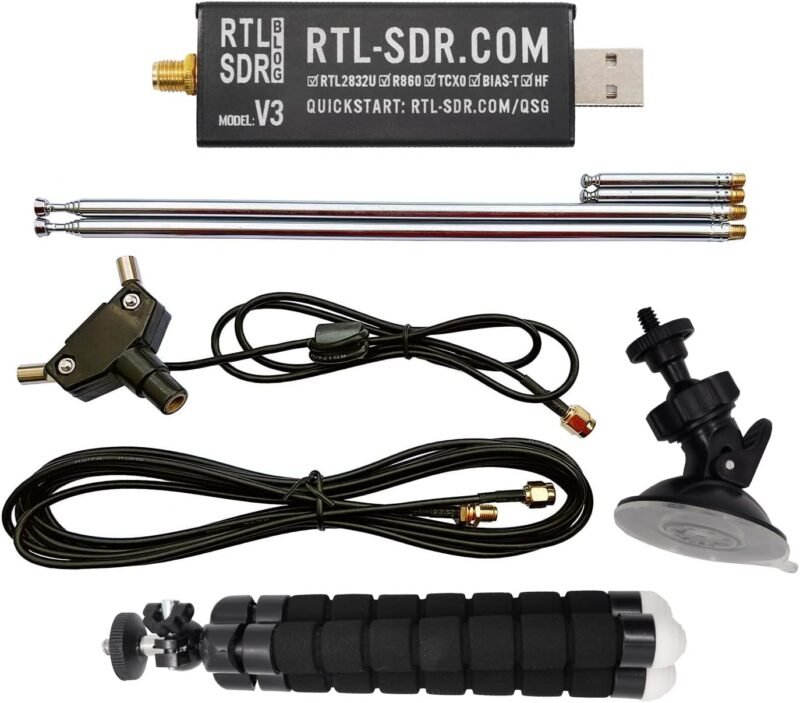
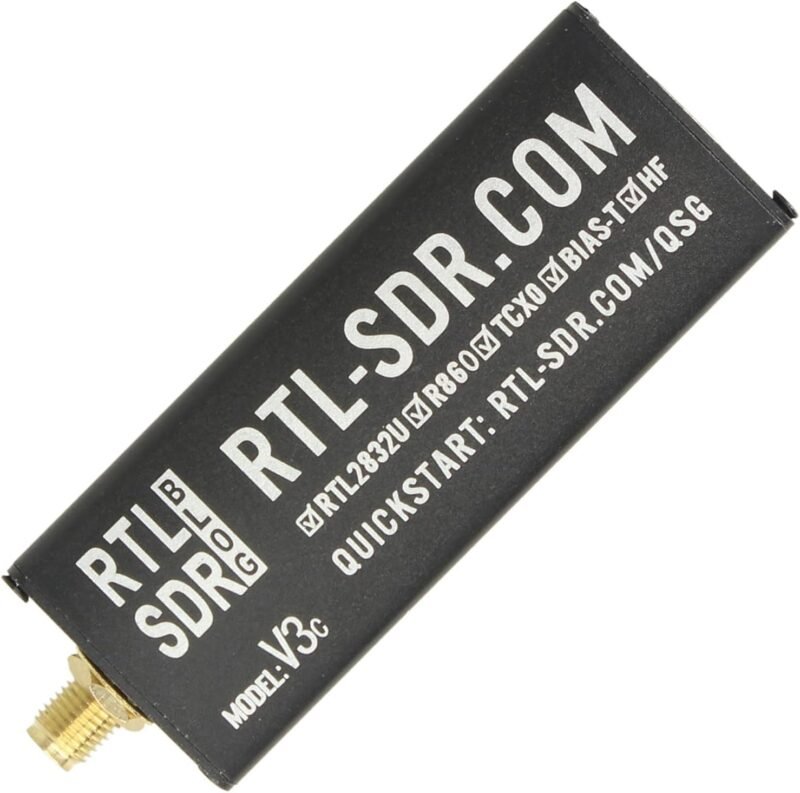
The RTL-SDR Blog V3 is the dongle most rtl_433 guides are written around, and this bundle adds the brand’s multipurpose dipole antenna kit. Per the listing it uses the R860 tuner with the RTL2832U, a 1PPM TCXO, an SMA connector, an aluminium shielded case with a thermal pad and an activatable bias tee. It tunes from 500kHz to 1.7GHz with up to 3.2MHz of bandwidth (2.4MHz stable), and HF below 24MHz works in direct sampling mode with reduced performance. The listing is clear that RTL-SDR dongles are receive only. Integration: plug it into a Raspberry Pi or mini PC running rtl_433, which decodes 433.92MHz, 315MHz, 868MHz and 915MHz weather sensors, door sensors and remotes, then publish to Home Assistant over MQTT. Telescope the dipole elements to around 17cm each for 433MHz. 4.4 stars from 6,500 ratings.
✅ Pros- Stable 1PPM TCXO, so 433MHz decoding does not drift
- Dipole kit covers 433, 868 and 915MHz with adjustment
- Huge user base and documentation
❌ Cons- Receive only, cannot transmit commands
- Dipole kit not suited to HF or permanent bad-weather use per listing
🎯 Verdict: The default dongle for an rtl_433 to Home Assistant bridge.
👉 Check Price on Amazon →
📦 BEST STARTER BUNDLE
2. Nooelec NESDR SMArt v5 RTL-SDR Bundle With 3 Antennas
⭐ 4.2/5 from 4,000 ratings · 100kHz to 1.75GHz, 0.5PPM TCXO
Buy on Amazon →

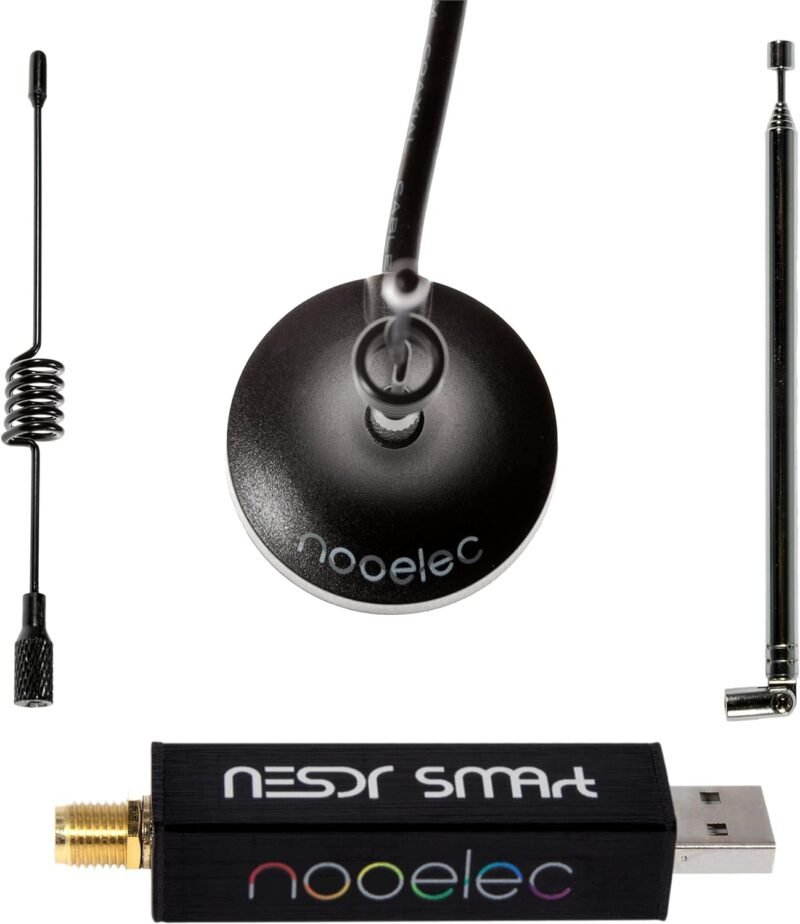
Nooelec’s NESDR SMArt v5 bundle is the most complete box to open on day one. The listing includes the dongle, a magnetic antenna base with a 2m RG-58 feed cable and three antenna masts, including a telescopic one you can tune for 433MHz. Nooelec claims improved HF and VHF/UHF SNR versus RTL-SDR v3 and a range of 100kHz to 1.75GHz with up to 3.2MHz bandwidth; HF below 25MHz uses direct sampling and needs a suitable antenna. It lists ADS-B, AIS, NOAA and GOES weather satellite reception among its uses and is built in the USA and Canada with a 2-year warranty. Integration: standard RTL2832U device, so it works with rtl_433, SDR++, GQRX and SDR# on Windows, macOS, Linux and Android. 4.2 stars from 4,000 ratings.
✅ Pros- Magnetic base and telescopic mast in the box
- 0.5PPM TCXO and 2-year warranty
- Wide 100kHz to 1.75GHz range
❌ Cons- Lower average rating than the RTL-SDR Blog kit
- Telescopic whip needs tuning for each band
🎯 Verdict: The easiest all-in-one kit for a first SDR desk setup.
👉 Check Price on Amazon →
🖥️ BEST FOR RASPBERRY PI RTL_433 SERVERS · ⭐ 4.6/53. RTL-SDR Blog V3 R860 RTL2832U Dongle Only
R860 tuner, 1PPM TCXO, SMA, bias tee, aluminium case · 3,140 ratings
Buy Here →

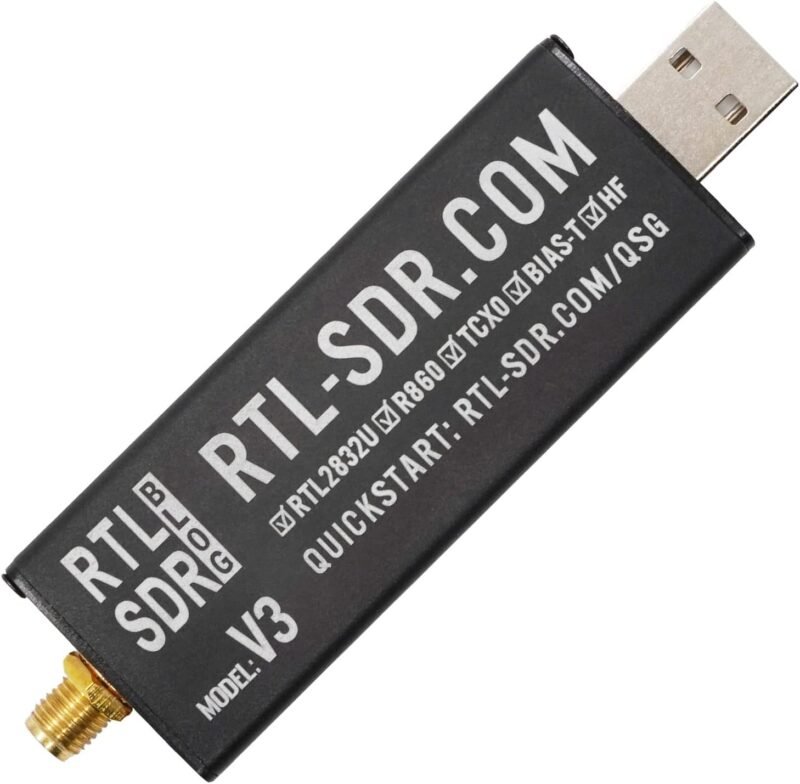
Same RTL-SDR Blog V3 hardware as our top pick, sold as the dongle only. Per the listing it has the R860 tuner, 1PPM TCXO, SMA connector, aluminium case with thermal pad and activatable bias tee. Buy this if you already own a 433MHz antenna, or if you are adding a second dongle so one can run rtl_433 on 433MHz while another watches 915MHz or ADS-B. It has the highest rating in this guide at 4.6 stars from 3,140 ratings.
✅ Pros: Highest rated pick here; ideal second dongle.
❌ Cons: No antenna included.
🎯 Verdict: Best value when you already have antennas.
🔷 BEST NOOELEC DONGLE ONLY · ⭐ 4.5/54. Nooelec NESDR SMArt v5 RTL-SDR Dongle
0.5PPM TCXO, SMA input, aluminium enclosure, R820T2 (R860) · 2,883 ratings
Buy Here →

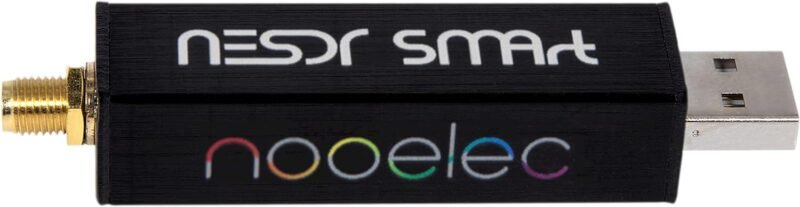
The NESDR SMArt v5 without the antenna bundle. The listing describes a 0.5PPM TCXO, SMA input and an aluminium enclosure built around the RTL2832U and R820T2 (R860) tuner, covering 100kHz to 1.75GHz. It shares the bundle’s claims of better HF and VHF/UHF SNR than RTL-SDR v3. For rtl_433 it behaves like any RTL2832U dongle. 4.5 stars from 2,883 ratings.
✅ Pros: Tight 0.5PPM TCXO and slim aluminium case.
❌ Cons: Antennas sold separately.
🎯 Verdict: A strong alternative to the RTL-SDR Blog dongle.
⚡ BEST FOR POWERED LNAS AND FILTERS · ⭐ 4.4/55. Nooelec NESDR SMArTee v2 Bundle With Integrated Bias Tee
Integrated bias tee, 0.5PPM TCXO, SMA, antenna base and 3 antennas · 652 ratings
Buy Here →

The SMArTee v2 adds an integrated bias tee to the SMArt formula, so it can power a mast-head LNA or filter through the coax. The listing also mentions a redesigned PCB that lowers noise by an average of 3dB, a 0.5PPM TCXO, SMA input, an antenna base and three antennas, in the same slim form factor that avoids blocking neighbouring USB ports. Useful when your 433MHz sensors are at the far end of the garden and you want an LNA near the antenna. 4.4 stars from 652 ratings.
✅ Pros: Built-in bias tee plus full antenna bundle.
❌ Cons: Do not connect a DC-shorted antenna while the bias tee is active.
🎯 Verdict: Pick it if you plan to add a powered LNA.
💰 BEST BUDGET TCXO DONGLE · ⭐ 4.4/56. Nooelec NESDR Mini 2+ 0.5PPM TCXO RTL-SDR Set
RTL2832U and R820T2, 0.5PPM TCXO, antenna, mount, female SMA adapter · 1,119 ratings
Buy Here →

The NESDR Mini 2+ is a small, lower-cost dongle that still has a 0.5PPM TCXO, which matters for narrow sensor signals. The listing includes an antenna, a mount and a female SMA adapter, and positions it as a low-cost SDR for Windows, macOS and Linux. It is a sensible pick for a dedicated rtl_433 receiver where you just need one stable band. 4.4 stars from 1,119 ratings.
✅ Pros: TCXO stability at a budget tier.
❌ Cons: Basic included antenna; no bias tee listed.
🎯 Verdict: The cheapest pick we would leave running 24/7.
🔹 BEST TINY DONGLE · ⭐ 4.3/57. Nooelec NESDR Nano 3 Tiny RTL-SDR
17 x 8 x 20mm, 15g, 0.5PPM TCXO, SMA and MCX inputs, custom heatsink · 153 ratings
Buy Here →

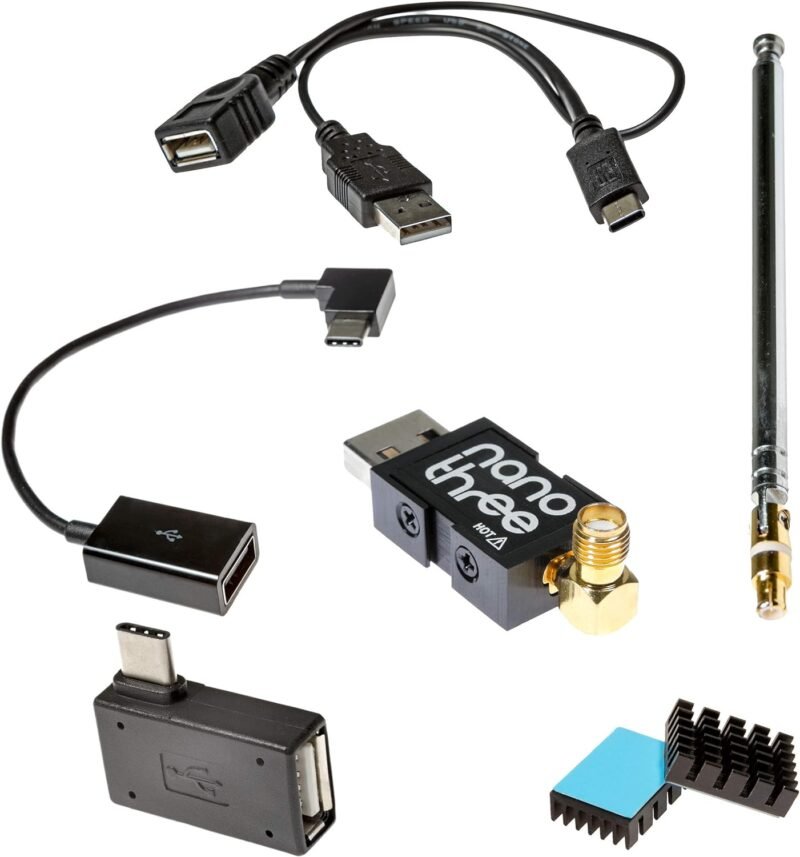
The Nano 3 is built to fit within the tightest USB spacing: the listing gives 17mm x 8mm x 20mm and 15g. It has an aluminium enclosure with silicone pads, a 0.5PPM TCXO, SMA and MCX inputs and a custom heatsink. Good for a Raspberry Pi or NAS where a full-size dongle would block other ports. 4.3 stars from 153 ratings.
✅ Pros: Will not block neighbouring USB ports.
❌ Cons: Small body runs warm; fit the included heatsink.
🎯 Verdict: Best for compact Pi and NAS installs.
🪙 CHEAPEST WAY TO TRY RTL_433 · ⭐ 4.3/58. Nooelec NESDR Mini USB RTL-SDR and ADS-B Receiver Set
RTL2832U and R820T tuner, MCX input, ESD-safe input, antenna included · 1,910 ratings
Buy Here →

The original NESDR Mini pairs the RTL2832U with an R820T tuner and an MCX input. The listing includes the dongle and an antenna, mentions an ESD-safe antenna input and a 1-year warranty, and says these use better components than generic DVB-T sticks. It does not list a TCXO, so expect some frequency offset; rtl_433 tolerates this for most 433MHz sensors, but a TCXO model is the safer long-term choice. 4.3 stars from 1,910 ratings.
✅ Pros: Very low cost way to test rtl_433.
❌ Cons: No TCXO listed; MCX connector needs adapters.
🎯 Verdict: Fine for experiments, upgrade for permanent installs.
🔌 BEST USB-C DONGLE · ⭐ 4.6/59. RTL-SDR Blog V3 Dongle Only (USB-C)
R860, 1PPM TCXO, HF bias tee, SMA, USB-C connector · 21 ratings
Buy Here →

A USB-C version of the RTL-SDR Blog V3 dongle, with the same R860 tuner, 1PPM TCXO, bias tee and SMA connector listed. Handy for modern laptops, USB-C mini PCs and Android phones without adapters. It is a newer listing with only 21 ratings (4.6 stars), so the review history is thin compared with the USB-A version.
✅ Pros: No USB-A adapter needed.
❌ Cons: Only 21 ratings so far.
🎯 Verdict: Choose it if your host only has USB-C ports.
📱 BEST FOR ANDROID PHONES · ⭐ 4.0/510. Nooelec NESDR Nano 3 OTG USB-C Bundle
Nano 3 in aluminium enclosure, nano antenna, 3 USB OTG adapters, heatsink · 137 ratings
Buy Here →

This bundle packages the Nano 3 for USB On-The-Go hosts. Per the listing it includes the Nano 3 in an anodised aluminium enclosure, a nano-sized antenna, three USB OTG adapters and a heatsink. Pair it with an Android SDR app to walk around and find which 433MHz sensor is transmitting, or to check signal strength before you place your rtl_433 receiver. 4.0 stars from 137 ratings.
✅ Pros: Pocketable kit for signal hunting.
❌ Cons: Small antenna limits range.
🎯 Verdict: Great field tool, not a fixed receiver.
✈️ BEST FOR ADS-B ONLY · ⭐ 4.4/511. AirNav Radar FlightStick ADS-B USB Receiver
Integrated 1090MHz band pass filter, in-built amplifier, ESD protection, Raspberry Pi · 569 ratings
Buy Here →

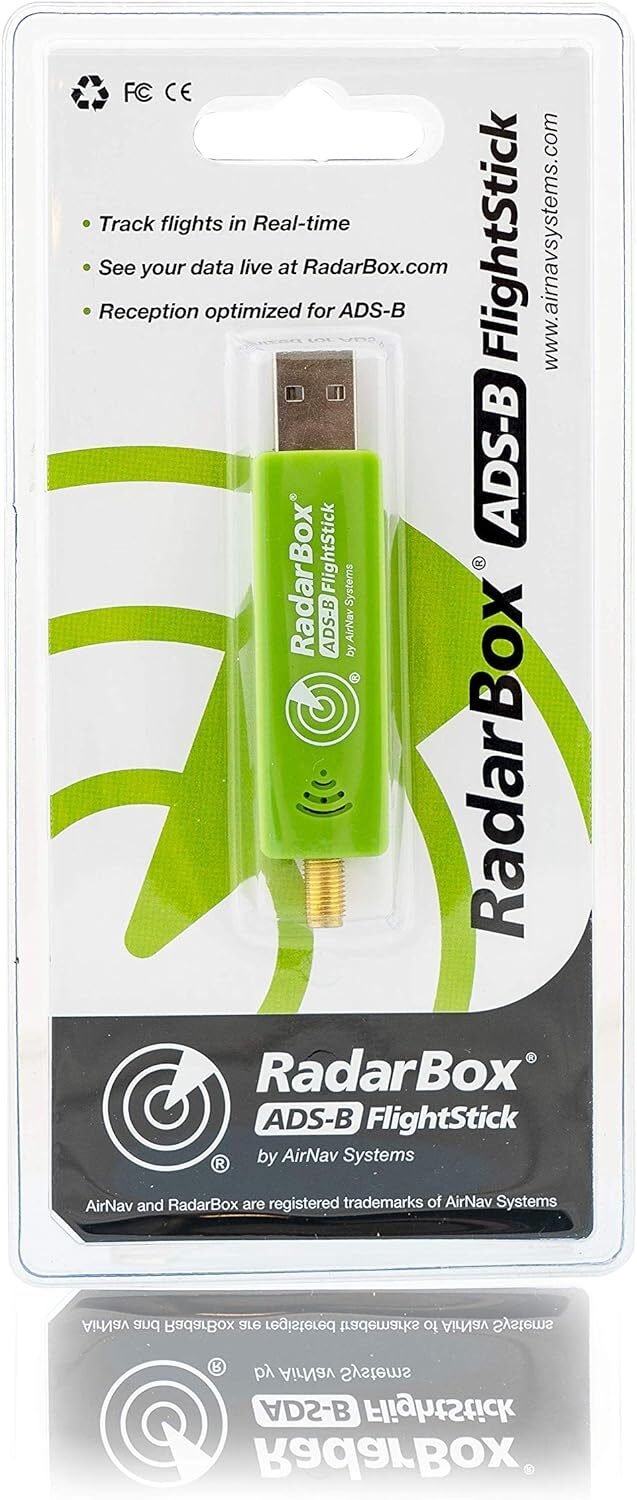
Not every SDR project is about 433MHz. The FlightStick is built for ADS-B plane tracking: the listing highlights an integrated 1090MHz band pass filter, an in-built amplifier and ESD protection, and says it works with Raspberry Pi. That filter is exactly why it is a poor choice for rtl_433, as it attenuates signals away from 1090MHz. Use it alongside a general dongle if you want a Pi that tracks planes and reads weather sensors. 4.4 stars from 569 ratings.
✅ Pros: Filtered and amplified for 1090MHz.
❌ Cons: Not suitable for 433MHz rtl_433 use.
🎯 Verdict: Add it for ADS-B; keep a separate dongle for sensors.
🛰️ BEST FOR WEATHER SATELLITES · ⭐ 4.5/512. Nooelec GOES Weather Satellite RTL-SDR Bundle
NESDR SMArTee XTR and parts to receive LRIT, HRIT and HRPT images · 112 ratings
Buy Here →

For weather nerds who want imagery as well as backyard sensor data, this bundle includes a NESDR SMArTee XTR and, per the listing, everything else needed to receive LRIT, HRIT and HRPT weather satellite images. The listing says you can be receiving GOES transmissions with as little as an hour of setup. It is a specialist kit, but the SDR inside also works as a normal RTL2832U receiver. 4.5 stars from 112 ratings.
✅ Pros: Complete kit for GOES imagery.
❌ Cons: Overkill if you only want rtl_433.
🎯 Verdict: The pick for satellite weather images.
🛒 Which One for Which Job
🏠
rtl_433 to Home Assistant
RTL-SDR Blog V3 + dipole kit on a Raspberry Pi, publishing to MQTT.
📦
First SDR, all in the box
Nooelec NESDR SMArt v5 bundle with magnetic base and three masts.
🌳
Far-away garden sensors
NESDR SMArTee v2 powering an LNA through its bias tee.
💰
Cheap dedicated receiver
NESDR Mini 2+ with a 0.5PPM TCXO.
📱
Hunting a rogue sensor
NESDR Nano 3 OTG with an Android SDR app.
✈️
Planes and weather together
AirNav FlightStick for ADS-B plus an RTL-SDR Blog V3 for sensors.
⚙️ RTL-SDR vs RF Bridge vs ESP32 433MHz Receiver
| Aspect | RTL-SDR + rtl_433 | RF bridge (Broadlink, SONOFF) | ESP32 + 433MHz module |
|---|
| Receives sensors | Hundreds of protocols decoded ⭐ | Learns remote codes only | Needs firmware per protocol |
| Transmits commands | No, RX only | Yes, replays fixed codes ⭐ | Yes with a TX module ⭐ |
| Bands | Any band from 433 to 915MHz, one at a time ⭐ | Usually 433MHz only | Fixed by the module |
| Home Assistant | MQTT auto-discovery, local ⭐ | Integration, local | ESPHome or MQTT, local ⭐ |
| Host needed | Pi or PC running rtl_433 | None ⭐ | None ⭐ |
| Best for | Weather stations and sensors ⭐ | Blinds, fans, outlets ⭐ | Custom DIY builds |
Highlighted cells mark the strongest option for each row. rtl_433 protocol support varies by device; check your model in the rtl_433 supported devices list.
❓ Frequently Asked Questions
What is rtl_433 and do I need an RTL-SDR for it?
rtl_433 is a free, open-source program that decodes wireless sensors and remotes on the 433MHz, 315MHz, 868MHz and 915MHz bands. It is designed around RTL2832U dongles like the ones in this guide, so yes, you need an SDR (some builds also support other SDRs and CC1101 radios).
How do I get rtl_433 data into Home Assistant?
The common setup runs rtl_433 on a Raspberry Pi or Home Assistant host with the dongle attached and publishes each decoded reading to an MQTT broker. The rtl_433 project includes an MQTT auto-discovery helper, and community add-ons package rtl_433 for Home Assistant OS, so sensors appear as entities automatically.
Can one dongle read 433MHz and 915MHz sensors at the same time?
Not simultaneously. An RTL-SDR covers about 2.4MHz of bandwidth at once, and 433MHz and 915MHz are far apart. rtl_433 can hop between frequencies on a timer, but you may miss transmissions, so two dongles on a powered USB hub is more reliable. See our USB hubs for Raspberry Pi guide.
Is the RTL-SDR Blog V3 still worth buying?
Yes for rtl_433. Sensor decoding happens at 433MHz to 915MHz, where the V3’s R860 tuner and 1PPM TCXO are well proven. The newer V4 mainly improves HF reception, which does not matter for weather sensors, and it was not available as a verified brand listing on Amazon US when we checked.
What antenna should I use for 433MHz sensors?
A simple quarter-wave whip of about 17cm, or a dipole with each element extended to about 17cm, works well. Mount it vertically, away from the computer, on a USB extension cable or coax. For longer range, move the antenna higher or add a filtered LNA powered by a bias tee.
🏁 Final Verdict: Best RTL-SDR Dongles for rtl_433
Our picks by job:
🥇 Best Overall: RTL-SDR Blog V3 + Dipole Kit
Buy Here →📦 Best Starter Bundle: Nooelec NESDR SMArt v5 Bundle
Buy Here →🖥️ Best Dongle Only: RTL-SDR Blog V3 (Dongle Only)
Buy Here →⚡ Best for LNAs: NESDR SMArTee v2 Bundle
Buy Here →✈️ Best for ADS-B: AirNav Radar FlightStick
Buy Here →