⚠️ Affiliate Disclosure: This post contains Amazon affiliate links. If you purchase through our links, we may earn a small commission at no extra cost to you. We only recommend products we have researched and verified. Prices change often — always confirm the current price on Amazon before buying.
📡 ULTIMATE BUYING GUIDE 2026
📏 Best Ultrasonic Distance Sensors for Embedded Devices
10 ultrasonic sensors compared for Arduino, ESP32 & Raspberry Pi — from the classic HC-SR04 to waterproof IP67 and long-range industrial modules — with real specs, honest verdicts and direct Amazon links.
✅ 10 Sensors Reviewed
✅ Verified Amazon Listings
✅ Updated June 2026
✅ Honest Pros & Cons
An ultrasonic distance sensor is one of the most useful — and cheapest — components in embedded systems. By emitting a 40 kHz sound pulse and timing its echo, these modules measure distance without contact, ignore ambient light, and work in the dark. That makes them the go-to choice for obstacle-avoidance robots, parking sensors, water-tank and reservoir level monitors, smart bins, and countless Arduino, ESP32 and Raspberry Pi projects.
But “ultrasonic sensor” covers a wide range of modules. The right pick depends on your microcontroller voltage (5 V vs 3.3 V logic), the interface you want (simple trigger/echo, UART, analog or I²C), whether you need waterproofing, and how far and how accurately you need to measure. This guide ranks 10 ultrasonic distance sensors across every budget and use case so you can match the sensor to your project.
💡 Reality check before you buy: Ultrasonic sensors are cheap and easy, but they are not laser-precise. Expect a blind zone (the classic HC-SR04 can’t see closer than ~2 cm; waterproof split-transducer modules have a 20 cm+ dead zone), a fairly wide beam (15°–75°) that picks up unintended objects in tight spaces, and readings that drift with temperature unless the module compensates. Soft fabrics, foam and angled surfaces absorb or deflect sound and read poorly. For millimeter precision over short ranges, a Time-of-Flight (ToF) sensor like the VL53L0X is the better tool — for cheap, robust ranging from a few centimeters to several meters, ultrasonic wins.
📊 Quick Comparison — All 10 Ultrasonic Sensors
| Sensor | Range | Interface | Power / Logic | Best For | Buy |
|---|
| 🥇 HC-SR04 | 2–400 cm | Trig/Echo (GPIO) | 5 V | Best Overall | View → |
| 🏅 MaxBotix LV-EZ1 (MB1010) | 15–645 cm | Analog · PWM · Serial | 2.5–5.5 V | Best Premium / Reliable | View → |
| 💠 RCWL-1601 | 2–450 cm | Trig/Echo (GPIO) | 3–5.5 V | Best for 3.3 V (ESP32/Pi) | View → |
| 🎯 US-100 | 2–450 cm | GPIO or UART | 2.4–5.5 V | Best Accuracy (temp comp.) | View → |
| 💧 JSN-SR04T | 23–600 cm | GPIO / Serial | 3–5.5 V (5 V rec.) | Best Waterproof (contact) | View → |
| 🌧️ DFRobot A02YYUW | 3–450 cm | UART (9600) | 3.3–5 V | Best IP67 / Smart Home | View → |
| ⚡ DFRobot URM09 (Analog) | 2–500 cm | Analog | 3.3–5.5 V | Best for Fast Robotics | View → |
| 🧩 Grove Ultrasonic Ranger | 2–350 cm | Single-pin (SIG) | 3.2–5.2 V | Best for Beginners | View → |
| 🛟 AJ-SR04M | 25–450 cm | GPIO / Serial | 3–5.5 V | Best Budget Waterproof | View → |
| 📡 MaxBotix MB1240 (XL-EZ4) | 20–765 cm | Analog · PWM · Serial | 3.3–5.5 V | Best Long-Range / Outdoor | View → |
Prices change frequently, so we’ve left them out — tap any View → button to check the current Amazon price yourself. Ranges and specs are typical manufacturer figures; real-world range depends on the target surface.
🔍 What to Look for in an Ultrasonic Sensor
📐
Range & Blind Zone
Check both the max range and the minimum (blind) zone. HC-SR04 sees ~2 cm–4 m; waterproof split modules can’t read closer than 20–25 cm — a problem for nearly-full tanks.
🔌
Interface
Trigger/Echo (GPIO) is universal but timing-sensitive. UART and I²C are cleaner on busy MCUs; analog output is fastest for robotics control loops.
⚡
Voltage & Logic Level
A 5 V-only HC-SR04 will damage a 3.3 V ESP32/Pi echo pin without a level shifter. Pick a 3.3 V-tolerant module (RCWL-1601, US-100, A02YYUW) or add a divider.
🌡️
Accuracy & Temp Comp.
The speed of sound changes ~0.6 m/s per °C. Sensors with built-in temperature compensation (US-100, URM09) stay accurate as conditions change.
🌧️
Environment & Beam
Outdoors or near liquid, choose a waterproof/IP67 module. Note the beam angle — narrow beams (MaxBotix) avoid side-wall false echoes in tight spaces.
🏆 Detailed Reviews — All 10 Ultrasonic Sensors
🥇 BEST OVERALL · EDITOR’S CHOICE

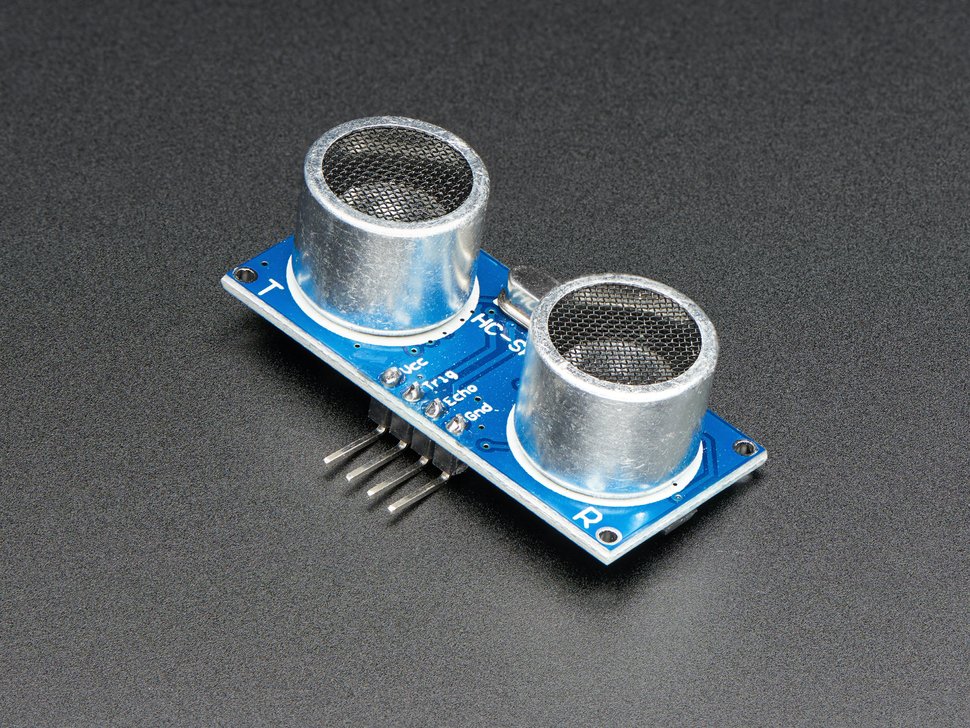
The HC-SR04 is the sensor that taught a generation of makers how ultrasonic ranging works, and it’s still the right default for most 5 V Arduino projects. A simple trigger pulse fires the beam; you time the echo pin and divide by two. It’s astonishingly cheap (this ELEGOO listing is a 5-pack), every tutorial and library supports it, and accuracy of a few millimeters is easy indoors. The catches: it’s 5 V only (the echo pin needs a level shifter for a 3.3 V board), it has no temperature compensation, and the dual-transducer body isn’t weatherproof.
✅ Pros- Dirt cheap — buy a multipack
- Universal library & tutorial support
- Reliable few-mm accuracy indoors
❌ Cons- 5 V only — needs level shift for ESP32/Pi
- No temperature compensation
- Not waterproof
🎯 Verdict: The best all-round starting point. If you’re on a 5 V Arduino and want the cheapest, best-supported sensor, buy a multipack and you’ll never run out.
👉 Check Price on Amazon →
🏅 BEST PREMIUM · MOST RELIABLE
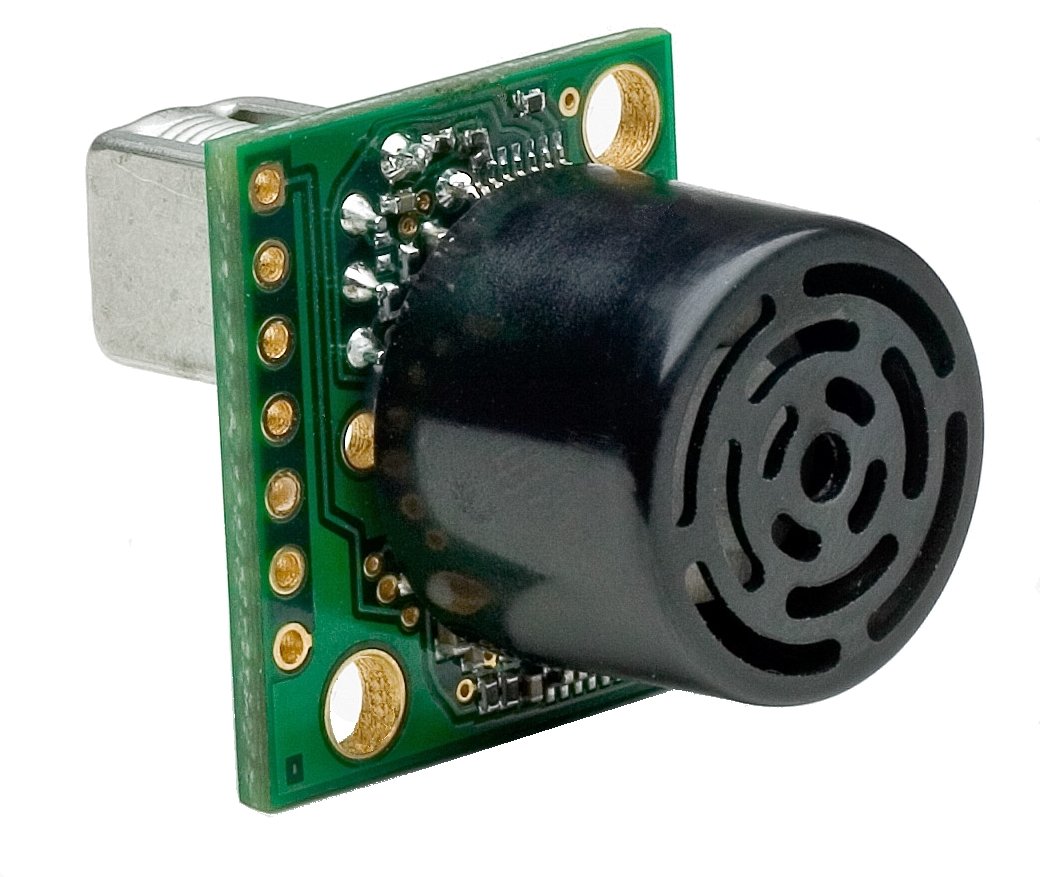
MaxBotix LV-MaxSonar-EZ1 (MB1010)
⭐⭐⭐⭐½ 4.7/5 · Industrial Grade
View on Amazon →
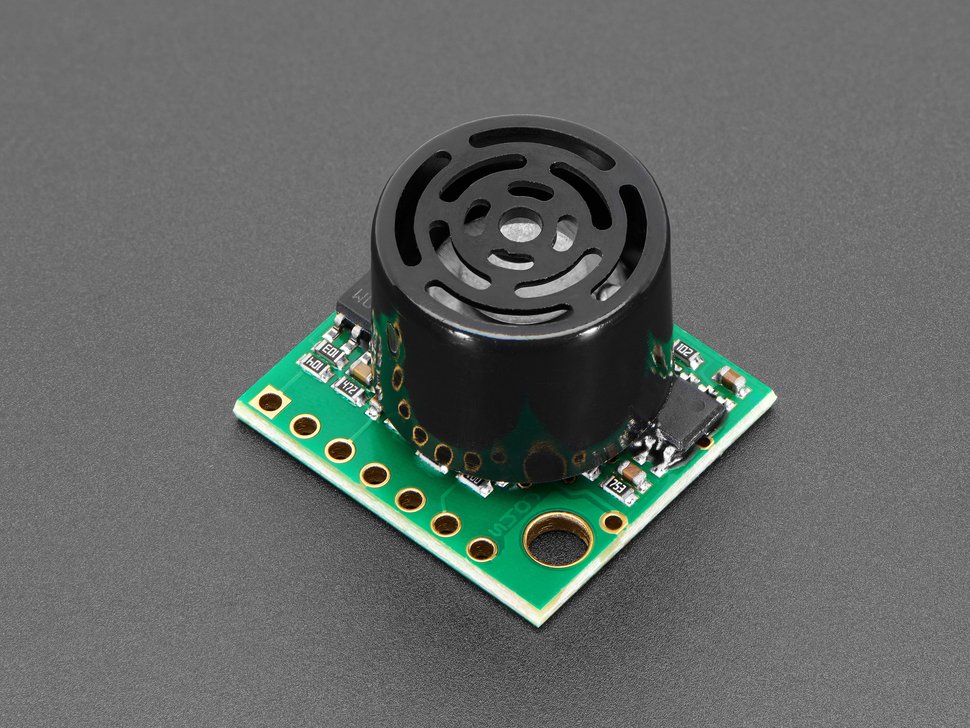
When a flaky reading isn’t acceptable — on a drone, an autonomous robot, or an industrial level gauge — the MaxBotix LV-MaxSonar-EZ1 is worth the premium. It’s a US-made, calibrated module that outputs analog voltage, PWM and RS232 serial simultaneously, runs from 2.5–5.5 V (3.3 V friendly), and is far more stable and noise-tolerant than a generic HC-SR04. It reports continuously with no fussy trigger timing, and objects inside its minimum range simply read as the minimum rather than glitching. You pay many times the price of a bargain module — but you get reliability you can design around.
✅ Pros- Calibrated, very stable readings
- Analog + PWM + serial outputs
- 3.3 V friendly, no trigger timing
❌ Cons- Many times the price of an HC-SR04
- Not waterproof
- Wider beam than the narrow XL models
🎯 Verdict: The reliability upgrade. If a wrong distance reading could crash a robot or overflow a tank, the EZ1’s stability and multi-output flexibility justify the cost.
👉 Check Price on Amazon →
💠 BEST FOR 3.3 V (ESP32 / RASPBERRY PI)
3. RCWL-1601
2–450 cm · 3–5.5 V power & logic · GPIO · ⭐ 4.5/5
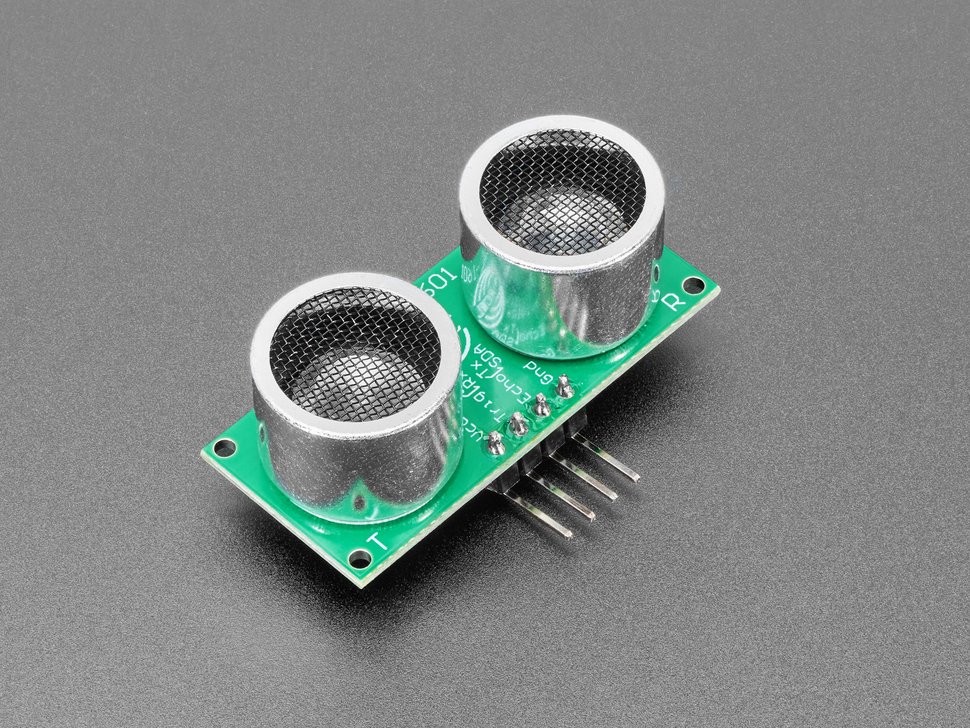
The RCWL-1601 is the answer to the most common ultrasonic headache: it’s an HC-SR04-compatible module that runs entirely on 3 V or 5 V for both power and logic, so it plugs straight into an ESP32, ESP8266 or Raspberry Pi with no level shifter. It uses the same trig/echo code as the HC-SR04 and draws very little current (~2.2 mA), making it ideal for battery IoT nodes. The board is a different size/shape, so plan your mounting.
✅ Pros: True 3.3 V power & logic; HC-SR04 code-compatible; very low current.
❌ Cons: Different footprint than HC-SR04; single output mode; not waterproof.
🎯 Verdict: The default ultrasonic sensor for 3.3 V boards. Same simplicity as the HC-SR04 without the level-shifting hassle.
🎯 BEST ACCURACY · TEMPERATURE COMPENSATED
4. US-100
2–450 cm · 2.4–5.5 V · GPIO or UART · ⭐ 4.5/5
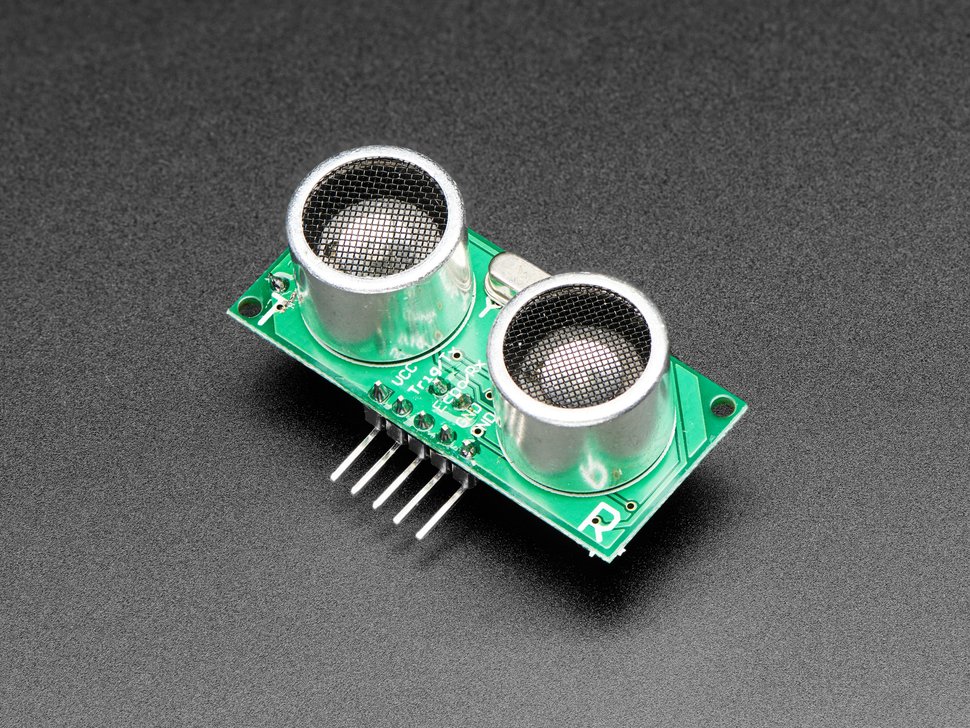
The US-100 looks like an HC-SR04 but adds two big upgrades: an on-board temperature sensor that compensates the speed-of-sound calculation, and a jumper-selectable UART mode alongside the normal trigger/echo mode. In UART mode you send one byte and read back a 16-bit millimeter value (or the temperature), which sidesteps the microsecond-precise timing the HC-SR04 needs — perfect for a busy RTOS or a Raspberry Pi. It also runs happily from 2.4–5.5 V.
✅ Pros: Temperature-compensated accuracy; GPIO and UART modes; 3.3 V friendly.
❌ Cons: Slightly pricier than HC-SR04; not waterproof; UART needs a free serial port.
🎯 Verdict: The smart upgrade to the HC-SR04. Best pick when you want better accuracy and a clean serial interface for a few cents more.
💧 BEST WATERPROOF (SEPARATE TRANSDUCER)
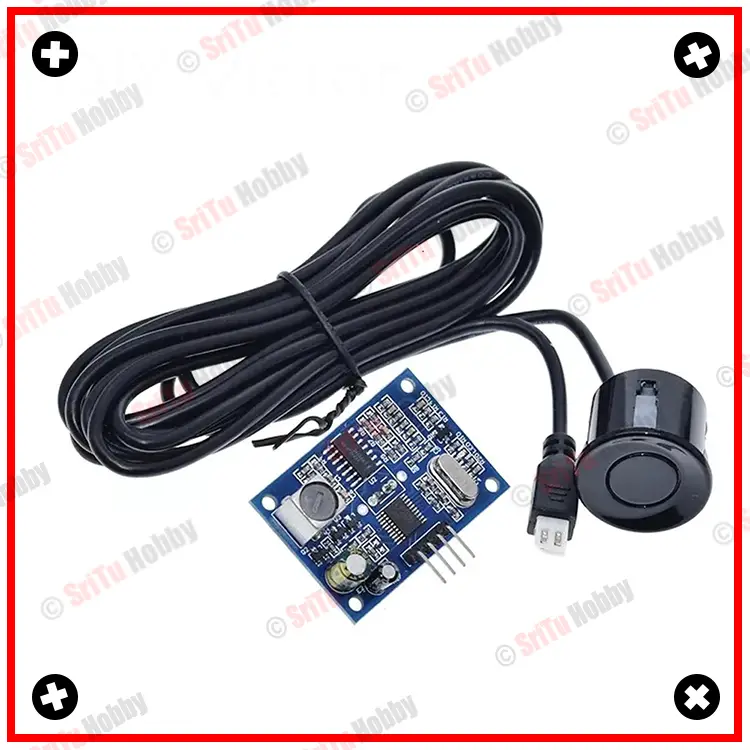
5. JSN-SR04T
23–600 cm · 3–5.5 V (5 V rec.) · 2.5 m cable · ⭐ 4.3/5

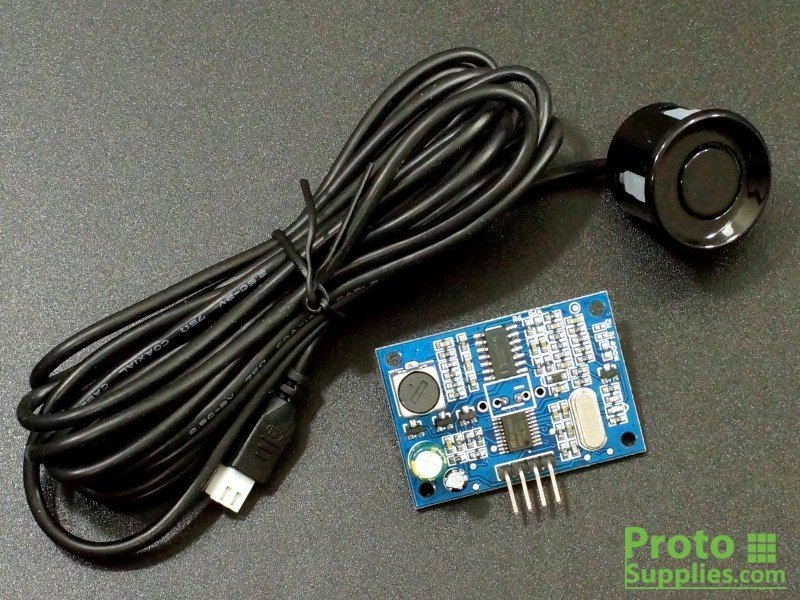
The JSN-SR04T splits the electronics from a single sealed transducer on a 2.5 m cable, so the wet end can sit in a tank, drainpipe or car bumper while the board stays dry. In default mode it’s HC-SR04 code-compatible (with one tweak: the trigger pulse needs to be ~20 µs), and it also offers serial modes via solder pads. The trade-offs are a large ~20 cm blind zone and a wide 75° cone that picks up side walls, so it’s happiest pointing across open space.
✅ Pros: Waterproof transducer on a long cable; HC-SR04 compatible; good max range.
❌ Cons: Big 20 cm blind zone; wide beam; 3.3 V operation is unreliable (use 5 V).
🎯 Verdict: The classic waterproof choice for tank-level and outdoor sensing where the target is more than 20 cm away.
🌧️ BEST IP67 · SMART-HOME / ESPHOME
6. DFRobot A02YYUW
3–450 cm · UART · IP67 · 3 cm blind spot · ⭐ 4.6/5

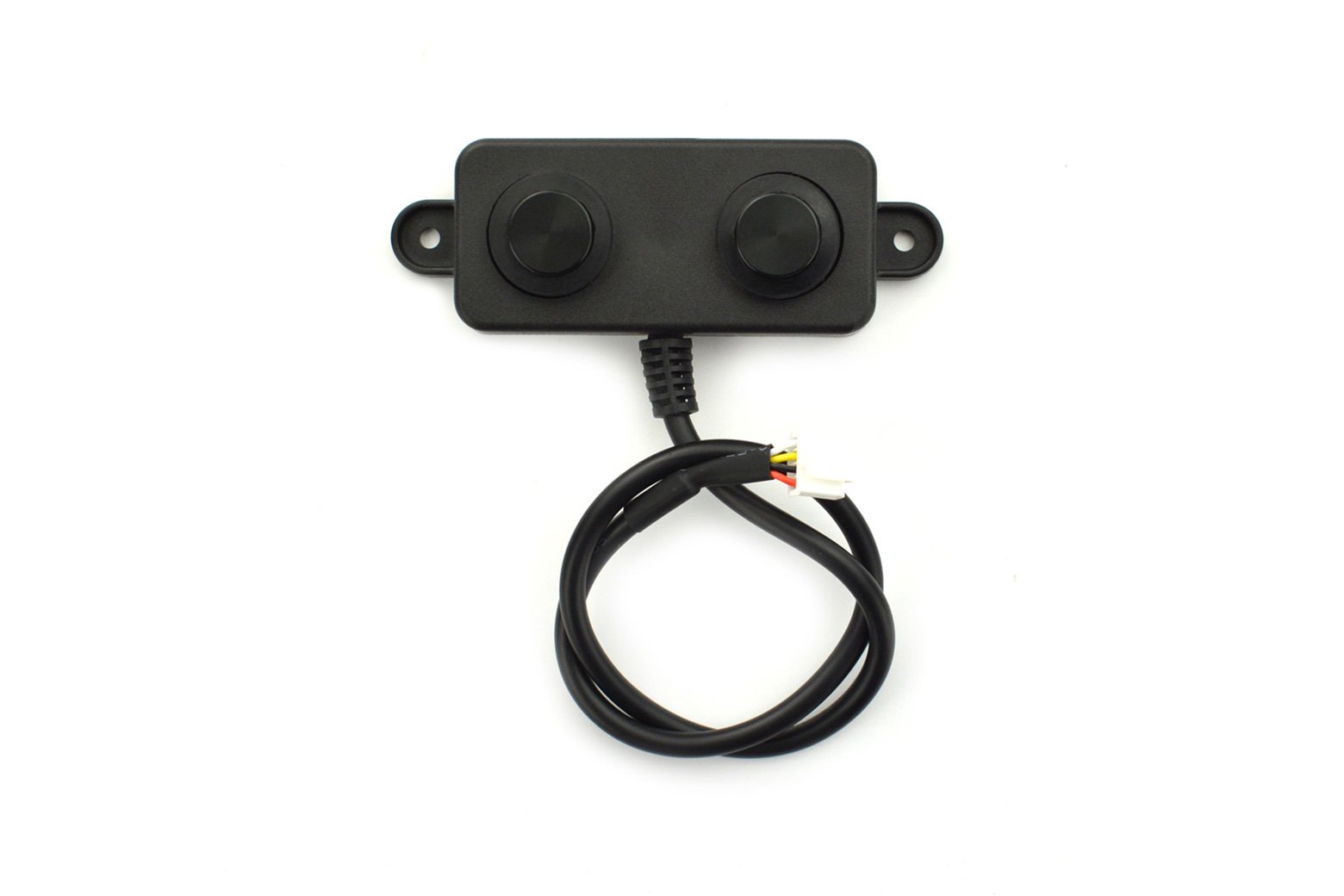
The DFRobot A02YYUW is the modern waterproof pick. Its fully sealed, IP67 integrated body solves the JSN-SR04T’s biggest weakness — a tiny 3 cm blind spot instead of 20 cm — so it can read a tank right up to the top. It streams distance over a clean 9600 bps UART (no trigger timing), runs from 3.3–5 V, and has native ESPHome support, making it a favorite for ESP32 / Home Assistant water-level automations. Tip: average several readings, as the fast UART output can jitter.
✅ Pros: True IP67; tiny 3 cm blind spot; clean UART; ESPHome / Home Assistant ready.
❌ Cons: UART only (no plain GPIO mode); pricier than a JSN-SR04T; wide 60° beam.
🎯 Verdict: The best waterproof sensor for smart-home and liquid-level projects — accurate close to the surface and effortless on an ESP32.
⚡ BEST FOR FAST ROBOTICS (ANALOG)
7. DFRobot Gravity URM09
2–500 cm · Analog · temp comp · up to 30 Hz · ⭐ 4.5/5
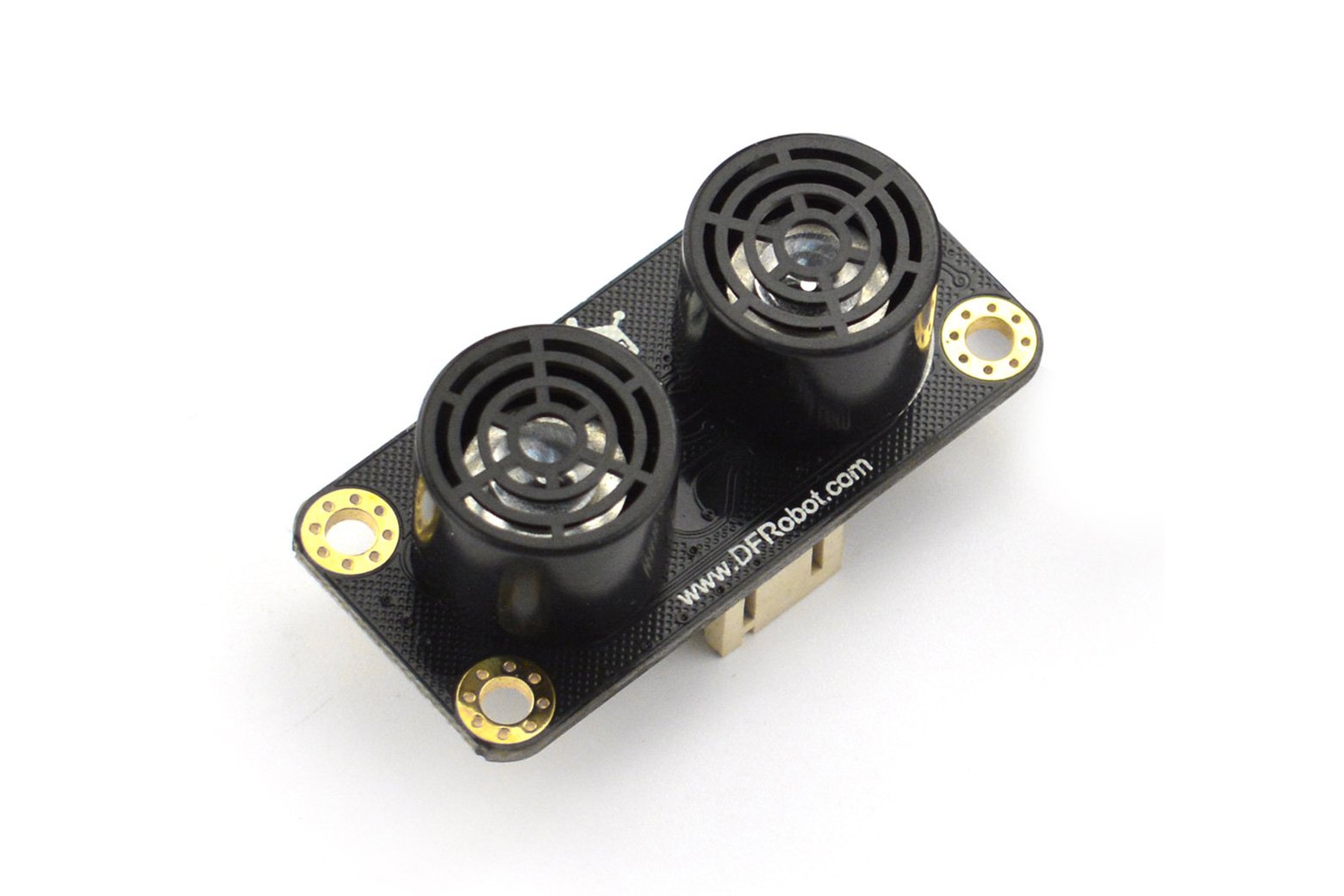
The DFRobot Gravity URM09 is built for speed. It outputs distance as a simple analog voltage you read with one ADC pin, refreshes up to 30 Hz, and includes built-in temperature compensation — exactly what an obstacle-avoidance control loop wants, with none of the trigger/echo blocking that slows down an HC-SR04. The plug-and-play Gravity connector and 3.3–5.5 V support make wiring trivial. (DFRobot also sells I²C and Trig versions of the URM09 if you prefer a digital bus.)
✅ Pros: Fast 30 Hz analog read; temp-compensated; long 500 cm range; Gravity plug-and-play.
❌ Cons: Analog needs a clean ADC; not waterproof; dearer than generic modules.
🎯 Verdict: The best sensor for responsive robotics. Fast analog output and temperature compensation make for smooth, non-blocking obstacle avoidance.
🧩 BEST FOR BEGINNERS (SINGLE-PIN, NO SOLDER)
8. Grove Ultrasonic Ranger
2–350 cm · single SIG pin · 3.2–5.2 V · ⭐ 4.4/5

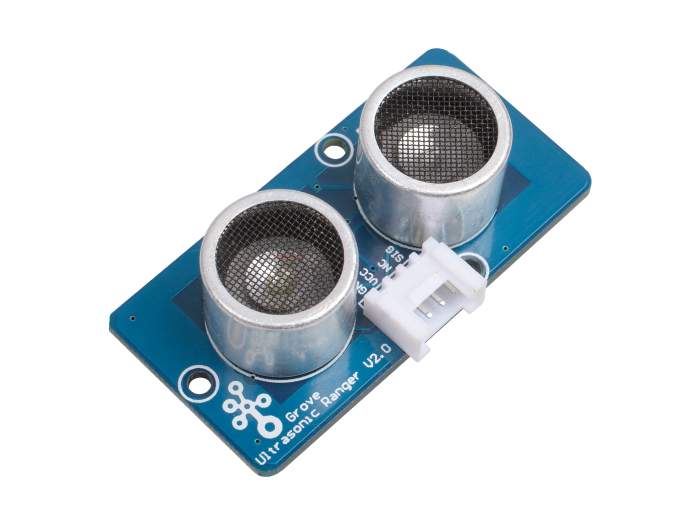
Seeed’s Grove Ultrasonic Ranger is the most beginner-friendly module here. It uses the keyed Grove connector — no breadboard, no soldering, no wiring mistakes — and combines trigger and echo onto a single SIG pin, freeing up I/O. With the Grove library it’s a one-line read on Arduino, micro:bit or Raspberry Pi (via a Grove base shield/hat). It’s the friction-free choice for classrooms and first projects, though you’ll want the Grove ecosystem to get the most from it.
✅ Pros: Plug-and-play Grove connector; single-pin; 3.3 V compatible; great library.
❌ Cons: Best with the Grove system; shorter 350 cm range; pricier than a bare HC-SR04.
🎯 Verdict: The easiest ultrasonic sensor to wire. Ideal for classrooms, STEM kits and anyone who wants zero-fuss prototyping.
🛟 BEST BUDGET WATERPROOF
9. AJ-SR04M
25–450 cm · GPIO / serial modes · 2.5 m cable · ⭐ 4.2/5

The AJ-SR04M is the close cousin of the JSN-SR04T and the cheapest way to get a waterproof transducer on a 2.5 m cable. It supports multiple operating modes (set by solder pads/resistor): default HC-SR04-style trigger/echo, automatic and MCU-controlled serial, and even a low-power and threshold-switch mode — handy for a simple battery-powered tank alarm. Like all single-transducer modules it has a large ~25 cm blind zone and a wide beam, so give it open space.
✅ Pros: Very cheap waterproof option; multiple modes incl. low-power; 2.5 m cable.
❌ Cons: ~25 cm blind zone; wide beam; quality varies by seller; soldering to change modes.
🎯 Verdict: The budget waterproof workhorse. Pick it when you need outdoor/wet sensing on the cheap and don’t mind the big dead zone.
📡 BEST LONG-RANGE / OUTDOOR (NARROW BEAM)
10. MaxBotix MB1240 XL-MaxSonar-EZ4
20–765 cm · analog/PWM/serial · narrow beam · ⭐ 4.6/5

When you need to measure far — across a room, down a grain silo, or a wide driveway gate — the MaxBotix MB1240 (XL-MaxSonar-EZ4) reaches up to 7.65 m with a deliberately narrow beam that rejects clutter on the sides. Like its LV sibling it offers analog, PWM and serial outputs, runs from 3.3–5.5 V, and is calibrated and weather-resistant for outdoor use. It’s a premium, US-made module — overkill for a desktop robot, but the right tool for serious long-range or industrial sensing.
✅ Pros: Long 7.65 m range; narrow noise-rejecting beam; multi-output; weather-resistant.
❌ Cons: Most expensive on this list; overkill for short ranges; not fully submersible.
🎯 Verdict: The long-range specialist. When distance and a tight beam matter more than price, nothing else here competes.
🛒 How to Choose the Right Ultrasonic Sensor
🟢
New to electronics?
Grab the HC-SR04 (5 V Arduino) or the solder-free Grove Ultrasonic Ranger. Cheap, universally documented, perfect first projects.
🔵
Using an ESP32 or Pi (3.3 V)?
Choose the RCWL-1601 or US-100 — both handle 3.3 V logic directly, no level shifter needed.
💧
Outdoor / tank-level / wet?
The DFRobot A02YYUW (IP67, 3 cm blind spot) is the best; the JSN-SR04T or AJ-SR04M are cheaper if your target is >20 cm away.
🤖
Building a robot?
The DFRobot URM09 (fast analog, temp-compensated) gives smooth non-blocking obstacle avoidance for control loops.
🎯
Need rock-solid reliability?
Step up to the MaxBotix LV-EZ1 for stable indoor readings, or the MB1240 for long-range, narrow-beam outdoor work.
💸
On a tight budget / many units?
Buy the HC-SR04 in a multipack — pennies per sensor and you’ll always have a spare on the bench.
⚙️ Key Specs Compared — Side by Side
| Spec | HC-SR04 | MaxBotix EZ1 | RCWL-1601 | US-100 | A02YYUW |
|---|
| Max range | 400 cm | 645 cm ⭐ | 450 cm | 450 cm | 450 cm |
| Blind / min zone | ~2 cm | 15 cm | ~2 cm ⭐ | ~2 cm | 3 cm |
| Interface | Trig/Echo | Analog/PWM/Serial ⭐ | Trig/Echo | GPIO + UART | UART |
| 3.3 V logic | No (needs shifter) | Yes ⭐ | Yes ⭐ | Yes ⭐ | Yes ⭐ |
| Temp compensation | No | No | No | Yes ⭐ | No |
| Waterproof | No | No | No | No | IP67 ⭐ |
| Best use | General 5 V | Reliable robots | ESP32/Pi | Accuracy | Wet / tanks |
⭐ marks the standout sensor for each row. Figures are typical manufacturer specs.
❓ Frequently Asked Questions
What’s the difference between the HC-SR04 and the JSN-SR04T / A02YYUW?
The HC-SR04 has two open transducers and isn’t weatherproof, but its blind zone is tiny (~2 cm). The JSN-SR04T and AJ-SR04M move the sensing to a single sealed transducer on a cable so it survives moisture — at the cost of a 20–25 cm blind zone. The DFRobot A02YYUW is the modern upgrade: fully IP67-sealed and only a 3 cm blind spot, which is why it’s preferred for tank-level work.
Can I use an ultrasonic sensor with a 3.3 V ESP32 or Raspberry Pi?
Yes, but mind the logic level. A standard HC-SR04’s 5 V echo pin can damage a 3.3 V GPIO — add a resistor divider or level shifter. Easier is to pick a natively 3.3 V module: the RCWL-1601, US-100, A02YYUW or URM09 all work directly with an ESP32 or Pi without extra parts.
How accurate are ultrasonic distance sensors?
Indoors, a few millimeters to about ±1 cm is realistic for a hard, flat target facing the sensor. Accuracy drops with distance, angled or soft surfaces, and temperature swings (sound speed changes ~0.6 m/s per °C). Sensors with temperature compensation (US-100, URM09) hold accuracy better. For sub-millimeter short-range work, use a Time-of-Flight sensor instead.
Ultrasonic vs. ToF/LiDAR (like the VL53L0X) — which should I use?
Ultrasonic is cheap, sees transparent and glossy surfaces, and reaches several meters — great for level sensing and general obstacle detection, but with a wide beam and lower precision. ToF/laser sensors (e.g. VL53L0X) are tiny and very precise at short range with a pencil-thin beam, but cost more and struggle with glass, dark or sunlit surfaces. Choose ultrasonic for robust, low-cost ranging; ToF for compact, high-precision close work.
Why do I get erratic or wrong readings?
Common causes: the target is inside the blind zone, the surface is soft/angled and absorbs the echo, side walls reflect the wide beam, the trigger pulse is too short (the JSN-SR04T/AJ-SR04M need ~20 µs), readings are taken too fast (leave 50–60 ms between pings), or power is noisy. Averaging several readings and adding a small delay between measurements fixes most jitter.
🏁 Final Verdict — Best Pick for Every Project
No single ultrasonic sensor wins everything — pick by your board voltage, environment and range:
🥇 Best Overall — HC-SR04: cheapest, best-supported, perfect for 5 V Arduino.
Buy →🏅 Best Premium — MaxBotix LV-EZ1: calibrated, stable, multi-output reliability.
Buy →💠 Best for 3.3 V — RCWL-1601: HC-SR04 simplicity, ESP32/Pi-ready.
Buy →🎯 Best Accuracy — US-100: temperature compensation + UART option.
Buy →🌧️ Best Waterproof — DFRobot A02YYUW: IP67, 3 cm blind spot, ESPHome-ready.
Buy →📡 Best Long-Range — MaxBotix MB1240: 7.65 m, narrow beam, outdoor-ready.
Buy →For most makers the HC-SR04 remains the smartest first buy — it’s cheap, universally supported, and good enough for the vast majority of projects. Move to the RCWL-1601 or US-100 the moment you switch to a 3.3 V ESP32 or Raspberry Pi, reach for the DFRobot A02YYUW when water or a tank is involved, and step up to a MaxBotix module when reliability or long range is non-negotiable. Match the sensor to your voltage, environment and range and you’ll spend less time fighting noisy readings and more time building.
Ready to put your sensor to work? Pair it with our Arduino, ESP32 and Raspberry Pi tutorials and start measuring distance today.
💬 Not sure which ultrasonic sensor fits your project? Tell us your board (Arduino, ESP32, Raspberry Pi) and what you’re measuring in the comments below, and we’ll point you to the right pick.
All Amazon links above use our affiliate tag (microlab05-20). Buying through them supports microcontrollerslab.com at no extra cost to you. Prices and availability change frequently — always confirm the current price on Amazon before buying.