⚠️ Affiliate Disclosure: This post contains Amazon affiliate links. If you purchase through our links, we may earn a small commission at no extra cost to you. We only recommend products we have thoroughly researched and verified. Prices change frequently — always confirm the current price on Amazon before buying.
Ultimate Buying Guide 2026
📈 Best USB Oscilloscopes for PC-Based Signal Analysis
10 USB oscilloscopes ranked for makers, students and engineers — from a $70 pocket scope to a 250 MHz 4-channel lab tool and a multi-instrument legend — with real specs, honest verdicts and direct Amazon links.
✅ 10 Scopes Reviewed
✅ Verified Amazon ASINs
✅ Updated June 2026
✅ Honest Pros & Cons
A USB oscilloscope turns the laptop you already own into a full electronics lab. Instead of paying for a benchtop scope with its own screen and knobs, you plug a compact “digitizer” into a USB port and your PC does the display, the maths and the storage. For anyone learning Arduino, ESP32, STM32 or Raspberry Pi, that means you can finally see what your signals are doing — PWM duty cycles, I²C and SPI transactions, sensor outputs, power-supply ripple and serial timing — instead of guessing.
The catch is that “USB oscilloscope” covers everything from a $70 two-channel toy to a $400 multi-instrument that replaces a whole bench. The specs that matter — bandwidth, sample rate, channels, resolution and software quality — vary enormously, and cheap scopes often disappoint on the one thing you can’t upgrade later: the software. This guide ranks 10 USB oscilloscopes across every budget and skill level so you can match the right tool to the kind of work you actually do.
💡 Reality check before you buy: A USB scope is only as good as its software and bandwidth. Budget scopes (Hantek, LOTO, OWON) are fantastic value but typically max out at 20–50 MHz with 8-bit resolution and basic apps — perfect for microcontroller and audio work, not for fast digital edges or RF. “Bandwidth” should be roughly 5× the fastest signal you want to measure accurately, and the headline sample rate is usually shared or halved when both channels are active. Finally, a USB scope needs a host PC and screen real-estate, so it’s portable but not standalone. Spend where the software is great (Pico, Digilent), save where you only need the basics.
📊 Quick Comparison — All 10 USB Oscilloscopes
| USB Oscilloscope | Channels | Bandwidth | Max Sample Rate | Best For | Buy |
|---|
| 🥇 Digilent Analog Discovery 3 | 2 analog + 16 digital | 30+ MHz | 125 MS/s | Best Overall | View → |
| 🏅 PicoScope 2204A | 2 analog | 10 MHz | 100 MS/s | Best Software / Starter | View → |
| 💵 Hantek 6022BE | 2 analog | 20 MHz | 48 MSa/s | Best Budget | View → |
| 🚀 Hantek 6254BD | 4 analog + AWG | 250 MHz | 1 GSa/s | Best High-Bandwidth | View → |
| 🎓 Analog Discovery 2 | 2 analog + 16 digital | 30 MHz | 100 MS/s | Best for Students | View → |
| 🛡️ OWON VDS1022I | 2 analog (isolated) | 25 MHz | 100 MSa/s | Best Isolated / Safety | View → |
| 🔬 Hantek 6022BL | 2 analog + 16 logic | 20 MHz | 48 MSa/s | Best Scope + Logic | View → |
| 🧮 PicoScope 2205A MSO | 2 analog + 16 digital | 25 MHz | 200 MS/s | Best Mixed-Signal | View → |
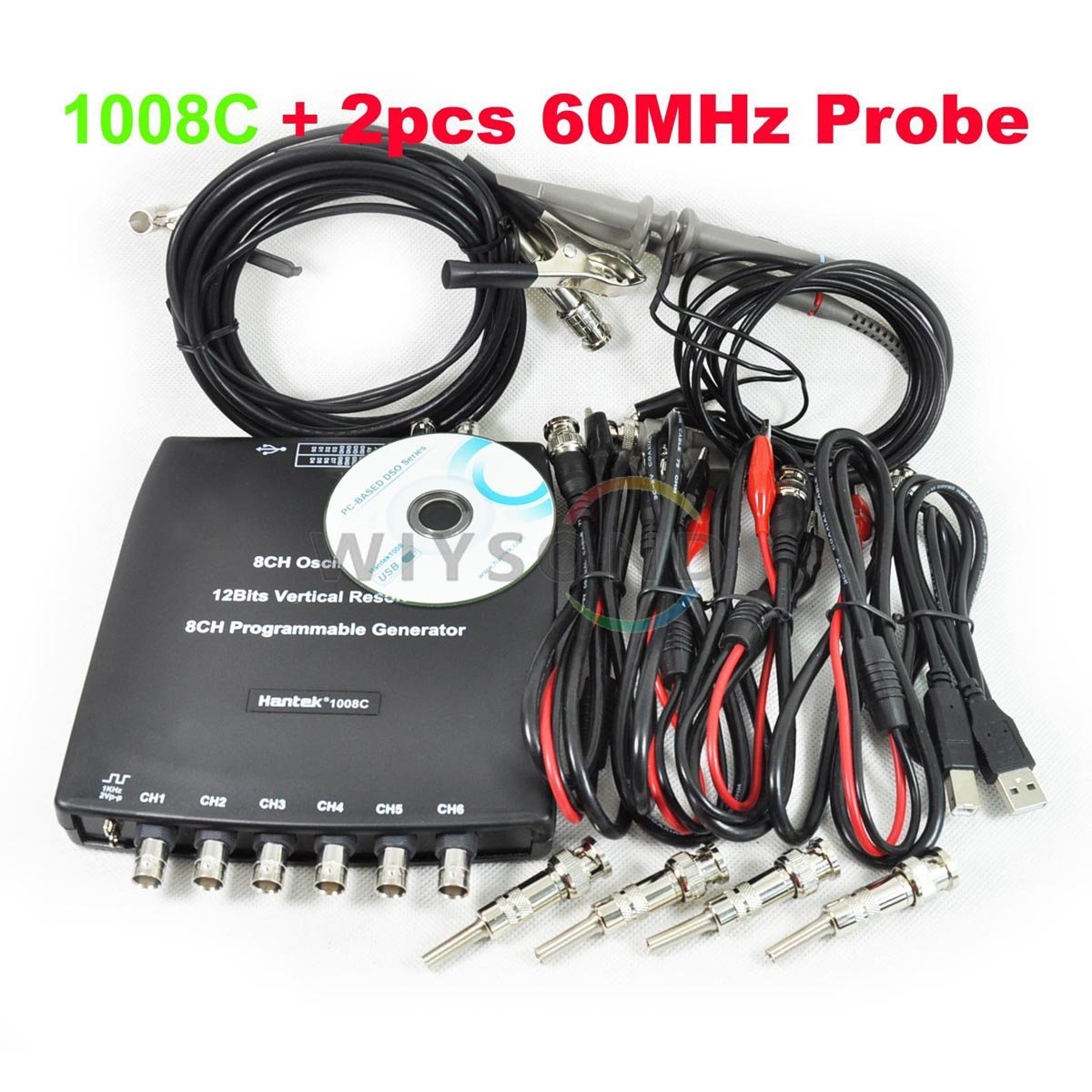
| 🚗 Hantek 1008C | 8 analog | ~200 kHz | 2.4 MSa/s | Best for Automotive | View → |
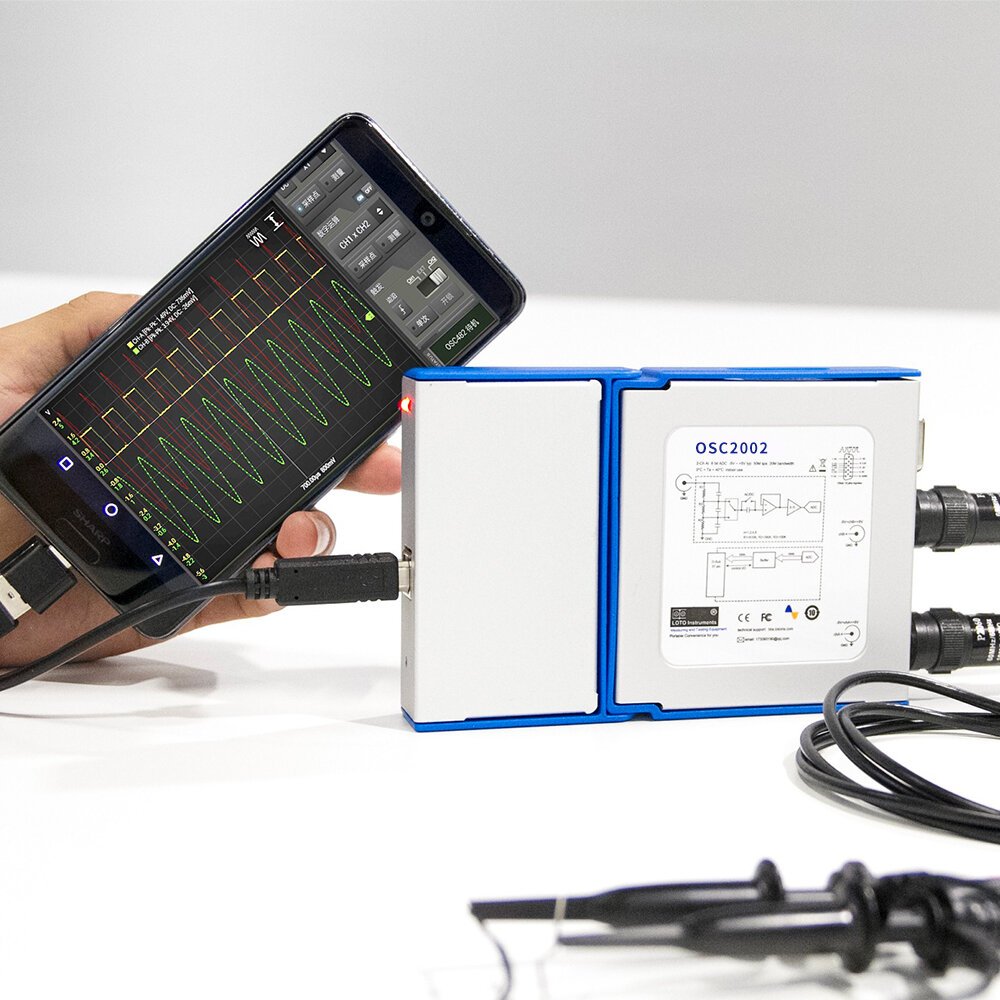
| 🪶 LOTO OSC2002 | 2 analog | 50 MHz | 1 GS/s | Best Pocket / Portable | View → |
Specs are manufacturer figures (max sample rate is usually shared/halved across active channels). We’ve left prices off this table on purpose — USB-scope pricing changes often, so tap any View → button to check the live Amazon price yourself.
🔍 What to Look for in a USB Oscilloscope
📶
Bandwidth
The most important number. Aim for ~5× your fastest signal. 20–50 MHz is plenty for microcontrollers and audio; 100 MHz+ is for fast digital and RF.
⚡
Sample Rate
How many points/second the scope captures. Higher means cleaner fast edges — but check whether it’s per channel or shared between both channels.
🎚️
Channels & Resolution
Two analog channels suit most work; add 16 digital lines (MSO) for decoding buses. 14-bit resolution (Digilent) shows tiny signals 8-bit scopes miss.
💻
Software Quality
You’ll live in this app. PicoScope 7 and Digilent WaveForms are the gold standard (and cross-platform). Cheap scopes’ software is functional but rough.
🧰
Extras & Safety
A built-in waveform generator, logic analyzer, protocol decoding and an isolated USB port (OWON) add real value and protect your laptop from ground loops.
🏆 Detailed Reviews — All 10 USB Oscilloscopes
🥇 BEST OVERALL
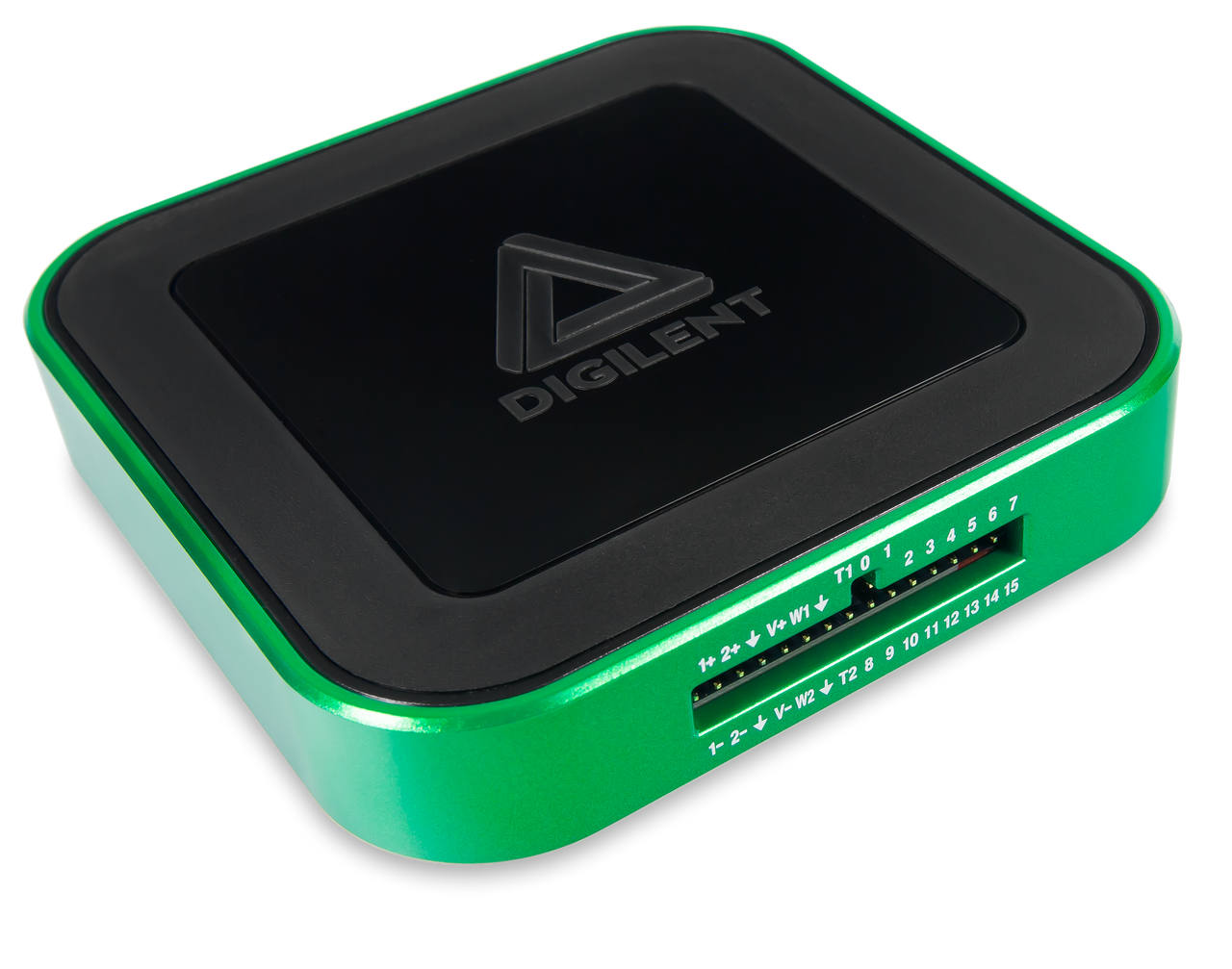
Digilent Analog Discovery 3
⭐ 4.7/5 · Editor’s Choice
Buy on Amazon →

The Analog Discovery 3 isn’t just a USB oscilloscope — it’s an entire portable lab. In one pocket-sized USB-C box you get a 2-channel 14-bit scope (125 MS/s, 30+ MHz with the BNC adapter), a 2-channel arbitrary waveform generator, a 16-channel logic analyzer/pattern generator and dual programmable power supplies. The free, cross-platform WaveForms software is superb, and its 14-bit resolution reveals small-signal detail that 8-bit budget scopes simply can’t. For a student or maker who wants one tool that does everything, nothing here comes close.
✅ Pros- Scope + AWG + logic + PSU in one
- 14-bit resolution, USB-C powered
- Best-in-class WaveForms software (Win/Mac/Linux)
❌ Cons- Premium price
- Needs BNC adapter for full bandwidth
- Flywire probes, not classic BNC out of the box
🎯 Verdict: The most capable USB instrument you can buy at this size. If your budget reaches it, the AD3 will outlast every other scope on this list.
👉 Check Price on Amazon: amazon.com/dp/B0CQMRJ6RQ 🏅 BEST SOFTWARE / STARTER
PicoScope 2204A
⭐ 4.7/5 · The Gold-Standard App
Buy on Amazon →

If you want the best USB-scope experience rather than the biggest spec sheet, buy a PicoScope. The entry-level 2204A pairs a 2-channel, 10 MHz, 100 MS/s front end with a built-in arbitrary waveform generator and — crucially — Pico’s industry-leading PicoScope 7 software, which runs on Windows, macOS and Linux and includes serial decoding, spectrum analysis, mask testing and deep buffers. The bandwidth is modest, but for learning, audio and microcontroller work the polish, reliability and long-term software support make it the scope you’ll actually enjoy using.
✅ Pros- Best software in the category
- Cross-platform & superb support
- Built-in waveform generator
❌ Cons- Only 10 MHz bandwidth
- No logic/MSO channels
- Pricey for the raw specs
🎯 Verdict: The most refined, future-proof starter scope. Buy it for the software — you’ll keep it for years.
👉 Check Price on Amazon: amazon.com/dp/B00GZMRZ3M 💵 BEST BUDGET · ⭐ 4.4/5Hantek 6022BE · 2CH · 20 MHz · 48 MSa/s · USB-powered
Buy →3. Hantek 6022BE

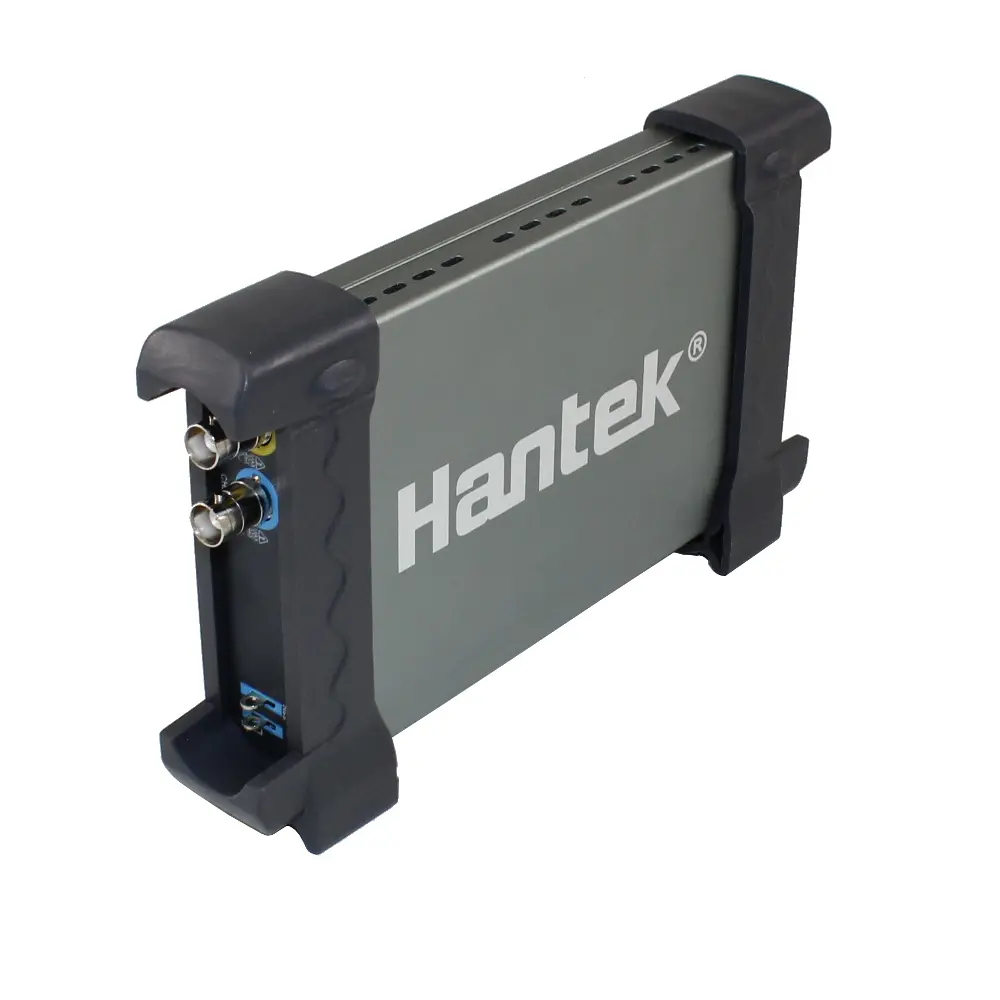
The Hantek 6022BE is the classic “my first oscilloscope” — a tiny aluminium box with 2 channels, 20 MHz of bandwidth and 48 MSa/s, powered entirely from USB. For microcontroller projects, simple audio and learning, it shows you real waveforms for the price of a couple of dev boards. The bundled software is basic, but it’s well supported by the excellent open-source OpenHantek6022, which works on Windows, macOS, Linux and even Raspberry Pi.
✅ Pros: Dirt cheap; truly pocketable; USB-powered; great open-source software option. ❌ Cons: 8-bit, 20 MHz only; no AWG or triggering depth; stock app is dated.
🎯 Verdict: The best way to own a real scope on a shoestring. Perfect for hobbyists who mostly probe sub-20 MHz signals.
🚀 BEST HIGH-BANDWIDTH · ⭐ 4.5/5Hantek 6254BD · 4CH · 250 MHz · 1 GSa/s · built-in AWG
Buy →4. Hantek 6254BD
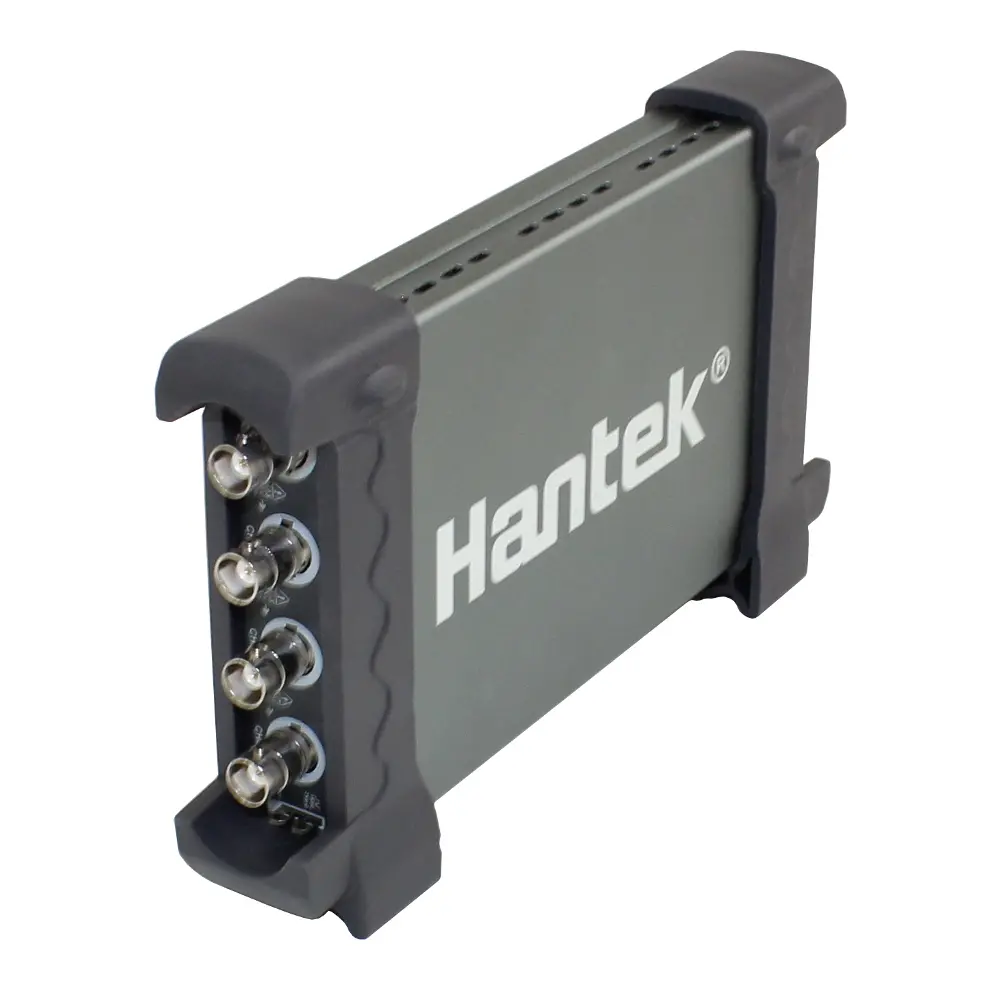
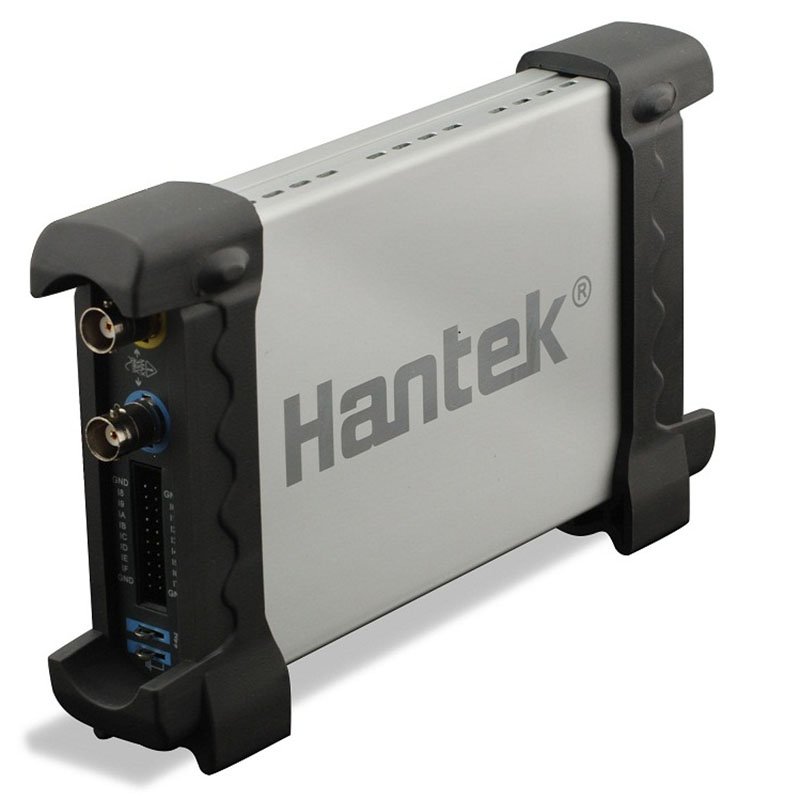
When you need real bandwidth without benchtop prices, the Hantek 6254BD delivers a lot of scope for the money: four analog channels, 250 MHz of bandwidth, a genuine 1 GSa/s real-time sample rate and a built-in DDS arbitrary waveform generator, all in a rugged anodized-aluminium USB box. It’s a serious tool for embedded debugging, power-electronics and four-signal SPI/bus work where a 2-channel 20 MHz scope runs out of room.
✅ Pros: 4 channels + 250 MHz + 1 GSa/s; built-in AWG; solid metal build; great spec-per-dollar. ❌ Cons: Windows-only software that feels dated; 8-bit; larger than pocket scopes.
🎯 Verdict: The best high-bandwidth, multi-channel USB scope for the price. A real workhorse for advanced makers and small labs.
🎓 BEST FOR STUDENTS · ⭐ 4.6/5Analog Discovery 2 · 2+16 ch · 14-bit · 100 MS/s · WaveForms
Buy →5. Digilent Analog Discovery 2

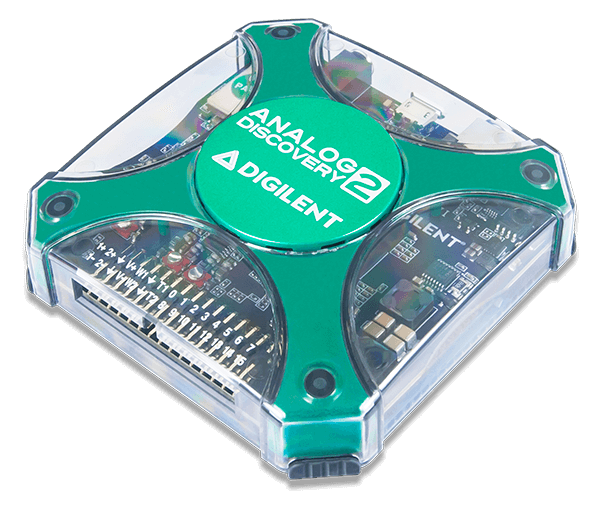
The outgoing Analog Discovery 2 remains a fantastic buy — especially for students who can use academic pricing. It offers the same all-in-one formula as the AD3 (14-bit 2-channel scope, AWG, 16-channel logic analyzer, dual power supplies) at 100 MS/s, driven by the same brilliant WaveForms software. Universities have deployed it by the thousand for at-home lab kits, so tutorials and community support are everywhere. It’s officially superseded by the AD3, but third-party stock is still widely available.
✅ Pros: Complete lab-in-a-box; 14-bit; huge tutorial/community base; academic discounts. ❌ Cons: Discontinued by Digilent (AD3 replaces it); micro-USB not USB-C; smaller buffers than AD3.
🎯 Verdict: The best value all-in-one for students and EE coursework — get it while stock and academic deals last.
🛡️ BEST ISOLATED / SAFETY · ⭐ 4.5/5OWON VDS1022I · 2CH · 25 MHz · 100 MSa/s · isolated USB
Buy →6. OWON VDS1022I
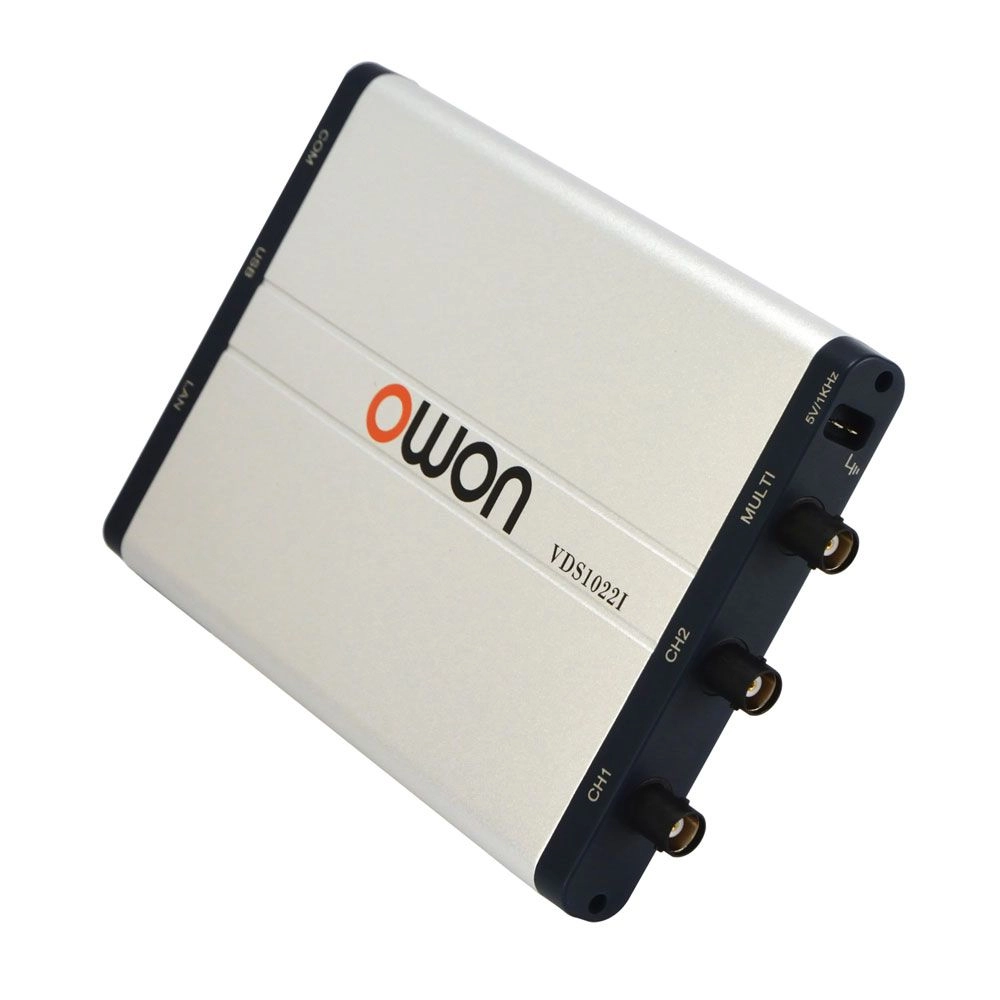
The standout feature of the OWON VDS1022I is right there in the name: galvanic USB isolation. That barrier between your circuit and your laptop prevents ground loops and protects your expensive PC from accidental over-voltage — a genuinely valuable safety feature most budget scopes skip. Add 25 MHz bandwidth, 100 MSa/s, a complete accessory bundle (two 60 MHz probes, silicone case) and clean, fast software, and it’s an excellent, safe entry scope. Independent testing has even measured its real bandwidth above the rated 25 MHz.
✅ Pros: Isolated USB protects your PC; complete kit included; quick setup; robust metal housing. ❌ Cons: Only 5k sample memory depth; occasional UI hang-ups; no waveform generator.
🎯 Verdict: The safest budget USB scope. Pick it if you ever probe mains-referenced or risky circuits and want to shield your laptop.
🔬 BEST SCOPE + LOGIC · ⭐ 4.3/5Hantek 6022BL · 2CH scope + 16CH logic · 20 MHz · 48 MSa/s
Buy →7. Hantek 6022BL

The Hantek 6022BL is the 6022BE’s smarter sibling: same 2-channel, 20 MHz, 48 MSa/s analog front end, plus a 16-channel, 10 MHz logic analyzer built in. For digital tinkering — watching an SPI bus, an I²C transaction or a parallel data line alongside your analog signals — that combo is a brilliant deal at the budget end. It’s the cheapest way to get both an analog scope and a multi-channel logic analyzer in a single USB device.
✅ Pros: Analog scope and 16-channel logic analyzer; USB-powered; very affordable; OpenHantek support. ❌ Cons: 8-bit, 20 MHz; logic analyzer software is basic; no protocol auto-decode like premium tools.
🎯 Verdict: The best budget two-in-one. Ideal for digital/embedded hobbyists who want logic capture without buying a second device.
🧮 BEST MIXED-SIGNAL · ⭐ 4.6/5PicoScope 2205A MSO · 2 analog + 16 digital · 25 MHz · 200 MS/s
Buy →8. PicoScope 2205A MSO
The PicoScope 2205A MSO brings Pico’s gold-standard software to mixed-signal work. You get 2 analog channels plus 16 digital channels at 25 MHz and up to 500 MS/s, an arbitrary waveform generator and the full PicoScope 7 suite with serial-protocol decoding (SPI, I²C, UART, CAN and more). Being able to capture and auto-decode analog and digital lines together, with truly excellent software, makes it a joy for embedded debugging — and far more portable than a benchtop MSO.
✅ Pros: Analog + 16 digital with superb software; protocol decode + AWG; cross-platform; compact kit. ❌ Cons: 25 MHz analog bandwidth; premium price; 8-bit analog resolution.
🎯 Verdict: The best mixed-signal USB scope for embedded engineers who want Pico software with logic channels in one tidy box.
🚗 BEST FOR AUTOMOTIVE · ⭐ 4.3/5Hantek 1008C · 8 channels · 2.4 MSa/s · 12-bit · diagnostics
Buy →9. Hantek 1008C

A specialist pick: the Hantek 1008C is an 8-channel, 12-bit, 2.4 MSa/s USB scope built for automotive diagnostics. Its low sample rate makes it useless for fast digital edges, but cars don’t need that — they need lots of channels at low frequency to watch sensors, ignition, CAN/LIN buses, injectors and charging circuits simultaneously. It even includes an 8-channel programmable generator to simulate crankshaft and camshaft signals. For DIY mechanics and EV/automotive students it’s a remarkably cheap way into signal-level diagnostics.
✅ Pros: 8 channels + 12-bit; purpose-built automotive presets; programmable signal generator; very affordable. ❌ Cons: Only 2.4 MSa/s — not a general-purpose scope; Windows-only; dated UI.
🎯 Verdict: The best USB scope for cars, not benches. A bargain for sensor/bus diagnostics — just don’t expect it to probe an MCU clock.
🪶 BEST POCKET / PORTABLE · ⭐ 4.2/5LOTO OSC2002 · 2CH · 50 MHz · 1 GS/s · 8–13-bit · ~210 g
Buy →10. LOTO OSC2002
Punching well above its size, the LOTO OSC2002 is a palm-sized 2-channel scope claiming 50 MHz bandwidth, a 1 GS/s sample rate and switchable 8–13-bit resolution, with FFT, protocol decoding, waveform recording and an open expansion interface for add-on modules (including isolated and signal-generator boards). Weighing about 210 g, it slips into a backpack and runs entirely from USB — a flexible, hackable little platform for makers who like to tinker with the hardware itself.
✅ Pros: Tiny and light; high claimed sample rate; modular/expandable; up to 13-bit mode; FFT & decoding. ❌ Cons: Niche brand & smaller community; software is functional not polished; specs are best-case.
🎯 Verdict: The best grab-and-go pocket scope for tinkerers who value portability and an expandable, open platform.
🛒 How to Choose the Right USB Oscilloscope
💵
On a Tight Budget?
Grab the Hantek 6022BE for pure analog, or the 6022BL if you also want a 16-channel logic analyzer. Real scopes for the price of a few dev boards.
🎓
Student or Beginner?
The PicoScope 2204A (best software) or Analog Discovery 2 (all-in-one with academic pricing) make learning the most pleasant.
🧪
Want One Tool for Everything?
The Analog Discovery 3 is scope + AWG + logic analyzer + power supply in your pocket. The single best do-it-all instrument here.
🚀
Need Real Bandwidth?
The Hantek 6254BD gives 4 channels, 250 MHz and 1 GSa/s — the most capable high-speed front end on this list for advanced work.
🔌
Doing Digital/Bus Work?
Go mixed-signal: the PicoScope 2205A MSO (premium) or Hantek 6022BL (budget) capture analog and digital lines together.
🚗
Working on Cars?
The 8-channel Hantek 1008C is purpose-built for automotive sensor, ignition and bus diagnostics — not for fast digital, but unbeatable for the garage.
⚙️ Key Specs Compared — Side by Side
| Spec | Analog Discovery 3 | PicoScope 2204A | Hantek 6022BE | Hantek 6254BD | OWON VDS1022I | PicoScope 2205A MSO |
|---|
| Bandwidth | 30+ MHz | 10 MHz | 20 MHz | 250 MHz ⭐ | 25 MHz | 25 MHz |
| Sample Rate | 125 MS/s | 100 MS/s | 48 MSa/s | 1 GSa/s ⭐ | 100 MSa/s | 200 MS/s |
| Analog Ch. | 2 | 2 | 2 | 4 ⭐ | 2 | 2 |
| Digital Ch. | 16 ⭐ | — | — | — | — | 16 ⭐ |
| Resolution | 14-bit ⭐ | 8-bit | 8-bit | 8-bit | 8-bit | 8-bit |
| Waveform Gen. | Yes | Yes | No | Yes | No | Yes |
| Software / OS | WaveForms ⭐
Win/Mac/Linux | PicoScope 7 ⭐
Win/Mac/Linux | Basic / Win
(OpenHantek) | Windows | Windows
(isolated USB) | PicoScope 7 ⭐
Win/Mac/Linux |
❓ Frequently Asked Questions
Is a USB oscilloscope as good as a benchtop one?
For the money, often better. A USB scope spends its budget on the analog front end and uses your laptop for the (large, high-resolution) display and processing — so you frequently get more bandwidth, deeper memory and slicker software per dollar. The trade-offs are that you always need a host PC nearby and can’t just glance at a standalone screen. For a home lab, classroom or field work, a good USB scope is genuinely excellent; for a busy repair bench where you want instant power-on and dedicated knobs, a benchtop still wins.
How much bandwidth do I actually need?
A useful rule of thumb is at least 5× the highest frequency you want to measure accurately — partly because square waves and fast edges contain harmonics far above their fundamental. For Arduino/ESP32 GPIO, audio, power-supply and most sensor work, 20–50 MHz (Hantek 6022BE, OWON, LOTO) is plenty. For fast SPI, video or RF, step up to 100 MHz+ — that’s where the Hantek 6254BD’s 250 MHz earns its keep.
What’s the difference between an oscilloscope and an MSO?
A plain oscilloscope shows analog voltages over time. A mixed-signal oscilloscope (MSO) adds digital channels — typically 16 — so you can view and decode logic and buses (SPI, I²C, UART, CAN) alongside the analog waveforms. The PicoScope 2205A MSO and the Hantek 6022BL (scope + 16-channel logic analyzer) give you that capability; the Analog Discovery 2/3 effectively do too. If you debug microcontrollers and protocols, mixed-signal is well worth it.
Does the headline sample rate apply to both channels?
Usually not — read the spec carefully. Many budget scopes quote a “max” sample rate that’s only achievable on a single channel; with both channels active it’s often halved. Digilent and Pico are clearer about per-channel figures. The practical upshot: don’t pick a scope purely on the biggest sample-rate number — bandwidth, resolution and software matter just as much.
Why is USB isolation a big deal?
A non-isolated USB scope shares ground with your laptop. If you probe a circuit at a different ground potential — or make a mistake on a mains-referenced supply — that fault can travel straight into your computer. An isolated scope like the OWON VDS1022I puts a barrier in the USB path, protecting your PC and reducing ground-loop noise. It’s a feature worth paying for if you ever work near higher voltages.
🏁 Final Verdict — Our Top Picks
The right USB oscilloscope for every kind of bench and budget:
🥇 Best Overall — Analog Discovery 3: scope + AWG + logic + PSU, 14-bit, brilliant software
Buy →🏅 Best Software / Starter — PicoScope 2204A: the most refined, cross-platform USB-scope experience
Buy →💵 Best Budget — Hantek 6022BE: a real 2-channel scope for the price of a few dev boards
Buy →🚀 Best High-Bandwidth — Hantek 6254BD: 4 channels, 250 MHz, 1 GSa/s and an AWG
Buy →🛡️ Best Isolated / Safety — OWON VDS1022I: galvanic USB isolation protects your laptop
Buy →🧮 Best Mixed-Signal — PicoScope 2205A MSO: 2 analog + 16 digital with Pico’s software
Buy →No single USB oscilloscope is perfect for everyone, but every pick here will turn invisible electrical signals into something you can actually see and debug. For most makers and students, the PicoScope 2204A (for its unbeatable software) or the Analog Discovery 3 (for doing absolutely everything in one box) are the scopes to beat. If you’re counting pennies, the Hantek 6022BE proves you don’t need to spend much to start seeing waveforms, while the Hantek 6254BD is the one to reach for when you need serious bandwidth and channels. Pair your new scope with our Arduino, ESP32, STM32 and Raspberry Pi tutorials and start probing your projects today.
💬 Not sure which USB oscilloscope fits your bench? Tell us what you’re working on — microcontrollers, audio, power electronics, automotive or fast digital — in the comments below, and we’ll point you to the right pick.
All Amazon links above use our affiliate tag (microlab05-20). Purchasing through them supports microcontrollerslab.com at no extra cost to you. Prices and availability change frequently — always confirm the current price on Amazon before buying.