⚠️ Affiliate Disclosure: This post contains Amazon affiliate links. If you purchase through our links, we may earn a small commission at no extra cost to you. We only recommend modules we have researched and whose listings we checked live on Amazon. Prices and stock change constantly, so we deliberately don’t print them here. Tap any “Buy Here” button to see the current price on Amazon before buying.
Ultimate Buying Guide
🧭 Best Accelerometer & Gyroscope Modules for Arduino, ESP32 & Robotics
9 IMU modules ranked, from the classic MPU6050 and MPU9250 to the LSM6DS3, ICM-20948, industrial ISM330DHCX and BNO085 sensor-fusion boards, with real specs, honest verdicts and direct Amazon links.
✅ 9 Modules Reviewed
✅ Verified Amazon ASINs
✅ Listings Checked Live
✅ Honest Pros & Cons
An accelerometer measures linear acceleration (including gravity, which is how it knows which way is down), and a gyroscope measures how fast it is rotating. Put them together, often with a magnetometer, and you get an IMU (Inertial Measurement Unit): the sensor behind self-balancing robots, drone flight controllers, camera gimbals, gesture controllers, step counters, vibration monitors and fall detectors. If your project needs to know its tilt, heading or motion, it needs one of these modules.
The trouble is that the market is a mix of legendary but end-of-life parts (MPU6050, MPU9250), modern low-power chips (LSM6DS3, BMI270, ICM-20948), industrial-grade sensors (ISM330DHCX) and smart “sensor fusion” modules (BNO055, BNO085) that do the orientation math for you. This guide ranks 9 accelerometer and gyroscope modules on the things that actually matter in embedded work: axes, measurement ranges, noise and drift, onboard fusion, interface, supply voltage and library support.
💡 Reality check before you buy: No cheap MEMS gyro holds a heading on its own. Integrate raw gyro data and it drifts by degrees per minute, which is why you need sensor fusion (a complementary, Madgwick or Kalman filter, or a module like the BNO085 that does it onboard). Magnetometers are easily thrown off by nearby motors, batteries and steel, so “9-DOF” does not automatically mean a reliable compass. The MPU6050 and MPU9250 are both discontinued by TDK InvenSense, and many cheap “MPU9250” boards actually carry an MPU6500 with no magnetometer at all. Finally, check the supply and logic voltage: most bare IMU chips are 3.3V parts, and only some breakouts include a regulator and level shifting for 5V Arduinos.
🧭 Quick Comparison: All 9 Accelerometer & Gyroscope Modules
| Module | Sensors | Interface | Key Feature | Best For | Buy |
|---|
| 🥇 BNO085 9-DOF Module | Accel + Gyro + Mag | I2C / SPI / UART | Onboard sensor fusion (quaternions) | Best Overall | Buy Here → |
| 🏅 HiLetgo GY-521 MPU6050 (3-Pack) | Accel + Gyro | I2C | Biggest tutorial base | Best Value | Buy Here → |
| 🎯 Adafruit BNO055 | Accel + Gyro + Mag | I2C | Euler angles out of the box | Best Name-Brand Fusion | Buy Here → |
| 🏭 SparkFun ISM330DHCX | Accel + Gyro | I2C (Qwiic) / SPI | Industrial, -40 to 105°C, ±4000 dps | Best High-Performance | Buy Here → |
| 🧲 ICM-20948 (2-Pack) | Accel + Gyro + Mag | I2C / SPI | Modern MPU9250 successor | Best Modern 9-DOF | Buy Here → |
| ⚡ NOYITO LSM6DS3 | Accel + Gyro | I2C / SPI | 8 KB FIFO, step and tap detection | Best Low-Power 6-Axis | Buy Here → |
| ⌚ SparkFun BMI270 Micro | Accel + Gyro | I2C (Qwiic) / SPI | Ultra-low power, gesture features | Best for Wearables | Buy Here → |
| 🧭 HiLetgo MPU9250 GY-9250 | Accel + Gyro + Mag | I2C / SPI | Cheapest 9-DOF, huge legacy support | Best Budget 9-DOF | Buy Here → |
| 📳 Teyleten GY-291 ADXL345 (3-Pack) | Accel only | I2C / SPI | Tap, free-fall and activity interrupts | Best Accelerometer-Only | Buy Here → |
We don’t list prices because they change daily. Several picks ship as multi-packs, so check the listing. Tap “Buy Here” to see the current price and stock on Amazon.
🔍 What to Look for in an Accelerometer / Gyroscope Module
🧮
Degrees of Freedom (3, 6 or 9)
3-DOF is accelerometer only (tilt, shock, vibration). 6-DOF adds a gyro for smooth pitch and roll. 9-DOF adds a magnetometer so you can also estimate heading (yaw) relative to magnetic north.
📏
Measurement Range
Most parts offer selectable ±2/4/8/16 g and ±250 to ±2000 °/s. Use the smallest range that won’t saturate: ±2 g for tilt, ±16 g for impacts, ±2000 °/s or more for fast-spinning drones and rockets.
🧠
Raw Data vs Onboard Fusion
Raw IMUs (MPU6050, LSM6DS3) give you numbers and leave the filtering to your MCU. Fusion modules (BNO055, BNO085) run the algorithm internally and output stable quaternions or Euler angles.
📉
Noise, Drift & Temperature Stability
Gyro bias drift and noise density decide how stable your angles are. Newer chips (ISM330DHCX, ICM-20948, BMI270) beat the 2010-era MPU6050, and industrial parts stay stable across wide temperature swings.
🔌
Interface, Voltage & Connectors
I2C is easiest; SPI is faster for high sample rates. Check for an onboard 3.3V regulator before wiring to a 5V Arduino, and look for Qwiic/STEMMA QT connectors if you hate soldering.
🏆 Detailed Reviews: All 9 Accelerometer & Gyroscope Modules
🥇 BEST OVERALL
BNO085 9-DOF IMU Module
⭐ 4.8/5 · Orientation Without the Math
Onboard
SENSOR FUSION (SH-2)
I2C / SPI
+ UART & UART-RVC
Quaternion
ROTATION VECTOR OUT

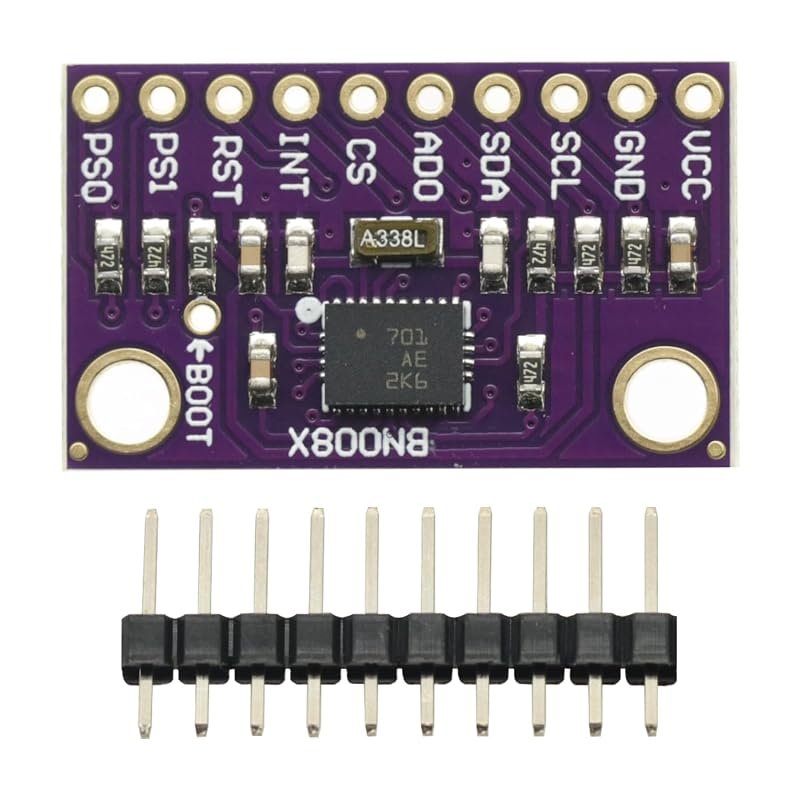
The BNO085 is the IMU we’d pick for almost any project that needs to know where it is pointing. It packs a 3-axis accelerometer, gyroscope and magnetometer together with an ARM Cortex-M0 running CEVA (Hillcrest) SH-2 fusion firmware, so instead of raw numbers you read calibrated, drift-corrected rotation vectors as quaternions, plus gravity, linear acceleration, step counting, tap and activity detection. That removes the hardest part of IMU work, writing and tuning a Kalman or Madgwick filter, from your microcontroller. This module (sold by GODIYMODULES) exposes all three interfaces: I2C up to 400 kHz, SPI up to 3 MHz and UART up to 3 Mbps, plus the simple UART-RVC mode that streams heading and acceleration with no driver code at all. The Adafruit BNO08x and SparkFun BNO08x Arduino libraries work with it.
✅ Pros- Onboard fusion, no filter tuning
- Stable quaternion / heading output
- I2C, SPI, UART and UART-RVC
- Extra outputs: steps, taps, activity
❌ Cons- Generic board, not the Adafruit original
- I2C mode is fussy with some ESP32 cores
- Costs several MPU6050s
🎯 Verdict: The best accelerometer/gyroscope module for most builders. If you want reliable orientation for a robot, gimbal or head tracker without becoming a sensor-fusion expert, start here.
👉 Check Price on Amazon →
🏅 BEST VALUE
HiLetgo GY-521 MPU6050 (3-Pack)
⭐ 4.6/5 · The Classic Learning IMU
Buy on Amazon →
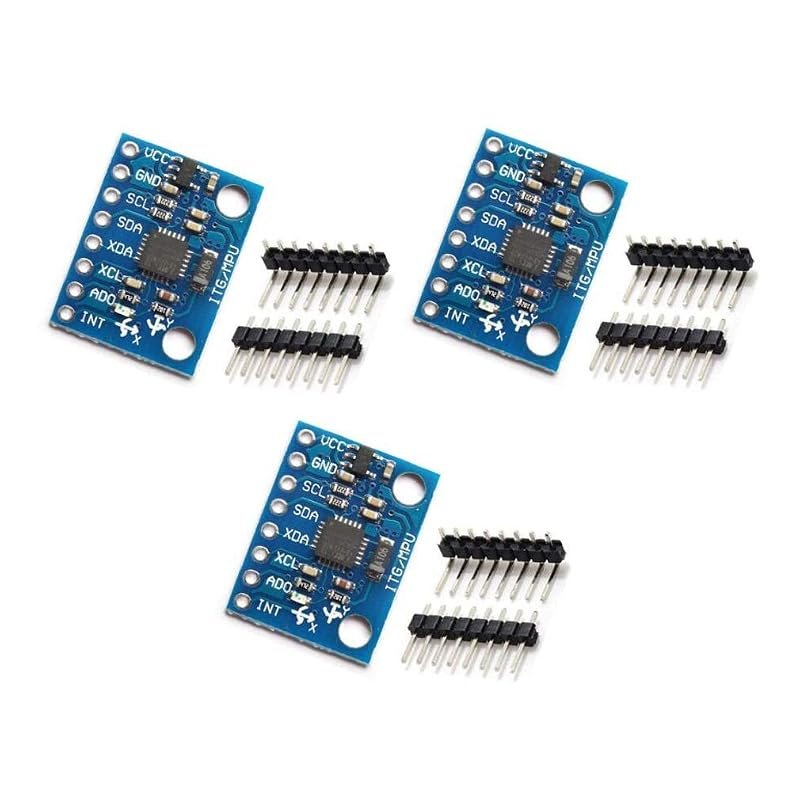
The MPU6050 on a GY-521 board is the IMU almost every maker learns on, and this HiLetgo three-pack is the cheapest sensible way to buy it. Each board combines a 3-axis accelerometer (selectable ±2/4/8/16 g) and 3-axis gyroscope (±250/500/1000/2000 °/s) with 16-bit ADCs, an onboard regulator for 3.3V to 5V supplies and standard I2C. The chip also includes InvenSense’s Digital Motion Processor (DMP), which libraries like I2Cdev/MPU6050 can use to output quaternions. Its real superpower is support: there are thousands of Arduino, ESP32, STM32 and Raspberry Pi Pico examples, including self-balancing robots, gesture gloves and drone stabilizers, and our own ESP32 MPU6050 tutorial.
✅ Pros- Three boards for pocket change
- Runs on 3.3V or 5V boards
- Onboard DMP for quaternions
- The biggest tutorial base of any IMU
❌ Cons- Chip is end-of-life; clones vary
- No magnetometer, so yaw drifts
- Noisier than modern IMUs
🎯 Verdict: The best value IMU for learning and prototyping. Buy the three-pack, learn tilt and complementary filtering on it, and upgrade only when your project demands it.
👉 Check Price on Amazon →
🎯 BEST NAME-BRAND FUSION · ⭐ 4.6/53. Adafruit BNO055 Absolute Orientation Breakout
Bosch BNO055 · 9-DOF · onboard fusion · Euler, quaternion, linear accel & gravity outputs · I2C · 3.3V/5V
Buy Here →

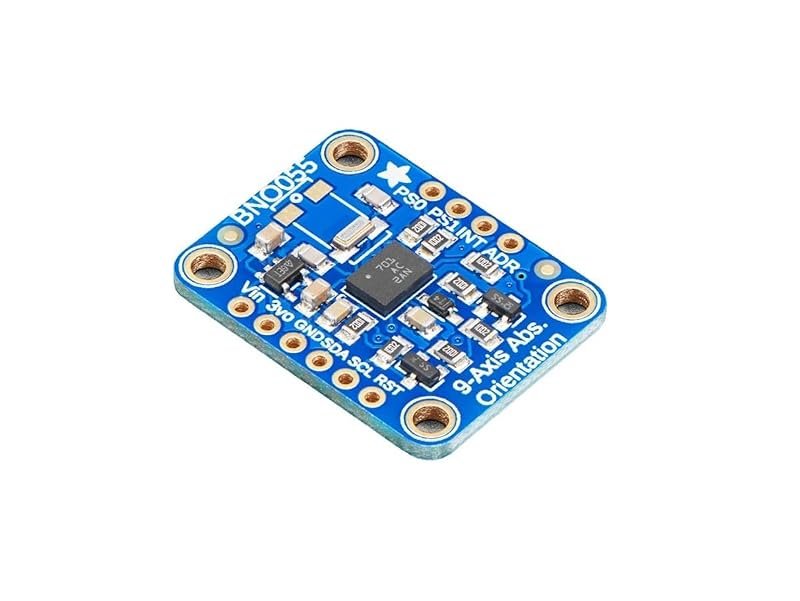
The Adafruit BNO055 was the first affordable “smart” IMU and is still the gentlest introduction to absolute orientation. Bosch’s BNO055 runs its own fusion on an internal Cortex-M0 and hands you Euler angles, quaternions, angular velocity, linear acceleration, gravity vector and magnetic field over I2C, with a calibration status register so you know when the heading is trustworthy. Adafruit’s breakout adds a regulator and level shifting so it works with 3.3V and 5V boards, and the Adafruit_BNO055 library has you reading heading, roll and pitch within minutes. It shares hardware with the BNO085 but runs Bosch’s simpler firmware, which is why we rank it just below.
✅ Pros: Genuine Adafruit board; Euler angles with zero math; great library and guide; 3.3V/5V safe.
❌ Cons: Fusion capped around 100 Hz; needs I2C clock stretching (awkward on some MCUs); Amazon stock is patchy outside the US.
🎯 Verdict: The best name-brand fusion IMU. Pick it if you want Adafruit’s quality and documentation and readable Euler angles out of the box.
👉 Check Price on Amazon →
🏭 BEST HIGH-PERFORMANCE · ⭐ 4.7/54. SparkFun 6DoF IMU Breakout ISM330DHCX (Qwiic)
ST ISM330DHCX · ±2 to ±16 g · ±125 to ±4000 °/s · -40 to +105°C · Machine Learning Core · I2C/SPI · Qwiic
Buy Here →

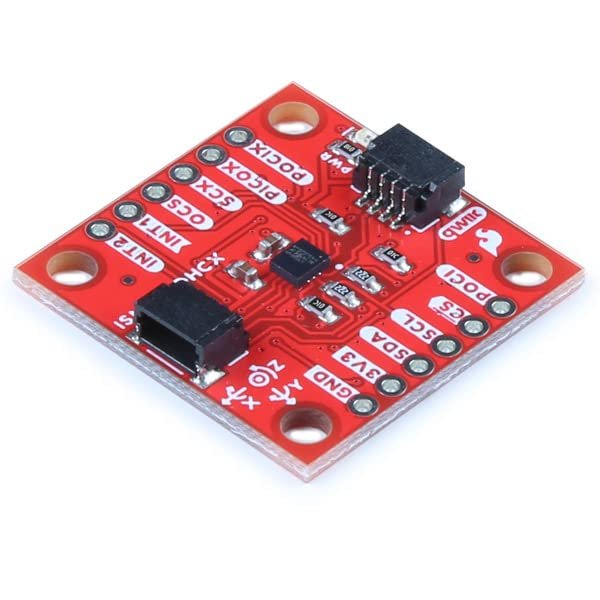
The ISM330DHCX is ST’s industrial-grade 6-axis IMU, and SparkFun’s 1″×1″ Qwiic breakout makes it plug-and-play. The gyro reaches an unusually wide ±4000 °/s, the sensor is specified from -40 to +105°C with embedded temperature compensation, and ST’s Machine Learning Core and finite-state machine can classify motion on-chip without waking your MCU. That combination makes it the right choice for vibration and condition monitoring, fast-spinning robots, rockets and anything that lives outdoors or in an enclosure that gets hot. The SparkFun library supports Arduino and ESP32, and the Qwiic connector means zero soldering.
✅ Pros: Industrial temperature range and stability; ±4000 °/s gyro; on-chip ML core; Qwiic, no soldering.
❌ Cons: No magnetometer; no onboard orientation fusion; pricier than hobby IMUs.
🎯 Verdict: The best high-performance 6-axis IMU. Choose it when stability, temperature range and headroom matter more than price.
👉 Check Price on Amazon →
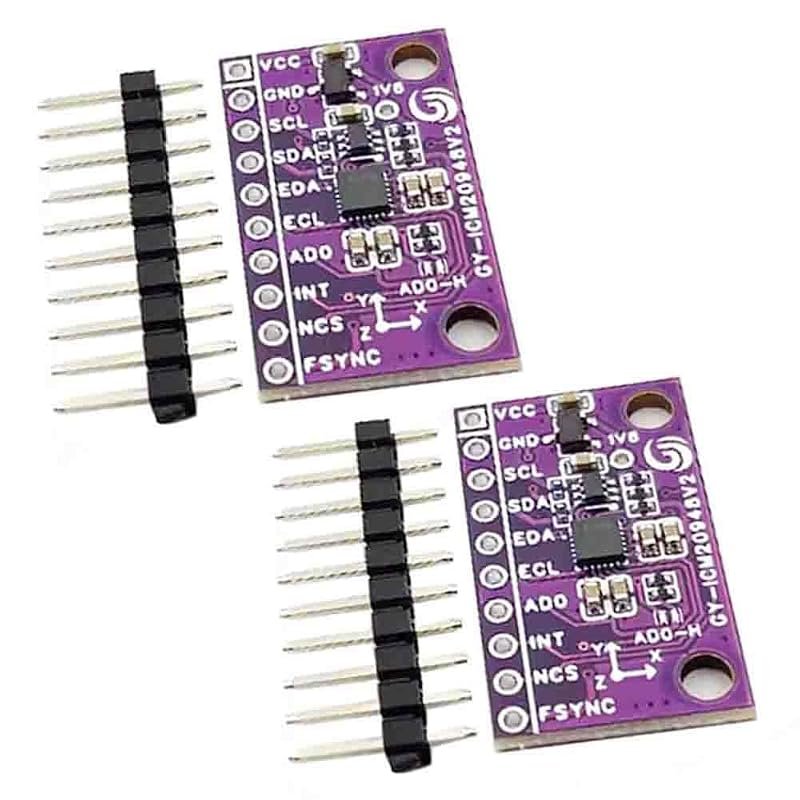
🧲 BEST MODERN 9-DOF · ⭐ 4.4/55. ICM-20948 GY-ICM20948V2 9-DOF Module (2-Pack)
TDK ICM-20948 · ±16 g · ±2000 °/s · AK09916 magnetometer · DMP · I2C/SPI · 2 boards in pack
Buy Here →
When TDK discontinued the MPU9250, the ICM-20948 became its official successor, and it is the 9-DOF chip to design around today. It pairs a 6-axis accel/gyro with the AK09916 magnetometer, uses noticeably less power than the MPU9250, and keeps an onboard Digital Motion Processor that can output fused quaternions. This GY-ICM20948V2 two-pack is the budget way in, and both the SparkFun ICM-20948 library and several MicroPython drivers support it. The listing is light on detail, so treat it as a 3.3V part unless you confirm a regulator on the board.
✅ Pros: Current-production 9-DOF chip; lower power than MPU9250; DMP quaternions; two boards per pack.
❌ Cons: Sparse listing and docs; magnetometer sits behind an internal I2C master; DMP setup is fiddly.
🎯 Verdict: The best modern 9-DOF raw IMU. If you’re replacing an MPU9250 in a new design, this is the chip to move to.
👉 Check Price on Amazon →
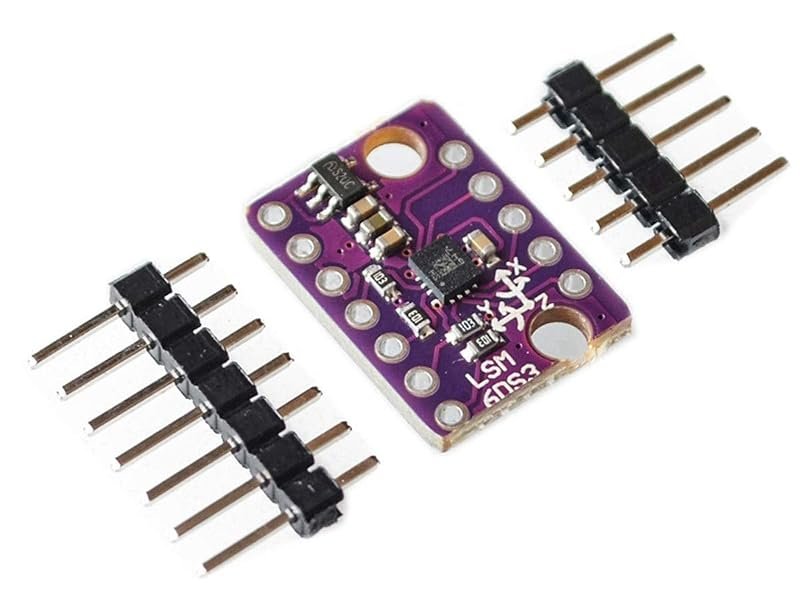
⚡ BEST LOW-POWER 6-AXIS · ⭐ 4.4/56. NOYITO LSM6DS3 6-DOF Breakout
ST LSM6DS3 · ±2 to ±16 g · ±125 to ±2000 °/s · 8 KB FIFO · accel up to 6.7 kS/s · step, tap & tilt detection · I2C/SPI
Buy Here →

The LSM6DS3 is ST’s “always-on” 6-axis IMU, the same family used on boards like the Arduino Nano 33 IoT and Seeed XIAO nRF52840 Sense. Its standout feature is a giant 8 KB FIFO: the sensor can buffer thousands of samples while your MCU sleeps, then hand them over in one burst, which is a big win for battery-powered loggers. It also has hardware pedometer, tap, double-tap, free-fall and tilt interrupts, and samples the accelerometer up to 6.7 kS/s for vibration work. The NOYITO breakout exposes I2C and SPI, and the SparkFun LSM6DS3 library works with it.
✅ Pros: 8 KB FIFO for sleep-heavy designs; built-in step/tap/tilt engines; fast sampling; low power.
❌ Cons: 3.3V-class part, check before wiring to 5V; no magnetometer; superseded by LSM6DSOX/DS3TR-C.
🎯 Verdict: The best low-power 6-axis IMU for loggers and step counters. Let the FIFO do the work while your MCU sleeps.
👉 Check Price on Amazon →
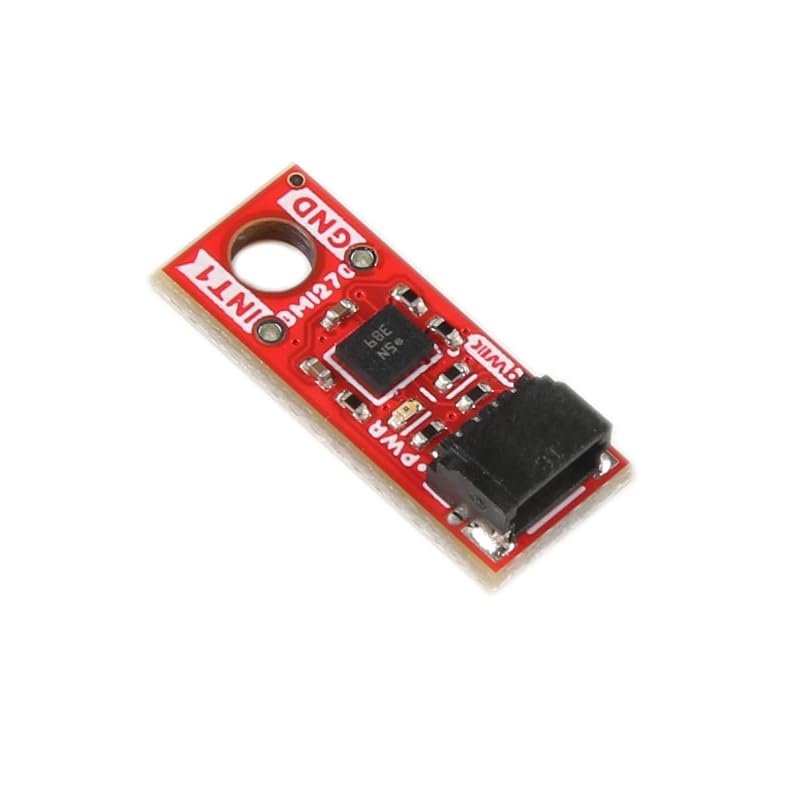
⌚ BEST FOR WEARABLES · ⭐ 4.5/57. SparkFun Micro 6DoF IMU Breakout BMI270 (Qwiic)
Bosch BMI270 · ±2 to ±16 g · ±125 to ±2000 °/s · ultra-low power · motion-triggered interrupts · I2C/SPI · Qwiic
Buy Here →
The Bosch BMI270 was designed for smartwatches and fitness bands, and SparkFun’s Micro Qwiic breakout makes it easy to prototype with. It draws very little current, and its on-chip features (step counter, wrist-gesture and activity recognition, any-motion and no-motion interrupts) let your MCU stay in deep sleep until something actually happens. It is the same IMU found on the Arduino Nano 33 BLE Sense Rev2, so there’s good Arduino support, and SparkFun’s library covers ESP32 and other cores. The tiny footprint fits wearables and handheld controllers where every millimetre counts.
✅ Pros: Ultra-low power; on-chip gesture and step features; tiny Qwiic board; modern, in-production Bosch chip.
❌ Cons: Needs a config blob uploaded at boot (library handles it); no magnetometer; costs more than generic boards.
🎯 Verdict: The best IMU for wearables and battery projects. Smart interrupts keep your MCU asleep and your battery alive.
👉 Check Price on Amazon →
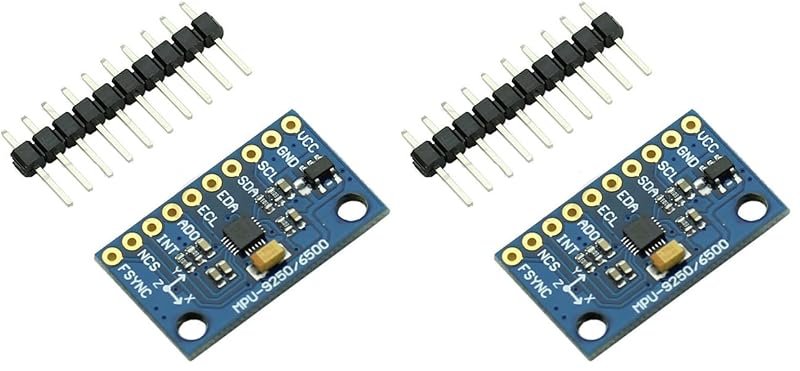
🧭 BEST BUDGET 9-DOF · ⭐ 4.1/58. HiLetgo MPU9250 GY-9250 9-Axis Module
MPU9250 (MPU6500 + AK8963) · ±16 g · ±2000 °/s · 3-axis magnetometer · I2C/SPI · 3V to 5V supply
Buy Here →

The MPU9250 is the MPU6050’s big brother: an MPU6500 accel/gyro and an AK8963 magnetometer in one package, giving a full 9-DOF for heading estimation on a tight budget. The HiLetgo GY-9250 board accepts 3V to 5V, exposes both I2C and SPI, and works with the popular hideakitai MPU9250 and Bolder Flight libraries (see our MPU9250 Arduino tutorial). The honest catch: TDK has discontinued the chip, quality varies from batch to batch, and some cheap “MPU9250” boards turn out to be MPU6500s with no magnetometer. Check the WHO_AM_I register (0x71 for a genuine MPU9250) as soon as it arrives.
✅ Pros: Cheapest 9-DOF option; I2C and SPI; huge legacy library and tutorial support; 3V to 5V friendly.
❌ Cons: Discontinued chip; batch quality varies; fake/MPU6500 boards exist; magnetometer needs careful calibration.
🎯 Verdict: The best budget 9-DOF for learning and existing designs. For anything new, the ICM-20948 or BNO085 is the safer long-term choice.
👉 Check Price on Amazon →
📳 BEST ACCELEROMETER-ONLY · ⭐ 4.3/59. Teyleten Robot GY-291 ADXL345 (3-Pack)
Analog Devices ADXL345 · 3-axis accel · ±2 to ±16 g · 4 mg/LSB · tap, free-fall & activity interrupts · I2C/SPI
Buy Here →
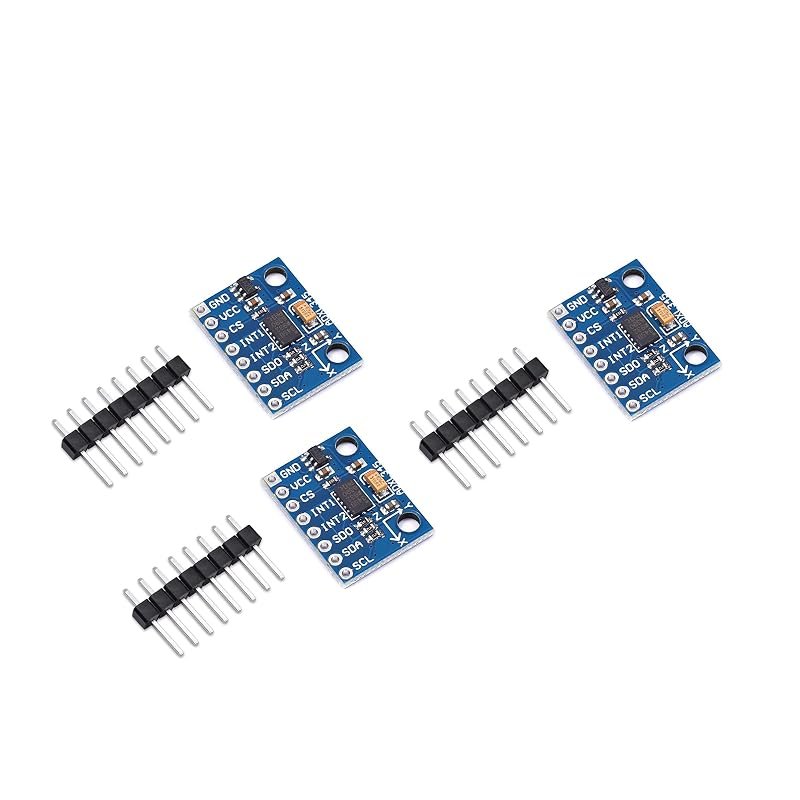
Not every project needs a gyro. If you only care about tilt, shock, vibration, tap or free-fall, the ADXL345 on a GY-291 board is simpler, cheaper to run and easier to use than any IMU. Analog Devices’ chip offers ±2 to ±16 g ranges with a fine 4 mg/LSB resolution, and its built-in single-tap, double-tap, activity, inactivity and free-fall detection can fire interrupts so your MCU doesn’t have to poll. It talks I2C or SPI, and the Adafruit ADXL345 and SparkFun libraries make it a five-minute job on Arduino, ESP32 or Pico. The three-pack covers a tilt alarm, a knock sensor and a spare.
✅ Pros: Simple and cheap; excellent tap/free-fall interrupts; fine 4 mg/LSB resolution; three boards per pack.
❌ Cons: No gyro, so no smooth rotation tracking; noisy under vibration for tilt work; generic board QC varies.
🎯 Verdict: The best accelerometer-only module. Perfect for tilt switches, knock sensors, fall detection and vibration triggers.
👉 Check Price on Amazon →
🛒 How to Choose the Right IMU Module
🤖
Need reliable orientation fast?
Get the BNO085: drift-corrected quaternions from onboard fusion, no filter code needed.
💵
Learning IMUs on a budget?
The HiLetgo MPU6050 three-pack has the most tutorials of any IMU and costs almost nothing.
🎯
Want Euler angles and great docs?
The Adafruit BNO055 outputs heading, roll and pitch directly with an excellent library.
🏭
Harsh environment or vibration monitoring?
The SparkFun ISM330DHCX is industrial-grade with ±4000 °/s and -40 to 105°C range.
🧲
Need raw 9-DOF for your own fusion?
Choose the ICM-20948 for new designs, or the MPU9250 if you’re following an older tutorial.
🔋
Running on a coin cell or LiPo?
Use the BMI270 or LSM6DS3: low current, smart interrupts and big FIFOs.
⚙️ Key Specs Compared: Side by Side
| Spec | BNO085 | MPU6050 | Adafruit BNO055 | ISM330DHCX | ICM-20948 |
|---|
| Degrees of Freedom | 9 ⭐ | 6 | 9 ⭐ | 6 | 9 ⭐ |
| Max Accel Range | ±8 g | ±16 g ⭐ | ±16 g ⭐ | ±16 g ⭐ | ±16 g ⭐ |
| Max Gyro Range | ±2000 °/s | ±2000 °/s | ±2000 °/s | ±4000 °/s ⭐ | ±2000 °/s |
| Onboard Fusion | Full SH-2 fusion ⭐ | DMP (6-axis) | Bosch fusion | ML core / FSM | DMP (9-axis) |
| Interface | I2C / SPI / UART ⭐ | I2C | I2C | I2C / SPI | I2C / SPI |
| Operating Temp | -40 to 85°C | -40 to 85°C | -40 to 85°C | -40 to 105°C ⭐ | -40 to 85°C |
| Chip Status | Active | Discontinued | Active | Active, industrial longevity ⭐ | Active |
Specs are taken from the chip datasheets and live Amazon listings and can vary by board revision. Always confirm details on the listing before buying.
❓ Frequently Asked Questions
What’s the difference between the MPU6050, MPU9250 and ICM-20948?
The MPU6050 is a 6-axis IMU (accelerometer and gyroscope). The MPU9250 adds an AK8963 magnetometer for 9 axes, and the ICM-20948 is TDK’s newer, lower-power 9-axis replacement with an AK09916 magnetometer. The MPU6050 and MPU9250 are both discontinued, though modules are still easy to find. For new 9-DOF designs, use the ICM-20948 (raw data) or BNO085 (fused orientation).
Do I need a 6-DOF or a 9-DOF IMU?
A 6-DOF IMU gives accurate pitch and roll because gravity provides a stable reference, which is enough for self-balancing robots, tilt sensing and most gimbals. Yaw (heading) has no such reference, so it slowly drifts. If you need a heading that stays put, such as for a rover, a compass or head tracking, you need a 9-DOF IMU so the magnetometer can correct yaw. Keep the magnetometer away from motors and batteries and calibrate it in place.
Why does my gyroscope angle drift, and how do I fix it?
A gyro measures rotation rate, so you get an angle by integrating it, and any tiny bias accumulates over time into drift. The fix is sensor fusion: combine the gyro’s smooth short-term response with the accelerometer’s (and magnetometer’s) long-term reference. A complementary filter is a few lines of code and works well for pitch and roll; Madgwick, Mahony or Kalman filters handle full 3D orientation. Also calibrate the gyro bias at startup by averaging a few hundred samples while the board is still. Fusion modules like the BNO085 and BNO055 do all of this internally.
Can I connect these modules to a 5V Arduino?
It depends on the breakout, not the chip. The GY-521 MPU6050, GY-9250 MPU9250 and Adafruit BNO055 boards include a 3.3V regulator and are commonly used on 5V Arduinos (the Adafruit board also level-shifts I2C). Many bare LSM6DS3, ICM-20948 and generic BNO085 boards are 3.3V-only, so power them from 3.3V and use an I2C level shifter with a 5V MCU. With ESP32, STM32, Raspberry Pi Pico and other 3.3V boards, everything here works directly.
How do I know if my MPU9250 is genuine?
Read the WHO_AM_I register (0x75) over I2C. A genuine MPU9250 returns 0x71; an MPU6500 returns 0x70, and some MPU9255 parts return 0x73. Then try to reach the AK8963 magnetometer at I2C address 0x0C (after enabling bypass mode): if it doesn’t respond, the board has no magnetometer. Since the MPU9250 is discontinued, buying from a seller with easy Amazon returns, as with the HiLetgo listing here, is worth it.
🏁 Final Verdict: Best IMU for Every Build
The right accelerometer and gyroscope module for every project and budget:
🥇 Best Overall: BNO085 9-DOF module, onboard fusion with stable quaternion output
Buy Here →🏅 Best Value: HiLetgo GY-521 MPU6050 three-pack, the classic learning IMU
Buy Here →🎯 Best Name-Brand Fusion: Adafruit BNO055, Euler angles out of the box
Buy Here →🏭 Best High-Performance: SparkFun ISM330DHCX, industrial range and ±4000 °/s
Buy Here →🧲 Best Modern 9-DOF: ICM-20948 two-pack, the MPU9250’s successor
Buy Here →⚡ Best Low-Power 6-Axis: NOYITO LSM6DS3, 8 KB FIFO and step/tap engines
Buy Here →⌚ Best for Wearables: SparkFun BMI270 Micro, ultra-low power with gesture interrupts
Buy Here →🧭 Best Budget 9-DOF: HiLetgo MPU9250 GY-9250, the cheapest way to 9 axes
Buy Here →📳 Best Accelerometer-Only: Teyleten GY-291 ADXL345 three-pack for tilt, tap and free-fall
Buy Here →For most projects the BNO085 is the module to buy: it gives you stable orientation without writing a single filter. If you’re learning, grab the MPU6050 three-pack; if you want Adafruit-level polish and Euler angles, the BNO055; for harsh environments, the ISM330DHCX; for new raw 9-DOF designs, the ICM-20948; for battery and wearable builds, the LSM6DS3 or BMI270; and for simple tilt or knock sensing, the ADXL345. Ready to wire one up? Start with our ESP32 MPU6050 tutorial, the MPU6050 with Raspberry Pi Pico in MicroPython guide, or ESP32 with MPU9250, and if you’re building a robot, pair your IMU with the right actuators from our best servo motors buying guide. Then dive into our Arduino, ESP32, STM32 and Raspberry Pi tutorials and start building.
💬 Not sure which IMU fits your build? Tell us what you’re making, whether it’s a self-balancing robot, a drone, a gimbal, a wearable or a vibration monitor, in the comments below, and we’ll point you to the right module.
All Amazon links above use our affiliate tag (microlab05-20). Purchasing through them supports microcontrollerslab.com at no extra cost to you. Prices and availability change frequently, so always confirm the current price on Amazon before buying.