Difference between preemptive and non-preemptive scheduling in Operating systems
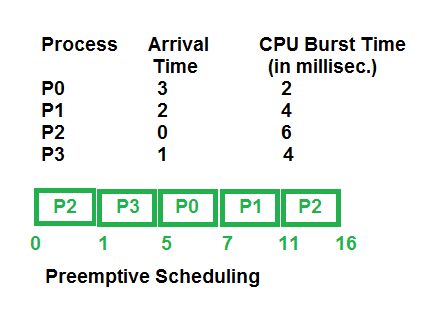
Preemptive scheduling

Before jumping onto the differences between preemptive and non-preemptive scheduling in operating system directly lets’ first have an overview about what scheduling means in operating system.What are the important terms used to define scheduling of tasks and processes in operating systems. First, We will define preemptive and non-preemptive scheduling and at the end, we will … Read more

Difference between Mainframes and Mini Computers

Mainframe and Mini Computer

Mainframe and Mini computers are two different types of machines designed to perform computations for different requirements. By reading about difference of Mainframe and MiniComputer, you will able to compare them. A computer is a machine that is programmable. Information is received by it in the form of digital data and then it processes the … Read more

Difference between TCP/IP and OSI model

Difference between TCPIP and OS model

Difference between TCP/IP and OSI model,  This article explains difference between TCP/IP and model.  First you will learn about the layers of TCP/IP model and then about the OSI model. Recommended Books Books that cover this topic in more depth. Book Why read it Buy on Amazon Computer Networking: A Top-Down Approach (Kurose & Ross) Networking … Read more

Difference between CPU and GPU

CPU and GPU

In this article, you will learn the difference between CPU and GPU. CPU is also know as central processing unit and GPU is also known as graphical processing unit. So we will discuss the main difference between a central processing unit and graphics processing unit. The main difference between them is processing of instructions capability. … Read more

Least Laxity First (LLF) Scheduling Algorithm

LLF Enhanced Least Laxity first LLF example

Least Laxity First (LLF) is a job level dynamic priority scheduling algorithm. It means that every instant is a scheduling event because laxity of each task changes on every instant of time. A task which has least laxity at an instant, it will have higher priority than others at this instant. LLF is an optimal … Read more

EARLIEST DEADLINE FIRST (EDF) SCHEDULING ALGORITHM

Earliest deadline first scheduling

Earliest deadline first (EDF) is dynamic priority scheduling algorithm for real time embedded systems. Earliest deadline first selects a task according to its deadline such that a task with earliest deadline has higher priority than others. It means priority of a task is inversely proportional to its absolute deadline. Since absolute deadline of a task depends … Read more

Rate Monotonic (RM) Scheduling Algorithm

Rate-Monotonic (RM) is a well-known real-time scheduling algorithm used in real-time operating systems (RTOS) to schedule tasks with fixed or periodic deadlines. RM is a priority-based scheduling algorithm, where each task is assigned a priority based on its period: shorter periods result in higher priorities. The RM scheduling algorithm operates under the following principles: The … Read more