ESP8266 Send Sensor Readings to Google Firebase Database and Create Web App
ESP8266 Send Sensor Readings to Google Firebase and Build an Android app to display Data

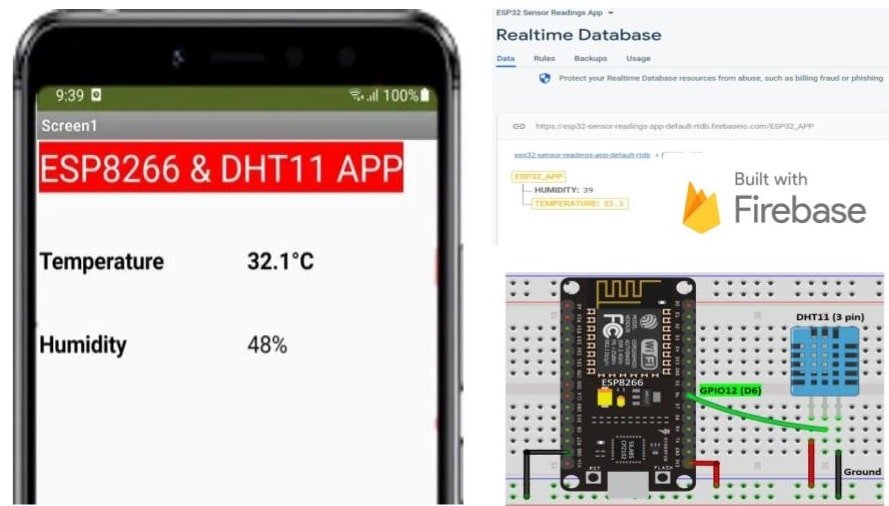
In this user guide, we will learn to send sensor readings to Google firebase and also on Android app through Google Firebase using ESP8266 NodeMCU and Arduino IDE. We will make our personal ESP8266 IOT app by using Google Firebase and MIT App Inventor. Previously, we used the Blynk application to control ESP32’s output (Control … Read more

BME680 with Arduino: Display Gas, Pressure, Temperature and Humidity on OLED

BME680 with ESP8266 NodeMCU and OLED Arduino IDE demo

In this tutorial, we will learn to interface the BME680 sensor with Arduino using Arduino IDE. The BME680 environmental sensor, which is used to measure ambient temperature, barometric pressure, relative humidity, and gas (VOC) or Indoor air quality (IAQ). We will learn how to interface it with Arduino using Arduino core programming. For demonstration, firstly, … Read more

MicroPython ESP32 and ESP8266: Program with VS Code and Pymakr

MicroPython ESP32 and ESP8266 Program with VS Code and Pymakr

In this tutorial, we will learn to program ESP32 and ESP8266 boards with VS code by using the Pymakr extension available in visual studio code. As we have seen in previous tutorials, we have learned to program ESP32 and ESP8266 boards using various IDEs. Recommended Components The following components are used in this project or … Read more

ESP8266 NodeMCU Server-Sent Events (SSE) Web Server (Arduino IDE)

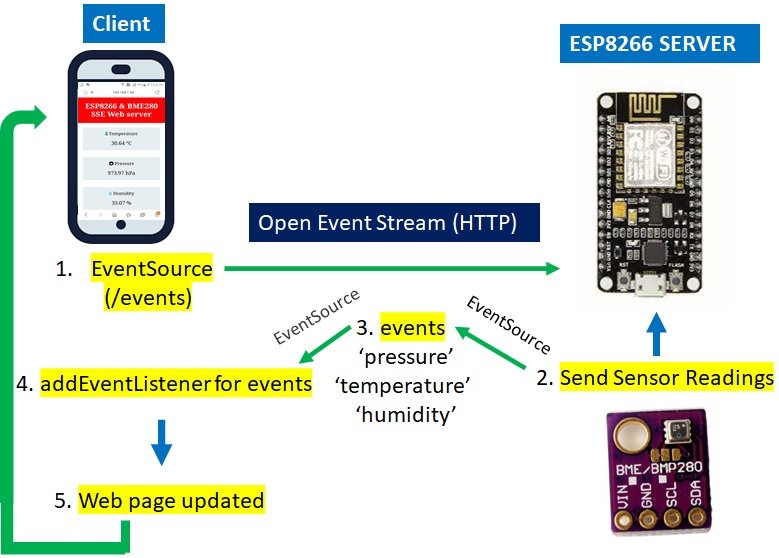
ESP8266 NodeMCU and BME280 server sent events Web server working process

In this user guide, we will learn about web server with Server-Sent Events (SSE) protocol. Using this technique, we will build an ESP8266 controlled web server that will automatically update sensor readings regarding temperature, pressure, and humidity to all connected web clients. Our client will receive automatic updates from the ESP8266 board with SSE through … Read more

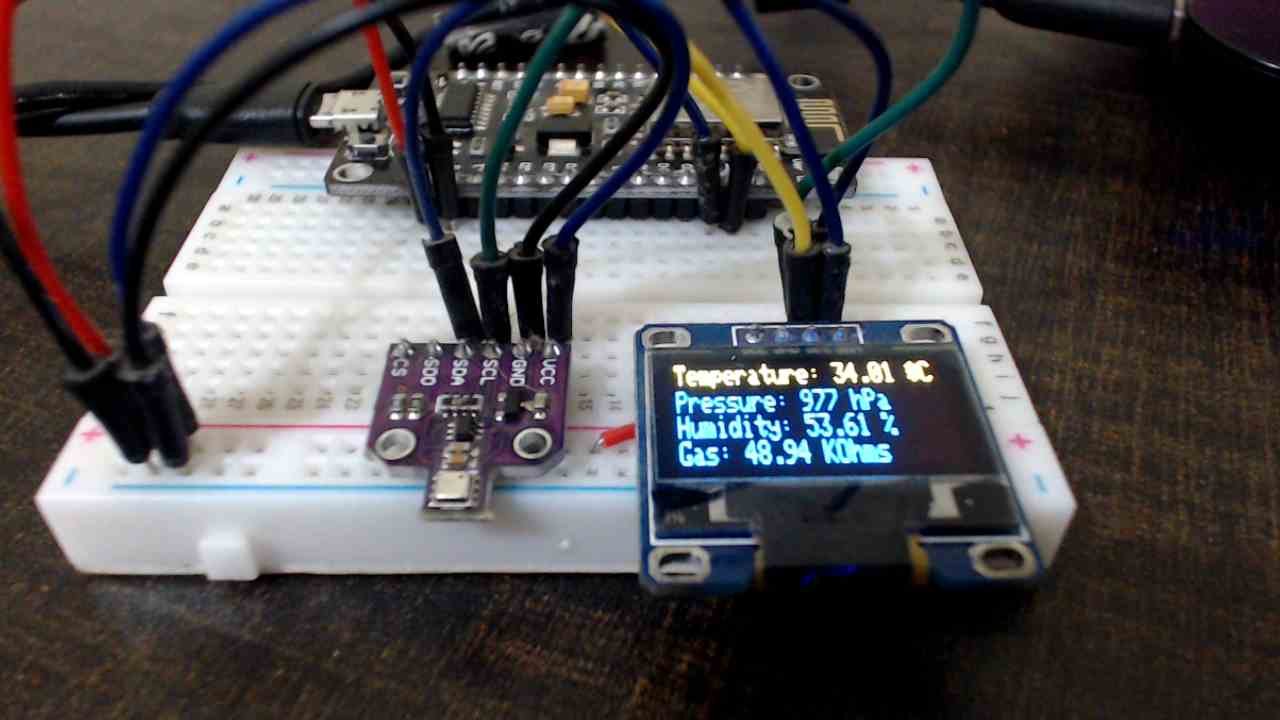
BME680 with ESP8266 NodeMCU using Arduino IDE (Gas, Pressure, Temperature, Humidity)

BME680 with ESP8266 NodeMCU and OLED Arduino IDE

In this tutorial, we will learn to interface the BME680 sensor with ESP8266 NodeMCU using Arduino IDE. The BME680 environmental sensor, which is used to measure ambient temperature, barometric pressure, relative humidity, and gas (VOC) or Indoor air quality (IAQ). We will learn how to interface it with ESP8266 NodeMCU using Arduino core programming. For … Read more

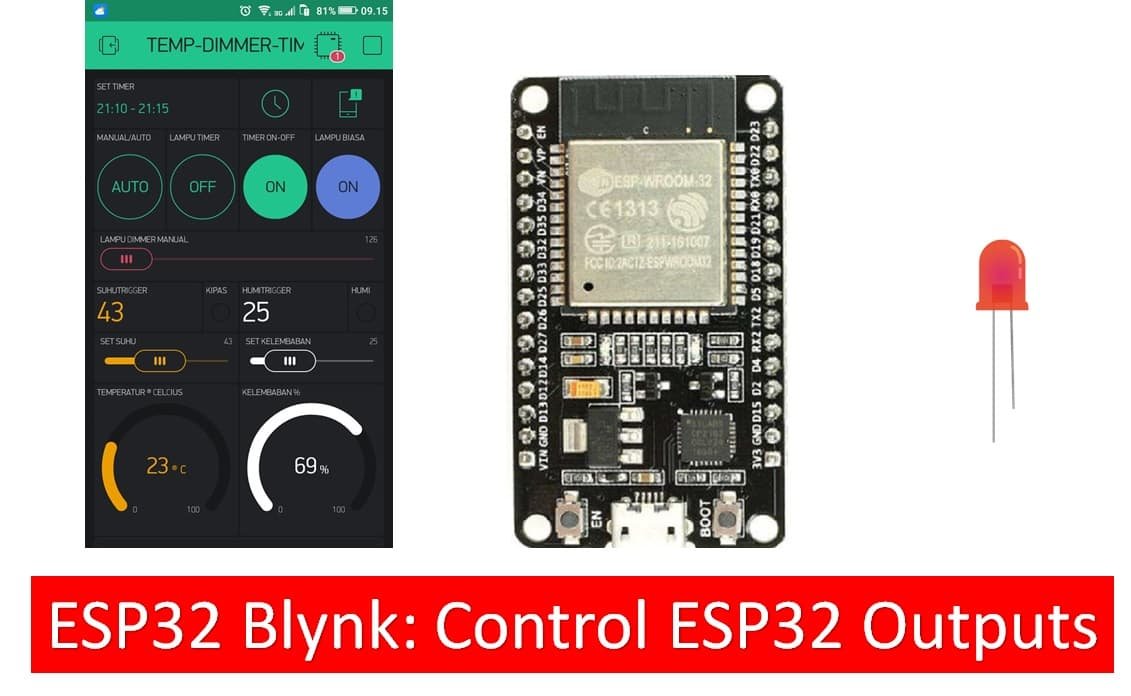
Control ESP32 Outputs using Blynk App and Arduino IDE

Control ESP32 Outputs using Blynk and Arduino IDE

In this user guide, we will control the output of the ESP32 using the Blynk application installed in our smartphones. Previously, we controlled the ESP module’s outputs through applications such as Telegram and Google Firebase. You can view the tutorials by accessing the links below: Telegram ESP32 and ESP8266: Control GPIOs and LEDs using Arduino … Read more

Getting Current Date and Time with ESP8266 NodeMCU using NTP Server-Client and Arduino IDE

Getting Date and Time with ESP8266 NodeMCU Arduino IDE (NTP Client)

In this tutorial, we will learn how to get the current date and time from the NTP server with the ESP8266 NodeMCU development board and Arduino IDE. In the data logger applications, the current date and timestamp are useful to log values along with timestamps after a specific time interval. The time.h header file provides … Read more

Reconnect ESP8266 NodeMCU to WIFI after Lost Connection (Solved)

ESP8266 NodeMCU Reconnect to Wi-Fi Network After Lost Connection

In this tutorial, we will learn how to reconnect the ESP8266 NodeMCU board to the WIFI network when it temporarily loses connection. Through different methods, we will demonstrate this functionality. Hence, this guide will be highly useful to avoid the nuisance of constantly losing network connection due to many reasons such as WiFi router restarted, … Read more

ESP8266 NodeMCU WebSocket Server using Arduino IDE and LittleFS – Control GPIOs

ESP8266 WebSocket Server control GPIO and relays remotely

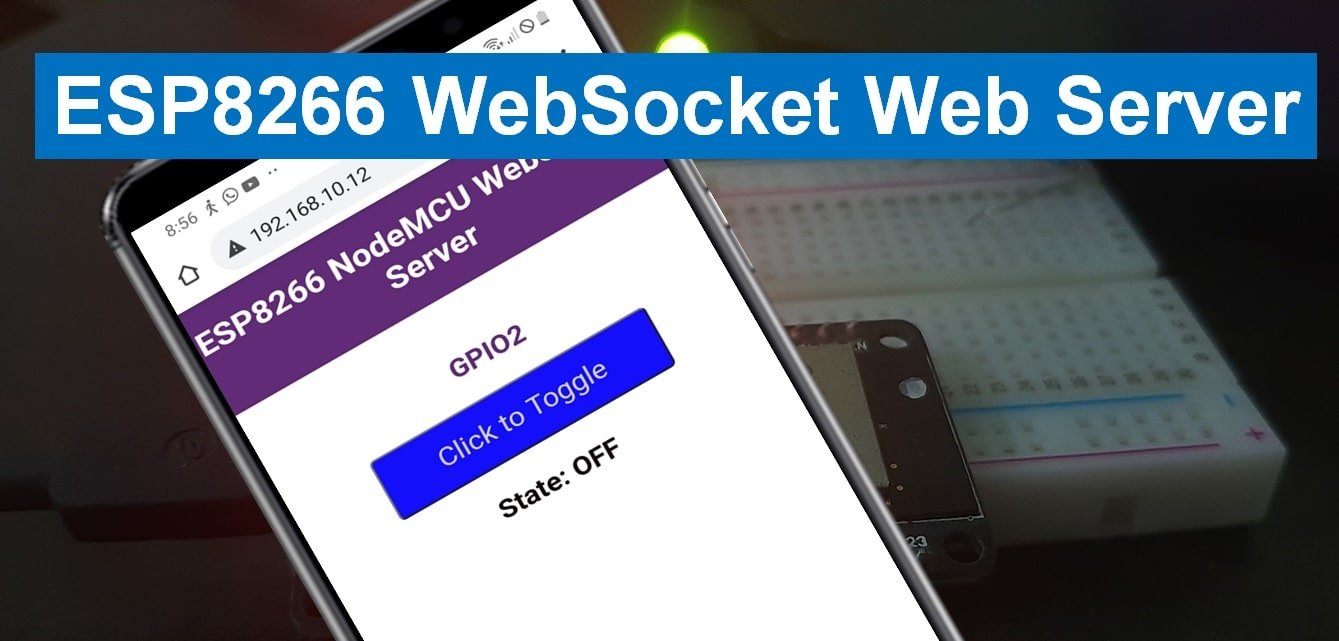
In this tutorial, we will create an ESP8266 NodeMCU web server by using a WebSocket communication protocol and Arduino IDE that will control the onboard LED of ESP8266 NodeMCU. Through WebSocket communication protocol, several clients can be connected to the server concurrently without blocking each other. We will see that unlike HTTP, a websocket server … Read more

ESP8266 NodeMCU Asynchronous Web Server using Arduino IDE and ESPAsyncWebServer library

ESP8266 NodeMCU Asynchronous Web Server using Arduino IDE

In this user guide, we will focus on building an async web server. The web server will be created in ESP8266 NodeMCU using Arduino IDE through the ESPAsyncWebServer library. The web server will allow the user to control multiple LEDs connected with the ESP8266 NodeMCU GPIO pins simultaneously by using HTTP GET requests to transfer … Read more