⚠️ Affiliate Disclosure: This post contains Amazon affiliate links. If you purchase through our links, we may earn a small commission at no extra cost to you. Every product below was checked against its live Amazon listing before publishing. Prices change often, so we don’t list them here. Tap any Buy Here button to see the current price on Amazon.
Ultimate Buying Guide
🧠 Best Edge AI Accelerators for Raspberry Pi
12 Hailo AI HAT+ boards, Coral Edge TPUs, the IMX500 AI Camera and M.2 NPU modules compared for object detection, Frigate NVRs and local LLMs.
✅ 12 Picks Reviewed✅ Hailo, Coral and MemryX✅ Pi 5 PCIe and USB Options✅ Honest Pros and Cons
A Raspberry Pi 5 CPU can run a small object-detection model, but only at a few frames per second while every core is pinned. An edge AI accelerator (an NPU or TPU) takes the neural network off the CPU, so YOLO-style detection, pose estimation and person tracking run in real time while the Pi stays free for your application. On the Pi 5 the main options plug into its single PCIe lane (Hailo AI HAT+ boards and M.2 modules), connect over USB (Coral Edge TPU), or sit right on the image sensor (the Sony IMX500 in the Raspberry Pi AI Camera).
This guide compares the accelerators you can actually buy on Amazon today, with the compatibility details that decide whether a module works on your board. If you want a whole AI dev board instead of an add-on, see our TinyML and edge AI development kits and Jetson Orin Nano guide, and for camera choices see our Raspberry Pi camera guide.
⚠️ Reality Check Before You Buy
- Hailo AI HAT+ boards need a Raspberry Pi 5. They use the Pi 5 PCIe connector, so a Pi 4 or Zero cannot run them. For older boards, the USB Coral Edge TPU is the practical choice.
- The Pi 5 has one PCIe lane. An AI HAT+ and an NVMe SSD HAT compete for it, so running both needs a board with a PCIe switch, and stacking adds height and heat.
- TOPS figures are not directly comparable. Hailo-10H quotes INT4, Coral and Hailo-8 quote INT8 class numbers and MemryX quotes TFLOPS. Real frame rates depend on the model, the input size and the software stack.
- Coral software is ageing. The Edge TPU runtime and Python libraries have seen few updates, so on a current Raspberry Pi OS expect extra setup (containers or community builds). Check your target software, such as Frigate, before buying.
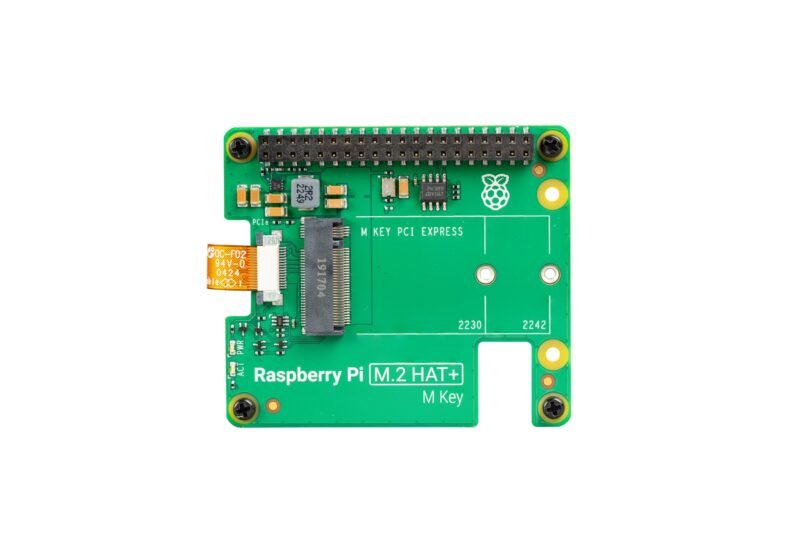
- Mind form factors and keys. The official Raspberry Pi M.2 HAT+ takes M-key 2230 and 2242 cards only. A 2280 module or an A+E key Coral card will not fit it without a different adapter.
- Power and cooling matter. Accelerators run warm under continuous inference. Use a Pi 5 active cooler and a supply that can feed the Pi plus the accelerator, and note that several picks below are third-party reseller listings, so read the seller details.
Table of Contents
- Quick Comparison: All 12 Edge AI Accelerators
- How to Choose
- Detailed Reviews: All 12 Picks
- Which One for Which Job
- Accelerator Chips Compared
- Frequently Asked Questions
- Final Verdict: Best Edge AI Accelerators
🧠 Quick Comparison: All 12 Edge AI Accelerators
| Product | Type | Performance (per listing) | Interface | Best For | Rating | Buy |
|---|
| 🥇 Raspberry Pi AI HAT+ (26 TOPS) | HAT (Hailo-8) | 26 TOPS | Pi 5 PCIe | Best Overall | ⭐ 4.3 (19) | Buy Here → |
| 🧩 Waveshare Hailo-8 M.2 Module | M.2 card (Hailo-8) | 26 TOPS, 2.5W typical | M.2 PCIe | Best M.2 Module | ⭐ 4.5 (42) | Buy Here → |
| 🔌 Coral USB Edge TPU Accelerator | USB stick (Edge TPU) | Single Edge TPU | USB 3.0 Type-C | Older Pis and PCs | ⭐ 4.2 (168) | Buy Here → |
| 📷 Raspberry Pi AI Camera (IMX500) | Camera (on-sensor AI) | IMX500 inference engine | CSI camera | Smart Camera Projects | ⭐ 4.3 (27) | Buy Here → |
| 📦 GeeekPi AI HAT+ Kit with Case | HAT kit (Hailo) | 26 TOPS | Pi 5 PCIe | All-in-One Build | ⭐ 4.6 (24) | Buy Here → |
| 💸 AI HAT+ 13 TOPS (Hailo-8L) | HAT (Hailo-8L) | 13 TOPS | Pi 5 PCIe | Single Camera on a Budget | ⭐ 3.8 (11) | Buy Here → |
| 💬 AI HAT+ 2 Kit (Hailo-10H) | HAT kit (Hailo-10H) | 40 TOPS (INT4), 8 GB RAM | Pi 5 PCIe M.2 | LLMs and VLMs | ⭐ 5.0 (3) | Buy Here → |
| 💻 Coral M.2 Accelerator (A+E Key) | M.2 card (Edge TPU) | 4 TOPS int8 | M.2 2230 A+E key | Mini PC Wi-Fi Slot | ⭐ 4.3 (30) | Buy Here → |
| ✌️ Coral Dual Edge TPU M.2 | M.2 card (2x Edge TPU) | 8 TOPS total int8 | M.2 2230 E-key | Two Models at Once | ⭐ 4.1 (40) | Buy Here → |
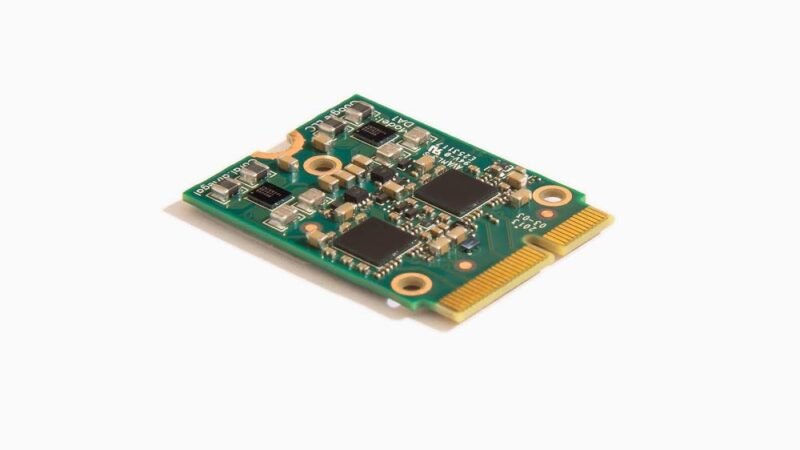
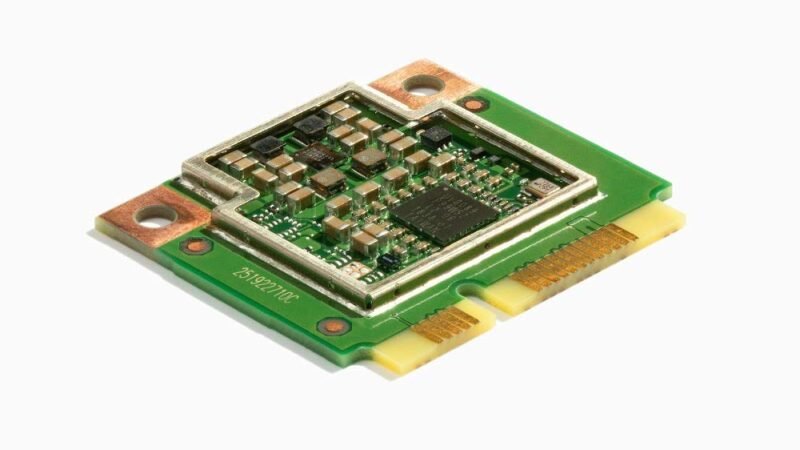
| 🖥️ Coral Mini PCIe Accelerator | Mini PCIe card (Edge TPU) | Single Edge TPU | Half-size Mini PCIe | Older PCs and Gateways | ⭐ 4.6 (22) | Buy Here → |
| 🚀 MemryX Cascade 100M M.2 | M.2 card (4x MX3) | 25 TFLOPS | M.2 2280 M-key, PCIe Gen 3+ | Multi-Camera PCs | ⭐ 4.3 (21) | Buy Here → |
| 🔧 Raspberry Pi M.2 HAT+ | Adapter HAT | Single-lane PCIe 2.0 (500 MB/s) | M-key 2230 or 2242 | Hosting M.2 AI Cards | ⭐ 4.7 (134) | Buy Here → |
Specs and ratings are taken from the Amazon listings at the time of writing. Ratings change over time, so check the listing for the latest numbers.
🔍 How to Choose
🍓
Match Your Host
Pi 5 owners get the most from Hailo boards on PCIe. Pi 4, Pi 3 and x86 mini PCs can use the USB Coral. Mini PCs with a spare M.2 slot can take Hailo, Coral or MemryX cards.
⚡
Pick the Right Performance
13 TOPS is enough for one camera running a light detector. 26 TOPS handles larger models or several streams. A Hailo-10H with onboard RAM targets small language and vision-language models.
🔌
Check Slot, Key and Length
M.2 cards come in M-key or A+E key and lengths like 2230, 2242 and 2280. Confirm the slot on your board or adapter before ordering, and remember dual-chip cards may need two PCIe lanes.
🧩
Software Support First
The accelerator is only as useful as its software. Hailo integrates with the Raspberry Pi camera stack, Coral targets TensorFlow Lite models, and MemryX uses its own SDK with ONNX and TFLite support.
🌡️
Plan Cooling and Power
Continuous inference heats both the Pi and the NPU. A kit with a case and active cooler saves guesswork, and an M.2 module in a closed mini PC needs some airflow.
🏆 Detailed Reviews: All 12 Picks
🥇 BEST OVERALL
1. Raspberry Pi AI HAT+ 26 TOPS (Hailo-8)
⭐ 4.3/5 from 19 ratings · Best Overall
Buy on Amazon →

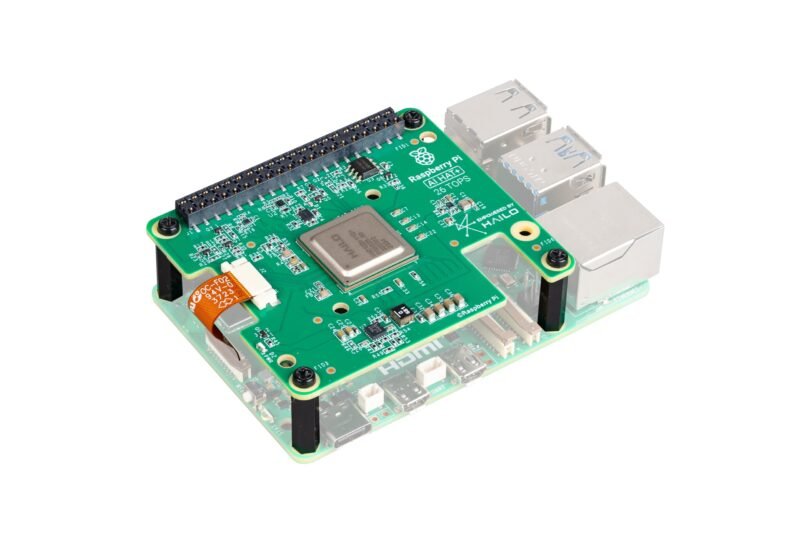
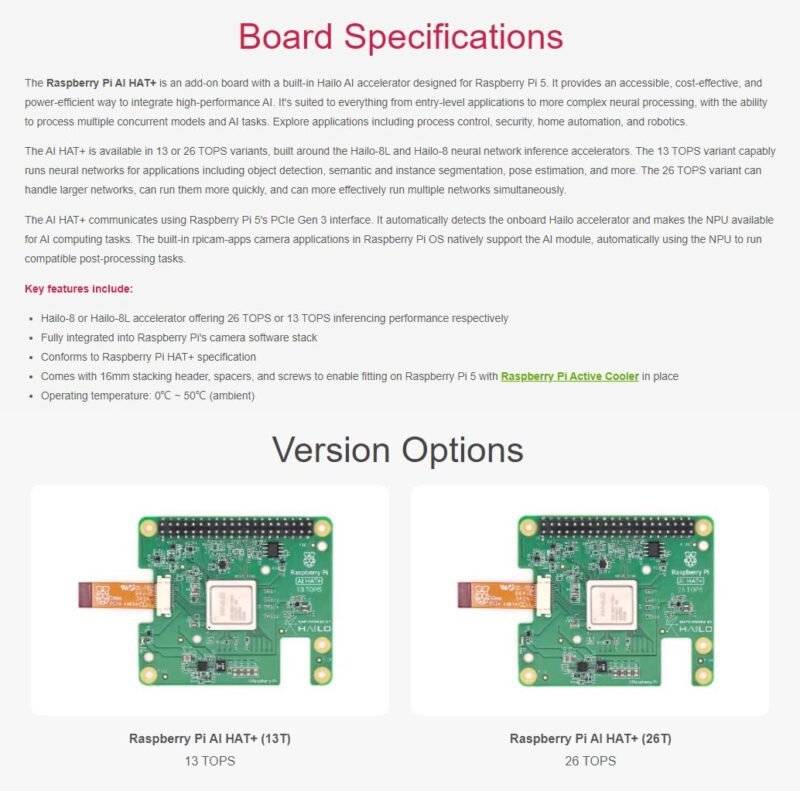
The official Raspberry Pi AI HAT+ in its 26 TOPS version puts a Hailo AI accelerator directly on top of a Raspberry Pi 5 and talks to it over PCIe. Per the listing it measures 65 x 56.5 mm, works as a standard HAT add-on and is rated for 0 to 50°C. Because it is the official board, it is the one most Pi AI tutorials and camera examples are written for, which makes it the easiest path to real-time object detection on a Pi. It holds 4.3 stars from 19 ratings, a small sample, so read recent reviews too.
✅ Pros- 26 TOPS on a Pi-sized HAT
- Official board with the widest tutorial support
- Direct PCIe link, no USB bottleneck
❌ Cons- Raspberry Pi 5 only
- Occupies the single PCIe lane
- Small review count so far
🎯 Verdict: The default choice for serious vision AI on a Raspberry Pi 5.
👉 Check Price on Amazon →
🧩 BEST M.2 MODULE
2. Waveshare Hailo-8 M.2 AI Accelerator Module
⭐ 4.5/5 from 42 ratings · Best M.2 Module
Buy on Amazon →

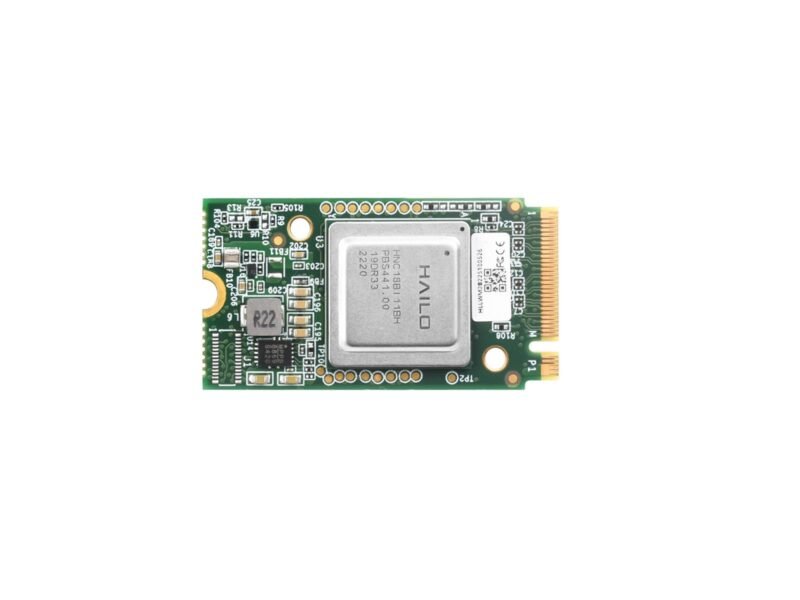
Waveshare’s Hailo-8 M.2 module carries the same 26 TOPS Hailo-8 processor as the top AI HAT+, but as a bare M.2 card. The listing quotes 2.5 W typical power, a -40 to 85°C range, Linux and Windows support and frameworks such as TensorFlow, TensorFlow Lite, ONNX, Keras and PyTorch, and it is marketed as Raspberry Pi 5 compatible. That makes it flexible: drop it into an x86 mini PC or an industrial box with an M.2 slot, or use it on a Pi 5 through an M.2 adapter. It has the strongest rating here among Hailo parts, 4.5 stars from 42 ratings.
✅ Pros- Wide -40 to 85°C rating
- Works in PCs as well as a Pi 5
- Best rated Hailo listing here
❌ Cons- Needs an M.2 slot or adapter
- Check key and length for your adapter
🎯 Verdict: Pick this if you want Hailo-8 power in a mini PC or a custom carrier.
👉 Check Price on Amazon →
🔌 BEST USB PLUG-IN · ⭐ 4.2/53. Coral USB Edge TPU ML Accelerator
Edge TPU · USB 3.0 Type-C · Debian Linux host · 168 ratings
Buy Here →

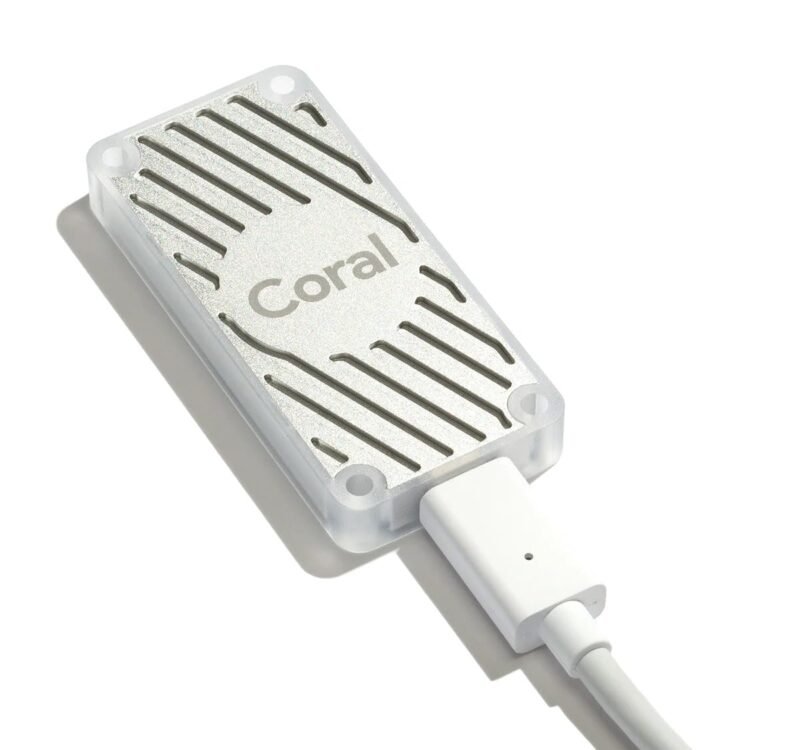
The USB Edge TPU accelerator is the most reviewed pick in this guide, with 4.2 stars from 168 ratings. Per the listing it pairs a Google Edge TPU coprocessor with a USB 3.0 Type-C socket, supports Debian Linux on the host and runs models built with TensorFlow. Because it is USB, it works with a Pi 4, a Pi 5 or an x86 machine without touching PCIe, which is why it became the classic Frigate detector. Plan around the ageing Coral software, which may need a container or community packages on a current OS.
✅ Pros: Plugs into almost any host; lots of community guides.
❌ Cons: Software stack is ageing; slower than Hailo-8.
🎯 Verdict: Still the easiest AI upgrade for a Pi 4 or a small PC.
📷 BEST CAMERA WITH BUILT-IN AI · ⭐ 4.3/54. Raspberry Pi AI Camera (Sony IMX500)
12.3 MP IMX500 · RP2040 onboard · MobileNet preloaded · 27 ratings
Buy Here →

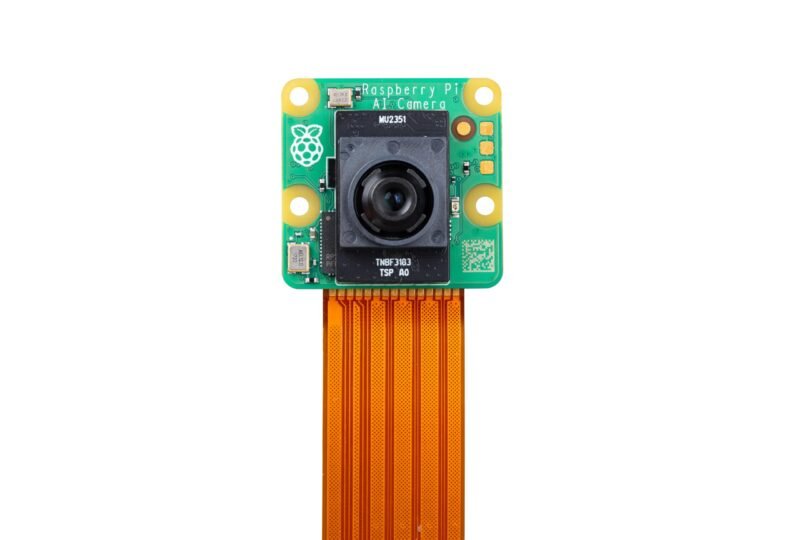
The Raspberry Pi AI Camera runs the neural network on the Sony IMX500 sensor itself, so the Pi receives detections alongside the image. The listing describes a 12.3 MP intelligent vision sensor with an integrated low-power inference engine, an RP2040 for neural network and firmware management, a preloaded MobileNet model, and sensor modes of 4056×3040 at 10 fps and 2028×1520 at 30 fps. It rates 4.3 stars from 27 ratings. It is ideal when one camera needs to react to people or objects, but models must be converted for the IMX500 and are smaller than what a Hailo chip can run.
✅ Pros: No PCIe or USB slot used; very low power.
❌ Cons: Limited model size; one camera only.
🎯 Verdict: The neatest single-camera AI build for any Pi with a camera port.
📦 BEST COMPLETE BUNDLE · ⭐ 4.6/55. GeeekPi AI HAT+ 26 TOPS Kit with Metal Case and Active Cooler
AI HAT+ 26 TOPS · metal case · active cooler · 24 ratings
Buy Here →

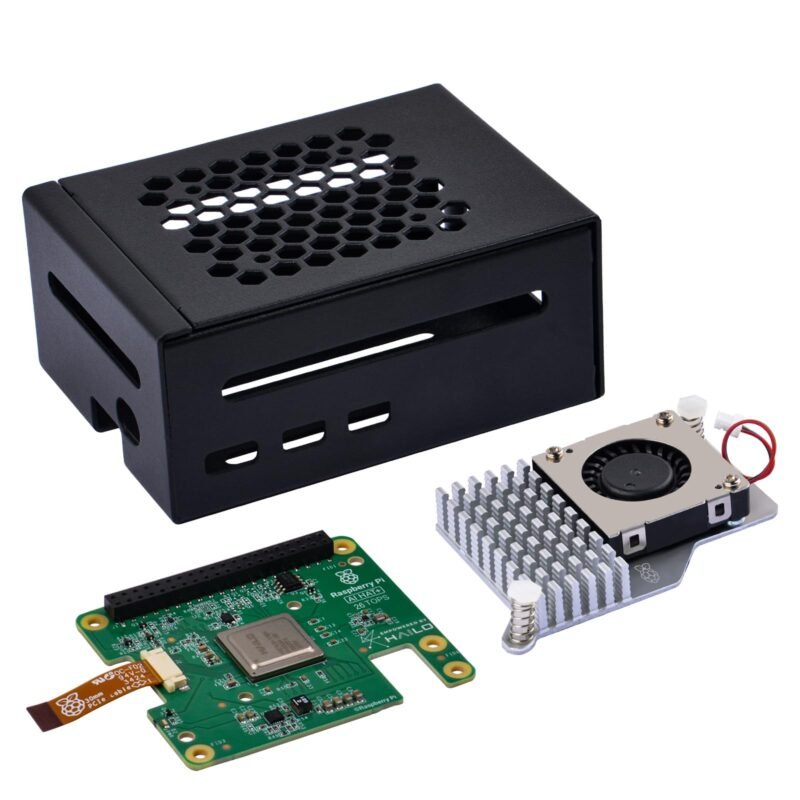
GeeekPi bundles the Raspberry Pi AI HAT+ (26 TOPS) with a metal case and an active cooler, so the stack fits together and stays cool. Per the listing the AI HAT+ uses the Pi 5 PCIe Gen 3 interface, conforms to the HAT+ specification and ships with a 16 mm stacking header, spacers and screws, and the case leaves most ports accessible, including USB-C power and micro HDMI. It rates 4.6 stars from 24 ratings, the best score among the 26 TOPS AI HAT+ listings here.
✅ Pros: Case and cooler solve fit and heat in one order.
❌ Cons: Raspberry Pi 5 board sold separately.
🎯 Verdict: The tidy way to build a finished Pi 5 AI box.
💸 BEST BUDGET HAILO · ⭐ 3.8/56. Raspberry Pi AI HAT+ 13 TOPS (Hailo-8L)
Hailo-8L · 13 TOPS · 16 mm stacking header · 11 ratings
Buy Here →

The 13 TOPS AI HAT+ uses the Hailo-8L, a lighter version of the Hailo-8. The listing says it communicates over the Pi 5 PCIe Gen 3 interface, is fully integrated into the Raspberry Pi camera software stack and comes with a 16 mm stacking header, spacers and screws for use with the Active Cooler. It is plenty for one camera running a common detector. Note this is a third-party listing (the title misspells the brand) with a weaker 3.8 star average from 11 ratings, so check the seller before buying.
✅ Pros: Same software as the 26 TOPS board; lower cost tier.
❌ Cons: Reseller listing; lowest rating here.
🎯 Verdict: Good for a single camera if you buy from a trusted seller.
💬 BEST FOR LOCAL LLMS · ⭐ 5.0/57. Raspberry Pi AI HAT+ 2 Kit (Hailo-10H, 8 GB)
Hailo-10H · 40 TOPS INT4 · 8 GB onboard memory · 3 ratings
Buy Here →
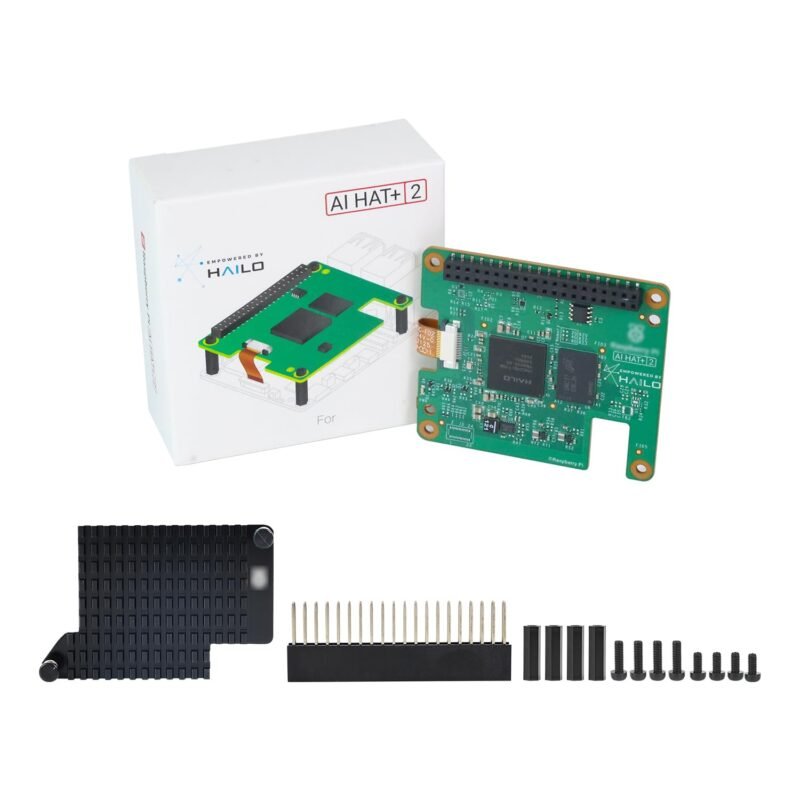
The AI HAT+ 2 kit moves up to the Hailo-10H, which the listing rates at 40 TOPS (INT4) with 8 GB of onboard memory that does not consume the Pi 5’s own RAM. The seller says it supports models up to about 6 billion parameters, for local LLM, vision-language model and AI vision acceleration, and includes a preconfigured system image and tutorials. It is the only pick here aimed at generative AI on a Pi. With just 3 ratings so far, treat it as an early-adopter buy.
✅ Pros: Onboard RAM for language models; also does vision.
❌ Cons: Only 3 ratings; reseller kit listing.
🎯 Verdict: The pick for running small LLMs locally on a Pi 5.
💻 BEST FOR MINI PC WI-FI SLOTS · ⭐ 4.3/58. Coral M.2 Accelerator A+E Key (G650-04527-01)
Edge TPU · 4 TOPS int8 · 2 TOPS per watt · 30 ratings
Buy Here →

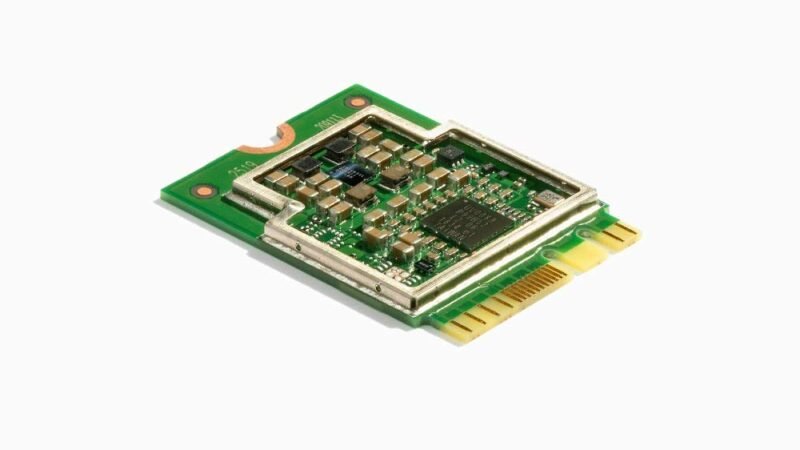
The Coral M.2 Accelerator with A+E key fits the slot many mini PCs and NAS boxes use for Wi-Fi cards. The listing quotes 4 TOPS (int8) peak performance at 2 TOPS per watt, Linux (Debian 10 or Ubuntu 16.04 and newer) and Windows 10 support, and a -20 to +85°C operating range. Swapping out a Wi-Fi card for this is a popular way to add a Frigate detector to a small x86 server. It rates 4.3 stars from 30 ratings. It does not fit the official Pi M.2 HAT+, which is M-key only.
✅ Pros: Uses a slot most mini PCs already have.
❌ Cons: Not for the Pi 5 M.2 HAT+; ageing software.
🎯 Verdict: A cheap detector upgrade for an x86 Home Assistant or NVR box.
✌️ BEST FOR MULTI-MODEL PIPELINES · ⭐ 4.1/59. Coral M.2 Accelerator with Dual Edge TPU (E-Key)
2x Edge TPU · 8 TOPS total · 2x PCIe Gen2 x1 · 40 ratings
Buy Here →
The Dual Edge TPU card packs two Edge TPUs on an M.2 2230 E-key board for 8 TOPS total (int8), per the listing, with one PCIe Gen2 x1 interface per TPU. That lets you run two models in parallel or pipeline one larger model. The catch is in that spec line: many E-key slots wire only one PCIe lane, in which case only one TPU is usable, so check your board or buy an adapter designed for this card. It holds 4.1 stars from 40 ratings.
✅ Pros: Two TPUs on one small card.
❌ Cons: Needs a slot with two PCIe lanes for both TPUs.
🎯 Verdict: Great value only if your slot exposes both lanes.
🖥️ BEST FOR LEGACY SYSTEMS · ⭐ 4.6/510. Coral Mini PCIe Edge TPU Accelerator
Edge TPU · half-size Mini PCIe · x86-64 or ARMv8 · 22 ratings
Buy Here →
This Coral Mini PCIe card brings the Edge TPU to older industrial PCs, routers and gateways that have a half-size Mini PCIe slot instead of M.2. The listing lists 64-bit Debian 10 or Ubuntu 16.04 and newer on x86-64 or ARMv8, and 64-bit Windows 10 on x86-64. It rates 4.6 stars from 22 ratings. Like the other Coral cards it suits TensorFlow Lite detection models rather than large modern networks.
✅ Pros: Revives older hardware with a spare Mini PCIe slot.
❌ Cons: Not usable on a Raspberry Pi without special carriers.
🎯 Verdict: The right part when your box has Mini PCIe, not M.2.
🚀 BEST FOR X86 EDGE BOXES · ⭐ 4.3/511. Cascade 100M M.2 AI Accelerator (4x MemryX MX3)
4x MemryX MX3 · 25 TFLOPS · 1 to 12 W · 21 ratings
Buy Here →

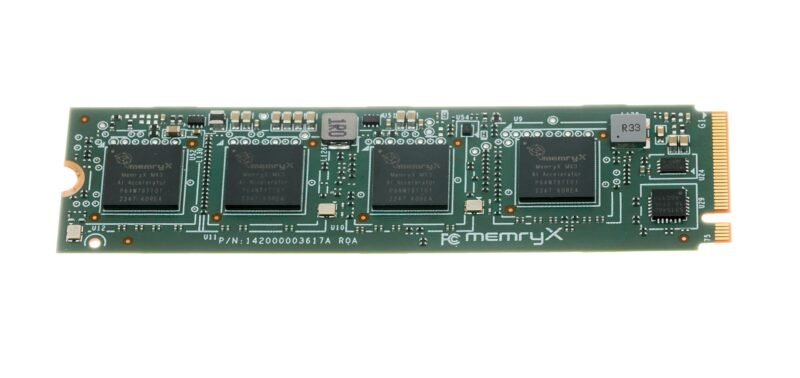
The Cascade 100M uses four MemryX MX3 accelerators on an M.2 2280 M-key card, rated at 25 TFLOPS with 42 MB of distributed on-chip weight storage, per the listing. It connects over PCIe Gen 3 and above, runs between 1 W and 12 W with host-managed airflow, and supports ONNX, TensorFlow, Keras and TFLite models through the MemryX SDK on Linux and Windows. It rates 4.3 stars from 21 ratings. Its 2280 length means it will not fit the official Pi M.2 HAT+, so it is best in an x86 mini PC.
✅ Pros: High throughput for several camera streams.
❌ Cons: 2280 size; needs airflow; separate SDK.
🎯 Verdict: A strong NPU for a multi-camera mini PC build.
🔧 ESSENTIAL ADAPTER · ⭐ 4.7/512. Raspberry Pi M.2 HAT+ (PCIe Adapter)
M-key · 2230 and 2242 · up to 3 A to the card · 134 ratings
Buy Here →

The official Raspberry Pi M.2 HAT+ is the bridge between a Pi 5 and an M-key M.2 card, whether that is an NVMe SSD or an AI module. The listing (shown in German on Amazon) specifies a single-lane PCIe 2.0 interface with 500 MB/s peak transfer, support for M-key cards in 2230 or 2242 sizes, up to 3 A for the attached device, power and activity LEDs, and a ribbon cable, 16 mm stacking header, standoffs and screws. It is by far the most reviewed item here, 4.7 stars from 134 ratings. Check that your AI card is M-key and 2230 or 2242 before pairing them.
✅ Pros: Official, well-reviewed and inexpensive.
❌ Cons: M-key 2230/2242 only; bullets in German.
🎯 Verdict: Buy it if your Pi 5 will host a bare M.2 AI module.
🧭 Which One for Which Job
📹
Frigate NVR on a Pi 5
The AI HAT+ (26 TOPS) or GeeekPi kit gives real-time person and car detection for several cameras. See our video doorbell guide for cameras that pair well.
🧓
Upgrading a Pi 4 or Older PC
The USB Coral Edge TPU needs no PCIe, so it brings hardware detection to boards that cannot take a HAT+ accelerator.
🐦
Single Smart Camera
The Raspberry Pi AI Camera runs detection on the sensor, ideal for a bird feeder cam, a people counter or a doorway trigger.
💬
Local Chatbot or VLM
The AI HAT+ 2 with Hailo-10H and 8 GB onboard memory targets small language and vision-language models without using the Pi’s RAM.
🗄️
Home Server or Mini PC
Swap a Wi-Fi card for the Coral A+E module, or add the Waveshare Hailo-8 or MemryX Cascade to an M.2 slot for a faster detector.
🏭
Industrial Vision Gateway
The Waveshare Hailo-8 module’s -40 to 85°C rating and the Coral Mini PCIe card suit fanless boxes in harsh environments.
⚙️ Accelerator Chips Compared
| Chip | Performance (per listing) | Interface | Fits Pi 5? | Software |
|---|
| Hailo-8 (AI HAT+ 26) | 26 TOPS | PCIe HAT or M.2 | Yes, native | Hailo SDK, Pi camera stack |
| Hailo-8L (AI HAT+ 13) | 13 TOPS | PCIe HAT | Yes, native | Hailo SDK, Pi camera stack |
| Hailo-10H (AI HAT+ 2) | 40 TOPS INT4 + 8 GB RAM | PCIe M.2 kit | Yes, native | Hailo SDK, LLM and VLM tools |
| Coral Edge TPU (USB) | Single Edge TPU | USB 3.0 Type-C | Yes, over USB | TensorFlow Lite (ageing) |
| Coral Edge TPU (M.2 A+E) | 4 TOPS int8 | M.2 A+E key | No (needs E-key slot) | TensorFlow Lite (ageing) |
| Sony IMX500 (AI Camera) | On-sensor inference | CSI camera | Yes, any camera port | Converted IMX500 models |
| MemryX MX3 x4 (Cascade) | 25 TFLOPS | M.2 2280 M-key | No (2280 too long) | MemryX SDK, ONNX, TFLite |
Performance figures are quoted from the Amazon listings and use different number formats (INT4, int8, TFLOPS), so treat them as a rough guide rather than a benchmark.
❓ Frequently Asked Questions
Do I need an AI accelerator for Frigate on a Raspberry Pi?
For more than one camera, yes in practice. CPU detection on a Pi 5 works but is slow and keeps the CPU busy. A Hailo AI HAT+ on a Pi 5, or a USB Coral on a Pi 4, gives real-time detection and leaves CPU time for recording and Home Assistant.
AI HAT+ 13 TOPS or 26 TOPS?
The 13 TOPS Hailo-8L handles a single camera with common detection models. The 26 TOPS Hailo-8 roughly doubles headroom, which helps with larger models, higher resolutions or several streams. If you are unsure, the 26 TOPS board is the safer long-term buy.
Can I use a Hailo AI HAT+ on a Raspberry Pi 4?
No. The AI HAT+ boards need the PCIe connector that only the Raspberry Pi 5 has. On a Pi 4, use the USB Coral Edge TPU, or move to a Pi 5. Our Pi 5 cases and coolers guide covers keeping the new board cool.
Can I run an NVMe SSD and an AI HAT+ at the same time?
Not with the standard boards, because the Pi 5 exposes a single PCIe lane. You need a carrier with a PCIe switch that splits the lane, and both devices then share bandwidth. See our Pi 5 NVMe HAT guide for dual-slot options.
Is the Google Coral still worth buying?
It is still the simplest accelerator for older Pis and x86 machines, and Frigate and many projects support it. However, its software has seen few updates, so on a Pi 5 a Hailo board is usually the better buy, with more performance and active software support.
🏁 Final Verdict: Best Edge AI Accelerators
Our picks by use case:
🥇 Best Overall: Raspberry Pi AI HAT+ 26 TOPS (Hailo-8)
Buy Here →🧩 Best M.2 Module: Waveshare Hailo-8 M.2 AI Accelerator Module
Buy Here →🔌 Best USB Plug-In: Coral USB Edge TPU ML Accelerator
Buy Here →📷 Best Camera with AI: Raspberry Pi AI Camera (Sony IMX500)
Buy Here →💬 Best for Local LLMs: Raspberry Pi AI HAT+ 2 Kit (Hailo-10H, 8 GB)
Buy Here →🔧 Essential Adapter: Raspberry Pi M.2 HAT+ (PCIe Adapter)
Buy Here →For most Raspberry Pi 5 owners, the Raspberry Pi AI HAT+ (26 TOPS) is the accelerator to buy, ideally with a case and active cooler like the GeeekPi kit. Pi 4 users and x86 servers are still well served by the USB Coral Edge TPU, and anyone experimenting with local language models should watch the AI HAT+ 2. For more Pi 5 upgrades, see our guides to NVMe HATs and SSD cases, Pi 5 cases and coolers, Raspberry Pi UPS HATs and Home Assistant hardware, plus video doorbells for Home Assistant if you are building a Frigate setup.
💬 Are you running object detection or an LLM on a Raspberry Pi? Tell us which accelerator you use in the comments below.
All Amazon links above use our affiliate tag (microlab05-20). Purchasing through them supports microcontrollerslab.com at no extra cost to you. Prices and availability change frequently, so always confirm the current price on Amazon before buying.