⚠️ Affiliate Disclosure: This post contains Amazon affiliate links. If you purchase through our links, we may earn a small commission at no extra cost to you. We only recommend products we have researched and whose listings we checked live on Amazon. Prices change constantly, so we deliberately don’t print them here. Always tap through and confirm the current price on Amazon before buying.
Ultimate Buying Guide
🔋 Best 18650 Batteries & Holders for Arduino, ESP32 & DIY Battery Packs
8 picks ranked, from genuine Samsung 25R high-drain cells and plug-and-play JST packs to holder sets, PCB-mount sleds and a USB battery shield, with real specs, honest verdicts and direct Amazon links.
✅ 8 Products Reviewed
✅ Verified Amazon ASINs
✅ Checked Live on Amazon
✅ Honest Pros & Cons
The 18650 lithium-ion cell (18 mm across, 65 mm long) is the workhorse battery of the maker world. It powers ESP32 weather stations, Arduino robots, LoRa trackers, portable Raspberry Pi builds, flashlights and DIY power banks. One cell gives you a nominal 3.6 to 3.7V and somewhere between 2,500 and 3,500mAh of real capacity, enough to run a deep-sleeping microcontroller for months or push 20A into a motor in short bursts.
The trouble is that the 18650 market is flooded with fakes, re-wrapped cells and impossible capacity claims, and the battery is only half the story: a weak holder with thin wires or poor springs can waste more power than a cheap cell. This guide ranks 8 batteries, packs and holders you can actually buy on Amazon today, covering raw high-drain cells, ready-made protected packs with connectors, multi-slot holders, PCB-mount sleds and an all-in-one charging shield.
💡 Reality check before you buy: Amazon US no longer stocks most well-known enthusiast cells (LG HG2, Molicel P28A, Samsung 30Q, Sony VTC6) as standalone listings, and the few that appear come from third-party resellers. Any 18650 claiming more than about 3,600mAh is fake, no matter how many stars it has. Raw high-drain cells are unprotected: they will happily over-discharge or short if you wire them carelessly, so pair them with a BMS or a charger board that has a cut-off. Finally, cheap spring holders are fine for a few amps, but for motor loads above roughly 3A the springs and thin leads become the weakest link, and spot-welded nickel strips are the safer choice.
🔋 Quick Comparison: All 8 18650 Batteries & Holders
| Product | Type | Config / Capacity | Key Spec | Best For | Buy |
|---|
| 🥇 Samsung 25R (4-Pack) | Raw cell, flat top | 1 cell · 2500mAh | 20A continuous | Best High-Drain Cell | Buy Here → |
| 🏅 DAIERTEK Holder Set | Holder, wire leads | 1 / 2 / 3 / 4 slot | 3.7 to 14.8V series | Best Holder Set | Buy Here → |
| 🔌 XINLANTECH 1S1P JST Pack | Protected pack | 1S · 2600mAh | BMS + JST PH2.0 | Best Plug-and-Play | Buy Here → |
| ⏳ AOLIKES 1S3P Pack | Protected pack | 1S3P · 7800mAh | 28.86Wh, PH2.0 3P | Best Long Runtime | Buy Here → |
| 🚗 Tenergy 7.4V 2S Pack | Protected pack | 2S · 2200mAh | PCB, bare leads | Best 7.4V Pack | Buy Here → |
| 🔆 diymore 18650 Shield V3 | Holder + charger | 1 slot | 5V/2A USB, 3V/1A pins | Best Holder with Charging | Buy Here → |
| 🧩 SDTC 2-Slot PCB Holder | PCB-mount holder | 2 slot | Gold-plated copper | Best for Custom PCBs | Buy Here → |
| 🔘 SDTC Holder with Switch | Holder, wire leads | 1 slot (2-pack) | Self-locking switch | Best with On/Off Switch | Buy Here → |
Holders and the battery shield ship without cells. Pack sizes vary by listing, so check the quantity before you buy. Prices change often, so tap through to see the live price on Amazon.
🔍 What to Look for in 18650 Batteries & Holders
⚖️
Capacity vs Discharge Rate
18650 chemistry trades capacity for current. High-drain cells like the Samsung 25R give about 2,500mAh but 20A continuous; energy cells reach 3,400 to 3,500mAh at under 10A. Sleepy sensor nodes want capacity, motors and heaters want current.
🛡️
Protected or Unprotected
Unprotected cells have no cut-off, so your circuit or charger board must stop them going below about 2.5 to 3.0V. Packs with a BMS add over-charge, over-discharge and short-circuit protection, which is the safer default for microcontroller projects.
📏
Flat Top, Button Top & Length
Raw flat-top cells are about 65 mm long. Protected button-top cells add a circuit and a nub, stretching to roughly 69 to 70 mm, which may not fit tight PCB holders. Measure your holder or device before you order.
🕵️
Authenticity & Honest Ratings
Ignore anything labelled 5,000 to 9,900mAh. A genuine 18650 weighs about 45 to 48 g; a light cell is usually a re-wrapped low-grade or recycled one. Buy from listings with a real brand, consistent reviews and spec sheets, then capacity-test new cells.
🔧
Holder Contacts & Current
Spring holders add contact resistance and usually come with thin leads, so treat them as 2 to 3A parts. Gold-plated or thick nickel contacts, short leads and a firm spring matter more than the plastic. For heavy loads, use welded packs instead.
🏆 Detailed Reviews: All 8 Picks
🥇 BEST HIGH-DRAIN CELL
Samsung 25R 18650 Flat Top (4-Pack)
⭐ 4.6/5 · The Proven Power Cell
Buy on Amazon →

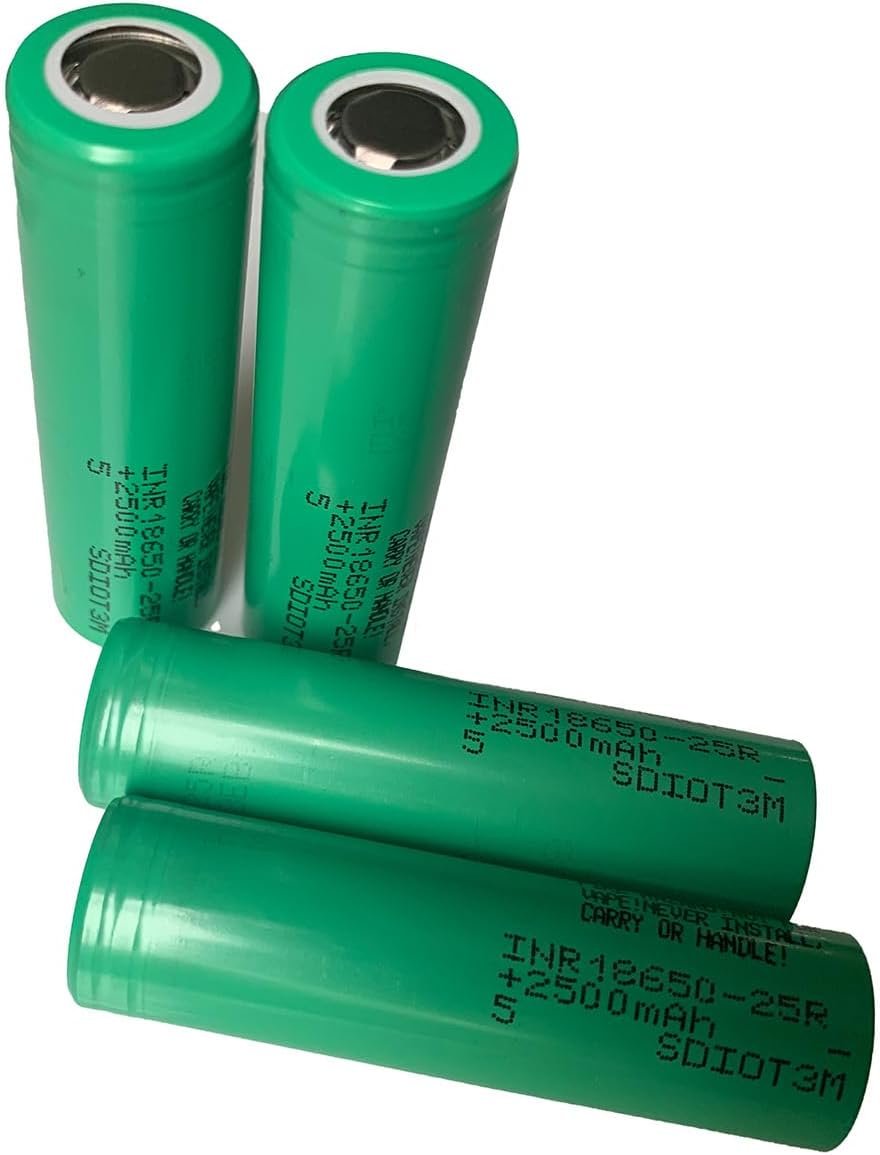
The Samsung INR18650-25R has been the reference high-drain cell for a decade, and it is the one big-name enthusiast cell we could still find on Amazon. It pairs a respectable 2,500mAh with a 20A continuous rating, so it shrugs off motor stalls, brushed-motor robots, high-power LED drivers, soldering irons and heated builds that would sag a capacity cell. Its voltage stays firm under load, which keeps boost converters and ESP32 radios from browning out. This four-pack is sold by a third-party reseller (SOOCOOL), the listing notes a newer 2025 wrapper stamp with identical specs, and it has only a small number of reviews, so weigh each cell (about 45 g) and run a capacity test when it arrives. These are bare, unprotected flat tops: use them in a holder or welded pack with a BMS or charger board that provides a low-voltage cut-off.
✅ Pros- Genuine 20A continuous discharge
- Stable voltage under heavy load
- Huge track record and datasheet support
- Four cells for a 2S or 4S build
❌ Cons- Unprotected, needs external cut-off
- Third-party seller, few reviews
- Lower capacity than 3,500mAh energy cells
🎯 Verdict: The best raw 18650 for robots, motors and anything that pulls real current. Verify the cells on arrival and always pair them with protection.
👉 Check Price on Amazon →
🏅 BEST HOLDER SET
DAIERTEK 18650 Battery Holder Set (1/2/3/4 Slot)
⭐ 4.5/5 · Every Series Voltage in One Box
Buy on Amazon →

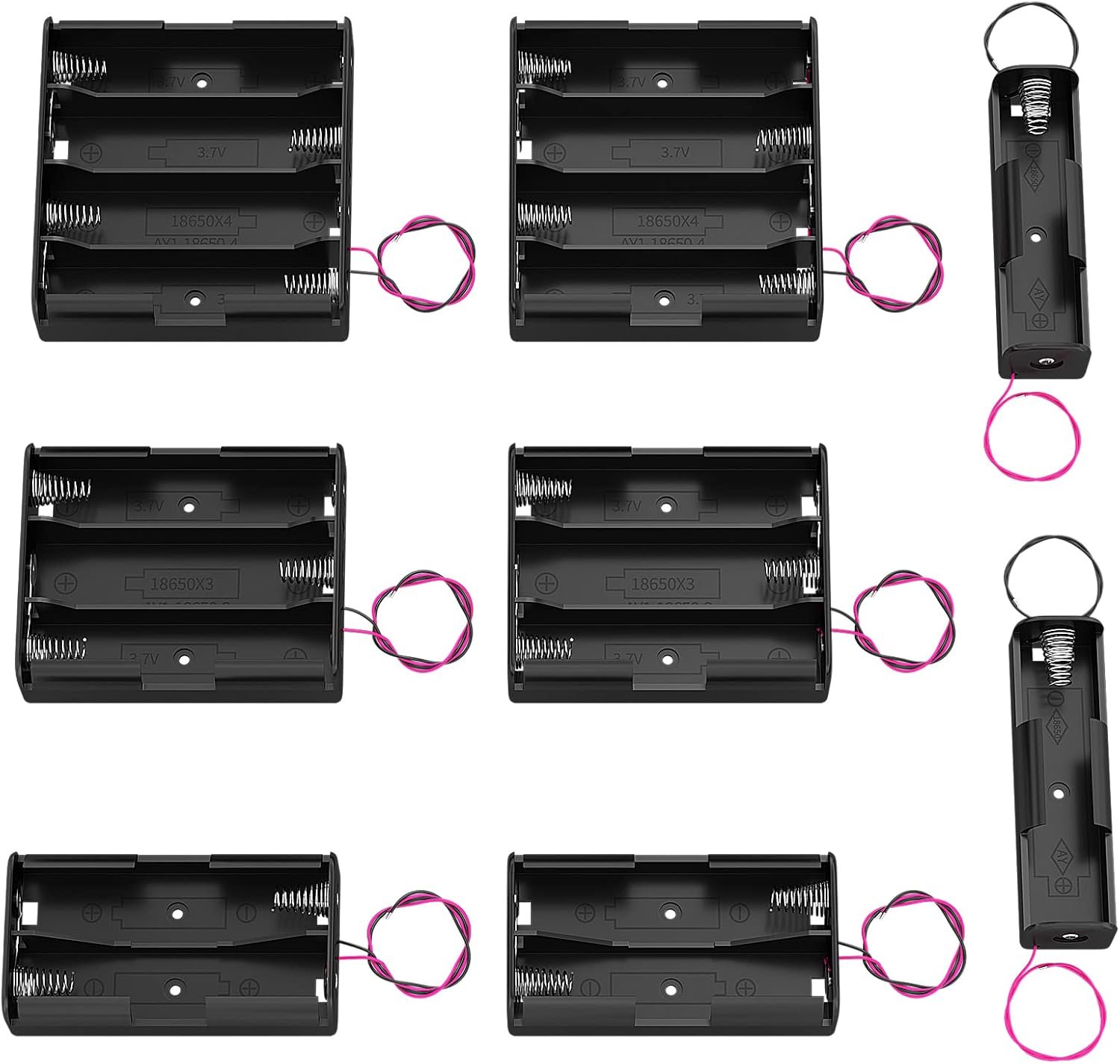
If you build with 18650s regularly, this DAIERTEK holder set is the drawer kit to own. It bundles 1-, 2-, 3- and 4-slot holders wired in series, giving you 3.7V, 7.4V, 11.1V and 14.8V nominal rails from the same cells, each with a pair of 150 mm tinned leads that drop straight into screw terminals or a breadboard. That covers a single-cell ESP32 node, a 2S robot car feeding an L298N or TB6612 driver, a 3S rail for a 12V buck converter and a 4S supply for LED strips. With well over 600 ratings at around 4.4 stars it is one of the most consistent holder listings on Amazon. Like all spring holders, it is best kept under a few amps.
✅ Pros- Four voltages in one kit
- Pre-wired tinned leads
- Strong, consistent review history
- Cells swap out for charging
❌ Cons- No switch, cover or protection
- Thin leads limit current
- Series only, no balance taps
🎯 Verdict: The best all-round 18650 holder pack for prototyping. One box covers every common series voltage from 3.7V to 14.8V.
👉 Check Price on Amazon →
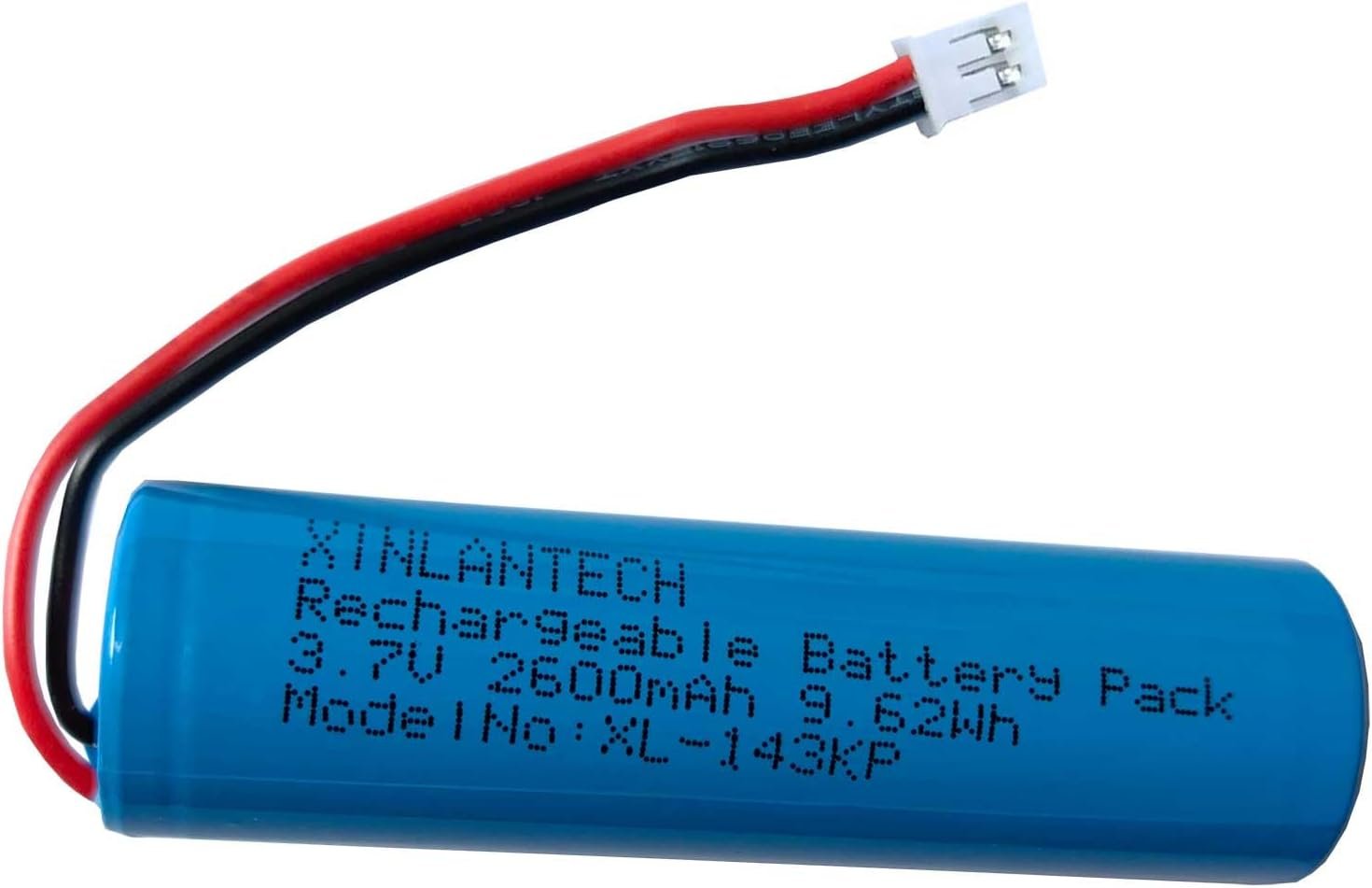
🔌 BEST PLUG-AND-PLAY FOR ESP32 · ⭐ 4.4/53. XINLANTECH 18650 1S1P 2600mAh Pack with JST PH2.0
3.7V · 2600mAh · 9.62Wh · BMS protection board · JST PH2.0 2-pin · about 50 g
Buy →

For most ESP32, Arduino Nano 33 and LoRa boards with a LiPo port, the easiest 18650 is one that is already finished. This pack wraps a single 2,600mAh cell with a BMS protection board and terminates in a JST PH2.0 plug on a short lead, so it clicks straight into the battery connector on boards like the TTGO, Heltec and FireBeetle families. You get over-charge and over-discharge protection without welding anything, and roughly three times the capacity of the small LiPo pouches those boards usually ship with. It has more than 200 ratings at about 4.2 stars. One crucial warning: JST PH polarity is not standardised, so check red and black against your board’s silkscreen before plugging in.
✅ Pros: Ready to plug in; built-in BMS; compact single-cell pack; solid review count.
❌ Cons: Polarity may need swapping; cell brand not stated; BMS current limit not specified.
🎯 Verdict: The simplest way to add an 18650 to a dev board with a JST battery port. Check polarity once and you are done.
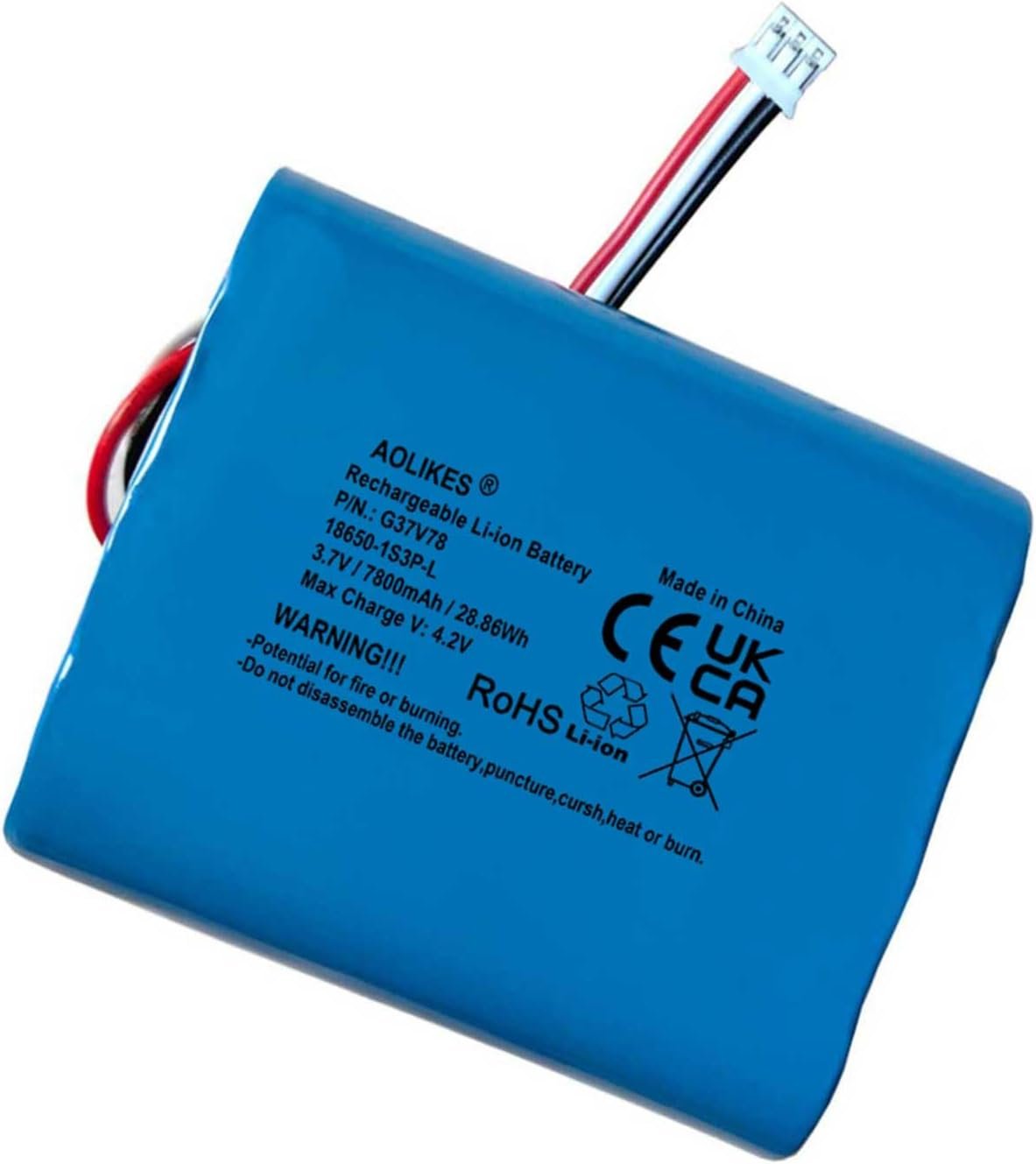
⏳ BEST FOR LONG RUNTIME · ⭐ 4.3/54. AOLIKES 18650 1S3P 7800mAh Pack
3.7V · 7800mAh (3 × 2600mAh parallel) · 28.86Wh · spot-welded · protection board · PH2.0 3-pin
Buy →

When a single cell won’t last the season, three in parallel will. This 1S3P pack spot-welds three 2,600mAh 18650s to a protection circuit with over-voltage, under-voltage and over-current cut-offs, giving you 7,800mAh at 3.7V (about 28.9Wh) behind a single PH2.0 plug. Because it stays at single-cell voltage, it works with every TP4056-style charger, solar charging module and LiPo-port dev board, and it simply runs three times longer. It is the natural choice for solar weather stations, LoRa repeaters, GPS trackers and remote cameras. The plug has three wires, so confirm the third pin’s function on the listing before wiring, and note the listing still has a small number of reviews.
✅ Pros: Three times single-cell runtime; welded and protected; works with any 1S charger.
❌ Cons: Bulky; 3-pin plug needs checking; few reviews so far; slow to charge from small solar chargers.
🎯 Verdict: The best ready-made 18650 pack for long-running, low-power IoT nodes that need to last weeks or months.
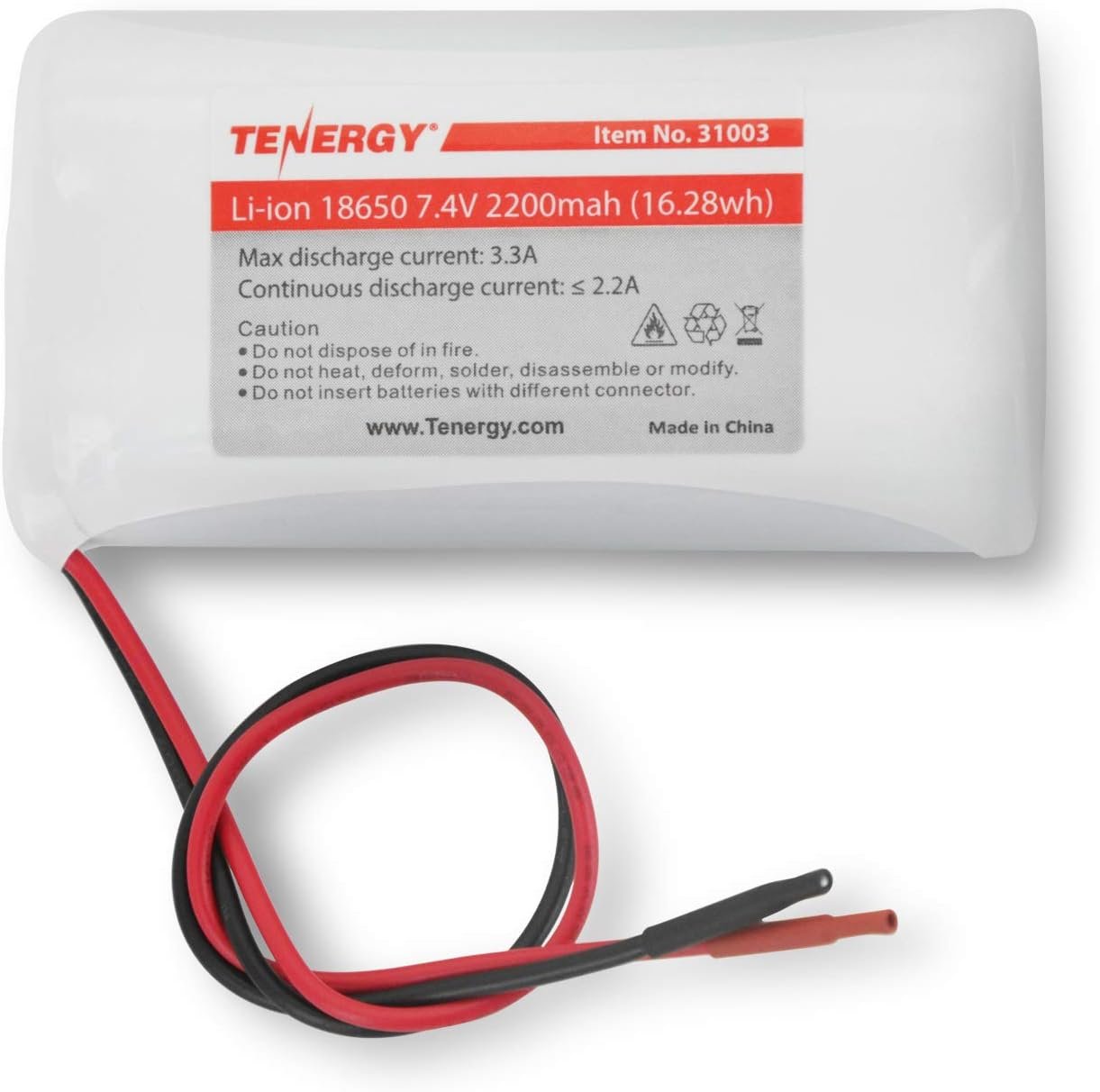
🚗 BEST 7.4V PACK · ⭐ 4.4/55. Tenergy 7.4V 2200mAh 18650 Pack with PCB
2 × 18650 in series · 7.4V · 2200mAh · PCB protection · bare leads · 72 × 38 × 19 mm · up to 500 cycles
Buy →

Tenergy is a long-established US battery brand, and this 2S 18650 module is a dependable way to get 7.4V without building a pack yourself. Two cells sit in a shrink-wrapped block with a protection PCB against over-charge, over-discharge and shorts, and bare red and black leads let you add whatever connector your project uses. 7.4V is the sweet spot for small robot cars with TT motors, RC models, 6 to 7V servo rails, LED work lights and anything that runs through a 5V buck regulator. It carries more than 200 ratings at around 4.3 stars. You will need a proper 2S (8.4V) Li-ion charger, not a single-cell TP4056.
✅ Pros: Trusted brand; protected 2S pack; bare leads for any connector; long review history.
❌ Cons: Modest 2200mAh; needs a 2S charger; no balance lead.
🎯 Verdict: The best ready-made 7.4V 18650 pack for robot cars, RC builds and buck-regulated 5V rails.
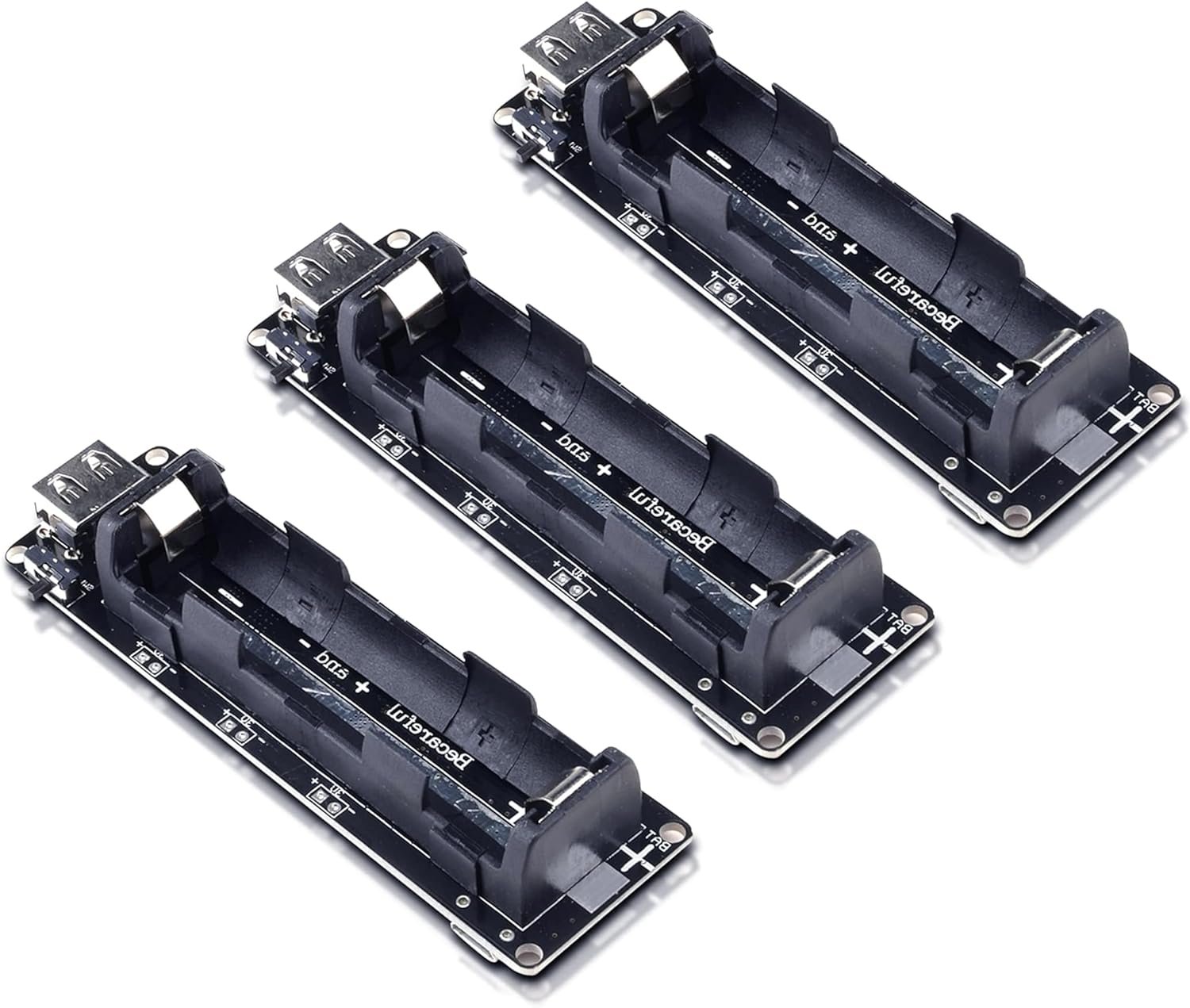
🔆 BEST HOLDER WITH CHARGING · ⭐ 4.3/56. diymore 18650 Battery Shield V3
1 × 18650 (not included) · micro-USB charging input · 5V/2A USB-A output · 3V/1A pin headers · power switch
Buy →

The 18650 Battery Shield V3 turns one cell into a tiny power bank for your projects. Drop in an 18650, charge it over micro-USB, and take a boosted 5V at up to 2A from the USB-A port or the low-voltage rail from the pin headers to feed an ESP8266, ESP32, Raspberry Pi Pico or sensor board directly. It replaces a holder, a charger board and a boost converter in one PCB, which makes it ideal for quick portable prototypes, field tests and classroom kits. It is a simple board, so expect some boost noise and a little quiescent drain; add a bulk capacitor for Wi-Fi loads and switch it off when not in use.
✅ Pros: Holder, charger and 5V boost in one; USB-A output; pin headers for MCUs; on/off switch.
❌ Cons: Micro-USB, not USB-C; single cell only; small review count on this listing.
🎯 Verdict: The best 18650 holder when you also need charging and a 5V output without any extra modules.
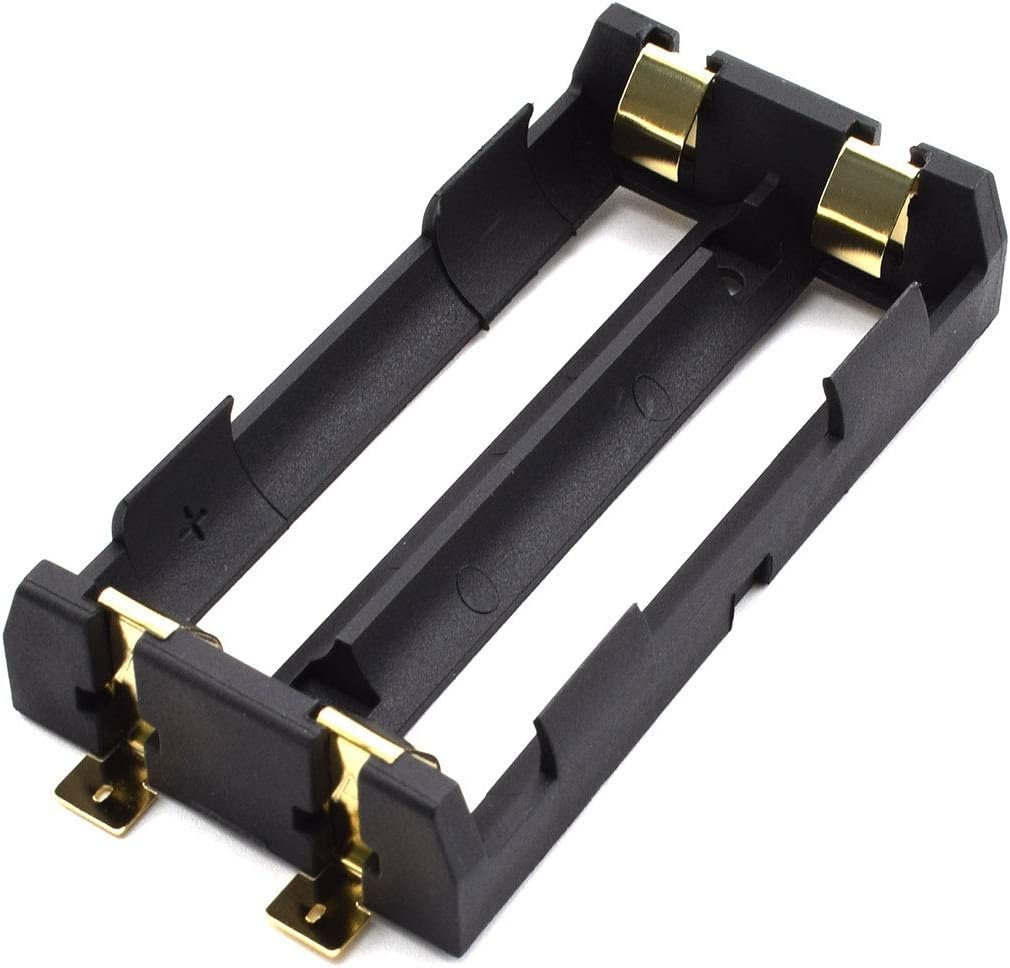
🧩 BEST FOR CUSTOM PCBs · ⭐ 4.3/57. SDTC Tech 2-Slot 18650 PCB Battery Holder
2 × 18650 · series or parallel by your PCB · PBT body · gold-plated copper contacts · 77.1 × 39.8 × 14.9 mm
Buy →

When your project graduates from wires to a real circuit board, a PCB-mount holder keeps the cells rigid and the layout clean. This SDTC sled holds two 18650s, and because each slot breaks out to its own pads, your PCB traces decide whether they run in series (7.4V) or parallel (3.7V, double capacity). The heat-resistant PBT body survives reflow-style handling, and the gold-plated copper contacts solder easily and keep contact resistance low. It is a great fit for custom ESP32 boards, data loggers and handheld instruments. Check the footprint against your CAD library before ordering boards, and remember that long protected button-top cells may not fit.
✅ Pros: Series or parallel by layout; gold-plated contacts; rigid PBT body; neat production look.
❌ Cons: Needs a PCB; footprint must be modelled; long button-top cells may not fit.
🎯 Verdict: The best 18650 holder for custom PCBs. Clean, rigid and flexible enough for 1S2P or 2S designs.
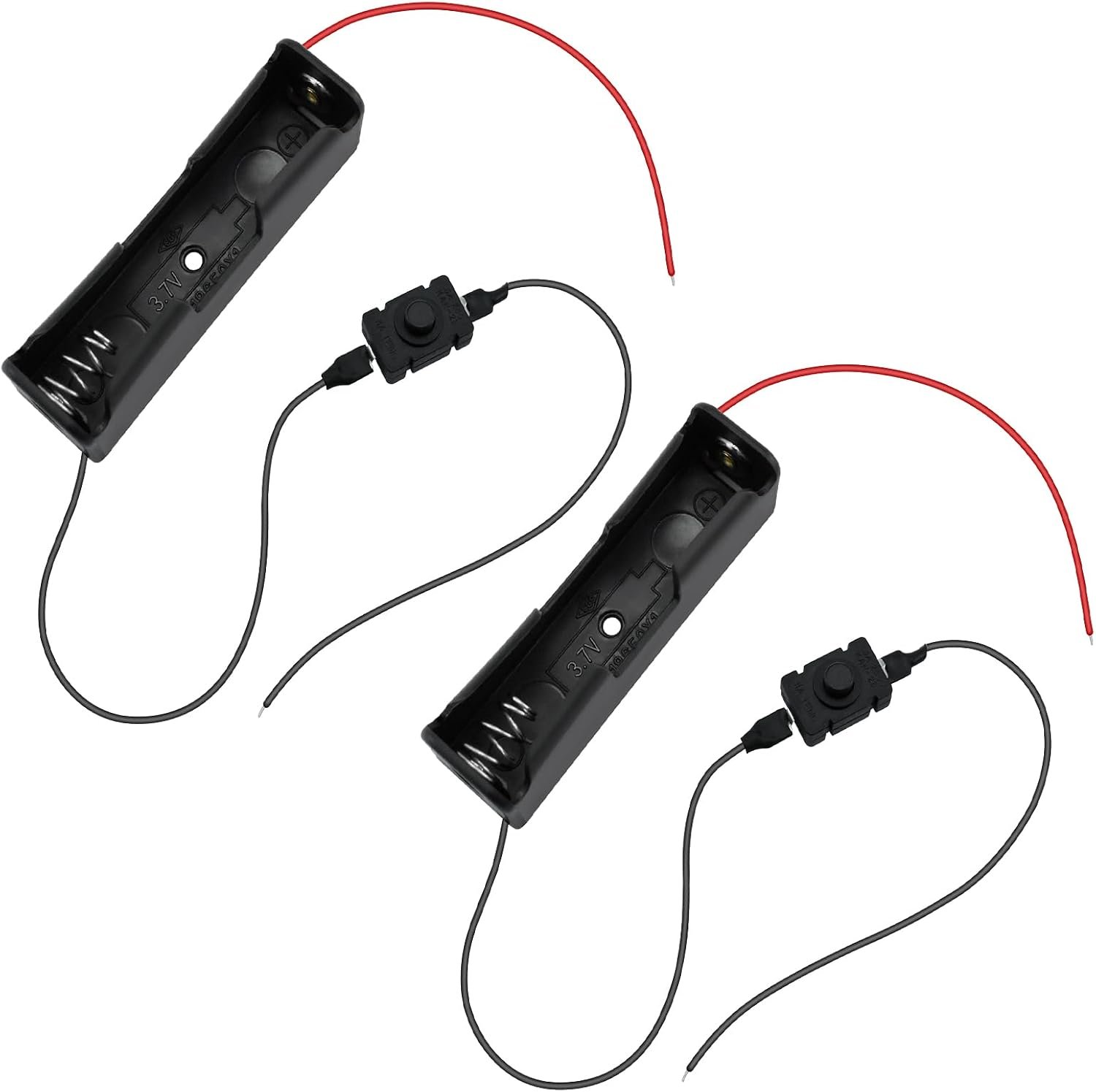
🔘 BEST WITH ON/OFF SWITCH · ⭐ 4.1/58. SDTC Tech 18650 Holder with Button Switch (2-Pack)
1 × 18650 · wire leads · self-locking push switch in the lead · nickel-plated spring · 76 × 21 × 20 mm
Buy →

Sometimes all you need is a cell, two wires and a way to turn it off. This SDTC holder puts a self-locking push-button switch right in the lead, so you can power a project down without pulling the battery or adding a separate switch to your enclosure. The single-slot body with a nickel-plated spring grips the cell firmly, and it comes as a two-pack. It suits LED projects, small toys, simple sensor demos and kits where students need an obvious on/off control. The inline switch is rated for small loads, so keep motors and high-current builds on a heavier switch.
✅ Pros: Built-in on/off switch; firm spring; cheap two-pack; no soldering needed.
❌ Cons: Single cell only; switch is for light loads; no cover or protection.
🎯 Verdict: The easiest way to add a switchable single-cell supply to a small project.
🛒 How to Choose the Right 18650 Setup
🤖
Driving motors or high-power LEDs?
Use Samsung 25R cells for their 20A rating, ideally in a welded pack with a BMS, or in the DAIERTEK holders for lighter loads.
📶
Powering an ESP32 or LoRa board?
The XINLANTECH 1S1P JST pack plugs straight into the board’s battery port with protection built in.
☀️
Remote or solar sensor node?
Pick the AOLIKES 1S3P 7800mAh pack for three times the runtime at single-cell voltage.
🚗
Need 7.4V for a robot car?
The protected Tenergy 2S pack is ready to wire, or fill a 2-slot DAIERTEK holder with your own cells.
🔋
Want charging and 5V in one board?
The diymore Battery Shield V3 charges over USB and outputs 5V/2A plus a low-voltage rail.
🧩
Designing your own PCB?
Solder in the SDTC 2-slot PCB holder, or use the SDTC switch holder for quick switchable builds.
⚙️ Key Specs Compared: Batteries Side by Side
| Spec | Samsung 25R | XINLANTECH 1S1P | AOLIKES 1S3P | Tenergy 2S |
|---|
| Nominal Voltage | 3.6V | 3.7V | 3.7V | 7.4V ⭐ |
| Capacity | 2500mAh per cell | 2600mAh | 7800mAh ⭐ | 2200mAh |
| Max Continuous Current | 20A ⭐ | BMS-limited | BMS-limited | PCB-limited |
| Protection | None (bare cell) | BMS ⭐ | OV / UV / OC ⭐ | PCB ⭐ |
| Connection | Flat top, holder or weld | JST PH2.0 2P ⭐ | PH2.0 3P | Bare leads |
| Charger Needed | 1S Li-ion (4.2V) | 1S Li-ion (4.2V) | 1S Li-ion (4.2V) | 2S Li-ion (8.4V) |
| Best Use | Motors, high-drain | Dev boards | Long-life IoT | Robot cars, RC |
Specs are taken from the live Amazon listings and manufacturer data, and can vary between sellers and batches. The packs’ BMS current limits are not published, so treat them as low-to-moderate current supplies. Always confirm details on the listing before buying.
❓ Frequently Asked Questions
Why can’t I find LG HG2 or Molicel P28A cells on Amazon?
Amazon US heavily restricts standalone lithium-ion cells, so most enthusiast favourites such as the LG HG2, Molicel P28A, Samsung 30Q and Sony VTC6 have no reliable listings there. The occasional “HG2” listing usually comes from an unknown seller with no reviews, which is exactly where counterfeits live. If your design truly needs one of those cells, buy from a specialist battery retailer that publishes test data. For most microcontroller projects, a verified Samsung 25R or a protected pack from this list does the job.
Should I use protected or unprotected 18650s with an ESP32 or Arduino?
Use protection somewhere in the chain. A protected pack (like the JST or 1S3P packs here) or a charger board with a DW01-style protection IC lets you use a bare cell safely. Unprotected cells without any cut-off will keep supplying a sleeping ESP32 until they drop below a safe voltage, which permanently damages them. For high-current robots, unprotected high-drain cells plus a correctly rated BMS is the standard approach.
Can I solder wires directly to an 18650 cell?
It is strongly discouraged. The heat needed to wet the steel can damage the internal seal and separator, and the joint is mechanically weak. Use a holder, buy a pack with pre-welded tabs, or spot-weld nickel strip. If you must solder, use a very hot, high-mass iron, flux and a quick touch, never a slow, low-power iron.
How do I spot a fake 18650?
Three quick checks catch most fakes. First, capacity: no 18650 exceeds about 3,600mAh, so 5,000 to 9,900mAh claims are false. Second, weight: genuine cells weigh roughly 45 to 48 g, while re-wraps with small cells inside are often under 35 g. Third, test it: a cheap charger with a capacity-test mode will show the real mAh after one cycle. A no-name brand, recycled-looking wrap or price far below the market are further warning signs.
Can I mix cells in a 2-slot or 4-slot holder?
Only use matched cells: same model, same age and the same state of charge. In series holders like the DAIERTEK set, a weaker cell will be over-discharged first and can be driven into reverse polarity; in parallel, cells at different voltages dump current into each other the moment you insert them. Charge cells individually to the same voltage before loading a multi-slot holder, and use a BMS for any series pack that stays assembled.
🏁 Final Verdict: Best 18650 Battery or Holder for Every Build
The right 18650 cell, pack or holder for every project and budget:
🥇 Best High-Drain Cell: Samsung 25R 4-pack, 2500mAh, 20A continuous
Buy →🏅 Best Holder Set: DAIERTEK 1/2/3/4-slot holders, 3.7V to 14.8V
Buy →🔌 Best Plug-and-Play: XINLANTECH 1S1P 2600mAh with BMS and JST PH2.0
Buy →⏳ Best Long Runtime: AOLIKES 1S3P 7800mAh protected pack
Buy →🚗 Best 7.4V Pack: Tenergy 7.4V 2200mAh with PCB protection
Buy →🔆 Best Holder with Charging: diymore 18650 Battery Shield V3, 5V/2A USB out
Buy →🧩 Best for Custom PCBs: SDTC 2-slot PCB holder, series or parallel
Buy →🔘 Best with On/Off Switch: SDTC single holder with button switch, 2-pack
Buy →No single 18650 product fits every build, but each pick here earns its place. For raw power, the Samsung 25R is still the cell to beat, and the DAIERTEK holder set gives you every series voltage from one box. If you would rather not deal with bare cells at all, the XINLANTECH JST pack plugs straight into a dev board, the AOLIKES 1S3P stretches runtime for remote IoT nodes, and the Tenergy 2S pack delivers a protected 7.4V for robots. Round it out with the diymore shield for USB charging and 5V output, the SDTC PCB holder for custom boards and the SDTC switch holder for simple builds. To charge and regulate your cells, see our guides to the best LiPo battery charger modules, the best boost converter step-up modules and the TP4056 lithium-ion charging module, then put your battery to work with our Arduino, ESP32, STM32 and Raspberry Pi tutorials.
💬 Not sure which 18650 setup fits your project? Tell us your board, load current and how long it needs to run in the comments below, and we’ll point you to the right cell or holder.
All Amazon links above use our affiliate tag (microlab05-20). Purchasing through them supports microcontrollerslab.com at no extra cost to you. Prices and availability change frequently, so always confirm the current price on Amazon before buying.