Interface MG995 Servo Motor with Arduino – Example Code
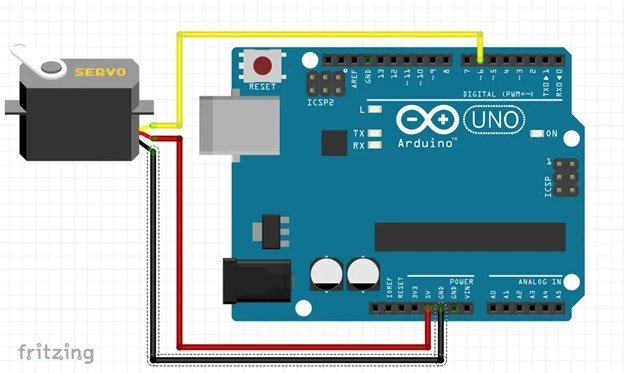
MG995 Servo Motor interfacing with Arduino

MG995 Servo Motor is a heavy-duty reliable servo motor. It is a low-power, cost-effective motor. MG995 is a dual shock-proof ball-bearing servo design with metal gear making it quite feasible for industrial production. The motor has a quick response and rotates at high speed. It comes with great holding power and a stable constant torque … Read more

AT89S52 8-bit Microcontroller with 8K Bytes In-System Programmable Flash

AT89S52 8-bit Microcontroller Programming circuit

AT89S52 is one of the popular microcontrollers from the Atmel family. AT89S52 microcontroller is an 8-bit CMOS microcontroller having 8k Flash memory and 256 bytes of RAM memory. It can be operated at 33MHz maximum operating frequency by using an external oscillator. Like other microcontrollers, It has GPIO pins, three 16-bit timers, one full-duplex UART … Read more

N76E003AT20 Microcontroller Unit

N76E003AT20 Microcontroller pinout diagram

N76E003AT20 is a microcontroller unit from the N76E003 family introduced by Nuvoton. It is an 8-bit, low-power MCU based on 8051 architecture. Moreover, it has a total number of 20 pins, out of which 18 are GPIO pins, memory, and other peripherals. N76E003AT20 is a high-speed controller with 16 MHz of a powerful oscillator, I2C … Read more

Interfacing RCWL-0516 Microwave Radar Sensor with Arduino

RCWL-0516 with Arduino Motion Detection

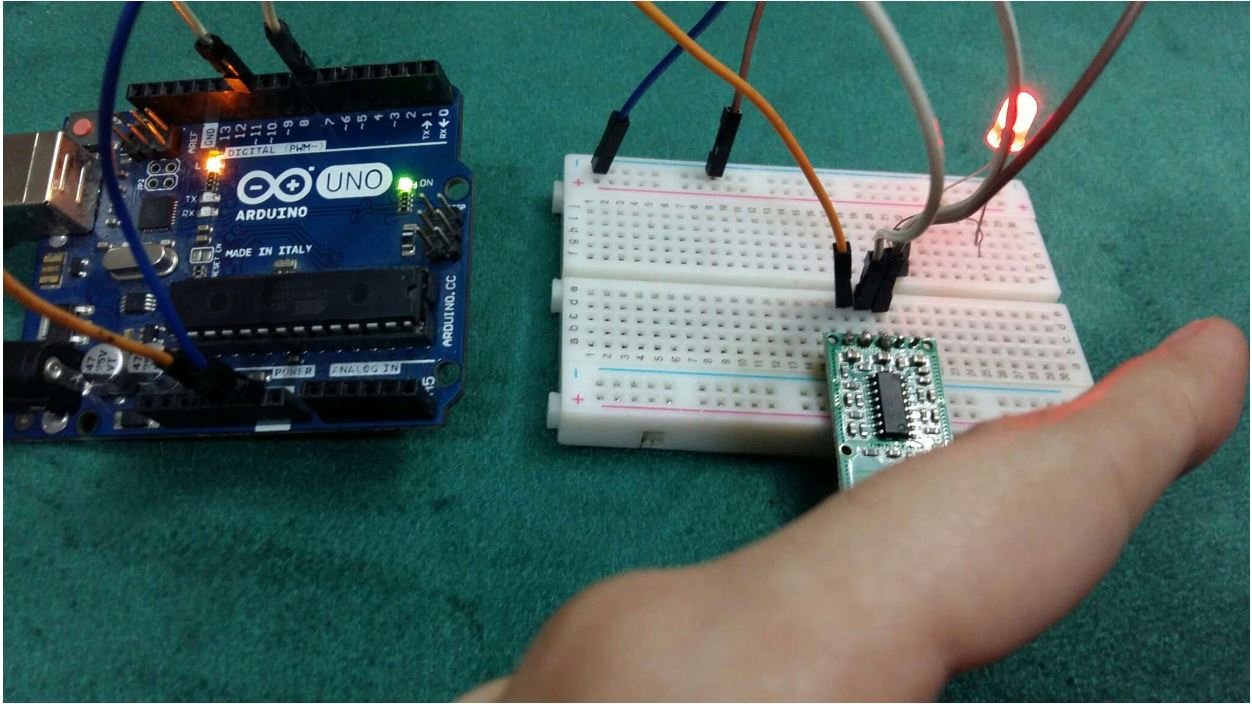
In this user guide we will learn to interface RCWL-0516 microwave radar sensor module with Arduino and program it for motion detection. We will discuss the components of RCWL-0516 sensor module, pinout, configuration, features, specifications, interfacing, 2D model, and applications. We have similar guide with ESP32 and ESP8266 NodeMCU: Recommended Components The following components are … Read more

TEENSY 3.2 Development Board – Getting Started Tutorial

TEENSY 3.2 pinout diagram

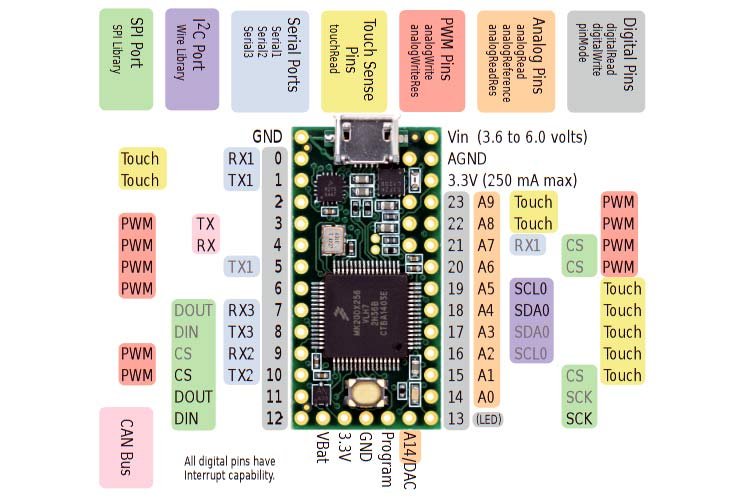
TEENSY Development Boards are quite famous for small projects, either for a hobbyist or designing small robots or entertainment stages. One of such boards is a TEENSY 3.2 Development Board made by PJRC. It is a bread-board compatible, USB development board of K20 Sub-Family with a 32-bit ARM Cortex-M4 microcontroller unit to implement different prototypes … Read more

STM32F103C8T6 Blue Pill Development Board

STM32F103C8T6 Blue Pill pinout diagram

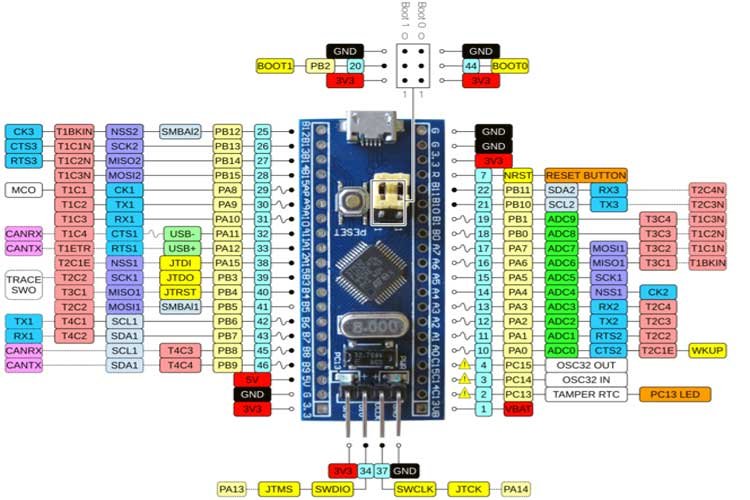
STM32F103C8T6 is one of the mid-range microcontroller units of the STM32F103x8 family based on RISC architecture. An integrated Blue Pill Development Board was introduced as a low-cost board as an alternative to STMicroelectronics STM discovery boards. The price of Blue Pill is around 2-3$. STM32F103C8T6 microcontroller comes with GPIO pins, processor, memory, USB port, Analog … Read more

ATtiny2313 8-bit AVR Microcontroller

ATtiny2313 pinout diagram 8-bit AVR Microcontroller

ATtiny2313 is one of the small Flash technology-based microcontrollers based on RISC architecture. An integrated IC with GPIO pins, processor, memory, and other peripherals. A low-power, hi-tech chip introduced by Microchip has a speed of 12 million instructions per second and a data EEPROM of 128 Bytes. It finds its applications from domestic devices to … Read more

Raspberry Pi Pico Pinout Reference – Which GPIO Pin to use?

Raspberry Pi Pico pinout diagram

In this tutorial, we will discuss Raspberry Pi Pico pinout and which GPIO pins to use for peripherals such as UART, I2C, SPI, Interrupts, and timers, etc. In this post, we are going to discuss the Raspberry Pi Pico development board which is the first development board from the Raspberry Pi in the microcontroller series. … Read more

TEENSY 3.6 development board

TEENSY 3.6 Development board pinout diagram

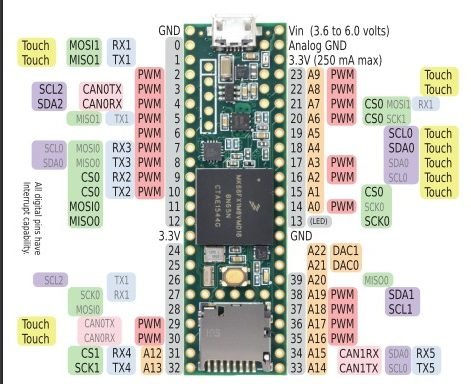
The TEENSY 3.6 development board consists of a 32-bit ARM Cortex M4 programmable microcontroller. It is Arduino compatible having 180MHZ processor along with a floating-point unit. It has a bootloader so you can easily program it through High-speed on-board USB port. In other words, it has an onboard programmer and debugger. Therefore, we don’t need … Read more